
Identify and Evaluate Quantum Computing Use Cases
Determine the viability and value of the quantum processing of today and tomorrow for your enterprise.
Vendor and industry buzz have anointed quantum computing as a potential Next Big Thing in future tech. Yet many CIOs and CTOs still aren’t sure how the technology works or whether it can add strategic value to their organizations. Use our practical three-step framework to understand the types of problems quantum computing solves best, identify potential use cases, and assess the feasibility of leveraging this emerging technology in your organization.
With a growing number of vendors making claims about their solutions, how do you separate potential quantum computing benefits from practical use cases for your own organization? Avoid getting caught up in FOMO and rushing into a vendor solution. Instead, focus on gaining a clear grasp of quantum’s real-world value proposition, then gauge your organization’s readiness to turn quantum computing opportunities into value-driven outcomes.
1. Quantum annealers can provide value today.
Most of the discussion around quantum computing focuses on gate-based quantum computers that require fault tolerance to deliver value. But annealing, another type of quantum computing focused on optimization problems, is already being deployed and providing value.
2. Feasibility depends on organizational readiness.
Assessing vendor solutions isn’t the same thing as ensuring your organization is ready to leverage quantum computing. If you’re not ready to act on the opportunity when it arrives, you’ll already be behind the competition.
3. Think of quantum computing’s value in dollar terms.
Assign a market value for your potential use case. That’s the simplest way to convert quantum computing capability into a clear opportunity for your organization to act on.
4. Commercialization is still years away
Industry hype might make it seem like widespread commercialization is around the corner. In reality, government bodies don’t expect significant commercial breakthroughs until 2032 to 2035. Even after quantum advantage is achieved, it will take years for enterprises to learn how to use it to solve their problems.
Use this framework to cut through the hype and understand quantum computing’s real-world value proposition for your enterprise.
Our approach provides clear use case analysis of quantum computing technology, plus a practical supporting tool to translate your knowledge into strategic action for your organization. This framework was developed in collaboration with industry experts from Amazon Braket (AWS), XPRIZE For Quantum Applications, D-Wave Quantum Inc., PsiQuantum, and Enterprise Quantum. Use this methodology to:
- Understand quantum computing. Create a customized quantum computing glossary.
- Identify use cases for quantum computing. Describe your business problem’s quantum relevance.
- Evaluate use cases with a practical approach. Assess your quantum use cases and estimate feasibility in your organization.
Identify and Evaluate Quantum Computing Use Cases
Determine the viability and value of the quantum processing of today and tomorrow for your enterprise.
Executive summary
Your Challenge
- Quantum computing is getting a lot of buzz from vendors making advancements with the technology; governments seem to be racing ahead with investments and research initiatives to develop the field; and market activity for quantum computing startups is picking up. What does it mean in terms of practical applications for IT leaders?
- What is the true value that quantum computing will offer, and how feasible will it be for your organization to pursue it?
- Identifying proven industry use cases and understanding real-world readiness is difficult in a nascent space with a lot of hype.
Common Obstacles
- Quantum computing has been under development for years with advancements in the research space, but it’s difficult to assess where and when different quantum processors will deliver business value.
- The opportunities of adopting quantum computing are hard to separate from the threat posed by quantum computing to information security. While migrating to new encryption standards is necessary because of quantum computing, it won’t require quantum computing.
- There’s many different hardware approaches to executing on quantum computing and vendors make various claims about their solution readiness. How do you know what’s really valuable?
Info-Tech’s Approach
- Understand where quantum computing is best at solving problems. Use problem archetypes to categorize quantum algorithms and identify potential use cases for your industry and organization.
- Consider the potential value of the solution. Weigh market factors and societal benefits as well as internal alignment with organizational goals.
- Judge the feasibility of the use case. Use external roadmaps to determine when quantum computing will address your use case, and consider internal maturity factors.
- Estimate a timeline. Start with when quantum computing could provide a true advantage, and add the desired timeframe that your organization would want to start leveraging it.
Info-Tech Insight
The quantum computing of the future will come from gate-based processors that can unlock simulations of dynamic molecular interactions. The quantum computing of today is analog in nature and creates business value by solving optimization problems.
Analyst perspective
The space between quantum first-movers and the fast-followers may be longer than other emerging technologies.
The rapid emergence of AI into the enterprise tech stacks may have created some unfair expectations for quantum computing among business leaders. With AI being rapidly integrated into familiar enterprise tools and valuable use cases identified across every industry, the expectation might be that the next big emerging technology will see a similar pattern of success. Quantum computing is being idealized as that next technology to cross the chasm from academic development to commercial deployment by many – look no further than CES 2026, which was packed full of sessions proclaiming that quantum computing “is now transforming key industries and disciplines” and a show floor demo of a ChatGPT-style bot that delivered “quantum solutions.” While there has been exciting progress in quantum processors in recent years and many vendors project having reliable chips ready by the end of the decade, the transition into the enterprise is going to be very different and far more difficult than that of AI.
Where AI saw broad application across industries, quantum computing will provide advantage across a very specific problem set. Where AI found an agreed-upon product approach with LLMs, the question of how to best approach a quantum processor remains an open one. Where AI was relatively easy to integrate into existing enterprise workflows through the creation of protocols using standard programming conventions, quantum computing will require entirely new programming frameworks that either haven’t even been created yet or are entirely unfamiliar across developers. With all that said, for some organizations – especially those in industries where the manufacturing must comprehend with complex molecular interactions – quantum computing will be transformational and should be pursued. For others running very complex operations at massive scale, optimization through quantum annealing can provide value today. Which path is right for your organization, if any exists at all?

Brian Jackson
Principal Research Director, Research Innovation
Info-Tech Research Group
Blueprint deliverables
Each step of this blueprint is accompanied by supporting deliverables to help you accomplish your goals:
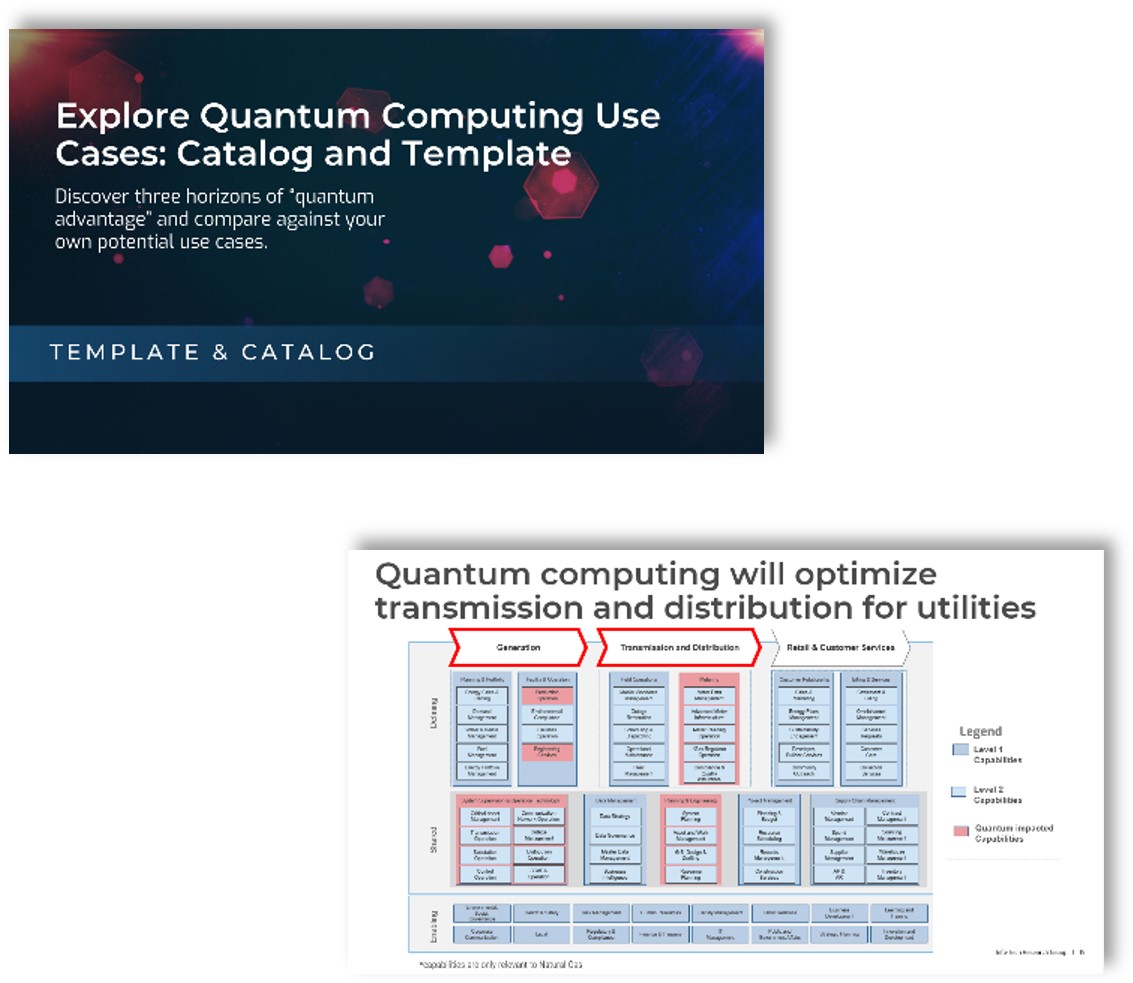
Explore Quantum Computing Use Case Catalog and Template
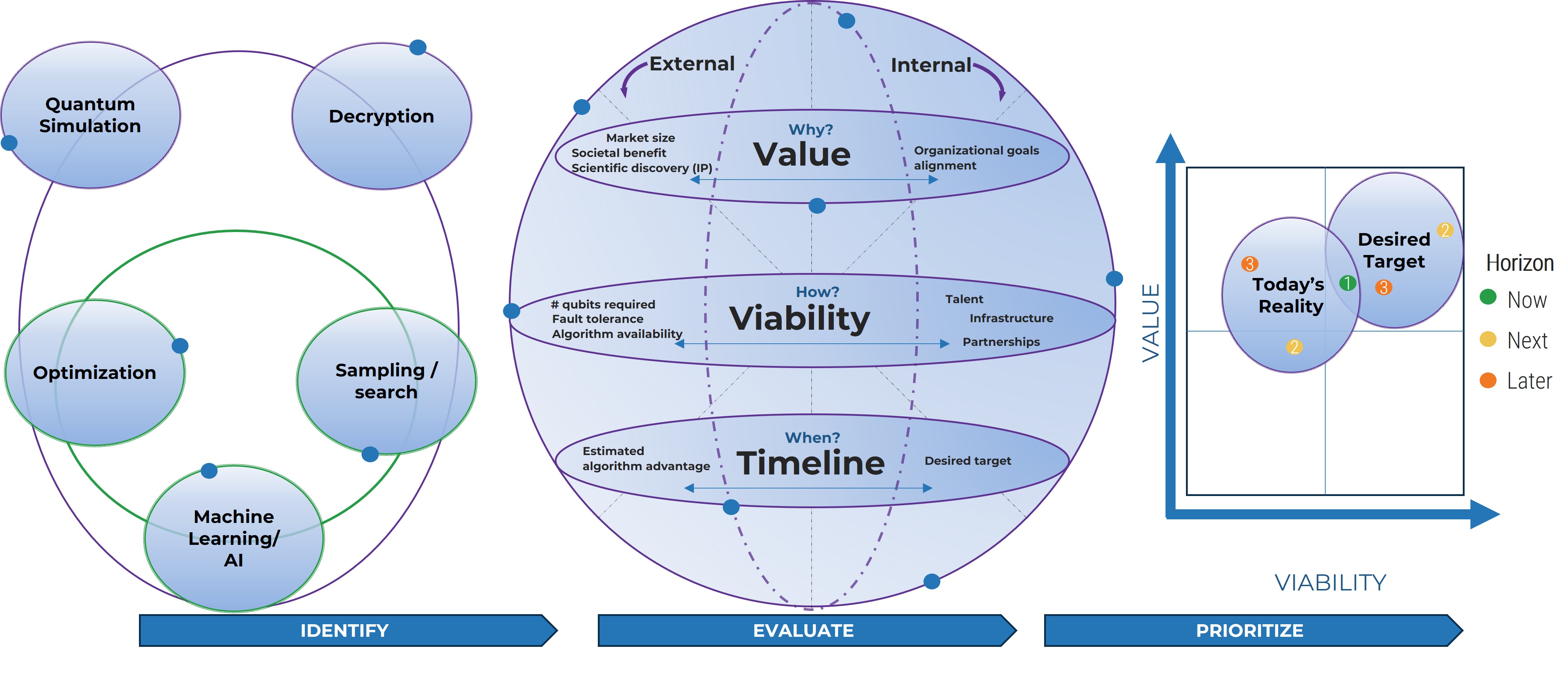
Rate the value and feasibility from a combined external and internal perspective and estimate a timeline for readiness. Then prioritize the use cases.
Insight summary
Quantum annealing can provide value today
Much of the discussion around quantum computing focuses on gate-based quantum computers that require fault tolerance to deliver value. This misses the quantum annealers already deployed and delivering value.
Organizations using HPC today will be among the first to benefit
Quantum processing units will be part of hybrid computing systems that still leverage classical HPC clusters, offloading specific problems to QPUs. That puts researchers working with HPC in position for first-mover advantage.
All organizations must prepare for quantum’s security threat
Quantum computing’s threat to traditional encryption standards means that all organizations must migrate systems and data to post-quantum cryptography. The standards are available now and don’t require using quantum computing to migrate.
Value of quantum computation can be expressed in dollars
Assigning a market value for your potential use case is the simplest way to convert quantum computing capability into a clear opportunity for your organization to act on.
Feasibility considerations depend on your organization’s readiness
Assess the quantum computing vendor solutions all you want; if you’re not ready to act on the opportunity when it arrives, you’ll be behind the competition.
The best way to do quantum computing is an open question
Several different approaches to controlling qubits seem equally viable right now, and the industry awaits answers about the most reliable or efficient hardware to solve quantum algorithms.
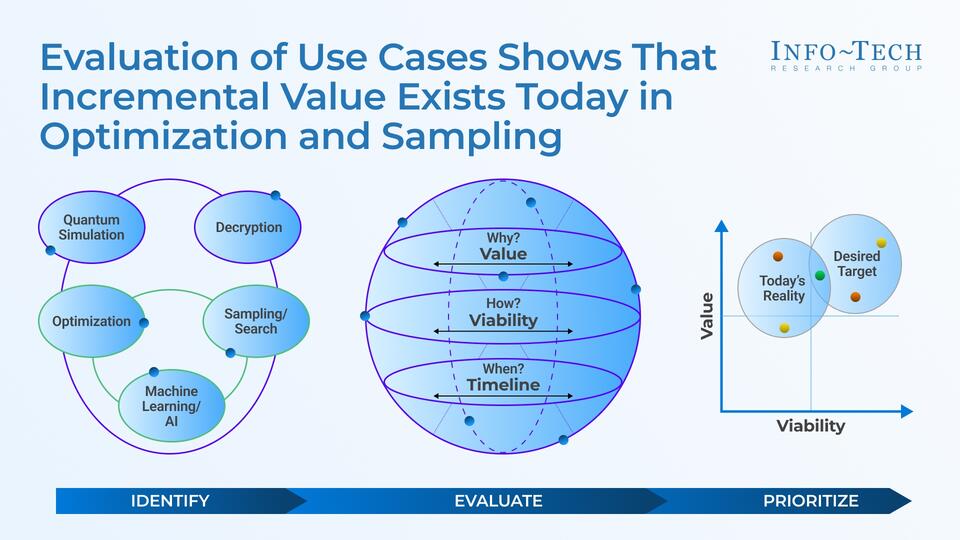
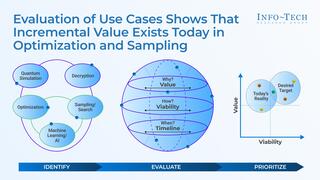
Evaluation of use cases show that incremental value exists today in optimization and sampling
Only specific problems within these five archetypes will see true quantum advantage.
Today’s solutions are more suited to problems in these 3 archetypes.
Evaluation reveals we are still many years away from seeing advantage for most problem candidates.
The value potential could be high, but feasibility from an external and internal perspective determines if it’s currently viable.
Step 1.1
Understand quantum computing
Activities
- 1.1.1 Create your customized quantum computing glossary
This step involves the following participants:
- CIO or IT leader
- Resident quantum expert
Outcomes of this step
- Customized glossary of terms for your organization
| Step 1.1 | Step 1.2 | Step 1.3 |
Quantum advantage is on the horizon
Vendor roadmaps estimate providing commercially viable quantum computers by the end of the decade.
Signals that quantum computing is nearing reality:
- The DARPA Quantum Benchmarking Initiative is investigating if companies working on quantum computing are on track to create a useful quantum computer by 2033 (DARPA).
- Quantum computer developers, including Google, Microsoft, Amazon, and IBM, have made announcements about crucial steps toward more reliable and “fault tolerant” capability that could provide commercial utility within years, not decades.
- Quantum computing is seeing both public and private investment ramp up, with governments competing to be a leader in the next lucrative technology breakthrough and investment markets positioning for a first-mover advantage.
A growing market
- $450-850 billion revenue generated by 2035 (McKinsey, 2023)
- 1,900% Increase in quantum computing patents filed between 2014-2024. (EPO, 2025)
- $55.7 billion public money invested or announced through 2025 (Qureca, qtd. by EPO, 2025)
But a difficult path is still ahead for enterprise adoption
Research advances are real, but many problems remain to satisfy most enterprise return on investment considerations.
The promises
- Gate-based quantum computers will allow enterprises to solve problems not feasible on classical computers by the end of the decade.
- Gate-based quantum computers are “universal” and can be programmed to perform any computation.
- Quantum annealers and “quantum-inspired” algorithms are providing commercial value today.
- Fault-tolerant quantum computing will herald many scientific breakthroughs and yield trillions of dollars of market value.
The reality
- Earliest estimates of real computational advantage are for 2029 and are represented by vendor roadmaps that have incentive to provide optimism. Government bodies estimate 2032-2035 as a likely period for commercial breakthrough.
- Quantum computers will only provide an advantage over classical systems for a subset of specific, complex problems. Many different hardware approaches to creating a gate-based system are still being explored, each with their own pros and cons.
- Some companies have achieved proof-of-concepts and even operationally deployed use cases here, but critics counter that classical systems could be used to provide the same value or close enough.
- After quantum advantage is achieved, it will still take years for enterprises to learn how to use it to solve their problems.
Use cases will explore opportunities with quantum computing
Countering the risk of quantum computing’s threat to encryption is a separate matter.
Opportunities for quantum computing:
- Business use cases for using quantum processing units to solve previously unfeasible problems.
- Requires using a quantum computer or sufficiently advanced simulation of one using a supercomputer.
Continue to explore opportunities of quantum computing on the next slide.
Threats of quantum computing:
- “Q-Day”: On an unknown date in the future, when quantum computers can execute Shor’s algorithm to break public key encryption methods, it will signal the obsolescence of current encryption methods that organizations rely on for digital operations.
- The National Institute of Standards and Technology (NIST) has published final standards for post-quantum cryptography. This encryption is designed to withstand quantum-computer–powered attacks and does not require the use of a quantum computer to implement.
- Organizations should create a roadmap to plan for their transition to post-quantum cryptography.
Info-Tech Recommends:
Go to this blueprint to defend against quantum’s threat to encryption: Prepare for Post-Quantum Cryptography.
About Info-Tech
Info-Tech Research Group is the world’s fastest-growing information technology research and advisory company, proudly serving over 30,000 IT professionals.
We produce unbiased and highly relevant research to help CIOs and IT leaders make strategic, timely, and well-informed decisions. We partner closely with IT teams to provide everything they need, from actionable tools to analyst guidance, ensuring they deliver measurable results for their organizations.
What Is a Blueprint?
A blueprint is designed to be a roadmap, containing a methodology and the tools and templates you need to solve your IT problems.
Each blueprint can be accompanied by a Guided Implementation that provides you access to our world-class analysts to help you get through the project.
Talk to an Analyst
Our analyst calls are focused on helping our members use the research we produce, and our experts will guide you to successful project completion.
Book an Analyst Call on This Topic
You can start as early as tomorrow morning. Our analysts will explain the process during your first call.
Get Advice From a Subject Matter Expert
Each call will focus on explaining the material and helping you to plan your project, interpret and analyze the results of each project step, and set the direction for your next project step.
Unlock Sample ResearchContributors
- Eric Kessler, General Manager of Amazon Braket, Amazon Web Services
- Kathrin Spendier, Technical Prize Director, XPRIZE for Quantum Applications
- Murray Thom, Vice-President of Quantum Technology Evangelism, D-Wave Quantum Inc.
- Nicole Holzmann, Defense Applications Development Lead, PsiQuantum
- Ryan Sim, independent consultant, Enterprise Quantum
 Tech Trends 2025
 Define Your Digital Business Strategy
 Kick-Start IT-Led Business Innovation
 Establish a Foresight Capability
 Apply Design Thinking to Build Empathy With the Business
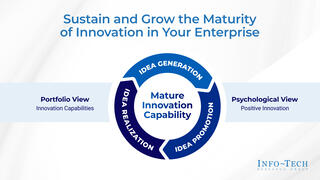 Sustain and Grow the Maturity of Innovation in Your Enterprise
 Position IT to Support and Be a Leader in Open Data Initiatives
 Double Your Organization’s Effectiveness With a Digital Twin
 Develop a Use Case for Smart Contracts
 Adopt Design Thinking in Your Organization
 Accelerate Digital Transformation With a Digital Factory
 Tech Trends 2024
 2021 Tech Trends
 Implement and Mature Your User Experience Design Practice
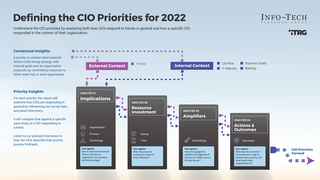 CIO Priorities 2022
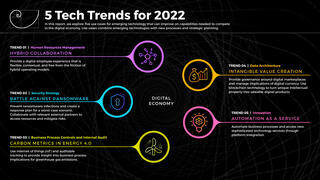 2022 Tech Trends
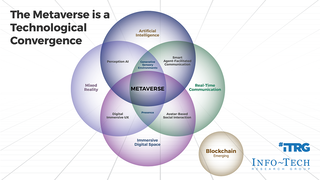 Into the Metaverse
 Demystify Blockchain: How Can It Bring Value to Your Organization?
 2020 Tech Trend Report
 2020 CIO Priorities Report
 CIO Trend Report 2019
 CIO Trend Report 2018
 CIO Trend Report 2017
 AI and the Future of Enterprise Productivity
 Evolve Your Business Through Innovation
 Build a Platform-Based Organization
 Tech Trend Update: If Contact Tracing Then Distributed Trust
 Tech Trend Update: If Biosecurity Then Autonomous Edge
 Tech Trend Update: If Digital Ethics Then Data Equity
 Tech Trends 2023
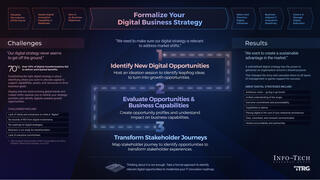 Formalize Your Digital Business Strategy
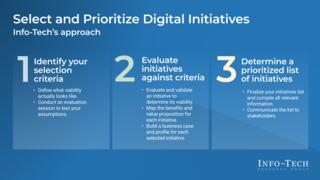 Select and Prioritize Digital Initiatives
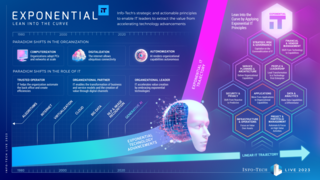 Adopt an Exponential IT Mindset
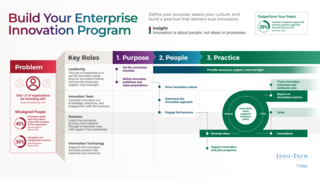 Build Your Enterprise Innovation Program
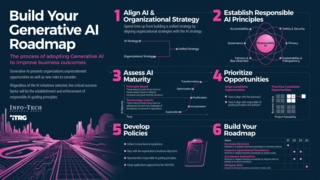 Build Your Generative AI Roadmap
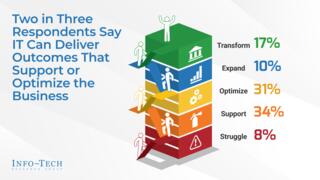 Annual CIO Survey Report 2024
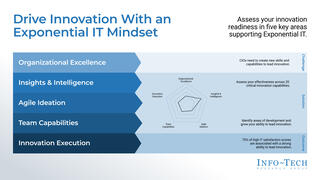 Drive Innovation With an Exponential IT Mindset
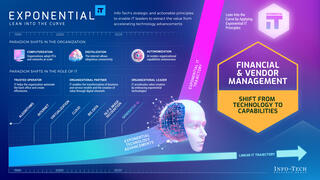 Exponential IT for Financial and Vendor Management
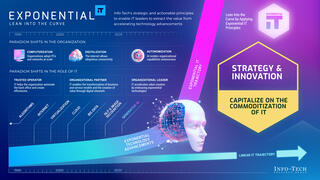 Exponential IT for Strategy, Risk, and Governance
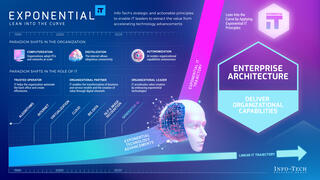 Exponential IT for Service Planning and Architecture
 Exponential IT for People and Leadership
 Exponential IT for Security and Privacy
 Exponential IT for Applications
 Exponential IT for Data and Analytics
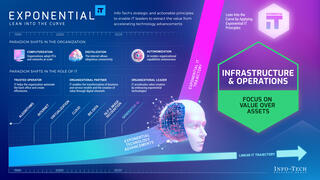 Exponential IT for Infrastructure and Operations
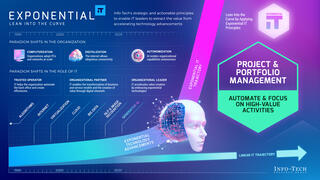 Exponential IT for Project and Portfolio Management
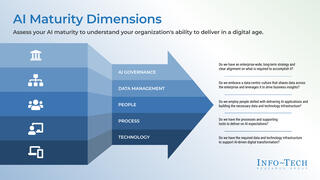 Assess Your AI Maturity
 Develop Responsible AI Guiding Principles
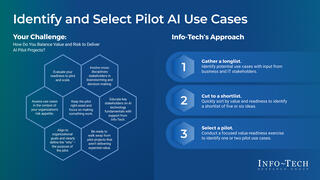 Identify and Select Pilot AI Use Cases
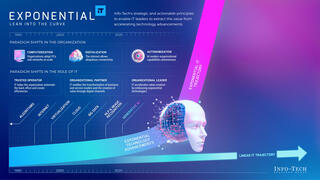 Exponential IT Keynote
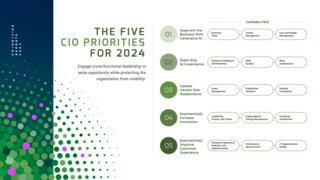 CIO Priorities 2024
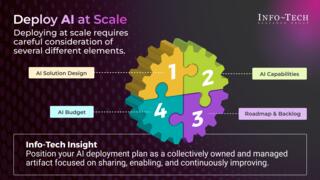 Build a Scalable AI Deployment Plan
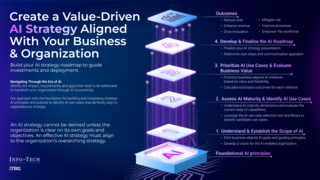 Build Your AI Strategy and Roadmap
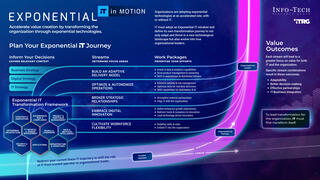 Develop an Exponential IT Roadmap
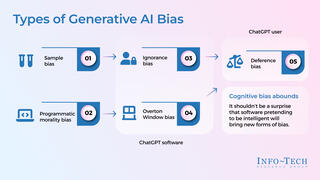 Use ChatGPT Wisely to Improve Productivity
 Build a FinOps Strategy to Enable Dynamic Cloud Cost Management
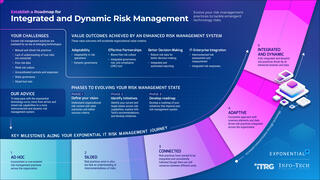 Establish a Roadmap for Integrated and Dynamic Risk Management
 Info-Tech’s Best of 2024 Mid-Year Report: AI Rewrites the Script for CIOs
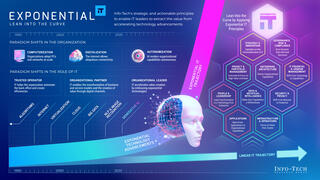 Explore the Art of the Possible for Exponential IT
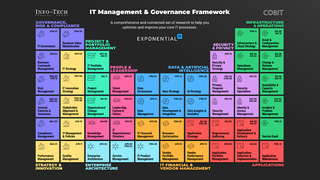 IT Management & Governance: The Next Evolution
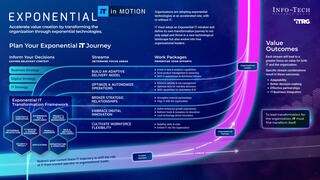 Bending the Exponential IT Curve Keynote
 Exponential IT in Motion: Transform Your Organization by Transforming IT
 AI Trends 2025
 LIVE 2024 Keynote Presentations
 LIVE 2024 Lightning Round Presentations
 CIO Priorities 2025
 Info-Tech’s Best of 2024 Report: IT Moves Into Position
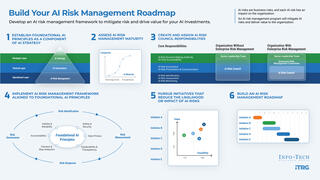 Build Your AI Risk Management Roadmap
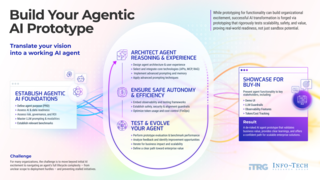 Design Your Agentic AI Prototype
 An Operational Framework for Rolling Out AI
 The AI Vendor Landscape in IT
 Run IT By the Numbers
 Building Info-Tech’s Chatbot
 Assessing the AI Ecosystem
 Bring AI Out of the Shadows
 Transform IT, Transform Everything
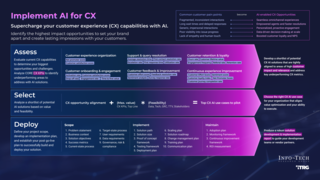 Implement AI for Customer Experience
 Info-Tech’s Best of 2025 Mid-Year Report: IT Moves From Disruption to Decisive Action
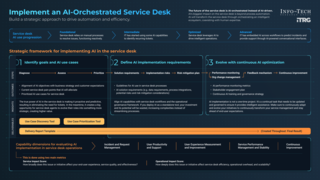 Implement an AI-Orchestrated Service Desk
 Info-Tech's All-Time Best, 2025 Edition: Change Is the Headline, Fundamentals Are the Path
 Tech Trends 2026
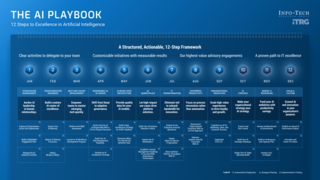 The AI Playbook
 AI Trends 2026
 Info-Tech’s Best of 2025: The Year AI Stopped Being a Project and Became the Strategy
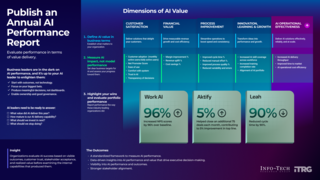 Publish an Annual AI Performance Report
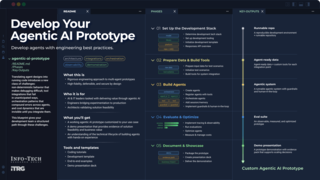 Develop Your Agentic AI Prototype
 Changing Landscape: Rethinking Vendor Decisions in the Agentic AI Era
 AI in Seven Charts
 Emerging AI Trends and Predictions From Our Global Technical Counselor Team
 Turn Customer Friction Into Agentic Opportunity
 People Change in the Face of Disruptive Technology
 Lead IT Like a Business: Every Dollar Is a Decision
 Optimize Cloud & AI Spend With Agentic FinOps
 Leadership Summit: The Ultimate Onboarding Experience 2026
 Resilience Is Not Planned – It Is Architected
 Redefine What It Means to Be CIO
 Navigating AI Agents in Service Management
 Influence Unleashed: The IT Leader’s Superpower
 The Challenge of Ethics in the Use of AI
 Revolutionize Risk Management With Agentic AI
 Introducing the Info-Tech Speakers Bureau
 Inside the Agentic Enterprise
 Agents 2.0: From Autonomy to Architecture
 Agentic IT: From Hype to Value
 Tech Trends 2027 Keynote
 Become an Exponential CIO
 Beyond the Agent: The Leadership Ecosystem for an AI-Enabled World
 Five Key Takeaways From Info-Tech LIVE 2026
 Info-Tech’s Best of 2026 Mid-Year Report
 Identify and Evaluate Quantum Computing Use Cases
 AI Adoption & Impact Study: AI in Software Development June 2026 Top 10 Insights
 AI Adoption & Impact Study: AI in the Enterprise June 2026 Top 10 Insights
