
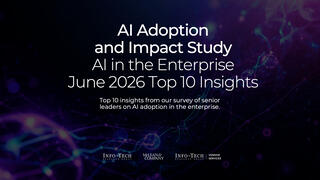
AI Adoption & Impact Study: AI in the Enterprise June 2026 Top 10 Insights
Top 10 insights from our survey of senior leaders on AI adoption in the enterprise.
See where AI delivers business value – and where it’s missing the mark.
AI investments have reached an inflection point. Enterprises must move from adoption to real outcomes. Data from our AI in the Enterprise June 2026 Top 10 Insights report reveals how organizations are approaching AI adoption right now – and which initiatives are actually delivering tangible results.
As part of Info-Tech's ongoing AI Adoption and Impact Study, over 500 senior enterprise leaders responded to our AI in the Enterprise Survey. The resulting report offers a timely snapshot of AI maturity, strategy, investment, infrastructure, vendor sourcing, and workforce planning. Leverage these real-world findings to inform your own AI strategy going forward.
10 key insights reveal the current state of AI in the enterprise.
These 10 critical insights unpack what AI transformation looks like today and where it’s heading next.
1. More than four in 10 organizations have cross-departmental AI adoption with measurable impact.
This finding differs significantly from media headlines about scant ROI from AI initiatives. Our data suggests AI has reached a maturity level where most enterprises have moved past the pilot stage to department-wide adoption.
2. CIOs/CTOs mostly still own accountability for AI, but risk losing ownership if they don’t drive measurable impact.
Although most organizations assign a CIO or CTO to lead AI initiatives, that model does not lead to the best results. Who owns AI matters just as much as whether you have an AI strategy.
3. Enterprises with an AI strategy triple their chances of getting measurable value from AI.
Organizations that still treat AI strategy as a planning exercise are leaving measurable outcomes on the table.
4. Better data readiness leads to better results with AI.
Organizations that are seeing department-wide AI adoption with measurable results are more likely to rate their data quality as excellent.
5. Most organizations chose buy over build for AI sourcing.
Eight in 10 organizations prefer to buy AI solutions over building them in-house. While buying AI solutions can be a shortcut to value, keep an eye on the market for new AI-native vendors that may offer the best solution.
6. Three-quarters of IT executives believe AI will disrupt SaaS.
Over 75% expect AI to disrupt their current SaaS model within two years, 28% anticipate AI replacing one or more major platforms outright, and 47% say AI will reduce reliance on some tools.
7. When AI is deployed without proven value, organizations plan headcount reductions.
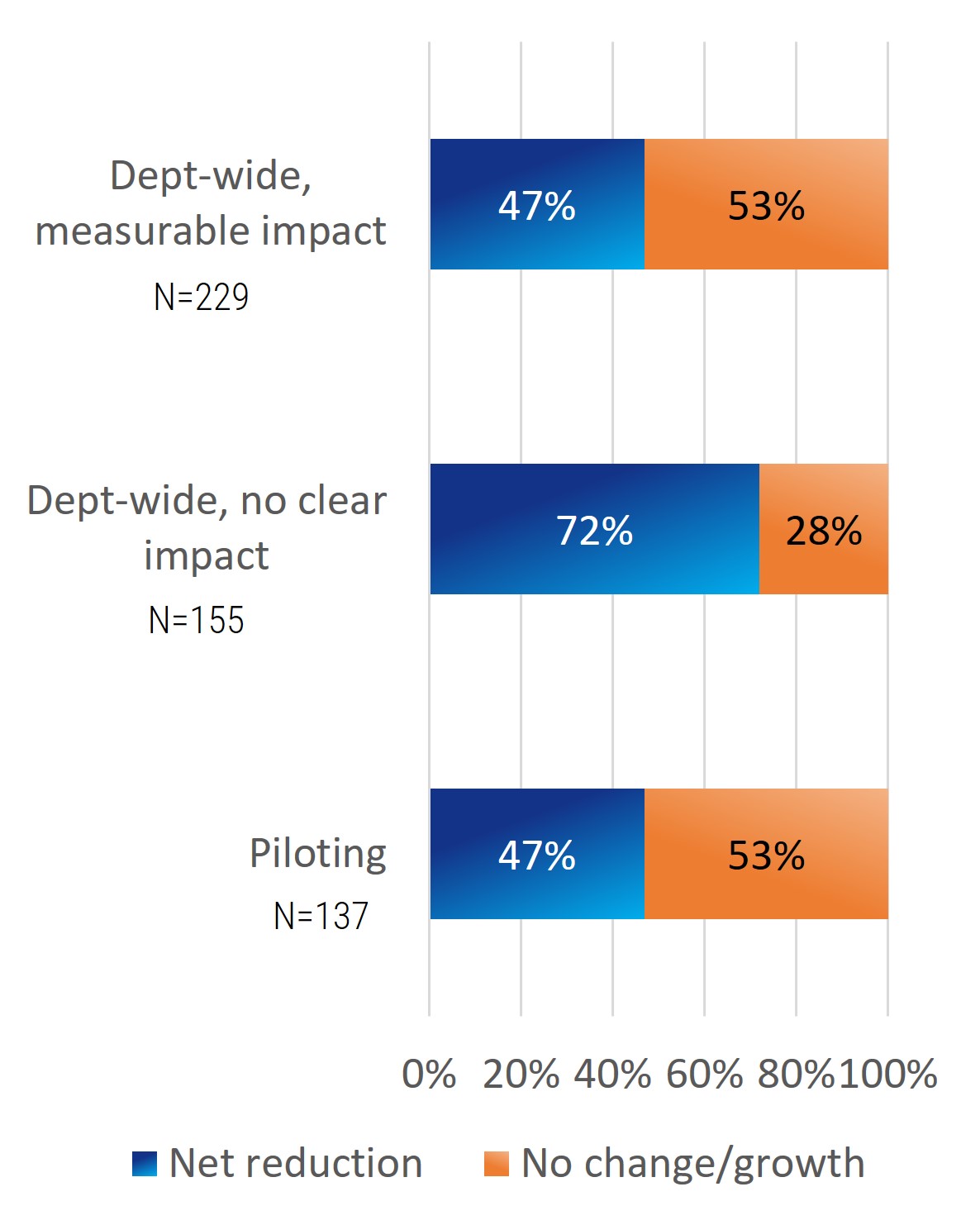
Organizations with department-wide adoption but no clear AI impact are most likely to cut jobs. But organizations that can demonstrate AI impact are the least likely to be cutting roles.
8. AI adoption spans all business functions but remains concentrated in IT.
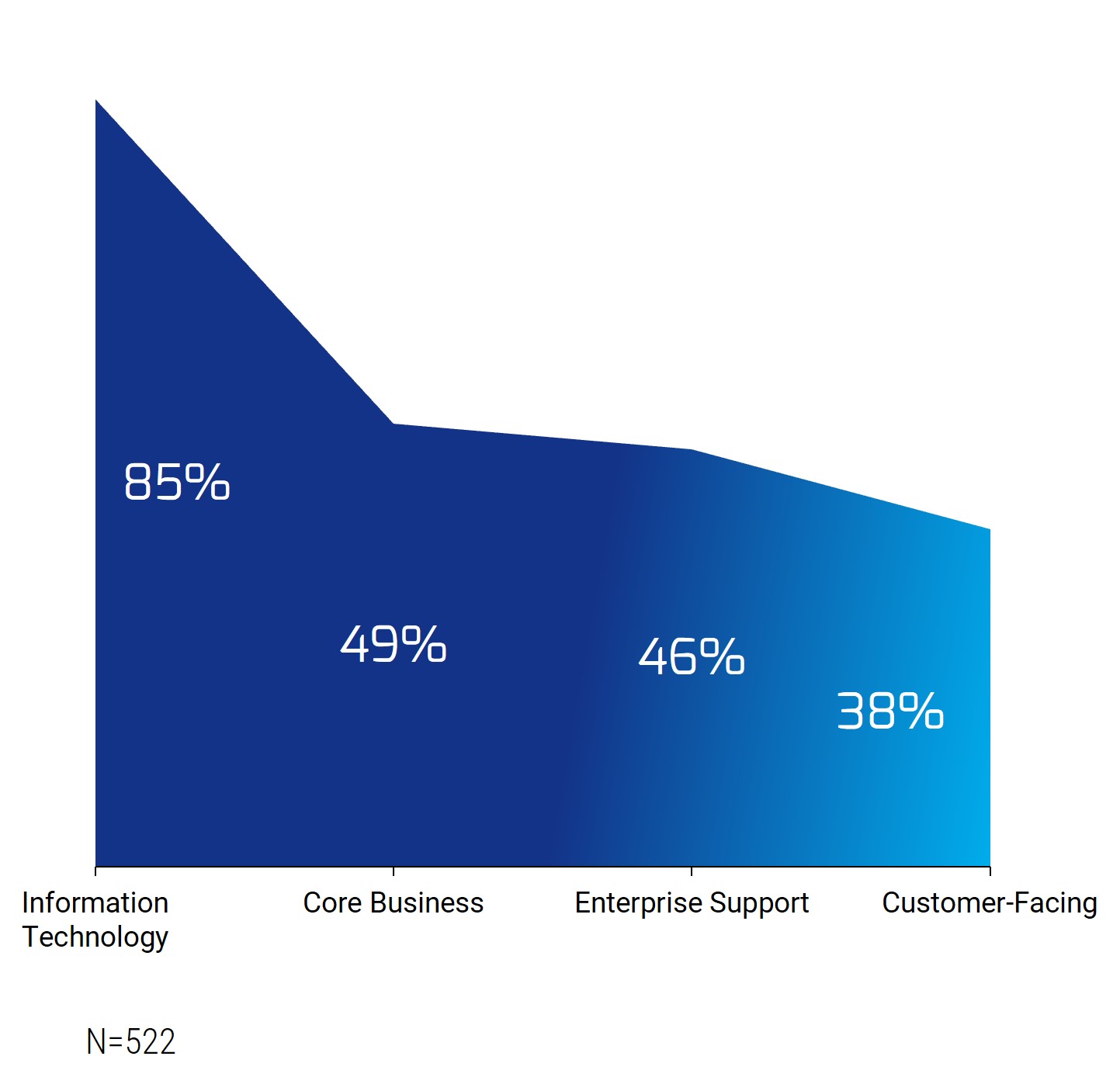
While 85% of organizations have adopted AI in IT, more than one-third (38%) have already deployed it to customer-facing functions. Take what you’ve learned from deploying AI in IT and use it to enable the rest of the business.
9. Almost all IT executives expect AI budget increases in the next 12 months.
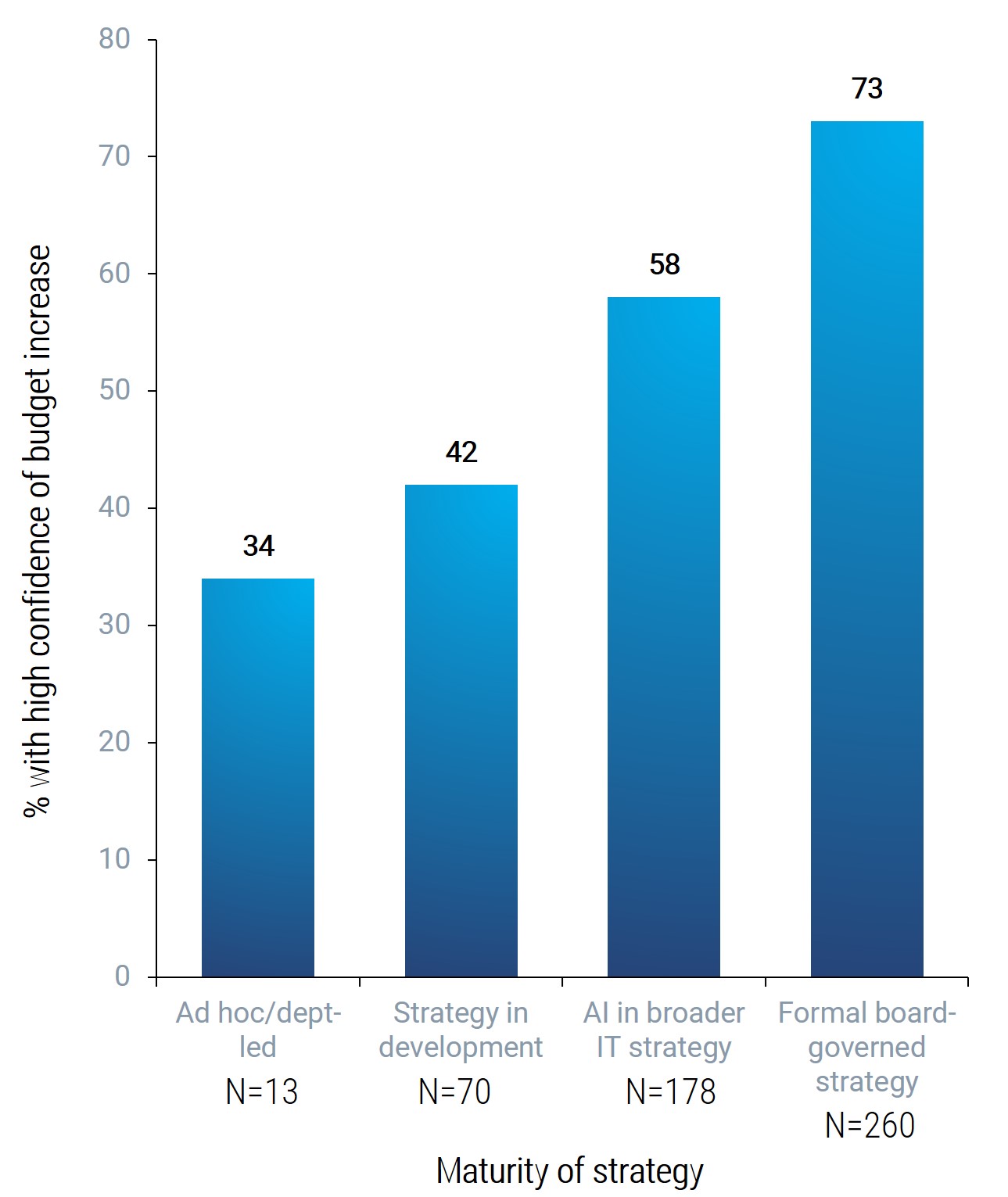
Over 95% anticipate their AI budget will rise. Having a board-approved AI strategy builds confidence and support for your AI budget: 73% of execs with a formal AI strategy are highly confident their AI budget will increase vs just 34% of IT leaders with an ad hoc AI approach.
10. Cost-cutting goals rarely lead to effective AI outcomes.
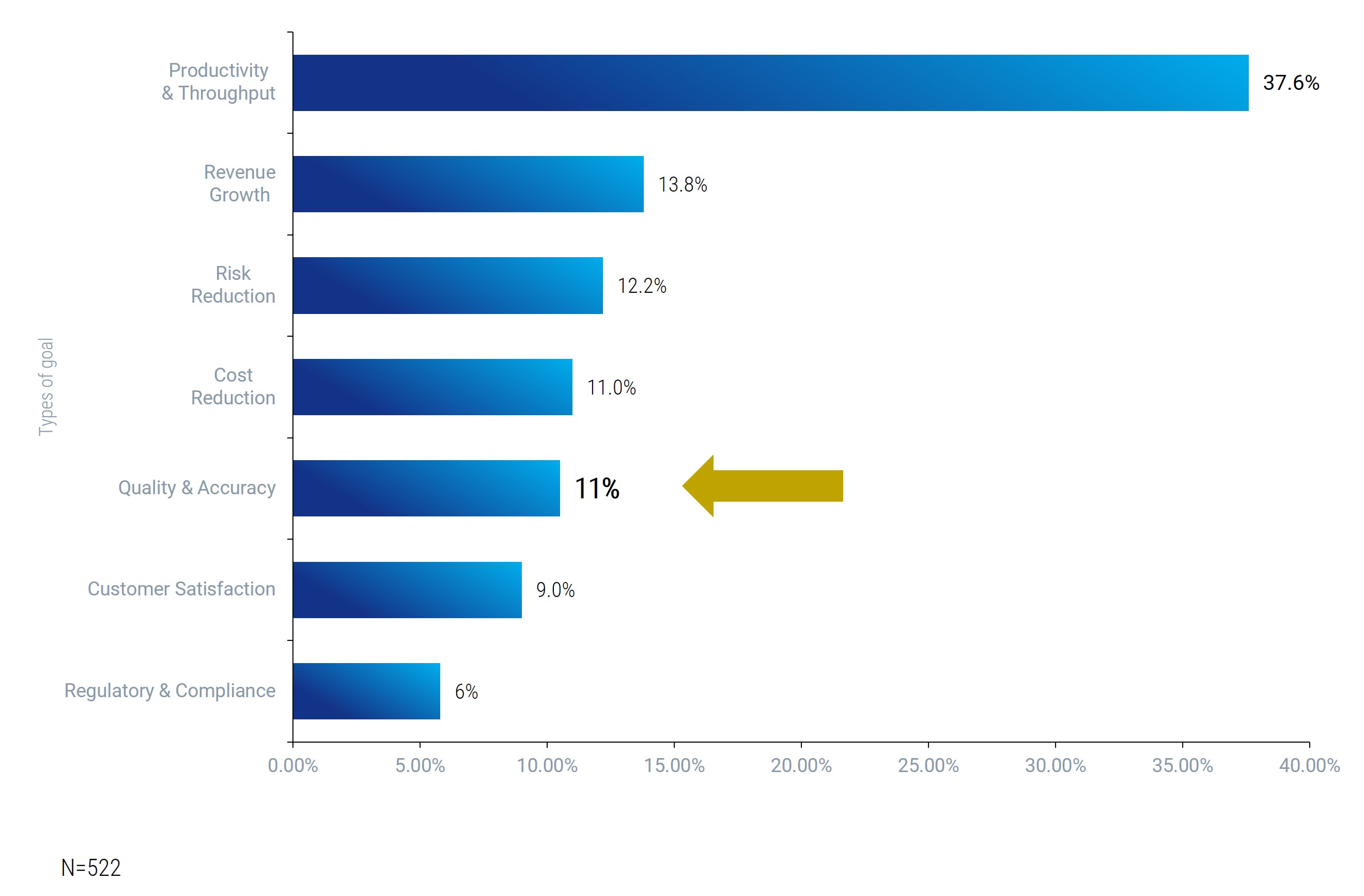
Among organizations’ most impactful AI use cases, cost reduction was the primary goal only 11% of the time. Cost savings may follow impactful AI use, but they should not anchor AI goals and use cases.
AI Adoption and Impact Study
AI in the Enterprise
June 2026 Top 10 Insights
Top 10 insights from our survey of senior leaders on AI adoption in the enterprise.
FIRMOGRAPHICS
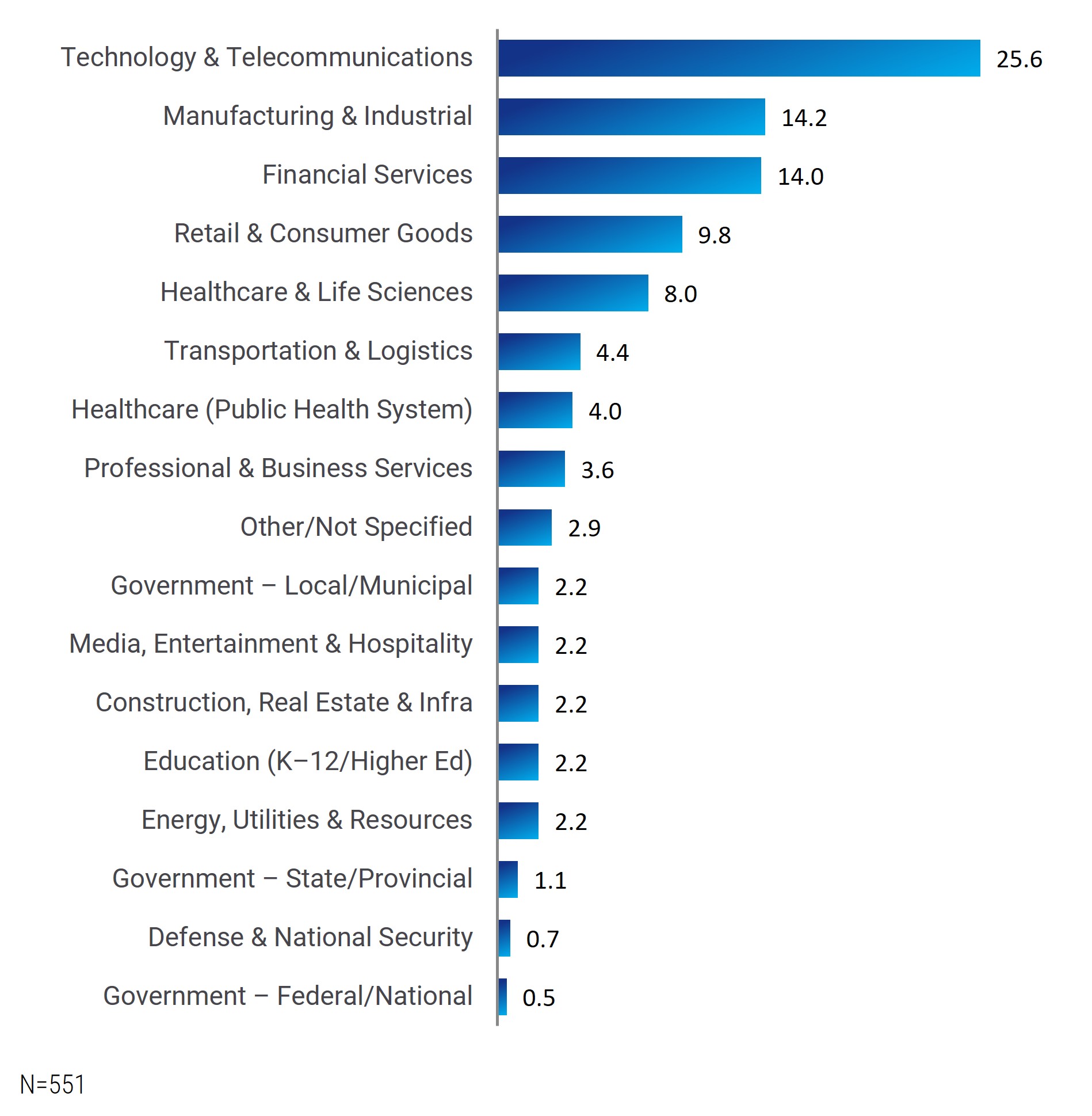
Survey respondents are senior-level enterprise leaders
Industry Distribution
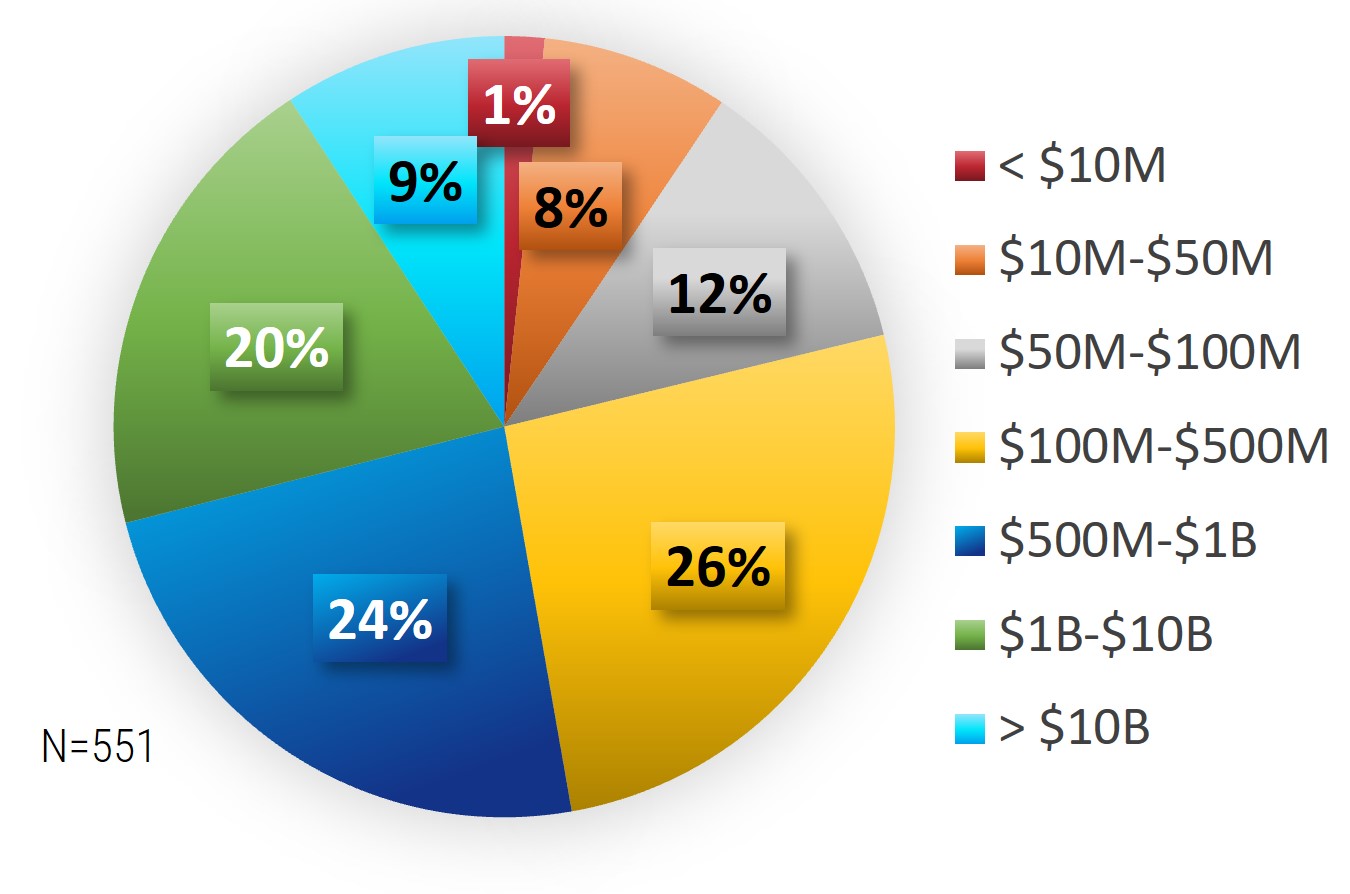
Annual Revenue/Budget
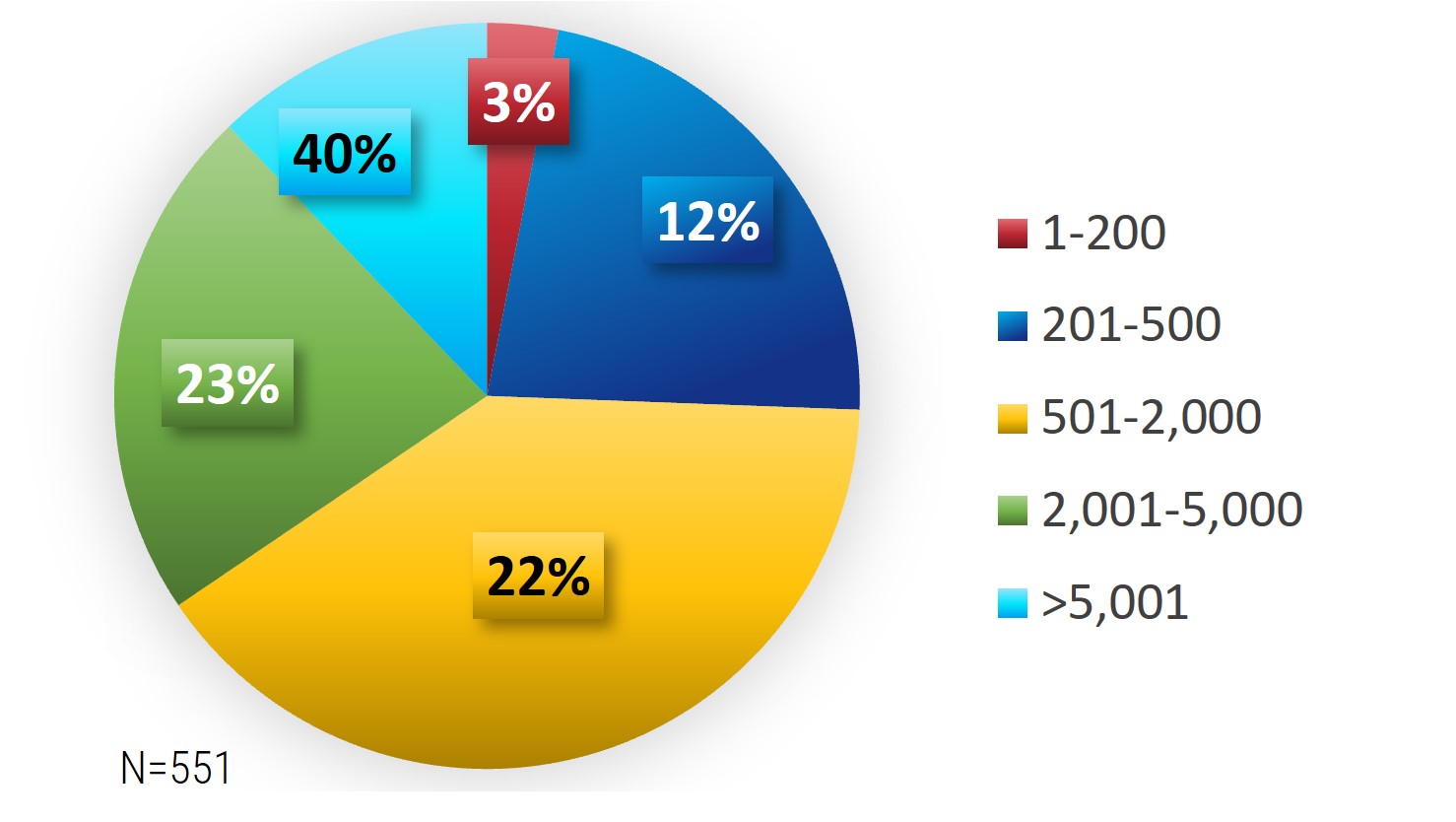
Headcount Distribution
551 Completed Responses
Observations
- 64% Commercial/private sector
- 53% Above $500M revenue
- 40% 501-2,000 employees
Top 10 insights
AI Maturity and Strategy
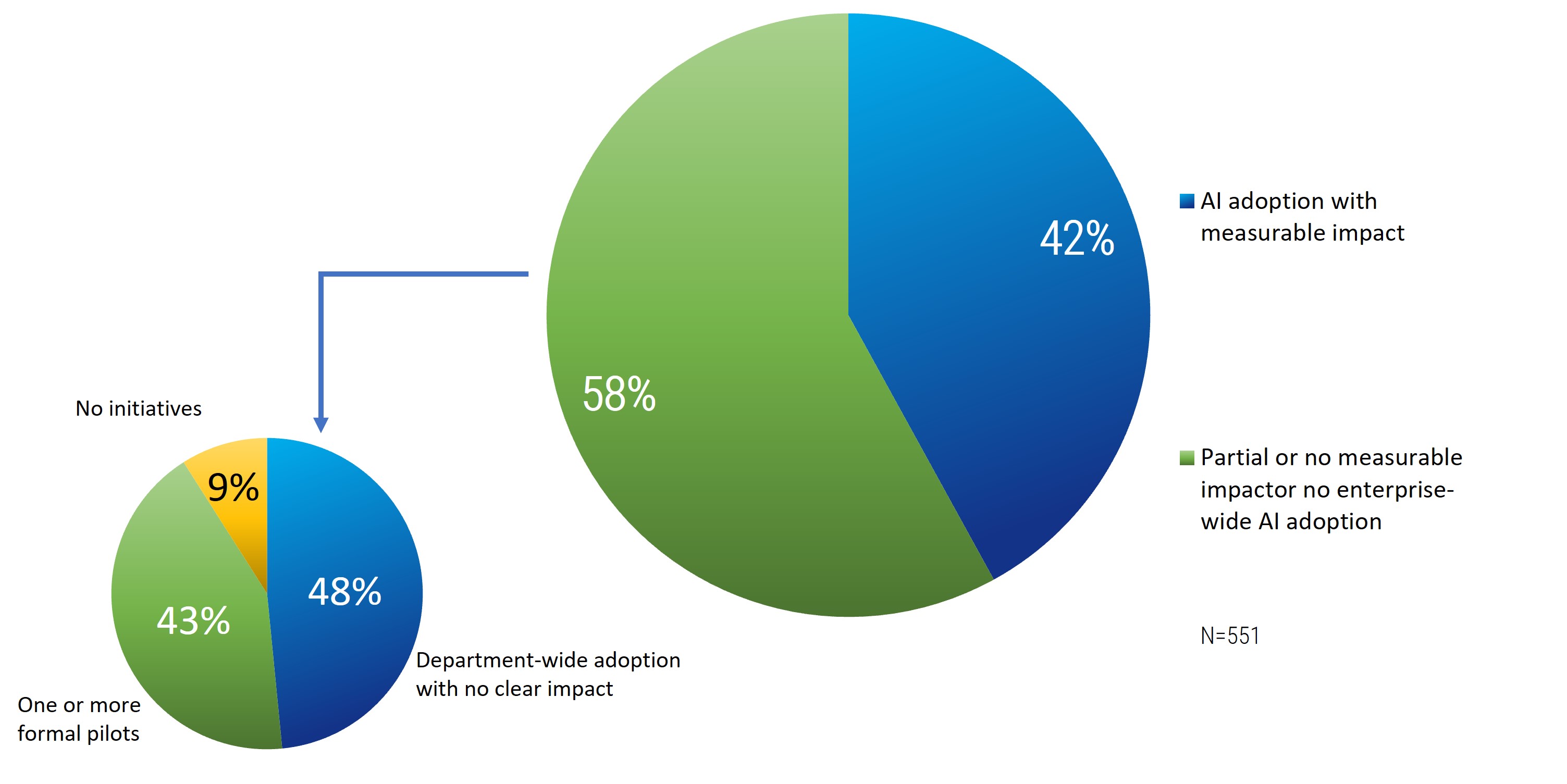
- More than four in 10 organizations have cross-departmental AI adoption with measurable impact
- CIOs/CTOs mostly still own accountability for AI, but risk losing ownership if they don’t drive measurable impact
- Enterprises with an AI strategy triple their chances of getting measurable value from AI
AI Vendor Sourcing and Infrastructure
- Better data readiness leads to better results with AI
- Most organizations chose buy over build for AI sourcing
- Three-quarters of IT executives believe that AI will disrupt SaaS
AI Investment and Workforce Outlook
- When AI is deployed without proven value, organizations plan headcount reductions
- AI adoption spans all business functions but remains concentrated in IT
- Almost all IT executives are expecting AI budget increases in the next 12 months
- Cost cutting goals rarely lead to effective AI outcomes
AI IN THE ENTERPRISE – JUNE 2026 – INSIGHT #1
More than four in ten organizations have department-wide AI adoption with measurable impact
How would you best describe your organization's current AI maturity level?
Info-Tech Insight
Despite the headlines about AI not resulting in a return on investment, four in ten organizations say they are seeing department-wide adoption with measurable impact. Most other organizations have adopted AI at the department-wide level with no clear impact yet (28.3%), or have at least launched one pilot (about one in four). Fewer than one in ten organizations say they have no AI initiatives in pilot.
What This Means for Leaders
AI is now mature enough that most enterprises have moved past the pilot stage to department-wide adoption. Many can measure the impact of AI, showing that organizations should look for opportunities to adopt AI in high-priority areas.
AI IN THE ENTERPRISE – JUNE 2026 – INSIGHT #2
CIO/CTOs mostly still own accountability for AI, but risk losing ownership if they don’t drive measurable impact
Who is the primary owner of AI initiatives in your organization?
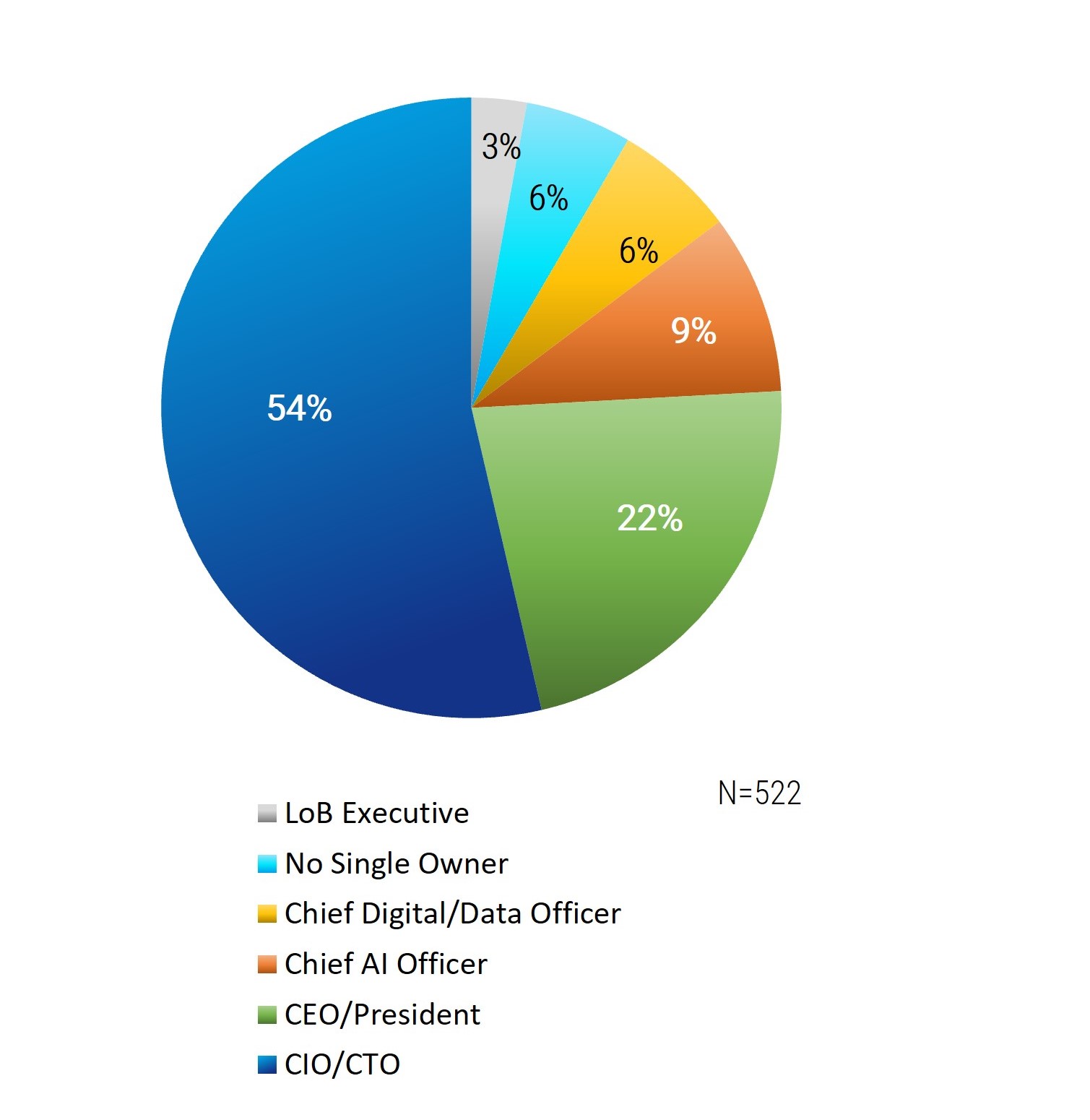
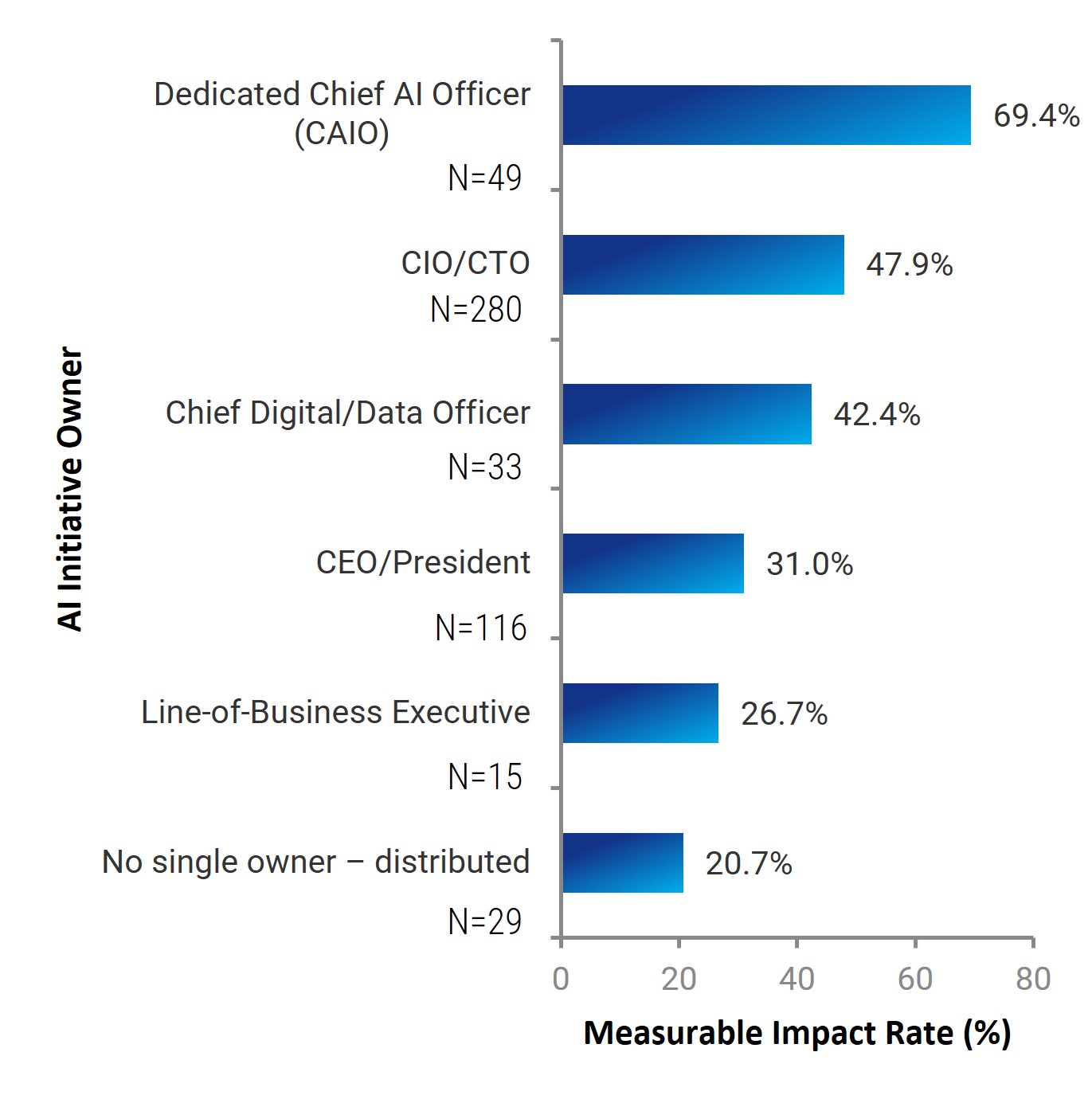
AI initiative owner’s impact on delivering AI with measurable results
Info-Tech Insight
Most organizations assign a CIO or CTO to lead AI initiatives, and those leaders are driving a measurable impact almost half the time. CIOs/CTOs are outperforming chief digital officers, CEOs or Presidents, and other line of business leaders that own accountability for AI. But one position is doing even better – chief AI officers.
What This Means for Leaders
IT leaders are being trusted to own AI initiatives by most organizations, but if organizations aren’t seeing measurable impact, they might consider assigning out accountability to a new executive position. CIOs and CTOs should prioritize a demonstration of measurable impact to their stakeholders to put themselves in an innovation leadership position with AI.
AI IN THE ENTERPRISE – JUNE 2026 – INSIGHT #3
Enterprises with an AI strategy triple their chances of getting measurable value from AI
Does your organization have a formal, board-approved AI strategy?
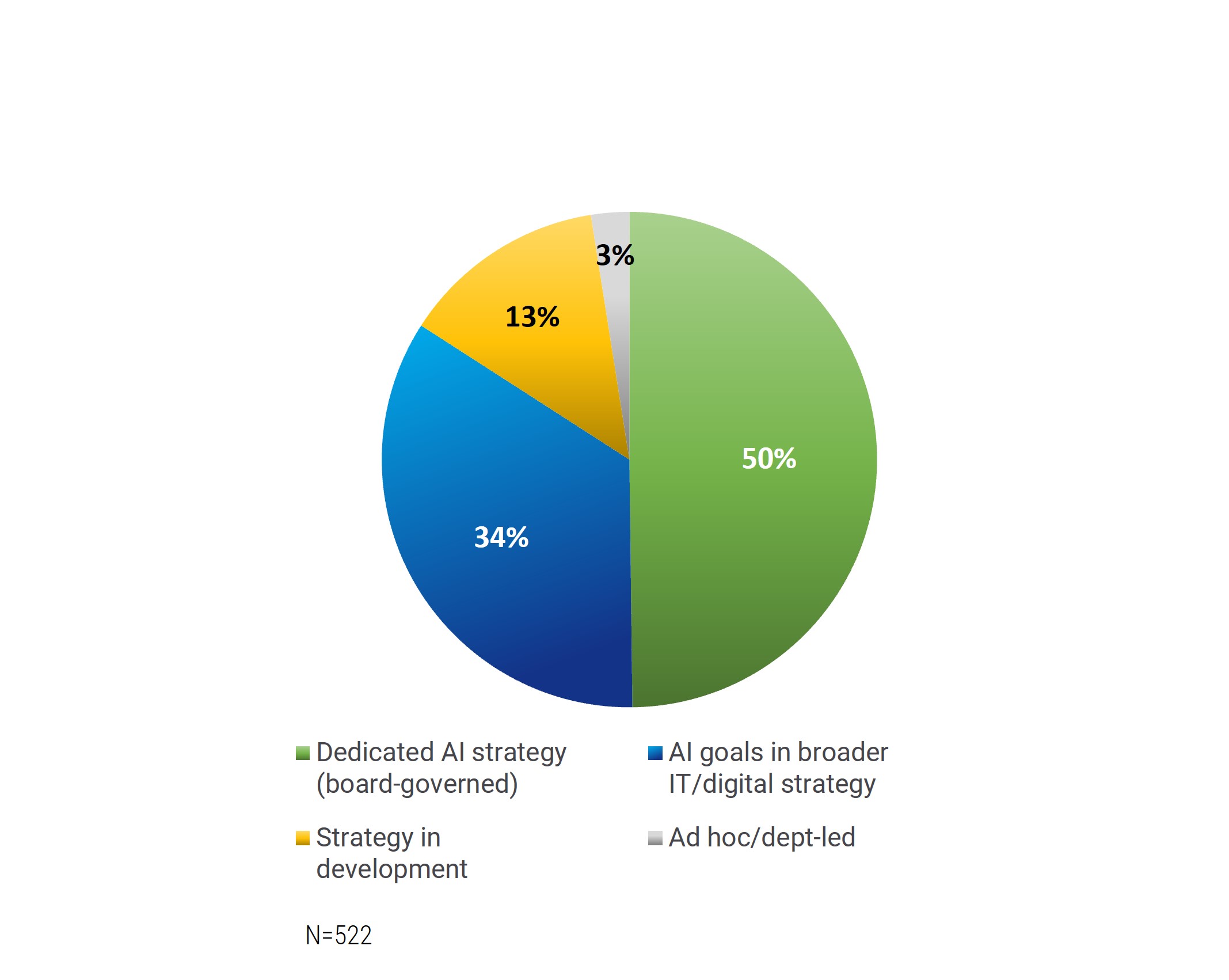
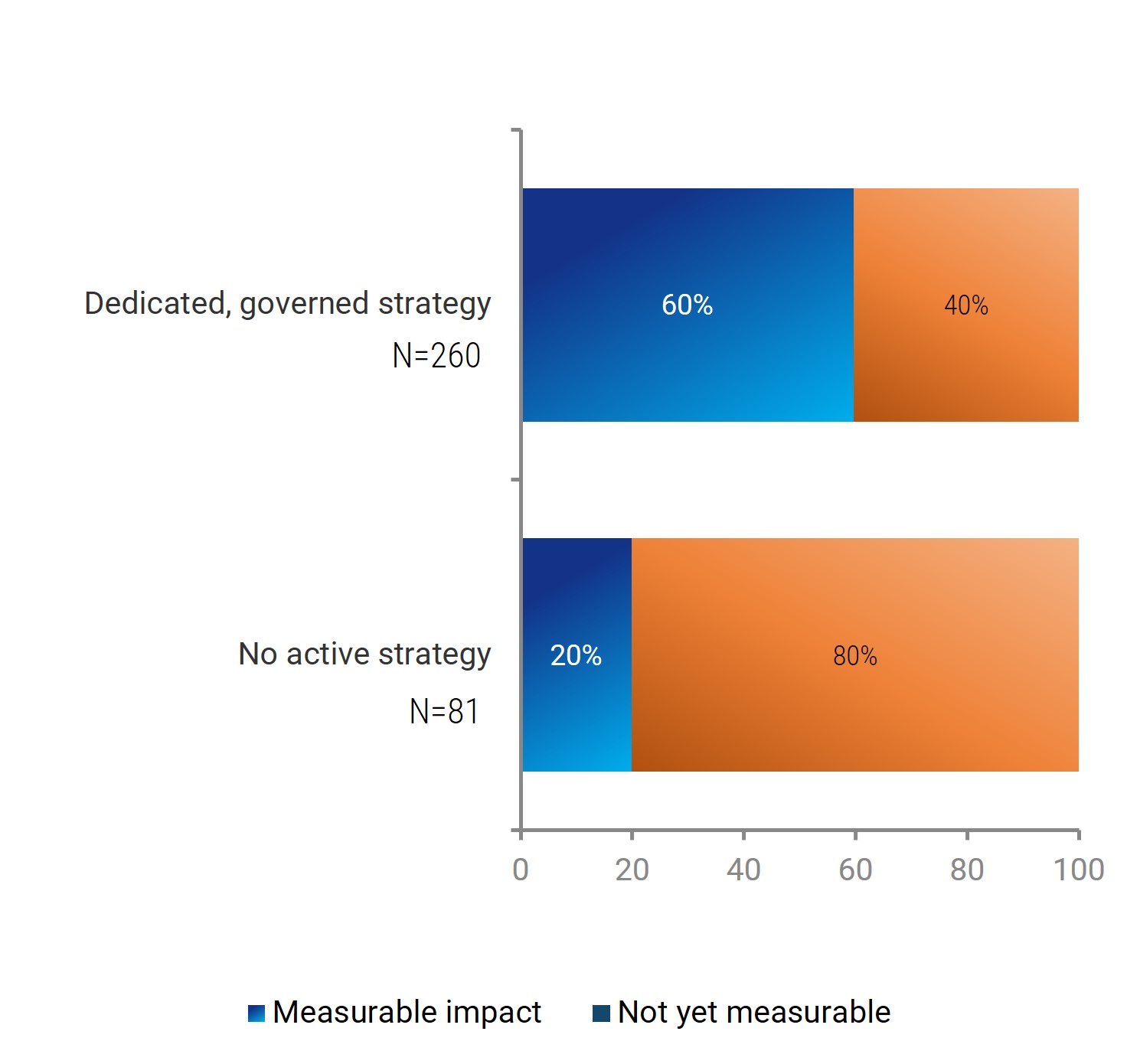
A formal AI strategy improves getting measurable results
Info-Tech Insight
Enterprises with a dedicated, governed AI strategy are three times as likely to have AI deployments with measurable impact (60%) compared to those with no active strategy (20%).
What This Means for Leaders
Organizations still treating AI strategy as a planning exercise are leaving measurable outcomes on the table. Formalize with an organization-wide strategy to link AI initiatives to business goals and set clear metrics that will demonstrate progress.
Alpine Energy jump-starts AI strategy with a partner and a proof of concept
When Alpine Energy's CIO lacked the internal expertise and organizational alignment to formalize an AI strategy, she used a targeted experiment and an executive briefing to create both.
Jessica McDonald, CIO
Alpine Energy
Industry: Utilities
Region: New Zealand
Size: 201-500 employees
Situation
Alpine Energy is a New Zealand electricity utility responsible for managing a large network of physical assets: power poles, distribution infrastructure, and associated equipment spread across its service territory. Decisions about when to inspect, repair, or replace those assets had long relied on a combination of attribute data, observed defect records, and the experience of field crews. The process was spreadsheet-driven and largely manual, which meant decisions were slow, inconsistent, and prone to over- or under-spending.
Jessica McDonald, Alpine's CIO, recognized that AI could change this, but she faced a problem that many technology leaders in mid-sized organizations will recognize: no formal AI strategy, no consolidated view of what tools staff were already using, and a leadership team that hadn't yet been brought along on what AI could mean for the business. She didn't have the in-house expertise to evaluate vendors rigorously, and she was skeptical of the larger platform providers whose licensing models she found opaque and whose costs she expected to escalate unpredictably.
Action
Jessica's path forward started not with a procurement process but with a conversation. At a Spark Accelerate conference in New Zealand, she met Mike Bayly, founder of Allexive, an Auckland-based AI startup. Rather than move straight to a contract, she had multiple conversations with Mike before committing any budget, deliberately testing his credibility and assessing whether he understood Alpine's context.
The first engagement was structured to build organizational readiness rather than deliver a technical solution. Jessica worked with Mike to develop and deliver an AI executive briefing to Alpine's leadership team. The briefing covered the current AI landscape, what it meant for leadership decision-making, what it could realistically mean for Alpine's business, and a high-level adoption roadmap. Mike had delivered similar briefings to other organizations, and his role was as much to challenge Jessica's own thinking as to present to the executive team.
With leadership alignment established, Jessica and Mike moved to a focused proof of concept on pole defect risk. The intent was explicitly exploratory: give Allexive Alpine's existing asset data and see what was achievable, without a predetermined outcome or an ROI requirement attached. In roughly five days of effort, Allexive produced a risk-ranked dashboard that assigned inspection priorities to poles and provided reasoning behind each ranking. It replaced a manual, spreadsheet-based process with a structured, explainable output.
Results
The executive briefing achieved what Jessica needed most at that stage: leadership alignment and organizational appetite for further AI investment. The leadership team came away with a shared understanding of the landscape and a concrete sense of what AI could do for Alpine, which gave Jessica the credibility and budget support to move forward.
The pole defect POC demonstrated that AI could produce a defensible, structured output from Alpine's existing data in a fraction of the time the manual process required. While Alpine has not yet deployed the approach at full production scale, the POC gave the organization something tangible to evaluate and a clear direction for the next phase of asset management work.
Perhaps as importantly, the engagement model itself proved out. By starting with a low-cost, low-risk partnership with a local advisor who understood the New Zealand context, Jessica built the internal confidence and external relationship she needed to pursue a more formal AI strategy. Allexive is now helping Alpine develop a skills-based AI licensing pathway that matches tools to staff role profiles, and a more ambitious agentic AI solution for safety-critical risk reviews is under active exploration. Alpine entered the engagement without a strategy. It is exiting it with the foundations of one.
AI IN THE ENTERPRISE – JUNE 2026 – INSIGHT #4
Better data readiness leads to better results with AI
Department-wide adoption of AI with measurable impact
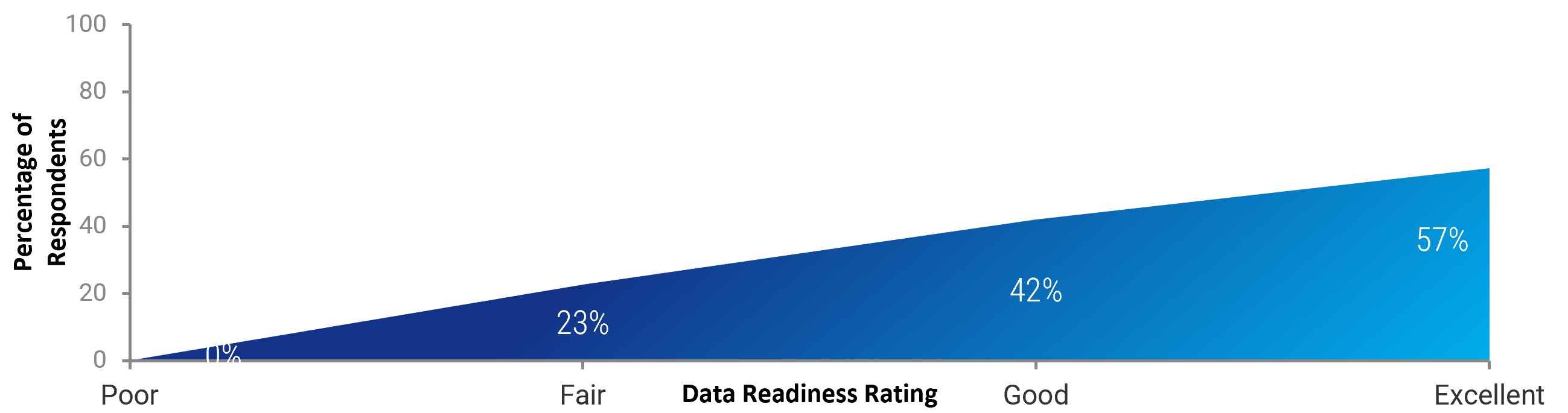
Organizations with no measurable impact from AI
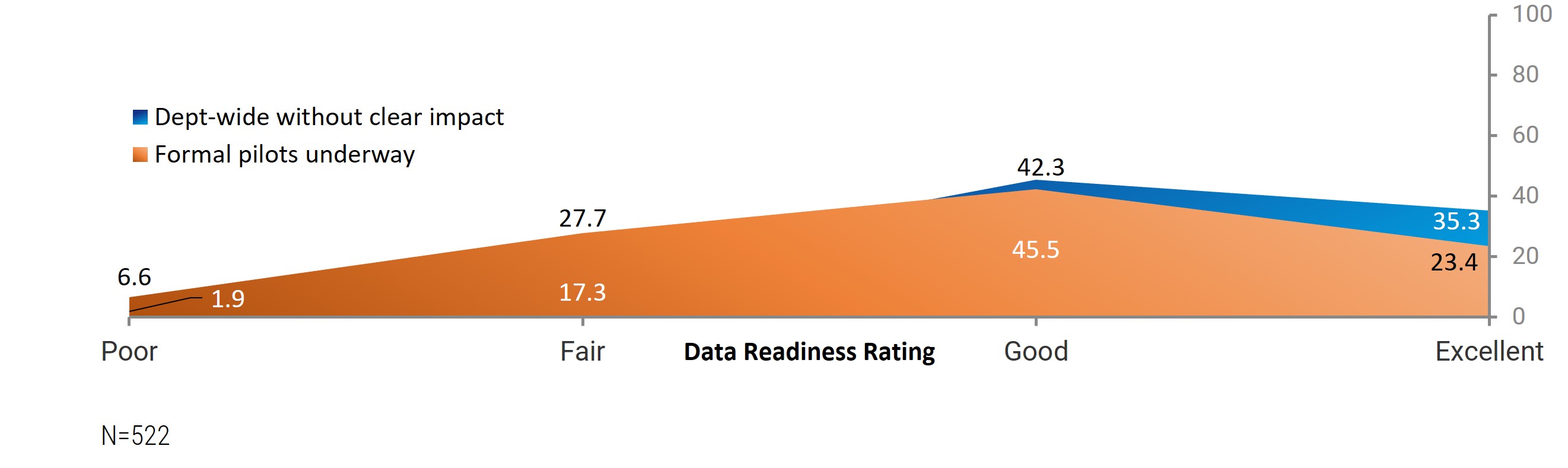
Info-Tech Insight
Organizations that are seeing department-wide adoption with measurable impact are much more likely to rate their data quality as excellent.
Organizations without measurable impact from AI are much less likely to rate their data readiness as excellent.
What This Means for Leaders
Data readiness is mandatory for AI impact. Keep in mind that data on its own has no value. The insights it nurtures, decisions it drives, and actions you take as a result will create value.
AI IN THE ENTERPRISE – JUNE 2026 – INSIGHT #5
Most organizations chose buy over build for AI sourcing
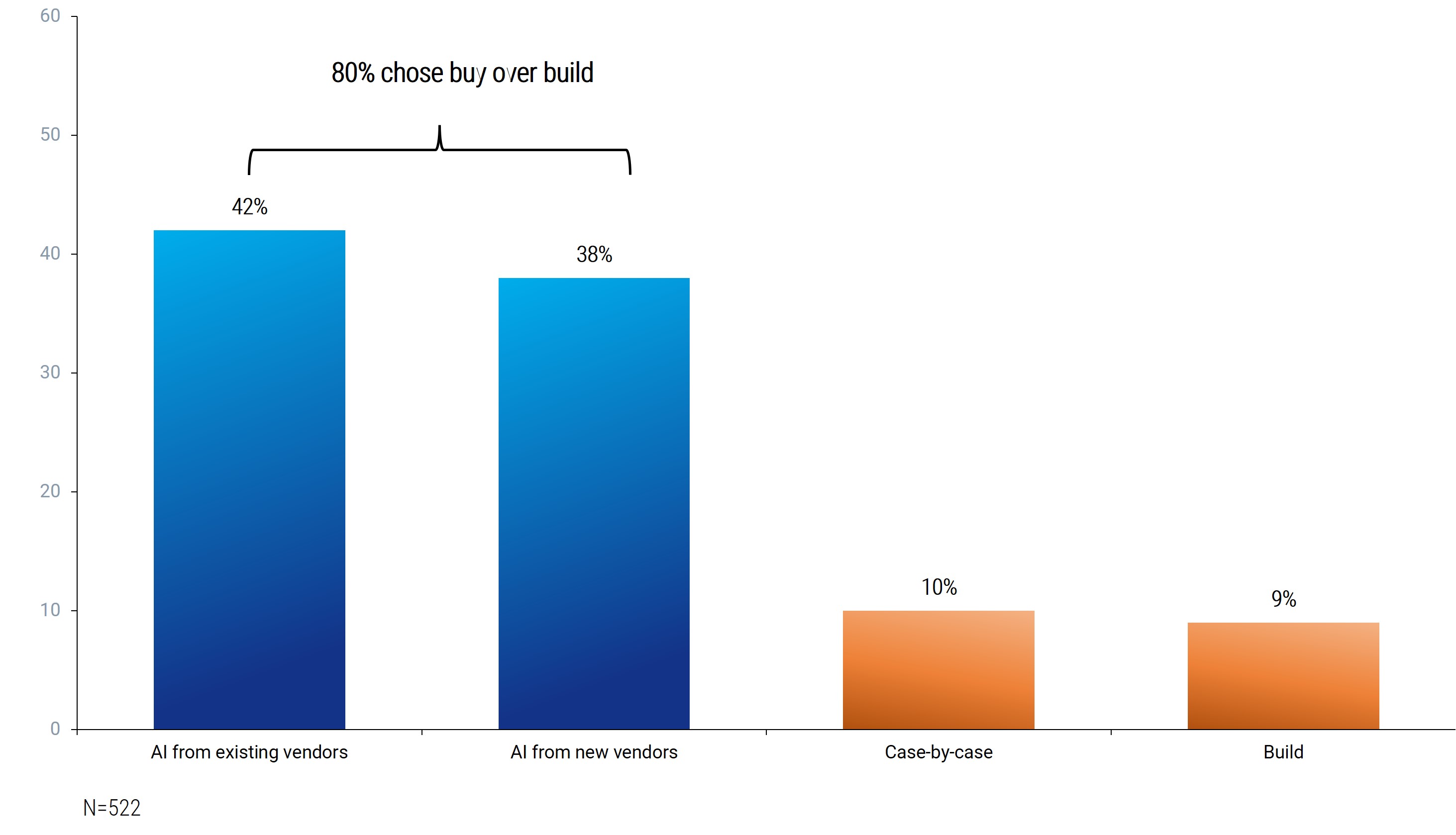
Default sourcing preference for adopting AI capabilities
Info-Tech Insight
Eighty percent of organizations prefer to buy AI solutions over building them in-house, with those buying split nearly evenly between activating their existing vendor stack (42%) and selecting new, best-of-breed vendors (38%).
What This Means for Leaders
Buying AI solutions can be a shortcut to value, and working with your existing vendors can be the path of least resistance. Still, keep an eye on the market for new AI-native vendors that may offer the best solution.
AI IN THE ENTERPRISE – JUNE 2026 – INSIGHT #6
Three-quarters of IT executives believe that AI will disrupt SaaS
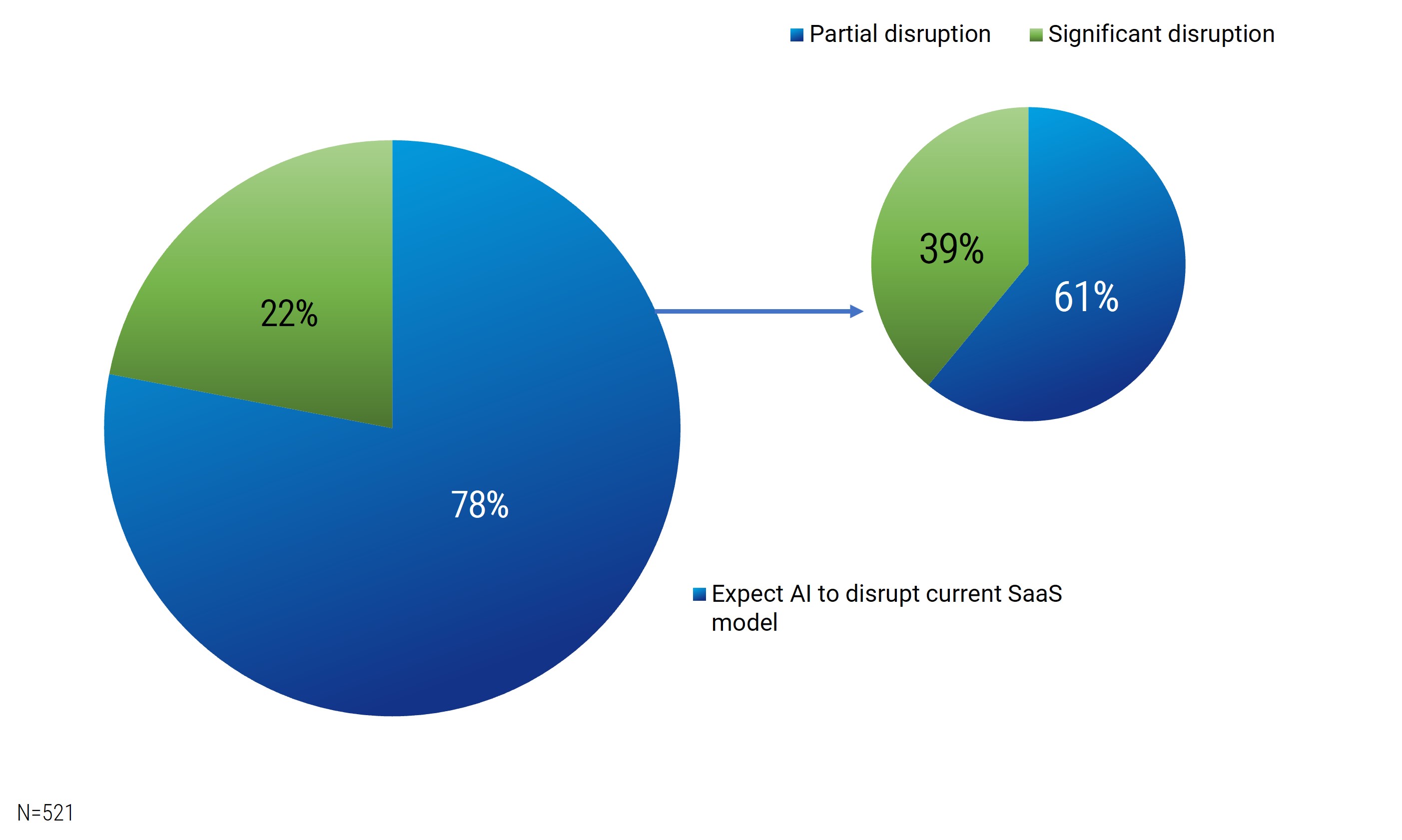
Do you expect AI to displace or reduce spending on traditional enterprise software over the next two years?
Info-Tech Insight
Seventy-eight percent of IT executives expect AI to disrupt their current SaaS model within two years. Twenty-eight percent anticipate replacing one or more major platforms outright, while 47.2% say AI will reduce reliance on some tools.
Those not expecting disruption say that either AI will complement, not replace, current software (19.4%) or that AI is adding to their software spend (2.3%) without replacing it.
What This Means for Leaders
AI provides an alternative to existing software vendor relationships not just because everyone is considering “vibe coding” their CRM instead of buying from a vendor. Rather, AI provides a new user experience that can source data from existing platforms and achieve new automations that were previously out of reach. Expect the software as a service (SaaS) model to continue to grow in the coming years, while also seeing new AI-first approaches win out in certain categories.
AI IN THE ENTERPRISE – JUNE 2026 – INSIGHT #7
When AI is deployed without proven value, organizations plan headcount reductions
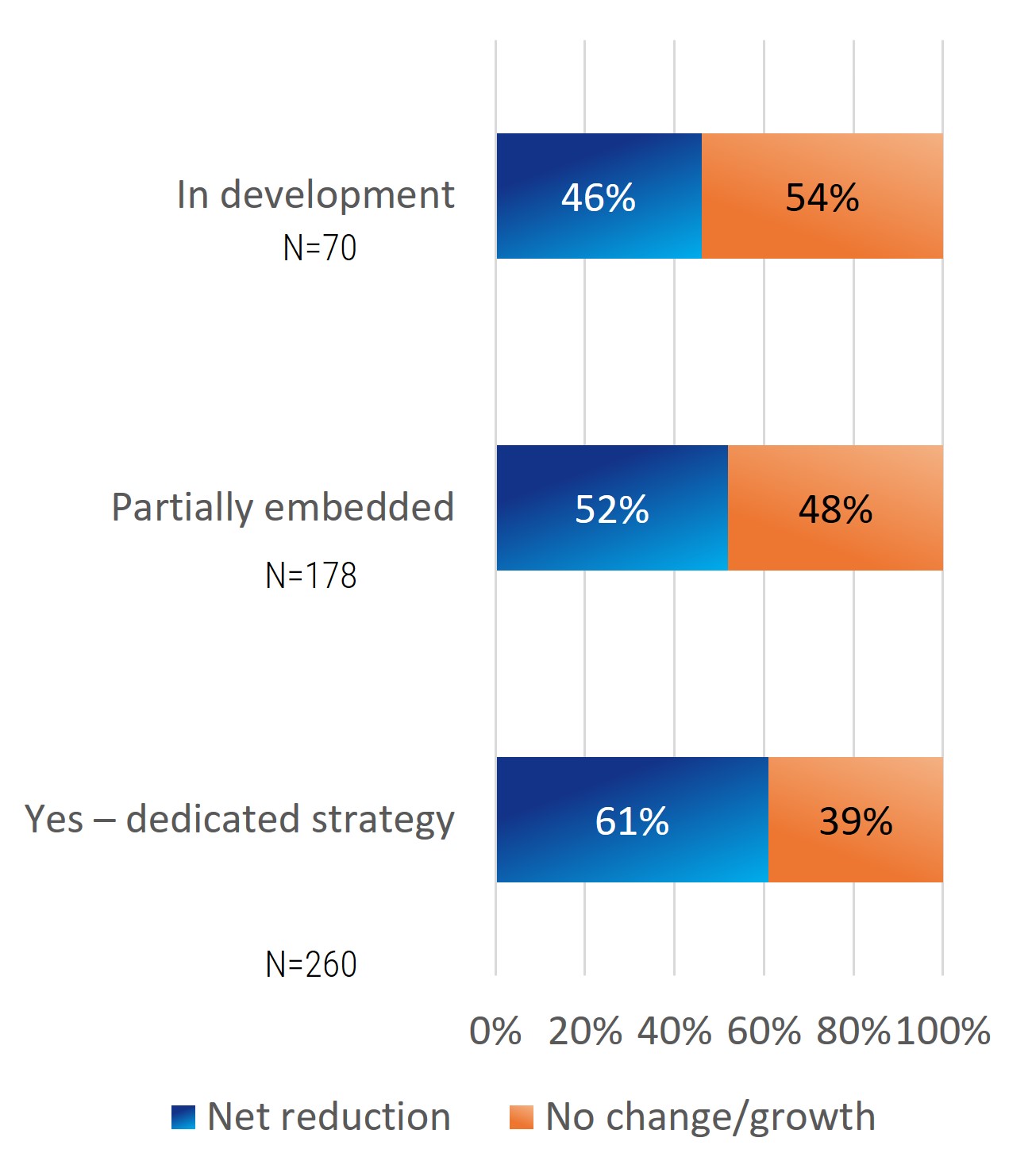
Expected workforce change by AI strategy formality
Expected workforce change by AI maturity
Info-Tech Insight
Organizations with a formal, board-approved AI strategy are the most likely to expect net headcount reductions as strategy formality and workforce cuts move together (left-hand chart). However, maturity reframes it (right-hand chart): the cuts don't climb step-by-step with adoption. The orgs most likely to cut are those with department-wide adoption but no clear impact, ahead of both the teams still piloting and the ones already seeing measurable impact.
What This Means for Leaders
Don't let a maturing AI program default into a headcount-reduction plan. In this data, cuts cluster where AI is deployed widely but hasn't proven its value. This is a measurement gap, not an efficiency win. The organizations that show impact are the least likely to be cutting roles. Build the capability to demonstrate AI outcomes before building the workforce-savings case.
AI IN THE ENTERPRISE – JUNE 2026 – INSIGHT #8
AI adoption spans all business functions but remains concentrated in IT
In which functions has your organization adopted AI capabilities?
Most popular IT functions for AI adoption
Sub-function | % |
| Strategy & Innovation | 55.5% |
| Security & Privacy | 47.9% |
| Data | 47.4% |
| Project & Portfolio Management | 41.6% |
| Infrastructure & Operations | 40.2% |
| IT Financial & Vendor Management | 36.6% |
| Governance, Risk & Compliance | 34.2% |
N=445
Info-Tech Insight
AI adoption is high in IT (85%) but is also distributed across other business areas, with more than one-third (38%) already deploying to customer-facing functions.
Within IT, strategy and innovation is the leading area for AI adoption, with security & privacy work the next-most common.
What This Means for Leaders
Take what you’ve learned from deploying AI within IT and enable the rest of the business. Strategy and innovation work are cross-functional capabilities and other leaders will be interested in adopting AI to help in that area if they see it’s working well in IT. It’s an opportunity to shift IT away from order-taking and be cast as an innovator that helps the business achieve its objectives. Showcase the AI wins in IT and talk about the lessons learned that could apply to other lines of business eager to deploy AI.
Unanimous adoption: How LA Dept. of Water and Power inspired users with a Community of Practice
LADWP's experience shows how getting a GenAI chatbot deeply embedded in daily work creates momentum to expand into more capable AI applications
Wei Chou, AI Dev Team Lead,
LADWP
Industry: Public Utility
Region: Western US
Size: 10,000+ employees
Situation
The Los Angeles Department of Water and Power is one of the largest publicly owned utilities in the United States, serving the City of Los Angeles with a workforce of more than 10,000 employees. Like many large public sector organizations, LADWP runs complex internal operations across functions including legal, supply chain, HR, finance, and IT, each with its own document-heavy workflows and knowledge management challenges. Staff routinely spent significant time on routine knowledge work: drafting communications, summarizing information, building presentations, and conducting research.
Deploying AI in this environment is not straightforward. As a municipal utility handling sensitive citizen and operational data, LADWP is subject to government-grade data compliance requirements. Any AI solution had to operate within those constraints before it could be broadly adopted. And like most organizations at the start of an AI rollout, LADWP had no pre-AI baselines in place to measure productivity, which meant that demonstrating value to leadership would require a different kind of evidence than a formal ROI calculation.
Action
Wei Chou, AI development team lead within LADWP's Technical Innovation group, deployed Microsoft 365 Copilot to 1,000 users across IT, leadership, and business functions, running it within Microsoft’s Government Community Cloud High environment to maintain compliance. Rather than mandating specific use cases from the top down, Wei built the conditions for adoption to spread organically with a bi-weekly Community of Practice. The CoP is open to all Copilot license holders and run by IT. Each session carries a specific agenda. Early sessions focused on showing individual business units how Copilot could apply to their workflows, tailoring examples for HR, finance, and other teams rather than presenting generic productivity advice.
As adoption matured, sessions shifted toward more advanced topics, including how to build agents directly from licensed data using Copilot Studio. Prompts surfaced through CoP discussions are documented in a rated SharePoint repository, organized by objective and use case, where users can see what their peers have found most useful and build on it.
Leadership engagement proved to be a critical accelerator. Senior managers became daily Copilot users and consistently appeared among the top 20 most active users across the organization, as tracked through Microsoft's usage monitoring dashboard. Their visible participation created organizational permission for others to invest time in learning the tool.
Results
Approximately 99% of LADWP's 1,000 licensed Copilot users engage with the tool daily, an exceptionally high utilization rate for an enterprise software rollout of this scale. Staff report significant time savings across email management, document drafting, presentation building, and research tasks. Seeing the enthusiastic adoption of AI has convinced leadership to commit to funding it.
The adoption of chatbots also lead Cho’s team to explore agentic AI. Because Copilot became genuinely embedded in daily work habits across the organization, LADWP had the organizational confidence and momentum to expand into more capable use cases. Copilot Studio agents are now live in legal and supply chain, delivering document retrieval and generation capabilities that would have been a harder sell without the foundation of broad, visible daily use already in place. The CoP that drove initial adoption continues to operate as the mechanism through which new use cases are identified, tested, and shared across the organization.
Widespread, visible adoption creates its own kind of evidence, and a structured community for sharing what works is one of the most practical tools available for turning a chatbot rollout into an expanding portfolio of AI use cases.
AI IN THE ENTERPRISE – JUNE 2026 – INSIGHT #9
Almost all IT executives are expecting AI budget increases in the next 12 months
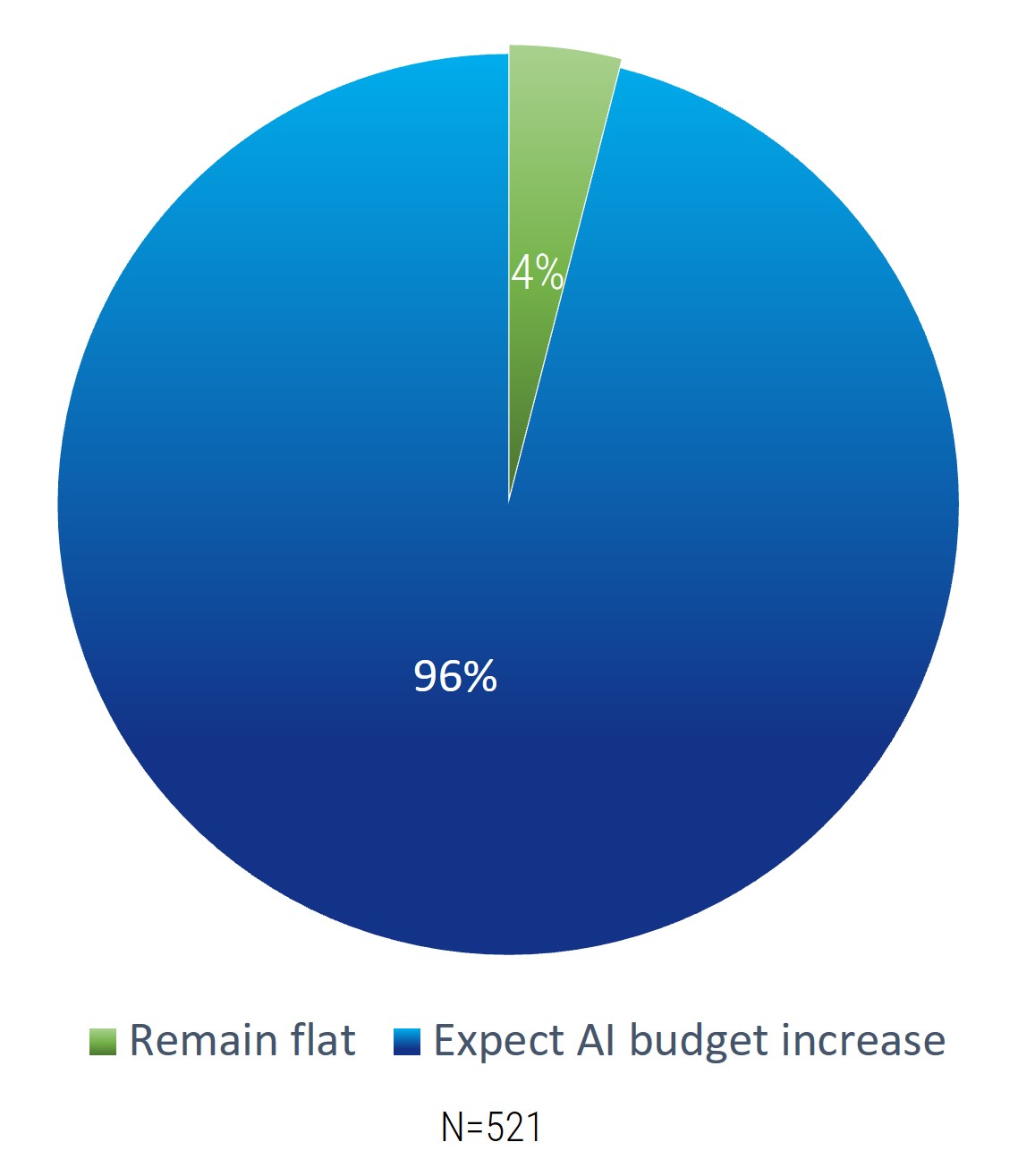
Expectations for AI spend change in 12 months
Impact of formal strategy on AI budget confidence
Info-Tech Insight
Ninety-six percent expect AI budgets to increase over the next 12 months. Forty-six percent expect increases of more than 25%. No respondents anticipate reductions.
Budget confidence also correlates with strategy: 73% of formal-strategy orgs report high confidence vs. 34% of ad hoc orgs.
What This Means for Leaders
AI is seen as an area to invest for almost all IT executives, and having a board-approved AI strategy is the best way to build confidence in supporting that budget. Work to formalize the AI strategy even as you navigate your AI pilots and deployments.
AI IN THE ENTERPRISE – JUNE 2026 – INSIGHT #10
Cost cutting goals rarely lead to effective AI outcomes
Types of goal set for organization’s most effective AI use cases
Info-Tech Insight
Among organizations' most impactful AI use cases, only 11% named cost reduction as the primary goal. Productivity & throughput leads at 38%, followed by revenue growth (14%) and risk reduction (12%).
Organizations mostly aren’t setting out to reduce overhead with their AI initiatives, but instead looking to augment staff.
What This Means for Leaders
Don't try to cost-cut your way to AI impact. Build business cases around productivity, risk, quality, and revenue outcomes. Cost savings may follow — but they should not be the anchor.
Methodology
The AI Adoption and Impact Study – AI in the Enterprise 2026 survey is designed to capture a structured view of organizational AI adoption and impact across multiple dimensions.
Conducted between April and June 2026, the survey received 551 completed responses from senior leaders actively involved in enterprise strategy.
Additional findings from this survey, along with in-depth interviews with enterprise leaders, will be featured in Info-Tech’s AI Adoption and Impact Study Dashboard and Insights Report.
For this insights report, the bottom 5% of survey respondents measured by least time taken to complete the survey were removed from the results.
- Sample size: 551 completed responses
- Collection window: April to June 2026
- Survey method: Online survey
- Geography: 97% North America; other respondents in APAC, EMEA, and other
About Info-Tech
Info-Tech Research Group is the world’s fastest-growing information technology research and advisory company, proudly serving over 30,000 IT professionals.
We produce unbiased and highly relevant research to help CIOs and IT leaders make strategic, timely, and well-informed decisions. We partner closely with IT teams to provide everything they need, from actionable tools to analyst guidance, ensuring they deliver measurable results for their organizations.
What Is a Blueprint?
A blueprint is designed to be a roadmap, containing a methodology and the tools and templates you need to solve your IT problems.
Each blueprint can be accompanied by a Guided Implementation that provides you access to our world-class analysts to help you get through the project.
Talk to an Analyst
Our analyst calls are focused on helping our members use the research we produce, and our experts will guide you to successful project completion.
Book an Analyst Call on This Topic
You can start as early as tomorrow morning. Our analysts will explain the process during your first call.
Get Advice From a Subject Matter Expert
Each call will focus on explaining the material and helping you to plan your project, interpret and analyze the results of each project step, and set the direction for your next project step.
Unlock Sample ResearchContributors
- More than 500 enterprise AI leaders.
 Tech Trends 2025
 Define Your Digital Business Strategy
 Kick-Start IT-Led Business Innovation
 Establish a Foresight Capability
 Apply Design Thinking to Build Empathy With the Business
 Sustain and Grow the Maturity of Innovation in Your Enterprise
 Position IT to Support and Be a Leader in Open Data Initiatives
 Double Your Organization’s Effectiveness With a Digital Twin
 Develop a Use Case for Smart Contracts
 Adopt Design Thinking in Your Organization
 Accelerate Digital Transformation With a Digital Factory
 Tech Trends 2024
 2021 Tech Trends
 Implement and Mature Your User Experience Design Practice
 CIO Priorities 2022
 2022 Tech Trends
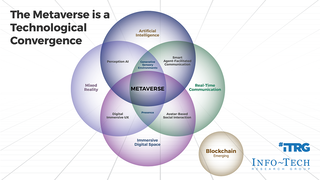 Into the Metaverse
 Demystify Blockchain: How Can It Bring Value to Your Organization?
 2020 Tech Trend Report
 2020 CIO Priorities Report
 CIO Trend Report 2019
 CIO Trend Report 2018
 CIO Trend Report 2017
 AI and the Future of Enterprise Productivity
 Evolve Your Business Through Innovation
 Build a Platform-Based Organization
 Tech Trend Update: If Contact Tracing Then Distributed Trust
 Tech Trend Update: If Biosecurity Then Autonomous Edge
 Tech Trend Update: If Digital Ethics Then Data Equity
 Tech Trends 2023
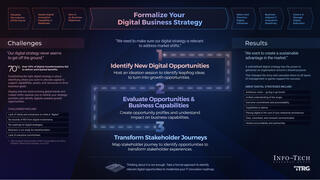 Formalize Your Digital Business Strategy
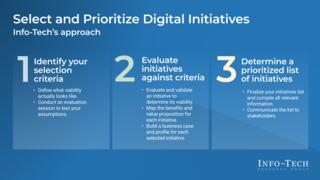 Select and Prioritize Digital Initiatives
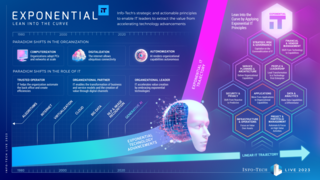 Adopt an Exponential IT Mindset
 Build Your Enterprise Innovation Program
 Build Your Generative AI Roadmap
 Annual CIO Survey Report 2024
 Drive Innovation With an Exponential IT Mindset
 Exponential IT for Financial and Vendor Management
 Exponential IT for Strategy, Risk, and Governance
 Exponential IT for Service Planning and Architecture
 Exponential IT for People and Leadership
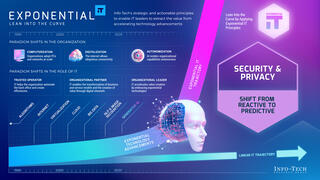 Exponential IT for Security and Privacy
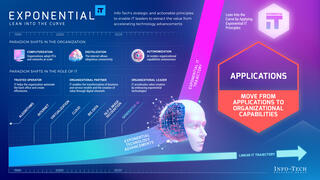 Exponential IT for Applications
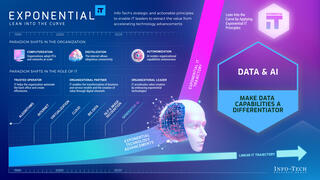 Exponential IT for Data and Analytics
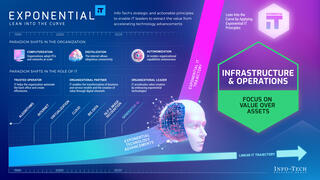 Exponential IT for Infrastructure and Operations
 Exponential IT for Project and Portfolio Management
 Assess Your AI Maturity
 Develop Responsible AI Guiding Principles
 Identify and Select Pilot AI Use Cases
 Exponential IT Keynote
 CIO Priorities 2024
 Build a Scalable AI Deployment Plan
 Build Your AI Strategy and Roadmap
 Develop an Exponential IT Roadmap
 Use ChatGPT Wisely to Improve Productivity
 Build a FinOps Strategy to Enable Dynamic Cloud Cost Management
 Establish a Roadmap for Integrated and Dynamic Risk Management
 Info-Tech’s Best of 2024 Mid-Year Report: AI Rewrites the Script for CIOs
 Explore the Art of the Possible for Exponential IT
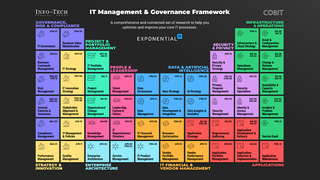 IT Management & Governance: The Next Evolution
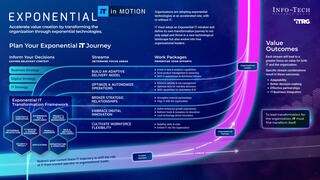 Bending the Exponential IT Curve Keynote
 Exponential IT in Motion: Transform Your Organization by Transforming IT
 AI Trends 2025
 LIVE 2024 Keynote Presentations
 LIVE 2024 Lightning Round Presentations
 CIO Priorities 2025
 Info-Tech’s Best of 2024 Report: IT Moves Into Position
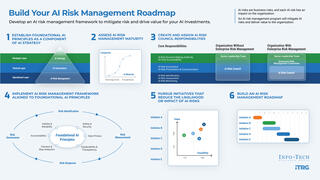 Build Your AI Risk Management Roadmap
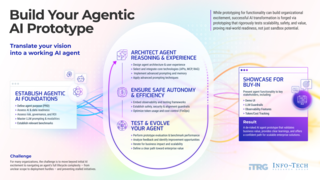 Design Your Agentic AI Prototype
 An Operational Framework for Rolling Out AI
 The AI Vendor Landscape in IT
 Run IT By the Numbers
 Building Info-Tech’s Chatbot
 Assessing the AI Ecosystem
 Bring AI Out of the Shadows
 Transform IT, Transform Everything
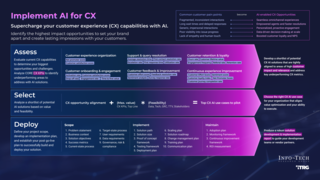 Implement AI for Customer Experience
 Info-Tech’s Best of 2025 Mid-Year Report: IT Moves From Disruption to Decisive Action
 Implement an AI-Orchestrated Service Desk
 Info-Tech's All-Time Best, 2025 Edition: Change Is the Headline, Fundamentals Are the Path
 Tech Trends 2026
 The AI Playbook
 AI Trends 2026
 Info-Tech’s Best of 2025: The Year AI Stopped Being a Project and Became the Strategy
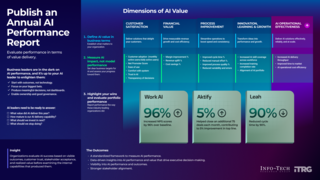 Publish an Annual AI Performance Report
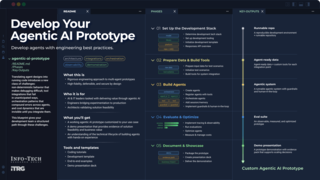 Develop Your Agentic AI Prototype
 Changing Landscape: Rethinking Vendor Decisions in the Agentic AI Era
 AI in Seven Charts
 Emerging AI Trends and Predictions From Our Global Technical Counselor Team
 Turn Customer Friction Into Agentic Opportunity
 People Change in the Face of Disruptive Technology
 Lead IT Like a Business: Every Dollar Is a Decision
 Optimize Cloud & AI Spend With Agentic FinOps
 Leadership Summit: The Ultimate Onboarding Experience 2026
 Resilience Is Not Planned – It Is Architected
 Redefine What It Means to Be CIO
 Navigating AI Agents in Service Management
 Influence Unleashed: The IT Leader’s Superpower
 The Challenge of Ethics in the Use of AI
 Revolutionize Risk Management With Agentic AI
 Introducing the Info-Tech Speakers Bureau
 Inside the Agentic Enterprise
 Agents 2.0: From Autonomy to Architecture
 Agentic IT: From Hype to Value
 Tech Trends 2027 Keynote
 Become an Exponential CIO
 Beyond the Agent: The Leadership Ecosystem for an AI-Enabled World
 Five Key Takeaways From Info-Tech LIVE 2026
 Info-Tech’s Best of 2026 Mid-Year Report
 Identify and Evaluate Quantum Computing Use Cases
 AI Adoption & Impact Study: AI in Software Development June 2026 Top 10 Insights
 AI Adoption & Impact Study: AI in the Enterprise June 2026 Top 10 Insights