
Get Your AI Projects Back on Track
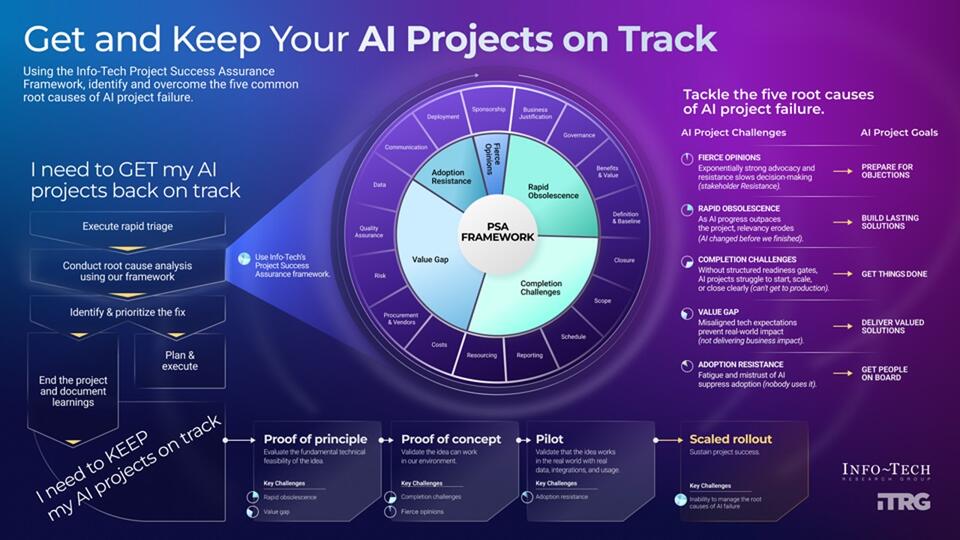
Tackle the five root causes of AI project failure.
AI projects face a more intense version of the challenges IT projects face, contributing to high rates of failure amid growing pressure to demonstrate results. Technology decision-makers need a practical way to identify blockers to success, recover or cancel struggling initiatives, and avoid repeating the same mistakes in the future. This research provides a structured framework for getting and keeping AI projects on track.
Many AI project obstacles are temporary growing pains rather than permanent barriers to success. Understanding which challenges require intervention and which will diminish over time is critical to deciding what comes next.
1. Understand why AI projects fail differently.
AI can intensify traditional project challenges. Using the Project Success Assurance Framework to assess those pressures helps teams identify where obstacles are emerging and focus on the factors most likely to affect project outcomes.
2. Focus on the obstacles that matter.
AI projects can lose momentum for many different reasons, making it difficult to know where to focus. Understanding which obstacle is creating the greatest friction helps teams focus on the issue most likely to affect project outcomes.
3. Determine the root cause before taking action.
Symptoms rarely reveal why an AI project is struggling. Root cause analysis helps teams separate temporary obstacles from more significant issues, identify the best path forward, and make decisions with greater confidence.
Use this guide to determine whether an AI project should continue, change course, or stop.
This research includes a structured recovery framework, diagnostic and planning workbooks, a readiness assessment poster, and a postmortem review template. Together, these resources help teams assess struggling AI projects, determine whether recovery is possible, capture lessons learned, and apply those lessons to future initiatives.
- Assess your current state by identifying the obstacles preventing project success.
- Diagnose the root cause, determine whether the project should continue, and build a roadmap for recovery.
- Apply lessons learned and establish practices that keep future AI projects on track.
Get and Keep Your AI Projects on Track
Tackle the five root causes of AI project failure.
Analyst perspective
AI projects face a more intense version of the challenges all IT projects face.
Recent reports suggest that AI projects often feel like they fail to deliver value.
Those faced with taking on an AI project are facing increasing pressure to implement AI technology to drive efficiency, growth, and competitive advantage despite these reported challenges. This is not the only competing objective that project stakeholders will come across when working through an AI project.
Tensions within your AI projects cause a widening gap between ambition for AI projects and their outcomes. At the same time, AI projects face numerous obstacles that can easily lead to project failure if managed ineffectively. Having multiple obstacles to navigate blurs whether a project is failing or simply facing navigable challenges and makes it challenging to avoid sunk costs for failing projects. Not all obstacles are here to stay. Pausing projects to let the technology and best practices catch up can be more effective than digging in to resolve every problem.
This guide is designed to help you get your AI project back on track by focusing on what matters. Identify the real blockers, fix what matters, and build the habits that stop it from happening again.

Jennifer Aswald
Research Analyst, Artificial Intelligence
Info-Tech Research Group
Executive summary
Your Challenge
Organizations are feeling increasing pressure to implement AI technology to drive efficiency, growth, and competitive advantage. At the same time, executive leaders face heightened scrutiny as high failure rates for AI initiatives are being reported.
These tensions within AI projects cause a widening gap between ambition for AI projects and their outcomes.
Despite scrutiny, senior stakeholders need to demonstrate skillful time management, effectiveness, and valuable results.
Common Obstacles
AI projects face a more intense version of the challenges all IT projects face:
- Rapid Obsolescence: As AI progress outpaces the project, relevancy erodes.
- Value Gap: Misaligned technology expectations prevent real-world impact.
- Completion Challenges: Without structured readiness gates, AI projects struggle to start or close cleanly.
- Fierce Opinions: Exceptionally strong advocacy and resistance slows decision-making.
- Adoption Resistance: Fatigue and mistrust of AI suppress adoption.
Info-Tech's Approach
Our approach simplifies the diagnosis by consolidating the many ways a project can fail into five root cause categories, so leaders can quickly identify what is broken and where to act.
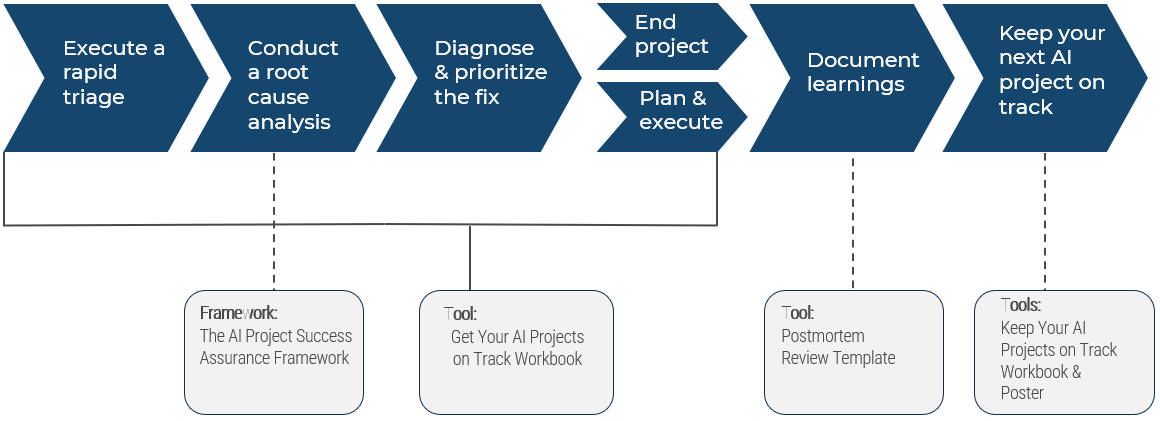
From there, a structured process helps teams execute a root cause analysis and prioritize the right fix, whether that means course-correcting or making the call to stop the project entirely.
Once your project is back on track, the same framework keeps it there with built-in checks at every stage from proof of concept through scaled rollout.
Info-Tech Insight
AI projects face a more intense version of the challenges all IT projects face. Identify the real blockers, fix what matters, and build the habits that stop it from happening again.
Get the AI Project Back on Track
The pressure is real, the scrutiny is high, and the timeline is tight.
Increasing organizational pressure to adopt AI.
Reported failure rates for AI initiatives are rising.
Senior stakeholders must still demonstrate effectiveness and deliver measurable results.
You are operating in an environment where ambition outpaces execution, but halting execution means falling behind.
Project sponsors are expected to drive AI forward and prove results even as failure rates rise.
Understand Why AI Projects Fail Differently
AI projects face a more intense version of the challenges all IT projects face
Fierce Opinions: Exceptionally strong advocacy and resistance slows decision-making.
- AI Triggers Strong Advocacy & Resistance, Complicating Sponsorship Alignment
Rapid Obsolescence: As AI progress outpaces the project, relevancy erodes.
- AI Creates Demand That Outpaces Intake Discipline
- Project Governance Must Account for Evolving AI Regulatory and Compliance Requirements
- AI Capabilities are Expanding at an Unmanageable Pace
- AI Projects Fail When Success Criteria are Implicit, Narrow, or One‑Dimensional
Completion Challenges: Without structured readiness gates, AI projects struggle to start or close cleanly.
- AI Projects Lack Clear Readiness Gates for Start and Closure
- Use Case Demands for AI Move Faster Than Scope Controls Can Keep Up With
- Resourcing AI Projects Demands Investments Beyond Initial Delivery
Value Gap: Misaligned technology expectations prevent real-world impact.
- Cost Prediction Uncertainty with AI Weakens Project Cost Plan Credibility
- AI Makes it Easy to Create an MVP, Breaking Traditional Build‑vs‑Buy Logic
- Emergent AI Risks Overwhelm Traditional Project Controls
- AI Requires Continuous, Not End‑Stage, Validation
- AI Projects Depend on Data Quality to Sustain Success
Adoption Resistance: Fatigue and mistrust of AI suppress adoption.
- AI Fatigue and Distrust From Previous Low-Value Projects Stalls Progress
- AI Adoption Requires Judgement & Cognitive Shifts that Transcend Traditional Training
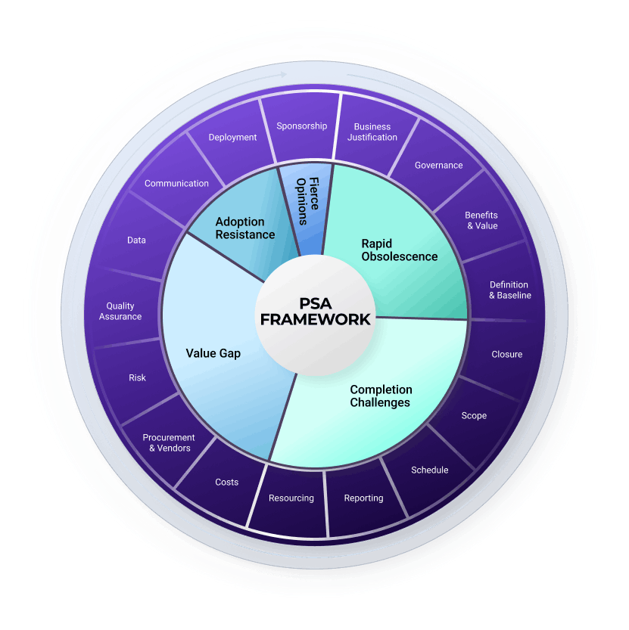
We have mapped the unique, intensifying challenges inherent to AI projects today to the pillars of Info-Tech's Project Success Assurance Framework.
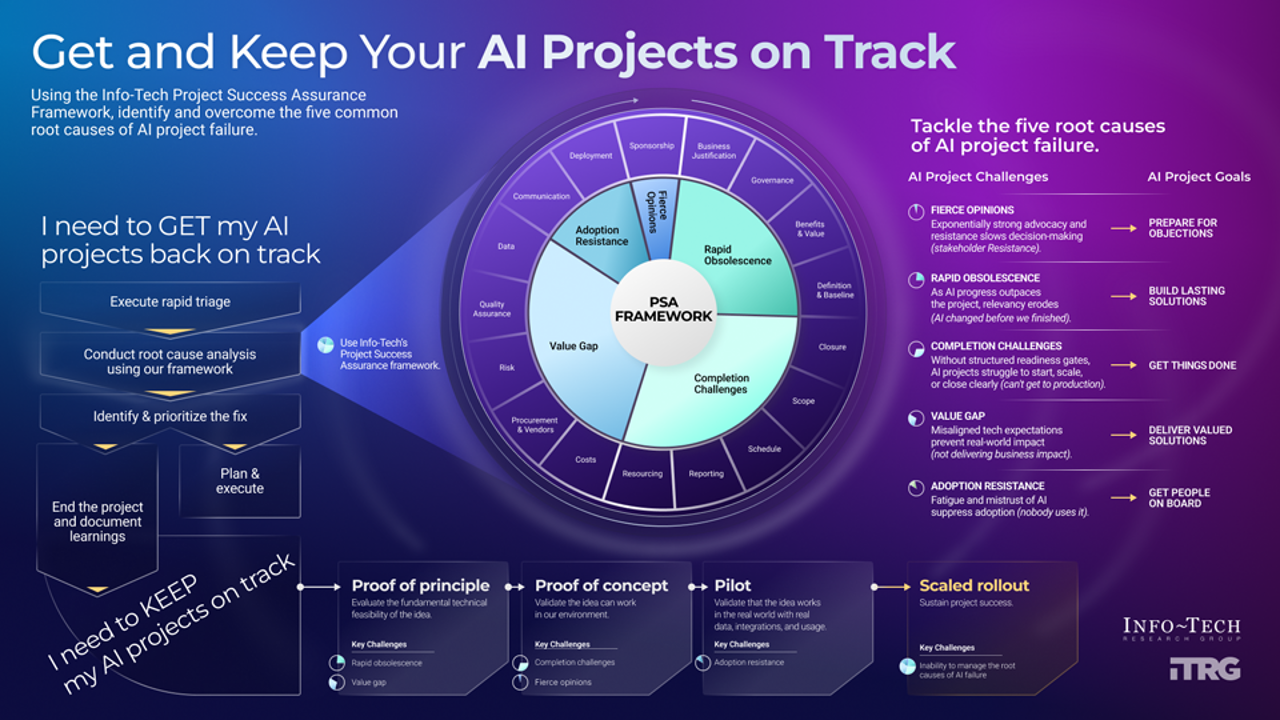
Info-Tech's methodology for getting your AI project back on track
1. Assess Your Current State | 2. Diagnose, Decide, and Act | 3. Keep Your Next AI Project On Track | |
|---|---|---|---|
Phase Steps |
|
|
|
Phase Outcomes |
|
|
|
Insight summary
AI projects are harder to manage | |
|---|---|
AI projects face a more intense version of the challenges all IT projects face. Identify the real blockers, fix what matters, and build the habits that stop it from happening again. | |
Some causes of failure aren't going to be a problem forever | Know whether your AI project is failing or simply facing a known obstacle |
Increased rates of AI project failure are temporary. Many current AI obstacles are short-term growing pains. As disruption stabilizes and governance frameworks mature, these obstacles will decline. | Managing the many obstacles an AI project faces is its own obstacle. It obscures determination between an AI project that is failing or simply navigating an obstacle. Awareness of AI project obstacles and management strategies of these obstacles assists with this determination. |
Determine the root cause of your current AI project's pains | Decide if this obstacle can be navigated within the project timeline |
Use the fishbone analysis tool in combination with the five root causes of AI project failure to determine the root cause of your current AI project pain. | After discovering the root cause of your current AI project discomfort, diagnose the severity of their obstruction and determine if you can manage to avoid project failure. |
Deliverables that GET your AI projects on track
Get Your AI Projects on Track Workbook
Diagnose and prioritize the obstacles that stand in the way of AI project success.
Postmortem Review Template
Regardless of project success or failure, you should take the time to reflect on lessons learned with your team. This postmortem review template guides project managers through a thorough analysis of the project.
Deliverables that KEEP your AI projects on track
Keep Your AI Projects on Track Workbook
Use this workbook to enable project teams to evaluate and navigate key AI project obstacles, at the right time.
Keep Your AI Projects on Track Poster
This poster will help you navigate AI project obstacles from proof of principle to the end of the pilot phase, preparing you for a scaled rollout. If you cannot answer "yes" to the questions in each stage, your AI project is in danger of falling off track.
Blueprint benefits
IT Benefits | Business Benefits |
|---|---|
|
|
Measure the value of this research
Are the success factors below relevant to your organization?
Success Factor | Potential Metrics | Example Target |
|---|---|---|
Deliver a relevant solution |
|
|
Deliver expected business outcomes |
|
|
Develop start, scale, and closure gates |
|
|
Minimize unanticipated costs |
|
|
Deliver solutions that are used |
|
|
Phase 1
Assess Your Current State. Prepare to Resuscitate the Project.
Phase 1 | Phase 2 | Phase 3 |
|---|---|---|
1.1 You Are Not Alone 1.2 Execute a Rapid Triage 1.3 Conduct a Root Cause Analysis | 2.1 Diagnose & Prioritize the Fix 2.2 Decide. Can it Be Saved? 2.3 Build Your Roadmap to Get it Back on Track | 3.1 Learn From the Project 3.2 Keep Your Next AI Project on Track
|
Get Your AI Project Back on Track
This phase will walk you through :
A thorough analysis of what is preventing success in your current AI project.
An understanding of the AI obstacles that will dissipate as the technology evolves, and more importantly, which obstacles are here to stay.
Save costs! Focus your long-term efforts toward shielding against the obstacles that are here to stay.
1.1: You Are Not Alone
Current reports suggest that AI projects fail more than non-AI projects, but AI adoption is not slowing.
Case study
Big players are not immune to AI project challenges
INDUSTRY: Fast Food
SOURCE: Business Insider; (Tangalakis-Lippert, 2026)
Background
Pizza Hut is a franchise known for record fast delivery times, high customer satisfaction, and consistent sales growth.
Feeling the pressure to adopt AI, they mandated a new AI-powered delivery management platform. The franchisees had little choice but to comply despite concerns about how the system would interact with its existing third-party delivery model. Rather than streamlining operations, the technology introduced new inefficiencies that the franchisee had no tools or support to address.
Change
The AI-powered delivery platform gave third-party drivers real-time visibility into kitchen order preparation. In theory, this would allow for tighter coordination between kitchen output and driver pickup.
In practice, third-party drivers used that visibility to batch multiple orders together, leaving completed pizzas sitting while they waited for a second order to be ready. The result was longer waiting times, colder deliveries, and a broken handoff process that had previously run smoothly.
Impact
The financial fallout exceeded $100 million in lost revenue and business value. What began as a technology rollout intended to improve the customer experience became a cautionary tale in AI adoption.
A gap between intended and actual value was never identified or addressed. That misalignment didn't just hurt this project; it has likely damaged franchisee trust and set back any future AI initiatives.
1.1 AI Project Failure
If your AI project is off track, you are in good company.
95% | Of enterprise level AI projects deliver no measurable value. MIT Sloan Management Review, 2025 |
|---|---|
53% | Of the population adopted generative AI in the last three years. Stanford, 2026 |
These two forces create a key tension between how AI is perceived and prioritized inside organizations.
Beware of the forces driving your AI projects off track
Adopt AI wisely! These are the five key causes of AI failure:
Rapid Obsolescence
As AI progress outpaces the project, relevancy erodes.
Value Gap
Misaligned technology expectations prevent real-world impact.
Completion Challenges
Without structured readiness gates, AI projects struggle to start or close cleanly.
Fierce Opinions
Exceptionally strong advocacy and resistance slows decision-making.
Adoption Resistance
Fatigue and mistrust of AI suppress adoption.
Each cause of AI failure is a result of mismanaging AI project obstacles
These obstacles are more intense versions of the challenges all IT projects face.
Rapid Obsolescence
As AI progress outpaces the project, relevancy erodes.
- AI Creates Demand That Outpaces Intake Discipline
- Project Governance Must Account for Evolving AI Regulatory and Compliance Requirements
- AI Capabilities Are Expanding at an Unmanageable Pace
- AI Projects Fail When Success Criteria Are Implicit, Narrow, or One‑Dimensional
Value Gap
Misaligned technology expectations prevent real-world impact.
- Cost Prediction Uncertainty With AI Weakens Project Cost Plan Credibility
- AI Makes it Easy to Create an MVP, Breaking Traditional Build‑vs‑Buy Logic
- Emergent AI Risks Overwhelm Traditional Project Controls
- AI Requires Continuous, Not End‑Stage, Validation
- AI Projects Depend on Data Quality to Sustain Success
Completion Challenges
Without structured readiness gates, AI projects struggle to start or close cleanly.
- AI Projects Lack Clear Readiness Gates for Start, Scale, and Closure
- Use Case Demands for AI Move Faster Than Scope Controls Can Keep Up With
- Resourcing AI Projects Demands Investments Beyond Initial Delivery
Fierce Opinions
Exceptionally strong advocacy and resistance slows decision-making.
- AI Triggers Strong Advocacy & Resistance, Complicating Sponsorship Alignment
Adoption Resistance
Fatigue and mistrust of AI suppress adoption.
- AI Fatigue and Distrust From Previous Low-Value Projects Stalls Progress
- AI Adoption Requires Judgement & Cognitive Shifts That Transcend Traditional Training
Don't worry! Many causes of AI failure are only short-term growing pains
As disruption stabilizes and governance frameworks mature, these obstacles will decline.
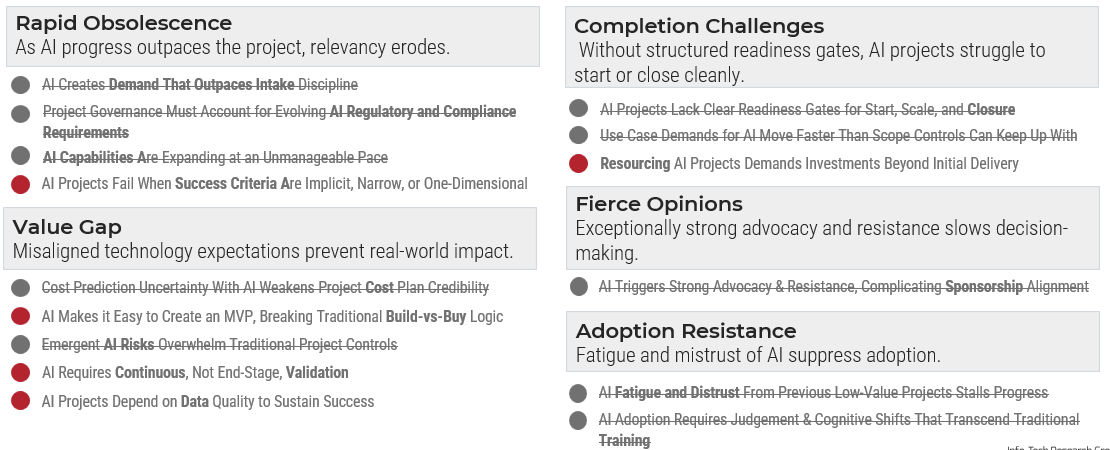
These AI obstacles are here to stay
AI Requires Continuous, Not End‑Stage, Validation: As AI behavior changes over time due to data, technology, or user evolution, ongoing validation of business value delivery is essential to continued project success.
AI Projects Fail When Success Criteria Are Implicit, Narrow, or One‑Dimensional: AI does not respond in the same way to a request every time, so broader success measures can help businesses report on AI value delivery more effectively.
AI Makes it Easy to Create an MVP, Breaking Traditional Build‑vs‑Buy Logic: A common cause of AI project failure is underestimating the time and costs to build a solution. It can appear simple to create an MVP, but tuning the model takes time.
AI Projects Depend on Data Quality to Sustain Success: Your AI solution will only ever be as good as the quality of the data that is fed into it.
Resourcing AI Projects Demands Investments Beyond Initial Delivery: Each AI project will have reoccurring costs required to uphold the value and reliability of its output.
Get Your AI Project Back on Track
Diagnose the problem, decide if it is fixable, then either rescue it or learn from it.
About Info-Tech
Info-Tech Research Group is the world’s fastest-growing information technology research and advisory company, proudly serving over 30,000 IT professionals.
We produce unbiased and highly relevant research to help CIOs and IT leaders make strategic, timely, and well-informed decisions. We partner closely with IT teams to provide everything they need, from actionable tools to analyst guidance, ensuring they deliver measurable results for their organizations.
What Is a Blueprint?
A blueprint is designed to be a roadmap, containing a methodology and the tools and templates you need to solve your IT problems.
Each blueprint can be accompanied by a Guided Implementation that provides you access to our world-class analysts to help you get through the project.
 Tech Trends 2025
 Define Your Digital Business Strategy
 Kick-Start IT-Led Business Innovation
 Establish a Foresight Capability
 Apply Design Thinking to Build Empathy With the Business
 Sustain and Grow the Maturity of Innovation in Your Enterprise
 Position IT to Support and Be a Leader in Open Data Initiatives
 Double Your Organization’s Effectiveness With a Digital Twin
 Develop a Use Case for Smart Contracts
 Adopt Design Thinking in Your Organization
 Accelerate Digital Transformation With a Digital Factory
 Tech Trends 2024
 2021 Tech Trends
 Implement and Mature Your User Experience Design Practice
 CIO Priorities 2022
 2022 Tech Trends
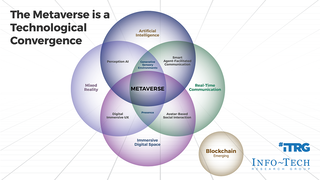 Into the Metaverse
 Demystify Blockchain: How Can It Bring Value to Your Organization?
 2020 Tech Trend Report
 2020 CIO Priorities Report
 CIO Trend Report 2019
 CIO Trend Report 2018
 CIO Trend Report 2017
 AI and the Future of Enterprise Productivity
 Evolve Your Business Through Innovation
 Build a Platform-Based Organization
 Tech Trend Update: If Contact Tracing Then Distributed Trust
 Tech Trend Update: If Biosecurity Then Autonomous Edge
 Tech Trend Update: If Digital Ethics Then Data Equity
 Tech Trends 2023
 Formalize Your Digital Business Strategy
 Select and Prioritize Digital Initiatives
 Adopt an Exponential IT Mindset
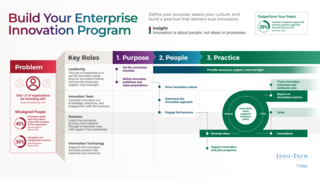 Build Your Enterprise Innovation Program
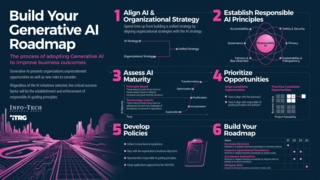 Build Your Generative AI Roadmap
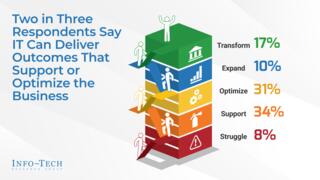 Annual CIO Survey Report 2024
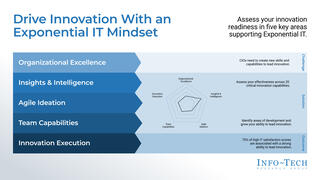 Drive Innovation With an Exponential IT Mindset
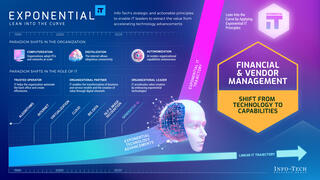 Exponential IT for Financial and Vendor Management
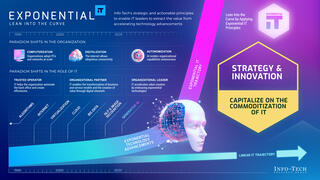 Exponential IT for Strategy, Risk, and Governance
 Exponential IT for Service Planning and Architecture
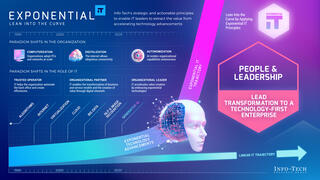 Exponential IT for People and Leadership
 Exponential IT for Security and Privacy
 Exponential IT for Applications
 Exponential IT for Data and Analytics
 Exponential IT for Infrastructure and Operations
 Exponential IT for Project and Portfolio Management
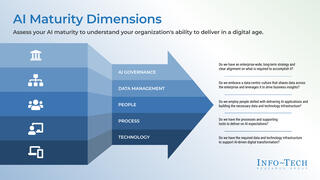 Assess Your AI Maturity
 Develop Responsible AI Guiding Principles
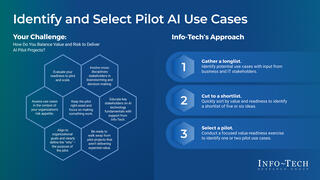 Identify and Select Pilot AI Use Cases
 Exponential IT Keynote
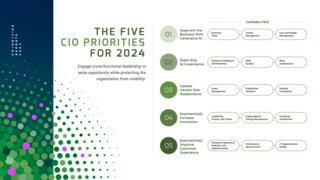 CIO Priorities 2024
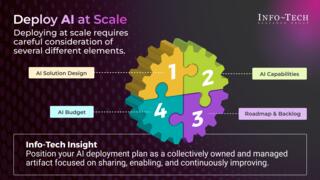 Build a Scalable AI Deployment Plan
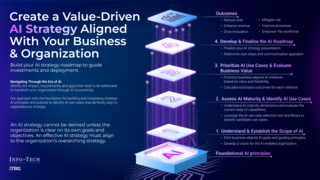 Build Your AI Strategy and Roadmap
 Develop an Exponential IT Roadmap
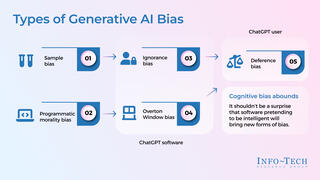 Use ChatGPT Wisely to Improve Productivity
 Build a FinOps Strategy to Enable Dynamic Cloud Cost Management
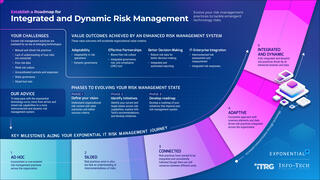 Establish a Roadmap for Integrated and Dynamic Risk Management
 Info-Tech’s Best of 2024 Mid-Year Report: AI Rewrites the Script for CIOs
 Explore the Art of the Possible for Exponential IT
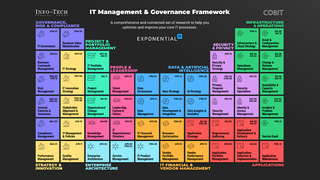 IT Management & Governance: The Next Evolution
 Bending the Exponential IT Curve Keynote
 Exponential IT in Motion: Transform Your Organization by Transforming IT
 AI Trends 2025
 LIVE 2024 Keynote Presentations
 LIVE 2024 Lightning Round Presentations
 CIO Priorities 2025
 Info-Tech’s Best of 2024 Report: IT Moves Into Position
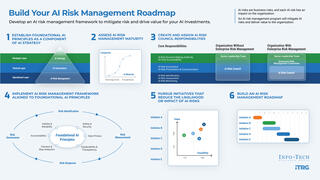 Build Your AI Risk Management Roadmap
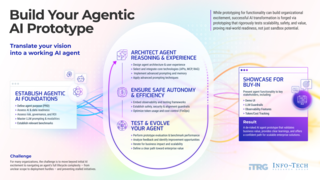 Design Your Agentic AI Prototype
 An Operational Framework for Rolling Out AI
 The AI Vendor Landscape in IT
 Run IT By the Numbers
 Building Info-Tech’s Chatbot
 Assessing the AI Ecosystem
 Bring AI Out of the Shadows
 Transform IT, Transform Everything
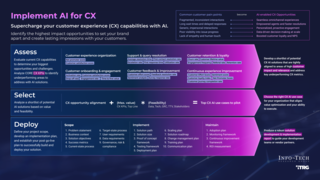 Implement AI for Customer Experience
 Info-Tech’s Best of 2025 Mid-Year Report: IT Moves From Disruption to Decisive Action
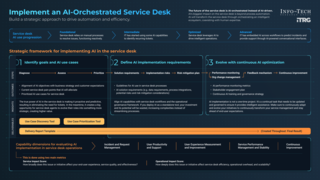 Implement an AI-Orchestrated Service Desk
 Info-Tech's All-Time Best, 2025 Edition: Change Is the Headline, Fundamentals Are the Path
 Tech Trends 2026
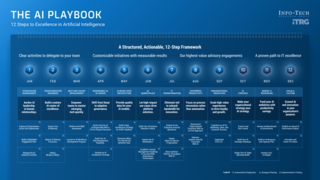 The AI Playbook
 AI Trends 2026
 Info-Tech’s Best of 2025: The Year AI Stopped Being a Project and Became the Strategy
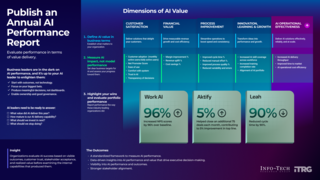 Publish an Annual AI Performance Report
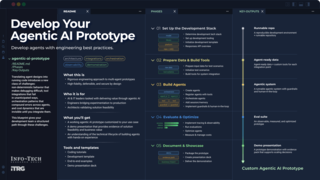 Develop Your Agentic AI Prototype
 Changing Landscape: Rethinking Vendor Decisions in the Agentic AI Era
 AI in Seven Charts
 Emerging AI Trends and Predictions From Our Global Technical Counselor Team
 Turn Customer Friction Into Agentic Opportunity
 People Change in the Face of Disruptive Technology
 Lead IT Like a Business: Every Dollar Is a Decision
 Optimize Cloud & AI Spend With Agentic FinOps
 Leadership Summit: The Ultimate Onboarding Experience 2026
 Resilience Is Not Planned – It Is Architected
 Redefine What It Means to Be CIO
 Navigating AI Agents in Service Management
 Influence Unleashed: The IT Leader’s Superpower
 The Challenge of Ethics in the Use of AI
 Revolutionize Risk Management With Agentic AI
 Introducing the Info-Tech Speakers Bureau
 Inside the Agentic Enterprise
 Agents 2.0: From Autonomy to Architecture
 Agentic IT: From Hype to Value
 Tech Trends 2027 Keynote
 Become an Exponential CIO
 Beyond the Agent: The Leadership Ecosystem for an AI-Enabled World
 Five Key Takeaways From Info-Tech LIVE 2026
 Info-Tech’s Best of 2026 Mid-Year Report
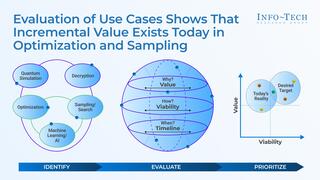 Identify and Evaluate Quantum Computing Use Cases
 AI Adoption & Impact Study: AI in Software Development June 2026 Top 10 Insights
 AI Adoption & Impact Study: AI in the Enterprise June 2026 Top 10 Insights
