
AI Adoption & Impact Study: AI in Software Development June 2026 Top 10 Insights
Insights from an AI adoption and impact study surveying applications, engineering, and product leaders.
For enterprise IT organizations, AI is more than a rapidly evolving technology; it represents a foundational shift across the software development landscape. Our AI in Software Development June 2026 Top 10 Insights report paints a detailed portrait of AI adoption in the software development lifecycle (SDLC). Key insights include AI’s impact on code quality and developer productivity, plus challenges ranging from security concerns to AI adoption barriers within development workflows.
As part of our ongoing AI Adoption and Impact Study, over 500 technical practitioners responded to our AI in Software Development survey. The resulting report offers timely, evidence-based data on AI coding tools, security practices, and adoption maturity in the software development process. This research sheds light on where AI is bringing significant improvements to software development and where obstacles to AI integration and value delivery remain within the SDLC.
10 key insights on the state of AI in the SDLC today.
These critical findings examine current AI adoption practices in software development, the gains achieved from them, and where AI-assisted outcomes are falling short of expectations.
1. AI speeds up code creation, but the code created requires more review.
Although 84% of developers use AI in the Build phase of software development, two-thirds of developers say AI-generated code requires more testing than human-generated code.
2. More experienced practitioners are significantly more likely to apply AI security tools.
Practitioners with 15+ years of experience are nearly twice as likely to use AI security tools as those with just 3-7 years of experience. The most experienced practitioners are also four times more likely to raise security or codebase context concerns in open text responses.
3. Engineers and applications teams disagree with product teams that vibe coding is error-free.
While 41% of product team members agree that vibe coding guarantees “zero errors,” 51% of applications practitioners disagree with that. Engineers have a more neutral opinion on the matter. Engineering and applications professionals need a formal seat at the table when AI adoption decisions are made, not just when the quality problems surface afterward.
4. AI tool adoption outpaces maturity at the Build stage.
Only 37% of developers using AI at the Build stage describe their AI maturity level as “formal or better,” indicating a gap between adoption and process maturity.
5. AI adoption is hindered by security, output quality, and data quality concerns, particularly at medium-to-large organizations.
Output quality is the top AI adoption challenge reported by small organizations (64%), but security concerns dominate for medium (47%) and large (51%) organizations.
6. Working with legacy code is the biggest roadblock to using AI in a given workflow.
When asked to name personal roadblocks to using AI in workflows, 51% of respondents cited AI breaks on legacy code, followed by AI code not passing quality gates (46%) and inconsistent skill levels across the team (36.7%).
7. Almost all developers report that their productivity has improved. Higher AI maturity correlates with further productivity gains.
Over 90% of developers report meaningful AI productivity gains. Organizations that report higher AI maturity at the Build phase are also more likely to report higher developer productivity.
8. AI is reducing defects in shipped code for most practitioners; more than half report defects have dropped by 50% or more.
While over 80% report meaningful AI defect reduction, only 9% find “no meaningful change,” and 8% claim “it’s too early to measure.” Teams that do not experience a reduction in defects from AI often face a measurement gap rather than an AI adoption problem.
9. Senior developers are more likely to shift time to review AI code, while juniors are more likely to see speed gains.
Although 38% of veteran developers say AI allows them to shift to reviewing and validating code, only 20% of the least experienced developers see that as a benefit of AI coding. Similarly, 75% of the least experienced developers see speed and efficiency gains as a key benefit of AI coding, but only 55% of veteran developers do.
10. More formal AI processes reduce defects in code.
Organizations with an informal level of AI maturity are the least likely to report that AI helps them reduce code defects.
About Info-Tech
Info-Tech Research Group is the world’s fastest-growing information technology research and advisory company, proudly serving over 30,000 IT professionals.
We produce unbiased and highly relevant research to help CIOs and IT leaders make strategic, timely, and well-informed decisions. We partner closely with IT teams to provide everything they need, from actionable tools to analyst guidance, ensuring they deliver measurable results for their organizations.
What Is a Blueprint?
A blueprint is designed to be a roadmap, containing a methodology and the tools and templates you need to solve your IT problems.
Each blueprint can be accompanied by a Guided Implementation that provides you access to our world-class analysts to help you get through the project.
Talk to an Analyst
Our analyst calls are focused on helping our members use the research we produce, and our experts will guide you to successful project completion.
Book an Analyst Call on This Topic
You can start as early as tomorrow morning. Our analysts will explain the process during your first call.
Get Advice From a Subject Matter Expert
Each call will focus on explaining the material and helping you to plan your project, interpret and analyze the results of each project step, and set the direction for your next project step.
Unlock Sample ResearchContributors
- More than 500 developers responding to our AI Adoption & Impact Study survey
 Tech Trends 2025
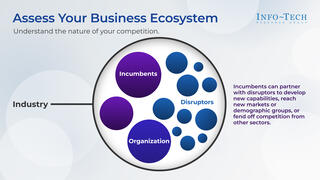 Define Your Digital Business Strategy
 Kick-Start IT-Led Business Innovation
 Establish a Foresight Capability
 Apply Design Thinking to Build Empathy With the Business
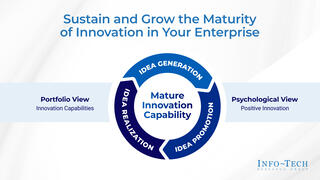 Sustain and Grow the Maturity of Innovation in Your Enterprise
 Position IT to Support and Be a Leader in Open Data Initiatives
 Double Your Organization’s Effectiveness With a Digital Twin
 Develop a Use Case for Smart Contracts
 Adopt Design Thinking in Your Organization
 Accelerate Digital Transformation With a Digital Factory
 Tech Trends 2024
 2021 Tech Trends
 Implement and Mature Your User Experience Design Practice
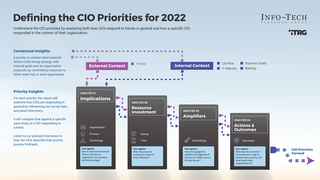 CIO Priorities 2022
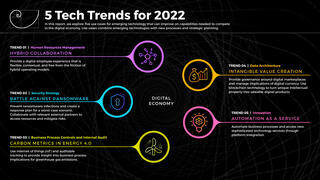 2022 Tech Trends
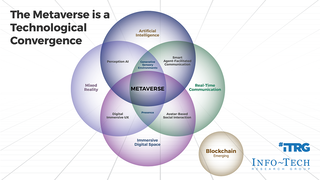 Into the Metaverse
 Demystify Blockchain: How Can It Bring Value to Your Organization?
 2020 Tech Trend Report
 2020 CIO Priorities Report
 CIO Trend Report 2019
 CIO Trend Report 2018
 CIO Trend Report 2017
 AI and the Future of Enterprise Productivity
 Evolve Your Business Through Innovation
 Build a Platform-Based Organization
 Tech Trend Update: If Contact Tracing Then Distributed Trust
 Tech Trend Update: If Biosecurity Then Autonomous Edge
 Tech Trend Update: If Digital Ethics Then Data Equity
 Tech Trends 2023
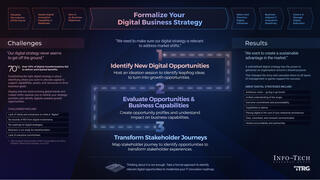 Formalize Your Digital Business Strategy
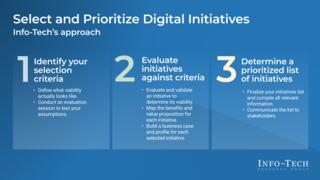 Select and Prioritize Digital Initiatives
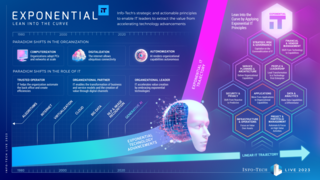 Adopt an Exponential IT Mindset
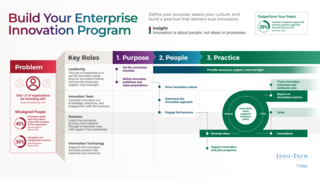 Build Your Enterprise Innovation Program
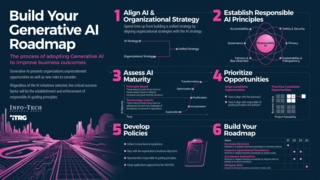 Build Your Generative AI Roadmap
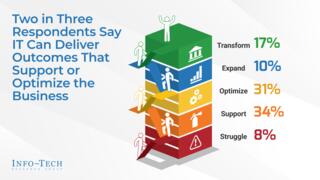 Annual CIO Survey Report 2024
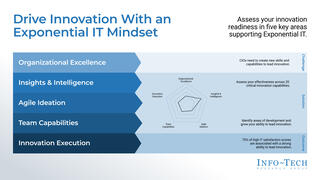 Drive Innovation With an Exponential IT Mindset
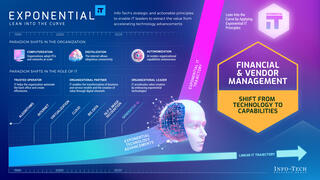 Exponential IT for Financial and Vendor Management
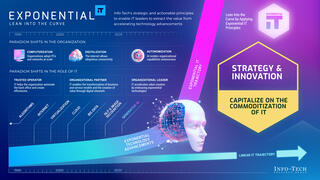 Exponential IT for Strategy, Risk, and Governance
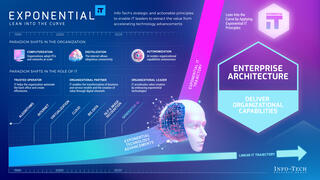 Exponential IT for Service Planning and Architecture
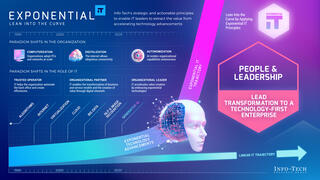 Exponential IT for People and Leadership
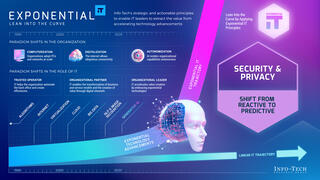 Exponential IT for Security and Privacy
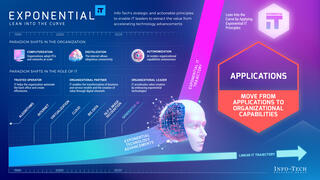 Exponential IT for Applications
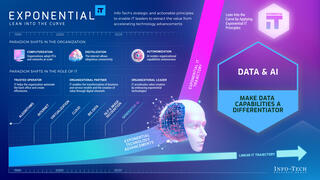 Exponential IT for Data and Analytics
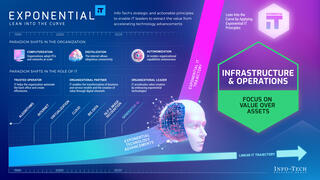 Exponential IT for Infrastructure and Operations
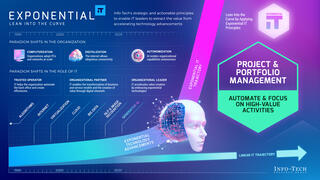 Exponential IT for Project and Portfolio Management
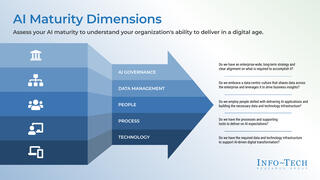 Assess Your AI Maturity
 Develop Responsible AI Guiding Principles
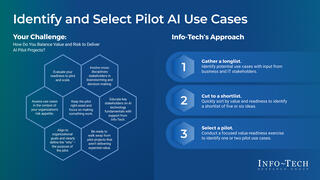 Identify and Select Pilot AI Use Cases
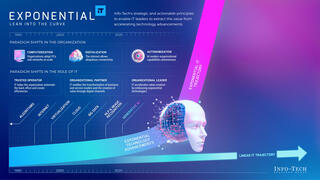 Exponential IT Keynote
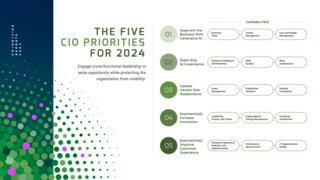 CIO Priorities 2024
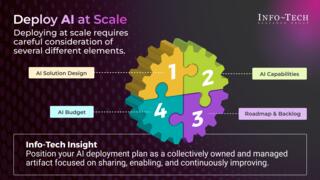 Build a Scalable AI Deployment Plan
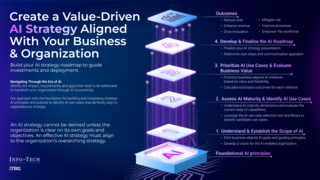 Build Your AI Strategy and Roadmap
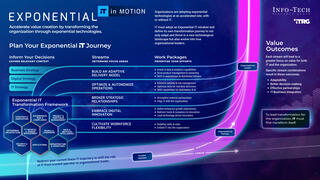 Develop an Exponential IT Roadmap
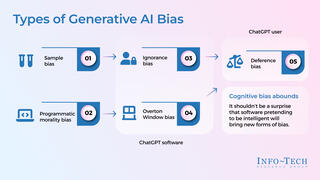 Use ChatGPT Wisely to Improve Productivity
 Build a FinOps Strategy to Enable Dynamic Cloud Cost Management
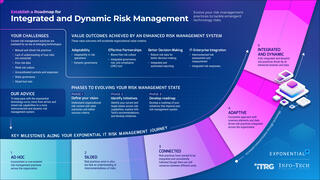 Establish a Roadmap for Integrated and Dynamic Risk Management
 Info-Tech’s Best of 2024 Mid-Year Report: AI Rewrites the Script for CIOs
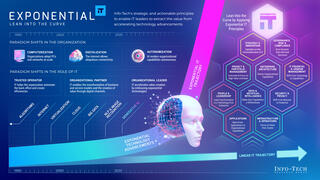 Explore the Art of the Possible for Exponential IT
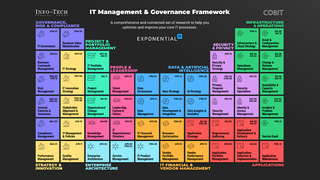 IT Management & Governance: The Next Evolution
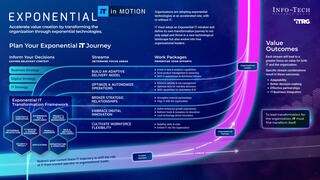 Bending the Exponential IT Curve Keynote
 Exponential IT in Motion: Transform Your Organization by Transforming IT
 AI Trends 2025
 LIVE 2024 Keynote Presentations
 LIVE 2024 Lightning Round Presentations
 CIO Priorities 2025
 Info-Tech’s Best of 2024 Report: IT Moves Into Position
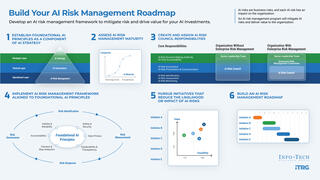 Build Your AI Risk Management Roadmap
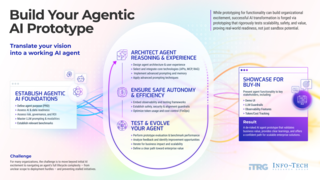 Design Your Agentic AI Prototype
 An Operational Framework for Rolling Out AI
 The AI Vendor Landscape in IT
 Run IT By the Numbers
 Building Info-Tech’s Chatbot
 Assessing the AI Ecosystem
 Bring AI Out of the Shadows
 Transform IT, Transform Everything
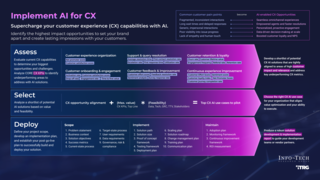 Implement AI for Customer Experience
 Info-Tech’s Best of 2025 Mid-Year Report: IT Moves From Disruption to Decisive Action
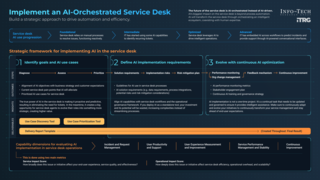 Implement an AI-Orchestrated Service Desk
 Info-Tech's All-Time Best, 2025 Edition: Change Is the Headline, Fundamentals Are the Path
 Tech Trends 2026
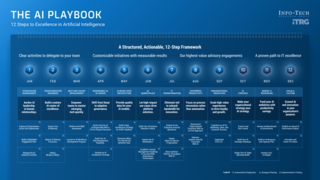 The AI Playbook
 AI Trends 2026
 Info-Tech’s Best of 2025: The Year AI Stopped Being a Project and Became the Strategy
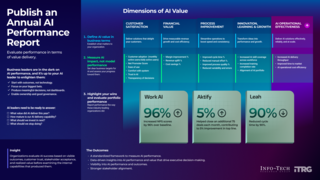 Publish an Annual AI Performance Report
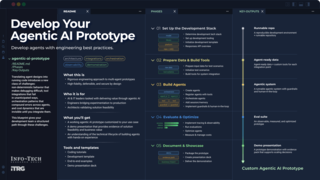 Develop Your Agentic AI Prototype
 Changing Landscape: Rethinking Vendor Decisions in the Agentic AI Era
 AI in Seven Charts
 Emerging AI Trends and Predictions From Our Global Technical Counselor Team
 Turn Customer Friction Into Agentic Opportunity
 People Change in the Face of Disruptive Technology
 Lead IT Like a Business: Every Dollar Is a Decision
 Optimize Cloud & AI Spend With Agentic FinOps
 Leadership Summit: The Ultimate Onboarding Experience 2026
 Resilience Is Not Planned – It Is Architected
 Redefine What It Means to Be CIO
 Navigating AI Agents in Service Management
 Influence Unleashed: The IT Leader’s Superpower
 The Challenge of Ethics in the Use of AI
 Revolutionize Risk Management With Agentic AI
 Introducing the Info-Tech Speakers Bureau
 Inside the Agentic Enterprise
 Agents 2.0: From Autonomy to Architecture
 Agentic IT: From Hype to Value
 Tech Trends 2027 Keynote
 Become an Exponential CIO
 Beyond the Agent: The Leadership Ecosystem for an AI-Enabled World
 Five Key Takeaways From Info-Tech LIVE 2026
 Info-Tech’s Best of 2026 Mid-Year Report
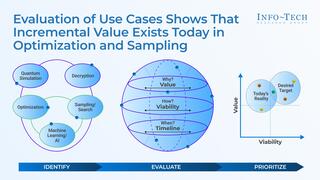 Identify and Evaluate Quantum Computing Use Cases
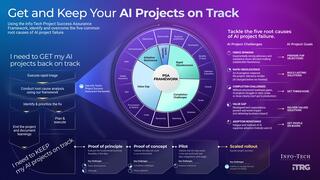 Get Your AI Projects Back on Track
 AI Adoption & Impact Study: AI in Software Development June 2026 Top 10 Insights
 AI Adoption & Impact Study: AI in the Enterprise June 2026 Top 10 Insights