
Vendor Spotlight: Salesforce Marketing Cloud
Building the next gen marketing platform.
Salesforce is reshaping its marketing portfolio around a unified customer data and AI foundation, creating both new opportunities and new evaluation challenges for enterprise buyers. Organizations that focus only on marketing features risk overlooking the broader platform capabilities, architectural decisions, and strategic direction that will determine long-term value. This guide provides technology and marketing decision-makers with the insight needed to make a structured, criteria-driven assessment of Salesforce Marketing Cloud, as part of a larger customer engagement ecosystem.
Marketing technology is increasingly converging around shared data, AI-driven automation, and connected customer experiences. As Salesforce accelerates its transition toward Marketing Cloud Next, buyers must evaluate not only where the platform stands today, but also where it is headed and what that means for future investments.
1. See the bigger picture.
Salesforce Marketing Cloud’s value increasingly depends on how effectively Salesforce connects customer data, content generation, analytics, AI, and engagement across the entire customer journey. Look beyond Cloud’s marketing features alone to assess Salesforce's broader strengths in innovation, architecture, implementation, and security to determine whether the platform can support long-term enterprise objectives.
2. Understand the platform shift.
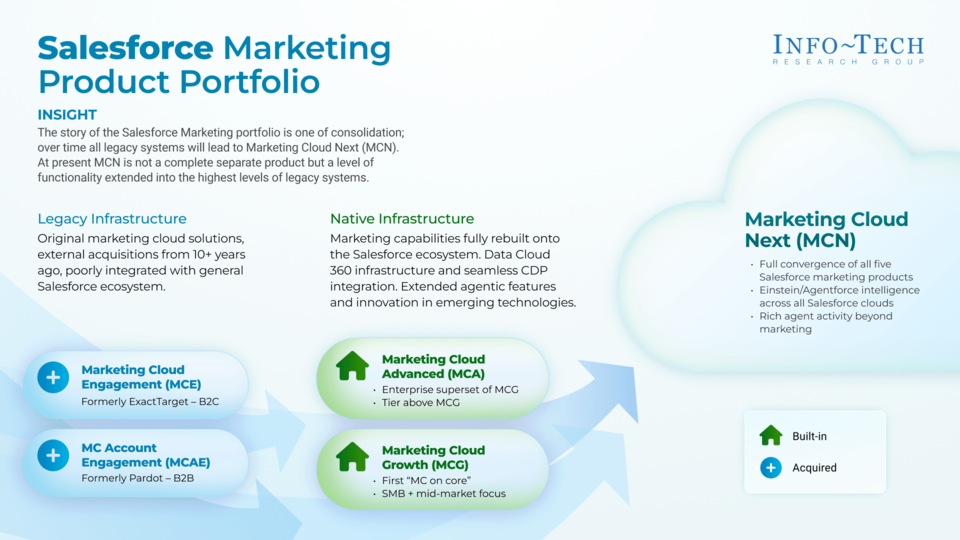
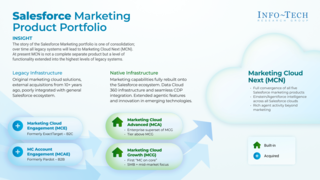
Salesforce is shifting to Marketing Cloud Next. Built on Salesforce's Data Cloud foundation, Marketing Cloud Next is designed to unify B2B and B2C marketing workflows while reducing data silos and operational complexity. Evaluate how Salesforce's long-term convergence strategy aligns with your future-state marketing architecture and digital transformation priorities.
3. Prepare for autonomous marketing.
Salesforce is positioning Agentforce and Marketing Cloud Next as the foundation for autonomous marketing operations. Agentforce is designed to build audiences, generate content, orchestrate journeys, and optimize engagement. Organizations that align marketing with CRM, customer data, and governance practices will be best positioned to realize the operational benefits of Salesforce's evolving AI ecosystem.
Use this guide to evaluate Salesforce Marketing Cloud’s alignment with your needs
This research brings together criteria-driven tools to help you analyze vendor capability, product portfolio, pricing tiers, AI capability, and implementation partners to support informed sourcing decisions. Move from feature-based product comparisons to a more strategic evaluation of Salesforce Marketing Cloud’s ability to support future customer engagement, AI adoption, and enterprise growth.
- Assess platform capabilities across the eight evaluation dimensions.
- Evaluate pricing tiers and total cost of ownership across the Salesforce Marketing Cloud portfolio to ensure long-term transparency and scalability.
- Identify the right implementation partner using a curated guide matched to your organization's size and use case.
- Build your customer success strategy by mapping Salesforce Marketing Cloud’s support model against your internal capabilities and risk tolerance.
About Info-Tech
Info-Tech Research Group is the world’s fastest-growing information technology research and advisory company, proudly serving over 30,000 IT professionals.
We produce unbiased and highly relevant research to help CIOs and IT leaders make strategic, timely, and well-informed decisions. We partner closely with IT teams to provide everything they need, from actionable tools to analyst guidance, ensuring they deliver measurable results for their organizations.
What Is a Blueprint?
A blueprint is designed to be a roadmap, containing a methodology and the tools and templates you need to solve your IT problems.
Each blueprint can be accompanied by a Guided Implementation that provides you access to our world-class analysts to help you get through the project.
Talk to an Analyst
Our analyst calls are focused on helping our members use the research we produce, and our experts will guide you to successful project completion.
Book an Analyst Call on This Topic
You can start as early as tomorrow morning. Our analysts will explain the process during your first call.
Get Advice From a Subject Matter Expert
Each call will focus on explaining the material and helping you to plan your project, interpret and analyze the results of each project step, and set the direction for your next project step.
Unlock Sample Research Build Your Enterprise Application Implementation Playbook
 Master Contract Review and Negotiation for Software Agreements
 Negotiate SaaS Agreements That Are Built to Last
 Governance and Management of Enterprise Software Implementation
 Select Software With the Right Satisfaction Drivers in Mind
 Select an Enterprise Application
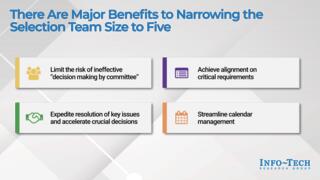 Optimize Your Software Selection Process: Why 5 and 30 Are the Magic Numbers
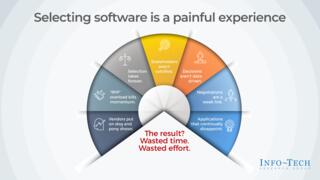 The Rapid Application Selection Framework
 Get the Best Discount Possible With a Data-Driven Negotiation Approach
 Craft a Customer-Driven Market Strategy With Unbiased Data
 Switching Software Vendors Overwhelmingly Drives Increased Satisfaction
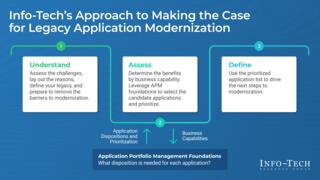 Make the Case for Legacy Application Modernization
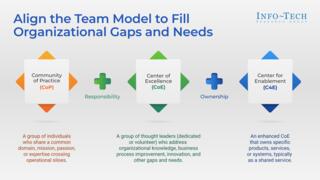 Empower Solution Delivery With the Right CoP, CoE, and C4E Model
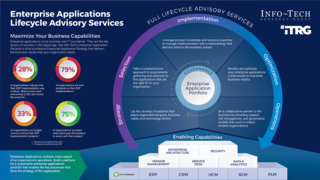 Enterprise Application Change: It's All About Business Capabilities
 2020 Applications Priorities Report
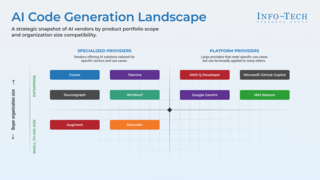 AI-Assisted Code Generation Tools
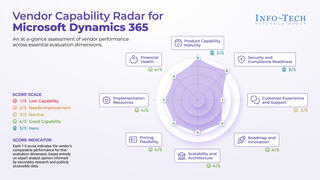 Vendor Spotlight: Microsoft Dynamics 365
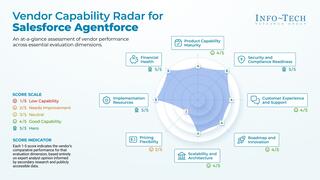 Vendor Spotlight: Salesforce Agentforce Service
 Vendor Spotlight: Microsoft Fabric
 Vendor Spotlight: Salesforce Marketing Cloud
 Vendor Spotlight: VMware Alternatives
 Vendor Spotlight: Microsoft AI
 Vendor Spotlight: Google AI
 Vendor Spotlight: Snowflake Data Platform
 Vendor Spotlight: Five9