
AI-Assisted Code Generation Tools
Buyers Guide and Market Trends
Accelerate development velocity with AI-assisted code generation tools.
Software delivery teams are under mounting pressure, as traditional development methods struggle to meet rising complexity, talent shortages, and the demand for continuous innovation. While AI-driven development tools promise to accelerate throughput, reduce manual effort, and enhance code quality, many teams still face challenges selecting the right solution for their unique organizational needs. Our Buyers Guide simplifies the decision-making process by helping you identify the tools that best align with your development goals, team capabilities, and existing workflows.
AI-assisted code generation is reshaping software development. However, with a quickly evolving market saturated by vendors, organizations struggle to keep up, leading to missed opportunities, misaligned tool choices, and wasted resources. IT leaders need a strategic approach to simplify decision-making, accelerate time-to-value, and avoid costly missteps.
- AI isn’t a plug-and-play fix.
AI’s real value lies in its ability to augment human creativity and decision-making. When integrated thoughtfully, it can save developers time when performing repetitive tasks to focus on more creative projects. With human oversight, AI-assisted code generation tools can transform development from a manual craft into a strategic, AI-enabled discipline where maintainable and standardized code are the norm.
- Don’t fall into the “paralysis by analysis” trap.
With a vast range of AI models available, teams often struggle to select the most suitable one, resulting in delays in implementation. Establishing a framework for evaluation and a centralized AI model library can speed up decision-making and improve model performance. This allows for a better understanding of core features, use cases, and how emerging trends shape strategic decisions.
- Close the skills gap with AI.
AI-assisted code generation tools accelerate development cycles and automate repetitive tasks. These tools enable developers of varying skill levels to contribute meaningfully and foster greater innovation across the entire team. This AI-enabled talent optimization allows less experienced developers to contribute effectively, reducing dependency on senior engineers and helping teams scale more efficiently.
Use this step-by-step guide to accelerate your AI decisions
Choosing the right AI-assisted code generation tool starts with understanding your primary needs. Whether it’s documentation and explanations or unit tests and quality assurance, there are a broad range of functionalities to consider. Rather than building solutions in-house, this guide helps you evaluate vendor solutions that align with your specific use cases. If you’re unsure where to start, explore our own IT Challenge, which compares nine leading vendors using a SWOT analysis to reveal their relative pros and cons.
Use our two-phase approach, along with a template and tool, to:
- Contextualize the AI code generation market by exploring key trends, future possibilities, a vendor comparison, and SWOT analysis.
- Select an AI code generation tool by constructing a solid business case based on high-value use cases that are aligned to organizational goals.
Member Testimonials
After each Info-Tech experience, we ask our members to quantify the real-time savings, monetary impact, and project improvements our research helped them achieve. See our top member experiences for this blueprint and what our clients have to say.
9.0/10
Overall Impact
$13,799
Average $ Saved
50
Average Days Saved
Client
Experience
Impact
$ Saved
Days Saved
City of Albemarle
Guided Implementation
9/10
$13,799
50
Talking through the details of what is changing, especially in the Agentic AI space, was very helpful for our context, our place on this journey. ... Read More
AI-Assisted Code Generation Tools
Buyers Guide and Market Trends Report
Analyst perspective
Accelerate development velocity with AI-assisted code generation tools.
Software delivery teams are under pressure to deliver faster, better, and smarter. Yet, traditional development methods can't keep pace with rising complexity, talent shortages, and the demand for continuous innovation. AI-assisted code generation tools emerge as both disruptors and catalysts. Increasingly, AI-driven development tools promise to accelerate throughput, reduce manual effort, and enhance quality across the SDLC, from design to deployment.
But AI isn't a plug-and-play fix. It requires a mindset shift. Teams must build a strong business case, prioritize high-value use cases, and streamline requirements gathering to ensure alignment. Tools must be embedded into workflows, not bolted on. Requirements workbooks, demo scripts, and vendor evaluations are essential to scale with confidence.
AI's real value lies in its ability to augment human creativity and decision-making. When integrated thoughtfully, it transforms development from a manual craft into a strategic, AI-enabled discipline. The organizations that succeed will be those that treat AI not as a tool but as a core capability of their delivery DNA.

Sumegha Sama
Research Analyst – AI
Info-Tech Research Group
Executive summary
| Your Challenge | Common Obstacles | Info-Tech's Approach |
|
|
This buyers guide will help you:
|
Info-Tech Insight
AI-assisted code is reshaping software development, but success depends on aligning AI tools with real-world needs. A structured, insight-driven approach to high-value use cases ensures organizations adopt the right solutions with clarity, confidence, and measurable impact.
CIOs and developers face several hurdles when examining the AI-assisted code generation market
The Struggle for Maintainable Code
Variations in coding standards and practices across teams lead to high maintenance costs. Standardizing development processes and introducing automated code quality can improve maintainability and speed up overall software reliability.
Picking the Right AI Model
With a vast range of AI models available, teams often struggle to select the most suitable one, resulting in delays in implementation. Establishing a framework for evaluation and a centralized AI model library can speed decision-making and improve model performance.
Shaping the Future of Dev
Businesses are often slow to adopt emerging AI generation tools, resulting in missed opportunities and inefficient workflows. Proactively exploring and piloting modern AI coding tools can enhance developer productivity and reduce manual errors.
"AI now generates 41% of all code, helping CIOs and developers cut software development costs by 35% and accelerate delivery across the enterprise."
– Ryan Favro, Founder, Gravy.ai
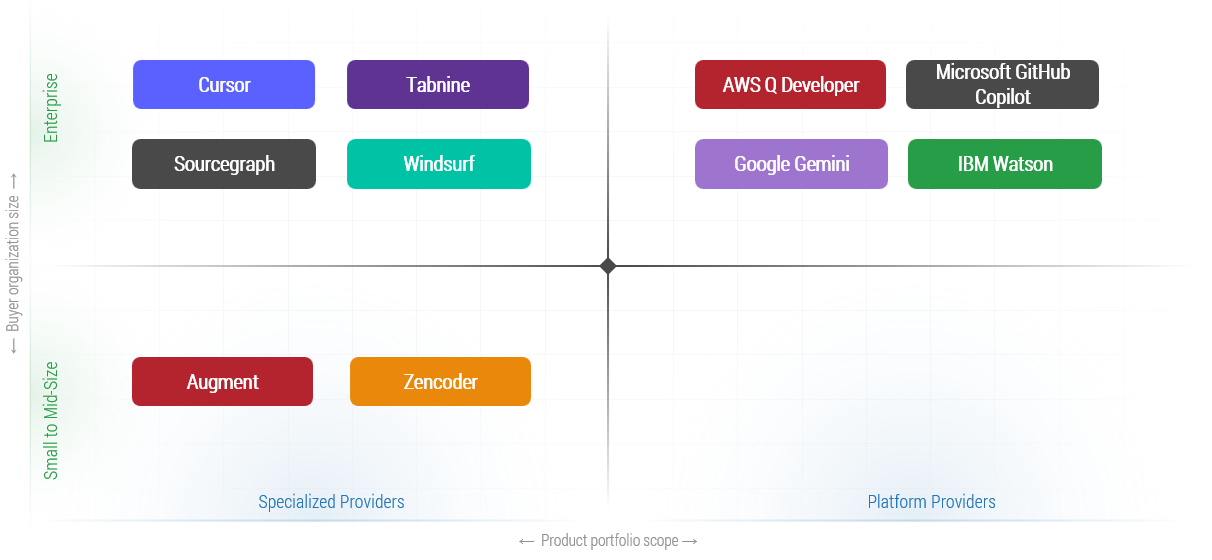
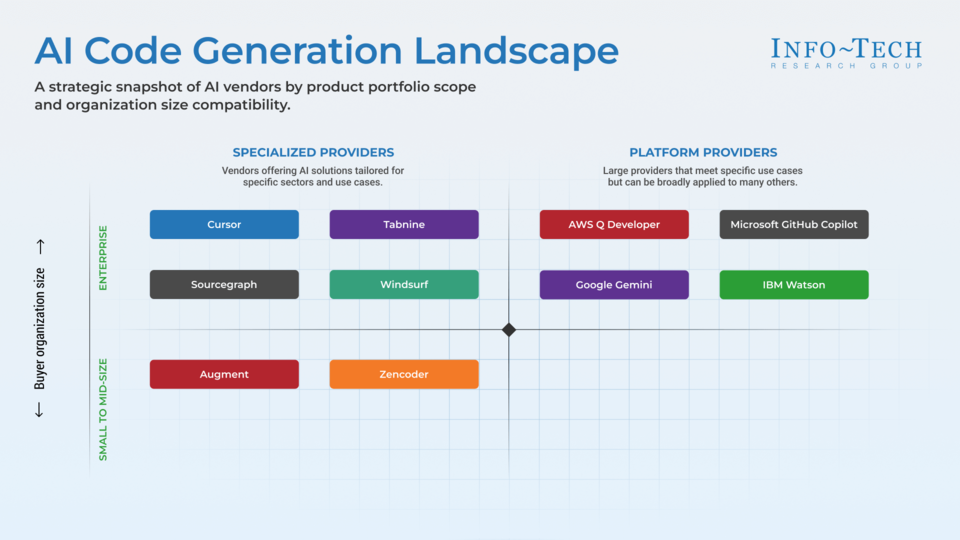
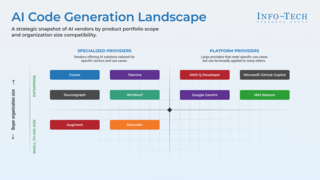
AI Code Generation Landscape
A strategic snapshot of AI vendors by product portfolio scope and organization size compatibility.
Specialized Providers
Vendors offering AI solutions tailored for specific sectors and use cases.
Platform Providers
Large providers that meet specific use cases but can be broadly applied to many others.
About Info-Tech
Info-Tech Research Group is the world’s fastest-growing information technology research and advisory company, proudly serving over 30,000 IT professionals.
We produce unbiased and highly relevant research to help CIOs and IT leaders make strategic, timely, and well-informed decisions. We partner closely with IT teams to provide everything they need, from actionable tools to analyst guidance, ensuring they deliver measurable results for their organizations.
What Is a Blueprint?
A blueprint is designed to be a roadmap, containing a methodology and the tools and templates you need to solve your IT problems.
Each blueprint can be accompanied by a Guided Implementation that provides you access to our world-class analysts to help you get through the project.
Talk to an Analyst
Our analyst calls are focused on helping our members use the research we produce, and our experts will guide you to successful project completion.
Book an Analyst Call on This Topic
You can start as early as tomorrow morning. Our analysts will explain the process during your first call.
Get Advice From a Subject Matter Expert
Each call will focus on explaining the material and helping you to plan your project, interpret and analyze the results of each project step, and set the direction for your next project step.
Unlock Sample ResearchContributors
- Andrew Kum-Seun, Research Director, Info-Tech Research Group
- Martin Bufi, Research Director, Info-Tech Research Group
- Austin Wagar, Senior Research Analyst, Info-Tech Research Group
- Thomas Randall, Research Lead, Info-Tech Research Group
 Build Your Enterprise Application Implementation Playbook
 Master Contract Review and Negotiation for Software Agreements
 Negotiate SaaS Agreements That Are Built to Last
 Governance and Management of Enterprise Software Implementation
 Select Software With the Right Satisfaction Drivers in Mind
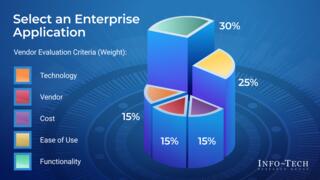 Select an Enterprise Application
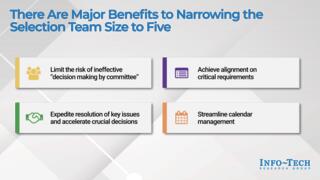 Optimize Your Software Selection Process: Why 5 and 30 Are the Magic Numbers
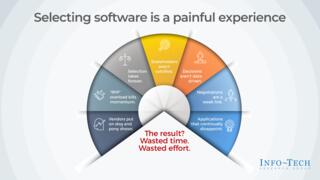 The Rapid Application Selection Framework
 Get the Best Discount Possible With a Data-Driven Negotiation Approach
 Craft a Customer-Driven Market Strategy With Unbiased Data
 Switching Software Vendors Overwhelmingly Drives Increased Satisfaction
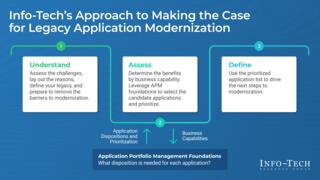 Make the Case for Legacy Application Modernization
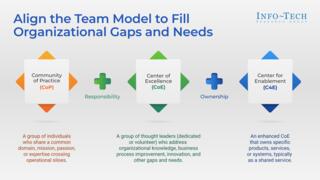 Empower Solution Delivery With the Right CoP, CoE, and C4E Model
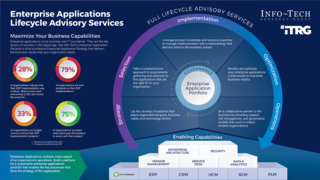 Enterprise Application Change: It's All About Business Capabilities
 2020 Applications Priorities Report
 AI-Assisted Code Generation Tools
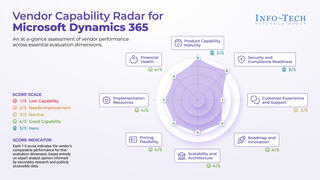 Vendor Spotlight: Microsoft Dynamics 365
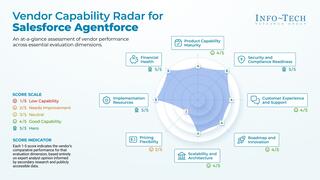 Vendor Spotlight: Salesforce Agentforce Service
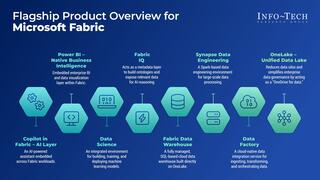 Vendor Spotlight: Microsoft Fabric
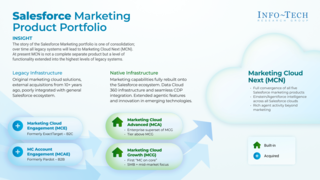 Vendor Spotlight: Salesforce Marketing Cloud
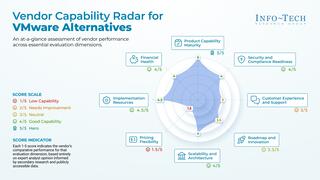 Vendor Spotlight: VMware Alternatives
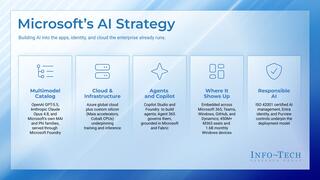 Vendor Spotlight: Microsoft AI
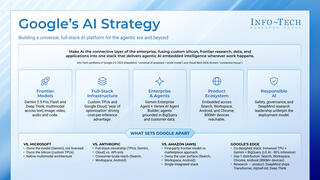 Vendor Spotlight: Google AI
 Vendor Spotlight: Snowflake Data Platform
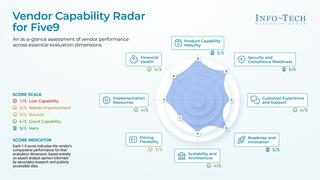 Vendor Spotlight: Five9
