
Vendor Spotlight: Google AI
Unlocking value across Google’s AI portfolio
Google’s AI portfolio is vast, spanning foundational models, data platforms, productivity tools, cloud infrastructure, and enterprise AI development environments. However, the breadth of the portfolio can make evaluation difficult, especially for organizations trying to determine where Google AI fits within their broader technology strategy. Our research evaluates the portfolio through a structured, criteria-based framework that aligns technology capabilities with organizational priorities, technical readiness, governance maturity, and long-term value.
Beyond selecting the right technologies, organizations must address the operational realities of AI adoption. Success depends not only on what the platform can do, but also on the organizational readiness required to realize its full potential.
1. A technical foundation built for enterprise AI.
Google’s AI portfolio is built on an integrated foundation of cloud, data, and AI services. Gemini Enterprise Agent provides a scalable environment for building, tuning, deploying, and governing AI agents, while BigQuery and Google Cloud provide the enterprise data foundation that supports this ecosystem. Gemini for Workspace extends AI into everyday developer and business workflows, helping organizations move from experimentation to embedded productivity and decision support.
2. Not a plug-and-play shortcut.
The platform delivers the greatest value when it is treated as an integrated data, cloud, and productivity ecosystem rather than a collection of standalone tools. Organizations without mature data practices, cost governance, or AI lifecycle capabilities may struggle to translate the platform’s breadth into measurable, sustainable outcomes.
3. A strong fit for organizations invested in the Google ecosystem.
Organizations that have already invested in Google Cloud, BigQuery, or Google Workspace are well positioned to scale AI across data, development, productivity, and enterprise applications. But to realize the full value of the platform, they also need strong governance, defined use cases, data controls, cost oversight, and responsible AI practices.
Use this practical framework to make an informed decision about Google AI.
This research provides a structured evaluation of Google’s AI portfolio, including role-based adoption guidance, product deep dives, industry-specific use cases, security and compliance considerations, SoftwareReviews data, and a SWOT analysis. Use this step-by-step resource to:
- Assess alignment between Google’s AI portfolio and the organization’s cloud, data, and productivity ecosystem.
- Separate near-term Workspace productivity use cases from longer-term agentic and data-platform opportunities.
- Evaluate the Gemini Enterprise Agent Platform and Gemini for Workspace against business value, technical readiness, and governance maturity.
- Identify where Google’s roadmap supports enterprise priorities such as agentic AI, multimodal intelligence, analytics, and workflow automation.
AI Vendor Spotlight: Google
Unlocking value across Google's AI portfolio
Executive summary
Your Challenge
Organizations are under pressure to move beyond AI experimentation and identify which platforms can support secure, scalable, and business-aligned AI adoption. Google's AI portfolio is compelling because it spans foundation models, data platforms, productivity tools, cloud infrastructure, and enterprise AI development environments.
However, the breadth of the portfolio can make evaluation difficult. The key challenge is determining where Google AI fits within the organization's broader technology strategy. Whether Google is primarily a productivity enhancer through Gemini for Workspace, an enterprise AI development platform through Gemini Enterprise Agent, a data intelligence layer through BigQuery, or a broader cloud modernization play.
Without a structured evaluation lens, buyers risk making AI platform decisions based on brand momentum, feature excitement, or isolated pilots rather than long-term readiness, integration fit, and measurable business value.
Common Obstacles
Organizations evaluating Google's AI portfolio often encounter complexity across several dimensions. The first is portfolio sprawl: Gemini, Gemini Enterprise Agent Platform (formerly Vertex AI), BigQuery, Gemini for Workspace, Agent Builder, Looker, Document AI, Contact Center AI, and other services can create confusion around what is required versus optional.
The second is data and governance readiness. Google's AI capabilities are strongest when connected to high-quality, well-governed enterprise data. Poor data hygiene, fragmented ownership, unclear access controls, and weak responsible AI policies can limit adoption and increase risk.
The third is cost and implementation discipline. The platform and cloud-native AI workloads can scale quickly, but so can consumption-based costs.
Organizations need clear operating models for model usage, workload monitoring, licensing, integration, and ongoing optimization.
Info-Tech's Approach
Our approach moves beyond AI hype and examines Google AI through a structured, criteria-based lens:
- Assessing alignment between Google's AI portfolio and the organization's cloud, data, and productivity ecosystem.
- Separating near-term Workspace productivity use cases from longer-term agentic and data-platform opportunities.
- Evaluating Gemini Enterprise Agent Platform and Gemini for Workspace against business value, technical readiness, and governance maturity.
- Identifying where Google's roadmap supports enterprise priorities such as agentic AI, multimodal intelligence, analytics, and workflow automation.
Rather than posing the question of whether "Google is a leader in AI or not?", we ask, "Where does Google's AI portfolio create defensible enterprise value for an organization, and what level of maturity is required to unlock it?"
Info-Tech Insight
Google AI delivers the greatest value when it is treated as an integrated data, cloud, and productivity ecosystem. The platform's strengths are strongest for organizations that can connect AI adoption to governed enterprise data, mature cloud operations, and phased business capability expansion.
Analyst perspective
Google AI is an end-to-end enterprise platform, not a standalone toolset. Value is realized when organizations synthesize AI to governed data, scalable infrastructure, and clearly defined business use cases.
Google's AI portfolio has evolved into a comprehensive enterprise platform anchored by applications such as Gemini Enterprise Agent, BigQuery, Google Cloud infrastructure, and Gemini-enabled Workspace experiences (among others). Rather than positioning AI as a standalone product, Google embeds its AI intelligence product portfolio across the full technology stack: data management, model development, collaboration, analytics, search, and workflow automation.
Google's core strength lies in the depth of its technical foundation. Gemini Enterprise Agent (formerly Vertex AI) provides a scalable environment for building, tuning, deploying, and governing agentic models, while BigQuery and Google Cloud data services create a strong foundation for AI-ready enterprise data. Gemini extends this capability layer into both developer and business-user workflows, helping organizations move from experimentation to embedded productivity and decision support.
Gemini's enterprise agent builder application also reflects the market shift toward embracing and adopting enterprise-grade agentic systems that can be grounded in organizational data and governed at scale.
That said, Google's suite of AI portfolio applications is not a plug-and-play shortcut. Its value depends heavily on cloud maturity, data readiness, integration planning, security posture, and internal AI operating models. Organizations that lack mature data engineering, cost governance, or AI lifecycle management capabilities may struggle to translate Google's technical breadth into measurable and sustainable business outcomes.
From my perspective, Google AI is best suited for organizations that:
- Have existing Google Cloud, BigQuery, or Google Workspace investments.
- Need scalable AI capabilities across data, development, productivity, and enterprise applications.
- Are prepared to govern AI adoption through defined use cases, data controls, cost oversight, and responsible AI practices.
Google can be a highly strategic AI platform choice, but only when organizations treat it as an enterprise capability layer rather than a collection of isolated AI features or tooling options.

Yaz Palanichamy
Senior Advisory Analyst, Research Innovation | Vendor Selection | Customer Experience Strategy
Info-Tech Research Group
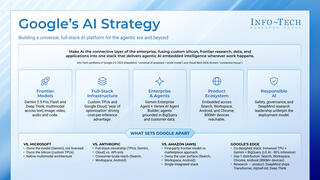
Google's AI strategy
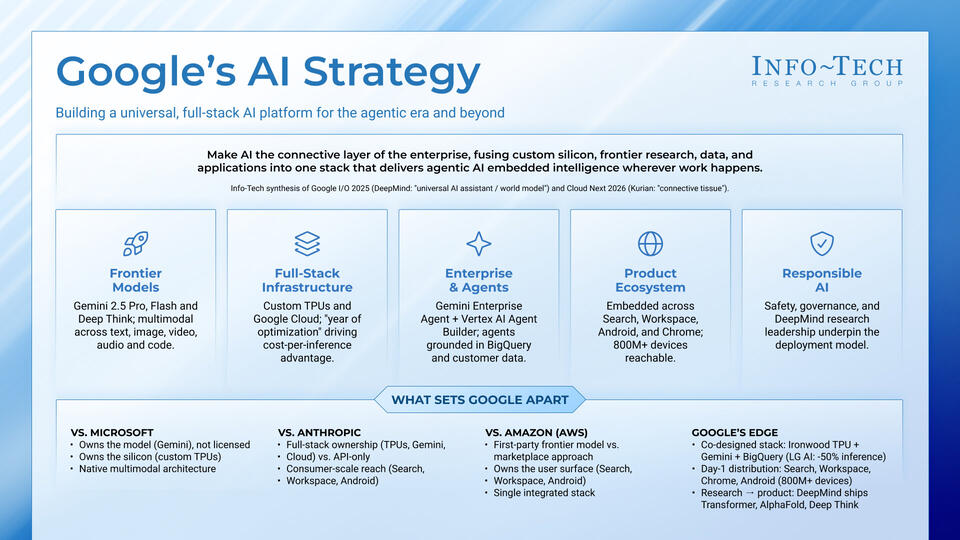
Building a universal, full-stack AI platform for the agentic era and beyond
Make AI the connective layer of the enterprise, fusing custom silicon, frontier research, data, and applications into one stack that delivers agentic AI embedded intelligence wherever work happens.
Info-Tech synthesis of Google I/O 2025 (DeepMind: "universal AI assistant / world model") and Cloud Next 2026 (Kurian: "connective tissue").
Frontier Models
Gemini 2.5 Pro, Flash and Deep Think; multimodal across text, image, video, audio and code.
Full-Stack Infrastructure
Custom TPUs and Google Cloud; "year of optimization" driving cost-per-inference advantage.
Enterprise & Agents
Gemini Enterprise Agent + Vertex AI Agent Builder; agents grounded in BigQuery and customer data.
Product Ecosystem
Embedded across Search, Workspace, Android, and Chrome; 800M+ devices reachable.
Responsible AI
Safety, governance, and DeepMind research leadership underpin the deployment model.
WHAT SETS GOOGLE APART
vs. Microsoft
- Owns the model (Gemini), not licensed
- Owns the silicon (custom TPUs)
- Native multimodal architecture
vs. Anthropic
- Full-stack ownership (TPUs, Gemini, Cloud) vs. API-only
- Consumer-scale reach (Search, Workspace, Android)
vs. Amazon (AWS)
- First-party frontier model vs. marketplace approach
- Owns the user surface (Search, Workspace, Android)
- Single integrated stack
Google's Edge
- Co-designed stack: Ironwood TPU + Gemini + BigQuery (LG AI: -50% inference)
- Day-1 distribution: Search, Workspace, Chrome, Android (800M+ devices)
- Research ? product: DeepMind ships Transformer, AlphaFold, Deep Think
FORWARD-LOOKING GO TO MARKET (GTM) AI Pro / Ultra tiers | Gemini Enterprise Agent Platform | Multicloud security via Wiz | On-prem via Google Distributed Cloud
Sources: Google DeepMind (Gemini I/O 2025); Gemini Enterprise Agent Platform; Google AI Principles
Speak with category experts to dive deeper into the vendor landscape
SoftwareReviews
Fact-based reviews of business software from IT professionals.
Product and category reports with state-of-the-art data visualization.
Top-tier data quality backed by a rigorous quality assurance process.
User-experience insight that reveals the intangibles of working with a vendor.
SoftwareReviews is powered by Info-Tech
Technology coverage is a priority for Info-Tech, and SoftwareReviews provides the most comprehensive unbiased data on today's technology. Combined with the insights of our expert analysts, our members receive unparalleled support in their buying journey.
Comprehensive software reviews to make better IT decisions
We collect and analyze the most detailed reviews on enterprise software from real users to give you an unprecedented view into the product and vendor before you buy.
SoftwareReviews' Verdict
Authenticated user reviews. Buy or skip assessment.
SOURCE
Google (Gemini) Enterprise Agent Platform Info-Tech and Software Reviews Data
Strong fit for Google Cloud native and ML mature organizations.
Champion tier reviewer scores; technical depth leads, but usability and setup friction may limit broader enterprise adoption.
Composite Score
8.8
CX Score
9.1
STRENGTHS
Data Integration
★★★★☆
Native BigQuery, Cloud Storage, and Dataflow tie-in for data prep and feature pipelines.
Model Training
★★★★☆
Managed AutoML and custom training, with TPU/GPU infra and 200+ Model Garden options.
Customization
★★★★☆
Fine-tuning, Vizier hyperparameter search, and grounding on enterprise data.
Feature Engineering
★★★★☆
Vertex Feature Store for serving, sharing, and reusing features across teams.
WATCH OUTS
Steep learning curve
GCP fluency required; setting up and configuring custom pipelines need deep ML and cloud knowledge.
Cost transparency
No scale-to-zero on endpoints; idle services keep billing, budgets lack hard stops.
Setup and IAM friction
Service agent and permission config can be complex to configure for teams new to GCP.
Fragmented documentation
Guidance scattered; limited end-to-end clarity for specific use cases.
Customization ceilings
AutoML and parts of Agent Builder offer less depth than fully custom approaches.
VERDICT
BEST FIT
GCP invested enterprises with mature data and ML engineering teams running production ML at scale.
USE CASES THAT WORK
- End-to-end MLOps with BigQuery and pipelines
- Multimodal Gemini and 200+ Model Garden access
RECONSIDER IF
- Multicloud or non-GCP cloud hosting environment
- Smaller/less mature AI enablement teams seeking low-code, plug-and-play AI tools
- Predictable per-seat pricing is required
Google AI
Gemini Enterprise
Founded 1998 | CA, USA
GOOGL (NASDAQ)
bio
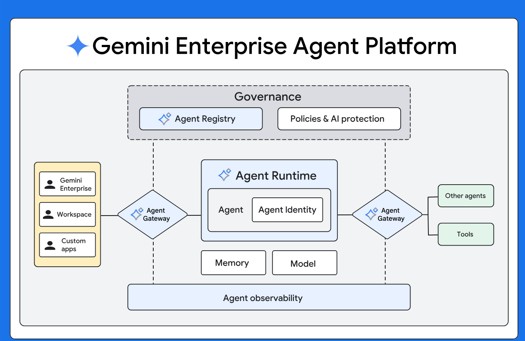
Gemini Enterprise Agent Platform (powered by Vertex AI) is Google Cloud's developer platform for building, scaling, governing, and optimizing enterprise-grade AI agents. It unifies model selection, agent development, orchestration, DevOps, and security in one destination, with first-class access to 200+ models including Gemini 3.1 Pro, Gemma 4, and Claude through Model Garden.
| 8.8 | 9.1 | +94 | 89% |
| COMPOSITE SCORE | CX SCORE | EMOTIONAL FOOTPRINT | LIKELINESS TO RECOMMEND |
118
REVIEWS
SoftwareReviews Data Points
Strengths:
- Unifies entire ML lifecycle in one platform
- Native BigQuery, Cloud Storage & Workbench integration
- 200+ models in Model Garden (Gemini, Claude, Llama)
- AutoML lowers coding barrier for non-experts
- Managed pipelines, Model Registry & Feature Store reduce MLOps overhead
Areas to Improve:
- Unpredictable pricing; idle endpoints still bill node-hours
- Documentation gaps and inconsistent UI for advanced features

Outlining key products within Google's AI portfolio
Consumer & Workplace Productivity
Gemini
Consumer chat, search & multimodal assistant.
Free, Pro & Ultra tiers.
Available on web & mobile.
Gemini for Workspace
AI in Gmail, Docs, Sheets & Meet. Drafts, summaries & meeting notes. Side panel across Workspace apps.
NotebookLM
Source-grounded research notebook. Audio overviews & deep summaries.
Upload PDFs, links & docs.
Google Vids
AI-generated video creation in Workspace. Scripts, voiceovers & visuals. Templates for training.
Gemini on Android
Default on-device assistant
Voice, camera & screen input
across phones, tablets, and other system interfaces.
Cloud, Data & Agents
Gemini Enterprise
Gen AI & agentic workflows.
For knowledge worker productivity.
Pre-built & custom agents.
Agent Platform
Formerly Vertex AI.
Build, govern & scale custom agents.
Model garden & tuning tools.
Google Cloud
Underlying AI infrastructure.
TPUs, BigQuery & enterprise security.
Global regions & compliance.
Gemini in BigQuery
AI inside the data warehouse.
SQL-native ML & generative AI.
Natural-language data analysis.
Models & Developer Tools
Nano Banana
Gemini 3 Flash Image model.
Native image generation & editing.
Fast, low-cost multimodal output.
DeepMind / Imagen 5
Frontier AI research lab.
Imagen, Veo & Lyria model family.
Powers Google's generative stack.
Antigravity
Agent-first developer platform.
Orchestrate sub-agents, CLI & SDK.
Managed agents via Gemini API.
Remy (Gemini Spark)
Google's 24/7 autonomous AI agent.
Multistep task execution.
Operates across Google services.
Architectural overview
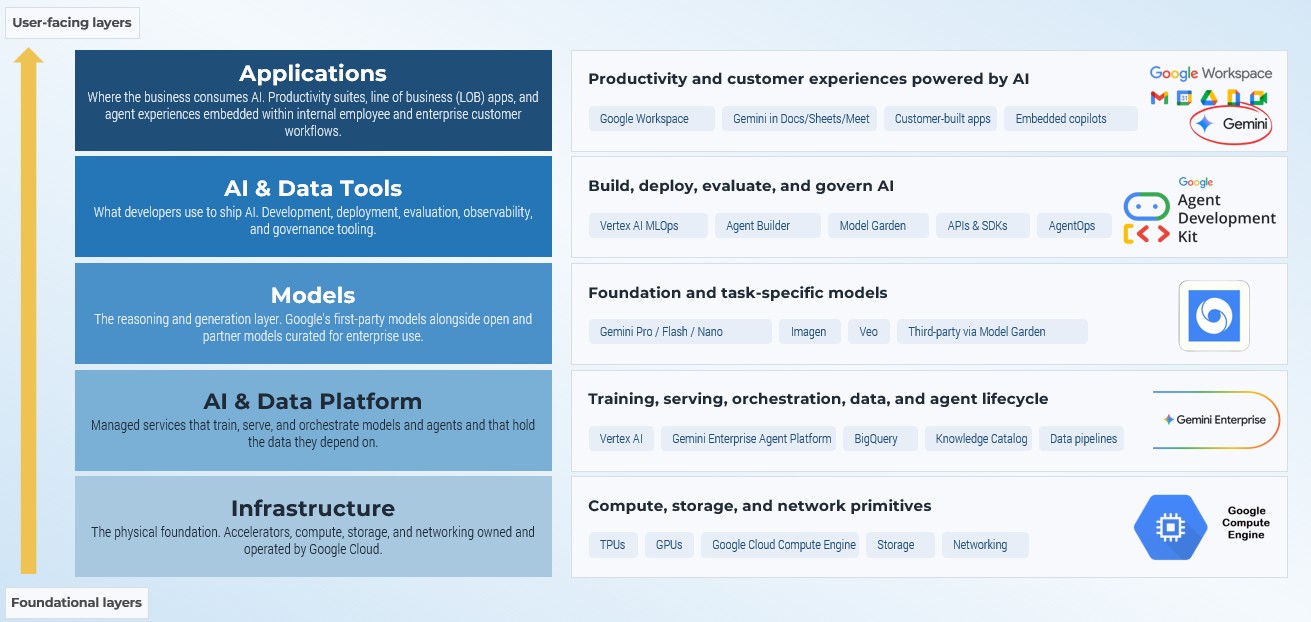
Five-layer view of Google's AI stack, from TPU infrastructure to Workspace and Gemini apps, with agent orchestration at the platform layer.
Data and AI integration
From unified data foundation to autonomous AI agents
Gemini Enterprise Agent Platform
(evolution of Vertex AI)
Agentic AI and Governance
- Agent Studio (low code) and ADK (code first) for building multistep AI agents
- Agent Identity, Gateway, and Model Armor for enterprise-grade governance
- 200+ models via Model Garden; agents connect to Workspace and third-party tools via MCP
Data Ingestion & Processing (Dataflow +Pub/Sub + Dataplex)
- Pub/Sub enables real-time event ingestion and stream analytics at scale
- Dataplex provides centralized governance, cataloging, and data quality using AI
- Dataflow supports real-time and batch transformation pipelines
Identity and Data Unification
- Feature Store enables centralized management of ML features tied to entities (customers, devices, etc.).
- Supports real-time serving of features from BigQuery for predictions
AI-Ready Data Platform (BigQuery)
- Provides a uniform way to work with both structured and unstructured data and supports open table formats like Apache Iceberg, Delta, and Apache Hudi
- Supports multi-modal data (text, image, video, logs)
- Enables real-time analytics with built-in ML capabilities (BigQuery ML)
About Info-Tech
Info-Tech Research Group is the world’s fastest-growing information technology research and advisory company, proudly serving over 30,000 IT professionals.
We produce unbiased and highly relevant research to help CIOs and IT leaders make strategic, timely, and well-informed decisions. We partner closely with IT teams to provide everything they need, from actionable tools to analyst guidance, ensuring they deliver measurable results for their organizations.
What Is a Blueprint?
A blueprint is designed to be a roadmap, containing a methodology and the tools and templates you need to solve your IT problems.
Each blueprint can be accompanied by a Guided Implementation that provides you access to our world-class analysts to help you get through the project.
Talk to an Analyst
Our analyst calls are focused on helping our members use the research we produce, and our experts will guide you to successful project completion.
Book an Analyst Call on This Topic
You can start as early as tomorrow morning. Our analysts will explain the process during your first call.
Get Advice From a Subject Matter Expert
Each call will focus on explaining the material and helping you to plan your project, interpret and analyze the results of each project step, and set the direction for your next project step.
Unlock Sample ResearchContributors
- Bill Wong, AI Research Fellow, Info-Tech Research Group
- Ben Dickie, Advisory Practice Lead (Research and Innovation), Info-Tech Research Group
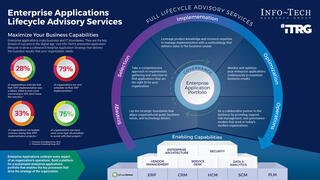 Build Your Enterprise Application Implementation Playbook
 Master Contract Review and Negotiation for Software Agreements
 Negotiate SaaS Agreements That Are Built to Last
 Governance and Management of Enterprise Software Implementation
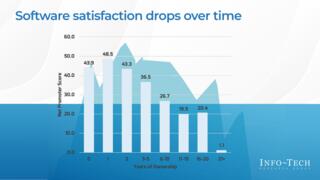 Select Software With the Right Satisfaction Drivers in Mind
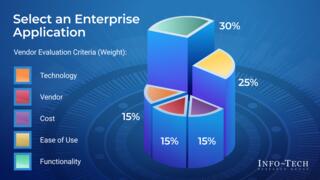 Select an Enterprise Application
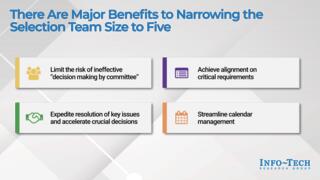 Optimize Your Software Selection Process: Why 5 and 30 Are the Magic Numbers
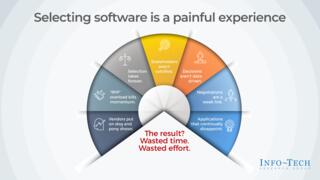 The Rapid Application Selection Framework
 Get the Best Discount Possible With a Data-Driven Negotiation Approach
 Craft a Customer-Driven Market Strategy With Unbiased Data
 Switching Software Vendors Overwhelmingly Drives Increased Satisfaction
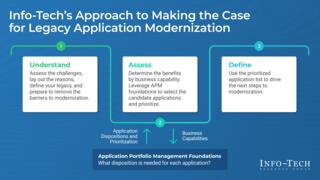 Make the Case for Legacy Application Modernization
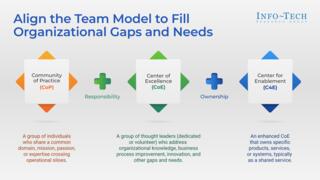 Empower Solution Delivery With the Right CoP, CoE, and C4E Model
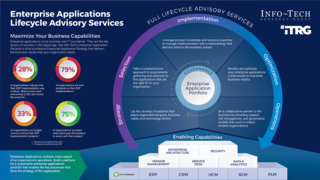 Enterprise Application Change: It's All About Business Capabilities
 2020 Applications Priorities Report
 AI-Assisted Code Generation Tools
 Vendor Spotlight: Microsoft Dynamics 365
 Vendor Spotlight: Salesforce Agentforce Service
 Vendor Spotlight: Microsoft Fabric
 Vendor Spotlight: Salesforce Marketing Cloud
 Vendor Spotlight: VMware Alternatives
 Vendor Spotlight: Microsoft AI
 Vendor Spotlight: Google AI
 Vendor Spotlight: Snowflake Data Platform
 Vendor Spotlight: Five9
