
Design Your Agentic AI Prototype
Design agents with engineering best practices.
Most organizations don’t struggle with AI ambition – they struggle with execution. AI agents present an extraordinary opportunity to drive innovation and competitive advantage, but initiatives often stall due to misalignment, complexity, and a lack of understanding around what agents can really do. The result is an estimated 95% of agentic AI projects failing to deliver ROI. This step-by-step blueprint provides a disciplined path from AI concept to rigorously scoped, testable agentic prototype that aligns to organizational goals, integrates with systems, and includes guardrails right from the outset.
The pressure to deliver quick wins with AI can result in organizations jumping into agentic projects before properly aligning on requirements, workflow, success criteria, and risk tolerance. Low-code/no-code tools support the misconception that agents are a quick and easy build. But when teams skip the fundamentals, the result is agents that may demo well but hide serious liabilities, including security and compliance gaps, untraceable decisions, and runaway cost. A disciplined framework that applies engineering best practices will force the right decisions early to produce an agent that is safe, governable, and scalable.
1. Talk is cheap. Agents create value only when they can act.
AI agents must be designed with clear instructions, the right tools, data, and models matched to the task. Without these foundations, it will be impossible to achieve intelligence or scalability. Instead, the result will be an agent that may be able to talk about the work but can’t deliver it.
2. Failure frequently starts with a poor understanding of workflow.
Teams often drop agents into workflows they don’t understand and expect intelligence to compensate for poor design. Real value comes from identifying where reasoning and judgment matter most and then transforming the workflow, rather than automating broken steps.
3. No guardrails equals no governance – and unlimited risk.
Without proper guardrails, governance, and tuning, agents can deadlock or spiral out of control. To avoid agents acting in ways that create real exposure, define your enterprise risks and agent boundaries upfront, including data privacy and content safety, regulatory, financial, and brand reputation.
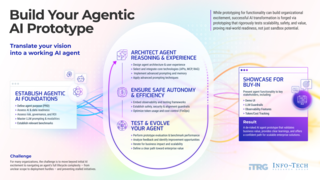
Use this step-by-step framework to standardize a prototype-to-production pipeline for your AI agents
This research can help you move from idea to working prototype with practical deliverables that include a detailed product requirements document (PRD), a baseline orchestration pattern, a safety and governance checklist, an evaluation framework with meaningful KPIs, and a roadmap that moves from prototype to pilot and into supported operations. The framework follows four phases:
- Business requirements & value alignment: Define the problem, personas, KPIs, current workflow, and prototype scope.
- Agent capabilities & workflow: Map the agentic workflow, pick models and tools, and write clear agent instructions.
- Prototype orchestration & governance: Choose an orchestration pattern and add guardrails and human-in-the-loop controls.
- Agent evaluation criteria & next steps: Define success metrics, set up tracing and observability, test with datasets, and plan next steps to pilot and production.

On Demand
Webinar

From Vision to Reality: Build Your Agentic AI Prototype
Play WebinarMember Testimonials
After each Info-Tech experience, we ask our members to quantify the real-time savings, monetary impact, and project improvements our research helped them achieve. See our top member experiences for this blueprint and what our clients have to say.
9.5/10
Overall Impact
$77,168
Average $ Saved
20
Average Days Saved
Client
Experience
Impact
$ Saved
Days Saved
BC College of Nurses and Midwives
Workshop
9/10
N/A
10
Interfor Corp
Workshop
10/10
$22,000
20
What were the best parts of your experience? • The workshop was highly collaborative and brought together business and IT stakeholders to design a ... Read More
Systematix Technology Consultants Inc
Guided Implementation
10/10
$10,000
10
Calista Corporation
Workshop
9/10
$137K
50
The best: Martin never once let us mark something "done" on our say-so, every step got run in the dashboard and eval-judged before we moved on. Tha... Read More
RCL Group Services (Pty) Ltd
Workshop
9/10
$37,974
20
The facilitators were extremely knowledgeable and engaging. They assisted the less technical attendees to understand the opportunities and challen... Read More
Stockman Bank
Workshop
10/10
N/A
N/A
Only a thrid of the way through but the info-tech team is performing at a very high level.
California Department of Social Services
Guided Implementation
9/10
N/A
N/A
Megan was knowledgeable and shared some good examples
Motion Picture & Television Fund
Guided Implementation
10/10
$2,759
20
Make-A-Wish Foundation of America
Guided Implementation
10/10
$13,799
5
Great insights on Agentic AI, deployment architectures, considerations, etc.
Educational Computing Network of Ontario (ECNO)
Guided Implementation
10/10
N/A
N/A
Broad spectrum of information lots of opportunities for attendees to engage in discussions
USAble Mutual Insurance Co. dba Arkansas Blue Cross and Blue Shield
Workshop
9/10
$68,999
10
Western Alliance Bank
Guided Implementation
10/10
$137K
10
USAble Mutual Insurance Co. dba Arkansas Blue Cross and Blue Shield
Workshop
9/10
$2,759
10
First Command Financial Services
Workshop
9/10
N/A
N/A
The engagement from info-tech was great for this workshop. Both Martin and Jai delivered great content and training to our team.
First Command Financial Services
Workshop
9/10
N/A
20
The best part of the training was its structure: a clear, step-by-step methodology from defining business requirements through evaluation, plus a h... Read More
TechSavvy s.r.o.
Guided Implementation
10/10
$3,220
2
Flexprint, LLC
Workshop
10/10
$551K
120
Best was the structure of the program and the impact that it had on the folks that attended. They had a renewed sense of excitement about being a p... Read More
Carmel Development & Management Co, Inc
Workshop
10/10
$137K
20
The best part is having the whole team understand the true planning process and the controls that go into an effective Agentic AI Prototype and pot... Read More
Al Nahdi Medical
Guided Implementation
10/10
$2,621
2
Meagan explained a very useful framework for building Agents end to end that we can use in our initiatives ..
City Brewing Company, LLC
Workshop
8/10
$13,799
10
Great mix of theory and practice! We went from Agent basics to building real workflows in a Python hackathon. A perfect high-level overview to appr... Read More
Kansas City Chiefs Football Club
Guided Implementation
10/10
$13,600
5
Turned into more of a sales pitch for Info-Tech services than an information sharing session, but it was still useful and there is interest in leve... Read More
Workshop: Design Your Agentic AI Prototype
Workshops offer an easy way to accelerate your project. If you are unable to do the project yourself, and a Guided Implementation isn't enough, we offer low-cost delivery of our project workshops. We take you through every phase of your project and ensure that you have a roadmap in place to complete your project successfully.
Module 1: Define Business Requirements & Align on Value Proposition
The Purpose
Convert business needs into a clear problem statement, success criteria, and scope to ensure a shared definition of “value,” which must inform every design decision.
Key Benefits Achieved
- Clear line of sight between agent opportunities and measurable business impact.
- Defined personas, KPIs and identified constraints that will ensure your agentic AI system will deliver value.
- Finalize your agentic AI prototype scope across business stakeholders and technical teams.
Activities
Outputs
Introduction to agentic AI concepts
Define the core problem statement
Discover key user personas
- Documented problem statement, personas, and KPIs
Document business KPIs with baselines and targets
Map the current-state workflow for the selected use case, identifying reasoning steps and edge cases
- Shared understanding of as-is workflow with reasoning steps and edge cases
Finalize the prototype scope and boundaries
- Defined and agreed upon prototype scope
Module 2: Map Your Agent Capabilities & Workflow
The Purpose
Design how your agents will work, including mapping workflows, decisions, tools, and handoffs between humans and agents.
Key Benefits Achieved
- Visualize your agentic workflow to demonstrate how your agents will function.
- Identify the right models, tools, and instructions for each agent.
- Prepare your developers to build APIs, agents, tools, and outputs in OpenAI.
Activities
Outputs
Introduction to agent workflow design, models, tools, and instructions
OpenAI Developer Crash Course 1: APIs, agents, tools & structured output.
Identify the optimal model for each agent
- Model shortlist for each agent
Define the necessary tools and agent instructions for each agent
- Data, tooling plan, and draft instructions for each agent
Optimize and rationalize agent distribution
- Initial agent workflow
Module 3: Define Your Prototype Orchestration & Governance
The Purpose
Define how agents are orchestrated, governed, and observed by embedding accountability and human oversight by design.
Key Benefits Achieved
- Design agent orchestration with clear controls, guardrails and oversight.
- Clearly identify areas for guardrails and human-in-the-loop requirements.
- Prepare your developers to build guardrails and orchestration patterns in OpenAI.
Activities
Outputs
Introduction to agent orchestration, guardrails, and human-in-the-loop (HITL)
OpenAI Developer Crash Course 3: Orchestration, guardrails, observability, FinOps
Determine the optimized orchestration pattern for the use case
- Documented orchestration pattern for the use case
Identify input, agent, and output risks
- Risk inventory
Document all necessary guardrails and HITL steps
- Input, agent, and output-level guardrails & HITL
- Optimized agent workflow design documented in the PRD
Module 4: Define Your Agent Evaluation Criteria
The Purpose
Establish clear evaluation criteria including metrics, test cases, traceability, and security.
Key Benefits Achieved
- Define what good looks like through clear agent success metrics.
- Establish your evaluation datasets and test criteria, and ensure design traceability.
- Set realistic expectations around next steps for the design finalization and prototype build.
- Prepare your developers to perform evaluations in OpenAI.
Activities
Outputs
Introduction to agent evaluation
OpenAI Developer Crash Course 4: Evaluations
Document agent competencies, success criteria, and metrics
- Agent success criteria, metrics, and tracing requirements
Document agent tracing requirements
Build evaluation datasets to test agents and the system
- Defined evaluation datasets
Determine your experimentation plan & define next steps
- Experimentation plan and next steps
- Finalized PRD
Design Your Agentic AI Prototype
Design agents with engineering best practices.
Design Your Agentic AI Prototype
EXECUTIVE BRIEF
Executive summary
Your Challenge | Common Obstacles | Info-Tech’s Approach |
|---|---|---|
|
|
|
Info-Tech Insight
Building reliable AI agents requires five reinforcing pillars: Strong Foundations, Thoughtful Orchestration, Safety & Guardrails, Continuous Evaluation, and a disciplined Deployment Strategy. Together they enable teams to move from prototype to production with confidence and measurable business impact.
Agentic AI Ambition Is Outpacing Execution Success
- Organizations are under growing pressure to translate AI ambition into operational reality. The path forward requires moving from experimentation to structured, scalable deployment – a shift that introduces both technical and organizational complexity.
- While enthusiasm for generative and autonomous technologies is high, most implementations remain isolated proofs of concept rather than integrated, repeatable capabilities that deliver measurable business impact.
- Sustainable success depends on measurement and repeatability. Clear performance metrics and monitoring systems are needed to continuously evaluate agentic effectiveness, while a structured roadmap must guide how successful use cases are scaled across the enterprise.
Together, these challenges define the central task: transforming promising experimentation into a disciplined, scalable, and governed model for agentic AI adoption.
95% of generative AI projects fail to deliver tangible ROI.
Source: MIT NANDA “GenAI Divide” Report, 2025
Barriers making it difficult to realize value
- The absence of standardized frameworks for orchestration, communication, and memory makes it difficult to build agents that are reliable, interoperable, and maintainable at scale.
- Traditional performance metrics, designed for static models, fail to capture the reasoning depth, autonomy, and collaboration quality that defines agentic behavior. Engagement and adoption don’t reflect whether agents are delivering operational value.
- Data security, privacy, and ethical considerations take on new dimensions when systems can act autonomously, requiring oversight mechanisms that are still emerging across the industry. Operational efficiency compounds the challenge, as early agentic prototypes often consume disproportionate compute resources or introduce latency that undermines real-world viability.
- Mixed perspective on how to design and build agents has led to confusion, and an over confidence in vendors, drag-and-drop solutions, and “vibe coding.” When teams rely on drag-and-drop or vibe coding, solutions may show well in a demo but fail to deliver enterprise-grade value, and struggle to act reliably, safely or at scale.
Ambition vs. Readiness
70% of CIOs that say they’ve adopted AI Agents.
Source: IDC, 2024
90% of CIOs fail to report ROI.
Source: IDC, 2024
Agentic systems go beyond generative AI
3 Levels of Agentic Progression
| 01 | Assist: Human prompts the AI, which then drafts content or uses tools, often with RAG. The human retains control for execution. No autonomous ReACT cycle is completed by the AI. |
|---|---|
| 02 | Single-Agent Autonomy: A single agent plans and acts across various tools based on a human-set goal. Key steps may require human approval, but the agent drives the workflow; execution can be by human or agent. |
| 03 | Multi-Agent Autonomy: Multiple agents collaborate under an orchestrator to achieve complex business outcomes. This system leverages distributed intelligence for execution, with or without human intervention. |
The evolution from generative AI to advanced agentic capabilities involves a progression through increasing levels of autonomy and complexity.
While low code options are a common entry point for single-level agents or assistants. However, as organizations scale to Multi-Agent Systems, and enterprise level workflows These will require much deeper integration, thoughtful design and custom development. This research focuses on how to build those types of Multi-Agent Systems.
Augmented LLMs are the foundation for autonomization
Adding memory, tools, and data access transforms LLMs from simple chatbots into the building blocks of autonomous systems.
Augmented LLM |
Agents (Autonomization) |
|---|---|
This LLM is enhanced with external capabilities but still works in a linear, input to output flow. The LLM only acts when prompted and its workflow is a single-pass interaction. Process:
| This LLM becomes part of a closed-loop system that allows autonomous decision-making and continuous action without constant human prompting. Process:
|
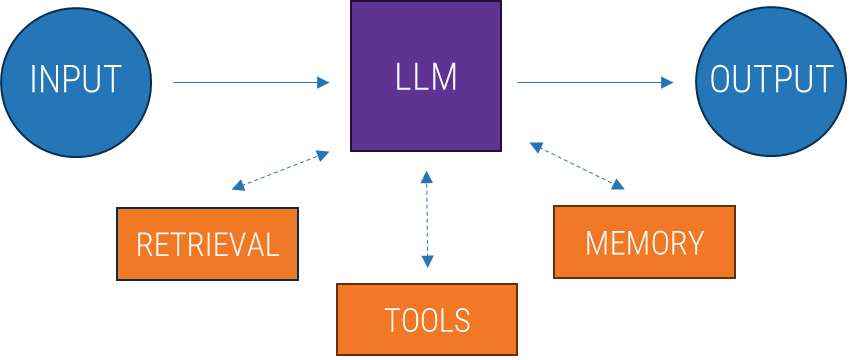
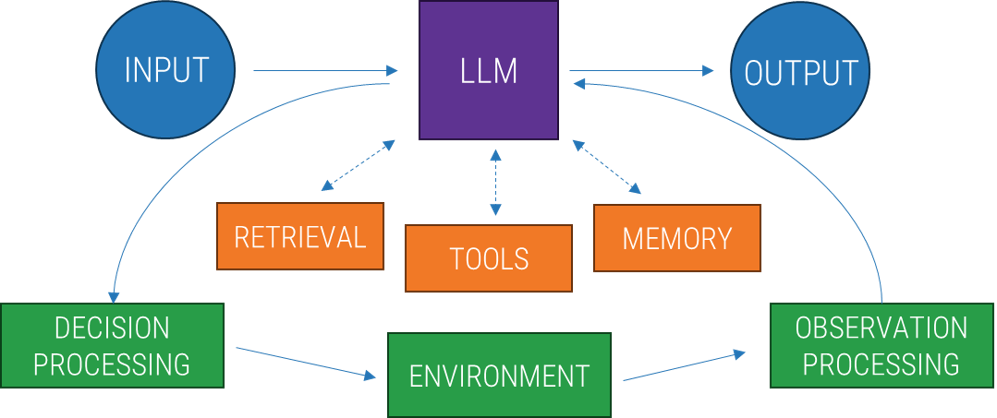
Agentic AI unlocks new ways for organizations to attain value
Agents excel where traditional rule-based automation fails to handle complex, ambiguous problems. Value-add can be found in scenarios that have:
Complex Decision-Making | Difficult-to-Maintain Rules | Heavy Reliance on Unstructured Data |
|---|---|---|
What an agent does:
How this helps:
Example: Refund approval in customer service workflows | What an agent does:
How this helps:
Example: Performing vendor security reviews | What an agent does:
How this helps:
Example: Processing a home insurance claim |
Agents extend beyond traditional automation software
AI agents move beyond traditional automation by applying context and reasoning to complete tasks on your behalf.
Aspect | Traditional Software | AI Agents |
|---|---|---|
Logic flow | Predetermined if/then branches | Dynamic reasoning based on context |
Input handling | Structured, validated fields | Natural-language understanding |
Adaptability | Code changes required | Learns from instructions/examples |
Error handling | Specific error codes | Contextual recovery strategies |
User interaction | Forms, buttons, static APIs | Conversational and intuitive |
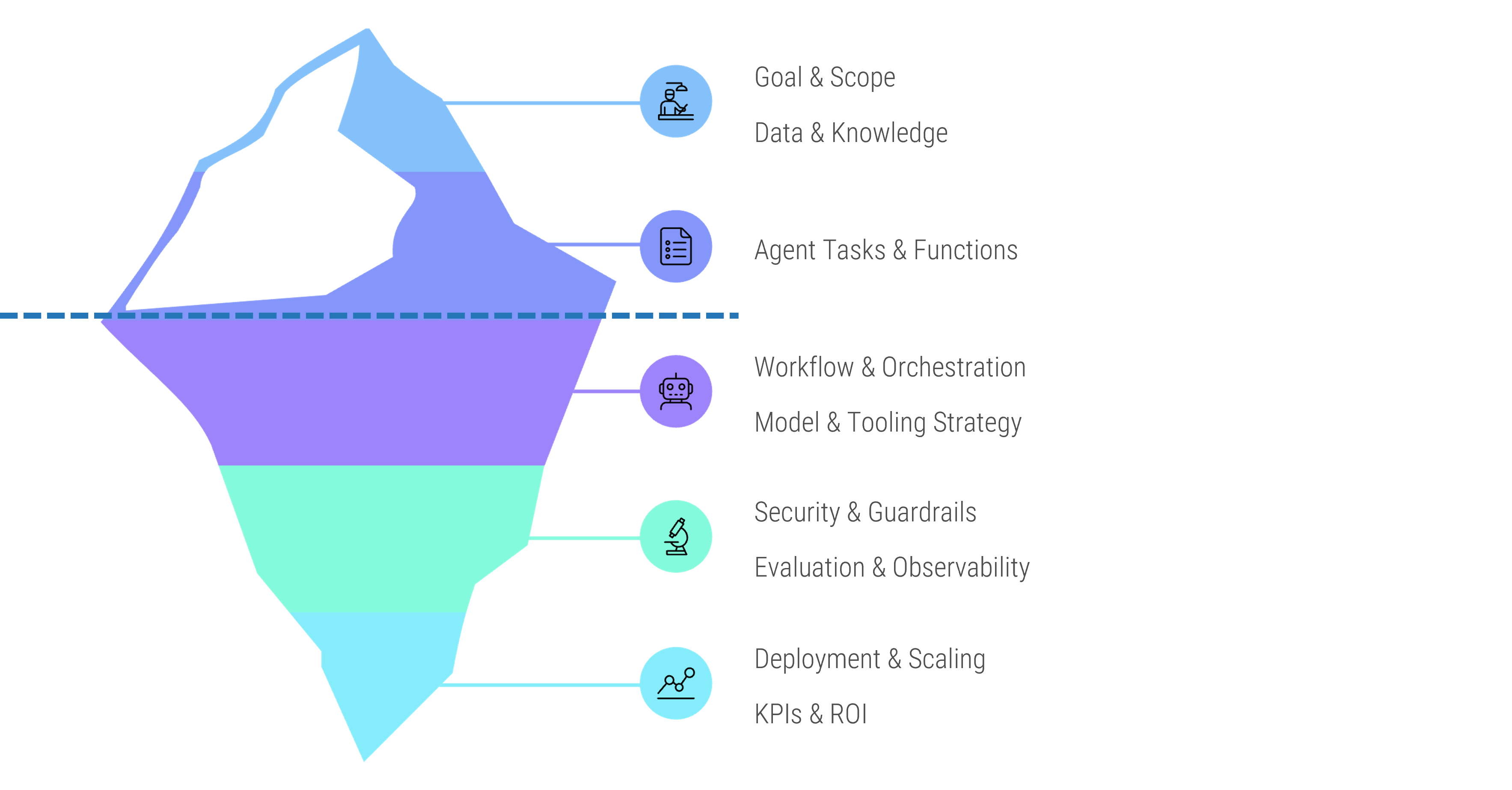
Agents fail when organizations focus on the surface and not the system
While users often perceive the simple interface and outputs of an AI agent as the “tip of the iceberg” a vast and complex infrastructure operates beneath the surface. If the agent can’t reason, extract, and act precisely, it can’t deliver business value.
Under the surface, an agent’s foundation includes:
- Sophisticated model orchestration
- Seamless tool integration
- Robust safety systems
- Continuous monitoring
- Significant operational complexity
Info-Tech Insight
Most agent deployment failures stem from overestimating the simplicity and speed of reaching production. True value comes from meticulous design and robust integration.
Info-Tech’s approach to agent design reduces risks that commonly derail agent projects
Six Failure Patterns of Agentic AI Design
| 01. | Process Blindness Attempting to automate a workflow that is poorly documented, inconsistent, or lacks a clear logic owner. Instead: Document and map the “as-is” workflow and all its exceptions before the implementation. | 02. | Integration Gaps Building an agent in a sandbox without verifying if it can access required APIs or databases in a live environment. Instead: Conduct a technical "plumbing" check early to ensure the agent has authenticated access to every tool it needs. |
|---|---|---|---|
| 03. | Governance Too Late Treating Security, Legal, and Compliance as a "final check," leading to projects being blocked right before launch. Instead: Embed "Privacy by Design" and Human-in-the-Loop (HITL) checkpoints from the requirements phase. | 04. | Unclear “Good” Failing to define what a "correct" answer looks like, making it impossible to measure if the agent is effective. Instead: Establish success metrics (e.g. 90% accuracy on queries) and test datasets before deployment. |
| 05. | Lack of Observability Running agents where you can see the final output but have no way to trace the steps the agent took to get there. Instead: Implement comprehensive traceability from day one. | 06. | Cost Surprises Failing to account for how "loops" and high token usage in complex agentic workflows can lead to exponential API costs. Instead: Set strict token limits, "max-turn" guards, and real-time cost monitoring for all production agents. |
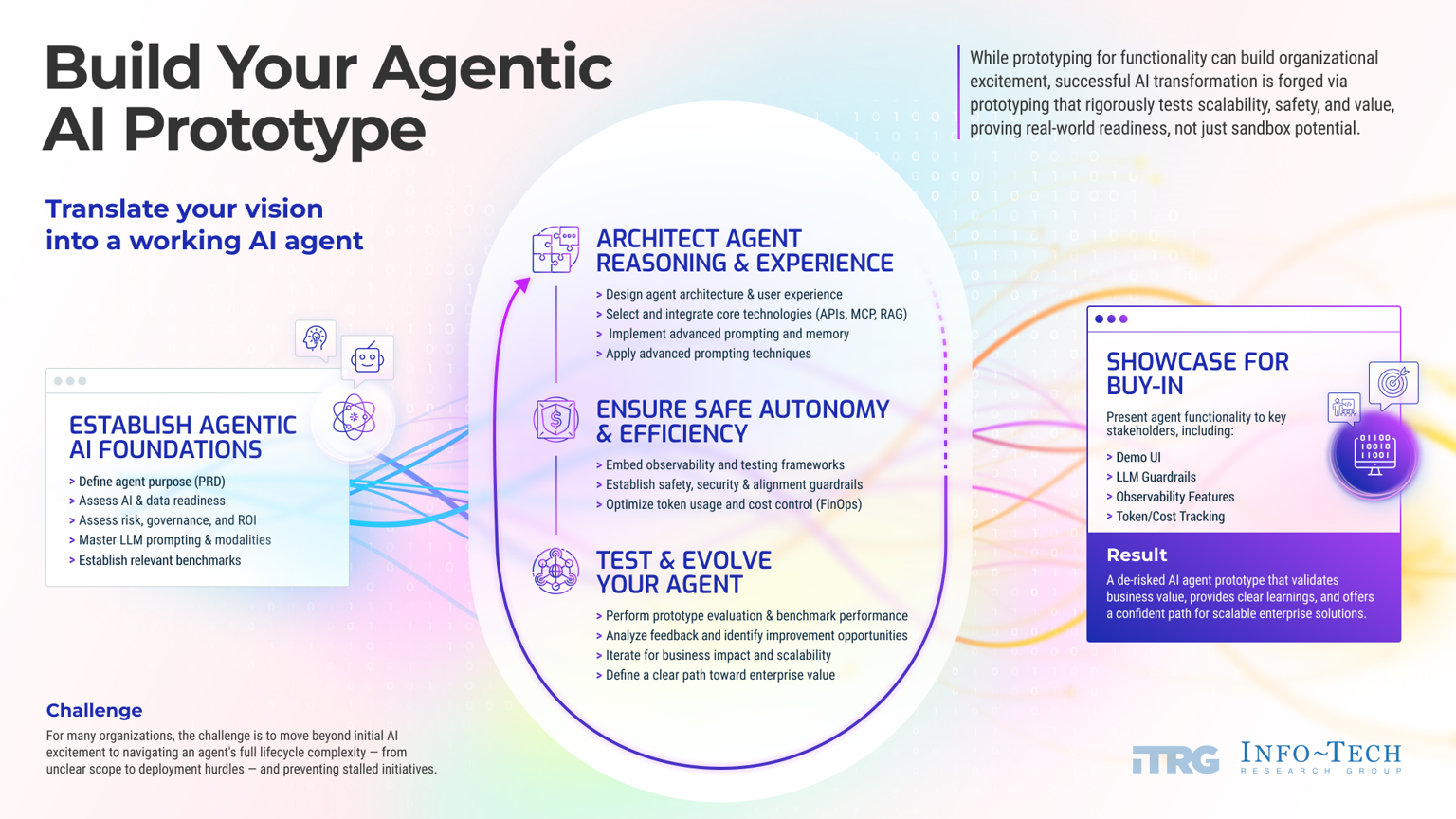
Info-Tech’s methodology to design an agentic prototype
1. Business Requirements & Value Alignment | 2. Map Your Agent Capabilities & Workflow | 3. Define Your Prototype Orchestration & Governance | 4. Define Your Agent Evaluation Criteria & Next Steps | |
|---|---|---|---|---|
Phase Steps | 1.1 Define your problem statement 1.2 Outline personas 1.3 Set KPIs 1.4 Map current workflow 1.5 Determine prototype scope | 2.1 Design an agentic workflow 2.2 Select agent model(s) 2.3 Specify agent tools 2.4 Author agent instructions 2.5 Optimize agent distribution | 3.1 Select the orchestration strategy 3.2 Identify risks 3.3 Define guardrails & human-in-the-loop 3.4 Design agentic workflow (with guardrails & human-in-the-loop) | 4.1 Define success criteria & metrics 4.2 Plan for tracing & observability 4.3 Create evaluation datasets 4.4 Determine next steps |
Phase Outcomes |
|
|
|
|
Insight summary
Overarching Insight
Designing reliable AI agents requires five reinforcing pillars: Clear Business Value, Strong Foundations, Thoughtful Orchestration, Safety & Guardrails, and Continuous Evaluation. Together they enable teams to move from prototype to production with confidence and measurable business impact.
Most failures start with a poor understanding of workflow.
Teams often drop agents into workflows they don’t understand and expect intelligence to compensate for poor design. Real value comes from identifying where reasoning and judgement matter most and transforming the workflow, not from automating broken steps faster.
Agents create value only when they can act.
In order to act, AI agents need to be designed with clear instructions, the right tools, and models matched to the task. Without these foundations you don’t get intelligence or scale – you end up with something that may be able to talk about the work but can’t deliver.
Multiple specialized agents are more reliable than one general-purpose agent.
When each agent has a narrow role and clear boundaries, the system handles edge cases more consistently. This is how organizations scale people. Agents work the same way.
No guardrails means no governance and unlimited risk.
Agents can deadlock or spiral out of control without proper guardrails, governance, and tuning. This means having a detailed understanding of your enterprise risks and agent boundaries including data privacy and content safety, regulatory, financial and brand reputation risks.
The “happy path” requires evaluation-driven development.
Part of the design phase needs to include defining critical evaluation criteria, test cases, and multiple good vs. bad scenarios. Without this, there is no way to reliably improve agents over time, and it’s not safe to deploy them to production.
Key deliverable
Info-Tech’s Agentic Product Requirements Document (PRD) helps teams move from an idea for an AI agent to a testable, well-scoped prototype.
Working within the framework of this PRD ensures you’re not just experimenting with an agent, but building it with purpose, safety, and measurable business value front-of-mind.
Move from idea to prototype
The Agentic PRD helps teams move from an idea for an AI agent to a testable, well-scoped prototype. By working through each section, you will:
- Align on the business case: Clearly define the problem, intended users, and measurable outcomes.
- Draw clear boundaries: Specify what is in scope for the prototype and what is deferred to future phases.
- Design with confidence: Choose the right model variant, tools, and knowledge sources while documenting user flows and safety guardrails.
- Plan for accountability: Set success metrics, evaluation methods, and industry-specific compliance checks.
- De-risk delivery: Outline rollout stages, risks, open questions, and implementation priorities so the team can build iteratively and safely.
A complete PRD is a pre-requisite for our technical workshop focused on developing the PRD into a functional prototype.
Blueprint benefits
IT Benefits | Business Benefits |
|---|---|
|
|
Info-Tech offers various levels of support to best suit your needs
| DIY Toolkit | Guided Implementation | Workshop | Executive & Technical Counseling | Consulting |
|---|---|---|---|---|
| "Our team has already made this critical project a priority, and we have the time and capability, but some guidance along the way would be helpful." | "Our team knows that we need to fix a process, but we need assistance to determine where to focus. Some check-ins along the way would help keep us on track." | "We need to hit the ground running and get this project kicked off immediately. Our team has the ability to take this over once we get a framework and strategy in place." | "Our team and processes are maturing; however, to expedite the journey we'll neecd a seasoned practitioner to coach and validate approaches, deliverables, and opportunities." | "Our team does not have the time or the knowledge to take this project on. We need assistance through the entirety of this project." |
Diagnostics and consistent frameworks are used throughout all five options.
Guided Implementation
What does a typical GI on this topic look like?
| Phase 1 | Phase 2 | Phase 3 | Phase 4 |
|---|---|---|---|
Call #1: Define problem statement, personas & KPIs. | Call #2: Map current workflow and set prototype scope. Call #3: Design agent workflow with models, tools, & instructions. Call #4: Optimize agent distribution. Call #5: Choose orchestration pattern. | Call #6: Design guardrails and human-in-the-loop. Call #7: Define successful agent behavior & select success metrics. | Call #8: Create tracing & experimentation plan. Call #9: Identify next steps and finalize documents & approvals. |
A Guided Implementation (GI) is a series of calls with an Info-Tech analyst to help implement our best practices in your organization.
A typical GI is 8 to 12 calls over the course of 4 to 6 months.
Contact your account representative for more information.
workshops@infotech.com
1-888-670-8889
This research covers step one in Info-Tech’s agentic AI prototyping series.
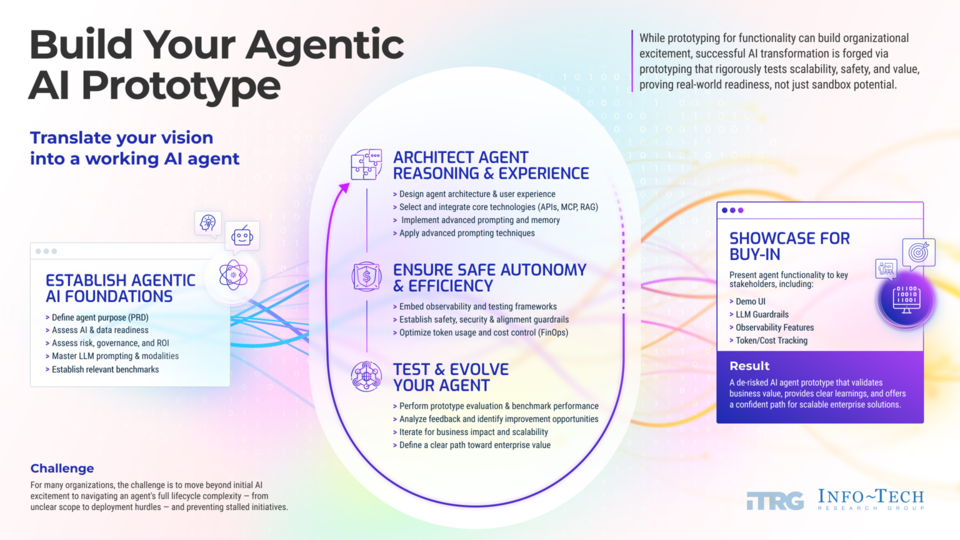
Leverage Info-Tech’s Design and Develop Workshops to rapidly go from vision into a working AI prototype.
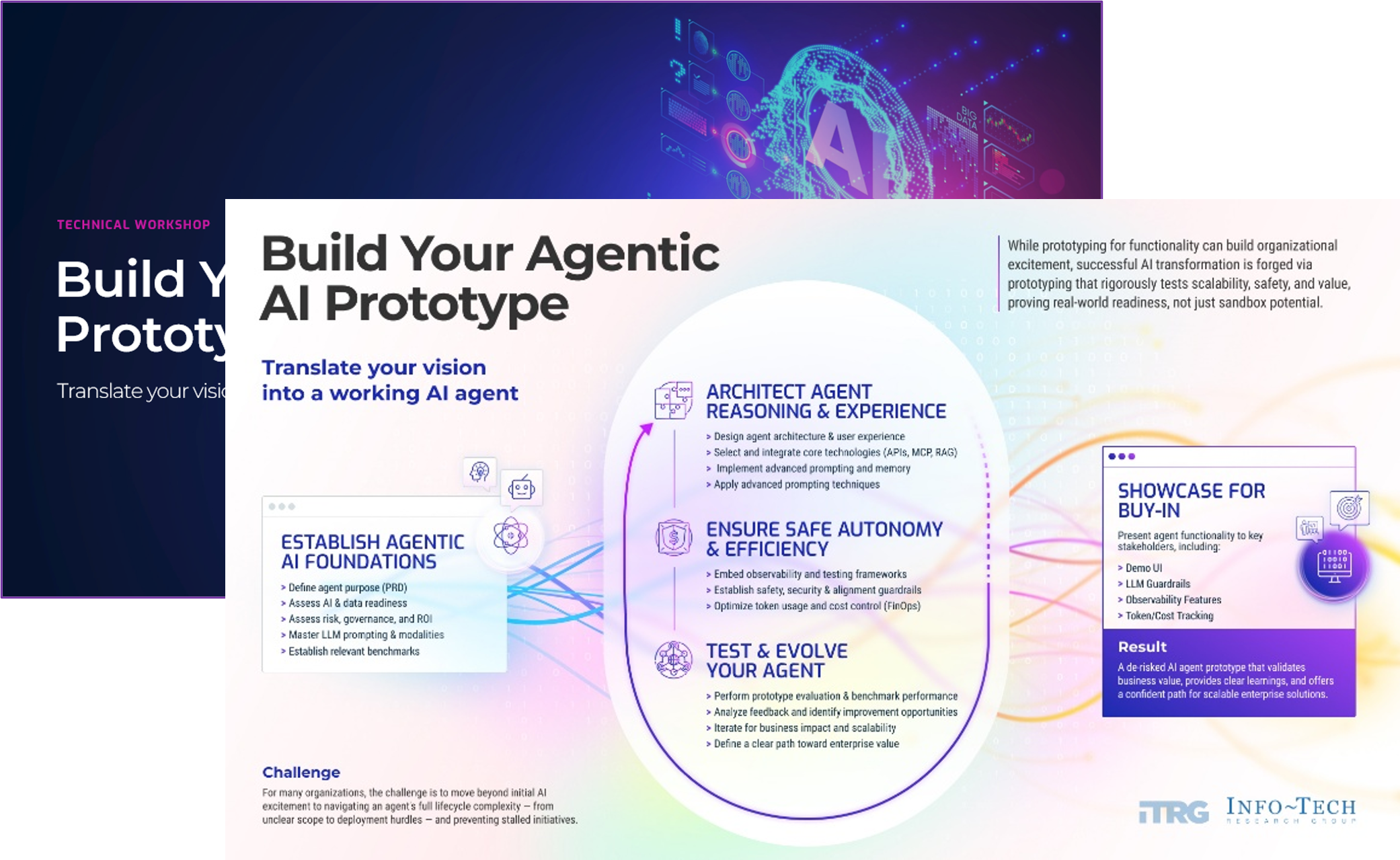
| 01 | Workshop 1: Design Your Agentic AI Prototype |
|---|---|
| 02 | Workshop 2: Develop Your Agentic AI Prototype |
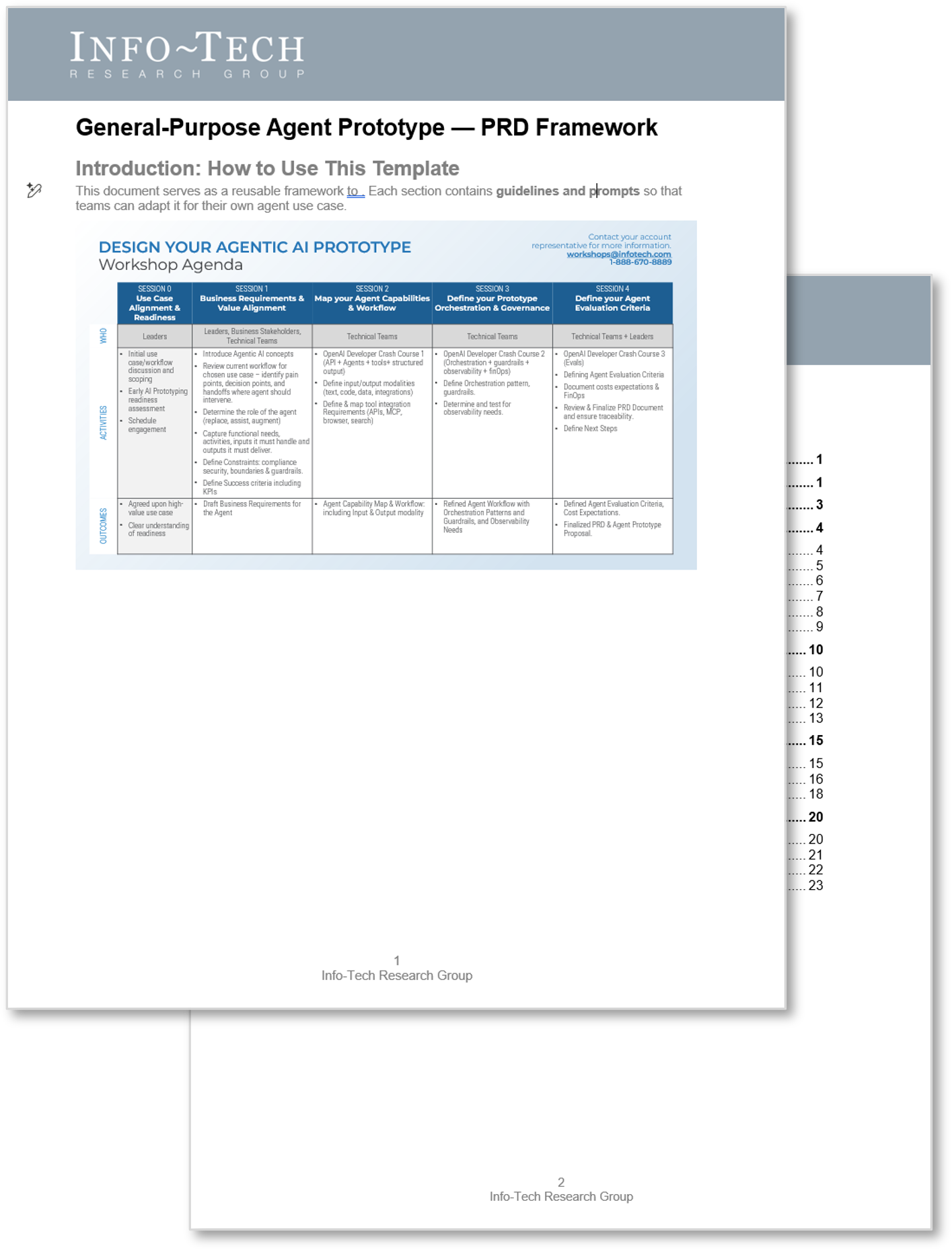
DESIGN YOUR AGENTIC AI PROTOTYPE
Workshop Agenda
| SESSION 0 Use Case Alignment & Readiness | SESSION 1 | SESSION 2 | SESSION 3 | SESSION 4 | |
|---|---|---|---|---|---|
WHO | Leaders | Leaders, Business Stakeholders, Technical Teams | Business Stakeholders, Technical Teams | Business Stakeholders, Technical Teams | Business Stakeholders, Technical Teams + Leaders |
ACTIVITIES |
|
|
|
|
|
OUTCOMES |
|
|
|
|
|
On Demand
Webinar
From Vision to Reality: Build Your Agentic AI Prototype
Play Webinar
Jeremy
Roberts
Senior Director, Research & Content

Martin
Bufi
Principal Research Director
About Info-Tech
Info-Tech Research Group is the world’s fastest-growing information technology research and advisory company, proudly serving over 30,000 IT professionals.
We produce unbiased and highly relevant research to help CIOs and IT leaders make strategic, timely, and well-informed decisions. We partner closely with IT teams to provide everything they need, from actionable tools to analyst guidance, ensuring they deliver measurable results for their organizations.
What Is a Blueprint?
A blueprint is designed to be a roadmap, containing a methodology and the tools and templates you need to solve your IT problems.
Each blueprint can be accompanied by a Guided Implementation that provides you access to our world-class analysts to help you get through the project.
Need Extra Help?
Speak With An Analyst
Get the help you need in this 4-phase advisory process. You'll receive multiple touchpoints with our researchers, all included in your membership.
Guided Implementation 1: Business Requirements & Value Alignment
- Call 1: Define problem statement, personas & KPIs.
Guided Implementation 2: Agent Capabilities & Workflow
- Call 1: Map current workflow and set prototype scope.
- Call 2: Design agent workflow with models, tools, & instructions.
Guided Implementation 3: Orchestration & Governance
- Call 1: Optimize agent distribution.
- Call 2: Choose orchestration pattern.
Guided Implementation 4: Evaluation & Next Steps
- Call 1: Design guardrails and human-in-the-loop.
- Call 2: Define successful agent behavior & select success metrics.
- Call 3: Create tracing & experimentation plan.
- Call 4: Identify next steps and finalize documents & approvals.
 Tech Trends 2025
 Define Your Digital Business Strategy
 Kick-Start IT-Led Business Innovation
 Establish a Foresight Capability
 Apply Design Thinking to Build Empathy With the Business
 Sustain and Grow the Maturity of Innovation in Your Enterprise
 Position IT to Support and Be a Leader in Open Data Initiatives
 Double Your Organization’s Effectiveness With a Digital Twin
 Develop a Use Case for Smart Contracts
 Adopt Design Thinking in Your Organization
 Accelerate Digital Transformation With a Digital Factory
 Tech Trends 2024
 2021 Tech Trends
 Implement and Mature Your User Experience Design Practice
 CIO Priorities 2022
 2022 Tech Trends
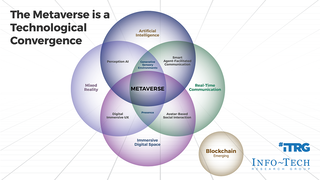 Into the Metaverse
 Demystify Blockchain: How Can It Bring Value to Your Organization?
 2020 Tech Trend Report
 2020 CIO Priorities Report
 CIO Trend Report 2019
 CIO Trend Report 2018
 CIO Trend Report 2017
 AI and the Future of Enterprise Productivity
 Evolve Your Business Through Innovation
 Build a Platform-Based Organization
 Tech Trend Update: If Contact Tracing Then Distributed Trust
 Tech Trend Update: If Biosecurity Then Autonomous Edge
 Tech Trend Update: If Digital Ethics Then Data Equity
 Tech Trends 2023
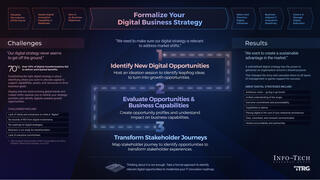 Formalize Your Digital Business Strategy
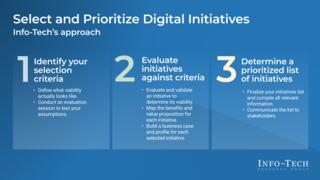 Select and Prioritize Digital Initiatives
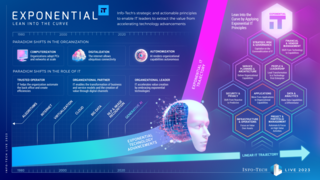 Adopt an Exponential IT Mindset
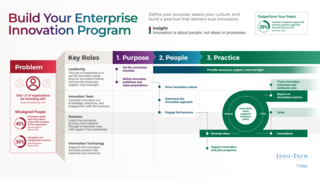 Build Your Enterprise Innovation Program
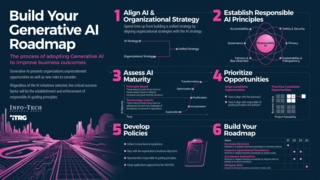 Build Your Generative AI Roadmap
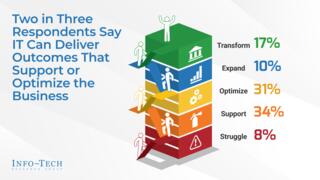 Annual CIO Survey Report 2024
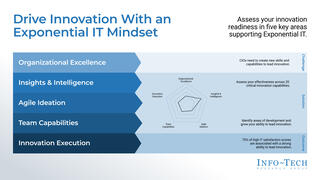 Drive Innovation With an Exponential IT Mindset
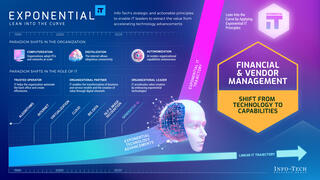 Exponential IT for Financial and Vendor Management
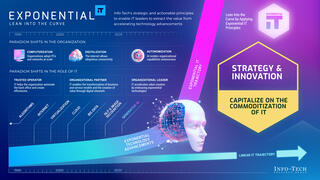 Exponential IT for Strategy, Risk, and Governance
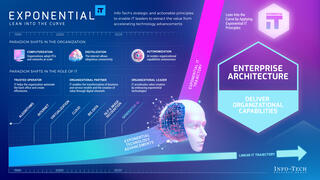 Exponential IT for Service Planning and Architecture
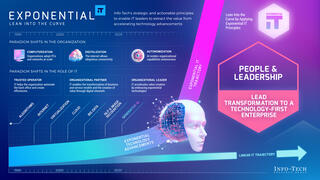 Exponential IT for People and Leadership
 Exponential IT for Security and Privacy
 Exponential IT for Applications
 Exponential IT for Data and Analytics
 Exponential IT for Infrastructure and Operations
 Exponential IT for Project and Portfolio Management
 Assess Your AI Maturity
 Develop Responsible AI Guiding Principles
 Identify and Select Pilot AI Use Cases
 Exponential IT Keynote
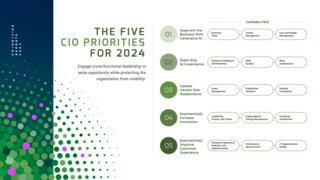 CIO Priorities 2024
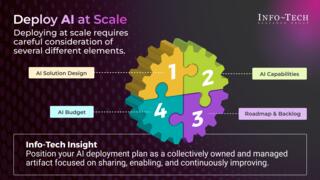 Build a Scalable AI Deployment Plan
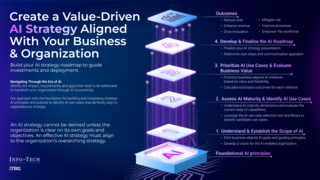 Build Your AI Strategy and Roadmap
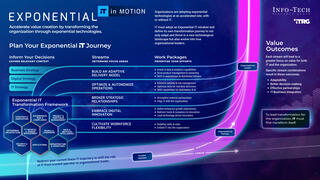 Develop an Exponential IT Roadmap
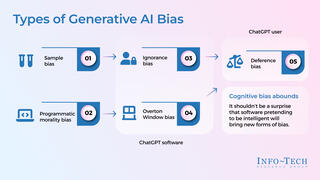 Use ChatGPT Wisely to Improve Productivity
 Build a FinOps Strategy to Enable Dynamic Cloud Cost Management
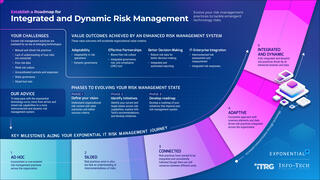 Establish a Roadmap for Integrated and Dynamic Risk Management
 Info-Tech’s Best of 2024 Mid-Year Report: AI Rewrites the Script for CIOs
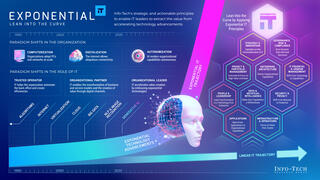 Explore the Art of the Possible for Exponential IT
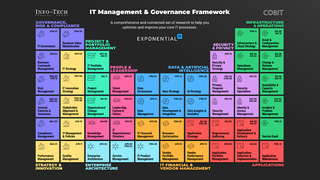 IT Management & Governance: The Next Evolution
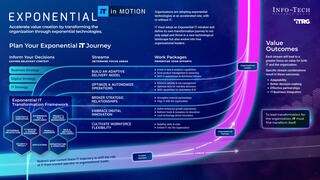 Bending the Exponential IT Curve Keynote
 Exponential IT in Motion: Transform Your Organization by Transforming IT
 AI Trends 2025
 LIVE 2024 Keynote Presentations
 LIVE 2024 Lightning Round Presentations
 CIO Priorities 2025
 Info-Tech’s Best of 2024 Report: IT Moves Into Position
 Build Your AI Risk Management Roadmap
 Design Your Agentic AI Prototype
 An Operational Framework for Rolling Out AI
 The AI Vendor Landscape in IT
 Run IT By the Numbers
 Building Info-Tech’s Chatbot
 Assessing the AI Ecosystem
 Bring AI Out of the Shadows
 Transform IT, Transform Everything
 Implement AI for Customer Experience
 Info-Tech’s Best of 2025 Mid-Year Report: IT Moves From Disruption to Decisive Action
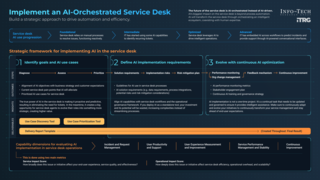 Implement an AI-Orchestrated Service Desk
 Info-Tech's All-Time Best, 2025 Edition: Change Is the Headline, Fundamentals Are the Path
 Tech Trends 2026
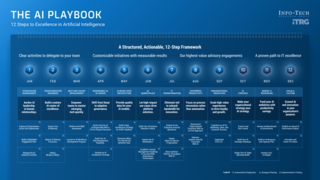 The AI Playbook
 AI Trends 2026
 Info-Tech’s Best of 2025: The Year AI Stopped Being a Project and Became the Strategy
 Publish an Annual AI Performance Report
 Develop Your Agentic AI Prototype
 Changing Landscape: Rethinking Vendor Decisions in the Agentic AI Era
 AI in Seven Charts
 Emerging AI Trends and Predictions From Our Global Technical Counselor Team
 Turn Customer Friction Into Agentic Opportunity
 People Change in the Face of Disruptive Technology
 Lead IT Like a Business: Every Dollar Is a Decision
 Optimize Cloud & AI Spend With Agentic FinOps
 Leadership Summit: The Ultimate Onboarding Experience 2026
 Resilience Is Not Planned – It Is Architected
 Redefine What It Means to Be CIO
 Navigating AI Agents in Service Management
 Influence Unleashed: The IT Leader’s Superpower
 The Challenge of Ethics in the Use of AI
 Revolutionize Risk Management With Agentic AI
 Introducing the Info-Tech Speakers Bureau
 Inside the Agentic Enterprise
 Agents 2.0: From Autonomy to Architecture
 Agentic IT: From Hype to Value
 Tech Trends 2027 Keynote
 Become an Exponential CIO
 Beyond the Agent: The Leadership Ecosystem for an AI-Enabled World
 Five Key Takeaways From Info-Tech LIVE 2026
 Info-Tech’s Best of 2026 Mid-Year Report
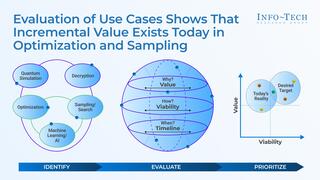 Identify and Evaluate Quantum Computing Use Cases
 AI Adoption & Impact Study: AI in Software Development June 2026 Top 10 Insights
 AI Adoption & Impact Study: AI in the Enterprise June 2026 Top 10 Insights
