
Assess Your AI Maturity
Look before you leap.
- The rapid adoption of AI technologies across business functions is forcing IT and business leaders to assess their maturity to implement AI systems and their organizational maturity to succeed with them.
- Indeed, despite the explosion of usage and interest in the technologies, currently few organizations have had success with a unified and widespread adoption of AI technologies, and even fewer with Gen AI.
- What’s more, jumping into an AI implementation that exceeds IT’s and a business function’s abilities to responsibly and safely sustain it will open the organization up to multiple risks (cybersecurity, reputational, shareholder risk, etc.).
Our Advice
Critical Insight
The goal in assessing your AI maturity isn’t to set targets to reach a top level of maturity. Oftentimes, the costs of reaching level 5 or top maturity outweigh the organizational benefits. Instead, use an AI maturity activity to help identify AI goals that the organization can support and benefit from, without imposing unrealistic expectations or opening the organization up to unnecessary risk.
Impact and Result
- Assess the current state of AI capabilities in your organization across five dimensions: AI Governance, Data, People, Process, and Technology.
- Identify your target level of AI maturity.
- Identify the right initiatives for your organization to reach your target maturity level for each dimension.
Member Testimonials
After each Info-Tech experience, we ask our members to quantify the real-time savings, monetary impact, and project improvements our research helped them achieve. See our top member experiences for this blueprint and what our clients have to say.
10.0/10
Overall Impact
9
Average Days Saved
Client
Experience
Impact
$ Saved
Days Saved
CHILDREN, YOUTH AND SOCIAL SERVICES CLUSTER, I&IT Cluster
Guided Implementation
10/10
N/A
9
best - examples of other orgs on a similar journey, what to anticipate. worst - none, this was a very good experience
Frequently Asked Questions
What is AI maturity assessment?
AI maturity assessment is a structured evaluation of an organization's current capabilities to implement and sustain AI technologies across five critical dimensions. Info-Tech Research Group's AI maturity assessment helps organizations assess their readiness across AI Governance, Data Management, People, Process, and Technology dimensions to identify AI goals that the organization can support and benefit from, without imposing unrealistic expectations or opening the organization up to unnecessary risk.
Why is assessing AI maturity important for organizations?
Info-Tech Research Group emphasizes that assessing organizational AI maturity is essential in formulating a strategic roadmap to advance toward AI objectives while avoiding significant risks. The rapid adoption of AI technologies across business functions is forcing IT and business leaders to assess their maturity to implement AI systems, and jumping into an AI implementation that exceeds IT's and business function's abilities to responsibly and safely sustain it will open the organization up to multiple risks including cybersecurity, reputational, and shareholder risk.
What are the five dimensions of AI maturity according to Info-Tech?
Info-Tech Research Group's AI maturity framework assesses organizational capabilities across five dimensions: AI Governance evaluates whether the organization has an enterprise-wide, long-term strategy and clear alignment on requirements; Data Management assesses whether the organization embraces a data-centric culture that shares data across the enterprise; People examines whether the organization employs people skilled with delivering AI applications and building necessary infrastructure; Process evaluates whether the organization has processes and supporting tools to deliver on AI expectations; and Technology assesses whether the organization has the required data and technology infrastructure to support AI-driven digital transformation.
What are the five levels of AI maturity in Info-Tech's framework?
Info-Tech Research Group's principles-based approach to AI defines five maturity levels: Level 1 (Exploration) involves learning about AI technologies with no deployed use cases and no familiarity with governance or processes; Level 2 (Incorporation) includes running pilot projects with some skills in using AI applications; Level 3 (Proliferation) shows AI applications adopted in multiple departments with some controls but no uniformity; Level 4 (Optimization) indicates the organization has automated most digital processes with high compliance; and Level 5 (Transformation) represents an AI-native culture where responsible AI principles are operationalized with processes that proactively address possible breaches or risks.
What is Info-Tech's critical insight about AI maturity goals?
According to Info-Tech Research Group's critical insight, the goal in assessing AI maturity is not to set targets to reach a top level of maturity, because oftentimes the costs of reaching level 5 or top maturity outweigh the organizational benefits. Instead, Info-Tech emphasizes that organizations should use an AI maturity activity to help identify AI goals that the organization can support and benefit from, without imposing unrealistic expectations or opening the organization up to unnecessary risk.
What should organizations at Level 1 (Exploration) focus on?
Info-Tech Research Group recommends that organizations at Level 1 (Exploration) should focus on learning before launching, with priorities including consuming Info-Tech's research such as "A Primer on AI for Business Leaders" and "Develop Responsible AI Guiding Principles," and focusing on building the governance, data practices, skills, processes, and infrastructure required to support pilot projects. At this level, key stakeholders are developing an initial understanding of key governance structures, data teams are investigating data requirements, and managers and staff are learning about the skills required to build, deploy, and manage AI applications.
What should organizations at Level 2 (Incorporation) focus on?
Info-Tech Research Group advises that organizations at Level 2 (Incorporation) should run pilot projects to gain practical experience, with priorities including clearly identifying business objectives and problem areas that can potentially benefit from AI implementation and evaluating the successes realized and challenges faced during pilot projects. Organizations at this level should define their responsible AI principles, provide the necessary structure for running pilots, start to work on governance frameworks for AI at scale, and establish processes for AI pilots while working toward developing processes and tools to support AI in production.
What tools does Info-Tech provide for assessing AI maturity?
Info-Tech Research Group provides two comprehensive tools for assessing AI maturity: the Assess Your AI Maturity Storyboard, which is a step-by-step assessment that helps organizations identify their current level of AI maturity for each dimension across AI Governance, Data, People, Process, and Technology; and the AI Maturity Assessment and Roadmap Tool, which helps organizations identify their current and target maturity levels and build a roadmap to address any gaps while setting realistic expectations and avoiding unnecessary risk.
What results have organizations achieved using Info-Tech's AI maturity assessment?
According to Info-Tech Research Group's member testimonials, organizations using the Assess Your AI Maturity blueprint achieved an average overall impact rating of 10.0 out of 10 and average time savings of 9 days. One specific example includes the Children, Youth and Social Services Cluster achieving a 10/10 impact rating with 9 days saved through Guided Implementation, with the member noting the best aspects were examples of other organizations on a similar journey and what to anticipate, demonstrating the value of Info-Tech's structured assessment approach.
What business value can organizations measure from AI maturity assessment?
Info-Tech Research Group identifies three key areas where organizations can measure value from conducting AI maturity assessments: mitigate risks by identifying and addressing governance, process, or technical gaps that can identify serious risks before they impact the organization; get to market faster by identifying and addressing maturity gaps that delay solution development to deliver AI solutions faster by removing obstacles; and reduce costs by preparing for development and deployment to reduce unnecessary costs and streamline delivery, leading to long-term cost savings through better-fit infrastructure, processes, tools, and techniques.
How critical is AI to businesses according to Info-Tech's research?
Info-Tech Research Group reports that 59% of companies view AI as critical or highly critical to their business in the next year, and 69% view it as critical or highly critical in the next three years, highlighting that the increasing capabilities and availability of generative AI will accelerate AI adoption. (Source: Scale, 2023) Info-Tech emphasizes that assessing organizational existing level of maturity for AI adoption is essential in formulating a strategic roadmap to advance toward AI objectives in this rapidly evolving landscape.
What complications do organizations face when assessing AI maturity?
Info-Tech Research Group identifies key complications organizations face when assessing AI maturity: organizations have no defined, formal way to assess their AI maturity today; AI requires cross-functional collaboration, and organizations are having difficulty aligning on maturity across different organizational siloes; and because AI is so new, it is challenging to find best practices to objectively measure current maturity and gaps. Info-Tech's AI Maturity Assessment tool addresses these complications by providing a structured framework for assessment across five dimensions.
What happened on November 30, 2022, that changed AI priorities?
According to Info-Tech Research Group, November 30, 2022, marked a turning point when the introduction and popular usage of ChatGPT and other similar products changed the priorities of many IT organizations. Info-Tech notes that until recently, machine learning and artificial intelligence were niche interests for many organizations with minimal, tentative investments that were often quickly abandoned, but since ChatGPT's introduction, IT leaders have been playing catch-up in terms of assessing AI capabilities and creating strategies and policies.
How can organizations avoid putting themselves at risk with AI?
Info-Tech Research Group advises organizations not to put themselves at risk by taking on too much too soon with AI implementation. Info-Tech recommends starting with an assessment that helps organizations assess their goals and gaps from a governance, data, people, processes, and technology perspective, and with an appropriate view of where the organization currently is versus where it needs to be, organizations can create strategies, policies, and roadmaps that will help better balance the need to innovate with the need to mitigate risks and protect and maximize shareholder value.
Who are the authors of Info-Tech's Assess Your AI Maturity blueprint?
Info-Tech Research Group's Assess Your AI Maturity blueprint was authored by Andrew Sharp (Research Director), Bill Wong (Principal Research Director), Harshita Bordiya (Research Specialist), and Travis Duncan, with contributions from 6 anonymous contributors. The research provides organizations with Info-Tech's approach to assessing AI maturity through a comprehensive framework and maturity assessment tool to help ensure organizations set AI goals that they can support and benefit from.
Assess Your AI Maturity
Look before you leap.
Analyst Perspective
Don’t put your organization at risk by taking on too much too soon.
The thought of maturing organizational artificial intelligence capabilities and approaches can be a sobering experience. Until recently, machine learning and artificial intelligence were niche interests for many organizations: something that an IT leader might ponder briefly while thumbing through a trend report or attending a keynote. For the most part, investments were minimal, tentative, and often quickly abandoned.
And then November 30, 2022, happened. The introduction and popular usage of ChatGPT and other similar products changed the priorities of many IT organizations. Since then, IT leaders have been playing catch-up in terms of assessing AI capabilities and creating strategies and policies.
Don’t put your organization at risk by taking on too much too soon. Start with an assessment that helps you assess your goals and gaps from a governance, data, people, processes, and technology perspective. With an appropriate view of where the organization currently is versus where it needs to be, you can create strategies, policies, and roadmaps that will help better balance the need to innovate with the need to mitigate the risks and protect and maximize shareholder value.

|

|

|
| Bill Wong Principal Research Director Info-Tech Research Group |
Andrew Sharp Research Director Info-Tech Research Group |
Harshita Bordiya Research Specialist Info-Tech Research Group |
Executive Summary
SituationYou must assess and improve the maturity of your AI and generative AI practices, processes, and tools.
|
ComplicationYou have no defined, formal way to assess your AI maturity today:
|
Info-Tech’s ApproachUse Info-Tech’s AI Maturity Assessment tool to:
|
Info-Tech Insight
The goal in assessing your AI maturity isn’t to set targets to reach a top-level of maturity. Oftentimes, the costs of reaching level 5 or top maturity outweigh the organizational benefits. Instead, use an AI maturity activity to help identify AI goals that the organization can support and benefit from, without imposing unrealistic expectations or opening the organization up to unnecessary risk.
Your Challenge
Assessing your organization's existing level of maturity for AI adoption is essential in formulating a strategic roadmap to advance toward your AI objectives.
- The rapid adoption of AI technologies across business functions is forcing IT and business leaders to assess their maturity to implement AI systems and their organizational maturity to succeed with them.
- Indeed, despite the explosion of usage and interest in the technologies, currently few organizations have had success with a unified and widespread adoption of AI technologies, and even fewer with generative AI.
- What’s more, jumping into an AI implementation that exceeds the IT’s and business function’s abilities to responsibly and safely sustain it will open the organization up to multiple risks (e.g. cybersecurity, reputational, shareholder risk).
This research will introduce you to Info-Tech’s approach to assessing AI maturity (i.e. our framework and maturity assessment tool) to help ensure you set AI goals that you can support and benefit from.

59% of companies view AI as critical or highly critical to their business in the next year, and 69% in the next three years. The increasing capabilities and availability of generative AI will accelerate AI adoption.
Measure the value of this research
Conduct a maturity assessment to uncover insights that lead to measurable value for your organization.
Mitigate risks
Identify and address governance, process, or technical gaps that can identify and mitigate serious risks before they impact your organization.
Measure Risk Mitigation: Estimate the impact of risks identified via the maturity assessment and mitigated/avoided in terms of customer impact, revenue impact, compliance impact, etc.
Get to market faster
Identify and address maturity gaps that can delay solution development, in order to develop and deliver AI solutions faster by removing the obstacles to delivery.
Measure Accelerated Development : Evaluate the impact on development time that infrastructure, tooling, and process gaps identified via the maturity assessment caused your organization.
Reduce costs
Prepare for development and deployment to reduce unnecessary costs and streamline delivery, leading to long-term cost savings.
Measure Cost Savings: Estimate the costs reduced or avoided through better-fit infrastructure, processes, tools, techniques, or solutions that were identified by working through the maturity assessment.
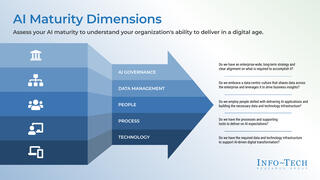
AI Maturity Dimensions
Assess your AI maturity to understand your organization's ability to deliver in a digital age.
AI Governance: Do we have an enterprise-wide, long-term strategy and clear alignment on what is required to accomplish it?
Data Management: Do we embrace a data-centric culture that shares data across the enterprise and leverages it to drive business insights?
People: Do we employ people skilled with delivering AI applications and building the necessary data and technology infrastructure?
Process: Do we have the processes and supporting tools to deliver on AI expectations?
Technology: Do we have the required data and technology infrastructure to support AI-driven digital transformation?
Evaluate maturity across dimensions with Info-Tech’s principles-based approach to AI

Level 1: Exploration
No experience building or using AI applications. Awareness of the uses of AI but lack of skill or capabilities for use. No familiarity with governance or processes.
Level 2: Incorporation
Some skills in using AI applications and/or AI pilots are being considered for use. In development and pilot use. Focus on building on dimensions through training, developing guidelines, and acquiring technology.
Level 3: Proliferation
AI applications have been adopted and implemented in multiple departments. Some controls are in place to monitor compliance with responsible AI guiding principles. No uniformity in AI use across departments.
Level 4: Optimization
The organization has automated most of their digital processes and leverages AI to optimize business operations. High level of compliance and control with responsible AI principles. Not an industry leader yet.
Level 5: Transformation
The organization has adopted an AI-native culture and approach for building or implementing new business capabilities. Responsible AI guiding principles are operationalized with AI processes that proactively address possible breaches or risks associated with AI applications.
Level 1: Exploration
Learn before you launch.
Organizations at this level:
- Are in the process of learning about AI technologies. No use cases deployed.
- Use publicly available AI technologies in an informal (and possibly unauthorized) manner.
- Focus on individual and team learning to develop an understanding of the ways AI could deliver value and have a high-level understanding of potential risks.
If you’re at this level, you should:
- Consume Info-Tech’s research, including our A Primer on AI for Business Leaders and Develop Responsible AI Guiding Principles.
- Focus on building the governance, data practices, skills, processes, and infrastructure required to support pilot projects.
|
AI Governance |
Key stakeholders are developing an initial understanding of key governance structures and requirements. No or minimal AI governance mechanisms in place. Some discussion around responsible AI principles. |
|
Data Management |
Data teams are investigating and learning more about the data requirements for proposed initial use cases. |
|
People |
Managers and staff are learning about the skills required to build, deploy, and manage AI applications. |
|
Process |
No process in place. Focus is on building processes to identify and select pilot use cases. |
|
Technology |
Developing an understanding of the hardware and software required to deliver pilot projects. |
Level 2: Incorporation
Run pilot projects.
Organizations at this level:
- Are initiating pilot projects to gain practical experience and insights into AI applications.
- Have AI implementations that are relatively limited in scope and scale.
- Focus on learning from the outcomes of pilot projects. Organizations gather feedback, iterate on their approaches, and refine their understanding of AI technologies and their potential applications.
If you’re at this level, you should:
- Clearly identify the business objectives and problem areas that can potentially benefit from AI implementation.
- Evaluate the successes realized and challenges faced during pilot projects.
AI Governance | Define your responsible AI principles. Provide the necessary structure for running pilots and start to work on governance frameworks for AI at scale. |
Data Management | Data teams are exploring data management practices, including data collection, storage, and preprocessing, to support AI pilot initiatives. |
People | Focus is on gathering and building a strong foundation of expertise and experience, which serves as an asset to run pilots and advance to higher levels of AI maturity. |
Process | Have established processes for AI pilots and are working toward developing processes and tools to support AI in production. |
Technology | Building a dedicated technology infrastructure to support AI pilot projects. |

About Info-Tech
Info-Tech Research Group is the world’s fastest-growing information technology research and advisory company, proudly serving over 30,000 IT professionals.
We produce unbiased and highly relevant research to help CIOs and IT leaders make strategic, timely, and well-informed decisions. We partner closely with IT teams to provide everything they need, from actionable tools to analyst guidance, ensuring they deliver measurable results for their organizations.
What Is a Blueprint?
A blueprint is designed to be a roadmap, containing a methodology and the tools and templates you need to solve your IT problems.
Each blueprint can be accompanied by a Guided Implementation that provides you access to our world-class analysts to help you get through the project.
Talk to an Analyst
Our analyst calls are focused on helping our members use the research we produce, and our experts will guide you to successful project completion.
Book an Analyst Call on This Topic
You can start as early as tomorrow morning. Our analysts will explain the process during your first call.
Get Advice From a Subject Matter Expert
Each call will focus on explaining the material and helping you to plan your project, interpret and analyze the results of each project step, and set the direction for your next project step.
Unlock Sample ResearchContributors
- 6 anonymous contributors
 Tech Trends 2025
 Define Your Digital Business Strategy
 Kick-Start IT-Led Business Innovation
 Establish a Foresight Capability
 Apply Design Thinking to Build Empathy With the Business
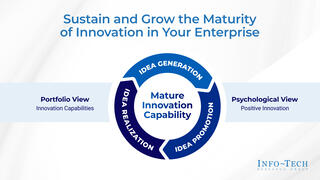 Sustain and Grow the Maturity of Innovation in Your Enterprise
 Position IT to Support and Be a Leader in Open Data Initiatives
 Double Your Organization’s Effectiveness With a Digital Twin
 Develop a Use Case for Smart Contracts
 Adopt Design Thinking in Your Organization
 Accelerate Digital Transformation With a Digital Factory
 Tech Trends 2024
 2021 Tech Trends
 Implement and Mature Your User Experience Design Practice
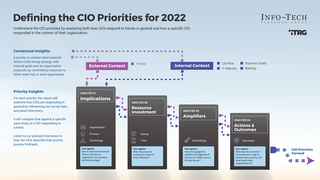 CIO Priorities 2022
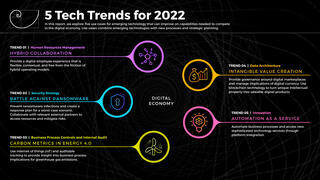 2022 Tech Trends
 Into the Metaverse
 Demystify Blockchain: How Can It Bring Value to Your Organization?
 2020 Tech Trend Report
 2020 CIO Priorities Report
 CIO Trend Report 2019
 CIO Trend Report 2018
 CIO Trend Report 2017
 AI and the Future of Enterprise Productivity
 Evolve Your Business Through Innovation
 Build a Platform-Based Organization
 Tech Trend Update: If Contact Tracing Then Distributed Trust
 Tech Trend Update: If Biosecurity Then Autonomous Edge
 Tech Trend Update: If Digital Ethics Then Data Equity
 Tech Trends 2023
 Formalize Your Digital Business Strategy
 Select and Prioritize Digital Initiatives
 Adopt an Exponential IT Mindset
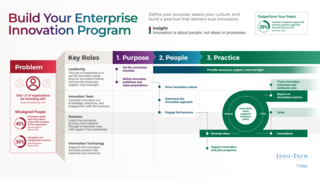 Build Your Enterprise Innovation Program
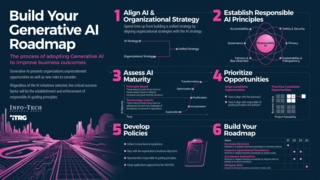 Build Your Generative AI Roadmap
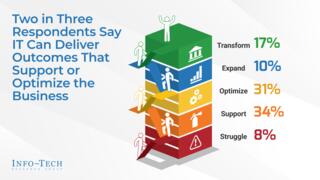 Annual CIO Survey Report 2024
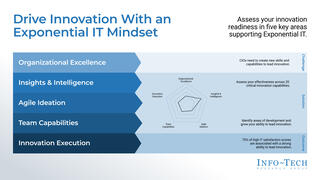 Drive Innovation With an Exponential IT Mindset
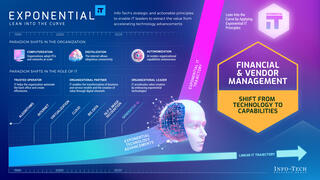 Exponential IT for Financial and Vendor Management
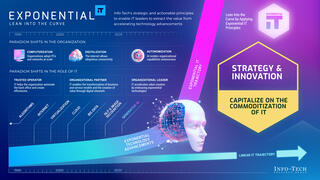 Exponential IT for Strategy, Risk, and Governance
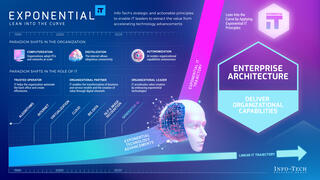 Exponential IT for Service Planning and Architecture
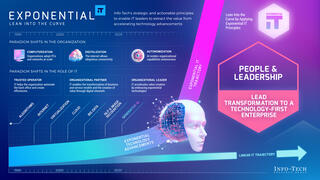 Exponential IT for People and Leadership
 Exponential IT for Security and Privacy
 Exponential IT for Applications
 Exponential IT for Data and Analytics
 Exponential IT for Infrastructure and Operations
 Exponential IT for Project and Portfolio Management
 Assess Your AI Maturity
 Develop Responsible AI Guiding Principles
 Identify and Select Pilot AI Use Cases
 Exponential IT Keynote
 CIO Priorities 2024
 Build a Scalable AI Deployment Plan
 Build Your AI Strategy and Roadmap
 Develop an Exponential IT Roadmap
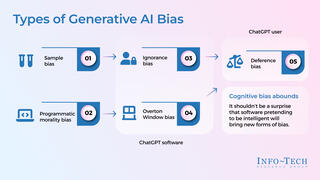 Use ChatGPT Wisely to Improve Productivity
 Build a FinOps Strategy to Enable Dynamic Cloud Cost Management
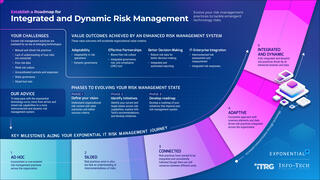 Establish a Roadmap for Integrated and Dynamic Risk Management
 Info-Tech’s Best of 2024 Mid-Year Report: AI Rewrites the Script for CIOs
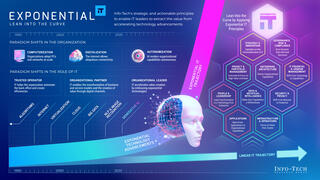 Explore the Art of the Possible for Exponential IT
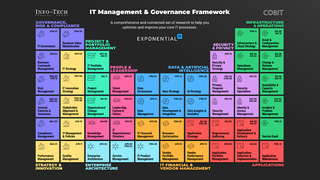 IT Management & Governance: The Next Evolution
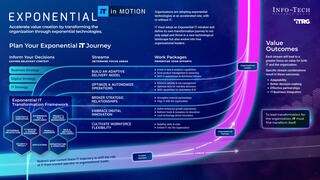 Bending the Exponential IT Curve Keynote
 Exponential IT in Motion: Transform Your Organization by Transforming IT
 AI Trends 2025
 LIVE 2024 Keynote Presentations
 LIVE 2024 Lightning Round Presentations
 CIO Priorities 2025
 Info-Tech’s Best of 2024 Report: IT Moves Into Position
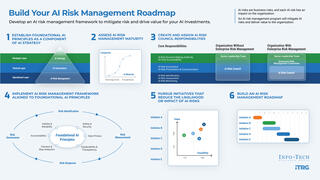 Build Your AI Risk Management Roadmap
 Design Your Agentic AI Prototype
 An Operational Framework for Rolling Out AI
 The AI Vendor Landscape in IT
 Run IT By the Numbers
 Building Info-Tech’s Chatbot
 Assessing the AI Ecosystem
 Bring AI Out of the Shadows
 Transform IT, Transform Everything
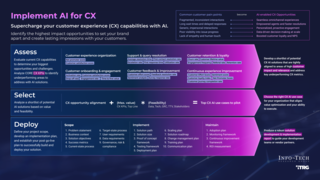 Implement AI for Customer Experience
 Info-Tech’s Best of 2025 Mid-Year Report: IT Moves From Disruption to Decisive Action
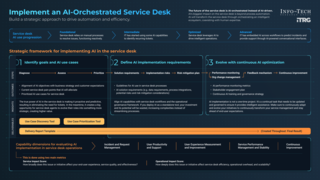 Implement an AI-Orchestrated Service Desk
 Info-Tech's All-Time Best, 2025 Edition: Change Is the Headline, Fundamentals Are the Path
 Tech Trends 2026
 The AI Playbook
 AI Trends 2026
 Info-Tech’s Best of 2025: The Year AI Stopped Being a Project and Became the Strategy
 Publish an Annual AI Performance Report
 Develop Your Agentic AI Prototype
 Changing Landscape: Rethinking Vendor Decisions in the Agentic AI Era
 AI in Seven Charts
 Emerging AI Trends and Predictions From Our Global Technical Counselor Team
 Turn Customer Friction Into Agentic Opportunity
 People Change in the Face of Disruptive Technology
 Lead IT Like a Business: Every Dollar Is a Decision
 Optimize Cloud & AI Spend With Agentic FinOps
 Leadership Summit: The Ultimate Onboarding Experience 2026
 Resilience Is Not Planned – It Is Architected
 Redefine What It Means to Be CIO
 Navigating AI Agents in Service Management
 Influence Unleashed: The IT Leader’s Superpower
 The Challenge of Ethics in the Use of AI
 Revolutionize Risk Management With Agentic AI
 Introducing the Info-Tech Speakers Bureau
 Inside the Agentic Enterprise
 Agents 2.0: From Autonomy to Architecture
 Agentic IT: From Hype to Value
 Tech Trends 2027 Keynote
 Become an Exponential CIO
 Beyond the Agent: The Leadership Ecosystem for an AI-Enabled World
 Five Key Takeaways From Info-Tech LIVE 2026
 Info-Tech’s Best of 2026 Mid-Year Report
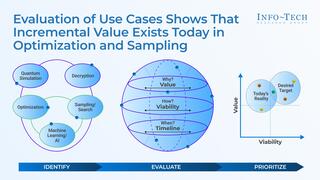 Identify and Evaluate Quantum Computing Use Cases
 AI Adoption & Impact Study: AI in Software Development June 2026 Top 10 Insights
 AI Adoption & Impact Study: AI in the Enterprise June 2026 Top 10 Insights