
Transform Infrastructure Delivery Through Platform Engineering
Design a scalable operating model for standardized, self-service infrastructure.
Traditional ticket-driven infrastructure models are struggling to keep pace with demands for faster delivery, stronger governance, and greater operational consistency. Platform engineering addresses these challenges by turning common infrastructure needs into standardized, reusable services that reduce manual effort and delays. This research helps organizations approach platform engineering as a progression, building the operating model, governance, and capabilities needed to expand automation and self-service, accelerate delivery, and improve consistency.
Platform engineering changes how infrastructure is delivered by making common needs easier and faster to fulfill without handling every request from scratch. Treating the platform as an internal product shifts infrastructure from one-off requests toward reusable capabilities with defined ownership, embedded governance, and measurable outcomes. Organizations can then expand automation and self-service as platform maturity and adoption increase.
1. Platform engineering is an operating model.
Platform engineering shifts infrastructure from a reactive, ticket-driven function to a standardized, product-oriented capability. Success depends on defined ownership, embedded governance, and reusable platform capabilities that teams can consume consistently and at scale.
2. Standardization creates the foundation for self-service.
Automation without standardization only accelerates inconsistency. Establishing reusable patterns, governance guardrails, and common platform capabilities enables organizations to scale automation and self-service while improving delivery speed and operational consistency.
3. Business outcomes define platform success.
Platform engineering should be measured by the value it delivers to the organization, including improved developer experience, increased adoption, faster delivery, greater operational reliability, and stronger governance. These outcomes provide the evidence needed to continuously improve the platform and justify future investment.
Use this guide to develop your platform engineering roadmap.
This research provides a structured, progressive methodology for transforming infrastructure delivery through platform engineering. It guides organizations from current-state assessment and platform service selection through standardization, productization, self-service, and value measurement. The accompanying Infrastructure Platform Engineering Operating Model Assessment & Design Workbook helps organizations apply the methodology through guided assessments and planning activities, translating platform engineering decisions into maturity scores, priorities, governance models, and a phased implementation roadmap. Use this research and workbook to:
- Assess your organization’s platform engineering readiness and current-state maturity.
- Identify and prioritize platform services based on organizational needs and strategic value.
- Define platform ownership, governance, and shared responsibilities across key stakeholders.
- Establish the standards and automation foundations needed to enable secure self-service.
- Develop a measurable implementation roadmap aligned with organizational readiness and business priorities.
About Info-Tech
Info-Tech Research Group is the world’s fastest-growing information technology research and advisory company, proudly serving over 30,000 IT professionals.
We produce unbiased and highly relevant research to help CIOs and IT leaders make strategic, timely, and well-informed decisions. We partner closely with IT teams to provide everything they need, from actionable tools to analyst guidance, ensuring they deliver measurable results for their organizations.
What Is a Blueprint?
A blueprint is designed to be a roadmap, containing a methodology and the tools and templates you need to solve your IT problems.
Each blueprint can be accompanied by a Guided Implementation that provides you access to our world-class analysts to help you get through the project.
Talk to an Analyst
Our analyst calls are focused on helping our members use the research we produce, and our experts will guide you to successful project completion.
Book an Analyst Call on This Topic
You can start as early as tomorrow morning. Our analysts will explain the process during your first call.
Get Advice From a Subject Matter Expert
Each call will focus on explaining the material and helping you to plan your project, interpret and analyze the results of each project step, and set the direction for your next project step.
Unlock Sample Research Create a Service Management and IT Operations Strategy
 Optimize the IT Operations Center
 Improve Incident and Problem Management
 Optimize IT Change Management
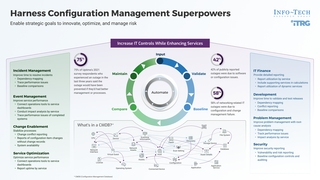 Harness Configuration Management Superpowers
 Develop Infrastructure & Operations Policies and Procedures
 Stabilize Release and Deployment Management
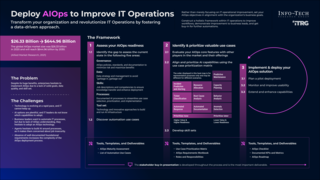 Deploy AIOps to Improve IT Operations
 Improve IT-Business Alignment Through an Internal SLA
 Implement Infrastructure Shared Services
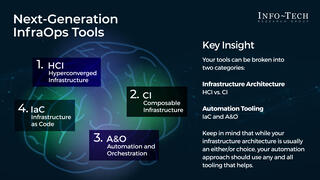 Next-Generation InfraOps
 Reduce Manual Repetitive Work With IT Automation
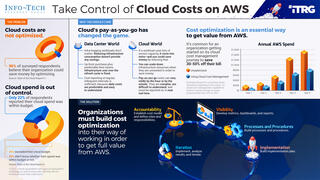 Take Control of Cloud Costs on AWS
 Take Control of Cloud Costs on Microsoft Azure
 Govern Shared Services
 Take Control of Infrastructure and Operations Metrics
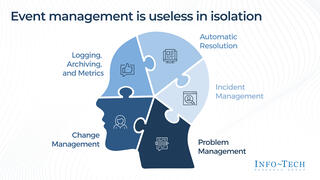 Engineer Your Event Management Process
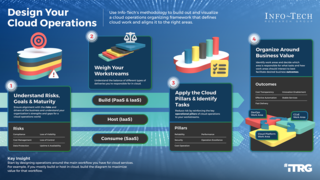 Design Your Cloud Operations
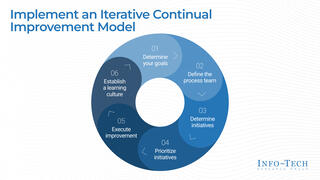 Build a Continual Improvement Program
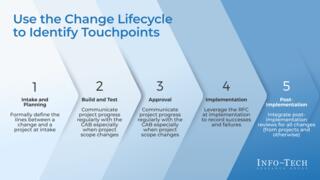 Align Projects With the IT Change Lifecycle
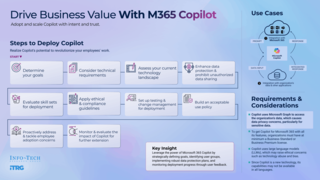 Drive Business Value With Microsoft 365 Copilot
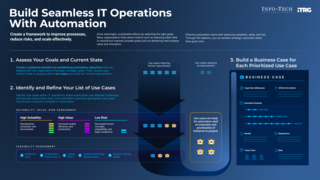 Build Seamless IT Operations With Automation
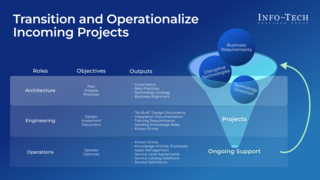 Transition and Operationalize Incoming Projects
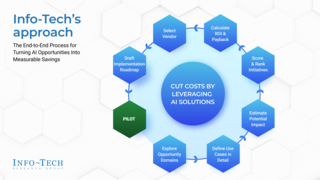 Cut Costs by Leveraging AI Solutions
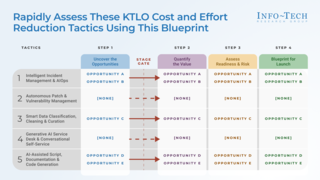 Harness AI to Reduce the Cost and Effort of KTLO in IT Operations
 AI in Seven Charts
 Emerging AI Trends and Predictions From Our Global Technical Counselor Team
 People Change in the Face of Disruptive Technology
 Lead IT Like a Business: Every Dollar Is a Decision
 Optimize Cloud & AI Spend With Agentic FinOps
 Beyond Firefighting: Tactics to Elevate Your Role in Infrastructure & Operations
 Influence Unleashed: The IT Leader’s Superpower
 The Challenge of Ethics in the Use of AI
 Introducing the Info-Tech Speakers Bureau
 Inside the Agentic Enterprise
 Agents 2.0: From Autonomy to Architecture
 Agentic IT: From Hype to Value
 Tech Trends 2027 Keynote
 Become an Exponential CIO
 Beyond the Agent: The Leadership Ecosystem for an AI-Enabled World
 Five Key Takeaways From Info-Tech LIVE 2026
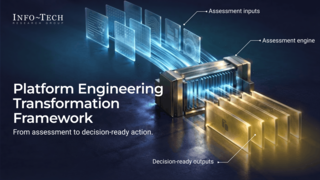 Transform Infrastructure Delivery Through Platform Engineering