
Improve IT-Business Alignment Through an Internal SLA
Understand business requirements, clarify current capabilities, and enable strategies to close service level gaps.
- The business is rarely satisfied with IT service levels, yet there is no clear definition of what is acceptable.
- Dissatisfaction with service levels is often based on perception. Your uptime might be four 9s, but the business only remembers the outages.
- IT is left trying to hit a moving target with a limited budget and no agreement on where services levels need to improve.
Our Advice
Critical Insight
- Business leaders have service level expectations regardless of whether there is a formal agreement. The SLA process enables IT to manage those expectations.
- Track current service levels and report them in plain language (e.g. hours and minutes of downtime, not “how many 9s” which then need to be translated) to gain a clearer mutual understanding of current versus desired service levels.
- Use past incidents to provide context (how much that hour of downtime actually impacted the business) in addition to a business impact analysis to define appropriate target service levels based on actual business need.
Impact and Result
Create an effective internal SLA by following a structured process to report current service levels and set realistic expectations with the business. This includes:
- Defining the current achievable service level by establishing a metrics tracking and monitoring process.
- Determining appropriate (not ideal) business needs.
- Creating an SLA that clarifies expectations to reduce IT-business friction.
Member Testimonials
After each Info-Tech experience, we ask our members to quantify the real-time savings, monetary impact, and project improvements our research helped them achieve. See our top member experiences for this blueprint and what our clients have to say.
Client
Experience
Impact
$ Saved
Days Saved
Welk Resort Group Inc.
Guided Implementation
7/10
$34,000
10
best - showing other ppt decks that i hadn't yet seen related to the service desk sla needs worst - late notice given for webex details created a ... Read More
Broome-Tioga Boces
Guided Implementation
10/10
$108K
50

About Info-Tech
Info-Tech Research Group is the world’s fastest-growing information technology research and advisory company, proudly serving over 30,000 IT professionals.
We produce unbiased and highly relevant research to help CIOs and IT leaders make strategic, timely, and well-informed decisions. We partner closely with IT teams to provide everything they need, from actionable tools to analyst guidance, ensuring they deliver measurable results for their organizations.
What Is a Blueprint?
A blueprint is designed to be a roadmap, containing a methodology and the tools and templates you need to solve your IT problems.
Each blueprint can be accompanied by a Guided Implementation that provides you access to our world-class analysts to help you get through the project.
Need Extra Help?
Speak With An Analyst
Get the help you need in this 3-phase advisory process. You'll receive multiple touchpoints with our researchers, all included in your membership.
Guided Implementation 1: Scope the pilot project
- Call 1: Identify the goals of an SLA for your organization.
- Call 2: SLA category overview and identification of the relevant SLA pilot project(s).
- Call 3: Create the project charter by establishing roles and responsibilities as well as project scope.
Guided Implementation 2: Determine current service levels
- Call 1: Review and document the current operational dependencies and maintenance procedures for applications/systems or services.
- Call 2: Document each SLA metric and establish the parameters of a cost-effective system for metrics tracking and reporting.
Guided Implementation 3: Set target service levels and create the SLA
- Call 1: Analyze findings from IT and business discussions.
- Call 2: Create a roadmap to improve current service levels.
- Call 3: Create a business-facing SLA that reflects the needs of the business.
Contributors
- Chris Dehart, Director of Cloud Framework and Process, HCA
- Gerry Kestenberg, Director IT Central Services & Store Support, LS travel retail North America
- Sandeep Sidhu, Manager, IT Service Delivery, Capilano University
- Penn Richmann, Applications Manager, City of Boulder
- Gail Koch, Support Manager, IT Service Management
- One anonymous contributor
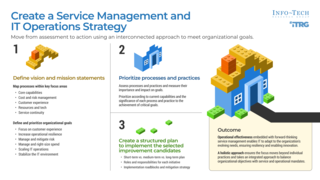 Create a Service Management and IT Operations Strategy
 Optimize the IT Operations Center
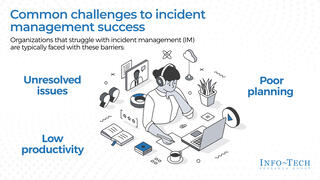 Improve Incident and Problem Management
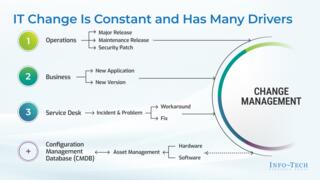 Optimize IT Change Management
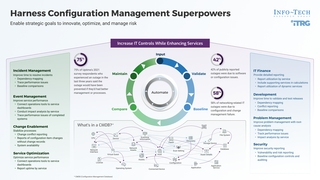 Harness Configuration Management Superpowers
 Develop Infrastructure & Operations Policies and Procedures
 Stabilize Release and Deployment Management
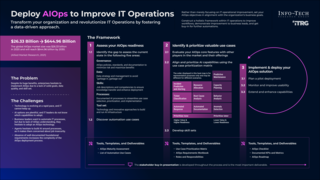 Deploy AIOps to Improve IT Operations
 Improve IT-Business Alignment Through an Internal SLA
 Implement Infrastructure Shared Services
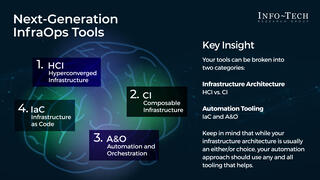 Next-Generation InfraOps
 Reduce Manual Repetitive Work With IT Automation
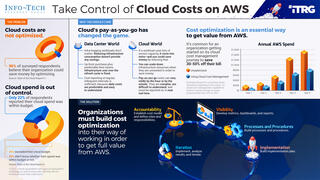 Take Control of Cloud Costs on AWS
 Take Control of Cloud Costs on Microsoft Azure
 Govern Shared Services
 Take Control of Infrastructure and Operations Metrics
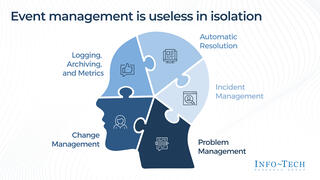 Engineer Your Event Management Process
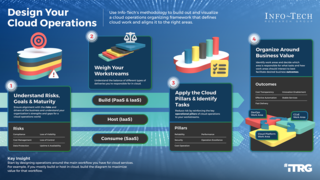 Design Your Cloud Operations
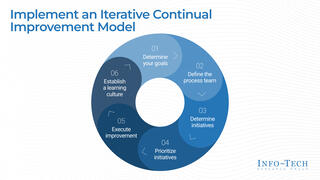 Build a Continual Improvement Program
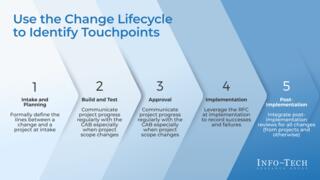 Align Projects With the IT Change Lifecycle
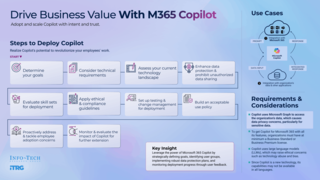 Drive Business Value With Microsoft 365 Copilot
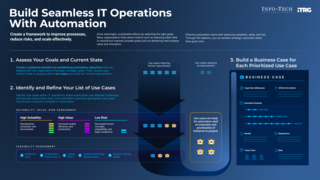 Build Seamless IT Operations With Automation
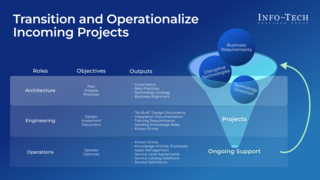 Transition and Operationalize Incoming Projects
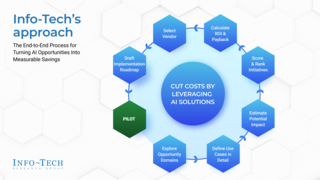 Cut Costs by Leveraging AI Solutions
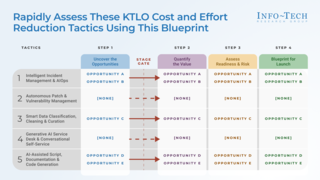 Harness AI to Reduce the Cost and Effort of KTLO in IT Operations
 AI in Seven Charts
 Emerging AI Trends and Predictions From Our Global Technical Counselor Team
 People Change in the Face of Disruptive Technology
 Lead IT Like a Business: Every Dollar Is a Decision
 Optimize Cloud & AI Spend With Agentic FinOps
 Beyond Firefighting: Tactics to Elevate Your Role in Infrastructure & Operations
 Influence Unleashed: The IT Leader’s Superpower
 The Challenge of Ethics in the Use of AI
 Introducing the Info-Tech Speakers Bureau
 Inside the Agentic Enterprise
 Agents 2.0: From Autonomy to Architecture
 Agentic IT: From Hype to Value
 Tech Trends 2027 Keynote
 Become an Exponential CIO
 Beyond the Agent: The Leadership Ecosystem for an AI-Enabled World
 Five Key Takeaways From Info-Tech LIVE 2026
 Transform Infrastructure Delivery Through Platform Engineering
