
Develop a Cloud Consumption Strategy
Optimize your cloud deployment to stay ahead of the demand curve.
- Organizations are moving to the Cloud in order to lower costs (or at least capex and administrative overhead) and increase scalability.
- Because costs are more evenly distributed over the TCO and incremental capacity increases are easy for large numbers of non-administrative IT users to deploy, organizations are experiencing (or at least enabling) ‘cloud sprawl,’ along with uncertainty in the operating budget as consumption patterns vary from month to month.
- It is easy for IT users (e.g. developers) to add a new instance rather than to optimize the use of existing resources, and there is no imminent need (as far as the user is concerned) to “turn the tap off” after capacity is no longer needed.
Our Advice
Critical Insight
- Without cloud consumption governance, users (both in business units and within IT) will risk sub-optimal use of cloud services.
- Traditional planning and management styles will not work in a cloud environment. Organization must use the appropriate mix of capacity planning, capacity management, and cost allocation practices to optimize the value accrued from cloud services.
- Capacity planning will simplify the planning process, maintain consistency, and ensure the right resources are being deployed for the appropriate use cases.
- Capacity management enables organizations to continuously improve on configurations to take advantage of various costs and benefits of private and public clouds.
- Cost allocation is enabled by the measurability of cloud services, and will increase cost visibility, and accountability within your company.
- To get the most value, the architecture of the people, policies, and procedures must be as lean and agile as the IT services your company is deploying.
Impact and Result
- Understand the value and risks of cloud versus traditional deployments.
- Design a cloud consumption strategy around your current internal infrastructure and outsourced services that reflects the needs of employees and ensures that costs align with business value.
- Plan for capacity proactively, but leave room to manage reactively
- Consider third party cloud analytics solutions to help plan, manage, and account for cloud usage and cost.

About Info-Tech
Info-Tech Research Group is the world’s fastest-growing information technology research and advisory company, proudly serving over 30,000 IT professionals.
We produce unbiased and highly relevant research to help CIOs and IT leaders make strategic, timely, and well-informed decisions. We partner closely with IT teams to provide everything they need, from actionable tools to analyst guidance, ensuring they deliver measurable results for their organizations.
What Is a Blueprint?
A blueprint is designed to be a roadmap, containing a methodology and the tools and templates you need to solve your IT problems.
Each blueprint can be accompanied by a Guided Implementation that provides you access to our world-class analysts to help you get through the project.
Contributors
- Vocalink
- Eagle County, Colorado
- United Nations World Food Programme
- Ceva Logistics
- U.S. General Service Administration
- Cloudability
- Cloudyn
- Uptime Cloud
- PlanForCloud (Rightscale)
- Newvem
- Blue Mountain Labs
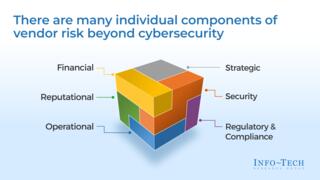 Looking at Risk in a New Light: The Six Pillars of Vendor Risk Management
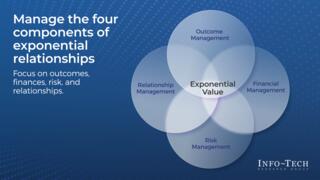 Manage Exponential Value Relationships
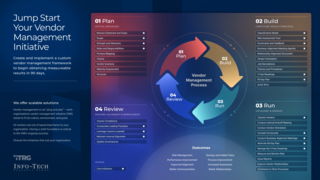 Jump Start Your Vendor Management Initiative
 Capture and Market the ROI of Your VMO
 Cut Cost Through Effective IT Category Planning
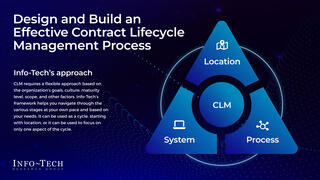 Design and Build an Effective Contract Lifecycle Management Process
 Maximize Value From Your Value-Added Reseller (VAR)
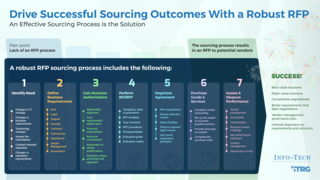 Drive Successful Sourcing Outcomes With a Robust RFP Process
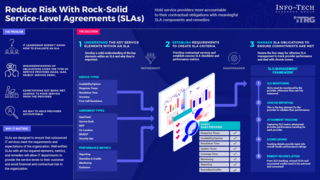 Reduce Risk With Rock-Solid Service-Level Agreements
 Slash Spending by Optimizing Your Software Maintenance and Support
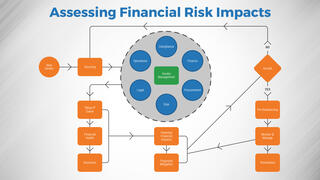 Identify and Manage Financial Risk Impacts on Your Organization
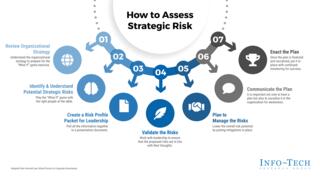 Identify and Manage Strategic Risk Impacts on Your Organization
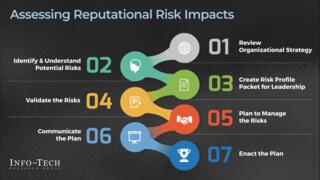 Identify and Manage Reputational Risk Impacts on Your Organization
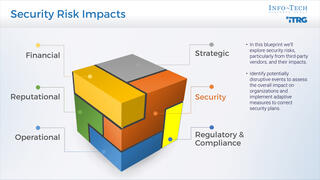 Identify and Manage Security Risk Impacts on Your Organization
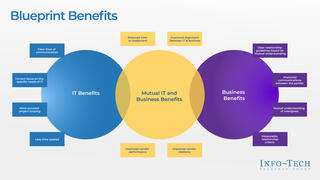 Evaluate Your Vendor Account Team to Optimize Vendor Relations
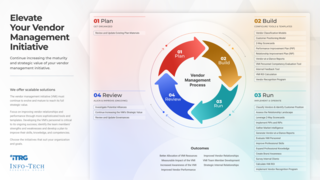 Elevate Your Vendor Management Initiative
 Prepare for Negotiations More Effectively
 Implement Your Negotiation Strategy More Effectively
 Evaluate and Learn From Your Negotiation Sessions More Effectively
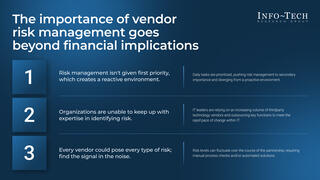 Proactively Identify and Mitigate Vendor Risk
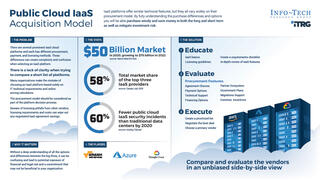 Master the Public Cloud IaaS Acquisition Models
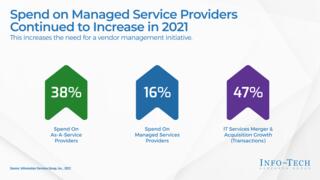 Essentials of Vendor Management for Small Business
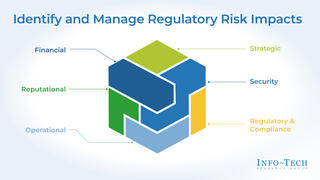 Identify and Manage Regulatory and Compliance Risk Impacts on Your Organization
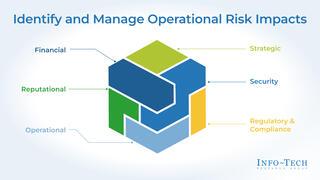 Identify and Manage Operational Risk Impacts on Your Organization
 Don’t Allow Software Licensing to Derail Your M&A
 Identify and Reduce Agile Contract Risk
 Improve Your Statements of Work to Hold Your Vendors Accountable
 Understand Common IT Contract Provisions to Negotiate More Effectively
 Master Contract Review and Negotiation for Software Agreements
 Master the MSA for Your Managed Services Providers
 Negotiate SaaS Agreements That Are Built to Last
 Establish a Vendor Management Roadmap to Succeed With Autonomous Technologies
 Price Benchmarking & Negotiation
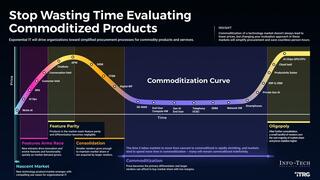 Stop Wasting Time Evaluating Commoditized Products and Services
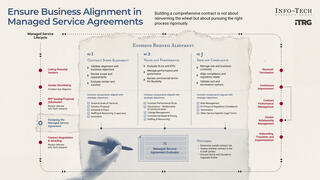 Ensure Business Alignment in Managed Service Agreements
 Comparing Software Practices in Maturing IT
 Run IT By the Numbers
 Transform IT, Transform Everything
 The Race to Develop Talent
 Building Info-Tech’s Chatbot
 Assessing the AI Ecosystem
 Sync or Sink: Aligning IT and HR for the Future of Work
 Building the Road to Governing Digital Intelligence
 Bring AI Out of the Shadows
 The AI Vendor Landscape in IT
 IT Spend and Staffing Benchmarking
 An Operational Framework for Rolling Out AI
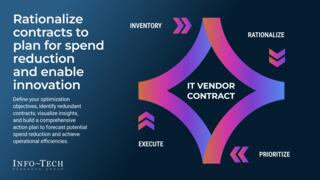 Optimize IT Vendor Contracts in Times of Uncertainty
 AI in Seven Charts
 Emerging AI Trends and Predictions From Our Global Technical Counselor Team
 Master High-Value Contracts: Optimize Costs and Reduce Risks Keynote
 Turn Customer Friction Into Agentic Opportunity
 People Change in the Face of Disruptive Technology
 Lead IT Like a Business: Every Dollar Is a Decision
 Optimize Cloud & AI Spend With Agentic FinOps
 Influence Unleashed: The IT Leader’s Superpower
 The Challenge of Ethics in the Use of AI
 Revolutionize Risk Management With Agentic AI
 Introducing the Info-Tech Speakers Bureau
 Inside the Agentic Enterprise
 Agentic IT: From Hype to Value
 Tech Trends 2027 Keynote
 Become an Exponential CIO
 Beyond the Agent: The Leadership Ecosystem for an AI-Enabled World
 Five Key Takeaways From Info-Tech LIVE 2026
