Professional Associations & Not-for-Profits
Top Trends and Priorities for 2026
Preview Another Industry




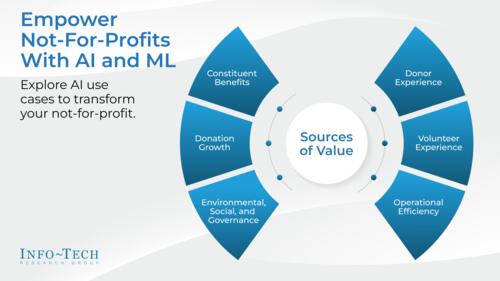
Adopt AI to scale mission capacity
The Challenge
Lean teams are stuck in manual work.
Associations and nonprofits run lean, and staff spend hours on routine administrative work that pulls them away from members and mission. Generative AI could absorb much of that load, but most organizations lack the strategy, skills, and guardrails to adopt it with confidence. The risk is not moving too fast on AI, but letting capacity stay trapped in manual work while peers pull ahead.
Why It Matters
A focused plan beats scattered curiosity.
AI is the rare lever that lets a small team scale its impact without scaling headcount, which is why it tops the sector's technology agenda. With a majority of nonprofits optimistic about AI yet many unsure where to begin, the organizations that move from interest to a focused plan this year will free the most staff time for mission ("Nonprofit Trends Report, 7th Ed," Salesforce, 2025).
The Solution
Apply AI to repetitive, high-volume work.
Implement AI in drafting, summarizing, and data lookup workflows allowing staff to reclaim hours for member and donor relationships.
Build AI literacy across the team.
Train staff on practical, responsible AI use to ensure adoption spreads safely across the team.
Pilot with clear goals and guardrails.
Choose a few high-value use cases, set success measures, and define acceptable use before scaling.


Treat stakeholder data as a trusted asset
The Challenge
Stakeholder data is scattered and unreliable.
Member, donor, volunteer, and program data sit in disconnected systems, so no one has a single, reliable view of a stakeholder or of impact. Teams reconcile conflicting records by hand, and impact reporting to funders is slow and hard to defend. Associations cannot personalize engagement or prove outcomes until their data is unified and governed.
Why It Matters
You can't prove impact on messy data.
Every AI ambition and impact claim rests on data the organization can trust, making data foundations the prerequisite for both efficiency and credibility. As nonprofits scale AI and analytics, those that unify and govern their stakeholder data now will be the ones that can both personalize engagement and prove their impact ("State of AI in Nonprofits," Techsoup, 2025).
The Solution
Unify stakeholder data in a core platform.
Connect membership, donation, and program records so staff work from one trusted view, often in the CRM.
Assign data ownership and quality standards.
Name owners and agree definitions for key measures so reports reconcile and stay accurate.
Build impact metrics on governed data.
Define outcome measures and dashboards on clean data so impact reporting to funders is fast and defensible.


Modernize funding and revenue operations
The Challenge
Revenue operations are fragmented and manual.
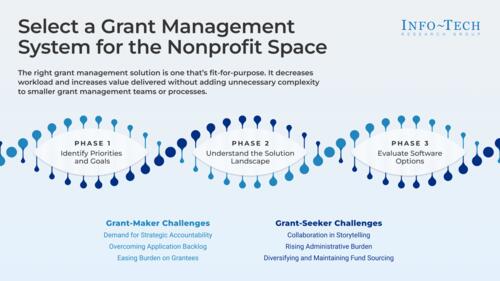
Associations depend on dues, donations, grants, and events, but the systems that run them are often fragmented and manual. Renewals lapse, donor journeys break across tools, and finance teams cannot see revenue clearly enough to act. As funding pressure rises, clunky revenue operations quietly cost the organization money it cannot afford to lose.
Why It Matters
Recurring giving is the path to stability.
Diversifying and stabilizing revenue is now an operational priority as traditional funding tightens and donor behavior shifts. With monthly and recurring giving making up a growing share of online revenue, associations that modernize how they capture and retain revenue will steady their finances ("Benchmarks 2025," M+R Benchmarks, 2025).
The Solution
Automate dues and donation workflows.
Streamline renewals, recurring gifts, and receipts so revenue is captured reliably without manual chasing.
Diversify and grow recurring revenue.
Build monthly giving and membership tiers so income is steadier and less event-dependent.
Give finance a clear revenue view.
Connect revenue systems to reporting so leaders can track and act on funding in real time.


Defend against cyber threats
The Challenge
Associations are soft, data-rich targets.
Associations hold exactly what attackers want: member rosters, payment details, and donor records, often protected by lean teams and limited budgets. Phishing, ransomware, and business email compromise increasingly target the sector precisely because defenses are thin. A single breach can drain funds, trigger compliance penalties, and break the member trust the organization runs on.
Why It Matters
Thin defenses make breaches likely.
Cybersecurity has become a survival issue, not an IT footnote, as attacks on under-resourced nonprofits climb. With 68% of breaches involving a human element and the average nonprofit breach reaching into the millions, building practical defenses now protects both the mission and member trust ("The Crucial Role of Cybersecurity for Nonprofit Organizations," BDO, 2025).
The Solution
Put core protections in place first.
Enforce multifactor authentication (MFA), reliable backups, and endpoint protection to close the gaps attackers exploit most.
Train staff and volunteers to spot attacks.
Run regular phishing and security awareness training, since most breaches start with human error.
Plan and rehearse incident response.
Document who does what in a breach and test it so the organization can contain and recover quickly.



Protect member privacy and trust
The Challenge
Privacy practices lag behind data use.
Members and donors share personal and payment data expecting it to be handled responsibly, yet many associations lack clear privacy practices, especially as AI tools ingest that data. Consent, retention, and acceptable-use rules are often informal or missing, creating compliance exposure and a quiet erosion of trust. In a sector built on relationships, mishandling stakeholder data is an existential risk, not a technicality.
Why It Matters
AI adoption is outracing privacy rules.
Privacy and responsible data use have become central to the trust that sustains membership and giving, particularly as AI adoption races ahead of governance. With 78% of nonprofits using generative AI but only 42% reporting any policies for it, closing that gap now is what protects both compliance and stakeholder confidence ("Benchmarks 2025," M+R Benchmarks, 2025).
The Solution
Publish a clear data privacy and use policy.
Define how stakeholder data is collected, used, retained, and shared so practices are consistent and defensible.
Set guardrails for AI and member data.
Require that AI tools meet privacy standards before they touch member or donor information.
Be transparent with members about their data.
Give stakeholders clear notice and choices so trust is reinforced, not assumed.


Close the technology talent and skills gap
The Challenge
Lean teams can't compete for scarce technical talent.
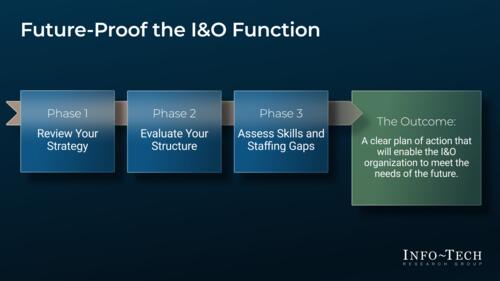
Associations and nonprofits often run technology on one or two generalists expected to cover security, data, and systems all at once, and they cannot match private-sector pay for the specialized skills now in shortest supply. When that person leaves, institutional knowledge walks out the door with them, and the organization is left dependent on whoever it can find next. The risk is not a single bad hire; it is a mission-critical function staffed by whoever happens to be available.
Why It Matters
Skilled talent is as hard to keep as it is to find.
Attracting and retaining skilled people is one of the toughest challenges nonprofit, government, and education leaders expect to face next year, right alongside the technology cost pressure squeezing every budget. Associations that invest deliberately in developing, cross-training, and retaining the people who run their systems will keep operating smoothly when peers are stuck backfilling vacancies ("State of Nonprofit, Government and Education," Wipfli, 2026).
The Solution
Build a lightweight technology talent plan.
Define the few roles and skills the mission truly depends on, and document how each will be developed, retained, or backfilled before a departure becomes a crisis.
Cross-train to remove single points of failure.
Pair staff on key systems and document institutional knowledge so critical operations don't depend on one irreplaceable person.
Supplement gaps with outsourced expertise.
Use managed service providers, fractional specialists, or shared-services partners to cover skills a lean team cannot justify hiring full-time.

Personalize stakeholder engagement
The Challenge
Generic blasts are losing the audience.
Members and donors expect relevant, timely communication, but many associations still send one-size-fits-all blasts to their whole list. Without segmentation and behavioral data, outreach feels generic, response rates slide, and engagement erodes. Generic communication trains stakeholders to ignore the organization at the moment it most needs their attention.
Why It Matters
Personalization decides what gets read.
Personalization now separates the messages that get opened and acted on from the ones that get ignored, directly affecting revenue and retention. As email volume rises while generic response rates fall, associations that segment and tailor engagement will earn far more value from the same audience ("Benchmarks 2025," M+R Benchmarks, 2025).
The Solution
Segment audiences by behavior and interest.
Use engagement and giving data to group stakeholders so messages match what they care about.
Tailor content and timing across channels.
Personalize email, mobile, and web outreach to each segment rather than broadcasting to all.
Use triggered journeys for key moments.
Automate welcome, renewal, and post-gift sequences so timely, relevant touches happen without manual effort.


Digitize member and constituent services
The Challenge
Members expect self-service, not phone trees.
Members increasingly expect to renew, register, and get answers online at any time, but many associations still rely on phone, email, and manual back-office steps. Clunky portals and slow responses frustrate members and pile routine requests onto small teams. A weak digital service experience drives down both satisfaction and renewals.
Why It Matters
Members compare you to every app they use.
Self-service has become the baseline expectation members carry over from every consumer app they use, making the digital front door central to retention. As nonprofits modernize how they serve constituents, those that deliver easy digital self-service will raise satisfaction while freeing staff from routine requests ("Nonprofit Trends Report,7th ed." Salesforce 2025).
The Solution
Build a self-service member portal.
Let members renew, register, and update their information online without staff involvement.
Add digital assistants for common requests.
Use chat and AI assistants to answer routine questions instantly and around the clock.
Streamline back-office service workflows.
Connect member-facing services to back-end systems so requests resolve quickly and consistently.

Expand digital outreach
The Challenge
Reach is narrowing as channels shift.
Associations compete for attention across email, social, search, and mobile, but many still lean on a narrow set of channels and shrinking organic reach. As platforms change and audiences fragment, outreach that worked a few years ago now delivers less. Standing still on digital outreach means slowly losing visibility with the very people the mission depends on.
Why It Matters
Owned audiences beat rented reach.
Reaching and growing an audience now requires a deliberate, multichannel strategy as organic web traffic declines and platforms shift. With channels like mobile messaging and short-form video growing fast while email response softens, associations that diversify outreach will keep building their audience rather than watching it erode ("Benchmarks 2025," M+R Benchmarks, 2025).
The Solution
Diversify across channels.
Build presence in email, mobile, social, and search so reach does not depend on any single platform.
Grow and nurture owned audiences.
Prioritize email and mobile lists you control over rented social reach that can vanish overnight.
Use data to focus spend.
Track channel performance and shift investment toward what actually drives engagement and giving.

Govern digital growth
The Challenge
Digital growth is outrunning governance.
As associations add AI, data, and digital tools quickly, governance, security, and accountability often lag behind. Decisions get made tool-by-tool with no overall view of risk, cost, or who owns what. Ungoverned digital growth accumulates hidden risk and duplicated spend that surface at the worst possible moment.
Why It Matters
Scale capability without scaling risk.
Sustainable digital growth depends on governance that keeps pace with adoption, especially for AI and data. With most nonprofits adopting AI faster than they are setting policies for it, associations that put governance, ownership, and acceptable-use guardrails in place now will scale digital capability without scaling risk ("State of AI in Nonprofits," Techsoup, 2025).
The Solution
Establish a digital and AI governance group.
Give a cross-functional team ownership of policy, risk, and major technology decisions.
Set acceptable-use and oversight standards.
Define clear rules for AI, data, and new tools so adoption stays responsible as it scales.
Review technology spend and risk regularly.
Track tools, cost, and exposure in one place so growth stays deliberate and accountable.


Comprehensive Professional Associations & Not-for-Profits Industry Coverage



Testimonials

“Choosing to partner with Info-Tech has been one of our best decisions. They’re a dependable part of our extended team, always ready to deliver, and the flexibility of the engagement means there’s virtually no limit to what we can achieve.”
Jacob Johnson, Head of Technology & Digital at SSI
View Full Case Study
“Info-Tech is an excellent resource and a key partner for us, making sure we always have the resources, tools, and knowledge to help us move forward as a team.”
Danielle Saldivar, VP of IT, Goodwill of Central and Northern Arizona
View Full Case Study
"We need to think about the front-end as the humanitarian organisation, and thus the back-end needs to become more efficient and streamlined to support that.”
Brett Wilson, CIO, Australian Red Cross
View Full Case Study