
Social Media Management Software Selection Guide
Identify the best tools that suit your social media management needs.
- Social media has changed the way businesses interact with their customers. It is essential to engage with your customers regularly and in a timely manner.
- Businesses must stay on top of the latest news and update the public regarding the status of downtime or any mishaps.
- Customers are present in multiple social media platforms, and it is important for businesses to engage with all audiences without alienating one group.
Our Advice
Critical Insight
- There are many social media platforms, and any post, image, or other content must be uploaded on all the platforms with minimal delay.
- It is often difficult to manage replies and responses to all social media platforms promptly.
- Measuring key performance metrics is crucial to obtain targeted ROI. Calculating ROI across multiple platforms with various audiences is a challenge.
Impact and Result
- A business’ social media presence is an extension of the organization, and the social media management strategy must align with the organization's values.
- Choose a social media management platform that is right for you by aligning your needs without falling for bells and whistles. Vendors offer a lot of features that are not helpful for most day-to-day activities.
- Ensure the social media management platform has support and integrations for all the platforms that you require.
Social Media Management Software Selection Guide
Identify the best tools for your social media management needs.
EXECUTIVE BRIEF
Analyst Perspective
Identify what will drive the most value for your organization beyond the core functionalities of publishing and scheduling.
Social media management platforms (SMMPs) are a necessary system to support customer engagement at this point in time. When social media first came out it occupied a marginal position in culture; it has since come to absorb all aspects of social and personal life to the extent that customers look to social media first to understand the identity and offerings of a brand. As social media continues to become more important in the consumer's daily life, it also becomes more diverse. New platforms replace old ones for younger demographics, and platforms innovate new ways to monetize and engage the microcommunities within.
Originally, the core focus of SMMPs was the scheduling and posting of content. However, as social media has become more complex, so have the tools designed to manage it. Customer engagement is now facilitated by in-depth analytics and social listening, while the content pipeline can be more thoroughly supported with content generation tools. Archiving features are of heightened relevance to industries with high compliance requirements, and multibrand collaboration is essential for agencies.
All SMMP tools provide core scheduling and publishing functionalities; they differentiate themselves in the marketspace by their strengths in these additional capabilities. Organizations must understand their own business objectives to identify the best-fit solution to maximize ROI. Additionally, the scale of a desired solution is important, both in terms of the number of users and the number of social profiles. A structured evaluation process will help maximize long-term value, reduce risk, and ensure the solution remains effective into the future.

Maya Chambers
Senior Analyst, Customer Experience & Application Insights
Info-Tech Research Group
Executive Summary
Your Challenge
- A strong social media presence across a range of platforms is essential to building a brand that stays top of mind for consumers. Without a centralized tool to manage all these accounts, messaging can quickly become disorganized and inconsistent. Internally, a structured workflow is needed for effective collaboration and campaign tracking.
- Without an SMMP, a brand is subject to operational inefficiencies and strategic blind spots that weaken customer experience and can negatively impact brand reputation.
Common Obstacles
- While the benefits of a strong social media presence is apparent to many marketers, difficulty measuring ROI from social media investments can make the case challenging to prove to business stakeholders.
- Manual posting and monitoring eats up staff time that should be spent on strategy, creative assets, and engagement.
- Tracking and analyzing metrics across platforms is cumbersome and chaotic, making it difficult to measure ROI or identify early signals of reputation shifts.
Info-Tech's Approach
- Social media presence is an extension of the organization, and organizational values must align with the social media management strategy.
- Choose an SMMP that is right for you by aligning your needs without falling for bells and whistles. Vendors offer many features that are not helpful during 80% of day-to-day activities.
- Ensure the SMMP has support and integrations for all the platforms you need.
Info-Tech Insight
IT must work in tandem with marketing, public affairs, sales, and other key stakeholders to define a unified vision for the SMMP solution.
Info-Tech's methodology for selecting an appropriate SMMP
|
1. Understand the SMMP Landscape and Trends |
2. Select the Right SMMP Vendor |
|
|---|---|---|
|
Phase Steps |
|
|
|
Phase Outcomes |
|
|
Guided Implementation
What does a typical GI on this topic look like?
Info-Tech offers various levels of support to best suit your needs
DIY Toolkit
"Our team has already made this critical project a priority, and we have the time and capability, but some guidance along the way would be helpful."
Guided Implementation
"Our team knows that we need to fix a process, but we need assistance to determine where to focus. Some check-ins along the way would help keep us on track."
Workshop
"We need to hit the ground running and get this project kicked off immediately. Our team has the ability to take this over once we get a framework and strategy in place."
Executive & Technical Counseling
"Our team and processes are maturing; however, to expedite the journey we'll need a seasoned practitioner to coach and validate approaches, deliverables, and opportunities."
Consulting
"Our team does not have the time or the knowledge to take this project on. We need assistance through the entirety of this project."
Diagnostics and consistent frameworks are used throughout all five options.
Phase 1
Understand the SMMP Landscape and Trends
Social media management is the process of strategically handling an organization's or individual's presence across social media platforms. It involves planning, creating, publishing, monitoring, and analyzing content and interactions to achieve specific communication, marketing, or business objectives. SMMP has developed a strategic role beyond simply posting updates. It integrates with marketing, customer service, sales, and brand reputation management to drive sales traffic, support customers through rapid response, track public sentiment, and engage microcommunities. In short, social media management is the coordinated effort of using tools, processes, and strategy to maximize the value of social platforms for business growth, brand trust, and customer engagement.
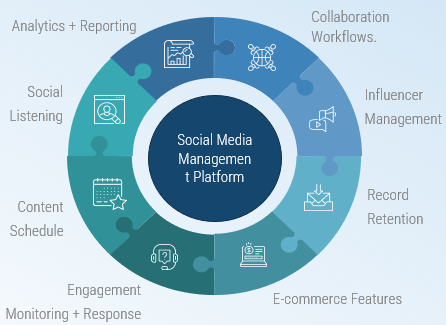
SMMP offers many key features, including but not limited to:
- Creating, scheduling, and posting content directly to major platforms.
- Monitoring and responding to engagement.
- Analytics and reporting.
- Social listening.
- Collaboration, approval workflows, and permissions.
- Influencer collaboration.
- Archiving and record retention.
- Integration with content, marketing, and e-commerce platforms.
Info-Tech Insight
SMMP platforms have continuously expanded their features list. It is, however, essential not to get lost in endless features to remain competitive and ensure the best ROI. Choose a solution that prioritizes core business needs like content scheduling and audience engagement, involving emerging features only if they align with your business strategy.
SMMP key capabilities framework
Organized into four pillars to evaluate SMMP vendors across core functionality, advanced features, governance, and extensibility
|
CAPABILITY |
DESCRIPTION |
|
|---|---|---|
|
Core SMMP Functions |
Multiplatform Scheduling & Publishing |
Create and schedule posts across major platforms. |
|
Content Calendar |
Visualized calendar to plan campaigns, view schedules posts, and manage timing. |
|
|
Engagement Monitoring |
Unified inbox to monitor and respond to comments, mentions, and DMs. |
|
|
Analytics & Reporting |
Performance dashboards showing key metrics (reach, impressions, growth, etc.) |
|
|
Advanced Features |
Social Listening |
Track mentions of brands, competitors, keywords, and hashtags. |
|
AI & Automation |
AI-assisted caption generation, sentiment analysis, predictive assistance. |
|
|
Influencer Marketing Tools |
Influencer discovery, vetting, campaign management, ROI measurement. |
|
|
Collaboration & Workflow |
Role-based tasks, drafts, approvals, and feedback. |
|
|
Compliance & Governance |
Approval Workflows |
Multilevel approval before publishing. |
|
User Roles & Permissions |
Granular access control to prevent unauthorized posting. |
|
|
Archiving & Record Retention |
Option for full content archiving including deleted/edited posts. |
|
|
Security Features |
SSO, 2FA, audit logs, and data residency compliance. |
|
|
Integration & Extensibility |
CRM & Marketing Automation |
Integration with CRM tools to tie social activity to customer data. |
|
E-commerce Platforms |
Integration with e-commerce platforms for shoppable posts and conversion tracking. |
|
|
Design Tools |
Canva, Adobe, or built-in editors for quick asset creation. |
|
|
Other Tools |
Integrations with project management and productivity apps. |
|
Key trends in SMMP
Shaping the future of SMMP
Key Trend
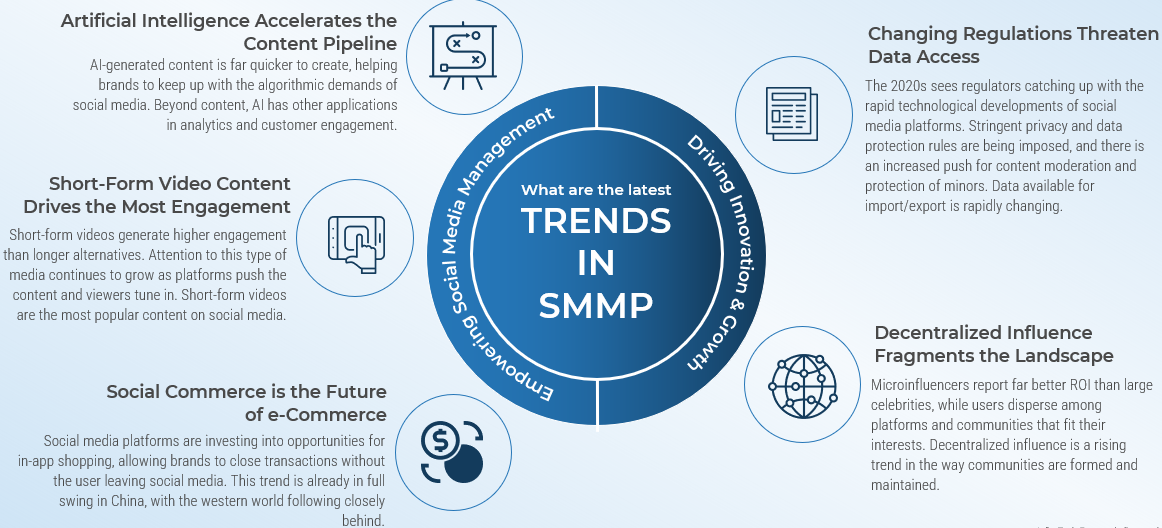
Across industries, AI is an opportunity for exponential growth. Within the social media management realm, an increase in both AI analytics and AI-generated content provides new opportunities to quickly align content creation to unique insights.
One immediate application of generative AI in the realm of social media is the enablement of rapid content production, from captions to images and video scripts. While intensive video and image generation often occurs in standalone tools, many SMMP platforms have developed capabilities to generate captions and other test-based content. Strong integration with generative AI content creation tools will be an essential advantage in the SMMP marketspace. For example, the release of Sora 2 supercharges the creation of AI-generated short-form video content.
The content pipeline (the end-to-end workflow for creating and publishing content across platforms) remains the core business function facilitated by SMMP platforms. Generative AI can be incredibly effective in accelerating the content pipeline, allowing brands to keep up with the rising demands of algorithmic visibility due to the oversaturation of social media. In addition to content creation, AI may support ideation and engagement through its analytic capabilities, which use social listening to track engagement, stream multiplatform posting, and identify relevant trends and audiences. Some vendors provide automated moderation to chat in direct message and respond to comments.
The possible advantages of generative AI are at odds with ever-tightening regulations on data access. The relationship between the two is constantly evolving and should be continually assessed.
|
35+ |
On Medium, AI-generated text attribution rates climbed from about 2% to 37% between 2022 and 2024, and Quora saw a similar increase, from 2% to 39% (Sun et al., 2024). |
|---|---|
|
88% |
88% of marketers now use AI tools in daily tasks (across content, analytics, and strategy) (SurveyMonkey, 2024). |
Key Trend
Changing regulations threaten data access
Regulatory influence continues to increase in relevance as more time, effort, and money is spent by regulators in managing the social media landscape. Technology is still ahead of regulation – but regulation is catching up.
Innovations in technology have long since outpaced regulators, and the regulatory landscape is characterized by a considerable lag behind private industry. However, considerable social and political pressure has been placed on regulators to confront data privacy and usage, intellectual property, and AI ethics. The decade of the 2020s marks a rapidly evolving regulatory environment that is both catching up to the developments of social media in the 2010s and laying the groundwork for forward-looking developments.
The EU is leading the charge and sets the standard for the most stringent privacy and platform control regulations. In Canada, Meta has completely blocked the sharing of news content in response to the 2023 Online News Act. In 2024, Australia passed the Online Safety Amendment Act 2024, which requires platforms to take reasonable measures to prevent users under 16 from having accounts.
These changing regulations have caused major platforms to revise their API frameworks, with direct impact on data import/export for SMMP analytics and posting. Apple's and Google's privacy policies regarding cookie depreciation are also impacting targeted advertising strategies.
For public sector entities, social media posts, comments, direct messages, and metadata are subject to record retention rules. In these cases, SMMP platforms must enable their users to retrievably retain all content for three to five years (or even longer!), even if it has been edited or deleted.
EU Laws:
General Data Protection Regulation (GDPR)
Established global standards for data privacy, user consent, and transparency.
Digital Services Act (DSA)
Effective from 2024, requires platforms to moderate harmful content, disclose algorithms, and provide greater transparency in advertising and recommendation systems.
Digital Markets Act (DMA)
Targets anticompetitive behavior of gatekeeper platforms like Meta, Google, and TikTok.
|
Global Efforts to Restrict Minor Access:
|
Platform-based API Changes:
|
Case study
City of Seattle's social media archiving
INDUSTRY: News
SOURCE: Tech Talk Seattle, 2020
Challenge
- In the United States, the Federal Records Act of 1950 requires government agencies to collect and retain records that document their activities. The contemporary application of this act includes social media posts and also demands electronic management to the fullest extent possible.
- The City of Seattle, one of the first US cities to adopt an open government approach, found itself struggling to comply with these regulations due to a sprawling social media footprint across several platforms and 114 official accounts.
- US public agencies are generally required to retain social media records for one to three years, depending on state law.
Solution
- Seattle implemented a social media archiving system powered by Archive Social. The system automatically captures and stores every post, comment, and direct message into a searchable public portal. The proactive investment in archiving tools allowed the city to respond quickly to numerous and time-sensitive public records requests as well as to meet the Washington State Public Records Act (WSPRA) requirements.
- The system allowed officials to instantly retrieve social media content instead of manually combing through platforms and to preserve deleted or altered posts.
Results
- One of the first US public agencies to leverage a social media archiving electronic records tool, Seattle has set the standard for compliance in the sector. The approach has been replicated by municipalities across the United States, saving dozens of staff hours per public records request. Other highly regulated industries, such as healthcare and finance, have also followed in its footsteps.
- The market continues to grow, as over 75% of US public agencies now consider social archiving a mandatory tool.
Key Trend
Decentralized influence fragments the landscape
Engagement vastly outperforms visibility in terms of conversions. Audiences are looking to more niche creators, platforms, and communities who relate to them in a more authentic, low-profile way.
Influencer marketing (the collaboration of brands with content creators to market their products and services) remains one of the most highly effective opportunities to see ROI on marketing dollars. Microinfluencers tend to provide more authentic and valuable engagement than broad-reaching celebrities.
This trend also manifests itself in platform fragmentation, as users disperse among the platforms with the best cultural fit for their interests. Private content and communities are on the rise through in-app subscriptions on platforms such as Instagram, Discord, Substack, and Patreon.
For sales, a cross-platform user journey has become more common, with users starting in one place and converting in another.
Creator monetization tools facilitate the microfragmentation of dominant social media platforms based on existing influencer communities. Subscriptions, tipping, view-based revenue, and brand collaboration marketplaces allow private content spaces to flourish inside a more general landscape. These tools are significant in providing infrastructure for decentralization based on both niche content type as well as private platform spaces, without the learning curve of switching to another platform.
Microinfluencers (10,000-100,000 followers) average 3.8% engagement per post,
which is far higher than macroinfluencers' 1.2% engagement rate. In fact, 56% of marketers report better ROI from micro/nano influencers over larger influencers.
Source: Stack Influence, 2025.
$5.78 in earned media value per $1 spent
Brands see strong returns from influencer marketing.
Source: Influencer Marketing Hub, 2020.
Case study
LaCroix built authentic buzz by engaging microinfluencers
INDUSTRY: CPG/Retail
SOURCE: Latterly, 2025; Digiday, 2016
Challenge
Founded in the 1980s under the National Beverage Corporation, LaCroix had a niche product – sparkling water – with a limited audience. Over time, consumer preferences shifted away from soda toward healthier beverage options, presenting a unique opportunity for mainstream adoption. The only problem? LaCroix didn't feel modern.
To capitalize on the trend toward sparkling water, LaCroix needed to modernize its brand image in a way that felt modern. While competitors relied on traditional advertising, LaCroix turned to social media to develop authentic relationships with young millennials.
Solution
Instead of paying big-name celebrities, LaCroix cultivated hundreds of small influencers and everyday fans to promote the brand on social media. With a market opening driven by the consumer desire to be healthier, LaCroix used microinfluencers to become part of organic conversations around lifestyle choices.
The brand made a considerable effort to involve its consumers in decision-making by fostering two-way communication on social media and harnessing feedback to refine its product offerings. Hashtags such as #livelacroix and #lacroixlove invited consumers to get involved. LaCroix actively shared content from Instagram users with as few as 150 followers.
Results
By 2024, LaCroix was ranked #1 on Newsweek's trusted brands list, illustrating how niche influencers can outperform celebrities in ROI. Engaging passionate microinfluencers was not only affordable (often costing only gifted products) but also developed authentic buzz and trust with customers.
LaCroix enjoys high repeat purchase rates, suggesting strong brand loyalty, a vital metric for sustained growth. The use of microinfluencers generated a sense of intimacy with customers, as opposed to the more luxury branding of competitors such as Perrier. A 30-year-old brand, LaCroix has become contemporary and hip, a drink of choice among trendy millennials.
Key Trend
Social commerce is the future of e-commerce
The fusion of content and commerce into social platforms turns engagement moments into seamless purchase opportunities without redirecting the user elsewhere. Embedded social selling is seen to many as the future of commerce.
Social commerce is the selling of goods and services through social media. Commerce is being directly integrated inside social media platforms and content ecosystems to eliminate the need to direct users to external websites, products, services, or checkout processes. In-app shopping has been directly embedded into TikTok, Instagram, Pinterest, and YouTube content through shoppable posts and product tags, while commerce features are woven into entertainment rather than treated as separate ads. Influencer storefronts allow an influencer to curate "shops" of items or personalized content feeds on fast-fashion and mass distribution websites while creator-endorsed products, taggable videos, and augmented reality try-ons further blur the line between content and commerce.
Social media platforms contain more data about consumers than traditional platforms, which allows more accurate targeting of ads and promotions. Popular platforms have opened their own built-in stores, allowing platforms to lower third-party costs and have more control over which products are featured. This also creates a transactional call to action without leaving social media.
Globally, the social commerce market is projected to reach $1.2 trillion by 2025, accounting for over 17% of all e-commerce sales.
$1.2 Trillion
Source: Accenture, 2022.
The launch of TikTok Shop drove a 26% increase in US social commerce sales in 2024.
Meanwhile, in China, where social commerce is most advanced, livestream shopping events by influencers routinely garner millions of viewers, with Chinese
brands seeing up to 30%
conversion rates on social channels.
Source: eMarketer, 2024.
Case study
Canvas Beauty
INDUSTRY: Beauty
SOURCE: Vimmi, 2024
Challenge
Stormi Steele graduated cosmetology school in 2011 with only $800 to her name. She spent the next decade working in salons, developing her own hair products, and launching a brand called Canvas Beauty. Sales grew thanks to social media, but Stormi struggled to break even. Then, one fateful day in June 2024, Stormi sold over $1 million worth of products during a six-hour TikTok Live. Three months later, she did it again in half that amount of time.
While Canvas Beauty did have a strong presence on social media, it was nothing exceptional. Followers sat at around 400,000, half the amount of viewers in her livestream.
Solution
Through social commerce, the customer and the audience have collapsed into one. While luxury brands have always considered the personalized experience of shopping, social commerce pushes that experience into the realm of entertainment.
Viewers tune in to a livestream for the excitement, for information, or simply out of curiosity. From there, flash sales, deals, and offers keep followers excited and engaged, while a sense of urgency pushes viewers to purchase quickly. Comments and real-time testimonials from customers provide credibility. Stormi maintains strong community engagement, going live frequently beyond special sales, showing the product in action, dueting with creators, and more.
Results
Canvas Beauty has created an irresistible pull by combining exclusivity with live interaction. Fans don't just want the product; they want the experience of participating in the moment.
The urgency created by live sales promotes customer loyalty and engagement. Followers have developed an attachment to Stormi as an influencer and community member and are rooting for her success, providing free credibility and testimonials.
Through successful leveraging of social commerce, Canvas Beauty has reached an all-time high in sales and set a framework for a new type of selling.
Key Trend
Short-form video content drives the most engagement
Immersive, engaging, and an algorithmic priority, short-form videos remain the most essential media type to build brand recognition and engagement. Tools that help produce short-form videos efficiently will be key to unlocking the value of this trend.
Since the rise of TikTok in the early 2020s, short-form video content has been algorithmically prioritized across platforms in an effort to compete and drive engagement. Short-form content, defined as videos less than two minutes long, take substantially less time and effort to consume, making them attractive for end users. It's also common for content creators and brands to cut and upload short clips from longer videos to drive more engagement with viewers.
Major competitors to TikTok are Instagram Reels and YouTube Shorts, although platforms as diverse as LinkedIn and Pinterest are experimenting more with video content. The shift in media style is accompanied by a shift toward the vertical format for a more immersive "endless feed" experience that keeps the user hooked.
While short-form video content is easier to consume, it tends to require more effort to produce. At the same time, algorithms increasingly demand a higher quantity of content to maximize viewer engagement. The ability of SMMP tools to accelerate the creation of short-form video content will be an essential factor in determining a marketer's ability to keep up with this trend.
With short videos generating 2.5× higher engagement than long-form videos on average, business accounts are increasingly keeping videos under two minutes (56% of business video posts) (Zelios, 2025).
YouTube Shorts reached 200 billion daily views by mid-2025
This is a 186% increase from a year prior – after the platform introduced short-form content to compete with TikTok (eMarketer, 2025).
Phase 2
Select the Right SMMP Vendor
Get to know the key players in the SMMP landscape
The following slides provide a top-level overview of the popular players you will encounter during your SMMP shortlisting process.
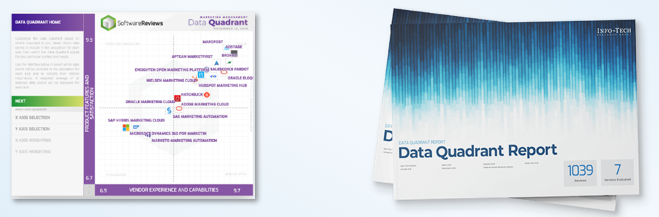
Evaluate software category leaders through vendor rankings and awards
SoftwareReviews
|
|

|
|

About Info-Tech
Info-Tech Research Group is the world’s fastest-growing information technology research and advisory company, proudly serving over 30,000 IT professionals.
We produce unbiased and highly relevant research to help CIOs and IT leaders make strategic, timely, and well-informed decisions. We partner closely with IT teams to provide everything they need, from actionable tools to analyst guidance, ensuring they deliver measurable results for their organizations.
What Is a Blueprint?
A blueprint is designed to be a roadmap, containing a methodology and the tools and templates you need to solve your IT problems.
Each blueprint can be accompanied by a Guided Implementation that provides you access to our world-class analysts to help you get through the project.
Need Extra Help?
Speak With An Analyst
Get the help you need in this 2-phase advisory process. You'll receive multiple touchpoints with our researchers, all included in your membership.
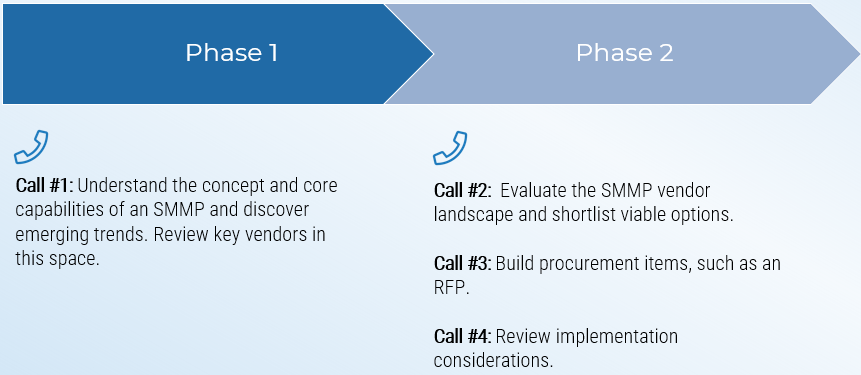
Guided Implementation 1: Shortlist social media management platforms
- Call 1: Understand what a social media management platform (SMMP) is.
- Call 2: Build the business case to select an SMMP.
Guided Implementation 2: Take a structured approach to selection
- Call 1: Define your key SMMP requirements.
- Call 2: Build procurement items, such as a request for proposal (RFP).
- Call 3: Evaluate the SMMP solution landscape and shortlist viable options.
 Marketing Management Suite Software Selection Guide
 Build IT Capabilities to Enable Digital Marketing Success
 Develop Your Web Experience Management Strategy
 Optimize Lead Generation With Lead Scoring
 Create a Buyer Persona and Journey
 Build a More Effective Go-to-Market Strategy
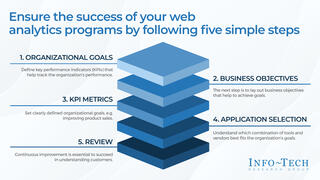 Leverage Web Analytics to Reinforce Your Web Experience Management Strategy
 2020 Applications Priorities Report
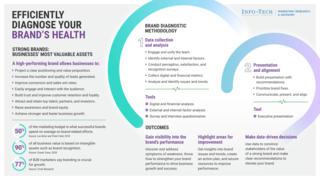 Diagnose Brand Health to Improve Business Growth
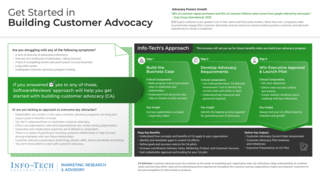 Get Started With Customer Advocacy
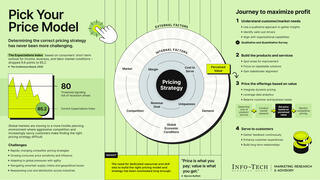 Pick Your Price Model
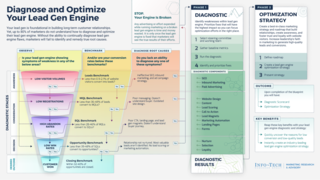 Diagnose and Optimize Your Lead Gen Engine
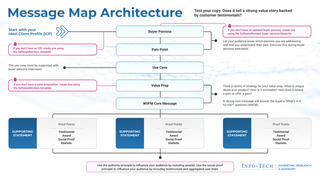 Develop the Right Message to Engage Buyers
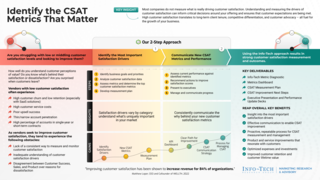 Identify the Customer Satisfaction Metrics That Matter
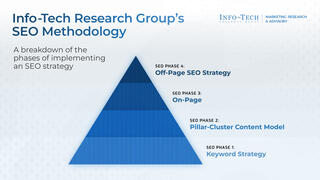 Create an Effective SEO Strategy
 Accelerate Business Growth and Valuation by Building Brand Awareness
 Social Media Management Software Selection Guide
 Build a More Effective Brand Architecture
 Build Competitive Intelligence for Market Success
 Create Assets to Accelerate the Buyer Journey
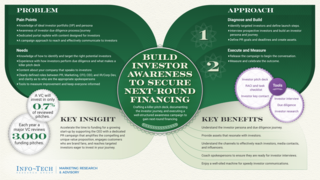 Build Investor Awareness to Secure Next-Round Financing
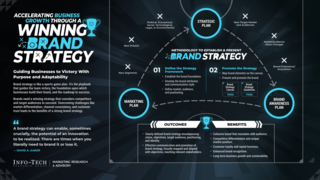 Brand Strategy: Establish and Cultivate a Flourishing Brand
 Improve Win Rates With a Sales Enablement Strategy
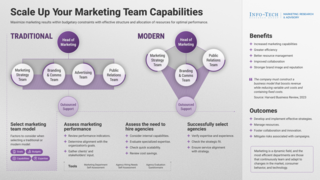 Scale Your Marketing Department
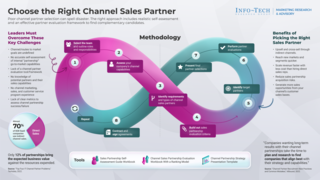 Choose the Right Channel Sales Partner
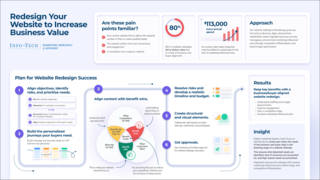 Redesign Your Website to Increase Business Value
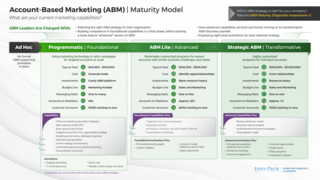 Build Your Account-Based Marketing Strategy
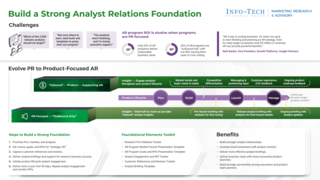 Build a Strong Analyst Relations Foundation
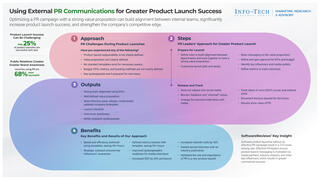 Improve External PR Communications for Greater Product Launch Success
 Turn Share of Voice Growth Into a Strategic Weapon
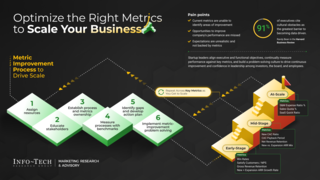 Optimize the Right Metrics to Scale Your Business
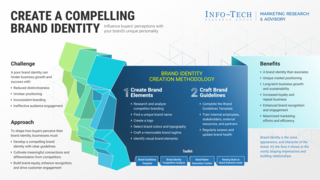 Leave a Lasting Impression With a Compelling Brand Identity
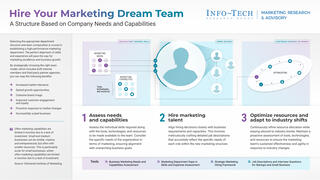 Hire Your Marketing Dream Team
 Match Your Budget to Your Market Position
 Capitalizing on AI
 Generative AI Use Cases for Marketing, Sales, and Customer Service
 The AI Advantage for Smarter Marketing – A Primer
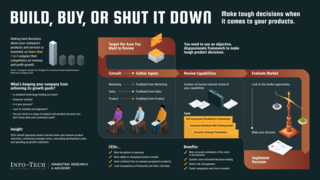 Build, Buy, or Shut It Down
 Event Activation Playbook
 Crush Your Product Launch
 Go-to-Market Strategy on a Page
 Maximize ROI on Sales and Marketing Collateral
 From Silos to Synergy: Create Marketing and IT Alignment
 Competitive Intelligence Software Selection Guide
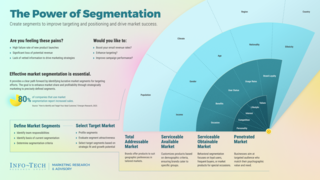 The Power of Segmentation
 Revolutionize Your Customer Onboarding
 Search Engine Optimization Software Selection Guide
 Build Better Dashboards Across Marketing, Sales, and Customer Success
 Make the Case for RevOps
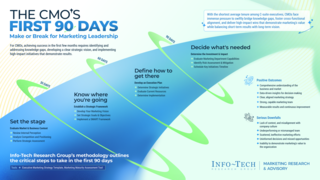 The First 90 Days as a CMO
 Stay Relevant in the Era of AI-Powered Search
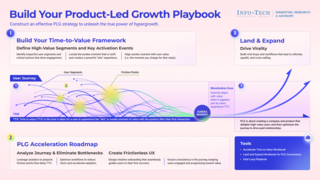 Build Your Product-Led Growth Playbook
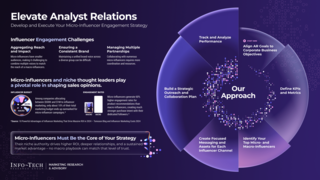 Elevate Analyst Relations
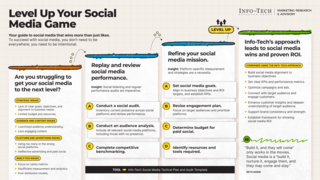 Level Up Your Social Media Game
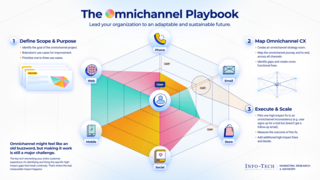 The Omnichannel Playbook
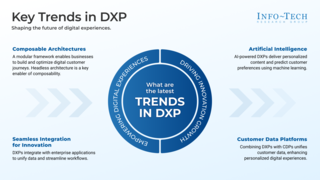 Digital Experience Platform Selection Guide
 Software Buyer Insights 2025
 Optimize Your CX Strategy
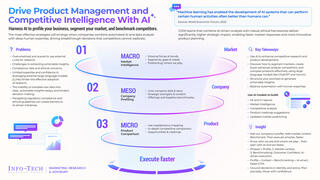 Drive Product & Market Planning With AI
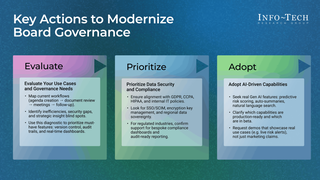 Board Management Software Selection Guide
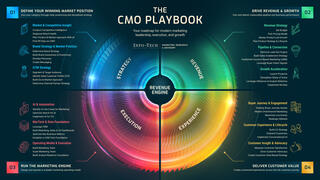 The CMO Playbook
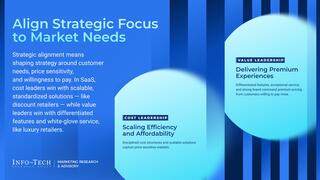 Position Your Brand Strategically as a Cost or Value Leader
 The Crisis Management Playbook
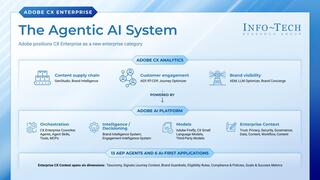 Vendor Spotlight: Adobe CX Enterprise
 Accelerate Persona & Journey Mapping With AI
