
Data Priorities 2026
AI and automation amplify whatever data they consume. Feed them noise, and they’ll scale confusion. Feed them clarity, and they’ll scale intelligence.
The ROI reckoning for data investments.
Amid shrinking budgets, trade tensions, and regulatory shifts, organizations are asking more from IT than ever before. But AI and automation amplify whatever data they consume – feed them noise and they scale confusion. Data leaders must now focus on feeding AI and automation clarity to scale intelligence, drive measurable impact, and stay ahead in an increasingly data-driven landscape.
The Data Priorities 2026 report explores the four initiatives that CIOs and CDOs must put front and center to harness data as a strategic asset and deliver accurate, timely, actionable insights that empower decisions across the organization.
Four key data priorities for 2026
This comprehensive report examines four key data initiatives to help IT leaders drive results and boost resilience in their organizations during the year ahead.
1. Enable Enterprise-Wide Accountability
Establish one governance for data and AI.
AI systems are data-dependent; poor data governance leads to poor AI outcomes. Adopt integrated data and AI governance to leverage overlapping stakeholders, avoid duplication, and ensure consistency and communication. This unified governance embeds fairness, transparency, and compliance into every stage of AI development.
2. Embrace Customer-Centricity for Data.
Build data products to engage smarter, faster, and stronger.
Treat data as a product to unlock swifter, more cost-effective results. Shift from an infrastructure-first approach toward a model that prioritizes measurable outcomes. And in these ROI-obsessed times, view data as a revenue-generating asset rather than just an internal efficiency play.
3. Build a Trusted AI-Ready Data Supply
Enable clarity with clean data and trust.
AI can’t fix poor inputs; it only multiples them. Poor quality data also clouds judgment and blurs direction, fueling hesitation and self-doubt among teams. Clear those clouds so your data-backed decisions, models, and AI systems can see (and steer) clearly ahead.
4. Cultivate Your Data Champions
Build an adaptable data organization with a culture-first approach.
Create a data culture where learning is valued and data practitioners can speak the business’ language. Empower data champions with authority and visibility to transform data literacy from a training goal into a shared organizational identity.
Data Priorities 2026
INTRODUCTION
Analyst Perspective
AI and automation amplify whatever data they consume. Feed them noise, and they’ll scale confusion. Feed them clarity, and they’ll scale intelligence.
In a perfect scenario, data teams would operate as a unified, insight-driven force that blends technical expertise, strategic thinking, and collaborative communication to deliver accurate, timely, and actionable insights that empower decisions across the organization.
However, the reality for many data teams looks quite different: They struggle with fragmented tools, unclear priorities, the growing volume of data, and constant firefighting, leaving little time to generate meaningful insights or strategic value. Increasingly, data teams must also navigate challenges such as building an AI-ready data supply, fostering data and AI literacy, ensuring data quality, closing governance gaps, and adapting architectures to meet organizational demands.
Amid shrinking budgets, trade tensions, and constant regulatory shifts, organizations are asking more from their IT departments than ever before. Yet this turbulent environment presents a unique opportunity. CDOs and CIOs are positioned to lead proactively, minimizing risks, optimizing costs, and driving innovation, including AI transformation, so IT delivers measurable value while demonstrating its strategic leadership. This is IT’s moment: Cost-cutting in times of crisis works. Doubling down on innovation works even better.
Turn disruption into momentum. Defining the right data priorities now will determine which organizations lead and which are left catching up. In this year’s Data Priorities Report, we highlight four key priorities for data leaders in 2026. We examine the signals driving each priority, explore the opportunities and risks, and provide guidance on technology and people enablement. This report also includes actionable tips to maximize value and measure success, case studies demonstrating real-world adoption, and recommendations to help data leaders implement these priorities effectively. Focusing on these priorities will empower organizations to harness data as a strategic asset, drive measurable impact, and stay ahead in an increasingly data-driven landscape.

Pooja Khandelwal
Research Analyst,
Data & Applications
Info-Tech Research Group
INTRODUCTION
Methodology
We used a multifaceted approach to identify and address the most critical data priorities.
Info-Tech Research Group derived this year’s data priorities through a comprehensive assessment of our annual Future of IT Survey, which asks IT decision-makers how they respond to emerging IT trends and how their organizations are addressing the opportunities, risks, and implications of emerging technology. Our analysts conducted additional interviews with data leaders to learn about their priorities, their current measures, and the areas where they need guidance.
FUTURE OF IT 2026 SURVEY
We conducted the Future of IT 2026 Survey between May and June 2025. This online survey received 738 responses from IT decision-makers across a broad range of industries and regions, with a focus on North America.
PRIORITIES INTERVIEWS
Between August and October 2025, Info-Tech analysts conducted 32 in-depth interviews with IT and data leaders to collect insights on priority-making and agenda-setting for 2026. The interviewees represented diverse industries, including banking and finance, government, media, and others, and hold extensive data experience across North America, Asia, and Europe.
METHODOLOGY
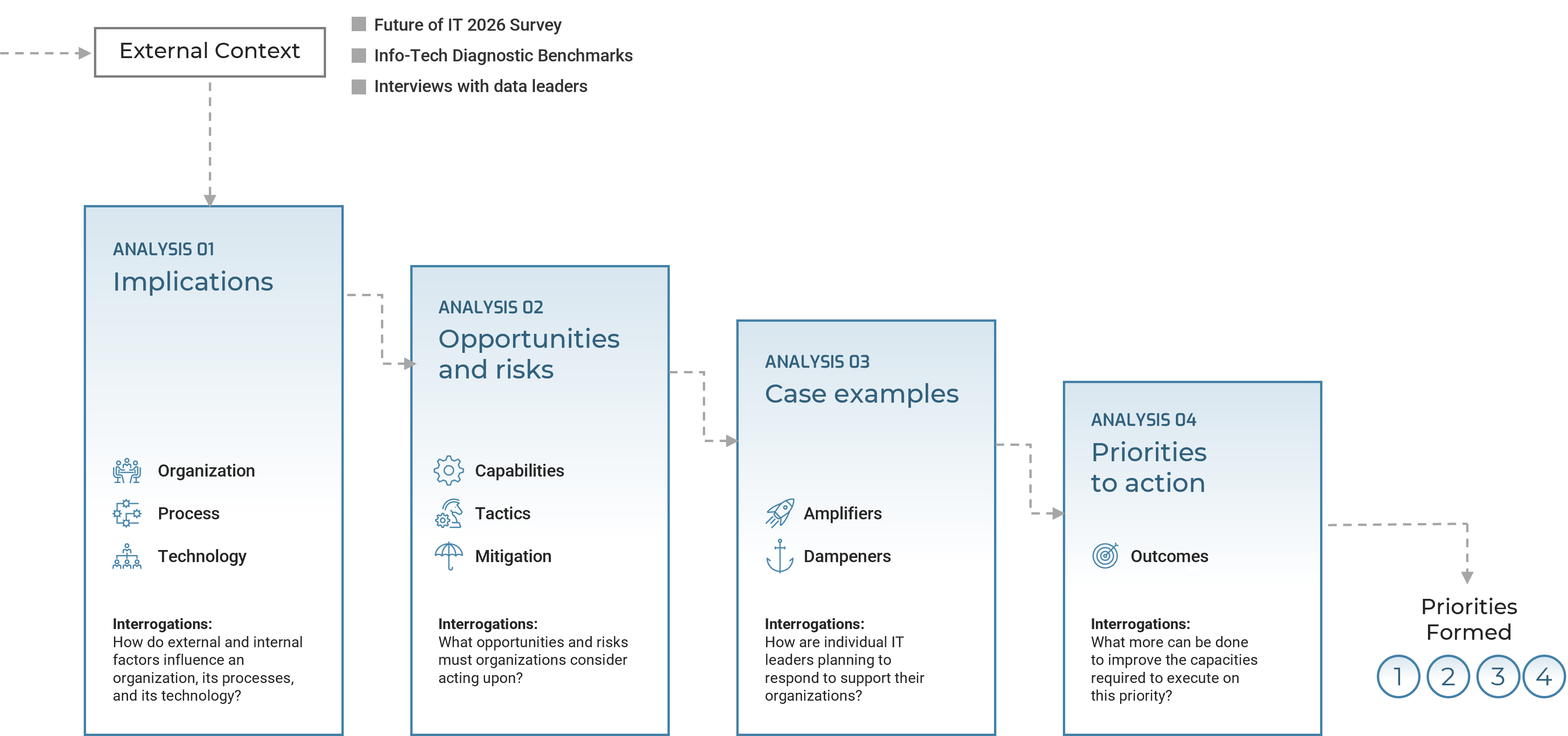
Moving from trends to priorities
Analyze how CDOs and CIOs respond to trends generally and within their organizations.
CONTEXTUAL INSIGHTS
A priority is created when external factors hold strong synergy with internal goals and an organization responds by committing resources to either avert risk or seize opportunity.
PRIORITY INSIGHTS
For each priority, this report will examine how data leaders are responding to the implications of the external trends impacting their organization. We'll consider the capabilities that play a role in responding to the opportunities and threats and suggest an initiative to improve them. We’ll also provide case studies to offer specific insights and recommend Info-Tech resources to guide members in addressing the data priorities.
DATA PRIORITIES 2026
-
Enable Enterprise-Wide Accountability:
Establish one governance for data and AI -
Embrace Customer-Centricity for Data:
Build data products to engage smarter, faster, and stronger -
Build a Trusted AI-Ready Data Supply:
Enable clarity with clean data and trust -
Cultivate Your Data Champions:
Build an adaptable data organization with a culture-first approach
INTRODUCTION
Priorities 2026:
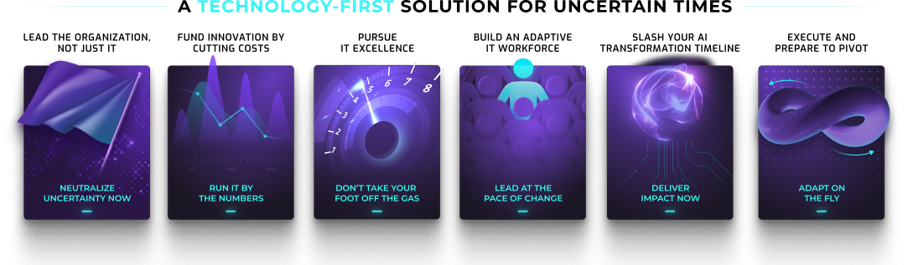
Seize IT’s moment with a technology-first action plan
FEATURED RESEARCH:
IT’s Moment: A Technology-First Solution for Uncertain Times
- IT can leap from now to next by mitigating risks, optimizing costs, and unlocking resources to drive innovation and AI transformation.
- “IT’s moment” identifies the pillars for IT leaders to contribute to a technology-first solution to help the organization thrive in uncertain times.
- Priorities reports focus on giving a functional perspective on how leaders can drive urgent change from within their role.
INTRODUCTION
Overcome the data challenges standing in your team’s way
Data teams are facing mounting pressure to manage the exponential growth of data across the enterprise. Yet, many are unprepared and lack the scalable processes, tools, and skills needed to keep pace. Without meaningful investment to address inefficiencies and gaps in data management, organizations risk overwhelming their teams and missing the opportunity to transform data into measurable value.
WHAT ARE THE TOP CHALLENGES EXPERIENCED BY OUR MEMBERS?
- Enabling an AI-ready data supply.
- Fostering data and AI literacy to align with organizational priorities and drive measurable value.
- Optimizing data quality, trust, and interpretability.
- Addressing the gaps in enterprise accountability for effective governance and risk management.
- Evolving modern data architectures to adapt and advance with changing business, technology, and scalability needs.
INTRODUCTION
Challenge 1:
Enabling an AI-ready data supply
Incomplete data can stunt AI readiness
A lack of AI-ready data is a critical barrier to realizing the full potential of advanced analytics and AI. Rapidly evolving business expectations, combined with uncertainty around what constitutes sufficient data quality, can leave organizations struggling to prioritize efforts effectively. Without a clearly defined approach to preparing data for AI, organizations risk creating inefficiencies, missing opportunities, and losing their competitive advantage.
ADDRESS THE UNDERLYING ROOT CAUSES
- The team lacks clarity on what the organization is trying to accomplish with AI and what level of data quality is required for success.
- Pressure to deploy AI rapidly means foundational work like making data AI-ready often gets overlooked.
- There is a lack of clarity around what “AI-ready data" means in the first place.
- There may be limited alignment on objectives, timelines, approaches, feasibility, etc., for AI initiatives.
- The organization’s data infrastructure may not be mature enough to handle AI workloads effectively.
WHAT IF THIS CHALLENGE IS NOT ADDRESSED?
- Operational costs will increase over time due to inefficiencies in preparing data for AI.
- Inability to fully leverage AI to improve operations or deliver market-relevant products will lead to inefficient internal processes and unclear priorities.
- Teams will struggle to deliver usable AI outputs quickly.
- AI pilot projects will be delayed due to unclear priorities and resource allocation.
- The organization will risk losing its competitive edge as operational efficiencies decline.
- The organization will struggle to attract or retain AI talent because of unclear strategic direction.
AI-ready data is crucial to successful AI implementation
20% If 20% of input is faulty, your AI output error rate can jump by more than half. (Source: Information Systems, 2025.)
8.6% of organizations are fully AI-ready from a data perspective, while 28.5% say they are only moderately prepared to deploy AI. (Source: Huble, 2025.)
INTRODUCTION
Challenge 2:
Fostering data and AI literacy to align with organizational priorities and drive measurable value
Literacy is meaningless without strategic direction and cultural support
An organization that is data and AI literate is an organization that has the skills and incentives to interpret, communicate with, and create value with data and AI. Data literacy must now include understanding ethical and responsible AI use, the different types of AI (narrow, general, and generative), and the complex challenges of privacy and data protection. Generic literacy programs often fail to address real business problems and leave teams misaligned, creating friction and limiting the measurable impact of data initiatives.
ADDRESS THE UNDERLYING ROOT CAUSES
- There is a lack of clarity about what literacy programs should teach, who should be taught, and what will truly add value.
- Technical teams focus on making business users “literate” in data rather than understanding and solving actual business problems.
- Lack of two-way literacy means technical teams may not understand the problems business teams are trying to solve and cannot translate data/AI capabilities into meaningful solutions.
- There are limited organizational incentives for employees to actively engage with literacy programs.
- Communication channels are fragmented, reducing the adoption and impact of training initiatives.
WHAT IF THIS CHALLENGE IS NOT ADDRESSED?
- Productivity will decrease as employees struggle to use AI tools effectively.
- Trust between business and technical teams will erode if literacy programs feel irrelevant, leading to cultural resistance to data-driven decision-making.
- Employees will use AI tools incorrectly or take actions that don’t align with organizational goals.
- Data and AI may be used inconsistently across the organization.
- Inconsistent data practices will emerge across different teams, leading to confusion and errors.
- There will be slower delivery of measurable outcomes and weaker integration of technical capabilities with business priorities.
The data and AI literacy gap is an industry-wide concern
86% of leaders rank data literacy as essential for their teams’ day-to-day work, and 62% now say the same for AI literacy. (Source: DataCamp, 2024.)
25% of organizations felt they were fully prepared to use data effectively, and only 21% said they were confident in their level of data literacy. (Source: Dataversity, 2025.)
INTRODUCTION
Challenge 3:
Optimizing data quality, trust, and interpretability
Without trust in data, data-driven decisions fall flat
Reliable, high-quality data is the cornerstone of all analytics and AI initiatives, yet defining and maintaining data quality remains complex. Without clear ownership and accountability where business teams define quality and technical teams support its maintenance, data can become inconsistent or unreliable. Poor data quality undermines decision-making, erodes stakeholder trust, and limits the organization’s ability to leverage advanced analytics effectively.
ADDRESS THE UNDERLYING ROOT CAUSES
- The organization lacks clarity about what constitutes “quality” in data and how it should be defined relative to business objectives.
- Defining quality is a business responsibility, but many organizations mistakenly expect technical teams to lead it. As a result, quality ownership often falls into a grey area between business and technical teams, causing friction and delays.
- Accountability for quality is difficult to operationalize across the organization.
- There may be insufficient tools or processes to consistently monitor data quality.
- The organization may lack standardized metrics to assess interpretability and trust.
WHAT IF THIS CHALLENGE IS NOT ADDRESSED?
- Teams will work with inconsistent or misaligned data, leading to poor decision-making.
- Uncertain trustworthiness will make it difficult to confidently use data for analytics or AI applications.
- Operational decisions will be affected by errors arising from inconsistent data quality.
- Loss of trust among stakeholders, customers, or internal teams will decrease confidence in data, slowing the adoption of AI and analytics initiatives.
- Organizational competitiveness will be impacted as stakeholder trust and confidence decline, limiting the ability to adopt and scale AI and analytics effectively.
- Poor-quality data will lead to regulatory or compliance risks over time.
- The organization will experience reputational damage if critical decisions are made based on unreliable data.
Poor data quality and lack of trust are the barriers to AI success
85% of all AI models and projects fail because of poor data quality or a lack of relevant data. (Source: Forbes, 2024.)
54% of AI users do not trust the data used to train AI systems. (Source: Salesforce, 2024.)
INTRODUCTION
Challenge 4:
Addressing the gaps in enterprise accountability for effective data and AI governance and risk management
Without strong governance, accountability breaks down and risks spiral out of control
Effective governance is about making the right decisions, managing risks, and deriving value from data across the enterprise. When governance responsibilities are unclear or misaligned with operational management, programs fail, accountability is weak, and critical risks go unmanaged. Without properly defined decision rights and accountability, organizations compromise data quality, expose themselves to operational and regulatory risk, and diminish the strategic value of their data assets.
ADDRESS THE UNDERLYING ROOT CAUSES
- Governance is misunderstood, often conflated with technical tracking of data lifecycles rather than decision-making accountability over data risks and data value.
- Lack of clarity on who should make governance decisions leads to disengagement from senior stakeholders.
- Escalation paths for data-related decisions are unclear, causing delays and confusion.
- There is insufficient executive sponsorship for governance initiatives.
- Teams lack incentives to actively participate in governance activities.
WHAT IF THIS CHALLENGE IS NOT ADDRESSED?
- Governance programs will fail as critical decisions lack ownership and enforcement.
- Unmanaged risks persist, resources are wasted, and policies lead to operational or organizational risks.
- Stakeholder confidence in data and decision-making may decline over time.
- Chronic inefficiencies limit the organization’s ability to leverage data strategically.
The data governance gap is holding back AI progress
62% of organizations cite a lack of data governance as the primary data challenge inhibiting AI initiatives. (Source: Precisely, 2025.)
39% of organizations report little or no data governance framework. (Source: TechTarget, 2025.)
INTRODUCTION
Challenge 5:
Evolving modern data architectures to adapt and advance with changing business, technology, and scalability needs
Legacy systems hinder organizational success
Modern data architectures are built for scale, flexibility, and trust. The rapid evolution of technology, coupled with the complexity of legacy systems and shifting expectations of what constitutes “modern,” makes architecture modernization a resource-intensive and ongoing challenge. Failure to evolve architecture strategically can result in rigidity, inefficiencies, and a loss of competitive relevance in a data-driven market.
ADDRESS THE UNDERLYING ROOT CAUSES
- The definitions of “modern architecture” are rapidly shifting due to fast technological change.
- Implementation requires significant investment of resources, time, and specialized skills – a commitment organizations may not fully understand or make.
- High complexity and evolving expectations make it difficult to plan and implement effectively.
- Legacy system constraints may limit the ability to implement modern architectures.
- Collaboration between architects, developers, and business stakeholders is often insufficient.
- Organizations have unclear prioritization of architecture improvements.
WHAT IF THIS CHALLENGE IS NOT ADDRESSED?
- Architecture modernization efforts will lag behind business needs, slowing down operational improvements.
- Teams will face inefficiencies while trying to adapt outdated systems to new requirements.
- Temporary system outages or integration issues will occur during architecture changes.
- The organization risks losing competitive relevance if the architecture cannot support evolving business and technology needs.
- The organization may decline if outdated architecture limits scalability, flexibility, or innovation.
- Accumulated technical debt will result in higher costs for future architecture upgrades.
The cost of maintaining and adapting legacy systems versus investing in modernization
10% to 20% is added to the cost of any project to address technical debt, creating a significant drag on productivity. (Source: McKinsey, 2025.)
Up to 180% ROI within three years is achievable for organizations that modernize their legacy data architecture. (Source: BayOne, 2025.)
INTRODUCTION
What data priority will drive the most impact for your organization in 2026?
This questionnaire will help you uncover your biggest data challenge today so you can identify the most critical data priority to focus on in 2026.
Instructions: Read each data challenge statement and mark (✓) if it applies. The area with the most checks on the left reveals your most important data priority on the right. Navigate to the section of this report most relevant to you.
Data Challenge |
Your top data priority for 2026 is… |
1. Enabling an AI-ready data supply
|
Build data products to engage smarter, faster, and strongerIf enabling AI-ready data supply is a top challenge, adopt a customer-centric data-as-a-product approach. Click here to explore this data priority. |
2. Fostering data and AI literacy to align with organizational priorities and drive measurable value
|
Foster an adaptable data organization with a culture-first approachIf improving data and AI literacy is a key issue, cultivate data champions and invest in data culture. Click here to explore this data priority. |
3. Optimizing data quality, trust, and interpretability
|
Enable clarity with clean data and trustIf data quality, trust, and interpretability are challenges, prioritize addressing data quality issues. Click here to explore this data priority. |
4. Addressing the gaps in enterprise accountability for effective governance and risk management
|
Establish one governance for data and AIIf gaps in accountability and governance are a concern, focus on building integrated data and AI governance. Click here to explore this data priority. |
5. Evolving modern data architectures to adapt and advance with changing business, technology, and scalability needs
|
Unify data and AI governance for reliable dataIf addressing legacy systems is a top challenge, implement integrated governance (click here to explore this data priority) and optimize data quality (click here to explore this data priority). |
INTRODUCTION
The Data Playbook:
12 Steps to Excellence in Managing Data & Analytics
FEATURED RESEARCH:
What are the benefits of the program?
- A Proven Methodology: A proven methodology to improve Data & Analytics delivery and management with supporting resources to make the journey easier.
- A Structured Framework: A calendar with 12 actionable steps for core Data & Analytics functions.
- High-Value Advisory Engagements: High-value advisory engagements that deliver tangible results and valuable experiences.
- Clear Activities You Can Delegate: Clear activities you can delegate to your team with Guided Implementations and actionable best practices.
- Customizable Initiatives With Measurable Results: Customizable initiatives with measurable results that align with your organizational, departmental, and personal goals, with annual proof of improvement.
How does the program work?
-
Commit to Your Evolution
- Contact your Counselor to learn more about the Data Playbook.
- Become familiar with the Data Playbook’s benefits, steps, expectations, and deliverables.
-
Assess Your Team Performance
- Build your Data & Analytics scorecard based on your personal success metrics and targets.
- Conduct your Annual Data & Analytics Department Assessment by evaluating your team’s performance of each step based on your current business context and performance goals.
- This will result in a prioritized set of steps for which to leverage Info-Tech’s support in your first year.
-
Customize Your Playbook
- Create your individual systematic improvement key initiatives plan, which will include your top 2-3 playbook initiatives, with your Counselor.
- Leverage Info-Tech's Diagnostics, Advisory Guided Implementations, Workshops, and Consulting experiences to customize and expedite your progress.
- Identify key contributors to the 12 monthly steps (direct reports) and delegate.
-
Stay on Track & Accelerate
- Quarterly, connect with your Counselor to review progress on the remaining playbook activities and determine if you would like additional assistance with any of them.
-
Celebrate Wins & Evolve
- At the end of each year, you will review and measure your progress across each of the 12 areas through quantifiable success measures.
PRIORITY 01
Enable Enterprise-Wide Accountability:
Establish one governance for data and AI
One governance for both data and AI ensures that a single decision aligns quality, compliance, and accountability, turning integrated governance into a strategic catalyst.
ENABLE ENTERPRISE-WIDE ACCOUNTABILITY
Align governance frameworks across AI and data
Avoid duplicating governance structures. Leverage overlapping stakeholders by integrating AI and data governance.
-
Risk Management
Both aim to identify and mitigate risks: AI governance focuses on algorithmic bias, model drift, and ethical concerns, while data governance addresses data quality, privacy, and security. -
Compliance & Regulation
Each ensures adherence to laws and standards (e.g. GDPR for data; AI Act or NIST AI RMF for AI). -
Value Delivery
Both aim to ensure the organization’s data assets are fully leveraged to drive organizational value. -
Accountability & Transparency
Both promote clear ownership, traceability, and explainability. AI governance emphasizes model interpretability, while data governance focuses on data lineage and stewardship.
AI systems are data-dependent. Poor data governance leads to poor AI outcomes.
Data governance ensures data quality, which is foundational for AI model reliability. Thus, AI governance often inherits and builds upon data governance practices, and participation in both governing bodies ensures consistency and communication.
ENABLE ENTERPRISE-WIDE ACCOUNTABILITY
Unify governance councils at the top
Delegate operational responsibilities to domain-specific working groups
INTEGRATED GOVERNANCE
- Policy & Framework Accountability
- Regulatory & Legal Accountability
- Ethical & Societal Accountability
- Risk & Performance Oversight
FOCUSED STREAMS
|
||
| Oversight of data assets, quality, access, usage | FOCUS | Oversight of AI systems, models, and lifecycle |
| Data breaches, poor data quality, noncompliance | KEY RISKS | Bias, explainability, autonomy, unintended consequences |
| Data creation, storage, usage, archiving, deletion | LIFECYCLE OVERSIGHT | Model development, deployment, monitoring, retraining |
| Data catalogs, metadata management, data stewardship | TOOLS & FRAMEWORKS | Model cards, fairness audits, AI ethics boards |

Strategic Stakeholders Overlap
Shared Impact Domains
AI and data governance both affect privacy, security, compliance, and public trust.
Integrated Risk
AI risks (e.g. bias, explainability) often stem from data issues (e.g. poor quality, lack of diversity).
Unified Accountability
Regulators increasingly expect board-level accountability for both data and AI risks.
Strategic Alignment
Both governance domains must align with organizational goals: innovation, customer trust, operational efficiency.
ENABLE ENTERPRISE-WIDE ACCOUNTABILITY
Signals
AI and data governance are converging amid rising stakes
INTEGRATED GOVERNANCE IS THE CORNERSTONE OF TRUSTWORTHY AI
In the age of AI, fragmentation is no longer sustainable. Disconnected data and governance frameworks create unknown challenges that heighten risk and hinder progress. Unified oversight that bridges technology, legal, and business domains elevates governance from reactive control to proactive assurance. With AI initiatives now a strategic priority, effective governance is the key to success. Integrated governance isn’t red tape; it’s the catalyst for platform convergence, delivering continuous visibility and risk mitigation across the enterprise.
EXECUTIVE ELEVATION TURNS GOVERNANCE INTO STRATEGY
Governance has moved onto the executive agenda, recognized as essential for competitiveness and long‑term sustainability. This shift reframes governance from a compliance function to a board‑level conversation about trust, agility, and market advantage. When leaders align governance with organizational strategy, they transform it into a value multiplier that accelerates responsible innovation and embeds accountability across the enterprise.
AI MAGNIFIES RISK, MAKING GOVERNANCE NONNEGOTIABLE
Generative AI amplifies data leaks, misuse, bias, and accountability gaps, making governance discipline indispensable. Governance now extends beyond managing data quality to safeguard model behavior, ethical integrity, and brand reputation. Treating governance as a continuous control layer ensures AI’s promise doesn’t become its liability.
EXTERNAL PRESSURES DEMAND INTERNAL STRENGTH
Regulatory, geopolitical, and ethical stakes are rising, increasing the cost of governance gaps. Governance sits at the intersection of compliance, ethics, and resilience, turning external volatility into internal discipline. In environments where small missteps can trigger outsized consequences, strong governance frameworks anchor confidence, protect reputation, and sustain competitive advantage.
These signals point to an inflection moment: As AI adoption accelerates and external pressures mount, data governance is no longer a siloed function; it must evolve into an integrated, strategic discipline to safeguard trust and unlock enterprise value.
Stronger data governance tops the agenda for nearly half of leaders in 2026
40.9% of leaders cite improving data governance as one of their top data priorities for 2026, even outside of AI-specific initiatives. (Source: Info-Tech Research Group, Future of IT Survey, 2025.)
Poor governance erodes AI value
60% of organizations will fail to realize the expected value of AI by 2027 due to inconsistent ethical governance. (Source: Lifebit, 2025.)
ENABLE ENTERPRISE-WIDE ACCOUNTABILITY
Opportunities
Data and AI governance represents a strategic opportunity to elevate traditional governance, transforming it into a powerful engine for sustainable value creation. By extending governance principles to AI, organizations can move beyond compliance to build systems that are trusted, explainable, and aligned with business goals. This integrated approach not only accelerates decision-making and fuels innovation but also modernizes risk management across the AI lifecycle, positioning governance as a driver of growth, not a gatekeeper.
BUILD TRUSTWORTHY AND ACCOUNTABLE AI
Data and AI governance embeds fairness, transparency, and compliance into every stage of AI development. Policies for training data help identify and mitigate algorithmic bias, ensuring fair outcomes and protecting customer trust. Tracking data lineage reveals how models make decisions, strengthening accountability and supporting regulatory compliance with frameworks.
DRIVE FASTER, SMARTER DECISIONS
Governance streamlines how organizations turn data into action. Automation tools handle tasks like metadata management and access control, freeing teams to focus on higher-value initiatives. Self-service access to trusted, well-documented data accelerates analytics and AI development while improving accuracy and reliability. By breaking down silos and providing a unified view of the data landscape, governance empowers faster, smarter, and more confident decision-making.
TRANSFORM RESPONSIBILITY INTO COMPETITIVE ADVANTAGE
Data and AI governance transforms responsibility into a competitive advantage. Integrating AI with ESG initiatives allows organizations to track emissions, forecast risks, and measure social impact with precision. Clear stewardship roles foster a culture of accountability across the enterprise, while modern, proactive governance builds customer trust and market differentiation, positioning organizations to innovate faster and grow more sustainably.
By moving beyond the limitations of traditional governance, data and AI governance creates an opportunity to uplift legacy practices, establish a modern framework that fosters trust, and unlock sustainable growth for the organization.
“Governance is not just about compliance; it’s what enables us to turn data into actionable insights that inform strategic choices and strengthen performance.”
– Valence Howden, Advisory Fellow, Info-Tech Research Group
“The main opportunity is being able to use AI safely and leverage data for decision-making without worrying about whether the data is trustworthy, because governance ensures it is.”
– Irina Sedenko, Data and AI, Metropolitan Transportation Authority
Data and AI governance fuels better decisions
98% of organizations with AI-driven governance reported improved decision-making. (Source: Lumenalta, 2024.)
ENABLE ENTERPRISE-WIDE ACCOUNTABILITY
Risks
MISUNDERSTANDING GOVERNANCE AS PURELY TECHNOLOGY OR COMPLIANCE-FOCUSED
Overemphasizing technology without considering adoption, behavior, and organizational context can lead to disengagement and limited impact. Real value comes from blending technology with culture, process, and executive sponsorship. Even with unified governance, this risk persists if leaders view governance as a checkbox rather than a strategic enabler across AI and data.
UNCHECKED AI ADOPTION AND RAPID TECHNOLOGY USE WITHOUT GOVERNANCE CONTROLS
AI amplifies risk. Without data governance, flawed or incomplete data drives unreliable outputs. Embedding governance across AI and data initiatives ensures consistent oversight and builds long-term trust, preventing reputational or financial damage from mismanaged technology. While integrating AI and data governance reduces siloed risks, it introduces complexity in balancing agility with oversight and ensuring domain-specific expertise is not diluted.
DILUTION OF DOMAIN EXPERTISE
When governance is unified, there’s a risk that specialized concerns, such as AI ethics or data privacy, will get overshadowed by broader priorities. If nuanced issues aren’t given space, critical gaps can emerge, leading to compliance failures or reputational harm. Integrated governance must preserve domain-specific expertise while enabling streamlined decision-making.
INTEGRATION WITHOUT CLARITY CAN CREATE BOTTLENECKS AND DILUTE ACCOUNTABILITY
Unified governance must be designed deliberately. Overcentralization can slow innovation, while unclear roles may lead to gaps or overlaps in responsibility. Integration should preserve domain expertise while enabling streamlined decision-making.
Understanding and mitigating risks ensures governance initiatives endure beyond pilot projects. Recognizing these risks allows technology, people, and processes to align effectively, paving the way to maximize value and measure success.
“Having a single source of truth allows us to respond quickly to operational issues and take smarter risks, because we know the data is reliable.”
– Nysa Zaran, Research Director, Info-Tech Research Group
“The biggest risk is losing priority at the executive level or losing the budget, but also talent.”
– Derrick Whalen, Director of IT Services, Port of Halifax
AI reveals governance gaps even in mature organizations
73% of organizations say AI has exposed critical gaps in visibility, collaboration, and policy enforcement. (Source: Channel Insider, 2025.)
About Info-Tech
Info-Tech Research Group is the world’s fastest-growing information technology research and advisory company, proudly serving over 30,000 IT professionals.
We produce unbiased and highly relevant research to help CIOs and IT leaders make strategic, timely, and well-informed decisions. We partner closely with IT teams to provide everything they need, from actionable tools to analyst guidance, ensuring they deliver measurable results for their organizations.
What Is a Blueprint?
A blueprint is designed to be a roadmap, containing a methodology and the tools and templates you need to solve your IT problems.
Each blueprint can be accompanied by a Guided Implementation that provides you access to our world-class analysts to help you get through the project.
Talk to an Analyst
Our analyst calls are focused on helping our members use the research we produce, and our experts will guide you to successful project completion.
Book an Analyst Call on This Topic
You can start as early as tomorrow morning. Our analysts will explain the process during your first call.
Get Advice From a Subject Matter Expert
Each call will focus on explaining the material and helping you to plan your project, interpret and analyze the results of each project step, and set the direction for your next project step.
Unlock Sample ResearchContributors
- Catherine Yoshida, Manager, Data Governance and Data Architecture at Teranet Inc.
- Irina Sedenko, Data and AI at Metropolitan Transportation Authority
- Derrick Whalen, Director, Information & Technology Services at Port of Halifax
- Patrick Saucier, Head of Enterprise Data Governance and Architecture at Regeneron
- Danny Buie, Vice President - IT Strategy & Data at Tyler Technologies, Inc.
- Kevin Fulton, IT Operations Manager at Field law
- Suzanne Lucas, Co-Founder at HRLearns
- Nikhil Sahai, Lead, Data Insights and Analytics at Warner Bros. Discovery
- Iyyad Jariri, Associate Vice President, Data Engineering at Interac Corp.
- Nipun Bhonsle, Director of Data Management and BI at American Food & Vending
- Mark Szkudlarek, Vice President, IT Operations at SanMar
- Rajesh Parab, Founder at Detanomics
- Marco Segura, Director of Systems and Digital Solutions at CAF (Banco de desarrollo de America Latina y El Caribe)
- Christopher Pailma, Chief Data Officer at Country of Los Angeles
- 5 anonymous contributors
 Establish an Analytics Operating Model
 Create and Manage Enterprise Data Models
 Build a Robust and Comprehensive Data Strategy
 Mandate Data Valuation Before It’s Mandated
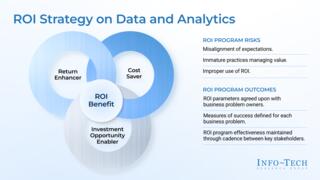 Position and Agree on ROI to Maximize the Impact of Data and Analytics
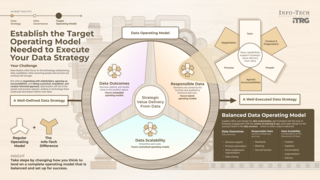 Establish the Target Operating Model Needed to Execute Your Data Strategy
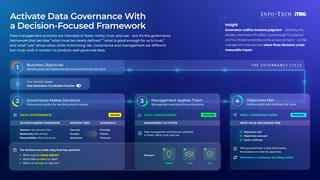 Activate Data Governance
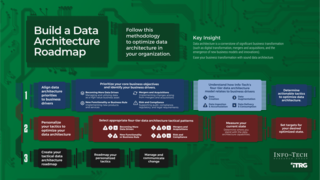 Build a Data Architecture Roadmap
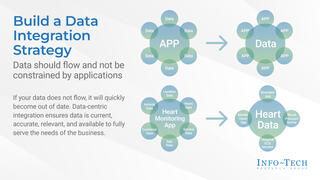 Build a Data Integration Strategy
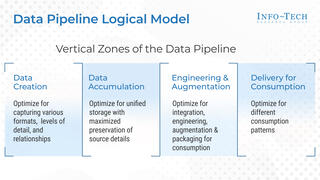 Build a Data Pipeline for Reporting and Analytics
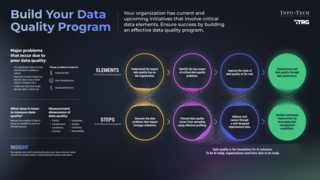 Build Your Data Quality Program
 Mitigate Machine Bias
 Design Data-as-a-Service
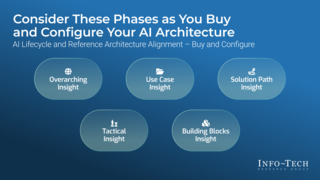 Define the Components of Your AI Architecture
 Get Started With Artificial Intelligence
 Go the Extra Mile With Blockchain
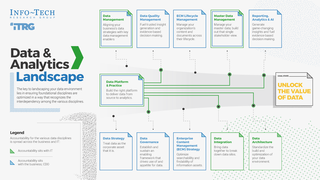 Understand the Data and Analytics Landscape
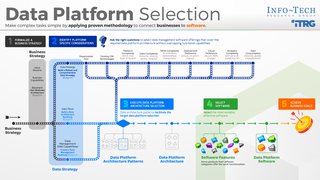 Select Your Data Platform
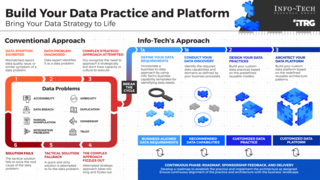 Build Your Data Practice and Platform
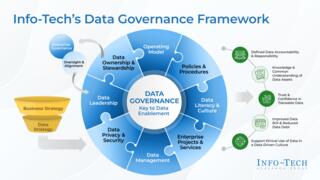 Establish Data Governance – APAC Edition
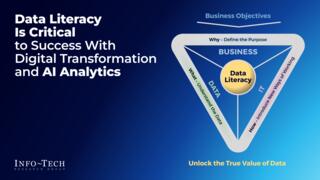 Foster Data-Driven Culture With Data Literacy
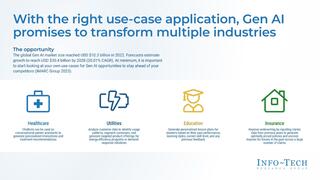 Generative AI: Market Primer
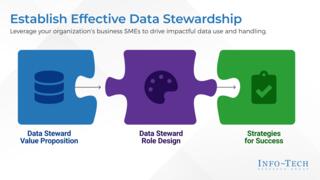 Establish Effective Data Stewardship
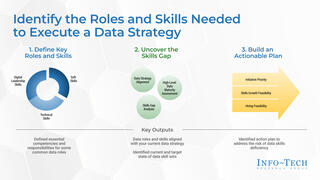 Identify and Build the Data & Analytics Skills Your Organization Needs
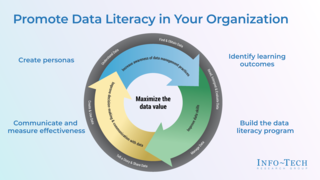 Promote Data Literacy in Your Organization
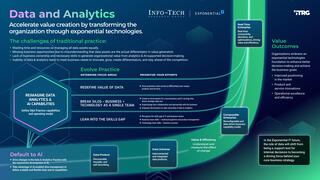 Define a Data Practice Strategy to Power an Autonomous Enterprise
 Fueling AI Greatness: The Critical Role of Data & AI Literacy
 Building the Road to Governing Digital Intelligence
 Map Your Data Journey
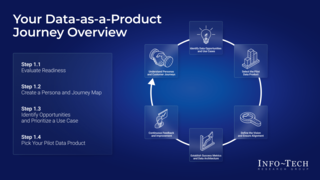 Launch a Customer-Centric Data-as-a-Product Journey
 Data Priorities 2026
