



Deliver projects on time and on budget
The Challenge
Most major projects still finish late and over budget.
Fragmented planning, late design changes, and reactive scheduling drive cost overruns and missed handovers. Owners increasingly expect predictable delivery, and firms that cannot provide it lose work.
Why It Matters
Predictable delivery is now the price of staying competitive.
Buildertrend's 2026 industry data shows 28.6% of builders still run over budget, with 33% naming labor costs the biggest threat to staying on budget even as 91% now track job costs in real time (Buildertrend, 2026). The firms that fix delivery first will win work that others cannot price with confidence.
The Solution
Invest in front-end planning
Put more rigor into preconstruction, design reviews, and constructability so problems are solved before crews mobilize.
Adopt lean scheduling
Use Last Planner and pull planning to stabilize workflow and protect the critical path.
Industrialize with prefab and modular
Shift repeatable scopes to off-site prefabrication and modular assembly to cut schedule risk and rework.

Protect margins against cost and supply volatility
The Challenge
Thin margins are squeezed further by volatile material and labor costs.
Price swings on materials, tariffs, and rising wages erode already-slim construction margins. Without tight cost control and accurate forecasting, profitable bids turn into loss-making jobs.
Why It Matters
Cost volatility decides which contractors stay profitable.
The Associated Builders and Contractors' chief economist warns that labor-cost escalation is compounding already-high construction costs and reducing the volume of work that is financially feasible ("Construction Industry Must Attract 349,000 Workers in 2026," ABC, 2026). Protecting margins is no longer a back-office task, it is a survival strategy.
The Solution
Tighten cost control and forecasting
Use integrated job-cost and forecasting tools to see margin erosion early and act before it compounds.
Lock in materials and escalation terms
Use early procurement, price locks, and contract escalation clauses to absorb material and tariff volatility.
Manage change orders rigorously
Track and price change orders and RFIs in real time so scope growth is captured, not absorbed as lost margin.


Unify teams, systems, and subcontractors
The Challenge
Owners, designers, subcontractors, and field crews still work from different versions of the truth.
Disconnected systems and siloed teams cause rework, disputes, and slow decisions across the project lifecycle. Information that should flow in real time is trapped in email, spreadsheets, and paper.
Why It Matters
Fragmentation is the root cause of rework, disputes, and delay.
Deltek's 2026 construction technology outlook finds that disconnected systems create blind spots, forcing leaders to decide on incomplete or outdated information when financial, labor, and field data live in silos ("2026 Construction Technology Trends," Deltek, 2026). Connecting teams, systems, and subcontractors on shared data is one of the highest-return moves a contractor can make.
The Solution
Adopt a common data environment
Standardize on a single common data environment (CDE) so owners, designers, and subcontractors share one source of truth.
Use BIM for coordination
Apply building information modeling (BIM) for clash detection and coordinated design across all trades.
Move to collaborative contracts
Use integrated project delivery (IPD) and aligned-incentive contracts to replace adversarial handoffs with shared accountability.

Keep workers safe and stay compliant
The Challenge
Construction remains one of the most dangerous industries to work in.
Falls and other jobsite hazards continue to injure and kill workers while regulatory requirements keep expanding. Safety lapses carry human, financial, and reputational costs that compound quickly.
Why It Matters
Safety failures are the fastest way to lose people, projects, and reputation.
The US Bureau of Labor Statistics' Census of Fatal Occupational Injuries, released in February 2026, recorded 1,032 fatalities among construction and extraction workers in 2024, with falls, slips, and trips the single largest cause (BLS, 2026). A strong safety and compliance program is both a moral obligation and a competitive advantage.
The Solution
Target the Focus Four hazards
Focus controls, training, and inspections on falls, struck-by, electrocution, and caught-in or -between risks.
Digitize safety and compliance
Use mobile inspections, observations, and incident tracking to spot trends and prove compliance.
Build a proactive safety culture
Reward near-miss reporting and pretask planning so hazards are caught before they cause harm.

Solve the skilled-trades shortage
The Challenge
A shrinking, aging skilled-trades workforce cannot keep pace with demand.
Retirements outstrip new entrants while megaprojects compete for the same scarce trades. Labor gaps drive up costs, stretch schedules, and force firms to turn down work.
Why It Matters
The labor gap directly limits how much a firm can build.
Associated Builders and Contractors estimates the US construction industry must attract roughly 349,000 net new workers in 2026, on top of normal hiring, just to keep pace with demand ("Construction Industry Must Attract 349,000 Workers in 2026," ABC, 2026). Firms that build their talent pipeline now will out-deliver those still fighting to staff each job.
The Solution
Build the talent pipeline
Partner with apprenticeships, trade schools, and registered programs to recruit and develop new entrants.
Reduce labor intensity with technology
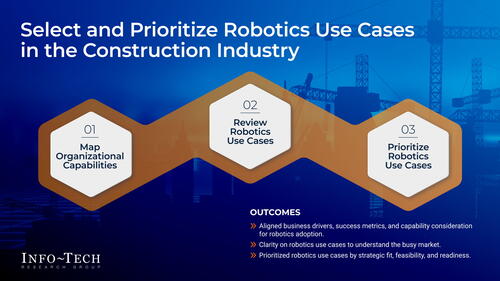
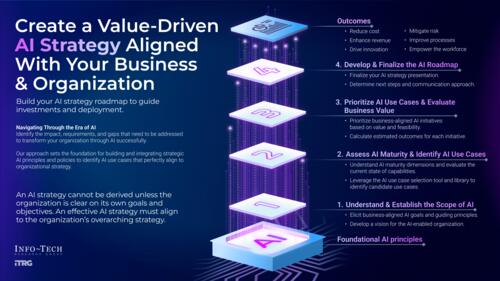
Deploy automation, robotics, and prefabrication to do more with the workers available.
Retain through a better field experience
Improve onboarding, scheduling, and digital field tools so skilled trades stay and stay productive.

Strengthen project controls with real-time field data
The Challenge
Decisions are made on stale data from the field.
Progress, quality, and safety information reaches the office days late and in inconsistent formats. By the time problems surface in reports, the cost to fix them has already grown.
Why It Matters
Real-time field data is what separates proactive teams from reactive ones.
A 2026 CMiC analysis finds construction overruns stem from delayed visibility, and that high-performing firms now track costs daily – and in some cases hourly – using AI to flag variance against baseline before it spreads ("How Firms are Preventing Construction Overruns in 2026," CMiC, 2026). Catching variance in the field, not weeks later in the office, is where schedule and margin are protected.
The Solution
Digitize daily field reporting
Replace paper with mobile field apps so progress, quality, and safety data is captured at the source.
Adopt reality capture
Use drones, 360-degree photo, and laser scanning to compare as-built progress against the model and plan.
Strengthen project controls with live data
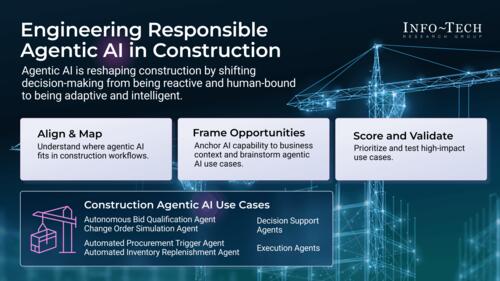
Track cost, schedule, and production-rate metrics on dashboards so teams resolve variance before it hits the project.


Build sustainably and meet decarbonization mandates
The Challenge
Decarbonization mandates are arriving faster than much of the industry can adapt.
Building codes, embodied-carbon rules, and client net-zero commitments now shape what gets built and how. Firms without a credible sustainability approach face lost bids and compliance risk.
Why It Matters
Sustainability has moved from differentiator to requirement.
The UNEP and GlobalABC Global Status Report finds buildings and construction account for around 37% of global CO2 emissions and nearly 50% of global material extraction ("Global Status Report for Buildings and Construction 2025-2026," UNEP and GlobalABC, 2026). Firms that build low-carbon capability now will meet tightening mandates and win climate-conscious clients.
The Solution
Measure and reduce embodied carbon
Use lifecycle assessment and low-carbon materials to cut embodied carbon in design and procurement.
Build to green standards
Deliver to LEED, energy-code, and net-zero requirements as a standard capability, not a special case.
Track and report sustainability data
Capture energy, materials, and waste data to meet client and regulatory reporting demands.

Modernize the tech foundation without disrupting work
The Challenge
Aging, disconnected systems hold back the whole operation.
Legacy software and paper processes resist integration and slow every other improvement. Yet rip-and-replace modernization risks disrupting active jobs that cannot afford downtime.
Why It Matters
Modernization is the foundation every other priority depends on.
Autodesk's 2026 construction outlook, drawing on more than 25 industry experts, finds that legacy delivery built on fragmented data, manual handoffs, and siloed teams is no longer sustainable, and that unified data platforms are what reduce costly rework and boost efficiency ("2026 Construction Trends," Autodesk, 2026). Sequencing modernization so it strengthens delivery rather than disrupting it is what makes the investment pay off.
The Solution
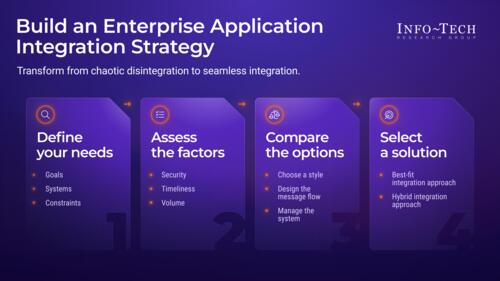
Map and prioritize the tech stack
Inventory current systems and retire or integrate the highest-friction legacy tools first.
Modernize on a connected platform
Move to integrated, cloud-based project and operations platforms that link office and field.
Phase change around live jobs
Roll out modernization in stages with training and pilots so active projects are never put at risk.
Scale delivery through repeatable governance and risk controls
The Challenge
Growth multiplies risk when operations are not standardized.
Firms that win more work often add projects, crews, and systems faster than their controls can handle. Inconsistent processes turn expansion into overruns, quality issues, and overextended teams.
Why It Matters
Scaling without discipline turns growth into loss.
The RICS 2026 Global Construction Monitor, drawing on nearly 3,000 professionals across five regions, finds pervasive measurement fragmentation, with productivity benchmark usage as low as 5% to 16% and 1 in 5 UK firms never measuring productivity at all ("Construction Productivity Report 2026," RICS, 2026). Standardized, repeatable operations and consistent measurement are what let a firm grow volume without growing risk.
The Solution
Standardize core processes
Define repeatable workflows, templates, and controls so every project runs the same proven way.
Scale governance and project controls
Extend cost, schedule, and risk controls and portfolio governance to match growing volume.
Scale capacity through partners
Use vetted subcontractor and supplier networks to add capacity without overextending in-house teams.
Defend jobsites and project data from cyber threats
The Challenge
Connected jobsites have opened a fast-growing attack surface.
Ransomware and data theft increasingly target construction firms through their many vendors, subcontractors, and connected devices. A single attack can halt a project, expose sensitive data, and trigger costly delays.
Why It Matters
A cyberattack can stop a project as fast as any site failure.
Rapid7 ranks construction among the top three most-attacked sectors for ransomware in 2025, citing its sprawling network of contractors, shared platforms, and legacy systems ("Threat Landscape of the Building and Construction Sector," Rapid7, 2025). Treating cybersecurity as core to project delivery, alongside cost, schedule, and safety, is now essential.
The Solution
Secure the project supply chain
Extend access controls, vetting, and monitoring to the contractors and vendors connected to your systems.
Protect connected jobsite devices
Secure the operational technology (OT) and Internet of Things (IoT) devices, sensors, and equipment on active sites.
Build ransomware resilience
Maintain tested backups, multifactor authentication, and an incident response plan so an attack cannot halt delivery.