



Engineer resilient, always-on media platforms
The Challenge
Always-on platforms are only as reliable as their least-visible dependency.
Dependence on third-party CDNs, cloud regions, and partner APIs means a single upstream fault can cascade into outages that teams cannot anticipate or contain. Observability, incident response, and recovery planning have not kept pace with platform complexity, leaving reliability to chance rather than design.
Why It Matters
When a platform goes dark, revenue, advertising, and audience trust stop at the same moment.
A single automated pipeline now feeds broadcast, streaming, social, and syndication at once, so one bad file or broken rule cascades across every endpoint rather than causing an isolated problem ("Industry Insights: Media Workflows Are Now Interconnected Supply Chains," NewscastStudio, 2026). Reliability has become a board-level metric because viewers and advertisers treat downtime as a direct breach of the service they pay for.
The Solution
Treat resilience as an engineered discipline
Stand up end-to-end observability across owned and third-party systems so failures are detected at the handoff points where they originate.
Formalize incident and problem management
Adopt clear severity tiers, runbooks, and post-incident reviews so recovery is fast, repeatable, and continuously improving.
Design for dynamic failover
Use orchestration to mirror high-value channels and scale backup across on-prem and cloud, replacing rigid 1:1 redundancy with automated failover.



Protect content authenticity and audience legitimacy
The Challenge
Platforms can no longer easily prove their content is real or their audiences are genuine.
Synthetic media, manipulated engagement, fake or inflated audiences, and invalid traffic erode confidence in what platforms publish and sell. Without verifiable provenance and clean audience signals, advertisers and regulators cannot tell legitimate inventory from manufactured activity.
Why It Matters
Trust is now the currency of every advertising and subscription dollar.
Generative tools have made synthetic media cheap and convincing, turning content provenance from a nice-to-have into a precondition for credibility ("Deepfake Disruption," Deloitte, 2024), and the C2PA content credential coalition has grown to over 6,000 member organizations as cameras, newsrooms, and platforms adopt signed credentials (Content Authenticity Initiative, 2026). When authenticity cannot be demonstrated, advertisers discount inventory, audiences disengage, and regulatory exposure rises.
The Solution
Verify content origin at creation
Adopt C2PA content credentials and signed provenance across production and distribution so every asset carries a tamper-evident chain of custody.
Detect manipulated and invalid audiences
Deploy invalid-traffic, bot, and engagement-fraud controls validated against TAG and MRC standards to keep reported audiences clean.
Make legitimacy auditable
Give advertisers and partners independent verification of audience and content quality instead of self-reported platform numbers.
Govern AI and automated decisions responsibly
The Challenge
Algorithms increasingly run the platform, yet no one clearly owns what they decide.
As models rank, recommend, moderate, and price content, gaps in oversight, bias testing, and transparency make automated outcomes hard to explain, challenge, or correct. Responsibility for what the algorithm does is often unassigned until something goes wrong.
Why It Matters
Ungoverned automated decisions create legal, operational, and reputational risk at platform scale.
Regulators are already acting: The EU fined X 120 million euros in the first enforcement decision under the Digital Services Act, partly for failing to let researchers study its recommendation algorithm ("Commission fines X €120 million under the Digital Services Act," European Commission, 2025). As the EU AI Act's transparency obligations phase in, platforms that cannot explain or audit automated decisions face escalating scrutiny and lost partner trust.
The Solution
Establish an AI governance framework
Define decision boundaries, accountable owners, and acceptable-use rules for ranking, recommendation, moderation, and pricing models.
Make automated decisions explainable
Maintain model documentation, logging, and human-review paths so outcomes can be understood, challenged, and corrected.
Align to emerging regulation
Map AI uses to the EU AI Act and DSA transparency duties and build the disclosure and researcher-access mechanisms regulators now expect.

Establish trusted measurement across media and advertising
The Challenge
Every platform measures success differently, so no number can be fully trusted.
Audience, engagement, and revenue figures rarely reconcile, leaving leaders unsure of the numbers behind growth, pricing, and investment decisions. Without shared definitions and systems of record, each platform effectively grades its own homework.
Why It Matters
Inconsistent metrics put real money and credibility on the line.
The ANA found that for every $1,000 entering a programmatic platform only about $440 reaches consumers ("2024 Programmatic Benchmark Study," ANA, 2024), and roughly $26.8 billion in global media value goes unrealized through measurement and supply chain opacity ("Q2 2025 Programmatic Transparency Benchmark," ANA, 2025). When advertisers cannot verify what they bought, premium inventory gets discounted and executive decisions rest on shaky data.
The Solution
Standardize metric definitions
Agree on common definitions for audience, engagement, and revenue across platforms and align them to MRC and industry measurement standards.
Establish systems of record
Designate authoritative sources for each metric so reporting reconciles instead of competing.
Make measurement auditable
Adopt independent verification and log-level transparency, such as the ANA programmatic benchmark, so reported results can be defended.

Sustain the unit economics of content and distribution
The Challenge
Platforms scale on growth assumptions long before anyone understands what they cost to run.
Infrastructure, content, and delivery costs can rise faster than the revenue or usage they support, especially as monetization shifts from subscriptions toward advertising and bundles. Growth initiatives get funded before a path to sustained profitability is understood.
Why It Matters
The market now judges digital media on profit, not subscriber growth.
2025 was the turning point at which streaming broadly moved into profit: Netflix posted a 29.5% operating margin and Disney's direct-to-consumer business reached $1.3 billion in operating income, up $1.2 billion year over year ("Wall Street Still Loves Streaming, but Are Its Affections Well Placed?" CNBC, 2026; "Streaming’s Profit Growth Could Mean More Scrutiny, Audiences for Marketers," eMarketer, 2025). Companies that cannot model and govern their cost-to-serve will struggle to sustain platforms as the economics tighten.
The Solution
Build cost transparency
Instrument cost-to-serve by title, platform, and distribution path so true unit economics are visible.
Govern investment by ROI, not growth alone
Model long-term operating economics and gate spending on payback rather than subscriber additions.
Rearchitect for elastic cost
Shift fixed, overprovisioned infrastructure to elastic capacity that scales with demand to protect margins.

Reduce cyber risk across the media ecosystem
The Challenge
A breach anywhere in the media ecosystem rarely stays in one place.
Content distribution, ad delivery, identity, and monetization all depend on shared platforms and third parties, so a single compromise can cascade across partners and workflows. Security responsibilities across that ecosystem are often unclear until an incident exposes the gaps.
Why It Matters
An ecosystem-level security failure hits revenue, trust, and compliance all at once.
ENISA analyzed 4,875 incidents in its 2025 Threat Landscape and found phishing behind about 60% of intrusions ("ENISA Threat Landscape 2025," ENISA, 2025), with more than 80% of phishing emails now using AI and supply-chain compromises cascading across interconnected services ("Phishing Threat Trends Report," KnowBe4, 2026). For platforms whose business is uptime and trust, a partner breach quickly becomes the platform's own crisis.
The Solution
Coordinate security across the ecosystem
Align controls and shared responsibilities with internal teams and platform partners, not just internal IT.
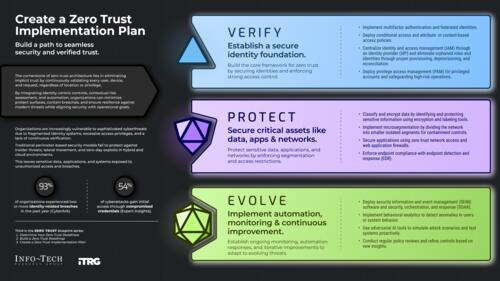
Adopt zero trust and third-party risk management
Continuously verify access and assess partner and vendor risk to limit blast radius when one system is compromised.
Defend against AI-enabled threats
Strengthen phishing, fraud, and abuse defenses against AI-generated social engineering and deepfake impersonation.

Strengthen customer identity and entitlement controls
The Challenge
Identity and entitlements are scattered across systems that were never built to work together.
Disconnected identity makes it hard to enforce access rules, manage entitlements, and support evolving monetization models like paid sharing and tiered bundles. Weak controls leak revenue and add friction for legitimate users.
Why It Matters
Identity and entitlement controls decide how much revenue actually gets collected.
Netflix's paid-sharing feature rollout drove millions of new subscribers and a shift toward its ad-supported tier, showing how directly entitlement enforcement can convert into revenue when done well ("Netflix Cracked Down on Password Sharing," CNN, 2024). As the industry moves to ad tiers, bundles, and shared-account rules, identity is the control point for both monetization and fraud.
The Solution
Unify identity across the platform
Consolidate fragmented identity systems into a consistent customer identity and access management foundation spanning users, households, and partners.
Enforce entitlements that match the monetization model
Implement access and rights controls for tiers, bundles, and paid sharing that protect revenue without adding friction.
Adopt interoperable identity standards
Use federated identity and standards such as UID2 to support secure authentication, measurement, and partner integration.

Clarify decision rights for platform and content changes
The Challenge
When every team touches a decision, no one truly owns it.
Changes to platforms, products, algorithms, and content routinely span multiple teams with no clear authority, affecting users, creators, advertisers, and regulators alike. When accountability is ambiguous, conflicts between growth, trust, and compliance get resolved reactively, after harm is done.
Why It Matters
Unclear accountability slows execution and magnifies regulatory and reputational risk.
The EU's first DSA enforcement action fined X 120 million euros for transparency and accountability failures, with penalties that can reach 6% of global revenue ("Commission Fines X €120 Million Under the Digital Services Act," European Commission, 2025). In media, where platform behavior is the business, weak change governance directly undermines trust and long-term viability.
The Solution
Define decision rights
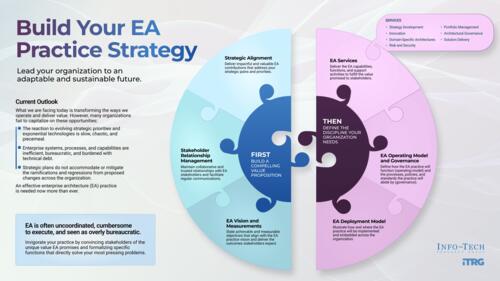
Document who owns platform, product, algorithm, and content decisions through a clear operating model and RACI.
Assign cross-functional accountability
Give high-impact changes a named owner and a forum that balances growth, trust, and compliance.
Enforce escalation and traceability
Require approval, logging, and audit trails for changes that affect users, creators, advertisers, or regulators.


Build data governance and interoperability across partners
The Challenge
Siloed, inconsistent data quietly caps what every platform can do.
Multiplatform ecosystems depend on consistent, well-governed, interoperable data, yet ownership, structure, and exchange standards are hard to maintain. The result is fragmented data that constrains coordination, analytics, and AI.
Why It Matters
Weak data foundations cap the value of every analytics and AI investment downstream.
Deloitte notes that moving AI beyond pilots depends on unglamorous groundwork like data hygiene, integration, and governance rather than new models ("TMT Predictions 2026," Deloitte, 2025). Without interoperable, governed data, platforms cannot coordinate across partners or turn audience data into reliable insights.
The Solution
Establish data ownership and standards
Define accountable data owners and standardized structures so data is consistent and trustworthy across platforms.
Enable controlled, standards-based exchange
Adopt API-first integration for secure data sharing across partners and the ecosystem.
Make data AI-ready
Invest in data quality and stewardship so downstream analytics and AI build on a governed foundation.


Modernize content and distribution operations
The Challenge
Legacy workflows make media operations slow, manual, and expensive to scale.
Siloed, on-premises, and manual systems make it hard to adapt to new formats, platforms, and audience behaviors. Fixed infrastructure forces teams to provision for peak demand, leaving costly capacity idle most of the time.
Why It Matters
Outdated operations throttle speed to market just as efficiency demands intensify.
Media organizations moving to cloud-based supply chains report up to 50% less content curation effort and 60% workflow efficiency gains by eliminating duplicate systems and manual handoffs ("Media Companies Shift From Fixed Infrastructure to Cloud-Based, Dynamic Supply Chains," NewscastStudio, 2025). With smaller teams expected to deliver more content across more endpoints, automation has shifted from a competitive advantage to a survival requirement.
The Solution
Adopt cloud-native, elastic workflows
Replace fixed infrastructure with elastic cloud capacity that scales from baseline to peak without overprovisioning.
Automate the content supply chain
Use metadata-driven orchestration for ingestion, QC, transcoding, and distribution to remove manual handoffs and errors.
Standardize metadata and integration
Adopt standardized metadata and open APIs so tools interoperate and assets move cleanly across platforms.