
Establish Your Adaptive AI Governance Program: From Principles to Practice
Prepare your organization for agentic AI and tomorrow’s AI technologies and solutions.
AI is evolving at a dizzying pace. Traditional governance frameworks for safe, responsible, and compliant AI use are struggling to keep up – too static to nimbly adapt when AI technology moves forward, new risks emerge, and regulatory standards change. As agentic AI proliferates, a new, dynamic model of AI governance is needed. Use our step-by-step methodology and practical tools to develop an AI governance roadmap that adapts to shifts in technology, risk, and legislation while aligning with your organization’s values and goals to deliver real impact.
Organizations are searching for a paradigm that enables them to leverage new AI technologies while also governing the new risks that are constantly being introduced. Adaptive AI governance effectively addresses both of those objectives: it doesn’t just mitigate risk – it enables secure innovation that ultimately drives value. Learn how to integrate governance throughout the AI lifecycle, delivering AI governance that grows and adapts with your organization.
1. This involves more than your compliance team.
Adaptive AI governance is not the siloed responsibility of your compliance department alone. It requires governance to be integrated into every stage of developing and deploying AI agents and AI applications. That includes planning and design, data collection and processing, testing and evaluation, monitoring, and decommissioning.
2. AI governance is not one-size-fits-all.
There’s no universal template for adaptive AI governance. The size, maturity, and enterprise governance structure of each organization will influence the specific roles and responsibilities involved in its AI governance program.
3. Humans play a critical role in adaptive AI governance.
Agentic AI involves AI systems performing tasks autonomously. But human beings play important parts in adaptive AI governance, even owning key stages of it. Designers, data scientists, developers, systems integrators, and product managers are just a few of the people who make adaptive AI governance work effectively.
Use this step-by-step blueprint to develop an adaptive governance framework for the safe, responsible deployment and use of AI
Our comprehensive blueprint helps you understand the components of an adaptive AI governance framework and how to customize it for your organization. Use our research and supporting tools to:
- Assess your current AI governance capabilities.
- Establish the organization’s foundational AI principles.
- Establish your organization’s AI governance structure.
- Develop an AI risk and compliance program.
- Implement AI policies to operationalize the foundational AI principles.
- Develop an AI assurance program.
- Ensure accountability is assigned for every AI application.
- Implement an adaptive and resilient AI governance framework.
- Integrate AI governance into the AI lifecycle.
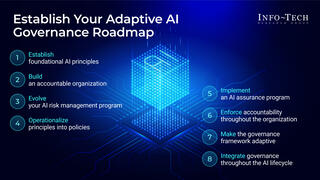
- Build the adaptive AI governance roadmap.
Member Testimonials
After each Info-Tech experience, we ask our members to quantify the real-time savings, monetary impact, and project improvements our research helped them achieve. See our top member experiences for this blueprint and what our clients have to say.
9.4/10
Overall Impact
$46,740
Average $ Saved
24
Average Days Saved
Client
Experience
Impact
$ Saved
Days Saved
Fortistar LLC
Guided Implementation
10/10
$2,759
10
Civil Engineering Services Company
Guided Implementation
7/10
N/A
2
Ross was great and really helped to guide and right size what is needed for our organization. Without Ross being able to specifically point out whe... Read More
GoodLife Fitness Clubs
Guided Implementation
9/10
N/A
38
Al Nahdi Medical
Guided Implementation
9/10
$5,519
5
American Regent, Inc.
Guided Implementation
9/10
N/A
N/A
She is extremely knowledgeable and well liked by the team
TerrAscend Corp
Guided Implementation
10/10
$34,499
20
ANDRES Construction Services
Guided Implementation
9/10
$22,079
32
Abbas has been a tremendous help and resource to have as we start our path towards data governance. Having someone with his experience and expertis... Read More
Lake County, FL
Guided Implementation
7/10
$6,899
10
The experience was great but we also spent a lot of time on theory instead of starting to work on our specific needs as much as I would like. At th... Read More
City of Birmingham
Guided Implementation
10/10
$124K
90
Natco Home Group
Guided Implementation
10/10
$34,499
10
Great domain expertise with Anita. Very interactive discussion. Nothing negative I can think of.
Jefferson County - Texas
Workshop
10/10
$13,799
50
Best: Able to keep everyone on task and engaged. Worst: When Sharon left.
CypressFairbanks Independent School District
Guided Implementation
10/10
$44,849
20
Christine is one of the smartest, most down-to-earth people I have ever met. So Amazing to work with!
OAG KENYA
Guided Implementation
9/10
$25,000
10
KDC/ONE Development Corporation, Inc
Guided Implementation
9/10
$8,000
10
Servicios Aeroportuarios Del Centro Norte S.A. DE C.V.
Guided Implementation
10/10
$8,279
20
BROTHER INTERNATIONAL EUROPE LIMITED
Guided Implementation
9/10
N/A
5
Altaz is very knowledgeable and was very good at simplifying complex concepts. His advice has been very valuable as we evaluate the next steps in o... Read More
University of Liverpool
Guided Implementation
10/10
$18,499
20
BridgeView Partners
Guided Implementation
10/10
$13,799
10
Christine is a pleasure to work with and trusted advisor. She can quickly understand the challenges we face, provide practical advice, and cares ab... Read More
Dallas Basketball Limited
Workshop
10/10
$37,949
20
Central Queensland University
Guided Implementation
10/10
$24,500
5
Guiding us to ensure executive and large group engagement was at the right level for impact. The Use Case tool, and workshop facilitation with la... Read More
BHP GROUP LIMITED
Guided Implementation
8/10
$24,500
10
Patti was very knowledge and gave practical advice and tips to move forward.
Aspen Pumps Group
Guided Implementation
10/10
N/A
3
Really insightful analyst session.
City of St. Louis
Guided Implementation
8/10
$1,379
2
Discovery Mining Ltd.
Guided Implementation
9/10
$2,000
2
WSECU
Workshop
10/10
$34,499
50
Areez was a fantastic facilitator and did an amazing job ensuring the right conversations took place while also doing maintaining efficiency and va... Read More
Data Volt Information Technology Company, a Simplified Joint Stock Company
Guided Implementation
10/10
N/A
20
The best part about this session is that it is keeping with the ever-evolving AI landscape.
Nippon Sanso Holdings Corporation
Workshop
10/10
$80,500
50
Best: Quality of the research in combination with the seniority, knowledge and experience of the Info-Tech analyst conducting the workshop (Areez E... Read More
University of North Texas System
Guided Implementation
10/10
$6,899
10
State of Kentucky - Kentucky Transportation Cabinet
Workshop
8/10
$137K
20
This was a great way to get our team together for focused time with an excellent and engaging facilitator. We were able to better frame our though... Read More
Worldwide Assurance For Employees of Public Agencies Inc
Workshop
10/10
$13,799
29
Sharon was fantastic. Her guidance really helped to get us started on our AI governance program. Great engagement and kept the sessions interesting... Read More
Workshop: Establish Your Adaptive AI Governance Program: From Principles to Practice
Workshops offer an easy way to accelerate your project. If you are unable to do the project yourself, and a Guided Implementation isn't enough, we offer low-cost delivery of our project workshops. We take you through every phase of your project and ensure that you have a roadmap in place to complete your project successfully.
Module 1: Review Current AI Strategy and Governance
The Purpose
Key Benefits Achieved
Activities
Outputs
Review the organization's current AI governance model.
Review the organization's existing AI strategy and roadmap.
- An understanding of the organization's current AI governance model and strategy roadmap.
Draw an inventory of applicable legal and regulatory requirements.
- A list of compliance requirements for AI use.
Module 2: Establish Foundational AI Principles and Governance
The Purpose
Key Benefits Achieved
Activities
Outputs
Level-set on the goals of AI governance and current AI governance maturity.
Determine and define foundational AI principles for the organization.
- Foundational AI principles
Identify key strategic, tactical, and operational elements of the organization’s AI governance structure.
Define mandate, roles, and responsibilities.
- Outline of your new AI governance structure and committees
Develop a charter for your executive-level committee.
- Enterprise AI Governance Committee Charter
Module 3: Define AI Governance Framework
The Purpose
Key Benefits Achieved
Activities
Outputs
Identify any risk and compliance requirements.
Assess the organization’s AI risk tolerance.
Recommend AI governance procedure and policy framework.
- Draft AI governance policy and procedure framework
Recommend an AI assurance framework.
Establish accountability structure for AI applications.
- A RACI chart that identifies the roles of different committees in supporting your AI governance initiatives
Module 4: Integrate Governance Into the AI Lifecycle
The Purpose
Key Benefits Achieved
Activities
Outputs
Define AI governance adaptability and resilience requirements.
Define key AI governance requirements for each stage of the AI lifecycle.
- Targets on the required level of AI governance adaptability and resilience
Module 5: Build an AI Governance Implementation Roadmap
The Purpose
Develop a roadmap and communication plan to proactively govern AI.
Key Benefits Achieved
Implement a dynamic, system-oriented, and continuous-monitoring governance model.
Activities
Outputs
Identify AI governance implementation initiatives.
Develop a high-level AI governance implementation roadmap.
- AI governance implementation roadmap
Establish Your Adaptive AI Governance Program: From Principles to Practice
Prepare your organization for agentic AI and tomorrow’s AI technologies and solutions.
Analyst perspective

Bill Wong
AI Research Fellow
Info-Tech Research Group

Valence Howden
Advisory Fellow
Info-Tech Research Group

Doug Powell
Senior Workshop Director
Info-Tech Research Group
Traditional AI governance models are having their relevance challenged as AI continues to evolve at an ever-increasing rate. The world continues to become more interconnected and new AI risks continue to emerge. The introduction of agentic AI, AI systems that can perform autonomously, exposes numerous gaps in traditional AI governance programs. A new paradigm is required for organizations to leverage new AI technologies while governing the risks they introduce.
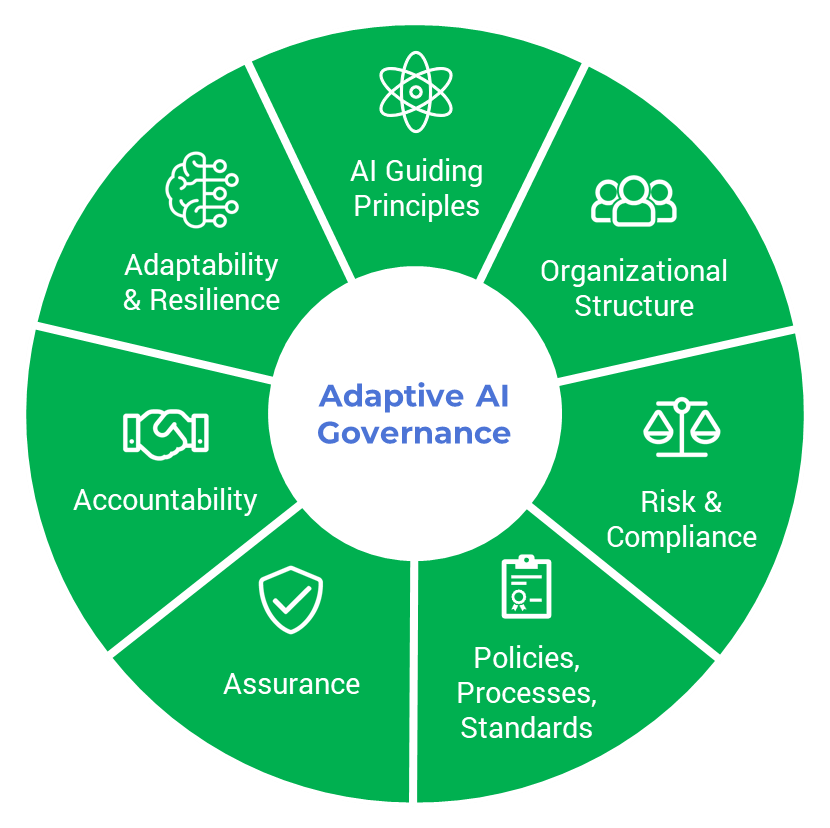
Info-Tech’s adaptive AI governance program offers a framework for the safe, responsible deployment and use of AI. It ensures alignment with the organization’s objectives and values while also adhering to the organization’s foundational AI principles and regulatory obligations. It provides a structured approach to monitoring, operating, and managing the effective and human-centric use and development of AI systems.
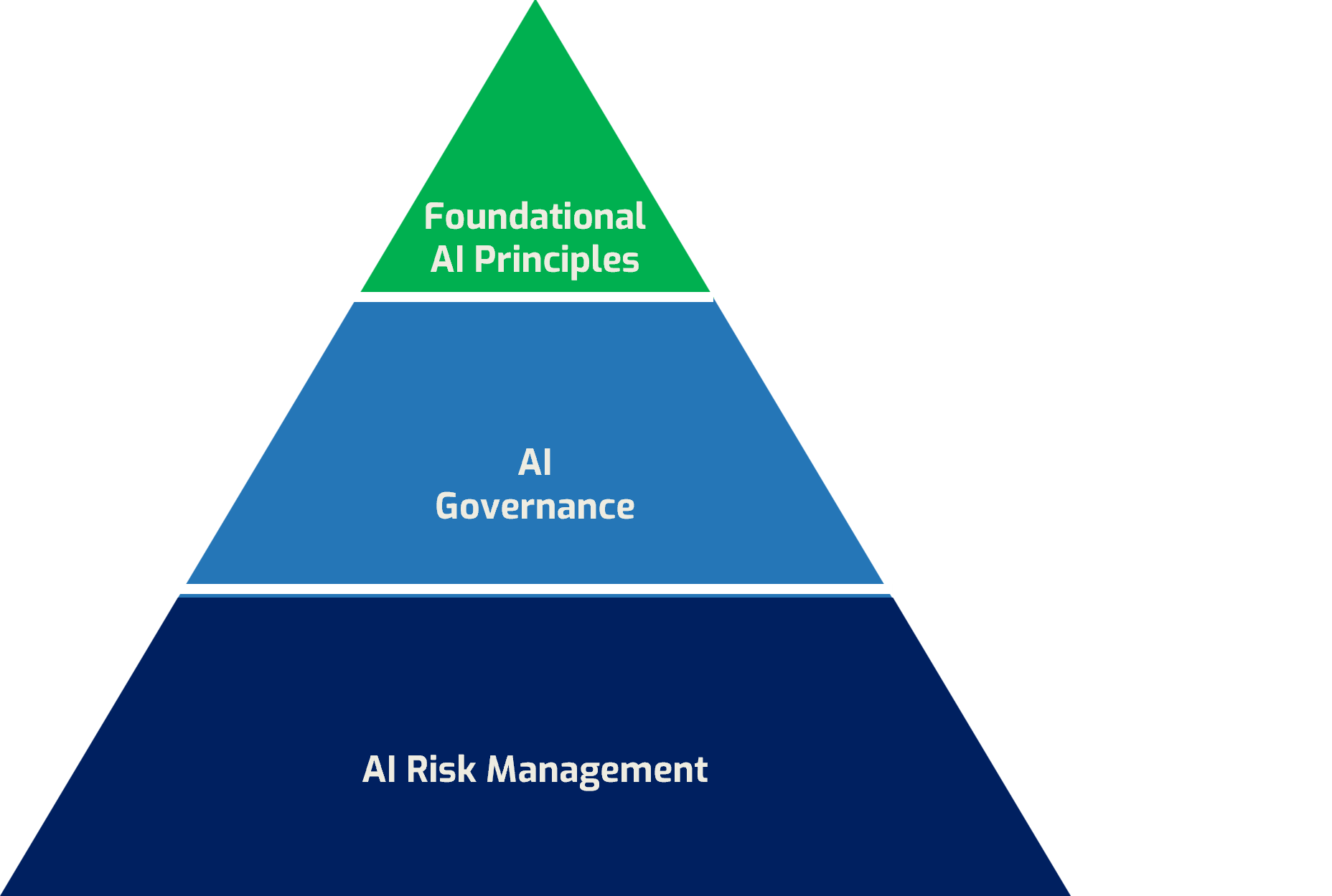
Adaptive AI governance will continue to be a subset of enterprise governance, a strategic practice that allows the organization to mitigate potential risks and drive innovation and value.
Organizations challenged with introducing adaptive AI governance programs can start by implementing a traditional AI governance program and evolving it to be more adaptive and responsive. Adaptive AI governance programs will involve collecting more external operational data for the AI system, making use of the latest AI models to reason and orchestrate AI agents, leveraging AI agents to use tools to perform various tasks, and then continuing to adapt by learning from the recommendations and actions performed.
Adaptive AI governance programs integrate governance throughout the AI lifecycle, enabling the organization to proactively uncover possible gaps with respect to governing the AI system. Implementing an adaptive AI governance program improves AI risk identification and governance, alignment to foundational AI principles, and value to the organization.
Executive summary
Your Challenge |
Common Obstacles |
Info-Tech’s Approach |
|---|---|---|
You have been given a mandate to govern how you will responsibly deliver on your AI strategy and target applications. You must:
|
Governance is often viewed as a restrictive and bureaucratic function that impairs innovation. Adaptive AI governance requires full adoption by the developers to the senior stakeholders as an enabler of safe and responsible innovation.
|
Adaptive AI governance represents an evolution from static and project-based governance to a dynamic, system-oriented and continuous monitoring governance model. The goal is to evolve your governance framework::
Develop a roadmap and communication plan to proactively govern AI in your organization. |
Overarching Info-Tech Insight
Organizations considering agentic AI applications will require an adaptive AI governance model that can evolve and respond to the new risks that agentic AI can introduce.
Establish an adaptive AI governance program to address the risks that AI introduces
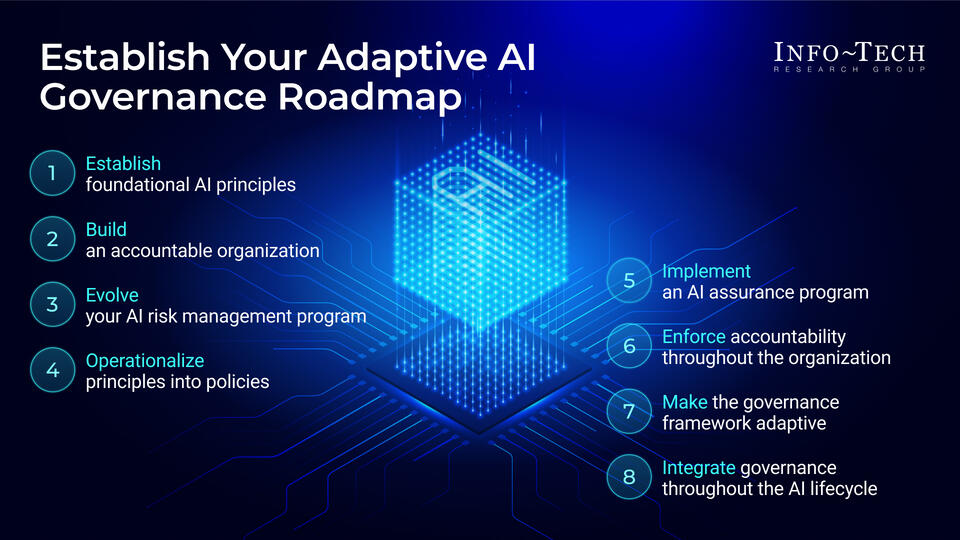
- Establish foundational AI principles to align with the organization’s strategic principles.
- Build/leverage organizational structures to support the use of AI in a manner consistent with the organization’s governance framework, values, and culture.
- Identify and comply with risk and compliance requirements.
- Establish policies, processes, and standards to operationalize the foundational AI principles.
- Develop an assurance program to monitor and confirm AI applications meet governance requirements.
- Assign roles and responsibilities to ensure the organization is accountable for the use of any AI applications.
- Ensure governance program is resilient and can adapt for AI.
Info-Tech advisory services lead to measurable value
Info-Tech members saved an average of $54,951 and 26 days by working with an Info-Tech analyst on developing an AI governance program.*
Why do members report value from analyst engagement?
- Get expert advice on your specific situation to overcome obstacles and speed bumps.
- Structure the project and stay on track.
- Review project deliverables and ensure the process is applied properly.
* Based on client response data from Info-Tech’s Measured Value Survey, following analyst advisory on BCP.
Benefits of adaptive AI governance
Adaptive AI governance is a dynamic framework that continuously evolves in its response to new risks, technological changes, and regulations. It embeds feedback loops, enabling governance to continuously adapt and evolve.
Organizations with adaptive AI governance:
- Ensure continuous compliance for an evolving regulatory landscape.
- Enable proactive vs. reactive risk management.
- Build resilient and self-healing AI systems.
- Foster a culture of accountability.
- Drive higher AI ROI through continuous improvement.
- Monitor AI systems in real time and govern them appropriately throughout their lifecycle.
Adaptive governance outcomes
Align to Strategy
Investments are dynamically aligned with the organization's strategic objectives.
Optimize Risk
Organizational risks can be proactively discovered, and actions can be taken in real time to minimize impacts.
Deliver Value
Transform governance from cost center to enabler for safe and trustworthy innovation.
Optimize Resource Allocation
Resources are allocated across the organization dynamically to optimize for business value.
Measure Performance
Operational data is continuously monitored, and governance actions can be performed in real time when thresholds are exceeded.
Traditional vs. adaptive AI governance: Evolving from static to dynamic resilience
Traditional AI Governance |
Adaptive AI Governance |
|
Risk Management |
Reactive and Periodic |
Predictive and Continuous |
Policy Enforcement |
Static and Manual |
Dynamic and Automated |
Assurance |
Predeployment Validation |
Continuous Verification |
Accountability |
Diffuse and Retrospective |
Embedded and Real Time |
Adaptability and Resilience |
Rigid and Fragile |
Flexible and Robust |
Value to the Organization |
Defensive and Compliance Focused |
Enabling and Business Value Driven |
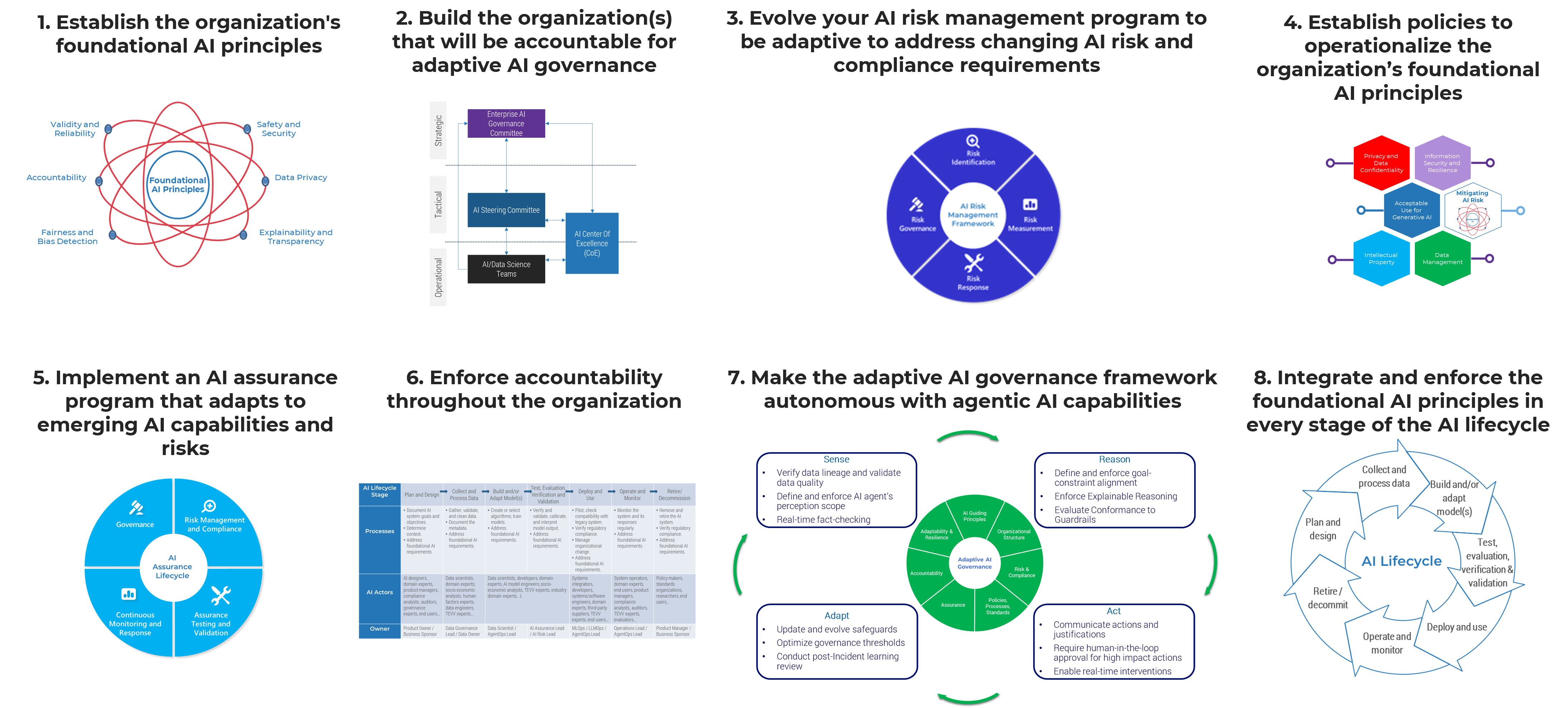
Build your adaptive AI governance roadmap
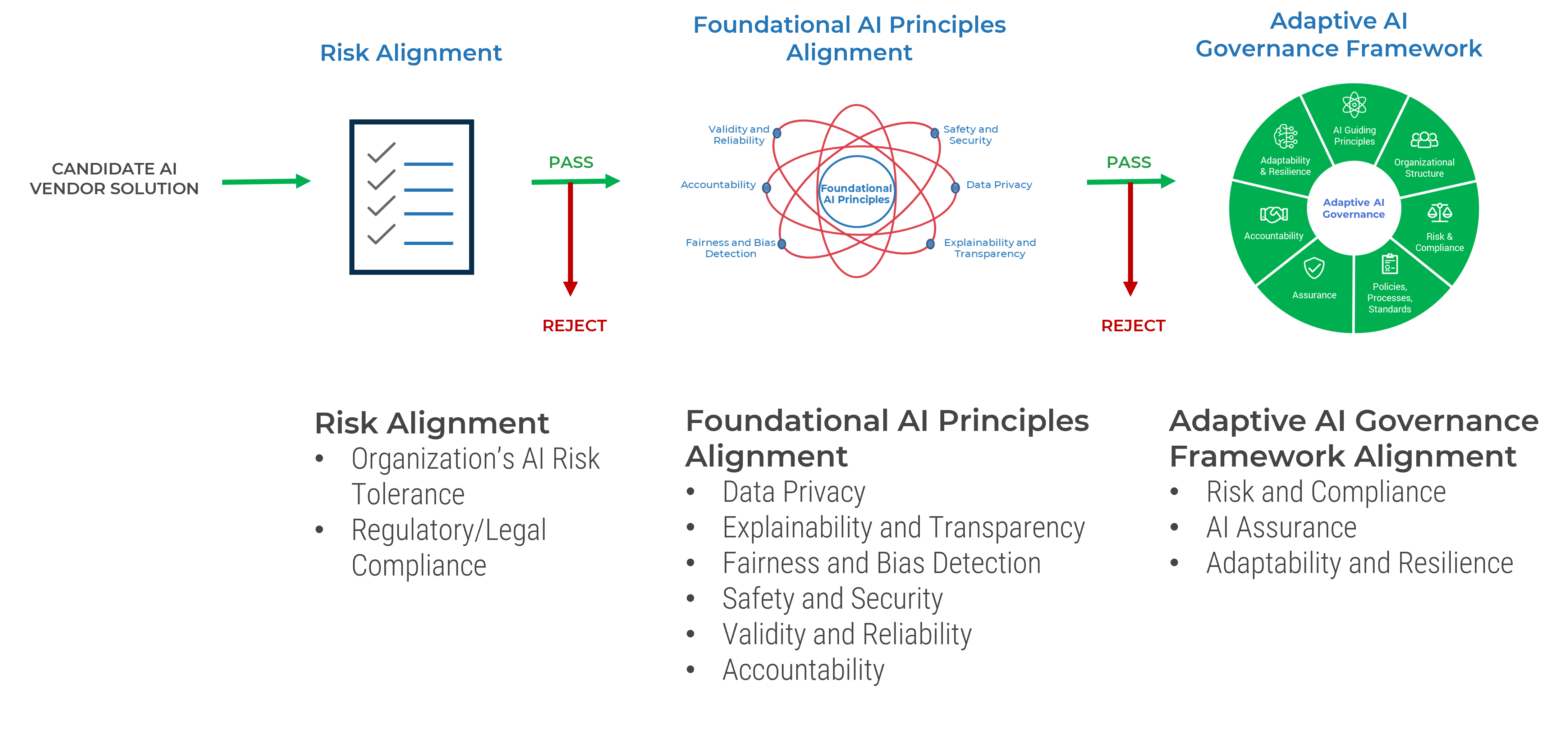
Applying AI governance for AI vendor solutions
Blueprint deliverables
Each step of this blueprint is accompanied by supporting deliverables to help you accomplish your goals:
AI Governance Maturity Assessment Tool
Conduct a structured review of your current and target governance capabilities.
Enterprise AI Governance Committee Charter Example
Define your Enterprise AI Governance Committee Charter
AI Governance Policy Template
Document AI policies.
AI Policy Worksheet
View AI policies from various institutions.
AI Risk Assessment Worksheet
Assess potential AI use case risks for your organization.
Adaptive AI Governance Executive Presentation
Summarize the key findings of this blueprint and provide your C-suite with a view of your organization’s AI governance challenges and your plan to meet them.
Info-Tech offers various levels of support to best suit your needs
| DIY Toolkit | Guided Implementation | Workshop | Consulting |
|---|---|---|---|
| "Our team has already made this critical project a priority, and we have the time and capability, but some guidance along the way would be helpful." | "Our team knows that we need to fix a process, but we need assistance to determine where to focus. Some check-ins along the way would help keep us on track." | "We need to hit the ground running and get this project kicked off immediately. Our team has the ability to take this over once we get a framework and strategy in place." | "Our team does not have the time or the knowledge to take this project on. We need assistance through the entirety of this project." |
Diagnostics and consistent frameworks are used throughout all four options.
Workshop overview
Contact your account representative for more information.
workshops@infotech.com 1-888-670-8889
Prework |
Session 1 |
Session 2 |
Session 3 |
Session 4 |
|
Activities |
Review Current AI Strategy and Governance |
Establish Foundational AI Principles and Governance |
Define AI Governance Framework |
Integrate Governance Into the AI Lifecycle |
Build an AI Governance Implementation Roadmap |
0.1 Understand the organization’s current AI governance model. |
1.1 Level-set on the goals of AI governance and current AI governance maturity. |
2.1 Identify any risk and compliance requirements. |
3.1 Define AI governance adaptability and resilience requirements. |
4.1 Identify AI governance implementation initiatives. |
|
Deliverables |
|
|
|
|
Phase 1
Assess Your Current AI Governance Capabilities
Step 1.1
Assess Your Current AI Governance Capabilities
Activities
1.1.1 Document the expected benefits of AI governance
1.1.2 Assess your AI governance practices
This step involves the following participants:
- Interested board members
- Executive stakeholders (especially from Legal, Compliance, and Risk)
- AI governance working group
- AI governance–related officials (if any)
Outcomes of this step
- A shared understanding of the goals of AI governance, its benefits, and your organization’s current state with respect to AI governance
Adaptive AI governance challenges
Business Challenges |
Technical Challenges |
|---|---|
|
|
AI Governance frameworks and initiatives
|
EU AI Act |
NIST AI RMF |
ISO/IEC 42001 |
World Economic Forum AI Governance Alliance |
Info-Tech Adaptative AI Governance |
Focus |
Providing a regulatory framework for AI product and market safety |
Providing a risk management framework driven by AI trustworthiness |
Providing an AI certification program driven by responsible AI principles |
Designing practical, actionable guidance and tools for responsible generative AI deployment |
Providing an AI governance framework that reacts in real time to changes in the environment. |
Regulatory Nature |
Mandatory legal obligations required |
Voluntary guidance |
Voluntary standard, certification available |
Voluntary public-private partnership |
Nonregulatory, voluntary guidance |
AI Principles |
Emphasizes safety, fundamental rights, and a high degree of transparency, human oversight, and accountability for high-risk AI |
Structured around trustworthy AI principles: safety, security, transparency, explainability, fairness, accountability, and privacy |
Follows management system principles: risk-based thinking, context of the organization, continuous improvement, and annex |
Centered on safety, trust, inclusivity, and ensuring the responsible deployment of generative AI technologies |
Focuses on foundational AI principles: safety and security, privacy, explainability and transparency, validity and reliability, fairness and bias detection, and accountability |
Framework Adaptability |
Low |
High |
Medium |
High |
High |
Implementation Approach |
Requires a formal conformity assessment |
Organizational guidance (govern-map-measure-manage) |
Focuses on creating an auditable management system |
Leverages a global community to prototype, pilot, and scale governance tools |
Structured and adaptable process |
Key areas of governance responsibility
Strategic Alignment
Ensures that technology investments and portfolios are aligned with the organization’s needs.
Resource Optimization
Ensures that people, financial knowledge, and technology resources are appropriately allocated across the organization.
Value Delivery
Reviews the outcomes of technology investments and portfolios to ensure benefits realization.
Performance Measurement
Monitors and directs the performance of technology investments to determine corrective actions and understand successes.
Risk Optimization
Defines and owns the risk thresholds and register to ensure that decisions are in line with the posture of the organization.
Adaptive AI governance components
Component | Description |
Foundational AI Principles | A core component of an organization’s AI strategy that drives AI governance. The principles should be periodically reviewed and validated to ensure the framework itself remains aligned to organizational goals. |
Organizational Structure | The defined roles, responsibilities, and oversight bodies (like an AI governance committee or the AI Center of Excellence) that establish clear ownership and decision-making authority for AI governance. |
Risk and Compliance | The dynamic processes for identifying, assessing, and mitigating AI-specific risks while continuously complying to evolving legal, regulatory, and internal standards. |
Policies/Processes/Standards | The mandated actionable rules and operational procedures that operationalize guiding principles into daily practice for users, developers, and stakeholders. Control mechanisms are required to support policies, monitor policy adherence, and ensure the policies are updated to reflect changing business context, risk tolerance, and the evolving AI risk landscape. |
Assurance | The independent validation and auditing mechanisms (e.g. impact assessments, certifications) that provide verified evidence and confidence that AI systems are functioning as intended and governed effectively. |
Accountability | The clear assignment of answerability for AI outcomes and decisions, ensuring there is always a designated owner/department responsible for AI system behavior and addressing any harms. |
Adaptability and Resilience | The framework’s adaptability refers to its built-in capabilities to continuously learn, evolve, and update its own rules and processes in response to new technologies, emerging risks, and changing regulations. The framework’s resiliency refers to its capacities to withstand, absorb, and rapidly recover from AI-related failures or disruptions, maintaining operational integrity and ensuring AI systems fail gracefully. |
Five key principles for building an adaptive governance framework
Delegate and empower |
Define outcomes |
Make risk-informed decisions |
Embed and automate |
Establish standards and behavior |
|---|---|---|---|---|
Decision-making must be delegated within the organization, and all resources must be empowered and supported to make effective decisions. |
Outcomes and goals must be clearly articulated and understood across the organization to ensure decisions stay within reasonable boundaries. |
Integrated risk information must be available with sufficient data to support decision-making and design approaches at all levels of the organization. |
Governance standards and activities need to be embedded in processes and practices. Optimal governance reduces its manual footprint while remaining viable. This also allows for more dynamic adaptation. |
Standards and policies need to be defined as the foundation for embedding governance practices organizationally. These guardrails will create boundaries to reinforce delegated decision-making. |
1.1.1 Document the expected benefits of AI governance
Run a brainstorming activity with key stakeholders to confirm why AI governance is needed and what benefits are expected. Use the examples below as a starting point. Document your responses on the next slide.
Why do we need embedded AI governance? What business-critical issues and challenges should better governance address? For example:
- AI is a novel technology that exposes our organization to new risks.
- Our existing governance structures require support to effectively identify, analyze, and implement controls for AI risks.
- We must enable the ethical and responsible use of new AI technologies.
- AI governance cannot exist in a vacuum and must be embedded within our existing enterprise governance model.
- Emergent risks may require a faster response than our existing governance structures permit.
What business benefits do we expect from AI governance? For example:
- Develop new AI solutions with confidence that the solutions will deliver the expected value to our customers and other stakeholders.
- Streamline the AI development process with standards, best practices, and frameworks that avoid costly and time-consuming rework.
- Ensure solutions meet regulatory, contractual, and legal compliance requirements in an evolving compliance landscape.
- Respond appropriately to emerging risks.
Input |
Output |
|---|---|
|
|
Materials |
Participants |
|
|
About Info-Tech
Info-Tech Research Group is the world’s fastest-growing information technology research and advisory company, proudly serving over 30,000 IT professionals.
We produce unbiased and highly relevant research to help CIOs and IT leaders make strategic, timely, and well-informed decisions. We partner closely with IT teams to provide everything they need, from actionable tools to analyst guidance, ensuring they deliver measurable results for their organizations.
What Is a Blueprint?
A blueprint is designed to be a roadmap, containing a methodology and the tools and templates you need to solve your IT problems.
Each blueprint can be accompanied by a Guided Implementation that provides you access to our world-class analysts to help you get through the project.
Talk to an Analyst
Our analyst calls are focused on helping our members use the research we produce, and our experts will guide you to successful project completion.
Book an Analyst Call on This Topic
You can start as early as tomorrow morning. Our analysts will explain the process during your first call.
Get Advice From a Subject Matter Expert
Each call will focus on explaining the material and helping you to plan your project, interpret and analyze the results of each project step, and set the direction for your next project step.
Unlock Sample Research Optimize IT Governance for Dynamic Decision-Making
 Maximize Business Value From IT Through Benefits Realization
 Build an IT Risk Management Program
 Review and Improve Your IT Policy Library
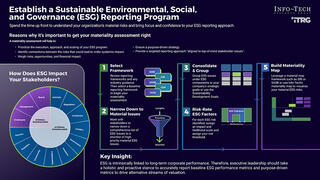 Establish a Sustainable ESG Reporting Program
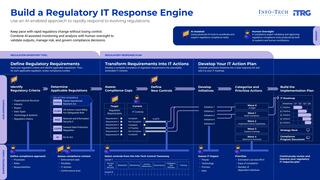 Build a Regulatory IT Response Engine
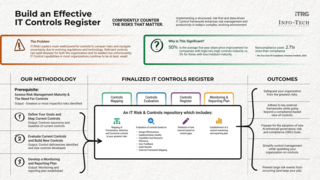 Build an Effective IT Controls Register
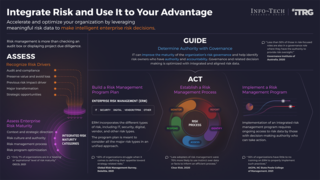 Integrate IT Risk Into Enterprise Risk
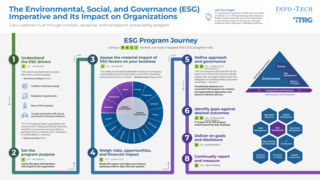 The ESG Imperative and Its Impact on Organizations
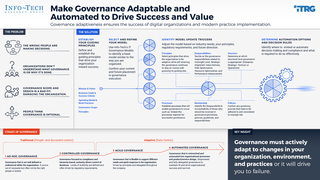 Make Your IT Governance Adaptable
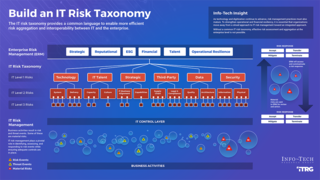 Build an IT Risk Taxonomy
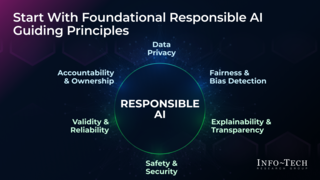 Prepare for AI Regulation
 Building the Road to Governing Digital Intelligence
 Identify and Respond to Credible Threats Arising From Global Uncertainty
 GRC Software Selection Guide
 Establish Your Adaptive AI Governance Program: From Principles to Practice
 Build an Integrated Enterprise Risk Management Program
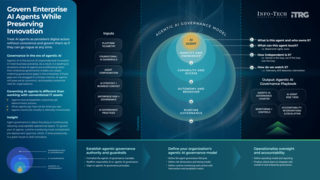 Govern Enterprise AI Agents While Preserving Innovation
 Execute Data-Driven Risk Assessments