
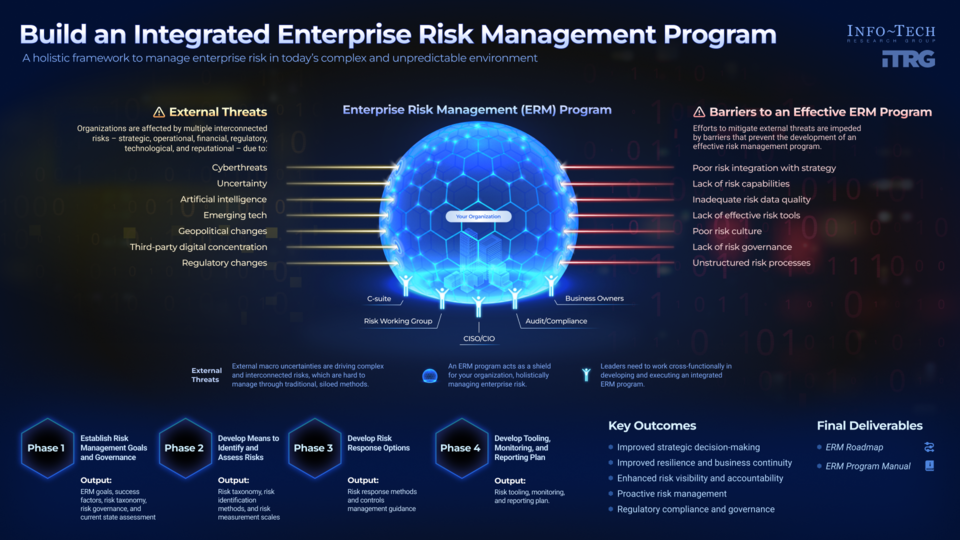
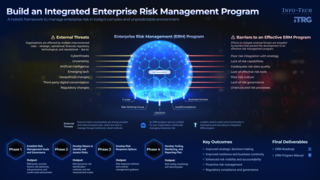
Build an Integrated Enterprise Risk Management Program
A holistic framework to manage enterprise risk in today’s complex and unpredictable environment.
Organizations operate in a risk environment of unparalleled volatility and complexity, intensified by AI and other emerging technologies. Traditional, siloed enterprise risk management (ERM) programs can’t keep pace with today’s deeply interconnected risks, which can cascade rapidly across department lines. This step-by-step blueprint will help you build an integrated ERM program that aligns risk appetite to strategic objectives, enables risk-informed decision-making, and embeds risk management across the organization.
Modern ERM programs require modern tools, such as integrated GRC platforms, AI-enabled analytics, and automated controls, supported by standardized risk taxonomies and a shared process across departments. But beyond technology, success depends on embedding ERM principles throughout organizational culture and practices. With strong cross-functional collaboration and a commitment to continuous improvement, organizations can move beyond reactive, siloed risk management to a holistic approach to navigate today’s complex web of risks.
1. Risk doesn’t care about your silos.
Enterprise risks are complex and interconnected, often cascading across functions in ways traditional, siloed risk management approaches fail to capture. Organizations must move toward a more integrated ERM approach that embeds risk management into strategy, governance, and daily operations across all functions.
2. Adopt a unified, goal-aligned view of ERM.
For your ERM program to be effective, it must be anchored in your organization’s strategic direction and risk appetite. This requires clear goals and success metrics, defined governance structures, a standardized risk taxonomy, and well-defined roles and responsibilities.
3. Tailor your risk response.
Effective risk management goes beyond risk identification to include specific response strategies around mitigation, transfer, acceptance, or leverage supported by fit-for-purpose controls. These strategies must be continuously monitored, transparently reported, and supported by appropriate GRC tooling.Use this step-by-step blueprint to build an integrated, proactive ERM program
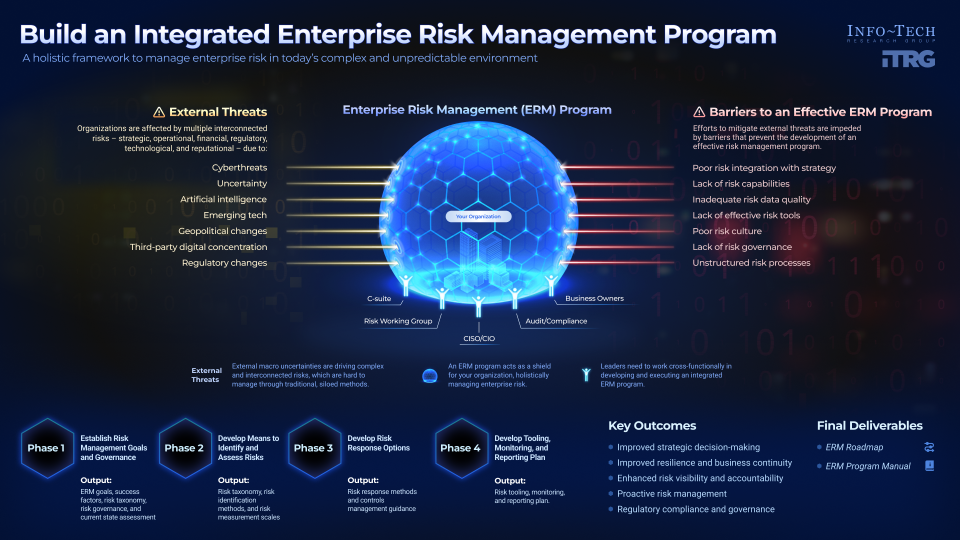
Our research provides a structured, four-phase framework supported by detailed tools, templates, and case examples to embed risk governance, monitoring, and response into your organization’s strategy, operations, and culture. Use this practical, actionable blueprint to build an ERM program that helps you shift from reactive risk tracking to integrated, enterprise-wide risk management.
- Establish ERM goals and governance by defining success factors, identifying constraints, assessing current states, confirming risk capacity and tolerance, and clearly defining roles and responsibilities.
- Develop means to identify and assess risks by establishing or refining a risk taxonomy, risk identification approach and risk assessment methods and scales and ensuring those approaches encompass priority areas.
- Develop risk response options by establishing risk response methods, developing and documenting a controls management approach, and establishing a plan for documenting risk responses for priority areas.
- Build a tooling, monitoring, and reporting plan by formally establishing approaches to monitoring and reporting, developing buying criteria for a GRC tool if needed, and finalizing your organization’s ERM Program Manual and ERM Roadmap.
Member Testimonials
After each Info-Tech experience, we ask our members to quantify the real-time savings, monetary impact, and project improvements our research helped them achieve. See our top member experiences for this blueprint and what our clients have to say.
9.0/10
Overall Impact
$24,266
Average $ Saved
11
Average Days Saved
Client
Experience
Impact
$ Saved
Days Saved
Toronto Community Housing Corporation
Guided Implementation
10/10
N/A
10
Anu asked a lot of great questions to build out the context of our ask. Valuable insight into his experience with clients and boards. And sent a he... Read More
Bob Barker Company, Inc.
Guided Implementation
10/10
$34,499
12
Patti provided world class advice for our Enterprise Risk Management program along with several resources to help mature our efforts.
Year Up Inc.
Workshop
8/10
$13,799
10
I found the ERM Workshop to be valuable because it provided a structured framework for thinking about organizational risk and reinforced the import... Read More
SAFE TRANSPORT VICTORIA
Guided Implementation
8/10
$24,500
10
Build an Integrated Enterprise Risk Management Program
A holistic framework to manage enterprise risk in today's complex and unpredictable environment
Analyst perspective
Enterprise risk does not care for your organizational silos, and neither should you!
In today's volatile and hyperconnected business environment, the traditional, siloed approach to risk management is no longer sufficient. Organizations are facing an unprecedented convergence of strategic, operational, technological, regulatory, and reputational risks accelerating in volume and complexity. The rapid adoption of AI and other emerging technologies, coupled with global supply chain dependencies and evolving regulatory landscapes, has created a risk ecosystem where threats are deeply intertwined and can cascade across the enterprise. As a result, leaders must recognize that risk does not respect organizational boundaries — effective risk management must be integrated, cross-functional, and embedded within the organization's strategy and operations.
This blueprint provides a pragmatic and actionable framework for building an integrated enterprise risk management (ERM) program. It emphasizes the importance of executive sponsorship, clear governance structures, and a risk-aware culture as foundational elements for success. By establishing well-defined risk appetite and tolerance statements, organizations can align risk-taking with strategic objectives and ensure that decision-making is both informed and resilient. The methodology's phased approach — spanning from prerequisite assessment to risk identification, response, monitoring, and reporting — ensures that ERM is not a one-time project but a continuous, evolving discipline that adapts to new threats and opportunities.
A key insight from this research is the critical role of data, technology, and tooling in enabling dynamic risk management. Manual, spreadsheet-based processes are increasingly inadequate for managing today's risks, which require real-time visibility, predictive analytics, and automated controls. The integration of governance, risk, and compliance (GRC) tools, AI-enabled risk analytics, and automated reporting enhances efficiency and provides the agility needed to respond to emerging risks. Organizations that invest in these capabilities will be better positioned to maintain risk within appetite, support regulatory compliance, and drive long-term value creation.
The journey to integrated ERM is as much about people and culture as it is about process and technology. Success depends on strong leadership, cross-functional collaboration, and a commitment to continuous improvement. By following the structured approach detailed in this blueprint, organizations can move beyond reactive risk management and build the foresight and resilience needed to thrive in an unpredictable world.

Anubhav (Anu) Sharma
Principal Research Director, Research Development
Info-Tech Research Group
What Is Risk?
Risk is the effect of uncertainty on the ability to achieve your goals/value proposition. Risk can be positive or negative.
Enterprise Risk Management
ERM is the practice and framework used to govern and manage risks to your organization. It allows you to identify and address risks and leverage risk information to drive better strategic decisions and exploit opportunities while improving organizational resilience.
Executive summary
In today's volatile world, organizations need an enterprise-level risk program.
In today's complex and rapidly evolving business environment, organizations face interconnected risks — strategic, operational, financial, regulatory, technological, and reputational — that are accelerating in volume and velocity and can significantly impact their ability to achieve their objectives.
Traditional siloed risk approaches fail to provide a comprehensive view of risk exposure, leading to blind spots, reactive decision-making and missed opportunities. Boards are increasingly concerned and asking the questions: How do we manage these risks? Who are the right leaders to help us manage these threats?
Organizational leaders need to take the lead and respond to this need through an integrated ERM program that can take on these elevated threats to organizational success.
Organizations face multiple hurdles in integrating risk management across silos.
- Lack of Executive Buy-In: Senior management isn't actively leading risk management, and it's poorly integrated with strategy and executive decision-making.§
- Resource and Time Constraints: Risk management requires significant resources, including personnel, time, data, and specialized knowledge and tools.
- Inconsistent Approaches: Inconsistent approaches to risk management with a lack of clear ownership and accountability can add to complexity and reduce productivity.
- Evolving Regulations: It's hard to keep up with changing regulations.
- Environmental Changes: Emerging risks are complex, evolving, and difficult to predict, requiring newer approaches to deal with them.
- Myopic View of Risk: Treating risk as a compliance checklist and not a strategic exercise can leave the organization vulnerable.
- Poor Risk Capabilities: Risk capabilities such as governance, culture, processes, and tooling are not at the level needed for setting up an effective risk management program.
Info-Tech brings a tested approach adapted to navigate today's unpredictable environment.
Organizations need an ERM framework that enables leadership to make informed decisions, enhance resilience, and create long-term value by chasing the right opportunities and proactively identifying and managing upside and downside risks.
- Establish your ERM goals, success factors, and guiding principles.
- Develop your ERM governance structure and define roles and responsibilities.
- Confirm/develop your risk appetite, tolerance, and indicators related to organizational objectives.
- Develop your enterprise risk taxonomy, risk identification, assessment and response methods, and risk monitoring and reporting plan.
- Identify tooling requirements and the key capabilities to be developed for unknowable risks to enable working in a more integrated manner and respond more dynamically.
- Finalize your ERM Program Manual and ERM Roadmap for a framework and operational plan to execute your ERM program.
Info-Tech Insight
Today's complex and interconnected risks cannot be managed in isolation. They need broader collaboration and consensus and an enterprise-level risk management framework. Enterprise risk is the responsibility of all business functions. Organizational leaders need to treat risk as part of their strategy and not an afterthought or risk major damage to the enterprise, its objectives, and their career trajectory.
External macro uncertainties are driving complex and interconnected risks
- Today's world is marked by unprecedented uncertainty, surpassing even major global events like Brexit and the COVID-19 pandemic. This volatility creates cascading organizational risks, including supply chain disruptions, cyberattacks, and trade conflicts such as tariffs.
- Each of these risks can trigger further financial, reputational, and operational challenges (e.g. higher costs for essential goods and services, loss of customers, and difficulty retaining talent).
- Compounding this is the rapid digitization of business over the past decade, driven by internet expansion, cloud adoption, mobile computing, and the recent surge in AI. As a result, risk categories — geopolitical, financial, technological, third-party, and cyber — are evolving quickly and becoming deeply interconnected, making them harder to predict and manage (See the digitalized extended enterprise visual on the right).
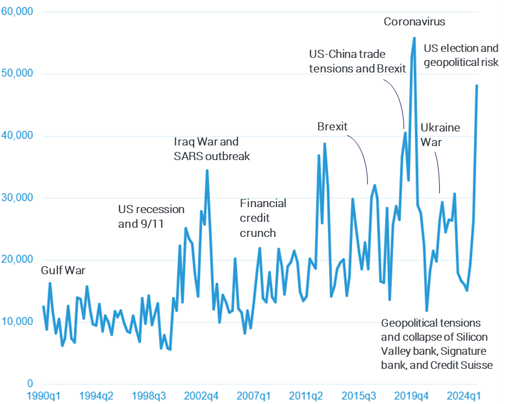
World Uncertainty Index (1990Q1 to 2025Q1)
The World Uncertainty Index is a measure that tracks uncertainty across the globe by text mining the country reports of the Economist Intelligence Unit. The index is available for 143 countries.
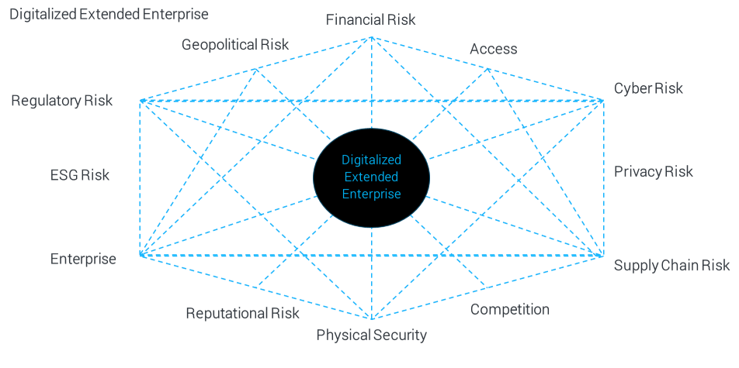
Source: MetricStream
Transformation needs are creating internal pressures
Organizations are being pressured to reevaluate budgets and reorganize internally in response to some of these external stimuli:
- AI investment has emerged as a priority due to the possible upside that it can provide. Organizations are focused on finding budgets to invest and develop capabilities that can help generate tangible value from AI.
- Reducing technical debt (i.e. legacy technology and data) has also been a priority. Often described as a hidden iceberg within an organization's technology stack, technical debt slows down innovation spend in the organization.
- The global labor market is being reshaped, with a skills gap emerging that drives organizations to focus on both attracting talent with emerging skill needs as well as retraining the existing workforce.
- Pressure to reinvent the business model and operating model, which requires a mindset shift for both leadership and the organizational culture in general.
Only 26% of companies have developed the necessary capabilities to move beyond proofs of concept and generate tangible value from AI.
Source: BCG, 2024
$370 million annually
Amount of dollars wasted on average by an enterprise due to its inability to efficiently modernize outdated, inefficient legacy systems and applications (technical debt).
Source: Business Wire, 2025
63% of employers identify skills gap as the biggest barrier to business transformation over the 2025-2030 period.
Source: World Economic Forum, 2025
Traditional siloed risk approaches fail to provide a comprehensive view of risk exposure, leading to blind spots, reactive decision-making and missed opportunities.
- Traditional risk management — relying on siloed processes, undefined taxonomies, poor risk data, and disconnected risk registers — falls woefully short of what is needed and exposes enterprises to massive risk.
- Traditional risk management doesn't offer insights into the interconnection of complex risks, an enterprise portfolio view of your greatest risks, or the risk tools, culture, and processes that can help you take on these risks.
47% of risk and compliance (R&C) professionals indicated their organization does not have a mature R&C program.
Source: NAVEX, 2023
33%
Percentage of R&C professionals that felt that siloed R&C management is the greatest barrier to rapidly responding to risk.
Source: Business Wire, 2022
61% of organizations still rely on documents, spreadsheets and emails for GRC management.
Source: OCEG, 2025
Info-Tech Insight
To effectively leverage opportunities and protect against negative impacts, organizations need to develop a deeper understanding of the interconnected risks at play and adopt an integrated ERM program that can take on this complex web of risks.
Any organizational leader can take the lead in developing an ERM program — risk does not care for your silos!
- CIOs: Focus on integrating risk beyond IT and cybersecurity, modeling risk integration, and positioning ERM as a strategic enabler. Take the emergence of AI risk as a catalyst to drive ERM.
- CISOs: Emphasize that cyber risk is enterprise risk, integrate it into the enterprise risk taxonomy, communicate risks in business terms, and align with regulatory requirements. Take the focus on cybersecurity as a catalyst to drive ERM.
- Executives (CEO, CFO, COO): Strengthen strategic alignment and decision-making, implement risk-based funding and performance measures, enhance board reporting, and promote executive accountability and risk ownership to drive ERM.
- Chief Risk Officer (CRO): Provide the central risk authority and specialized expertise needed to holistically manage risk in the organization by leading the development of an integrated ERM program.
Leaders need to work cross-functionally to develop and execute an integrated ERM program
CEO, COO, CFO
- Set the tone for risk culture and align to organizational goals.
- Define risk appetite.
- Champion ERM program.
- Embed risk in decision-making.
Chief Risk Officer/Risk Function
- Design and execute the risk management program.
- Develop risk policies.
- Coordinate risk communication.
- Adapt risk profile to changing conditions.
- Facilitate risk processes.
Legal/Compliance
- Ensure adherence to laws/ regulations.
- Identify regulatory and compliance risks.
- Integrate legal/compliance perspectives in managing risk.
Internal Audit
- Provide unbiased assurance.
- Evaluate risk controls and identify gaps and recommend improvements.
- Report risks to the board/senior management.
- Maintain reliability of process.
Business Unit leads
- Identify operational risks.
- Tailor risk assessments and develop mitigation strategies.
- Integrate risk management in daily activities.
- Report and monitor key risks.
Board of Directors /Audit & Risk Committee
- Align with governance standards and oversight.
- Review and approve risk framework.
- Hold management accountable and ensure transparency.
- Guide risk-informed strategic decisions.
CIO/CISO/IT Teams
- Assess data, system, AI, and technology risks and protect against cyberthreats.
- Implement risk tools and analytics.
- Ensure cyber, IT, and data compliance and ensure operational resilience and business continuity.
Finance/Treasury
- Oversee financial risks.
- Quantify and monitor risk exposure.
- Support risk forecasting and analysis.
- Balance risk insights with organizational financial goals.
Human Resources
- Identify and monitor people-related risks.
- Provide R&C training and awareness.
- Monitor risk culture.
- Recruit of risk personnel.
Operations
- Identify and monitor operational risks/weak signals.
- Implement controls.
- Plan for contingencies.
- Integrate ERM with operational management.
Organizations face multiple hurdles in integrating risk management across silos
| 1 | Lack of Executive Buy-In: Senior management isn't actively leading risk management, and it's poorly integrated with strategy and executive decision-making.§ |
| 2 | Resource and Time Constraints: Risk management requires significant resources, including personnel, time, data, and specialized knowledge and tools. |
| 3 | Inconsistent Approaches: Inconsistent approaches to risk management with a lack of clear ownership and accountability can add to complexity and reduce productivity. |
| 4 | Evolving Regulations: It's hard to keep up with changing regulations. |
| 5 | Environmental Changes: Emerging risks are complex, evolving, and difficult to predict, requiring newer approaches to deal with them. |
| 6 | Myopic View of Risk: Treating risk as a compliance checklist and not a strategic exercise can leave the organization vulnerable. |
| 7 | Poor Risk Capabilities: Risk capabilities such as governance, culture, processes, and tooling are not at the level needed for setting up an effective risk management program. |
Different industry frameworks and standards have provided insights in helping Info-Tech develop an ERM approach that goes beyond compliance
ERM frameworks are structured approaches to ERM that help organizations establish a consistent risk management culture and environment. They guide risk management functions and help organizations manage complexity, visualize risk, assign ownership, and define responsibility for managing risks and associated controls.
COSO ERM
The Committee of Sponsoring Organizations (COSO) of the Treadway Commission framework is a joint initiative of five private-sector organizations based on five interrelated ERM components (governance & culture, strategy & objective-setting, performance, review & revision, information, and communication & reporting). It includes 20 principles across the domains regardless of organizational scale, industry, or type.
ISO 31000
The International Organization for Standardization (ISO) 31000-2018 ERM framework is a cyclical approach that provides the guidelines, principles, framework, and process for effective risk management in organizations. It provides guidance for audit/assurance and an internationally recognized benchmark.
RIMS ERM
Created by the Risk Management Society, the RIMS ERM framework looks at seven critical ERM attributes (erm-based approach, ERM process management, risk appetite management, root cause discipline, uncovering risks, performance management, and resiliency & sustainability) and assesses 25 competency drivers.
See the appendix for more details on these frameworks and standards.
Blueprint overview
| Pre-Phase | Phase 1 | Phase 2 | Phase 3 | Phase 4 | |
|---|---|---|---|---|---|
| Activities | Assess Current Needs | Establish Risk Management Goals and Governance | Develop Means to Identify and Assess Risks | Develop Risk Response Options | Develop Tooling, Monitoring, and Reporting Plan |
|
0.1 Understand current risk management needs and ascertain go-forward direction. 0.2 (Optional) Discuss prerequisites for a Guided Implementation/workshop, including identifying sponsor and workshop participants. |
1.1 Define ERM goals and success factors. 1.2 Identify organizational constraints. 1.3 Assess current state of risk capabilities and understanding. 1.4 Assess and confirm your risk capacity, appetite statements, and tolerance. 1.5 Establish required governance and define roles and responsibilities. |
2.1 Develop or refine enterprise risk taxonomy. 2.2 Develop approach for risk identification. 2.3 Develop risk assessment approach and scales. 2.4 Establish risk identification and assessment plan for priority areas. |
3.1 Establish risk response methods (accept, transfer, mitigate, etc.) 3.2 Develop and document controls management approach. 3.3 Establish plan for documenting risk responses for priority areas. |
4.1 Establish monitoring approach. 4.2 Develop risk reporting approach. 4.3 Develop your buying criteria (if applicable) for a GRC tool. 4.4 Finalize ERM Program Manual and ERM Roadmap. |
|
| Outputs |
|
|
|
|
|
Insight summary
Enterprise risks are so complex and interconnected that organizations must move beyond siloed, reactive approaches and adopt an integrated ERM program.
Only by embedding risk management into strategy, governance, and daily operations — across all functions — can organizations enhance resilience, make informed decisions, and create long-term value in today's unpredictable environment. This is especially true for technology-related risks for which CIO/CISOs have the responsibility.
Before launching an ERM program, organizations must confirm prerequisites.
Ensure executive sponsorship, resource allocation, and foundational risk documentation are in place to avoid stalled initiatives and align stakeholders on the purpose and scope of ERM.
Defining clear ERM goals, success metrics, governance structures, and an enterprise risk taxonomy sets the strategic direction and accountability for risk management.
Ensure risk appetite and tolerances are aligned with organizational objectives and that roles and responsibilities are clearly articulated to enable consistent and effective risk oversight.
A structured approach to risk identification and assessment enables organizations to better understand their impact.
Move risk management from ad hoc or siloed practices to a holistic, prioritized view of enterprise risk exposure.
Effective risk management requires not just identifying risks but developing tailored response strategies (accept, mitigate, transfer, avoid) and robust controls.
Continuous risk monitoring and transparent reporting supported by appropriate GRC tooling help keep risk within appetite and enable timely, data-driven decisions.
Blueprint deliverables
Each step of this blueprint is accompanied by supporting artifacts to help you accomplish your goals:
This Excel workbook is a structured document that helps you work through the phases and activities of this blueprint. This includes templates to document the results of the different phases and steps as well as an enterprise risk register template.
Use this tool to conduct a deeper analysis of high-priority risk events that surpass your organization's acceptable risk threshold.
ERM Committee Charter Template
Document the charter for the ERM Committee.
Risk Working Group Charter Template
Document the charter for the Risk Working Group.
Key deliverables:
A structured, actionable guide for managing enterprise risk that serves as the operational framework for risk management, detailing risk governance, identification, assessment, response, monitoring, and reporting.
An operational plan that lays out the sequence of initiatives and phases required to execute and mature the ERM program.
Measure the value of this research
Be ready to tackle complex, interconnected, and emerging enterprise risks.
This research helps organizations develop a fit-for-purpose ERM program that will deliver value in the form of organizational resilience for today's era of uncertainty and emerging technologies.
Leverage this research to:
- Evaluate readiness of risk management to tackle uncertainty and emergent risks.
- Increase knowledge and expertise on cutting-edge risk management practices.
- Develop an ERM program manual to guide ERM activities in the organization.
- Develop a strategic roadmap to mature and execute the ERM program.
- Generate buy-in and senior-level (board or CEO) alignment on risk management.
- Streamline and integrate risk management discussions across the organization.
- Bring focus on the skills and capabilities you need to drive risk management.
- Ensure compliance with relevant laws/regulations.
Measure the value of this blueprint
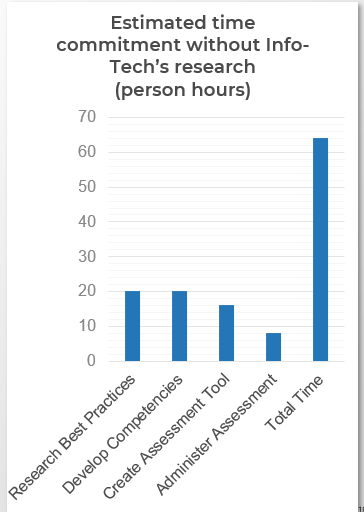
Most organizations will need to spend a lot of money and resources creating an ERM program if they do not use Info-Tech's resources.
Based on similar efforts, most organizations would take months to prepare an ERM program without Info-Tech's resources. That's nearly 65 hours multiplied by the number of people involved in researching and gathering data, conducting meetings, and documenting findings for a total cost of thousands of dollars. Improve your success rate and reduce your effort by using Info-Tech's methodology developed through the combined insights of seasoned Info-Tech experts as well as external industry viewpoints.
Case example
INDUSTRY
Technology
TYPE
Semiconductor Manufacturer
Acme Inc. develops its integrated ERM framework.
Acme Inc. is a global semiconductor manufacturer specializing in advanced sensor technologies. It has grown to become a key supplier to major automotive original equipment manufacturers (OEMs) worldwide.
Annual Revenue: $500 million
Employees: 1,500
Manufacturing Facilities: US, Canada, UK, China
The company has a complex global supply chain, highly automated production lines, and a just-in-time manufacturing model.
It is connected by a global enterprise resource planning (ERP) system, cloud-based lifecycle management, and a real-time order tracking portal for customers.
It has a high-pressure delivery schedule and must undergo strict quality control requirements and technology audits from customers and auditors. In addition, it has complex intellectual property that it needs to protect.
Currently, Acme Inc. is looking to digitally transform its technology amid rising technology regulatory requirements, the need to protect intellectual property among growing cyberthreats in the semiconductor industry, and uncertainty in the global supply chain.
Acme Inc. faces a rapidly evolving risk landscape driven by digital transformation, regulatory changes, and the proliferation of AI technologies. As a key supplier to automotive OEMs, Acme's resilience depends on its ability to manage interconnected risks — especially those emerging from AI adoption and threats posed by malicious actors leveraging AI. The CIO, CISO and CRO, recognizing the limitations of their current risk register, embark on a comprehensive ERM journey, especially integrating AI and other technology risk management to strengthen organizational resilience. Follow Acme Inc.'s journey throughout this blueprint.
Follow Acme Inc.'s ERM framework development journey throughout this blueprint:
Pre-Phase: Assess Prerequisites
Phase 1: Establish Risk Management Goals and Governance
Phase 2: Develop Means to Identify and Assess Risks
Phase 3: Develop Risk Response Options and Controls
Phase 4: Develop Tooling, Monitoring, and Reporting
Info-Tech offers various levels of support to best suit your needs
| DIY Toolkit | Guided Implementation | Workshop | Executive & Technical Counseling | Consulting |
|---|---|---|---|---|
| "Our team has already made this critical project a priority, and we have the time and capability, but some guidance along the way would be helpful." | "Our team knows that we need to fix a process, but we need assistance to determine where to focus. Some check-ins along the way would help keep us on track." | "We need to hit the ground running and get this project kicked off immediately. Our team has the ability to take this over once we get a framework and strategy in place." | "Our team and processes are maturing; however, to expedite the journey we'll need a seasoned practitioner to coach and validate approaches, deliverables, and opportunities." | "Our team does not have the time or the knowledge to take this project on. We need assistance through the entirety of this project." |
Diagnostics and consistent frameworks are used throughout all five options.
Guided Implementation
What does a typical GI on this topic look like?
| Pre-Phase | Phase 1 | Phase 2 | Phase 3 | Phase 4 |
|---|---|---|---|---|
|
Call #1: Define scope and assess completeness of prerequisites. |
Call #2: Define ERM goals, success factors, and metrics. Call #3: Identify organizational constraints. |
Call #4: Assess current state of risk capabilities and confirm risk appetite.* Call #5: Establish required governance. Call #6: Establish enterprise risk taxonomy. |
Call #7: Develop risk identification approach and establish risk register. Call #8: Develop probability and impact scales. Call #9: Establish risk responses and controls management approach. |
Call #10: Establish method for developing tolerances/key risk indicators (KRIs). Call #11: Discuss monitoring, reporting, and tooling plan. Call #12: Summarize results, finalize deliverables, and plan next steps. |
*If risk appetite is not defined, this step will take longer.
A Guided Implementation (GI) is a series of calls with an Info-Tech analyst to help implement our best practices in your organization.
A typical GI is 12 to 14 calls over the course of 3 to 4 months.
About Info-Tech
Info-Tech Research Group is the world’s fastest-growing information technology research and advisory company, proudly serving over 30,000 IT professionals.
We produce unbiased and highly relevant research to help CIOs and IT leaders make strategic, timely, and well-informed decisions. We partner closely with IT teams to provide everything they need, from actionable tools to analyst guidance, ensuring they deliver measurable results for their organizations.
What Is a Blueprint?
A blueprint is designed to be a roadmap, containing a methodology and the tools and templates you need to solve your IT problems.
Each blueprint can be accompanied by a Guided Implementation that provides you access to our world-class analysts to help you get through the project.
Need Extra Help?
Speak With An Analyst
Get the help you need in this 5-phase advisory process. You'll receive multiple touchpoints with our researchers, all included in your membership.
Guided Implementation 1: Assess Prerequisites for Working on ERM Framework
- Call 1: Define scope and assess completeness of prerequisites.
Guided Implementation 2: Establish Risk Management Goals, Governance, and Taxonomy
- Call 1: Define ERM goals, success factors, and metrics.
- Call 2: Identify organizational constraints.
Guided Implementation 3: Develop Means to Identify and Assess Risks
- Call 1: Assess current state of risk capabilities and confirm risk appetite.
- Call 2: Establish required governance.
- Call 3: Establish enterprise risk taxonomy.
Guided Implementation 4: Establish Method for Developing KRIs and Define Risk Response Options
- Call 1: Develop risk identification approach and establish risk register.
- Call 2: Develop probability and impact scales.
- Call 3: Establish risk responses and controls management approach.
Guided Implementation 5: Develop Tooling, Monitoring, and Reporting Plan
- Call 1: Establish method for developing tolerances/key risk indicators (KRIs).
- Call 2: Discuss monitoring, reporting, and tooling plan.
- Call 3: Summarize results, finalize deliverables, and plan next steps.
Contributors
- Four anonymous contributors
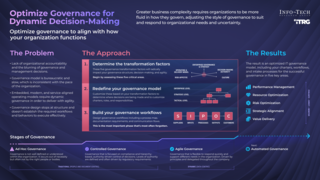 Optimize IT Governance for Dynamic Decision-Making
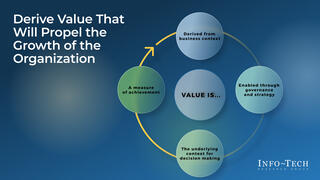 Maximize Business Value From IT Through Benefits Realization
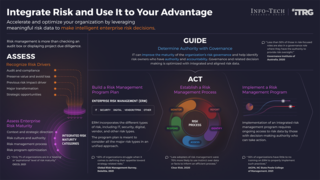 Build an IT Risk Management Program
 Review and Improve Your IT Policy Library
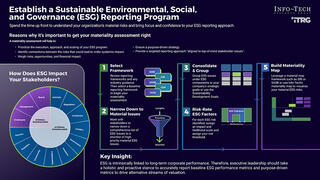 Establish a Sustainable ESG Reporting Program
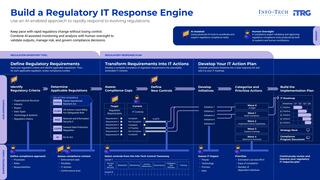 Build a Regulatory IT Response Engine
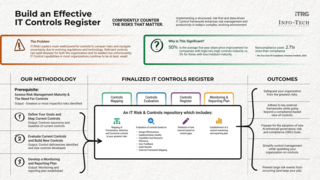 Build an Effective IT Controls Register
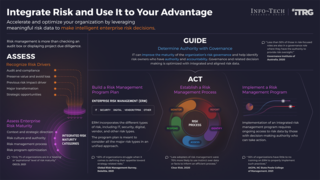 Integrate IT Risk Into Enterprise Risk
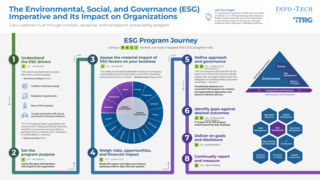 The ESG Imperative and Its Impact on Organizations
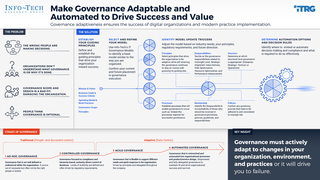 Make Your IT Governance Adaptable
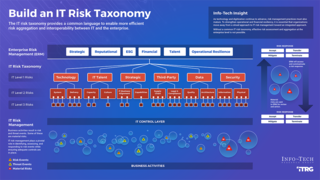 Build an IT Risk Taxonomy
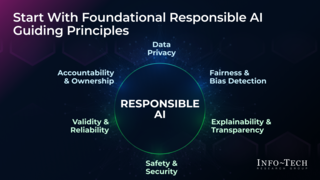 Prepare for AI Regulation
 Building the Road to Governing Digital Intelligence
 Identify and Respond to Credible Threats Arising From Global Uncertainty
 GRC Software Selection Guide
 Establish Your Adaptive AI Governance Program: From Principles to Practice
 Build an Integrated Enterprise Risk Management Program
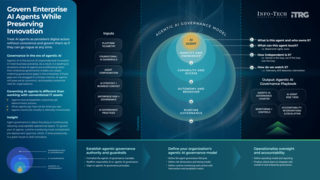 Govern Enterprise AI Agents While Preserving Innovation
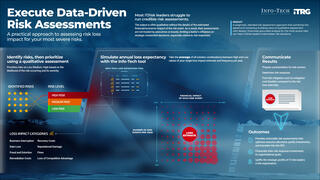 Execute Data-Driven Risk Assessments
