
Build Your Applications Practice Strategy
Delivering value starts with embracing what your practice should be.
Applications are the engine that powers critical business processes. But applications teams are struggling to meet stakeholder expectations amid constant disruptions due to AI, rising technical and operational complexity, and growing cybersecurity risks. A well-equipped applications practice is important to ensure applications are reliable, valuable, and aligned with strategic priorities. Use our three-phase framework and practical tools to craft an applications practice strategy that is compelling, aligned with stakeholder goals, and solves the problems that matter to your organization.
The applications practice is evolving beyond a team of siloed, task-oriented order-takers. Today’s modern practice is a strategic partner, collaborating across functions and disciplines while continuously engaging with stakeholders to co-own outcomes. Learn how to transform your applications practice from a tactical role into a strategic and business-aligned partner.
1. When your applications practice leads, disruption becomes the advantage.
The future belongs to organizations whose applications practice is the strategic engine driving value delivery. Become the trusted advisor and technology enabler that senses, predicts, and initiates practical organizational transformation.
2. Every transformation begins with identity.
Your practice must first embrace who it is today to evolve into the strategic leader of tomorrow. Begin with embracing transparency, value- and quality-driven thinking, and collaboration to build trust and earn influence. When this transformation is done right, it turns incremental wins into lasting impact.
3. Start with what is most painful and concerning to your stakeholders.
Then, illustrate how the practice will contribute to your organization’s success through a compelling value proposition. If your stakeholders do not know why the applications practice exists, they will see it as a hurdle and barrier.
Use this blueprint to build the applications practice your stakeholders will stand behind.
Our research framework and supporting templates help CIOs and applications leaders define how their organization will deliver, manage, and support applications to maximize business outcomes. Use this three-phase methodology to:
- State the role of your applications practice by listing your guiding principles.
- Build your value proposition by prioritizing the services that address the strategic priorities most important to your stakeholders.
- Capture your practice’s vision by selecting your delivery orientation, defining your objectives and scope, and building your roadmap and communication plan.

On Demand
Webinar

Build an Application Department Strategy
Play WebinarMember Testimonials
After each Info-Tech experience, we ask our members to quantify the real-time savings, monetary impact, and project improvements our research helped them achieve. See our top member experiences for this blueprint and what our clients have to say.
9.3/10
Overall Impact
$14,891
Average $ Saved
20
Average Days Saved
Client
Experience
Impact
$ Saved
Days Saved
Cairns Regional Council
Guided Implementation
10/10
$24,500
20
Excellent in all area's - Hans is phenomenal!
Open Text Corporation**
Guided Implementation
8/10
$9,000
10
The best part of the experience is fact that tools, template and approach was shared in order to create the strategy. The worst part is I found so... Read More
Hamilton Police Services
Guided Implementation
9/10
N/A
N/A
Kieran was very knowledgeable and easy to work with. No negatives.
CPA Alberta
Guided Implementation
8/10
$11,500
5
It was good to bounce some ideas off of Vince. This gave us confidence that we are on the right track. Will do another call once we have done some ... Read More
Southern Nevada Health District
Guided Implementation
10/10
N/A
N/A
It allowed me to think through my and my team's specific needs. No worst part.
Al Nahdi Medical
Guided Implementation
10/10
$15,755
7
I really enjoy talking to Alex and listening to his directions and insights .. Very useful input as usual .
Sinclair Community College
Guided Implementation
10/10
$13,700
60
I really can't recall any worst part of this experience. I think Andrew was a great person to work with. He was very balanced professionally and ... Read More
Regional Transportation District
Guided Implementation
10/10
$685K
100
Best experience was going through the exercise of pulling things out of my head and getting them documented in real time. I wasn't fully prepared ... Read More
Earlham College
Guided Implementation
7/10
$2,599
1
Good introductory call.
LGM Financial Services
Guided Implementation
10/10
$10,000
2
Rosens Diversified
Guided Implementation
9/10
N/A
N/A
We are still early on in the process, but very happy so far. Time and $ savings may come into play eventually too, just too early to quantify given... Read More
Los Angeles County Probation
Guided Implementation
10/10
N/A
N/A
Too early to provide feedback on question 2 and 3. I like the template and there is a plan to get to the end goal.

Application Strategy
At the end of this course, you will be able to develop an application department playbook with your vision, goals, guiding principles, and delivery orientation.
- Course Modules: 2
- Estimated Completion Time: 1 hour
Workshop: Build Your Applications Practice Strategy
Workshops offer an easy way to accelerate your project. If you are unable to do the project yourself, and a Guided Implementation isn't enough, we offer low-cost delivery of our project workshops. We take you through every phase of your project and ensure that you have a roadmap in place to complete your project successfully.
Module 1: Align the Role of Your Applications Practice
The Purpose
Key Benefits Achieved
- Identifying the attributes your applications practice will exhibit.
- Defining the role your applications practice will play in your context.
- Outlining principles that will guide your applications practice.
Activities
Outputs
State the role of your practice
- Your interpretation of the applications practice’s role
List your guiding principles
- List of guiding principles
Module 2: Build your value proposition
The Purpose
Key Benefits Achieved
- Recognizing the strategic priorities your practice is expected to address.
- Identifying the contributions your practice will provide to meet your strategic priorities.
- Outlining the value your practice promises to deliver through the services it offers.
Activities
Outputs
Know your strategic priorities
- Applications practice value statements
Reveal your practice contributions
- List of practice contributions to address stakeholder needs and pains
Module 3: Design your target state
The Purpose
Key Benefits Achieved
- List of the services your applications practice will deliver.
- Selection of the delivery orientation(s) that best supports the organization.
- Discussion of the various industry good practices to consider in the target state.
Activities
Outputs
Shortlist your practice services
- Prioritized list of applications practice services
Select your delivery orientation
- Selection of the preferred delivery orientation(s)
Learn industry good practices
- Possible items and changes to include in the applications practice target state.
Module 4: Roadmap your practice
The Purpose
Key Benefits Achieved
- Defined objectives and metrics for your applications practice.
- Clarified scope of the applications practice including organizational coverage, application portfolio, and technical depth.
- Achievable applications practice implementation roadmap.
- Applications practice stakeholder communication plan.
Activities
Outputs
Define your objectives and scope
- Defined applications practice objectives, metrics, and scope coverage
Build your roadmap and communication plan
- Applications practice roadmap and communication plan
Build Your Applications Practice Strategy
Delivering value starts with embracing what your practice should be.
Analyst perspective
Build the applications practice your stakeholders will stand behind.
Applications practices are often viewed as cost centers, necessary only to keep the lights on. This couldn’t be further from the truth! Applications are the circulatory system, moving and transforming the data needed to fulfill critical business processes. A well-equipped practice ensures applications are reliable, valuable, and aligned with strategic priorities.
Applications leaders need a careful mix of processes, people, and technologies to succeed. However, buy-in for this investment is never guaranteed. Craft a compelling value proposition that aligns what your practice needs with what your stakeholders care about. When your practice is capable to move with your organization’s ambition, the real transformation can begin.
Andrew Kum-Seun and Caleb Pittman
Applications Practice
Info-Tech Research Group


Executive summary
Your Challenge | Common Obstacles | Info-Tech’s Approach |
|---|---|---|
Cybersecurity, exponential technologies, AI, and other industry disruptions are changing business operations and strategies at a rapid pace. Your stakeholders expect your applications practice to keep pace without additional resources or funding. A strategy is needed to ensure every corner of the applications practice is designed and executed to achieve the same vision, objectives, and metrics. | Unlike other IT domains, there is no universal framework that clearly outlines the best tactics, tools, and methodologies for application delivery and management. The applications practice oversees a variety of technologies aligned to various standards and stakeholders. A single and prescriptive practice may cause more harm than good. Current investments in legacy technologies and bureaucratic processes inhibit your organization from innovating and adapting. | Create a compelling value proposition. State the strategic ambitions and goals your practice must solve. Indicate the role the practice will play in leading the organization forward. Prioritize the services and capabilities that support your vision. Assess your current state to find where value delivery can be improved. Communicate and rollout your practice. Define and communicate the initiatives to deliver your practice’s vision with a convincing presentation and consumable one-pager. |
Info-Tech Insight
The future belongs to organizations whose applications practice is the strategic engine driving value delivery. Become the trusted advisor and technology enabler that senses, predicts, and initiates practical organizational transformation. When your practice leads, disruption becomes the advantage.
An applications practice is not a luxury but a necessity
What is an applications practice?
An applications practice is an organizational unit that is accountable for the delivery, maintenance, and support of business-critical applications throughout their lifecycle. The goal is to ensure applications deliver business value optimally while adhering to technical quality standards.
- Managing Increasing Complexity
Modern organizations are incredibly complex with intricate webs of processes, applications, and data sources. A good applications practice untangles this complexity to ensure the organization is efficient in a shifting operational environment. - Delivering Consistently Amidst Constant Change
The pace of technology growth is exponential. The practice provides the mechanisms to embrace changes proactively, allowing the organization to prepare, adapt, and thrive. - Bridging IT Silos
IT functions often work and deliver applications in silos, leading to fragmented customer experiences and delivery inefficiencies. A good practice promotes system-thinking and encourages cross-department collaboration to raise application value and quality. - Ensuring Sustainability and Scalability
The business can outgrow its applications. The applications practice ensures that business capabilities and technologies scale sustainably together, avoiding unnecessary, costly, and disruptive overhauls in the future.
From conversations with Info-Tech analysts, advisors and counselors.
Stakeholders expect your practice to navigate constant disruptions
- Global uncertainty. Economic volatility, geopolitical tensions, and operational disruptions have become significant concerns for applications teams who use external parties and vendors. Climate change, rising authoritarianism, and geopolitical tensions were notes as the top three concerns to developers (Devographics, 2025).
- Cybersecurity. The growing sophistication and volume of threats and attack vectors are forcing teams to fundamentally change how they select, implement, and manage their applications, but practices struggle to address them. In, fact, 64% of applications have flaws in first-party code (Veracode, 2025).
- Artificial intelligence (AI). The rapid integration of AI introduces new capabilities, like predictive analytics, but also stresses good data quality, governance, and responsible use. An AI strategy is critical for broader AI success. However, only twenty-four percent of respondents stated they have a corporate-wide, up-to-date AI strategy in place (Tech Trends 2026, Info-Tech).
- Democratized IT. Users want the ability to build, configure, and extend their solutions with seamless access to key enterprise systems and unrestricted integrations with third-party services. IT is expected to support these capabilities, but the required changes to be successful are beyond what many organizations can tolerate.
The applications practice will only become more disrupted
Respondents identified the top factors that are likely or highly likely to disrupt business in the next 12 months (2025-2026):
- Government-enacted regulatory changes
- Talent shortage
- AI and emerging technologies
- Industry-enacted standards or regulation changes
- Cybersecurity incidents
Source: Tech Trends 2026, Info-Tech Research Group; n=525
Practices struggle to get their house in order
The complexities applications practices face undermine their ability to meet stakeholder objectives. Misalignment and underinvestment in these practices lead to operational inefficiencies, brittle and costly systems, and lost opportunities. When stakeholders pay attention and engage with their applications practice, they help ensure that all practice decisions and optimizations directly support strategic goals. Empathize and sympathize with the practice and do not expect they will just “figure it out” on their own.
UNADDRESSED APPLICATIONS PRACTICE GAPS AND CHALLENGES IMPEDE ORGANIZATIONAL MATURITY
Human skills, knowledge, and capacity are the biggest AI blocker
52% of IT decision-makers stated skill sets to understand AI was a top challenge for using AI in the organization.
Source: F5, 2025; n=~650
Poor integration management slows modernization efforts
Top time-consuming task related to automation today
- Working with vendor APIs
- Writing scripts/custom code to support automation
- Integrating with ticketing/management systems
Source: F5, 2025; n=~650
Today’s applications challenges span across people, processes, and technologies
Top barriers preventing teams from improving their software development lifecycle include:
- Technical debt or complexity of legacy systems
- Resource capacity
- Integration challenges
- Organizational culture resistant to change
- Lack of clear governance for new technologies like AI
- Lack of collaboration across teams
- Siloed teams
- Security and compliance concerns
- Data quality and accessibility
- Lack of understanding or strategy for new technologies like AI
Source: Tech Trends 2026, Info-Tech Research Group; n=117
Build your applications practice strategy
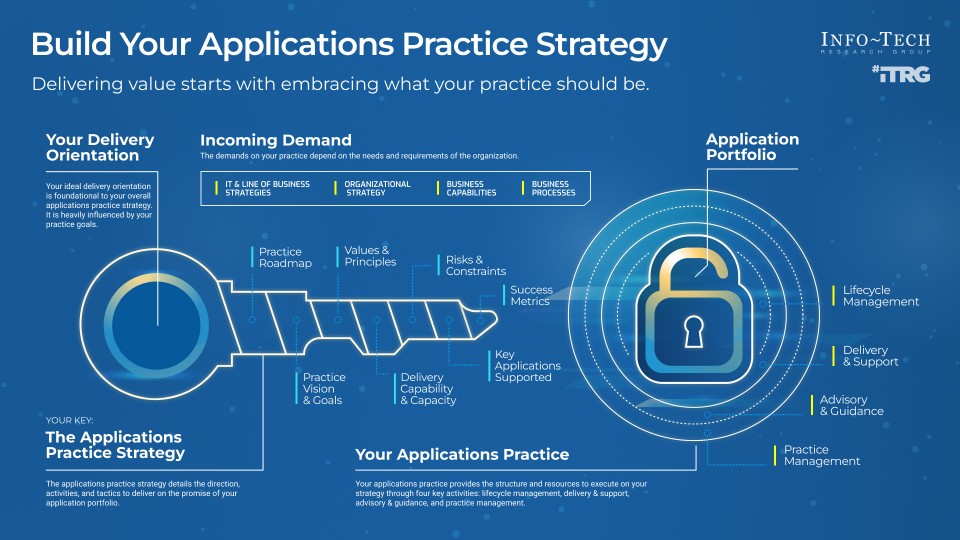
An applications practice strategy defines the role your applications practice will play in your organization and how it intends to deliver business outcomes. It clearly illustrates how your organization will deliver, manage, and support applications, including the delivery orientation, capabilities, and investment priorities.
Why do many organizations lack a formal applications strategy? | Why is an applications strategy important? |
|---|---|
|
|
Make your strategy compelling, relevant, and achievable
1. Define the Role Stakeholders Need
Every organization operates with its own unique challenges, context, and priorities. That is why blindly following industry best practices can lead to inefficiencies, misalignment, and missed opportunities. Success comes from tailoring teams to the specific needs of stakeholders, creating solutions that fit your reality, not someone’s else’s blueprint.
2. Deliver the Services That Solve Problems
Applications practices deliver more than software. They provide services that optimize value delivery. By aligning planning, platforms, portfolio, and delivery practices to stakeholder priorities, practices accelerate time-to-value and strengthen quality standards. Every initiative is judged by the value it creates, not by the volume it produces.
3. Make Meaningful Changes
Impactful transformation in the applications practice begins with pragmatic steps that align technology and tactics with strategic priorities. When workflows are simplified, modern tools embraced, and a cross-functional focus is placed on value, the department becomes a catalyst for business success. Every change is intentional, measurable and tied directly to the outcomes that matter.
Center your practice’s goals on delivery throughput
What is delivery throughput?
Delivery throughput is the speed at which valuable solution features, updates, and fixes are consistently and efficiently delivered with sufficient quality and acceptance from stakeholders, customers, and end users.
Info-Tech Insight
There is no objective standard for defining and measuring throughput across different solution delivery lifecycle (SDLC) methodologies or from one project to the next. Your throughput optimization should account for your team’s capacity to successfully deliver each ingredient of throughput: value, quality, and speed. An organizational consensus of throughput’s interpretation will also level set expectations as you judge throughput over time and across projects.
Introduce AI into your practice now
AI presents unique opportunities to address the various challenges impeding your practice from delivering valuable, quality applications at an acceptable speed and cadence. While AI is no silver bullet, its maturity and prevalence in the marketplace has placed greater focus on its adoption.
- AI is already integrated into solution delivery – 68% of professional developers are using AI tools at least weekly (Stack Overflow, 2025).
- Suggestions from AI are more trustworthy and insightful than before – 72% of respondents are comfortable asking AI to optimize application performance, 59% would support AI-driven application cost optimization, and 59% would rely on AI to mitigate zero-day vulnerabilities (F5, 2025).
- More teams are seeing measurable improvements when using AI tools – 68% of developers report time savings of more than ten hours a week using generative AI (Gen AI) with significant gains for noncoding tasks (The State of Developer Experience in 2025, Atlassian, 2025).
See Boost Solution Delivery Throughput With AI to learn more.
AI is becoming more of an integral part of applications practices today
45% of development professionals are currently working on and maturing their AI/ML capabilities.
Source: Temporal, 2025; n=226
Use your strategy to kick-start your applications practice journey
STRATEGIZE 1 | RATIONALIZE 2 | OPERATE 3 | OPTIMIZE 4 | SCALE 5 |
|---|---|---|---|---|
This Blueprint | Evolve Your Software Development Lifecycle Into a Solution Delivery Lifecycle | |||
|
|
|
|
|
Application modernization starts with a strategy
INDUSTRY: Energy
SOURCE: Info-Tech Engagement
ABC created a five-year strategic plan.
A mid-sized, state-owned energy company relied on a complex mix of modern and legacy applications to support its operations. The company’s applications practice faced increasing external pressures to meet the growing user expectation and desire from stakeholders to strengthen the alignment with long-term operational goals.
Upon conducting a SWOT analysis, the practice identified that they possessed strong technical abilities and knowledge of the business. These strengths gave the practice confidence to address challenges related to legacy systems, resource limitations, and increasing demand for secured, modern, and scalable applications. The practice decided that they would begin crafting a five-year strategic plan centered on modernization, business alignment, and operational resilience.
Results
The applications practice established a five-year strategic plan with hope to increase user satisfaction from 79% to 95% over the next five years by upskilling staff, harnessing emerging technologies, and implementing a continuous improvement framework.
The five-year strategic plan highlighted the following core values:
Innovation
User-Centricity
Security and Integrity
Agility
Continuous Improvement
Info-Tech’s methodology for applications practice strategy
1. Align the Role of Your Applications Practice | 2. Build Your Value Proposition | 3. Capture Your Practice’s Vision | |
|---|---|---|---|
Phase Steps | 1.1 State the Role of Your Practice 1.2 List Your Guiding Principles | 2.1 Know Your Strategic Priorities 2.2 Reveal Your Practice Contributions 2.3 Shortlist Your Practice Services | 3.1 Select Your Delivery Orientation 3.2 Define Your Objectives & Scope 3.3 Build Your Roadmap & Communication Plan |
Phase Outcomes |
|
|
|
Insight Summary
Info-Tech Insight
The future belongs to organizations whose applications practice is the strategic engine driving value delivery. Become the trusted advisor and technology enabler that senses, predicts, and initiates practical organizational transformation. When your practice leads, disruption becomes the advantage.
Phase 1 | Every transformation begins with identity. Your practice must first embrace who it is today to evolve into the strategic leader of tomorrow. Begin with embracing transparency, value- and quality-driven thinking, and collaboration to build trust and earn influence. When this transformation is done right, it turns incremental wins into lasting impact. |
|---|---|
Phase 2 | If your stakeholders do not know why the applications practice exists, they will see it as a hurdle and barrier. Start with what is most painful and concerning to your stakeholders. Then, illustrate how the practice will contribute to your organization’s success through a compelling value proposition. |
Phase 3 | Your applications practice will lose momentum if it takes too long to show measurable improvements. However, the practice cannot just focus on the now. Demonstrate quick-win changes and the initiations of your practice’s foundations. Communicate success across your organization to maintain stakeholder buy-in and drive the motivation to scale. |
Blueprint deliverables
Each step of this blueprint is accompanied by supporting deliverables to help you accomplish your goals:
Applications Practice Strategy One-Pager Template
Deliver consumable collateral about your applications practice strategy to your stakeholders.
Key deliverable:
Applications Practice Strategy Presentation Template
Communicate a compelling value proposition to your applications practice stakeholders in the language they understand.
Blueprint benefits
Justify the Importance of Your Applications Practice With a Value Proposition | Define an Appropriately Scoped and Capable Applications Practice |
|---|---|
Notable Impacts
|
Notable Impacts
|
Info-Tech offers various levels of support to best suit your needs
| DIY Toolkit | Guided Implementation | Workshop | Executive & Technical Counseling | Consulting |
|---|---|---|---|---|
| "Our team has already made this critical project a priority, and we have the time and capability, but some guidance along the way would be helpful." | "Our team knows that we need to fix a process, but we need assistance to determine where to focus. Some check-ins along the way would help keep us on track." | "We need to hit the ground running and get this project kicked off immediately. Our team has the ability to take this over once we get a framework and strategy in place." | "Our team and processes are maturing; however, to expedite the journey we'll neecd a seasoned practitioner to coach and validate approaches, deliverables, and opportunities." | "Our team does not have the time or the knowledge to take this project on. We need assistance through the entirety of this project." |
Diagnostics and consistent frameworks are used throughout all five options.
Guided Implementation
What does a typical GI on this topic look like?
| Phase 1 | Phase 2 | Phase 3 |
|---|---|---|
Call #1: Describe the role you need the applications practice to be. Call #2: Define your guiding principles. | Call #3: Understand the concerns your stakeholders experience. Call #4: List your practice contributions, services, and their expected value. | Call #5: Assess your capabilities and state your delivery orientation. Call #6: Define the objectives, metrics, and scope of your applications practice. Call #7: Roadmap and plan communications next steps. |
A Guided Implementation (GI) is a series of calls with an Info-Tech analyst to help implement our best practices in your organization.
A typical GI is 7 to 10 calls over the course of 3 to 5 months.
Workshop overview
Contact your account representative for more information.
workshops@infotech.com 1-888-670-8889
| Module 1 | Module 2 | Module 3 | Module 3 | Module 5 | |
|---|---|---|---|---|---|
Align the Role of Your Applications Practice | Build Your Value Proposition | Design Your Target State | Roadmap Your Practice | Next Steps and | |
Activities | 1.1 State the role of your practice 1.2 List your guiding principles | 2.1 Know your strategic priorities 2.2 Reveal your practice contributions | 3.1 Shortlist your practice services 3.2 Select your delivery orientation 3.3 Learn industry best practices | 4.1 Define your objectives and scope 4.2 Build your roadmap and communication plan | 5.1 Complete in-progress deliverables from previous four days 5.2 Set up review time for workshop deliverables and to discuss next steps |
Deliverables |
|
|
|
|
|
On Demand
Webinar
Build an Application Department Strategy
Play Webinar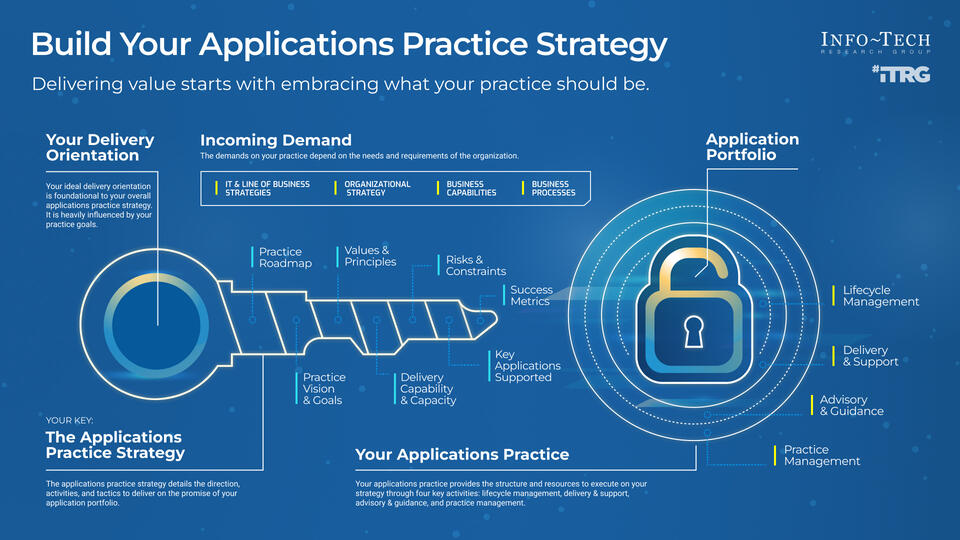
About Info-Tech
Info-Tech Research Group is the world’s fastest-growing information technology research and advisory company, proudly serving over 30,000 IT professionals.
We produce unbiased and highly relevant research to help CIOs and IT leaders make strategic, timely, and well-informed decisions. We partner closely with IT teams to provide everything they need, from actionable tools to analyst guidance, ensuring they deliver measurable results for their organizations.
What Is a Blueprint?
A blueprint is designed to be a roadmap, containing a methodology and the tools and templates you need to solve your IT problems.
Each blueprint can be accompanied by a Guided Implementation that provides you access to our world-class analysts to help you get through the project.
Need Extra Help?
Speak With An Analyst
Get the help you need in this 3-phase advisory process. You'll receive multiple touchpoints with our researchers, all included in your membership.
Guided Implementation 1: Take stock of who you are
- Call 1: Discuss Info-Tech’s perspective and kick off the initiative.
- Call 2: Talk about the importance of values and principles and how they apply to you.
- Call 3: Consider your department’s orientation.
Guided Implementation 2: Articulate your strategy
- Call 1: Understand the department strategy canvas and the significance of its elements.
- Call 2: Understand the goals, vision, and metrics.
- Call 3: Determine the highest priority items for your department.
Guided Implementation 3: Communicate your strategy
- Call 1: Understand stakeholder analysis and its role in your communication plan.
- Call 2: Lay out your communication plan.
- Call 3: Reflection and wrap-up.
Contributors
- Sandy Minners – Senior Vice President, Client Engagement & Delivery, American Bankers Association
- Scott Rutherford – Executive Vice President of Technology, LGM Financial Services Inc.
- Cullen Hale – Enterprise Architect, Consumers Energy
 Applications Priorities 2025
 Rationalize Your Application Portfolio
 Extend Agile Practices Beyond IT
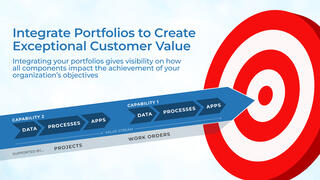 Integrate Portfolios to Create Exceptional Customer Value
 Automate Your Software Delivery Lifecycle
 Build Your BizDevOps Playbook
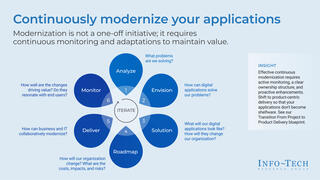 Modernize Your Applications
 Embrace Business-Managed Applications
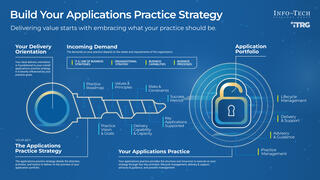 Build Your Applications Practice Strategy
 Review Your Application Strategy
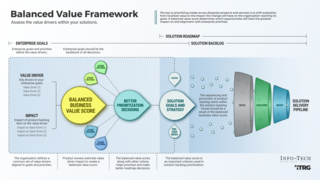 Assess the Value Drivers Within Your Solutions
 2020 Applications Priorities Report
 Applications Priorities 2022
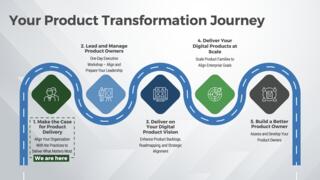 Make the Case for Product Delivery
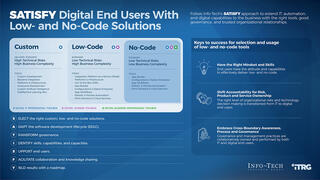 Satisfy Digital End Users With Low- and No-Code
 Select a Sourcing Partner for Your Development Team
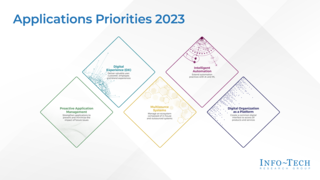 Applications Priorities 2023
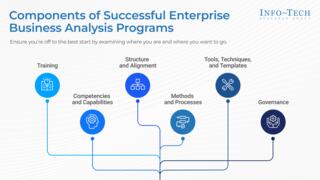 Make the Case for Enterprise Business Analysis
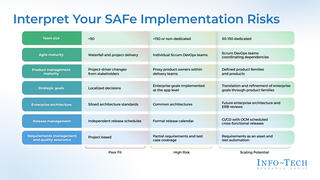 Decide if You Are Ready for SAFe
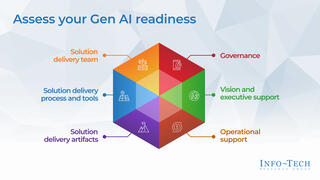 Adopt Generative AI in Solution Delivery
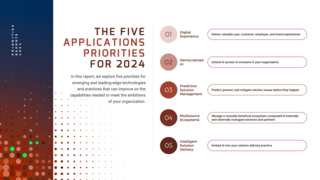 Applications Priorities 2024
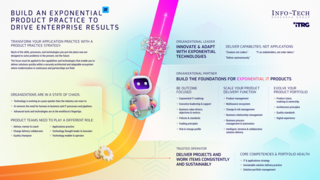 Build Your Exponential IT Product Practice
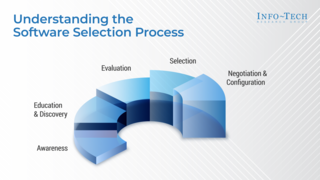 Insights Into Software Selection 2025
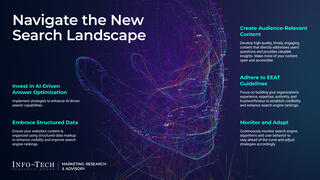 Stay Relevant in the Era of AI-Powered Search
 Transform IT, Transform Everything
 Building Info-Tech’s Chatbot
 Assessing the AI Ecosystem
 Building the Road to Governing Digital Intelligence
 Bring AI Out of the Shadows
 The AI Vendor Landscape in IT
 An Operational Framework for Rolling Out AI
 Applications Priorities 2026
 Develop a Plan to Overcome Your Microsoft Power Apps Challenges
