




Keep care safe and reliable throughout cyberattacks
The Challenge
Protect care delivery as cyber disruption escalates.
Hospitals are high-value targets that hold sensitive patient data and run always-on clinical systems across a wide web of vendors, devices, and payers, and AI is making attacks faster and harder to stop. The job is no longer just preventing breaches; it is keeping care continuity through ransomware, vendor outages, identity compromise, and downtime events.
Why It Matters
Resilience protects patients, trust, and revenue.
A cyber event can halt clinical workflows, delay care, and freeze the revenue cycle, so the ability to operate through an attack now matters as much as preventing one. Federal expectations are rising too, as the US Department of Health and Human Services (HHS) has proposed a HIPAA Security Rule update that would make many of today's voluntary safeguards mandatory ("HIPAA Security Rule To Strengthen the Cybersecurity," HHS, 2025), making resilience and modern identity controls both a safety and a compliance imperative.
The Solution
Build resilience, not just security maturity.
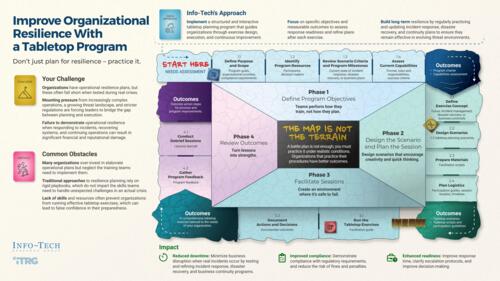
Test clinical downtime, backup, and recovery procedures against realistic ransomware and outage scenarios, and align cyber strategy to patient safety and the HHS Cybersecurity Performance Goals.
Manage third-party, supply chain, and device risk.
Map critical vendors, clearinghouses, cloud, and electronic health record (EHR) dependencies plus connected medical devices, segment networks, and require clear recovery and incident-notification commitments.
Govern identity for an AI-era threat landscape.
Strengthen role-based and privileged access, ensure multifactor authentication, and improve frequency of access reviews. Reevaluate all privileged access because AI-enabled attacks can turn one stolen credential into a system-wide impact.
Patching practices must be reevaluated.
Given the advent of Fable 5 (Mythos) the 30 day timeline for patching can't remain as it is. Also consider security changes for administrators.


Use AI to drive better operational outcomes
The Challenge
Move from AI experimentation to governed, adopted AI.
Health systems are piloting AI across documentation, coding, scheduling, and decision support, but many efforts stall because value is unclear, data is weak, or governance is immature. The constraint is no longer access to AI; it is the discipline to deploy it safely, prove value, and manage risks to safety, bias, and privacy.
Why It Matters
Responsible adoption protects trust and effectiveness.
AI can sharpen service delivery and stretch scarce resources, but only with governance that protects trust, security, and accountability. Right now AI is landing mainly as an operational efficiency lever, with adoption still limited and returns only beginning to materialize ("2026 Global Health Care Outlook," Deloitte, 2025), so disciplined governance is what enables organizations to safely scale their efforts.
The Solution
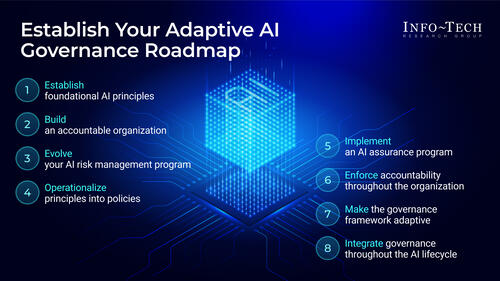
Create an AI governance and intake model.
Define how AI use cases are proposed, reviewed, approved, monitored, and retired, with clinical, privacy, security, data, and IT stakeholders at the table.
Prioritize use cases with measurable workflow value.
Start where AI cuts administrative burden, strengthens documentation, supports the revenue cycle, or improves throughput while keeping risk at an acceptable level.
Build safe deployment and monitoring.
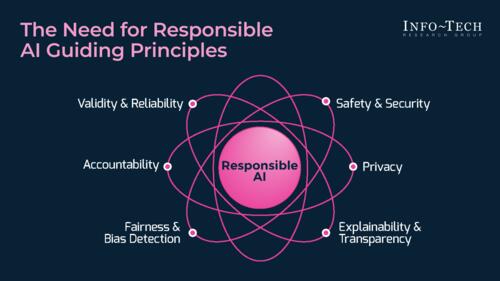
Ensure meaningful human oversight, use explainable AI, audit trails, and strict vendor due diligence, treating AI as an operating capability rather than a one-time purchase.

Turn connected data into capacity and outcomes
The Challenge
Turn fragmented data into trusted insight that runs operations.
Clinical, imaging, claims, operational, and partner data remain scattered across systems and settings, which limits care coordination, analytics, and AI, and leaves leaders without timely visibility into capacity and flow. The gap is rarely more data; it is the governance, interoperability, and workflow integration that turn data into action at the front line.
Why It Matters
Trusted, connected data drives better care, decisions, and throughput.
Reliable, well-governed, interoperable data is the foundation for coordination, reporting, analytics, AI, and day-to-day operational calls like bed capacity and patient flow. Federal policy is pushing the same way, with the Assistant Secretary for Technology Policy and Office of the National Coordinator for Health Information Technology (ASTP/ONC) advancing Fast Healthcare Interoperability Resources (FHIR)-based interoperability and nationwide exchange under the Trusted Exchange Framework and Common Agreement, TEFCA ("Health Data, Technology, and Interoperability," ONC, 2025), so investing in data foundations now pays off in both compliance and capacity.
The Solution
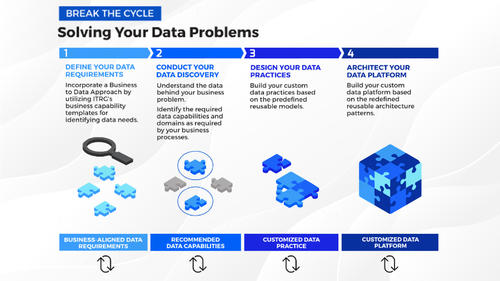
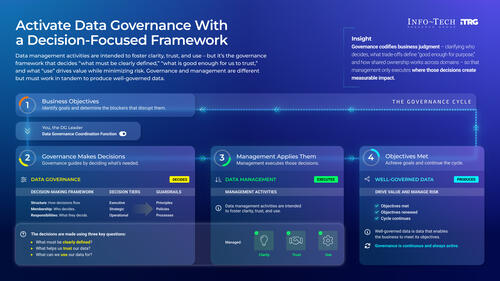
Establish enterprise data governance.
Clarify ownership, stewardship, data quality, terminology standards, and approved uses across clinical, operational, and financial domains.
Modernize interoperability and ready data for analytics and AI.
Invest in APIs, FHIR-based exchange, and master data management so analytics and AI run on reliable, well-governed information.
Turn analytics into operational action.
Use real-time visibility and predictive analytics for capacity, patient flow, discharge, and length of stay, and connect insights to clear next steps for clinical and operational teams.


Maintain trust through privacy and compliance
The Challenge
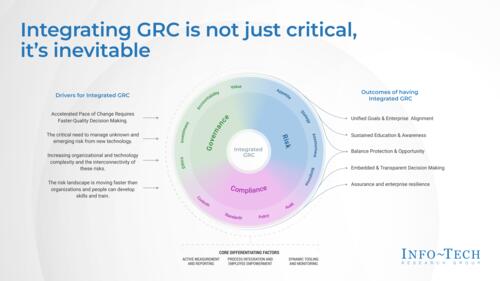
Navigate a tougher privacy, compliance, and trust environment.
Health systems must satisfy privacy, security, interoperability, AI, and reporting requirements while patients and clinicians expect responsible use of sensitive data. Every new AI, analytics, cloud, and data-sharing initiative widens the gap between what is technically possible and what is demonstrably compliant and trusted.
Why It Matters
Digital transformation depends on trust.
Organizations cannot scale AI, analytics, interoperability, or virtual care without confidence that sensitive data is used safely and lawfully. With the US Department of Health and Human Services proposing the first major HIPAA Security Rule overhaul in 13 years ("HIPAA Security Rule Notice of Proposed Rulemaking to Strengthen Cybersecurity," HHS, 2025), strong privacy and compliance practices are now the price of admission for digital adoption, not a back-office afterthought.
The Solution
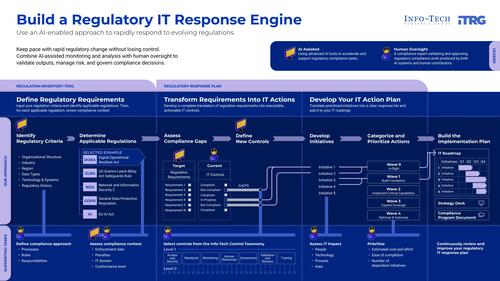
Embed privacy and compliance into digital initiatives.
Bring privacy, security, legal, and compliance in early on AI, analytics, cloud, interoperability, and digital front door projects.
Set clear policies for data and AI use.
Define acceptable use, consent, model monitoring, vendor responsibilities, retention, and escalation paths.
Keep evidence for regulators and stakeholders.
Document decisions, controls, risk assessments, approvals, and monitoring so the organization can demonstrate compliance and accountability.

Improve access to care
The Challenge
Meet patients in an increasingly digital, distributed care world.
Patients expect care that is easy to access, schedule, understand, and pay for, yet many providers offer fragmented experiences across portals, scheduling, telehealth, and billing functions. At the same time, care delivery is shifting beyond the hospital into ambulatory, home, virtual, and remote-monitoring settings that the digital front door must also support.
Why It Matters
Better digital access supports more convenient, coordinated care.
Easier scheduling, navigation, and virtual options reduce friction, strengthen engagement, and improve utilization across delivery settings. Consumer expectations and cost pressure are accelerating the shift toward digital and home-based care ("2026 Global Health Care Outlook," Deloitte, 2025), so a coherent access strategy is now central to both growth and efficiency.
The Solution
Improve the digital front door.
Integrate search, scheduling, registration, intake, messaging, billing, and portal access into a simpler patient journey.
Expand hybrid and distributed care.
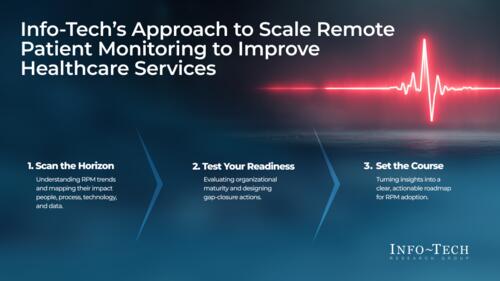
Support virtual visits, e-consults, remote patient monitoring, and hospital-at-home to improve access, quality, and system efficiency.
Design for inclusion and adoption.
Ensure digital services work across different levels of digital access, language, health literacy, and disability needs.

Optimize workflows to improve staff experience
The Challenge
Close the remaining gaps in workforce enablement.
Burnout and staffing pressure persist, and while many systems have eased them with digital documentation, virtual care, and workflow redesign, adoption is uneven across service lines. Behavioral health, ambulatory, home care, and specialist workflows often still rely on manual coordination and tools that do not truly reduce frontline burden.
Why It Matters
Workforce sustainability still shapes access and quality.
Where high-friction workflows go unmodernized, clinicians keep the administrative load that digital investment was meant to remove. Workforce strain and burnout remain persistent conditions shaping daily operations, according to the American Hospital Association ("2026 Environmental Scan," AHA, 2026), so closing these gaps protects staff capacity and care continuity.
The Solution
Target unresolved workflow pain points.
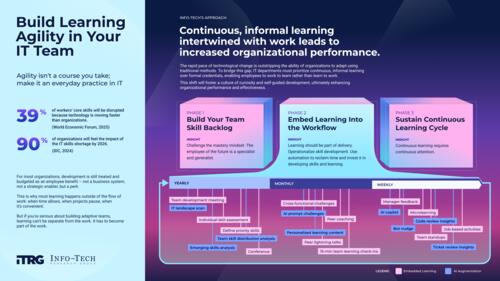
Find the departments and roles where documentation, inbox, referrals, scheduling, and handoffs still create avoidable burden, and prioritize these areas first.
Extend proven models to underserved areas.
Apply successful workflow, virtual care, and automation approaches to areas which have historical underinvestment: behavioral health, ambulatory, and home care.
Measure impact on staff experience.
Track documentation time, message volume, task burden, and turnover risk to confirm that changes reduce work rather than add to it.


Simplify the tech estate to move faster
The Challenge
Simplify aging technology while enabling modern care.
Health systems carry complex portfolios of legacy applications, duplicate systems, custom integrations, and aging infrastructure, with uneven cloud adoption. That sprawl raises costs and cyber exposure and was not designed for today's needs in analytics, interoperability, AI, or security.
Why It Matters
Modernization is the foundation for secure, scalable care.
Modern platforms and a rationalized application portfolio cut complexity, improve resilience, and free IT capacity for access, automation, and analytics. As cost and capacity pressures intensify across the sector, according to the American Hospital Association ("2026 Environmental Scan," AHA, 2026), every dollar spent maintaining brittle legacy systems is a dollar not spent on modern care delivery.
The Solution
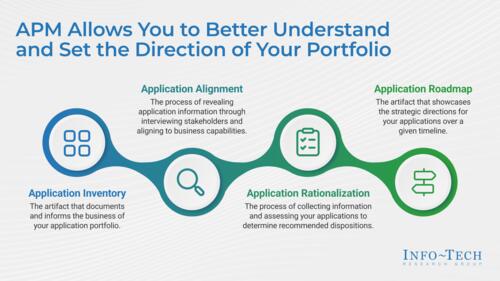
Rationalize the application portfolio.
Retire, consolidate, or replace redundant, risky, or high-cost applications based on clinical dependency, value, cost, and risk.
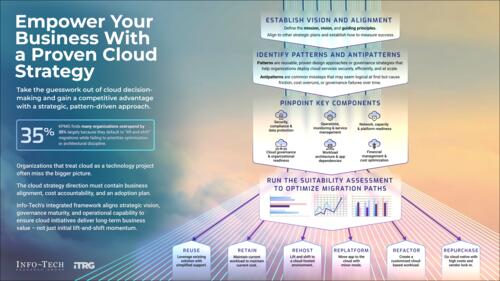
Use cloud as an enabler, not the goal.
Adopt cloud where it improves resilience, scalability, analytics, AI readiness, security, or cost transparency.
Modernize integration and platform architecture.
Replace brittle point-to-point integrations with reusable services, application programming interfaces (APIs), and secure data platforms.

Fund innovation while protecting margins
The Challenge
Fund transformation while margins stay under pressure.
Labor, supply, reimbursement, and capital pressures collide with rising demand, yet IT must still fund cybersecurity, AI, cloud, electronic health record (EHR) optimization, and digital access. Budget conversations increasingly demand a clear line from technology spend to clinical, operational, financial, or workforce outcomes.
Why It Matters
Technology investment has to support financial sustainability.
IT leaders must fund security, modernization, AI, and access while cutting waste and proving value. With margin pressure expected to persist across health systems ("2026 Global Health Care Outlook," Deloitte, 2026), financial discipline is what lets leaders defend the right investments and redirect savings into modernization.
The Solution
Tie IT investment to measurable outcomes.
Use business cases that connect spend to key sources of business value: growth, delivery capacity, workforce sustainability, patient experience, cost efficiency, clinical quality, or safety & compliance.
Prioritize the portfolio transparently.
Compare initiatives on value, risk, feasibility, and strategic fit, and pause those without clear ownership or benefit.
Track value after go-live.
Measure adoption, savings, productivity, and clinical impact, and feed results back into funding and vendor accountability.


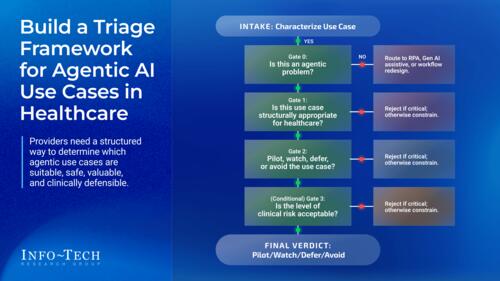
Automate prior authorization and speed reimbursement
The Challenge
Manual prior authorization and billing slow care and cash flow.
Providers still run much of prior authorization and the revenue cycle on faxes, phone calls, and manual review, which delays treatment, drives denials, and ties up clinical and administrative staff. As payers introduce standardized electronic prior authorization, providers that stay manual will fall behind on both speed and cost.
Why It Matters
Faster, automated authorization protects revenue and care access.
Prior authorization is one of healthcare's most inefficient processes, and automating it reduces denials, and frees staff time for higher-value work. The Centers for Medicare & Medicaid Services (CMS) now requires impacted payers to launch FHIR-based prior authorization APIs and faster decision timelines ("2024 CMS Interoperability and Prior Authorization Final Rule," CMS, 2024), with operational rules starting in 2026 and the APIs live by 2027, so providers should ready their revenue cycle to plug in now.
The Solution
Adopt electronic, FHIR-based prior authorization.
Connect to payer prior authorization APIs as they go live under CMS-0057-F, replacing fax and phone workflows with electronic submission and status tracking.
Tackle denials at the source.
Use analytics to find top denial reasons, close front-end eligibility and documentation gaps, and automate appeals and coding support.
Modernize the revenue cycle tech stack.
Apply automation to eligibility, coding, claims, and patient billing, integrated with the electronic health record (EHR) to cut manual handoffs.

Secure connected medical devices and clinical systems
The Challenge
Connected medical devices expand the attack surface.
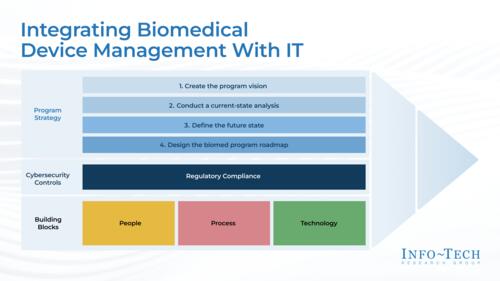
Hospitals run thousands of networked devices, from infusion pumps to imaging systems, many on legacy software that cannot be easily patched and was never built for today's threats. A single compromised device can disrupt care or open a path into clinical networks, yet most fleets lack full inventory and clear lifecycle ownership.
Why It Matters
Device security is now a patient safety and procurement issue.
Insecure or unpatched devices put both data and patient safety at risk, and remediation is hard once a device is already in clinical use. With the US Food and Drug Administration now enforcing premarket cybersecurity requirements for new cyber devices under Section 524B, health systems can raise the baseline through procurement while managing the large installed base of legacy devices.
The Solution
Build a complete device inventory and risk view.
Maintain a real-time inventory of networked medical devices with software versions, network exposure, and clinical criticality so risk can be prioritized.
Segment and monitor the device fleet.
Isolate devices on controlled network segments, watch for anomalous behavior, and contain a compromised device without disrupting care.
Use procurement and FDA requirements to raise the baseline.
Require software bills of materials (SBOMs), patching commitments, and security terms in purchasing aligned to FDA Section 524B, and plan lifecycle replacement for unsupportable legacy devices.
Comprehensive Healthcare Delivery Industry Coverage

Testimonials

"Because security is so broad and involves so many components, we needed to build a multi-disciplinary, multi-faceted approach. Info-Tech has research on everything across the entire spectrum, and they have helped set the stage for our approach to security.”
David Schned, Director, IT Operations and CISO, LHSC
View Full Case Study