
Vendor Spotlight: Adobe CX Enterprise
Customer experience orchestration in the agentic era
Organizations are under increasing pressure to deliver connected, personalized customer experiences while managing fragmented technologies and disconnected workflows. As AI agents become the first point of contact between brands and customers, organizations must evaluate platforms on more than feature breadth. They must also consider how content, customer data, journeys, and AI work together to deliver connected customer experiences. Our research provides a structured, criteria-based framework to help organizations assess how Adobe CX Enterprise aligns with their requirements across data management, agentic orchestration, content production, and activation.
Adobe’s 2026 introduction of CX Enterprise marks a shift toward an agentic customer experience system designed to simplify modern customer experience management. Organizations considering CX Enterprise should understand how the portfolio is organized, how AI is embedded across workflows, and how the platform connects content, customer data, and journeys within a unified operating model.
1. A clear path through a complex portfolio.
Adobe has organized its customer experience portfolio around key business challenges such as customer engagement, content supply chain, and brand visibility, making it easier for organizations to identify the right entry point and expand adoption over time. Rather than treating the portfolio as a collection of standalone products, organizations can align investments with both their immediate priorities and long-term customer experience strategy.
2. AI is embedded throughout the customer experience lifecycle.
Within Adobe CX Enterprise, AI is embedded throughout content creation, customer data, journey orchestration, analytics, and decisioning. These capabilities help teams automate routine work and coordinate customer experiences from planning through execution, making AI part of everyday customer experience operations.
3. A unified customer experience platform.
Adobe brings together content, customer data, journey orchestration, analytics, and activation within a single platform, reducing integration challenges associated with managing multiple disconnected marketing technologies. This allows organizations to move data, insights, and workflows more seamlessly to support customer experience orchestration.
Use this research to evaluate Adobe CX Enterprise with confidence.
This vendor spotlight provides a practical, evidence-based evaluation of Adobe CX Enterprise, including a vendor overview, product portfolio map, ideal customer persona, vendor capability radar, product roadmap, SoftwareReviews data, and a SWOT analysis. Use this structured framework to:
- Assess Adobe's approach to customer experience orchestration, including AI agents, MCP openness, multi-LLM support, and governance.
- Evaluate pricing models, long-term commercial considerations, and Adobe CX Experience Platform's security, governance, and data management capabilities.
- Understand Adobe's product strategy, innovation roadmap, ecosystem partnerships, and customer success model.
Vendor Spotlight: Adobe CX Enterprise
Customer experience orchestration in the agentic era
Analyst perspective
Choosing the right Adobe ecosystem is key to connecting content, customer data, journeys, and creative teams at scale.
Adobe can be a strong customer experience platform, but its value does not come from using every product it offers. It comes from choosing the parts that solve the organization's real problems. For companies already using Adobe Experience Cloud (or Adobe CX Enterprise), Adobe can help teams move content faster, use customer data more consistently, and reduce handoffs between creative, marketing, data, and IT teams.
Adobe's main strength is the depth of its ecosystem. Products such as Real-Time CDP, Experience Manager, Journey Optimizer, Customer Journey Analytics, GenStudio, Workfront, LLM Optimizer, and its newer AI capabilities can support many parts of the customer experience journey. But more Adobe products do not automatically mean better results. Without clean data, clear ownership, strong governance, and careful cost control, Adobe can become expensive and difficult to manage.
The evaluation of Adobe should start with the work the organization needs to improve most. Buyers should look at where Adobe is genuinely needed, where existing tools may already be good enough, and how much effort will be required to connect systems, move content and journeys, train users, and manage ongoing costs. They should also check how pricing may grow over time and how much support will be needed from Adobe or external partners.
To get real value, organizations should adopt Adobe in phases and link each phase to clear outcomes, such as faster campaign delivery, better personalization, fewer content bottlenecks, stronger governance, and improved journey performance. Adobe's AI roadmap is important, but buyers should separate what works today from what still needs to mature. The strongest Adobe business case will come from focused execution, not from adopting the full ecosystem.

Hriday Gulrajani
Senior Analyst, Research, Customer Experience Strategy
Info-Tech Research Group
Executive summary
Your Challenge
Organizations are under pressure to deliver consistent, personalized customer experiences across channels while operating in complex and fragmented technology environments. Customer data, content, analytics, and activation capabilities sit in disparate systems, limiting any unified customer view and real-time execution.
A new pressure has emerged in 2026: AI agents are becoming the first point of contact between brands and customers. Organizations now need platforms that unify data, enable agentic execution, and govern how brands appear in AI-mediated discovery.
Common Obstacles
Organizations face fragmented martech ecosystems where data integration, identity resolution, and cross-channel orchestration remain difficult. Disconnected tools create inefficiencies, limit responsiveness, and increase reliance on technical teams, while CX teams lack a clear answer for brand visibility when AI agents search on behalf of customers.
Navigating Adobe CX Enterprise is complex, with varying maturity across data, journeys, and content workflows. This often leads to underutilization and slow time to value. With Adobe's 2026 shift to an agentic CX system, organizations also need to decide which agent ecosystems to commit to and how those agents fit existing investments.
Info-Tech's Approach
Info-Tech applies a structured, criteria-based evaluation to assess how the Adobe CX Enterprise vision aligns with enterprise requirements across data management, agentic orchestration, content production, and activation.
The assessment covers platform capabilities, agent ecosystem openness, multi-LLM support, MCP architecture, governance, implementation requirements, and operating model alignment. It evaluates how Adobe supports unified profiles, agent-led journeys, brand visibility in AI search, and governed decisioning, so recommendations rest on practical outcomes rather than feature breadth.
Info-Tech Insight
Adobe's CX Enterprise suite is built on Adobe Experience Platform and supports its broader Customer Experience Orchestration vision. Buyers should not judge Adobe by product breadth alone. They should assess whether their data, governance, and operating model are ready to support agentic CX at scale.
CX Enterprise Vendor Snapshot
Independent overview of vendor profile, capabilities, and positioning
Headquarters
San Jose, California, USA
Focus Industries
Financial Services, Retail, Healthcare, Manufacturing, Travel & Hospitality, Government
Customer Segment
Primary: Enterprise
Secondary: Upper Mid-Market
Employees
31,300+

Vendor Overview
Founded: 1982
Key Leaders:
- CEO: Shantanu Narayen
- CMO: Lara Balazs
- President, CXO: Anil Chakravarthy
- President, Creativity & Productivity Business: David Wadhwani
Website:www.adobe.com
Core CX Enterprise Components
| Content, Forms & Workflows | AEM Sites, AEM Assets, AEM Forms, AEM Guides, Brand Intelligence, Experience Manager Sites Optimizer, Learning Manager, Frame.io, GenStudio, Workfront |
| Data & Analytics | Adobe Analytics, Content Analytics, Customer Journey Analytics, Marketing Campaign Analytics, Engagement Intelligence, Real-Time CDP |
| Journeys, Campaign & Personalization | Advertising, Campaign, Brand Concierge, Journey Optimizer, Journey Optimizer Experimentation Accelerator, Marketo Engage, Target |
| Commerce & Transactions | Adobe Commerce, Commerce Optimizer |
| Orchestration & Agent Infrastructure | CX Enterprise Coworker, Experience Platform Agent Orchestrator |
| Brand Visibility & Search | LLM Optimizer, Semrush |
Key Milestones
| 2026 | Adobe unveils CX Enterprise agentic AI system; expands multi-LLM support and open MCP architecture |
| 2025 | Launches AEP Agent Orchestrator and first six AI agents for customer experience workflows |
| 2019 | Adobe launches its enterprise edition Commerce Cloud |
| 2018 | Adobe acquires marketing automation software company Marketo |
| 2018 | Adobe buys e-commerce services provider Magento Commerce for $1.68 billion |
| 2012 | Adobe releases Adobe Marketing Cloud |
| 2010 | Day Software was acquired by Adobe for $240M, and Communique was rebranded as Adobe CQ |
| 2009 | Adobe acquires online marketing and web analytics company Omniture for $1.8 billion |
| 1986 | Adobe enters the NASDAQ Composite index |
| 1982 | Adobe Inc. founded |
Info-Tech Insight
CX Enterprise is best suited for organizations with the maturity to manage complex data, content, and agentic orchestration across functions. Value depends on agentic readiness: defined agent governance, unified profiles, and a content foundation ready for agent-led decisioning.
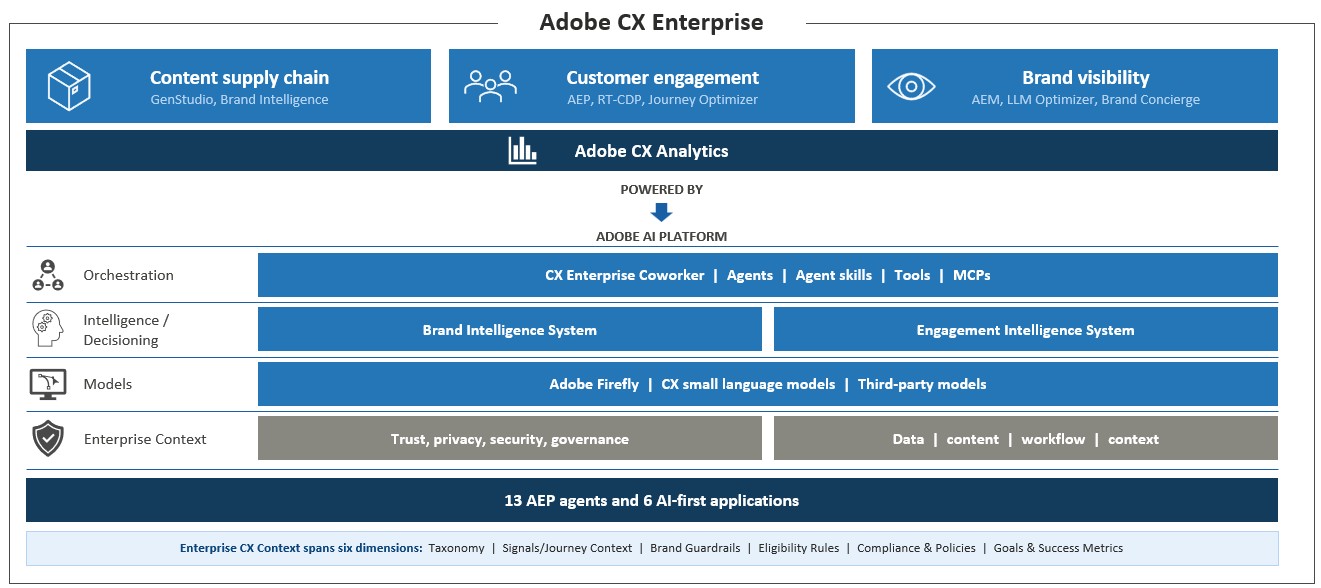
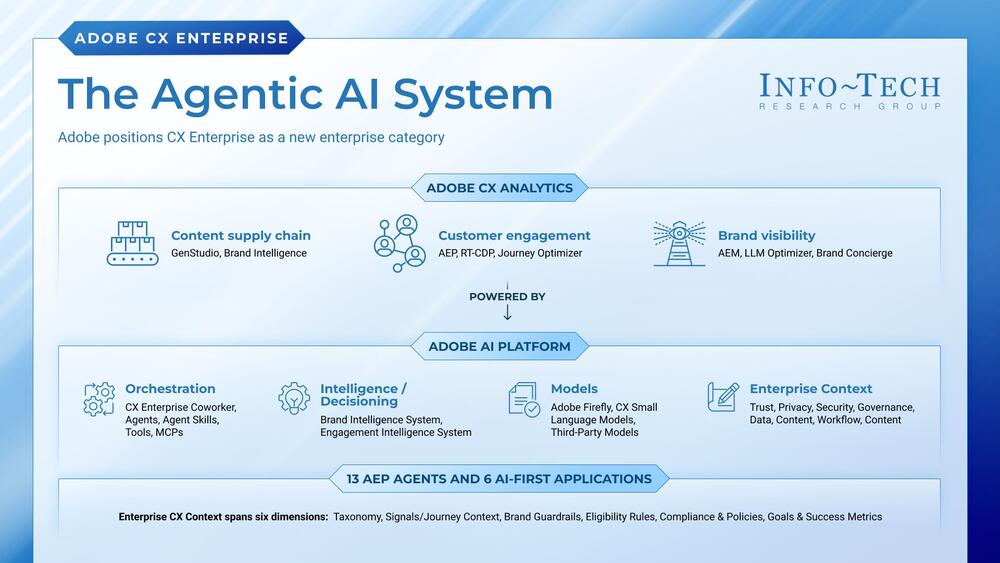
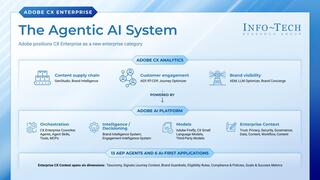
Adobe CX Enterprise: The Agentic AI System
Adobe positions CX Enterprise as a new enterprise category
CX Enterprise meets customers where they are
Three deployment modes for different team types, customizable to enterprise needs
Full-stack Adobe
Use Adobe's agentic workflows
Work directly in Adobe apps with fully integrated agentic capabilities. Adobe owns the quality and governance of every step, end to end.
Best For
Marketers & Practitioners
Adobe orchestrated
Adobe agents in your workflow
Surface Adobe's capabilities inside the customer's preferred UI: Microsoft Copilot, Claude, ChatGPT, Gemini, or your own. Adobe orchestrates CX underneath.
Best For
Business Teams
Bring-your-own orchestration
Adobe capabilities, your layer
Build and extend CX use cases using Adobe's skills and tools inside the customer's own orchestration layer. Customer extends Adobe primitives.
Best For
Developers & Technical Teams
All three modes draw on the same Adobe AI platform | Customize and configure to enterprise needs
Info-Tech Insight: The deployment choice is a governance decision, not just a UI choice. Map each mode to a stakeholder before procurement.
CX Enterprise Coworker
You set a goal. Coworker does the work. You approve and ship.
Scenario: A marketing team needs a competitive briefing using analyst reports, win/loss interviews, and pipeline data.
1. YOU DEFINE THE GOAL
Plain language request
Work directly in Adobe apps with fully integrated agentic capabilities. Adobe owns the quality and governance of every step, end to end.
Inputs
- Analyst Reports
- Win/Loss Interviews
- Pipeline Data
The user describes the outcome, not every task
2. COWORKER ASSEMBLES THE WORK
Behind the scenes, Coworker:
- Pulls relevant source data from RT-CDP, CX Analytics
- Identifies positioning gaps and market themes
- Drafts the briefing (GenStudio + Firefly)
- Checks brand & governance requirements
- Prepares the output for review
Coworker coordinates the work, not just answers a prompt
3. YOU REVIEW & APPROVE
Competitive_briefing.docx
Ready for sales leadership review
- Review the recommendation
- Approve or revise
- Send to the sales team
The human stays accountable for the final decision
THREE WAYS TO USE COWORKER
COWORK
Run a one-time task
Example: Build the briefing
DISPATCH
Keep the goal active
Example: Update me when the market changes
SCHEDULED
Run on a cadence
Example: Refresh this every Friday
Adobe is claiming a category, not shipping features
THE THREE CX ENTERPRISE PILLARS
| CONTENT SUPPLY CHAIN Manual to AI-orchestrated |
APPS & PRODUCTS
|
INTELLIGENCE + AGENTS
|
COMPETES + BUYER CALL vs. Salesforce, Canva, Figma "Multi-LLM cuts lock-in." "Lead in regulated industries." |
| CUSTOMER ENGAGEMENT Campaigns to continuous |
APPS & PRODUCTS
|
INTELLIGENCE + AGENTS
|
COMPETES + BUYER CALL vs. Salesforce Marketing Cloud, Microsoft, Braze "Deepest moat vs CRM-led peers in real-time work." |
| BRAND VISIBILITY Search to AI discovery |
APPS & PRODUCTS
|
INTELLIGENCE + AGENTS 3 new agents:
|
COMPETES + BUYER CALL vs. Profound, Athena, in-house SEO/AI teams "AEM-dependent. Non-AEM customers face build-vs-buy." |
POWERED BY: Adobe AI Platform | AEP | Real-Time CDP | Identity | Governance | Audiences | CX Analytics
NATIVE AI INTEGRATORS: Microsoft | Anthropic | Google Cloud | IBM | OpenAI | AWS | NVIDIA
Info-Tech Insight: The deployment choice is a governance decision, not just a UI choice. Map each mode to a stakeholder before procurement.
Product portfolio map
How capabilities scale across CX Enterprise portfolio, organized as three adoption stages
| FOUNDATION | INTEGRATED EXPERIENCE PLATFORM | ENTERPRISE-SCALE EXPERIENCE ECOSYSTEM |
|---|---|---|
| Core Digital Marketing & Content Capabilities | Cross Channel Orchestration With Unified Data Layer | End-to-End Experience & Revenue Orchestration |
| Focused on channel execution and web experience management using primarily standalone Adobe applications. Suitable for organizations optimizing individual touchpoints without full platform unification. | Builds on foundational tools with Adobe Experience Platform to unify profiles, enable real-time decisioning, and orchestrate journeys across channels. Adds first wave of AI agents (Marketing, Brand Concierge, Audience). | Extends the platform across marketing, commerce, and B2B ecosystems with agentic orchestration via CX Enterprise, supporting global, multibrand enterprises with advanced AI agents, multi-LLM choice, MCP openness, and enterprise governance. |
Key Adobe Applications:
|
Key Adobe Applications:
|
Key Adobe Applications:
|
| Best Fit: Midmarket or enterprise teams modernizing digital marketing but not yet unifying customer data across systems | Best Fit: Enterprises seeking true omnichannel personalization with a centralized data foundation | Best Fit: Large global enterprises operating complex ecosystems across B2C, B2B, and commerce envt. |
About Info-Tech
Info-Tech Research Group is the world’s fastest-growing information technology research and advisory company, proudly serving over 30,000 IT professionals.
We produce unbiased and highly relevant research to help CIOs and IT leaders make strategic, timely, and well-informed decisions. We partner closely with IT teams to provide everything they need, from actionable tools to analyst guidance, ensuring they deliver measurable results for their organizations.
What Is a Blueprint?
A blueprint is designed to be a roadmap, containing a methodology and the tools and templates you need to solve your IT problems.
Each blueprint can be accompanied by a Guided Implementation that provides you access to our world-class analysts to help you get through the project.
Talk to an Analyst
Our analyst calls are focused on helping our members use the research we produce, and our experts will guide you to successful project completion.
Book an Analyst Call on This Topic
You can start as early as tomorrow morning. Our analysts will explain the process during your first call.
Get Advice From a Subject Matter Expert
Each call will focus on explaining the material and helping you to plan your project, interpret and analyze the results of each project step, and set the direction for your next project step.
Unlock Sample Research Marketing Management Suite Software Selection Guide
 Build IT Capabilities to Enable Digital Marketing Success
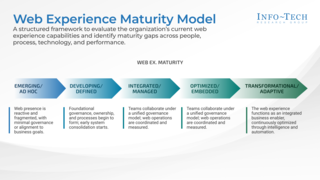 Develop Your Web Experience Management Strategy
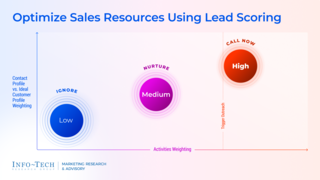 Optimize Lead Generation With Lead Scoring
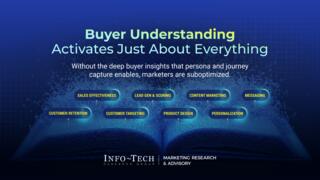 Create a Buyer Persona and Journey
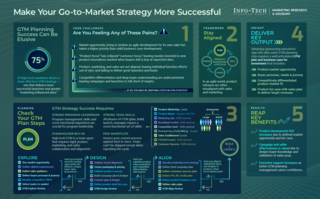 Build a More Effective Go-to-Market Strategy
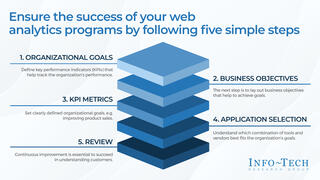 Leverage Web Analytics to Reinforce Your Web Experience Management Strategy
 2020 Applications Priorities Report
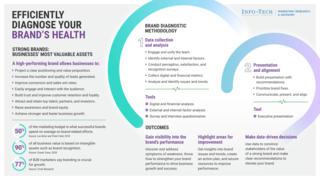 Diagnose Brand Health to Improve Business Growth
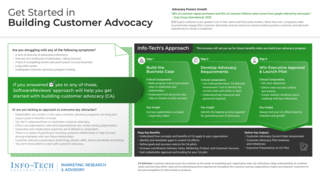 Get Started With Customer Advocacy
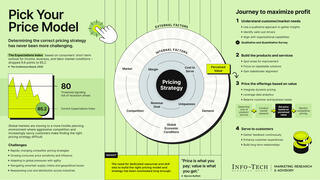 Pick Your Price Model
 Diagnose and Optimize Your Lead Gen Engine
 Develop the Right Message to Engage Buyers
 Identify the Customer Satisfaction Metrics That Matter
 Create an Effective SEO Strategy
 Accelerate Business Growth and Valuation by Building Brand Awareness
 Social Media Management Software Selection Guide
 Build a More Effective Brand Architecture
 Build Competitive Intelligence for Market Success
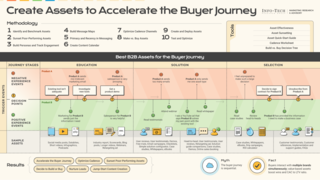 Create Assets to Accelerate the Buyer Journey
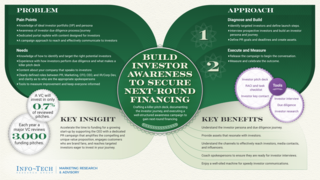 Build Investor Awareness to Secure Next-Round Financing
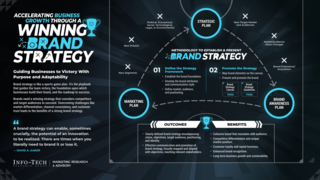 Brand Strategy: Establish and Cultivate a Flourishing Brand
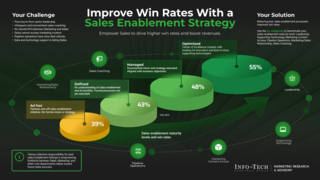 Improve Win Rates With a Sales Enablement Strategy
 Scale Your Marketing Department
 Choose the Right Channel Sales Partner
 Redesign Your Website to Increase Business Value
 Build Your Account-Based Marketing Strategy
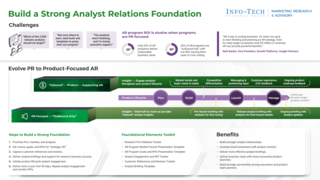 Build a Strong Analyst Relations Foundation
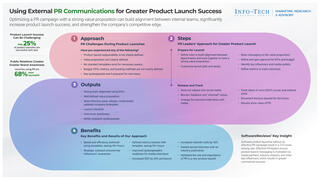 Improve External PR Communications for Greater Product Launch Success
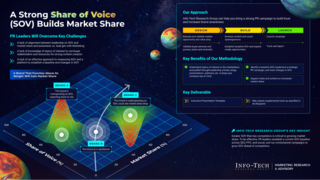 Turn Share of Voice Growth Into a Strategic Weapon
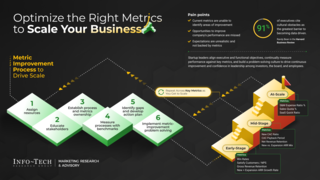 Optimize the Right Metrics to Scale Your Business
 Leave a Lasting Impression With a Compelling Brand Identity
 Hire Your Marketing Dream Team
 Match Your Budget to Your Market Position
 Capitalizing on AI
 Generative AI Use Cases for Marketing, Sales, and Customer Service
 The AI Advantage for Smarter Marketing – A Primer
 Build, Buy, or Shut It Down
 Event Activation Playbook
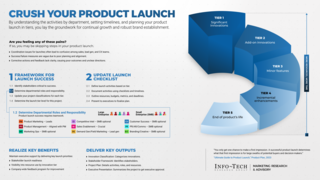 Crush Your Product Launch
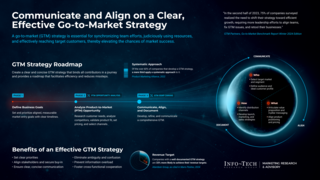 Go-to-Market Strategy on a Page
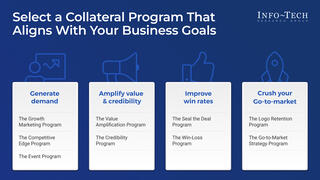 Maximize ROI on Sales and Marketing Collateral
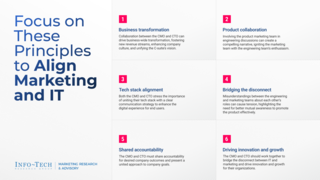 From Silos to Synergy: Create Marketing and IT Alignment
 Competitive Intelligence Software Selection Guide
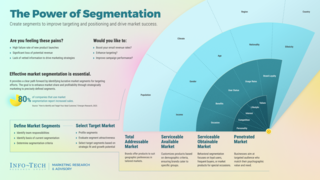 The Power of Segmentation
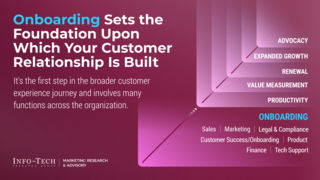 Revolutionize Your Customer Onboarding
 Search Engine Optimization Software Selection Guide
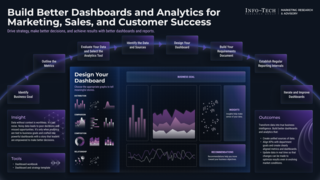 Build Better Dashboards Across Marketing, Sales, and Customer Success
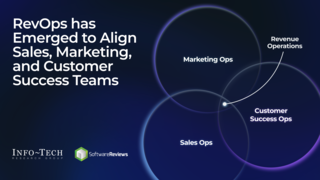 Make the Case for RevOps
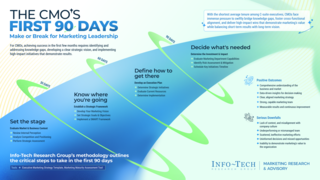 The First 90 Days as a CMO
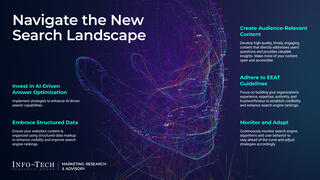 Stay Relevant in the Era of AI-Powered Search
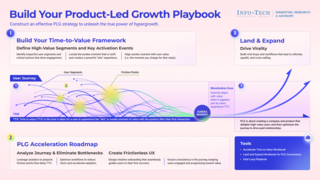 Build Your Product-Led Growth Playbook
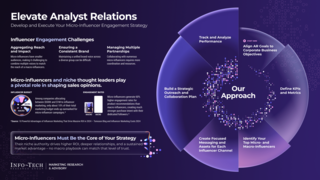 Elevate Analyst Relations
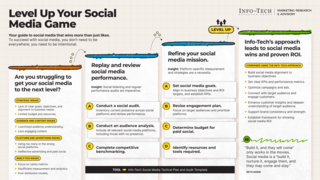 Level Up Your Social Media Game
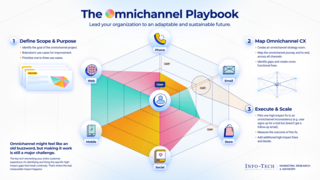 The Omnichannel Playbook
 Digital Experience Platform Selection Guide
 Software Buyer Insights 2025
 Optimize Your CX Strategy
 Drive Product & Market Planning With AI
 Board Management Software Selection Guide
 The CMO Playbook
 Position Your Brand Strategically as a Cost or Value Leader
 The Crisis Management Playbook
 Vendor Spotlight: Adobe CX Enterprise
 Accelerate Persona & Journey Mapping With AI
