
Position Your Brand Strategically as a Cost or Value Leader
Don’t get stuck in the middle. Channel efforts and resources effectively to secure success.
Most organizations struggle to commit to a single competitive position, leaving strategy and execution misaligned.
- No explicit commitment to cost or value leadership leaves the business stuck in the middle with eroding pricing power and differentiation.
- Cultural resistance and competing priorities make it hard to scale a focused strategy as the organization grows.
- Strategy and brand positioning are misaligned, causing execution to break down across messaging, product, and R&D investment.
- Resources and investments are spread too widely, diluting impact and creating internal friction.
Our Advice
Critical Insight
The problem isn't capability or effort; it's the absence of a deliberate strategic choice.
- Neither cost nor value leadership is inherently better, but trying to do both creates structural contradictions that weaken both.
- The root cause of underperformance is rarely effort. It's usually a lack of strategic focus.
- Strategic clarity reveals capability gaps; closing them deliberately is what determines whether the strategy succeeds.
Impact and Result
A clear leadership position turns strategic focus into measurable competitive advantage, including:
- A defined leadership position (cost or value) that aligns teams, resources, and investment around a single competitive thesis.
- Sharper messaging, stronger pricing power, and a defensible point of differentiation in the market.
- A concrete action plan to close the gaps between current state and chosen strategy built on Info-Tech's evaluation, positioning, and execution framework.
- Sustainable competitive advantage and improved customer loyalty through consistent, focused value delivery.
Position Your Brand Strategically as a Cost or Value Leader
Don’t get stuck in the middle. Channel efforts and resources effectively to secure success.
Position Your Brand Strategically as a Cost or Value Leader
Analyst perspective

Nathalie Vezina
Marketing Research & Advisory
Info-Tech Research Group
Why is clear strategic positioning critical?
Clear strategic positioning is essential for businesses to achieve alignment and focus, both internally and externally. Misalignment among key stakeholders with differing visions is a frequent challenge. Such disarray can lead to confusion, hampering effective messaging, product development, research and development (R&D) investments, and operational processes, ultimately affecting profitability and competitiveness.
A common shortfall is the failure to explicitly define a strategic position, whether as a cost leader or a value leader, and align resources and teams around this chosen focus. Without this clarity, businesses face inefficiencies, inconsistent messaging, and uncoordinated efforts in delivering products and services. Together, these issues erode both customer loyalty and market share.
In essence, a well-articulated and unified strategy provides far-reaching benefits. It not only strengthens the company’s competitive edge but also fosters internal clarity, streamlines operations, and ensures consistent delivery of value to consumers. These qualities are crucial for achieving sustainable, long-term success in any competitive market environment.
Executive summary
Pain Points
Businesses often encounter hurdles when attempting to define and execute their strategy. Key challenges include:
- Difficulty establishing a clear and focused strategic direction.
- Spreading resources and investments too widely, leading to diluted impact and inefficiencies.
- Struggling to achieve a unique position in the market without a defined leadership priority.
- Balancing competing priorities between pricing, quality, and value, creating strategic ambiguity.
Obstacles
Organizations often face significant hurdles when implementing a focused leadership strategy. These include:
- Cultural and organizational resistance.
- The risk of being “stuck in the middle” due to a lack of full commitment to a clear and distinct strategy.
- The need to carefully balance costs with quality or value with price sensitivity.
- The difficulty of scaling a leadership strategy while maintaining strategic focus during expansion.
Info-Tech’s Approach
Info-Tech adopts a structured and practical methodology to address key strategic challenges and empower organizations. The approach includes:
- Resolving issues of unclear positioning with straightforward strategies.
- Employing simple yet highly efficient tools to guide decisions.
- Providing actionable guidance to help businesses establish and maintain a clear and distinct leadership position.
- Fostering alignment across teams for cohesive decision-making.
Don't try to be everything to everyone.
Sustainable advantage means committing to one path – cost leadership or value leadership – not chasing both.
“The more your choices look like those of your competitors, the less likely you will ever win.”
– “Playing to Win,” A.G. Lafley & Roger L. Martin, 2013
Most brands aren’t failing… they’re unfocussed
When strategy and brand positioning aren’t aligned, execution breaks down.
Organizations that fail to clearly choose how they compete don’t just struggle to stand out – they create internal friction that slows decisions, dilutes investment, and confuses the market, ultimately affecting growth.
|
The root cause is rarely effort. It’s usually a lack of strategic focus. |
Understand the two types of leadership
Cost and value leadership represent distinct approaches to market success, requiring different organizational capabilities, resources, and cultural mindsets to achieve their goals.
Cost Leadership
- Targets price-sensitive, high-volume markets.
- Relies on efficient ops, economies of scale, and process optimization.
- Focuses on cost control, standardization, and maintaining lowest costs.
- Operates on lower margins but compensates with higher volumes.
- Vulnerable to cost-reducing technologies adopted by competitors.
- Requires significant market share and a culture centered on efficiency.
- Common in commodity-driven industries.
Vs.
Value Leadership
- Targets premium segments with unique features and superior quality.
- Relies on strong R&D, marketing, and continuous innovation.
- Operates on higher margins but often with lower volumes.
- Vulnerable to imitation and shifting customer preferences.
- Success hinges on sustained differentiation and brand strength.
- Fosters a culture of creativity and innovation.
- Common in the luxury and technology sectors.
Don’t fall into the stigma trap
One is not better than the other
Neither cost leadership nor differentiation is inherently better than the other. Leadership styles often come with preconceived notions and biases that can unfairly overshadow their true potential. Both cost and value leaders can be effective in driving organizational success, but they often face criticism and misconceptions that might deter leaders from embracing them fully.
Stigma Around Cost-Based Leadership
- Seen as overly profit-focused, neglecting employee welfare.
- Perceived as prioritizing cost management over quality.
- Associated with stifling creativity and innovation.
- Criticized for emphasizing short-term savings over long-term growth.
- Risking high employee turnover by undervaluing talent retention.
Stigma Around Value-Based Leadership
- Judged as overly idealistic and out of touch with practical challenges.
- Considered less impactful in driving immediate financial outcomes.
- Seen as alienating cost-conscious stakeholders.
- Believed to complicate decision-making with ethical dilemmas.
- Viewed as prioritizing purpose at the expense of profitability.
Examples:
Amazon – Criticized for labor practices in warehouses and pressure on small businesses.
Uber – Condemned for treatment of gig workers and cost-cutting labor practices.
Meta – Associated with data privacy scandals and enabling misinformation.
WeWork – Stigma from overhyping its value and failing to deliver on promises.
Avoid the “stuck in the middle” trap
Trying to compete on both cost and value creates structural contradictions. What looks like flexibility in theory becomes friction in execution.
A hybrid approach requires balancing cost and value differentiation, which often leads to unclear branding and reduced competitiveness.
What “stuck in the middle” looks like:
- Pricing pressure has no true cost advantage.
- Differentiation claims are unsupported by investment.
- Messaging to customers and the market is inconsistent.
Why it fails:
- Cost leadership demands efficiency and standardization.
- Value leadership demands investment, innovation, and experience.
- These operating models pull organizations in opposite directions.
Examples:
Sears – Failed to balance retail and online presence.
Blackberry – Lost edge in cost efficiency and innovation.
Difficult to balance cost leadership and differentiation, leading to being stuck in the middle.
Requires significant resources and expertise to manage competing priorities effectively.
Demands high investments in technology, innovation, marketing, and supply chain optimization.
Risks unclear brand positioning and diluted market appeal.
Challenges businesses with limited budgets and operational capabilities.
Failure in one priority (cost or uniqueness) undermines the entire strategy.
Align strategic focus to market needs
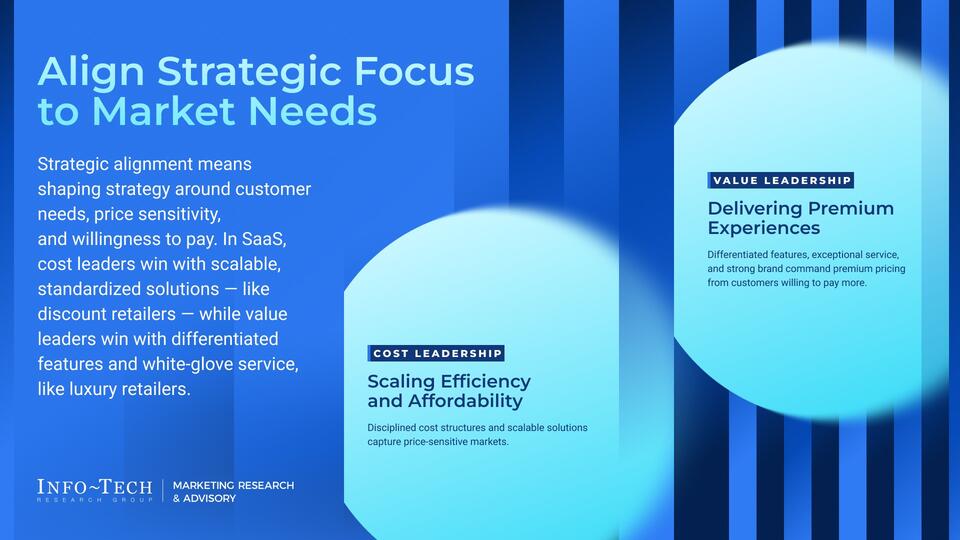
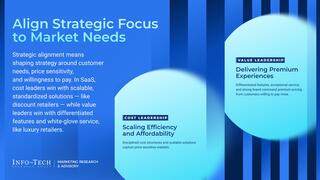
Strategic alignment means shaping strategy around customer needs, price sensitivity, and willingness to pay. In SaaS, cost leaders win with scalable, standardized solutions – like discount retailers – while value leaders win with differentiated features and white-glove service, like luxury retailers.
Cost Leadership – Scaling Efficiency and Affordability
Disciplined cost structures and scalable solutions capture price-sensitive markets.
Key Focus Areas:
- Reduce cost of goods sold – long-term supplier contracts and volume procurement lower per-unit costs.
- Improve selling, general, and admin efficiency – streamline operations and outsource noncore processes.
- Leverage Automation & AI — self-service platforms automate onboarding for segments with lower annual contract value (ACV).
Strategic Principles:
- Target lower-ACV segments for scalable, repeatable revenue — volume over pricing power.
- Monitor unit economics: Customer acquisition cost (CAC) payback period is the key growth lever.
Value Leadership – Delivering Premium Experiences
Differentiated features, exceptional service, and strong brand command premium pricing from customers willing to pay more.
Key Focus Areas:
- Differentiate through innovation — ship high-impact features faster than competitors to maintain a compelling value proposition.
- Elevate service excellence — dedicated customer success managers and proactive engagement for mid- to high-ACV accounts.
- Build a defensible brand — thought leadership, exclusive experiences, and social proof create a competitive moat.
Strategic Principles:
- Monitor brand premium: maintain a price premium above cost leaders without losing share.
- Invest in retention: CLV and reduced repeat-buyer CAC are the compounding margin advantage.
Cost leadership use cases
These companies focus on efficiency, economy of scale, and low overhead to offer the most competitive prices.

Open Source & Ecosystem Partnerships
Adaptable, customizable platform supported by OEM partnerships with a broad app ecosystem, suited for a range of price points and markets.

Direct-to-Customer Model
Customizable devices at competitive prices through direct sales and build-to-order manufacturing, minimizing inventory costs manufacturing.

High-Volume, Standardized Operations
Focuses on a simple, standardized menu with efficient processes for quick service, low costs, and consistency worldwide.

The "Value-for-Money" Suite
Cost-effective, all-in-one solution (CRM, mail, finance) targeting SMBs with high price sensitivity, offering lower starting prices than competitors.
Value leadership use cases
These companies charge premiums for solving complexity, offering key ecosystems or specialized tools.

Product Leadership
Seamless ecosystem (iOS) and premium industrial design that justifies high margins.

Product Leadership, Ecosystem Dominance
Premium tools with seamless integrations, constant innovation, and high switching costs.

Brand Leadership
Premium athletic gear backed by strong branding, emotional consumer connection, and endorsements from top athletes.

Ecosystem Dominance
Premium-priced sales platform with extensive integrations, targeting enterprises with high switching costs and critical needs.
Move from ambiguity to strategic focus
Turn a focused effort into competitive advantage.
Strategic focus is about winning somewhere, not competing everywhere. It requires confronting reality, making hard choices, and aligning the organization around a single way to compete.
-
STEP 1
Diagnose Reality- Assess whether your strengths lie in cost efficiency or differentiated value.
- Examine margins, pricing power, customer expectations, and capabilities.
-
STEP 2
Make the Tradeoff Explicit- Decide what you will prioritize and what you will stop doing.
- Strategic clarity requires intentional sacrifice.
-
STEP 3
Narrow Your Focus- Refine your target market or niche to where you can win.
- Compete where your chosen strategy can win decisively.
Define your business leadership style
Understand strategic focus and organizational approach
Evaluating a company's leadership type involves analyzing its strategic focus, decision-making frameworks, and organizational culture to assess alignment with key leadership models, such as cost or value leadership. This process includes assessing how effectively the company uses resources, navigates competitive challenges, and delivers unique value to its customers.
Determining whether the business prioritizes one approach or another allows stakeholders to gain critical insights into its competitive positioning, operational strengths, and potential risks for long-term success.
Step 1 will help you evaluate your current leadership style to determine if you focus on cost efficiency, value creation, or fall somewhere in between.
Evaluating leadership style helps uncover whether your focus lies in cost efficiency or value creation – or if you fall somewhere in between.
Rate each statement on a scale of 1-5 (1 = Strongly Disagree, 5 = Strongly Agree).
The section with the higher score indicates your likely strategic position. A significant difference between scores (>10 points) suggests a clear strategic focus, while similar scores might indicate a need for better strategic clarity.
Step 1 – Evaluate your type of leadership
Understand your leadership position to develop an effective business strategy. Evaluate whether your organization is better suited for cost or value leadership to make more informed decisions about your market approach.
Cost Leadership Indicators |
Rating 1-5 |
| 1. We constantly seek ways to reduce operational costs. | < 1-5 > |
| 2. Our pricing is typically lower than competitors. | < 1-5 > |
| 3. We focus on standardization and efficiency. | < 1-5 > |
| 4. Our profit margins are thin, but volume is high. | < 1-5 > |
| 5. We emphasize economies of scale. | < 1-5 > |
| 6. Our marketing focuses on price advantages. | < 1-5 > |
| 7. We invest heavily in process improvements. | < 1-5 > |
| 8. Our products/services meet basic market needs. | < 1-5 > |
| 9. We target price-sensitive customers. | < 1-5 > |
| 10. Our operations prioritize minimizing waste. | < 1-5 > |
| Total score | < xx > |
Value Leadership Indicators |
Rating 1-5 |
| 1. We invest significantly in innovation and R&D. | < 1-5 > |
| 2. Our prices are higher than industry average. | < 1-5 > |
| 3. We emphasize product/service differentiation. | < 1-5 > |
| 4. We maintain higher profit margins. | < 1-5 > |
| 5. We focus on customization and flexibility. | < 1-5 > |
| 6. Our marketing emphasizes unique features/benefits. | < 1-5 > |
| 7. We invest heavily in quality and design. | < 1-5 > |
| 8. Our products/services exceed market standards. | < 1-5 > |
| 9. We target quality-conscious customers. | < 1-5 > |
| 10. Our operations prioritize excellence over cost. | < 1-5 > |
| Total score | < xx > |
Find the right competitors to compete against
Position yourself against the right competitors or find your untapped market space.
Position strategically to win
Compete against rivals that align with your scale and capabilities or find a “blue ocean.”
Focus on scalability and audience alignment
Carefully assess your cost and value positioning to match it with suitable competitors and effectively serve your target audience.
Stand out and lead
Focus your efforts on markets where you can differentiate and dominate with your unique strengths.
The following exercise in step 2 will help your organization align its positioning with the market, guiding strategic decisions on where to compete and succeed.
Rather than comparing themselves to top brands, businesses should assess their cost-value positioning relative to competitors that align with their scale, capabilities, and audience.
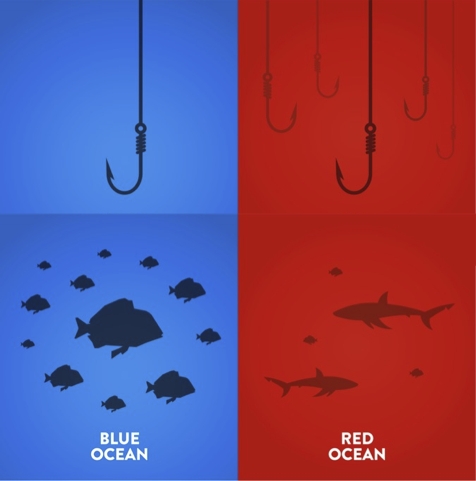
Step 2.1 – Establish strategic positioning: Balance cost and value leadership
Determine your competitive advantage by positioning yourself along two key dimensions: cost structure and value differentiation. This framework guides strategic decisions on where to compete and how to win in the marketplace.
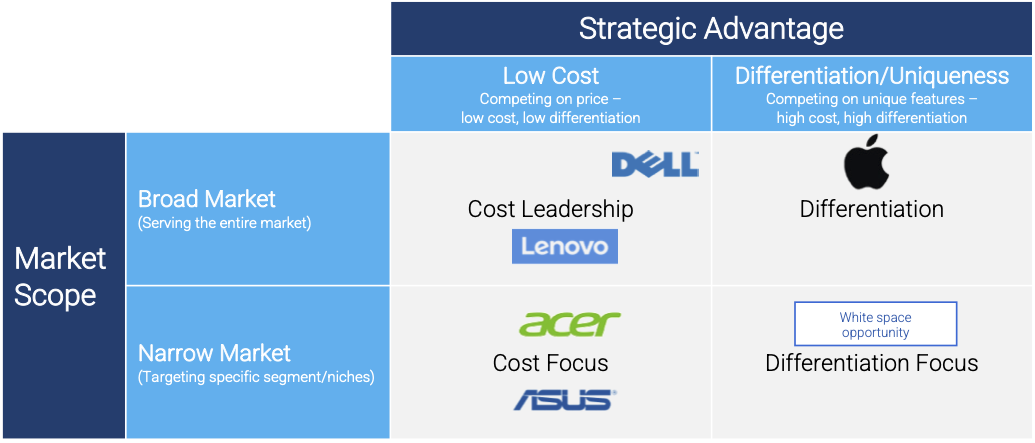
Source: Business-to-you, 2021
Instructions
- Identify your top competitors’ target market (broad/narrow).
- Determine their strategic advantage (cost/differentiation).
- Place them in the appropriate quadrant (replace the examples).
- Add your position in the matrix.
Example
- Acer (Chromebooks): Bottom left (Narrow Cost)
- Apple: Top right (Broad Differentiation)
- Asus (Entry-level laptops): Bottom left (Narrow Cost)
- Lenovo: Top left (Broad Cost)
- Dell: Bottom right (Broad Cost)
- White Space/Opportunity: Bottom right (Narrow Differentiation)
Step 2.2 – Evaluate and refine positioning
Key questions to ensure strategic alignment and competitive advantage.
Once you've completed the Brand vs. Value Leadership Matrix, take a moment to reflect and analyze your findings by asking yourself the following critical questions:
-
Am I positioning my brand against the right competitors?
- Are the competitors I'm benchmarking against truly relevant?
- Do they attract a similar audience or offer comparable value?
-
Am I operating in a crowded market or a niche category?
- Is the market oversaturated, making it hard to stand out?
- If niche, am I fully leveraging this uniqueness to differentiate?
-
Are there opportunities in a white space or blue ocean?
- Have I identified untapped areas with minimal competition?
- Is there an unmet customer need my brand could dominate?
-
Is my brand positioned strategically to win?
- Does my value proposition align with customer expectations?
- Am I communicating unique strengths to build advantage?
Choosing to Lead with cost, win on relentless efficiency
Cost leadership is not about being cheap. It’s about building a system that delivers acceptable value at the lowest sustainable cost.
Winning as a cost leader requires discipline across key areas:
- Operational Efficiency: Simplify processes, reduce rework, and prioritize standardization.
- Cost Structure Control: Focus on minimizing waste to manage costs.
- Cost Accountability: Ensure clear ownership and scale-based cost management.
- Supply Chain Optimization: Consolidate suppliers and build strong partnerships.
- Predictability First: Offer straightforward, market-driven products and services.
- Market Focus: Target price-sensitive customers and emphasize value, affordability, and reliability.
Choosing to lead with value, earn the premium every day
Value leadership only works if customers believe you are worth more — consistently.
Winning as a value leader requires commitment across key areas:
- Defensible Uniqueness: Prioritize features and experiences competitors can't copy.
- Innovation Commitment: Invest in R&D to lead markets, not follow rivals.
- Quality Excellence: Consistently exceed standards in design, usability, and service.
- Brand Storytelling: Build a narrative that merges emotional and functional customer value.
- Customer Intimacy: Understand buyer needs and use feedback to shape offerings.
- Culture of Creativity: Foster innovation and sound judgment and focus on long-term value.
You fall in between – that’s both a risk and an opportunity
Being “in between” is not a strategy; it’s the result of unresolved trade-offs.
Organizations stuck between cost and value leadership often lack pricing power and differentiation, overextend teams with conflicting priorities, and invest broadly but win narrowly (if at all). The issue isn’t ambition, it’s indecision.
To move forward, leadership must make explicit choices:
- Analyze reality: Are margins driven by efficiency and volume or by uniqueness and willingness to pay? Where do customers reward you today?
- Make the tradeoff visible: What will you stop doing to reinforce focus? What indulgences (features, markets, segments) dilute execution?
- Narrow the battlefield: Compete where your chosen strategy can win decisively. Avoid markets that force contradictory operating models.
Once this is clear, execution can finally align.
Turn strategic choice into execution
To succeed, organizations must identify what needs to change and act on it deliberately.
Strategic clarity reveals gaps. Closing them determines whether the strategy succeeds.
The next step is to identify your most critical gaps and build an action plan aligned to your chosen leadership strategy.
- Not all gaps matter equally. Focus on those that directly impact your ability to win.
- Action plans should reinforce one strategy, not preserve compromises.
- Progress depends on sequencing change, not fixing everything at once.
In this context, step 3 will guide you in identifying gaps in your approach and developing an action plan to address inefficiencies or missed opportunities, ensuring alignment with your strategic goals.
About Info-Tech
Info-Tech Research Group is the world’s fastest-growing information technology research and advisory company, proudly serving over 30,000 IT professionals.
We produce unbiased and highly relevant research to help CIOs and IT leaders make strategic, timely, and well-informed decisions. We partner closely with IT teams to provide everything they need, from actionable tools to analyst guidance, ensuring they deliver measurable results for their organizations.
What Is a Blueprint?
A blueprint is designed to be a roadmap, containing a methodology and the tools and templates you need to solve your IT problems.
Each blueprint can be accompanied by a Guided Implementation that provides you access to our world-class analysts to help you get through the project.
Talk to an Analyst
Our analyst calls are focused on helping our members use the research we produce, and our experts will guide you to successful project completion.
Book an Analyst Call on This Topic
You can start as early as tomorrow morning. Our analysts will explain the process during your first call.
Get Advice From a Subject Matter Expert
Each call will focus on explaining the material and helping you to plan your project, interpret and analyze the results of each project step, and set the direction for your next project step.
Unlock Sample Research Marketing Management Suite Software Selection Guide
 Build IT Capabilities to Enable Digital Marketing Success
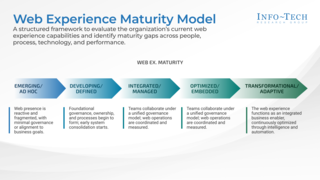 Develop Your Web Experience Management Strategy
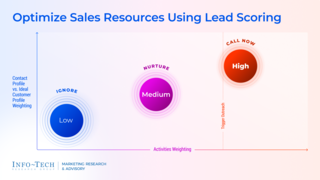 Optimize Lead Generation With Lead Scoring
 Create a Buyer Persona and Journey
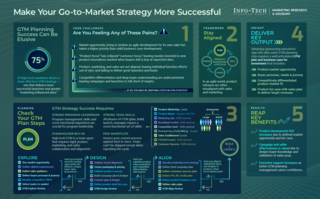 Build a More Effective Go-to-Market Strategy
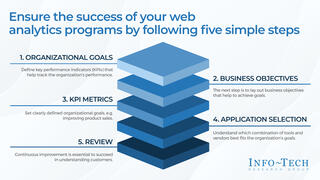 Leverage Web Analytics to Reinforce Your Web Experience Management Strategy
 2020 Applications Priorities Report
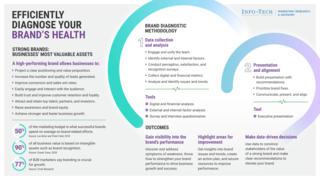 Diagnose Brand Health to Improve Business Growth
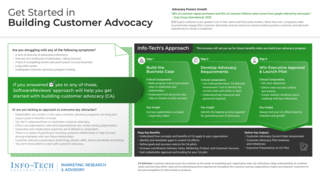 Get Started With Customer Advocacy
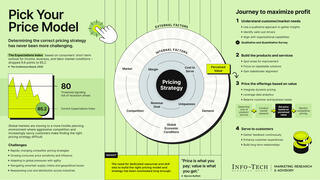 Pick Your Price Model
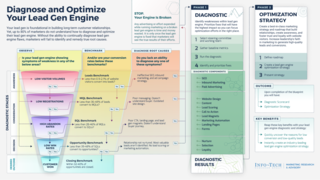 Diagnose and Optimize Your Lead Gen Engine
 Develop the Right Message to Engage Buyers
 Identify the Customer Satisfaction Metrics That Matter
 Create an Effective SEO Strategy
 Accelerate Business Growth and Valuation by Building Brand Awareness
 Social Media Management Software Selection Guide
 Build a More Effective Brand Architecture
 Build Competitive Intelligence for Market Success
 Create Assets to Accelerate the Buyer Journey
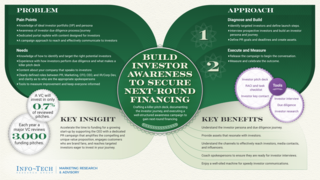 Build Investor Awareness to Secure Next-Round Financing
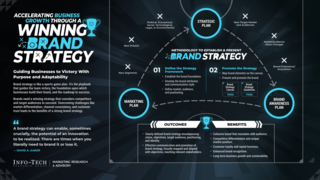 Brand Strategy: Establish and Cultivate a Flourishing Brand
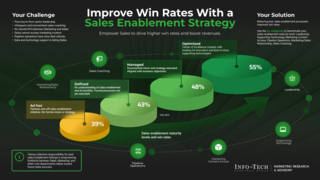 Improve Win Rates With a Sales Enablement Strategy
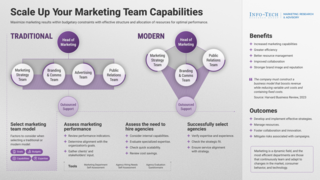 Scale Your Marketing Department
 Choose the Right Channel Sales Partner
 Redesign Your Website to Increase Business Value
 Build Your Account-Based Marketing Strategy
 Build a Strong Analyst Relations Foundation
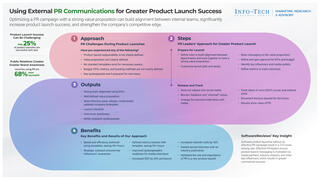 Improve External PR Communications for Greater Product Launch Success
 Turn Share of Voice Growth Into a Strategic Weapon
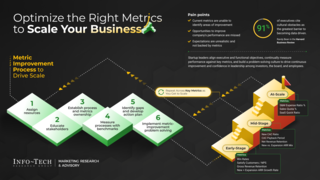 Optimize the Right Metrics to Scale Your Business
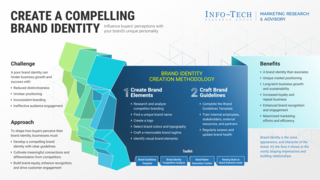 Leave a Lasting Impression With a Compelling Brand Identity
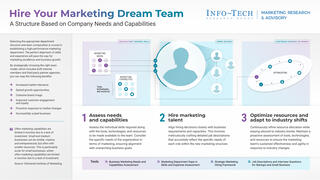 Hire Your Marketing Dream Team
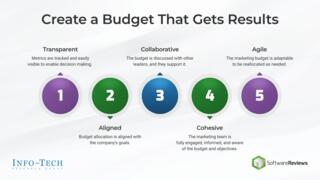 Match Your Budget to Your Market Position
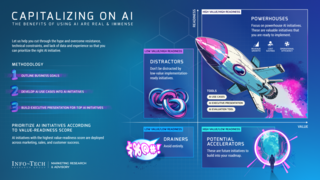 Capitalizing on AI
 Generative AI Use Cases for Marketing, Sales, and Customer Service
 The AI Advantage for Smarter Marketing – A Primer
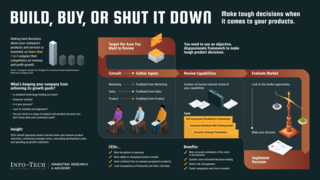 Build, Buy, or Shut It Down
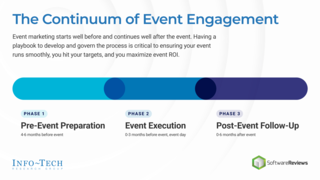 Event Activation Playbook
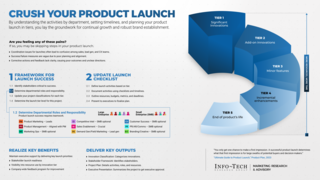 Crush Your Product Launch
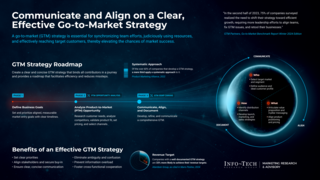 Go-to-Market Strategy on a Page
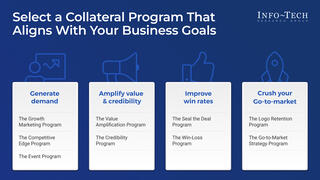 Maximize ROI on Sales and Marketing Collateral
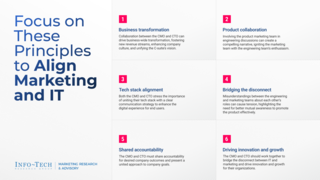 From Silos to Synergy: Create Marketing and IT Alignment
 Competitive Intelligence Software Selection Guide
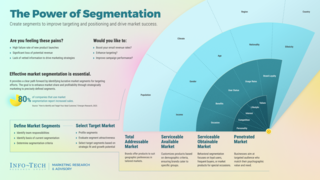 The Power of Segmentation
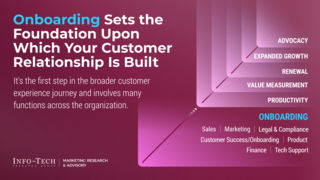 Revolutionize Your Customer Onboarding
 Search Engine Optimization Software Selection Guide
 Build Better Dashboards Across Marketing, Sales, and Customer Success
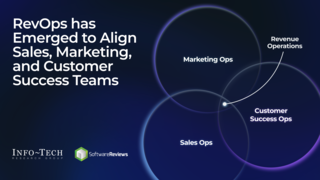 Make the Case for RevOps
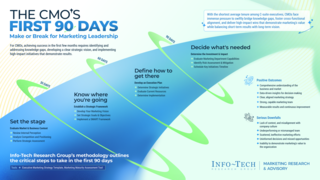 The First 90 Days as a CMO
 Stay Relevant in the Era of AI-Powered Search
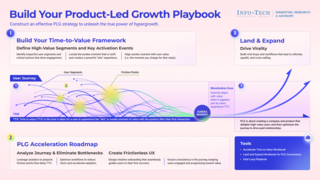 Build Your Product-Led Growth Playbook
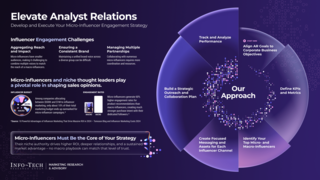 Elevate Analyst Relations
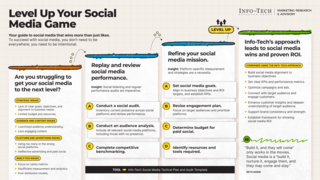 Level Up Your Social Media Game
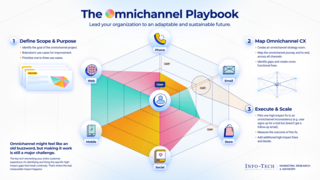 The Omnichannel Playbook
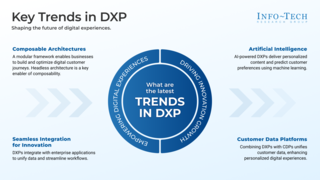 Digital Experience Platform Selection Guide
 Software Buyer Insights 2025
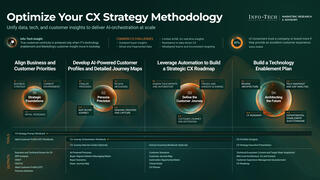 Optimize Your CX Strategy
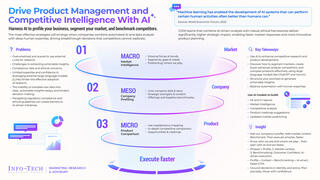 Drive Product & Market Planning With AI
 Board Management Software Selection Guide
 The CMO Playbook
 Position Your Brand Strategically as a Cost or Value Leader
 The Crisis Management Playbook
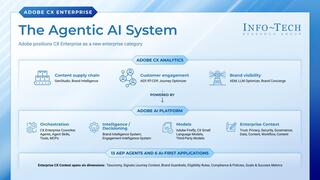 Vendor Spotlight: Adobe CX Enterprise
 Accelerate Persona & Journey Mapping With AI