From Complexity to Clarity: Exploring SAMU’s Role in M&A, SaaS Optimization, and Digital Transformation
This note is from an analyst briefing (December 2025) on SAMU’s role in enterprise architecture management. During the briefing, Samu executives detailed the core capabilities for centralizing architecture data, managing dependencies, and supporting initiatives such as mergers, digital transformation, compliance, and cost optimization.
SAMU is an enterprise architecture management solution developed by Atoll Technologies. It was first created in 2003 to support a major bank merger by consolidating complex IT ecosystems. Since then, it has evolved to help organizations manage architecture data, dependencies, and change. The core objective is to provide a single source of truth for enterprise architecture and support initiatives such as mergers and acquisitions, digital transformation, and cloud migration. In addition, SAMU addresses ongoing enterprise needs such as application portfolio management, technology lifecycle management, compliance and regulatory reporting, IT cost optimization, risk assessment, and integration planning. It also supports impact analysis for system changes, governance of architecture standards, and prevention of SaaS sprawl by identifying redundant applications and underused licenses.
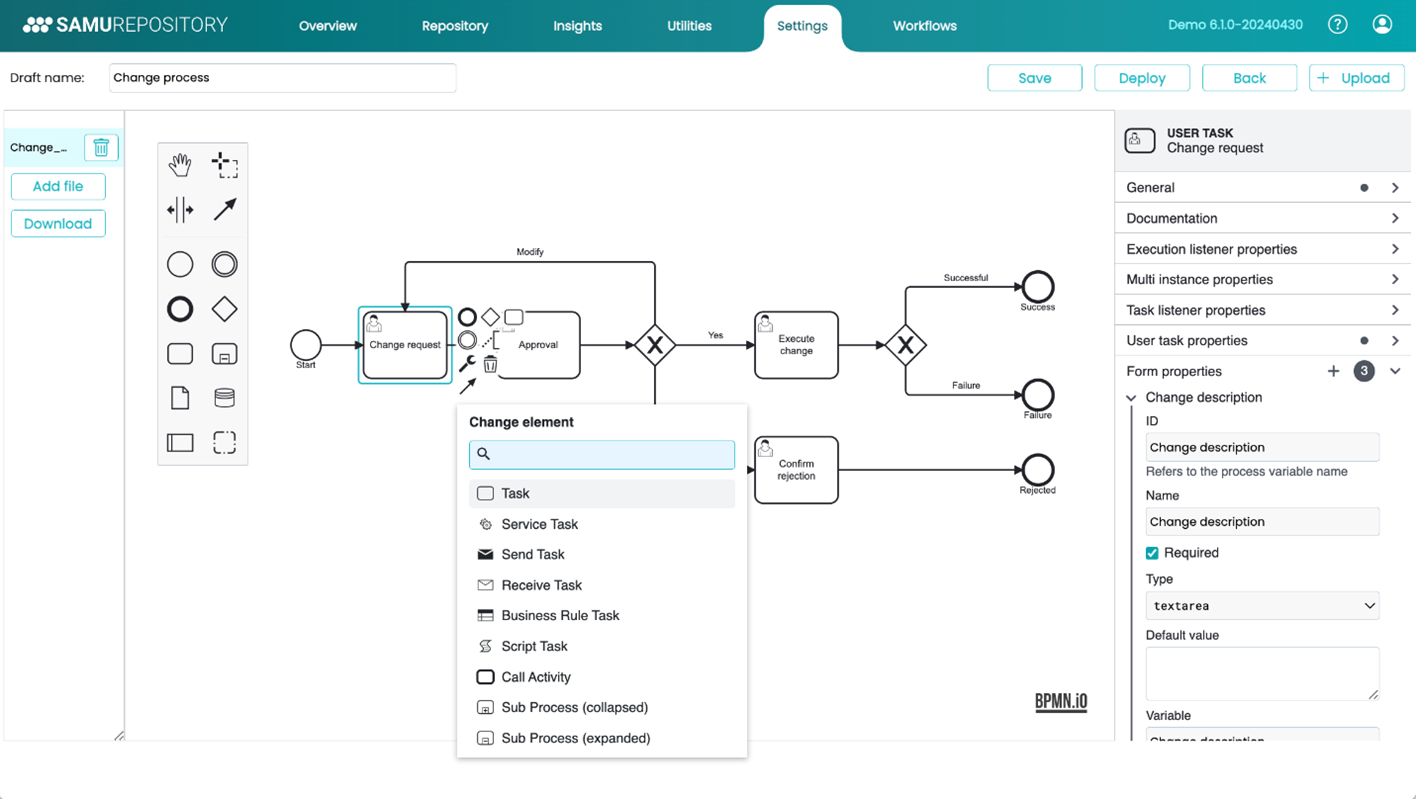
Image Source: Samu.io
Main Features
- Central Repository: Stores enterprise architecture data in one place, reducing fragmentation across spreadsheets and diagrams.
- Dynamic Visualization: Generates diagrams that update automatically when underlying data changes.
- Customizable Meta-Model: Full flexibility allows organizations to define object types and relationships without coding. Almost everything in SAMU from reports to visualizations and user rights can be customized.
- Integration Capabilities: Includes REST API, SOAP adapter, and Excel wizard for data exchange with CMDBs, project portfolios, and service desks.
- Impact Analysis: Identifies dependencies and potential risks when systems change.
- Pricing Options: Offers models based on objects or users in On-Prem Perpetual, On-prem Subscription, and SaaS.
Benefits for Customers and Prospects
Cost Management
SAMU helps organizations reduce software spending by identifying redundant applications and underused licenses. The platform supports SaaS rationalization by pinpointing overlapping functionalities across different tools, enabling teams to consolidate and optimize their software portfolios. Additionally, it empowers CFOs to generate detailed reports on software usage versus licensing costs, making it easier to optimize expenditures and maximize value from technology investments.
Risk Management
By maintaining a structured and centralized architecture repository, SAMU enhances compliance and governance protocols across the enterprise. The solution tracks technology standards and security zones, reducing exposure to noncompliant systems and associated risks. SAMU also provides clear visibility into dependencies, which helps prevent disruptions during system upgrades or decommissioning processes.
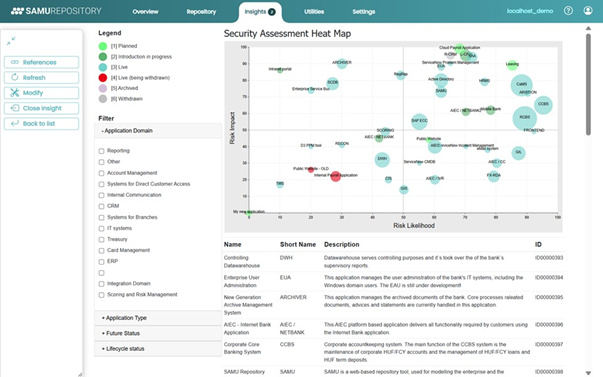
Image Source: Samu.io
Efficiency and Change Management
During mergers and acquisitions, SAMU shortens IT consolidation timelines by mapping duplicate systems and facilitating migration planning. Data synchronization is automated with CMDBs and other systems, ensuring the quality and accuracy of architecture information. Furthermore, SAMU detects project conflicts, such as one project removing an application while another depends on it, helping organizations avoid costly errors and streamline change management.
Decision Support and Strategic Planning
SAMU offers impact analysis tools that clarify the downstream effects of system changes, supporting better decision-making. The platform provides comprehensive visibility into IT complexity, which aids in budgeting, resource allocation, and transformation planning. Scenario modeling capabilities support M&A due diligence, enabling organizations to estimate potential cost savings and integration challenges before committing to major changes.
Operational Governance
Application portfolio management and technology lifecycle tracking are central features of SAMU, allowing organizations to maintain oversight of their technology assets. The solution enforces architecture standards and preferred technology choices, promoting consistency across the enterprise. As a catalog for business processes, applications, and integrations, SAMU increases transparency and strengthens operational governance.
Scalable Adoption
Organizations can begin using SAMU to address a specific pain point, such as application rationalization or compliance, and then expand its use to broader cases as needs evolve. Its flexible meta-model supports customization without coding, allowing organizations to adapt the solution to their changing business requirements over time.
Future-Ready Capabilities
SAMU positions organizations to take advantage of emerging AI technologies for predictive alerts, proactive architecture health checks, and automated diagram recognition. The platform is also designed to integrate with AI assistants through standards like CP Server, enabling advanced analytics and future-ready enterprise architecture management.
Customer case studies cited during the briefing
Formerly DuPont Pioneer Now Corteva
DuPont Pioneer used SAMU to consolidate its IT systems following a merger. By leveraging SAMU’s capabilities, the organization was able to significantly accelerate its planning process, reducing the timeline from two years to just six months.
Banking Sector
In the banking sector, SAMU was applied to efficiently identify duplicate systems and facilitate migration planning during mergers. This approach helped streamline operations and supported effective change management within complex IT environments.
Global Enterprises
Major global enterprises, including Vodafone, T-Mobile, and Cloudera, rely on SAMU for architecture governance and transformation. These organizations use the platform to maintain oversight of their technology assets and drive successful business and IT integration.
Our Take
Enterprise architecture often lacks visibility and structure, creating inefficiencies, redundant systems, and unmanaged risk. SAMU addresses these challenges by centralizing architecture data in a repository-driven model that connects business and IT. This approach is designed to support initiatives such as mergers and acquisitions, digital transformation, and IT rationalization.
Features such as impact analysis, integration with CMDBs, and dynamic visualization are common in enterprise architecture tools. SAMU claims flexibility in its meta-model and strong integration capabilities. The enterprise architecture market includes other vendors like Ardoq, LeanIX, MEGA HOPEX, and Orbus iServer, which offer similar repository-driven approaches. SAMU’s differentiators appear to be in the flexibility built into their product and their pricing models.
The stated benefits – cost optimization, risk reduction, and efficiency – are valid, but priorities differ by role. CIOs often focus on governance and compliance, CTOs prioritize integration and agility for transformation projects, and CFOs care about cost control and SaaS rationalization. Before positioning SAMU, organizations should validate whether these benefits resonate with their stakeholders through research or client interviews.
