


Protect margins amid cost and tariff volatility
Get tailored support & continuous insights for Manufacturing - Durable Goods. All included in your membership.
The Challenge
Thin margins are under pressure from tariffs and volatile input costs.
Tariffs, raw-material swings, and rising wages erode already-slim durable-goods margins. Without disciplined cost control and pricing, demand softness turns quickly into lost profit.
Why It Matters
Cost control now decides who stays profitable through the tariff era.
In the National Association of Manufacturers' Q4 2025 survey, trade uncertainty was the top business challenge at 73.1%, and 80.3% of manufacturers reported paying tariffs on imported inputs in 2025 ("Manufacturers’ Outlook Survey," National Association of Manufacturers, 2025). Firms that build pricing discipline and cost visibility now will protect margin while competitors absorb the hit.
The Solution
Build dynamic cost and margin visibility
Use should-cost modeling and live margin tracking to see cost erosion by product and act early.
Engineer tariff and supply resilience into sourcing
Qualify alternative and nearshore suppliers and use tariff engineering to reduce landed-cost exposure.
Price with discipline
Adopt data-driven, value-based pricing so cost increases are recovered, not quietly absorbed.




Build supply chain resilience
Get tailored support & continuous insights for Manufacturing - Durable Goods. All included in your membership.
The Challenge
Global supply chains remain fragile and exposed.
Tariffs, geopolitical shifts, and concentrated sourcing leave durable goods makers vulnerable to disruption. A single supplier or logistics shock can stall production and inflate costs.
Why It Matters
Supply chain resilience directly protects both revenue and cost.
Deloitte's 2026 outlook points to new digital tools as transformative for managing global supply chain complexity while balancing cost and resilience ("Manufacturing Industry Outlook," Deloitte, 2025). Building visibility and flexibility now is far cheaper than absorbing the next disruption.
The Solution
Map and monitor the multitier supply chain
Gain visibility beyond Tier 1 suppliers and monitor risk signals continuously.
Diversify and regionalize sourcing
Qualify alternate suppliers and nearshore critical inputs to reduce single points of failure.
Hold targeted buffers
Use risk-based safety stock and dual sourcing on critical components to absorb shocks without bloating inventory.


Sense and respond to shifting demand
Get tailored support & continuous insights for Manufacturing - Durable Goods. All included in your membership.
The Challenge
Demand signals shift faster than planning cycles can absorb.
Economic uncertainty, changing customer expectations, and long production lead times make forecasting harder. Plans built on stale assumptions leave firms overstocked in some lines and short in others.
Why It Matters
Demand agility is now a core competitive capability.
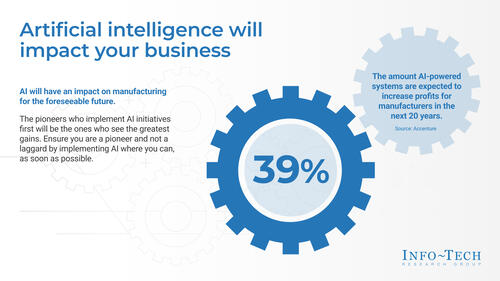
Deloitte's 2026 Manufacturing Industry Outlook finds that policy and economic uncertainty are placing a premium on accurate data, faster decisions, and the ability to adapt quickly (Deloitte, 2025). Manufacturers that sense and respond in near real time will take share from slower-moving rivals.
The Solution
Stand up demand sensing
Combine point-of-sale, channel, and external signals to forecast closer to real demand.
Tighten integrated planning
Run integrated sales and operations planning (S&OP) so production, inventory, and procurement move together against the latest signal.
Build flexible production response
Use postponement, modular configurations, and flexible capacity to adjust mix without long resets.


Accelerate product innovation across the lifecycle
Get tailored support & continuous insights for Manufacturing - Durable Goods. All included in your membership.
The Challenge
Innovation is too slow and disconnected across the product lifecycle.
Fragmented engineering, design, and commercialization processes delay launches and inflate costs. Disconnected product lifecycle data makes it hard to reuse what the organization already knows.
Why It Matters
Faster, connected innovation is where durable-goods firms differentiate.
A 2026 Informatica survey of 600 data leaders found nearly 70% have adopted generative AI, yet 57% say poor data reliability is a top barrier to putting it to work, and 3 in 4 admit governance has not kept pace ("CDO Insights 2026," Informatica, 2026). Connecting the lifecycle and the data behind it is what turns innovation intent into faster launches.
The Solution
Connect the product lifecycle
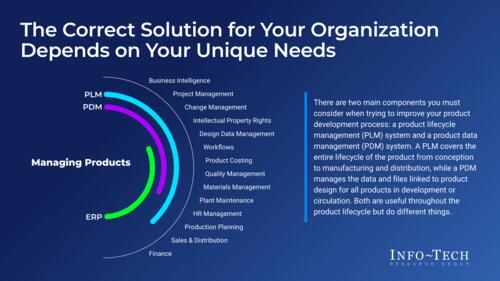
Integrate product lifecycle management (PLM), engineering, and manufacturing data so teams work from one source of truth.
Apply AI to design and engineering
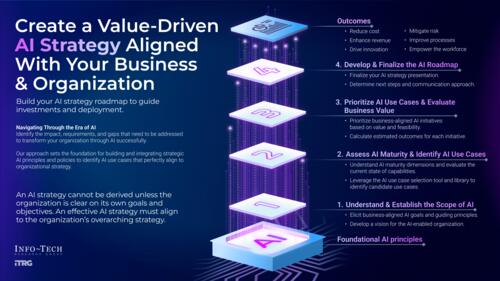
Use generative design and AI-assisted engineering to speed development and reuse proven components.
Manage portfolio complexity
Rationalize SKUs and standardize platforms and modules to cut cost and accelerate launches.

Increase operational agility
Get tailored support & continuous insights for Manufacturing - Durable Goods. All included in your membership.
The Challenge
Rigid operations cannot flex with demand and disruption.
Legacy plants, manual processes, and siloed systems slow the response to volume swings and supply shocks. Manufacturers that cannot adapt quickly lose both efficiency and orders.
Why It Matters
Agility is now the foundation of competitiveness.
In Deloitte's research, a large majority of manufacturers plan to invest a fifth or more of their improvement budgets in smart manufacturing to gain agility and resilience (Deloitte, 2025). Flexible, connected operations are what let a firm absorb shocks without losing output.
The Solution
Invest in smart manufacturing
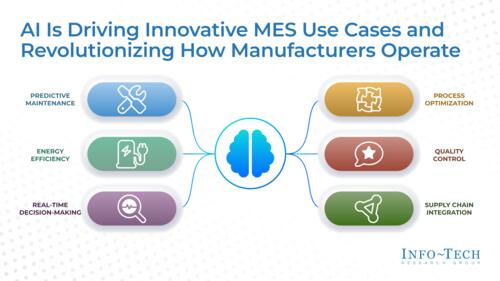
Deploy Internet of Things (IoT) sensors, manufacturing execution systems (MES), and analytics to make plants visible and responsive.
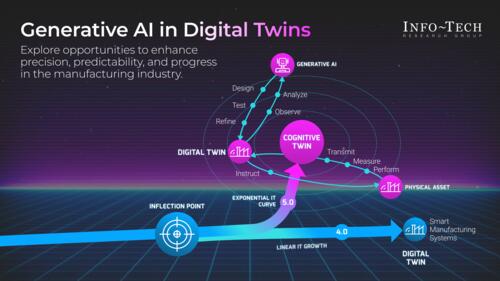
Use digital twins and simulation
Model lines and scenarios to test changes before committing capital or disrupting production.
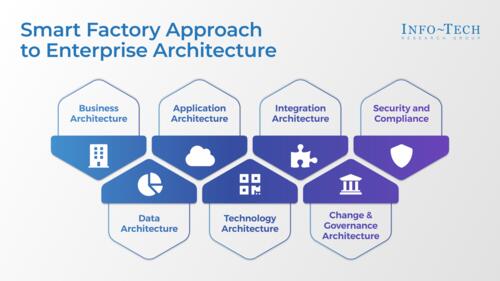
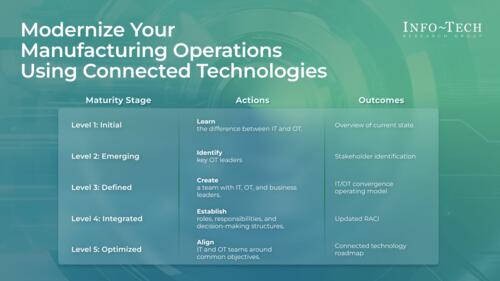
Build a connected operating model
Link plants, planning, and suppliers so the network can rebalance quickly when conditions change.

Build the digital thread across product, production, supply, and service
Get tailored support & continuous insights for Manufacturing - Durable Goods. All included in your membership.
The Challenge
Disconnected systems break the flow of data across the product lifecycle.
Engineering, product lifecycle management (PLM), manufacturing execution, supply chain, quality, and service each hold pieces of the truth in separate systems. Without a connected thread, teams rework what others already know and cannot trace a problem from the field back to its source.
Why It Matters
A connected digital thread turns fragmented data into an enterprise advantage.
An EY analysis with the Aerospace Industries Association found that manufacturers struggle to scale digital threads because it is an operating-model challenge, not a tools problem, and that leaders who succeed track cycle time, quality, and decision speed rather than tool adoption ("Digital Thread Delivers Value, so What’s Stopping Scale?" EY, 2026). Linking engineering, production, supply, quality, and service data end to end is what makes faster launches, traceability, and better decisions possible.
The Solution
Connect the lifecycle end to end
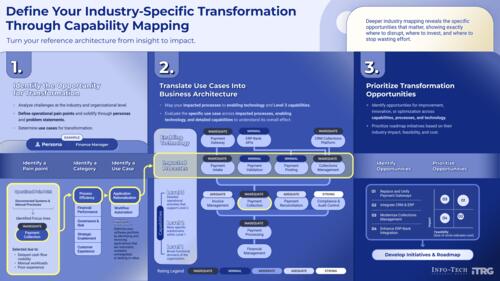
Integrate PLM, manufacturing execution systems (MES), enterprise resource planning (ERP), supply chain, quality, and service data into one authoritative thread.
Trace from field back to design
Link connected-product and warranty telemetry to the as-built and as-designed record so issues route to root cause.
Build the data and integration foundation
Standardize data models and integration so the thread scales across sites, products, and partners.

Improve product quality and field performance
Get tailored support & continuous insights for Manufacturing - Durable Goods. All included in your membership.
The Challenge
Quality problems surface late, in the field, where they cost the most.
Complex assemblies, multitier suppliers, and limited in-service visibility let defects reach customers as warranty claims, recalls, and downtime. For aerospace, components, and contract manufacturers, field failures carry safety, contractual, and reputational stakes.
Why It Matters
Quality and field performance are where durable goods reputations and – margins – are made or lost.
WardsAuto reports that warranty claims now run 3% to 4% of revenue at most automakers, with a dozen top global OEMs spending over $67 billion on warranty and recalls in a single year as software and complex components push defects into the field ("The $100B Quality Tax," WardsAuto, 2026). Manufacturers that engineer quality in and monitor products in service protect margin, contracts, and brand.
The Solution
Engineer quality in
Use design for quality, first-article inspection, and statistical process control to prevent defects, not just catch them.
Control quality across the supply chain
Share quality data and requirements with suppliers so incoming and in-process quality is controlled across tiers.
Monitor field and warranty performance
Use connected-product and warranty data to detect issues early and feed fixes back into design and production.

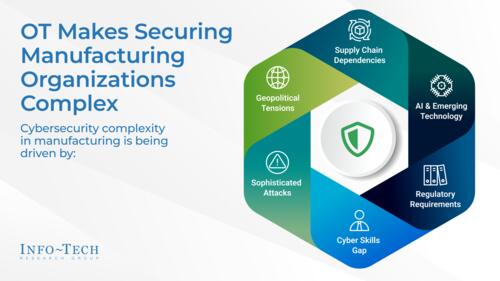
Secure connected plants and products
Get tailored support & continuous insights for Manufacturing - Durable Goods. All included in your membership.
The Challenge
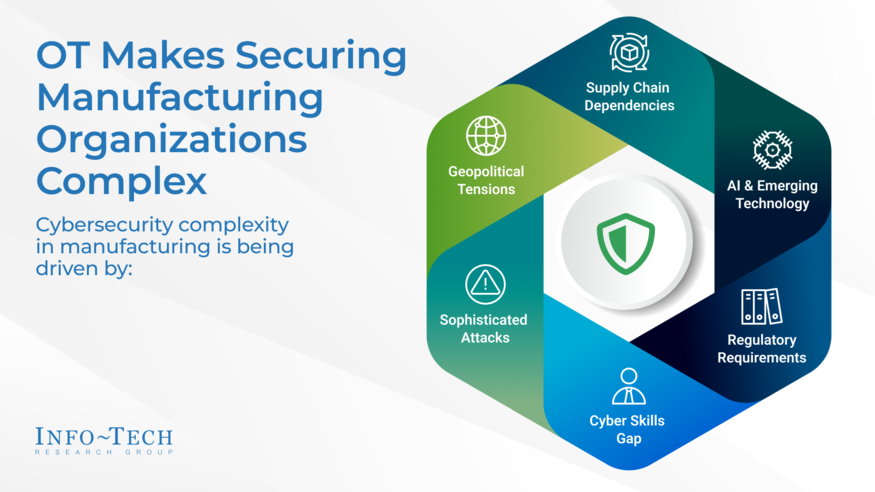
Connected plants and products have widened the attack surface.
Converged IT and operational technology, connected equipment, and third-party access expose manufacturers to disruptive cyberattacks. A single breach can halt production lines and compromise sensitive product and customer data.
Why It Matters
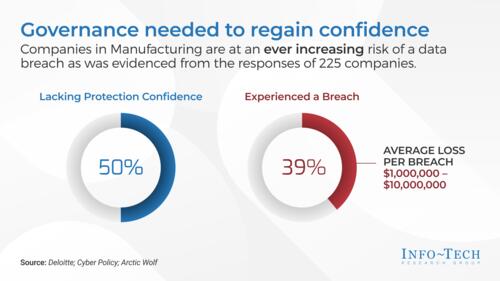
A cyberattack can stop production as completely as any equipment failure.
IBM X-Force found manufacturing was the most attacked industry for the fifth consecutive year, at 27.7% of incidents, with operational technology widening the attack surface ("Why Manufacturing Companies Are Most Vulnerable to Hacking," IBM X-Force, 2026). Treating security as core to operations, not an IT afterthought, is now essential to uptime.
The Solution
Govern IT and OT security together
Unify governance, segmentation, and monitoring across information technology and operational technology environments.
Secure connected products by design
Build security into product development and manage vulnerabilities across the installed base.
Build operational resilience
Maintain tested backups, network segmentation, and an incident response plan so an attack cannot stop the line.


Grow aftermarket and connected-product revenue
Get tailored support & continuous insights for Manufacturing - Durable Goods. All included in your membership.
The Challenge
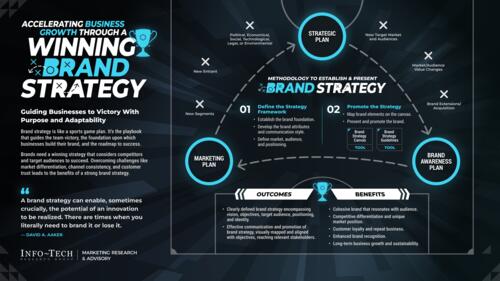
High-margin service and aftermarket revenue is being left on the table.
Many durable goods makers still treat the sale as the finish line, not the start of a lifetime relationship. Without connected products and service capability, recurring revenue and loyalty flow to third parties.
Why It Matters
Aftermarket service is the highest-margin growth most durable goods makers underuse.
Deloitte finds aftermarket services can deliver operating margins more than two times higher than equipment sales, while producing steadier, less cyclical revenue (Deloitte, 2025). Connected products and strong service capability turn every unit sold into a recurring revenue stream.
The Solution
Build the connected installed base
Use IoT-enabled products to track usage, predict failures, and trigger proactive service.
Launch recurring service offers
Move from one-off repairs to subscriptions, performance contracts, and equipment-as-a-service.
Run aftermarket as a profit center
Stand up parts, service, and renewals operations with their own targets, pricing, and digital channels.

Get ahead of sustainability and regulatory demands
Get tailored support & continuous insights for Manufacturing - Durable Goods. All included in your membership.
The Challenge
Sustainability and disclosure rules are tightening across markets.
Climate disclosure laws, emissions targets, and customer ESG expectations now shape products, materials, and reporting. Firms without credible data and a clear plan face compliance risk and lost business.
Why It Matters
Sustainability has shifted from optional to regulated.
In the NAM Q4 2025 survey, 38.2% of manufacturers reported being subject to new international or state laws requiring disclosure of emissions and climate risks ("Manufacturers’ Outlook Survey," National Association of Manufacturers, 2025). Firms that build credible sustainability data now will meet mandates and win climate-conscious buyers.
The Solution
Measure emissions and product footprint
Build auditable data on energy, materials, and Scope 1-3 emissions to meet disclosure rules.
Design for circularity
Use low-carbon materials, energy-efficient designs, and repairable, recyclable products.
Report to standard
Align reporting to applicable climate-disclosure regulations and customer ESG requirements.

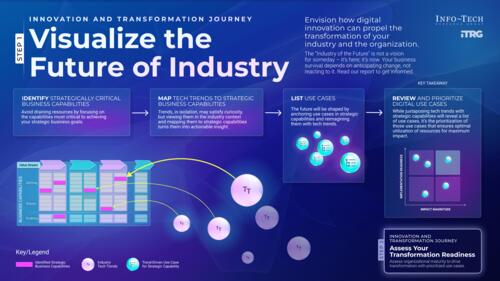
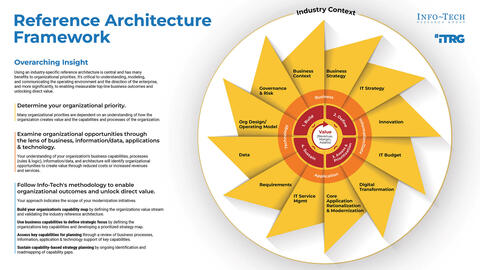
Comprehensive Manufacturing - Durable Goods Industry Coverage


Testimonials

“I’m passionate about efficiency, so I didn’t want to do it, get it wrong, and then do it again. Info-Tech helped me skip that trial-and-error phase and just jump to a solution that works. That was too important to try to wing it myself with a bunch of Google results.”
Dennis Moncrieff, IT Superintendent
View Full Case Study
“You've got to be able to build a resilient organization, and that means letting go, helping the team succeed, and holding them accountable. I've seen so many places where the CIO leaves and everything crumbles. That is a bad model.”
Ed DePrimo, Global CIO, Mauser Packaging Solutions
View Full Case Study
"We haven't grown staff-wise proportionately to the capabilities we've added. And that's a testament to the team and to that continuous improvement mindset.... We provide the service of not just keeping all the IT stuff working but helping solve business problems for people.”
Wally Wilinsky, CIO, Leonardo DRS
View Full Case Study