




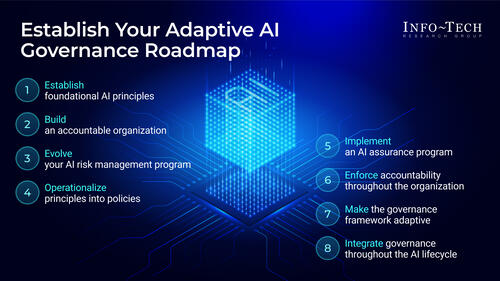
Activate AI across utility operations
The Challenge
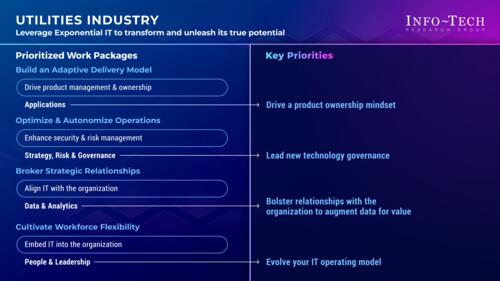
Most utility AI never escapes the pilot phase.
Utilities are under pressure to improve reliability, field productivity, and customer service while managing aging infrastructure and surging data-center load, yet weak data quality, unclear governance, and integration barriers keep promising AI use cases stuck in proofs of concept. The question is no longer whether AI can help, but how to scale it safely across regulated operations.
Why It Matters
AI only pays off when leaders trust it.
From load forecasting to outage prediction and asset health, AI is moving from experiment to core grid and customer workflow, but value depends on disciplined use cases and human oversight rather than scattered experimentation. With 74% of utility executives saying AI's full potential can only be realized on a foundation of trust ("AI Is Reshaping Utilities," Accenture, 2025), the utilities that govern AI now will set the pace for the rest of the decade.
The Solution
Prioritize utility-specific use cases.
Focus on outcomes like reliability, wildfire and storm response, field productivity, and customer service where data and process maturity support responsible adoption.
Put governance and guardrails in place.
Define decision rights, model oversight, data-use rules, and human-in-the-loop checkpoints so AI scales without compromising safety, privacy, or regulatory standing.
Embed AI into core workflows.
Connect models to control-room, work-management, and customer platforms so insight becomes repeatable decisions and measurable productivity gains, not isolated tools.


Converge and secure IT, OT, and the critical infrastructure supply chain
The Challenge
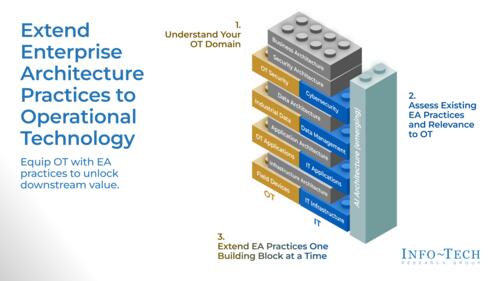
IT and OT still run on separate tracks while the attack surface keeps expanding.
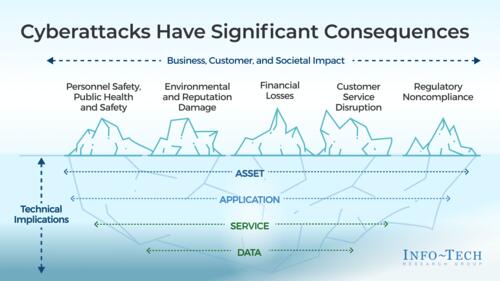
Utilities depend on both enterprise IT and OT to keep power flowing, but the two functions carry different governance models, risk tolerances, and architectures, leaving gaps in visibility, security, and accountability across an increasingly connected, vendor-dependent grid. As grid-edge devices and third-party ecosystems multiply, those seams widen faster than either team can close alone, and adversaries are probing exactly where IT, OT, cloud, and the supply chain meet.
Why It Matters
Convergence and supply chain assurance are now a security and reliability mandate.
Modernizing grid, substation, and field environments increasingly crosses the IT/OT boundary, so coordinated control and supplier oversight are what let utilities secure critical infrastructure and modernize without disrupting service. With 81% of OT architecture reviews showing poor segmentation between IT and OT, and with ransomware against industrial organizations up 95% year over year ("2026 OT/ICS Cybersecurity Report and Year in Review," Dragos, 2026), while utilities with mature OT visibility contain incidents in five days versus an industry average of 42, closing the IT/OT divide and hardening the supply chain is among the most urgent moves a utility can make.
The Solution
Clarify shared ownership.
Define how IT, OT, engineering, and security leaders share accountability for decisions, escalation, and modernization so efforts reflect both enterprise standards and operational reality.
Standardize architecture and integration.
Adopt common principles for connecting enterprise systems, control platforms, and field devices, and apply identity, segmentation, monitoring, and vulnerability management tuned to each domain to reduce the complexity that creates risk.
Collaborate on a security program across both domains and the supply chain.
Coordinate access control, monitoring, segmentation, and incident response across IT and OT, manage third-party and supplier risk by their access to critical systems, and map controls to NERC CIP so security investment reduces both risk and audit burden.


Fortify grid reliability and operational resilience
The Challenge
Reliability is being tested as never before.
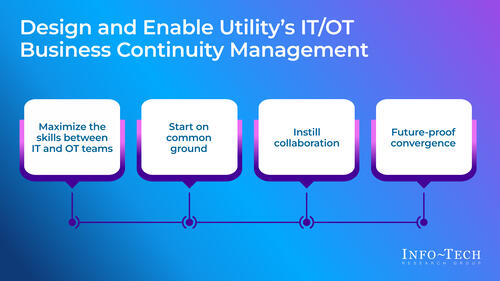
Utilities face rising service expectations alongside extreme weather, aging assets, workforce constraints, and increasingly interconnected systems. Traditional continuity plans rarely account for the dependencies linking enterprise systems, field operations, control environments, and customer channels. A single weak link can now cascade across all of them.
Why It Matters
Resilience is what protects public safety and trust.
Outages affect safety, customer confidence, regulatory standing, and financial performance, so a stronger resilience posture is what lets utilities keep service running and recover quickly when events hit. For example, with NERC warning that extreme weather remains a top threat to reliability and summer demand up roughly 10 GW year over year ("2025 Summer Reliability Assessment," NERC, 2025), planning for disruption is now a baseline expectation, not a contingency.
The Solution
Map critical service dependencies.
Identify the systems, data, vendors, and roles required to sustain essential service so continuity planning reflects real operational impact.
Modernize continuity and recovery plans.
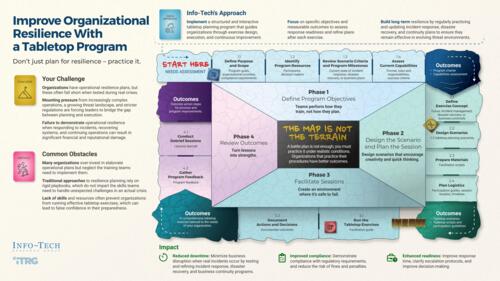
Update business continuity, disaster recovery, and crisis response for current technology dependencies and test them against storm, cyberattack, and system-failure scenarios.
Strengthen operational visibility.
Improve monitoring and communication across critical services so teams detect disruption earlier and shorten the duration and impact of interruptions.

Build an AI-ready, connected data foundation
The Challenge
Utility data is rich but fragmented.
Utilities generate enormous volumes of data across customer, enterprise, asset, GIS, and operational systems, but when that data is siloed, inconsistent, or poorly governed, leaders cannot get a trusted view of operations, assets, or customers. Every new AI and analytics ambition runs straight into that fragmentation.
Why It Matters
Trusted data is the precondition for everything else.
Reliable, connected data underpins AI, analytics, regulatory reporting, and asset planning, so a strong data foundation is what turns digital ambition into dependable decisions. Becoming an AI-ready, data-driven organization depends on modernizing data platforms rather than treating data as a technical afterthought ("Data Modernization Services," EY, 2025), making the data foundation a strategic priority in its own right.
The Solution
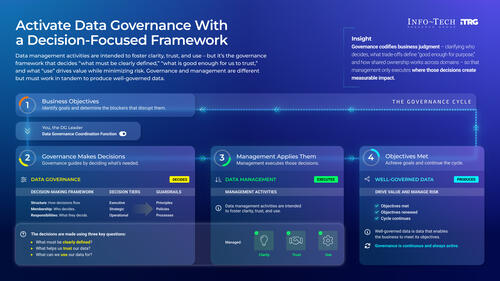
Define data ownership and governance.
Establish accountability for critical data domains, quality standards, and access rules so trust in data improves across enterprise and operational environments.
Integrate enterprise and operational data.
Connect data from core business, asset, customer, GIS, and field systems to give leaders a complete view of utility performance.
Make data ready for analytics and AI.
Improve quality, metadata, and lineage so teams move from isolated reports to reusable data products and trusted operational intelligence.

Modernize aging ERP, CIS, and grid platforms
The Challenge
Legacy systems are quietly capping progress.
Many utilities still run aging applications, customized ERP and customer information system (CIS) platforms, and brittle integrations that are costly to maintain and hard to change. These environments slow modernization, raise risk, and limit the data access that customers, regulators, and field teams increasingly demand.
Why It Matters
Modern foundations create room to move.
Modernization improves scalability, security, and integration while reducing the technical debt that consumes IT capacity, so deliberate investment here frees the organization to respond to new demands. Utilities have long extended the life of stagnant core systems, but the shift to cloud and Gen AI now makes reinventing those platforms both possible and overdue ("Outlook 2025: Four Themes Empowering Utilities," EY, 2025), turning modernization into a competitive lever rather than a maintenance chore.
The Solution
Assess modernization priorities.
Rank systems by operational impact, lifecycle risk, security exposure, and strategic fit so investment targets the platforms that constrain the business most.
Reduce unnecessary complexity.
Rationalize redundant applications, outdated integrations, and unsupported technologies to cut cost and free capacity for higher-value work.
Modernize around service continuity.
Phase upgrades, migrations, and replacements around the requirements of essential service so modernization improves performance without disrupting operations.


Advance sustainability and conservation across water and power
The Challenge
Demand is rising faster than utilities can build.
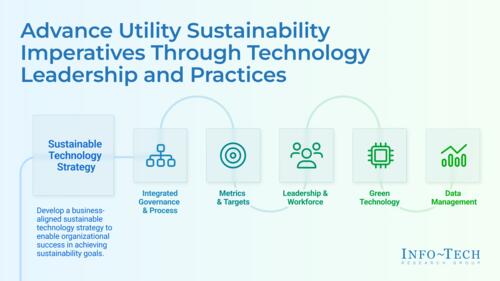
Electric load is surging from data centers, electrification, and extreme heat, while water utilities face scarcity, drought, and aging systems, and new generation, treatment, and network capacity is slow and capital intensive to add. Conservation, efficiency, and sustainability are no longer only compliance obligations; they are practical levers to alleviate demand, defer costly builds, and stretch constrained resources across both water and electric operations.
Why It Matters
Sustainability is becoming a capacity and affordability strategy.
Every unit of demand avoided through efficiency and conservation eases pressure on capital budgets, reliability margins, and ratepayer bills, making sustainability a core operating lever rather than a reporting exercise. With US peak power demand projected to rise 26% by 2035, propelled by data centers and electrification ("Energy Crossroads," Deloitte, 2026), utilities that pair cleaner supply with demand-side conservation can manage growth without overbuilding.
The Solution
Target conservation and efficiency programs.
Use data and analytics to identify where demand-side management, efficiency incentives, leak detection, and conservation programs can defer capital-intensive new builds across water and power.
Embed sustainability into planning and operations.
Integrate decarbonization, water stewardship, and resource-efficiency goals into capital planning, asset management, and technology decisions so sustainability shapes investment rather than trailing it.
Use technology to measure and optimize.
Deploy smart metering, sensors, GIS, and AI-driven analytics to track consumption, reduce loss, and optimize generation, distribution, and treatment for lower resource and emissions intensity.
Maximize return on technology investment
The Challenge
Technology demand far outstrips capacity.
Utilities are being asked to modernize infrastructure, adopt AI, strengthen cybersecurity, and meet new customer needs all at once, and without disciplined prioritization, IT portfolios fill with competing initiatives that strain budgets and delivery. Not every worthy project can or should be funded at the same time.
Why It Matters
Investment discipline is what protects transformation.
Utilities must deliver measurable value while controlling cost, so strong portfolio and value management is what lets leaders fund the right work and defend it to regulators. With industry CapEx projected to jump 22% to roughly $212 billion in 2025 and to top $1 trillion through 2029 ("Can US Infrastructure Keep Up With the AI Economy?" Deloitte, 2025), the pressure to prove return on every technology dollar has never been higher.
The Solution
Prioritize investment by value.
Evaluate initiatives on strategic fit, risk reduction, operational impact, and feasibility so funding flows to the work that matters most.
Measure benefits and outcomes.
Define expected value before delivery and track cost avoidance, productivity, risk reduction, and service gains to show IT's contribution.
Rationalize low-value spend.
Identify duplicative tools, underused applications, and aging contracts so budget can shift from maintenance toward strategic priorities.


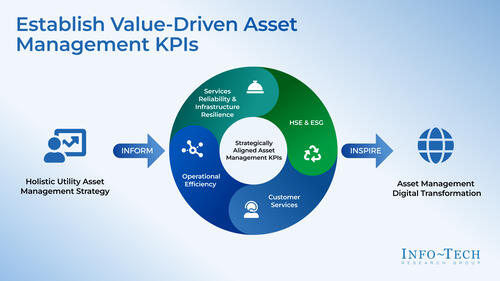
Win the race for critical utility talent
The Challenge
The workforce is changing faster than the org chart.
Utilities face retirements, specialized skill shortages, and fierce competition for digital, cyber, data, and OT talent, while traditional roles and training models were not built for AI, IT/OT convergence, or modern grid operations. The talent gap is widening just as technology demands intensify.
Why It Matters
Modern grids need modern skills, and everyone is hiring.
Transformation depends on people who can govern, secure, and operate complex environments, so a strong workforce strategy is what sustains every other priority. With power sector postings for core roles up 20% and data center postings up 64% between 2023 and 2025 ("In the AI Age, Data Centers and Power Companies Compete for the Same Core Workforce," Deloitte, 2026), utilities are now competing for the same scarce talent as the hyperscalers driving their load growth.
The Solution
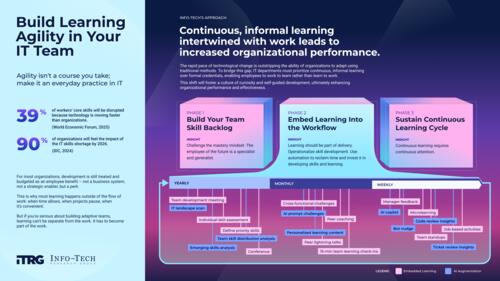
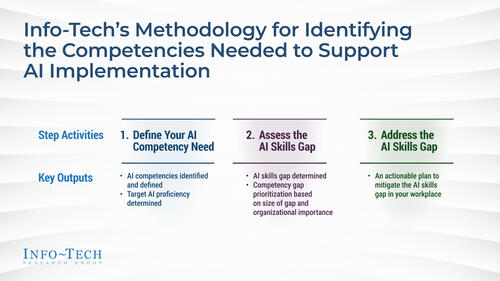
Identify critical skill gaps.
Assess current and future needs across IT, OT, cyber, data, and architecture so training, hiring, and succession target the capabilities that matter most.
Modernize roles and operating models.
Redefine responsibilities and decision rights to reflect changing technology environments and improve cross-functional accountability.
Build learning and succession pathways.
Create development plans, cross-training, and knowledge transfer so the organization depends less on individual experts and grows more resilient over time.


Set a clear roadmap for grid modernization
The Challenge
Technology decisions lack a shared direction.
Utilities are investing in AI, cloud, cybersecurity, data platforms, GIS, and grid modernization at the same time, and without a clear roadmap, those investments become fragmented, duplicative, or disconnected from the long-term operating model. Good individual decisions can still add up to an incoherent whole.
Why It Matters
Strategy is what turns activity into direction.
A strategic technology roadmap connects today's initiatives to a coherent future state, improving governance and guiding investment toward business, operational, and regulatory needs. Utilities are shifting from planning to execution and leaning on smarter, AI-enabled systems to optimize the grid ("2026 Power and Utilities Industry Outlook," Deloitte, 2026), which only works when a clear roadmap sequences the work.
The Solution
Define the target-state architecture.
Lay out the systems, data flows, and capabilities needed for the utility's future so modernization decisions align and avoid unnecessary complexity.
Connect roadmaps to business priorities.
Translate utility goals into capabilities, sequencing, and investment needs so architecture work becomes actionable rather than theoretical.
Govern technology change consistently.
Use clear decision forums, standards, and intake processes to keep investments aligned and reduce the risk of disconnected projects.
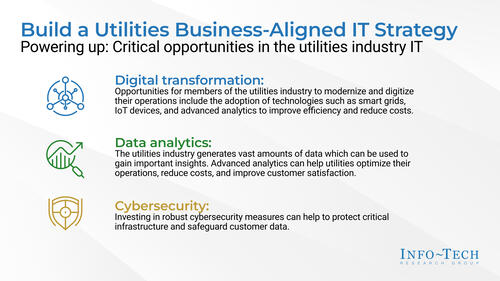
Deliver the digital experience ratepayers expect
The Challenge
Customer expectations have outrun utility tools.
Ratepayers now expect convenient digital service, proactive outage and billing communication, and responsive support across channels, but aging customer systems and fragmented data limit the consistency and efficiency utilities can deliver. The gap between expectation and experience grows every time a customer compares their utility to a modern app.
Why It Matters
Digital experience now shapes trust and satisfaction.
Customer-facing technology determines how utilities handle outages, billing, and service requests, so modern engagement directly affects satisfaction in a cost-pressured environment. With JD Power finding utility digital satisfaction at just 611 of 1,000, well below other industries, and 28% of utilities still offering no mobile app ("Utilities Failing to Connect with Customers on Digital Channels," JD Power, 2025), the room to improve is both wide and visible to every customer.
The Solution
Improve digital service channels.
Modernize portals, mobile apps, and self-service so interactions are easier and more consistent, reducing friction for customers and load on service teams.
Integrate customer data and systems.
Connect billing, outage management, field service, and contact-center data so service is visible end to end and support is timely and personalized.
Use automation to lift service.
Apply workflow automation and AI-assisted support to streamline common interactions so utilities respond faster and more consistently across channels.

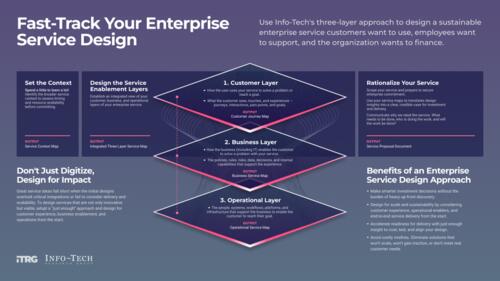
Comprehensive Utilities Industry Coverage

Testimonials

“Being able to have a partner like Info-Tech who is willing to step in, provide you with services that can give you and your team an outcome that you know is trusted is a financial benefit to any organization.”
Aron Calfas, Head of Digital Risk and Assurance, Sydney Water
View Full Case Study
"I absolutely value the mentorship that Info-Tech provides – it really feels like they're a people-focused organization. How do we make sure our people and leaders wholeheartedly believe in what we're doing to improve IT? The cornerstone of our success is our continuing partnership with Info-Tech."
Steve Wilson, Head of IT, Hydro Tasmania
View Full Case Study
“We changed the level of participation that we've gotten from the business and shifted the mindset of technology being simply a cost center to something that can enable the business and drive results."
Greg Allarding, CIO, Mansfield Energy
View Full Case Study