Strengthen community systems against cyber threats
The Challenge
Defend against a surging wave of cyberattacks that increasingly single out local government.
Cities and counties are prime ransomware and phishing targets, yet many run aging infrastructure with understaffed security teams and thin budgets. When 911 dispatch, utility billing, or permitting goes down the disruption is immediate and public, so cyber resilience cannot wait for the next incident.
Why It Matters
A successful attack does more than cost money.
Federal funding now flows specifically to this gap, with the CISA State and Local Cybersecurity Grant Program directing $1 billion over four years and requiring states to pass at least 80% through to local governments ("State and Local Cybersecurity Grant Program," CISA, 2024). Local governments that build defensible, right-sized programs now will qualify for those grants, lower insurance costs, and protect the data residents trust them with.
The Solution
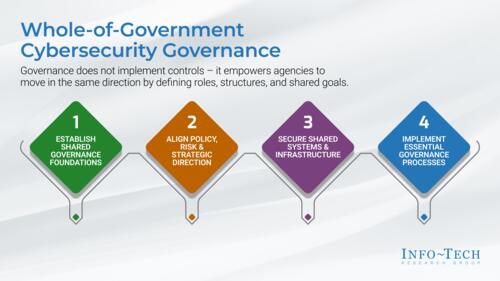
Build a risk-based security strategy.
Identify threats, vulnerabilities, and consequences across departments and align spending to real risk rather than checkbox compliance.
Adopt zero trust and modern controls.
Move to a zero-trust model with multifactor authentication and continuous monitoring to protect the attack surface created by remote work and cloud.
Extend capacity through shared services.
Pursue regional or state-level shared security operations and tap CISA grant funding to add capability without proportional cost.




Digitize city hall for every resident
The Challenge
Meet rising demand for accessible, seamless digital services.
Constituents want to permit, pay, and request services on mobile devices, yet many municipalities still depend on paper and in-person processes. The 2024 Department of Justice rule under Title II of the Americans with Disabilities Act (ADA) makes web and mobile accessibility a legal requirement for local governments, raising the stakes well beyond convenience.
Why It Matters
Accessible digital services are now both an equity imperative and a compliance obligation.
The ADA Title II rule requires local government web content and mobile apps to meet WCAG 2.1, Level AA, with compliance dates extended to 2027 and 2028 by population. Governments that design with accessibility and strong authentication in mind from the start will cut call volume, close the digital divide, and avoid legal exposure.
The Solution
Target high-value services with human-centered design.
Use personas and journey mapping to prioritize the services residents use most, then build accessible, mobile-first interfaces around them.
Design for accessibility and security from the start.
Build to WCAG 2.1, Level AA, and embed privacy, authentication, and security so compliance is not a retrofit.
Scale on a reference architecture.
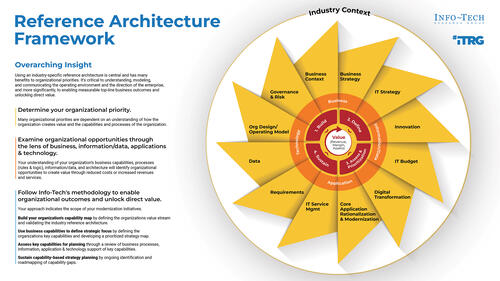
Align data collection, sharing, and storage to a common digital government architecture so services scale across departments safely.


Deploy AI to serve residents
The Challenge
Capture AI's value in local service delivery while governing real legal and reputational risk.
AI already powers 311 chatbots, permitting automation, and benefits fraud detection, but public records requests are now landing for employee AI queries and chatbot interactions. Without retention policies, acceptable-use rules, and transparency, municipalities face liability before they see the benefits.
Why It Matters
AI has become the defining government technology priority.
NASCIO ranked AI the number one state and local CIO priority for 2026, the first time in over a decade that cybersecurity did not hold the top spot ("State CIO Top Ten Policy and Technology Priorities for 2026," NASCIO, 2026). Local governments that invest now in data quality, governance, and content-retention policies will scale AI responsibly and meet emerging state AI laws, while those that delay risk bias, exposure, and stalled deployments.
The Solution
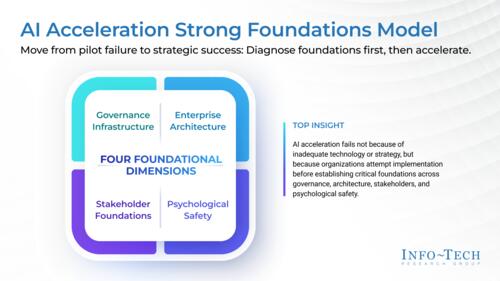
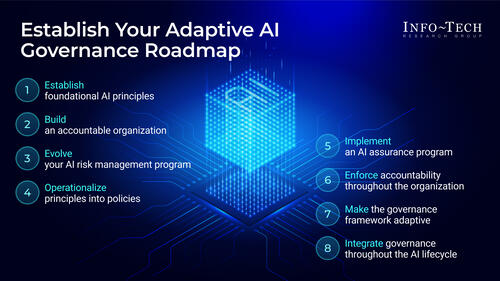
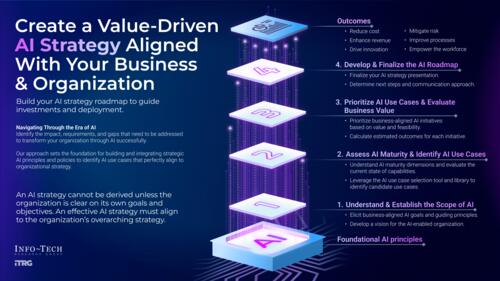
Set an AI strategy and responsible-use policy.
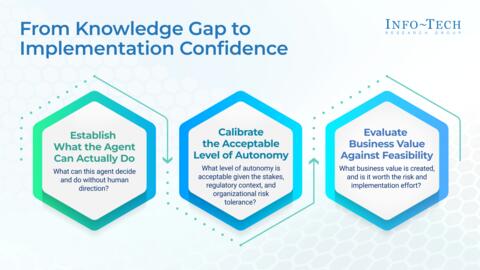
Fold AI into the IT roadmap and adopt responsible-AI principles covering acceptable use, transparency, bias, and content retention for tools like Copilot and chatbots.
Prioritize high-value, low-risk use cases.
Focus on resident chatbots, document summarization, predictive maintenance, and fraud detection, with governance guardrails matched to each use case's risk.
Ground AI in governed data and skills.
Ensure AI draws on reliable, well-managed data and upskill staff so they can work effectively alongside AI-assisted systems.


Overhaul the systems residents rely on
The Challenge
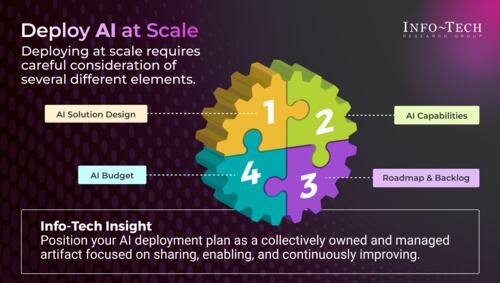
Replace aging core systems that block service delivery and AI readiness.
Permitting, land records, utility billing, and 311 platforms are often decades old, unsupported, and unable to integrate with cloud or AI tools. Every year of deferral compounds technical debt, security exposure, and the gap between what residents expect and what government can deliver.
Why It Matters
Modernization is the prerequisite for nearly every other priority.
GAO reports that government spends over $100 billion a year on IT, roughly 80 percent of it just operating and maintaining existing systems, and that only three of ten critical legacy systems it flagged in 2019 were modernized by early 2025 ("Information Technology: Agencies Need to Plan for Modernizing," GAO, 2025). Local governments that tie modernization to business outcomes free up budget and unlock the data foundation that AI and digital services require.
The Solution
Anchor modernization in business value.
Prioritize applications against digital business goals so investment targets the services residents and staff depend on most.
Match the approach to risk tolerance.
Assess complexity and change tolerance, then choose the right path for each system, whether it is rehosting, refactoring, or replacing.
Sequence with a clear roadmap.
Define milestones, dependencies, and disposition plans that show incremental value and sustain investment.



Recruit and retain municipal tech talent
The Challenge
Compete for scarce IT talent against private employers.
Pensions and job security carry less weight with younger candidates who prioritize flexibility and growth, while rigid, seniority-based HR systems slow hiring. AI raises the bar further, demanding model governance, data engineering, and oversight skills that are expensive and scarce.
Why It Matters
Workforce capacity sets the ceiling on every other priority.
NASCIO's "2025 State CIO Survey" reports median CIO tenure of just over two years and names change leadership the most important leadership trait, underscoring how much delivery depends on people (NASCIO, 2025). Local governments that offer flexible work, meaningful projects, and skills-based advancement will fill the roles that modernization and AI depend on.
The Solution
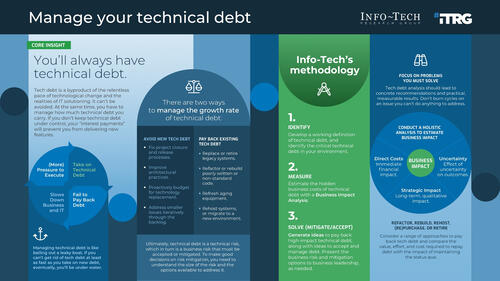
Track workforce trends and gaps.
Monitor IT labor trends and map them to needed capabilities, especially AI governance, cloud, and cybersecurity, before gaps become bottlenecks.
Invest in growth and meaningful work.
Offer training, leadership development, and AI literacy, and assign engaging projects that keep skilled staff motivated.
Modernize hiring and advancement.
Adopt flexible and remote work and promote on skills and impact rather than tenure alone.


Mobilize data as a community asset
The Challenge
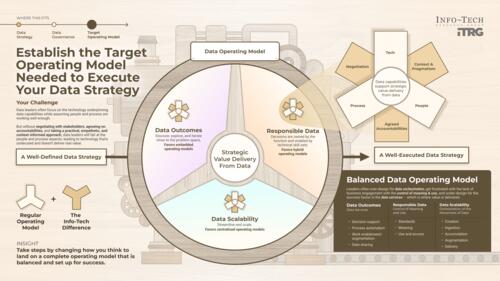
Turn siloed local data into a governed asset that powers AI, analytics, and better decisions.
Permitting, utility, public safety, and financial data are often inconsistent and hard to share across departments, which is the biggest barrier to reliable AI. Federal interoperability and open-data requirements add further urgency to clean, governed, shareable data.
Why It Matters
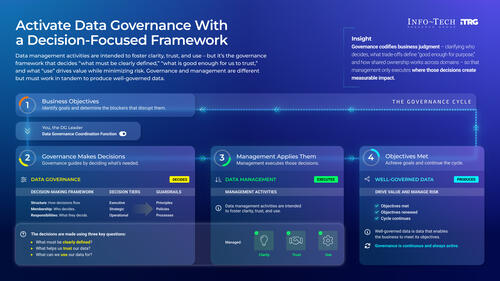
Data governance is the foundation that makes AI and analytics viable.
Data management has appeared in the state and local CIO top ten every year since 2016, reflecting how central it is to outcomes ("The 2025 State CIO Survey," NASCIO, 2025). Governments with mature data practices make faster, evidence-based decisions and meet reporting requirements, while weak governance quietly undermines every AI and analytics investment.
The Solution
Align data work with strategy.
Tie data management plans to organizational goals and position governance explicitly as a prerequisite for AI readiness.
Govern data as a shared asset.
Build a collaborative, scalable plan across IT and departments, with clear ownership and quality standards.
Close gaps with a data roadmap.
Assess current data services, identify gaps, and sequence corrective actions that improve integration, literacy, and analytics.




Power smart, connected communities
The Challenge
Move beyond legacy smart-city models toward inclusive, AI-enabled communities.
Traditional smart-city frameworks left rural and regional governments behind, and connectivity remains the foundational gap: Without broadband, digital services cannot reach underserved residents. A new model pairs AI, GIS, and connected infrastructure to improve quality of life everywhere.
Why It Matters
Closing the digital divide is now a funded national priority.
The NTIA Broadband Equity, Access, and Deployment (BEAD) program directs $42.45 billion to expand high-speed internet to unserved areas, targeting the roughly 7 million homes and businesses that still lack access (NTIA, 2024). Communities that build interoperable, shared digital infrastructure will be positioned to capture this funding and deliver cost-effective services at scale.
The Solution
Use AI and GIS to serve communities.
Deploy AI and sound GIS solutions to improve decision-making, resource allocation, and personalized services across urban and rural areas.
Close the broadband gap.
Pursue federal broadband funding and partnerships to ensure equitable access, without which no smart-community initiative can succeed.
Build shared, model communities.
Connect physical and digital infrastructure through shared identity and interoperable platforms, ready to activate when grants or mandates create urgency.


Master cloud and shared services
The Challenge
Shift from cloud adoption to disciplined execution, optimization, and AI enablement.
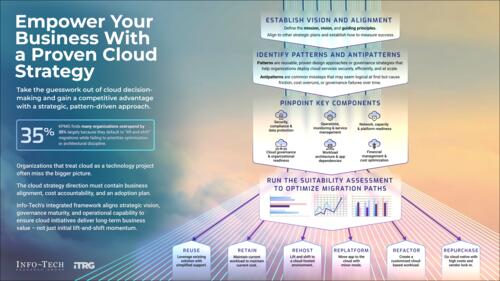
Most local governments are past the whether-to-adopt question and now face governance, cost control, and security across hybrid and multicloud environments. Cloud is the enabling infrastructure for AI, modern applications, and remote work, so the lingering gap with the private sector is increasingly hard to justify.
Why It Matters
Cloud maturity is what makes AI and modern service delivery possible.
NASCIO's 2025 State CIO Survey shows steady migration of email, collaboration, service management, and project portfolio tools to the cloud, with many states also moving mainframe workloads (NASCIO, 2025). Governments that treat cloud-smart portfolio management as an ongoing discipline, and pool regional cloud services, will optimize cost and unlock AI workloads.
The Solution
Assess and design the architecture.
Evaluate current infrastructure and design a scalable, interoperable architecture spanning on-premises, private, and public cloud.
Govern data and security.
Set data management policies and security controls such as identity management and encryption across the hybrid multicloud environment.
Manage cloud as an ongoing discipline.
Define roles, SLAs, and monitoring, and treat cloud-smart portfolio management as continuous, not a one-time migration.



Equip first responders with modern technology
The Challenge
Navigate rising technology complexity and accountability in public safety.
New capabilities such as AI-assisted dispatch, body-camera data management, and license plate recognition offer real operational gains but raise equity, privacy, and civil-liberties concerns. Decisions here face intense public scrutiny, so governance and community trust must come first.
Why It Matters
Public safety now runs on dedicated digital infrastructure that demands disciplined governance.
FirstNet, the nationwide public safety broadband network, completed its initial buildout in 2023, covers about 99% of the population, and serves roughly 30,000 agencies, making connected, data-rich response the norm (FirstNet Authority, 2024). Governments that pair these capabilities with responsible-AI frameworks and community engagement will avoid the high-profile failures that follow ungoverned deployments.
The Solution
Prioritize capabilities and value.
Focus on the outcomes a technology delivers rather than the technology itself, and address governance at the front end.
Balance governance and urgency.
Address funding-model barriers while building the governance that public-safety technology requires before deployment.
Engage the community.
Communicate transparently and collaborate with stakeholders to build trust and support for public-safety technology decisions.


Tighten vendor and contract management
The Challenge
Bring structure to vendor management as technology procurement grows more complex.
Local governments rely heavily on external vendors for core systems, cloud, and AI tools, yet often lack governance frameworks, inviting lock-in, SLA failures, and vendor-driven decisions. When a contract fails or a platform locks in, the cost is immediate and public.
Why It Matters
Disciplined vendor and contract management is a direct lever on cost and risk.
GAO reports that agencies have saved about $4.6 billion since 2014 through better software license management alone, illustrating the value left on the table without oversight ("Veterans Affairs: Actions Needed to Address Software License Challenges," GAO, 2025). As cloud and AI vendor relationships grow more complex, structured vendor governance protects public investment and the continuity of critical services.
The Solution
Define vision and governance.
Establish a vendor management governance structure with clear roles, decision rights, and performance metrics.
Assess and categorize vendors.
Inventory vendors, contracts, and services, categorize them by criticality, and track costs and deliverables over time.
Communicate and train.
Share program objectives and procedures with stakeholders and train staff so vendor management is consistent and avoids lock-in and overruns.
Comprehensive Government - Local & Municipalities Industry Coverage

Testimonials

“The quality of the Info-Tech deliverables was outstanding, and they really took the time to understand our business. I’m starting to look at Info-Tech as a trusted partner.”
Tony Ventura, Director, Information Technology Services, Peel Regional Police
View Full Case Study
"Having more voices, feedback, and ideas to help make a good decision is where Info-Tech has been invaluable to me.”
Tim Moody, CTO, City of Savannah
View Full Case Study
“My overall objective was to find a partner to work alongside us in the same direction that we were heading. I found that in Info-Tech." was the right partner. Not only are they strategists and analysts, but they’re also a true partner.”
Dorothy Parks, CIO, Gwinnett County
View Full Case Study