





Improve cost efficiency, visibility, and margin performance
The Challenge
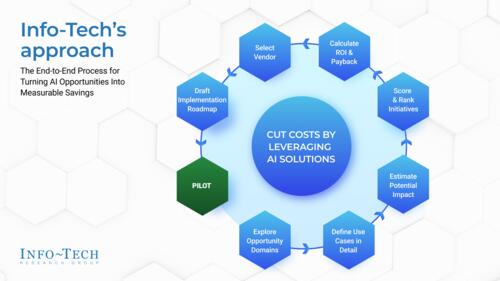
Reduce expenses while protecting margins and service quality
Financial institutions are under pressure from higher funding costs, deposit competition, claims inflation, regulatory costs, and ongoing investment demands. However, manual processes, legacy platforms, fragmented operating models, and disconnected cost data make it difficult to understand the true cost of serving customers, products, channels, and business lines. The challenge is reducing expenses while improving cost transparency, protecting margins, and maintaining service quality, compliance, and growth capacity.
Why It Matters
Operating inefficiency directly limits growth capacity
Operating inefficiency directly limits profitability across financial services by increasing cost-to-income ratios, claims and underwriting expenses, and operational friction in banking, insurance, wealth, and capital markets. Without clear cost visibility, leaders risk cutting the wrong areas, underinvesting in high-value capabilities, and missing margin leakage across products, customers, channels, and technology spend. With revenue growth slowing, banks must cut costs faster to protect returns: McKinsey estimates AI adoption could drive up to 20% in net cost reductions across the industry, while players that fail to adapt risk a $170 billion erosion of global profit pools ("Global Banking Annual Review 2025," McKinsey, 2025).
The Solution
Improve enterprise cost visibility
Implement integrated analytics tools and platforms to provide better visibility into cost-to-serve, margin leakage, and performance variation across business lines.
Control technology and vendor costs
Implement IT financial management, vendor management, and cloud cost management tools to reduce redundant spend and improve visibility into technology cost drivers.
Clearly articulate the business value of IT
Establish IT financial management, value tracking, and portfolio reporting practices that connect technology spend to business outcomes, risk reduction, operational efficiency, and growth enablement.



Protect against fraud and financial crime and strengthen digital trust
The Challenge
Combat increasingly sophisticated fraud, scams, cyber threats, and financial crime
Fraud and financial crime are evolving faster than traditional risk controls can detect and respond. Real-time payments, digital onboarding, mobile banking, and open banking have expanded the number of channels where customers can be exploited. Financial institutions face greater difficulty distinguishing legitimate customer activity from suspicious behavior without adding friction to the customer experience.
Why It Matters
Trust is the core product of financial services
Fraud losses, cyber incidents, AML failures, or payment disruptions can damage customer confidence, increase regulatory scrutiny, and create significant financial and reputational consequences. Institutions must protect customers and the financial system without making legitimate transactions unnecessarily difficult. US consumers reported losing more than $12.5 billion to fraud in 2024, a 25% increase in a single year, underscoring how quickly scams are outpacing legacy controls ("New FTC Data Show a Big Jump in Reported Losses to Fraud," FTC, 2025).
The Solution
Modernize fraud detection
Use AI, behavioral analytics, transaction monitoring, and real-time risk scoring to detect suspicious financial activity.
Strengthen identity, authentication, and customer protection
Improve digital identity verification, biometric authentication, fraud detection, and customer education to prevent fraud while maintaining a smooth experience for legitimate transactions.
Integrate anti-money laundering (AML), fraud, cyber, and risk intelligence
Connect financial crime, cybersecurity, compliance, and customer servicing data to improve detection, investigation, and case management.


Accelerate speed to market for new products
The Challenge
Reduce delays in product development and commercialization
Financial institutions need to launch new products, digital services, pricing changes, embedded offerings, and customer experiences faster without increasing risk. Legacy platforms, complex approval processes, regulatory controls, and siloed delivery models often slow innovation and limit responsiveness to market opportunities.
Why It Matters
Capture growth opportunities before competitors
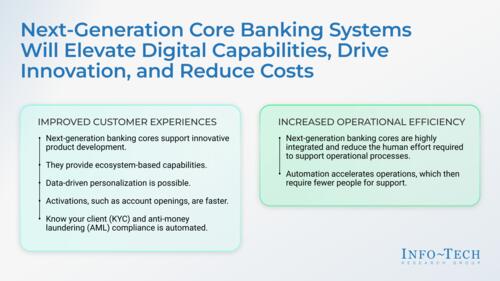
Institutions that accelerate product and service delivery can respond faster to customer needs, fintech competition, regulatory changes, and emerging market opportunities. Speed to market is now a top driver of core modernization: Legacy cores can stretch product launches into months or years, while modern, modular platforms let banks launch and adapt far faster ("Core Banking Technology Modernisation," EY, 2025).
The Solution
Enable modular product architecture
Use application programming interfaces (APIs), microservices, configurable platforms, and reusable components to launch and modify products faster.
Digitize governance and approvals
Implement workflow orchestration, AI, and compliance-by-design processes to accelerate review cycles while maintaining control.
Embed security into product delivery and release cycles
Adopt secure coding standards, automated vulnerability scanning, dependency checks, and secure release so products move faster with less risk.

Modernize customer experience to deepen relationships
The Challenge
Meet rising expectations for seamless and personalized financial experiences
Customers increasingly expect real-time, personalized, convenient experiences across mobile banking, online portals, contact centers, branches, and embedded financial channels. However, many financial institutions still operate with fragmented customer profiles, product-centric systems, slow onboarding, disconnected servicing processes, and limited visibility across the full customer relationship.
Why It Matters
Customer loyalty is harder to maintain as switching barriers decline
Banks, insurers, wealth firms, and payment providers are competing against fintechs, digital banks, neobanks, insurtechs, and robo-advisors. Poor experiences can reduce product adoption, weaken cross-sell opportunities, and ultimately push customers to organizations that can engage them more effectively across the full relationship. The global neobanking market grew from $143.29 billion in 2024 to a projected $210.16 billion in 2025, a signal of how fast digital-first challengers are capturing relationships ("Neobanking Market Size," Fortune Business Insights, 2025).
The Solution
Develop a unified customer data foundation
Build a single view of the customer across financial products, enabling financial institutions to understand total customer value, anticipate needs, and deliver more consistent experiences across business lines.
Modernize digital engagement platforms
Enhance mobile, online, contact center, branch, advisor, and broker platforms to deliver consistent, low-friction experiences across every financial touchpoint.
Enable real-time personalization and next-best action
Use AI, analytics, and decisioning engines to deliver tailored product recommendations, insights, renewal prompts, risk alerts, and proactive service interventions.


Adapt to rising regulatory and compliance demands
The Challenge
Navigate expanding regulatory complexity
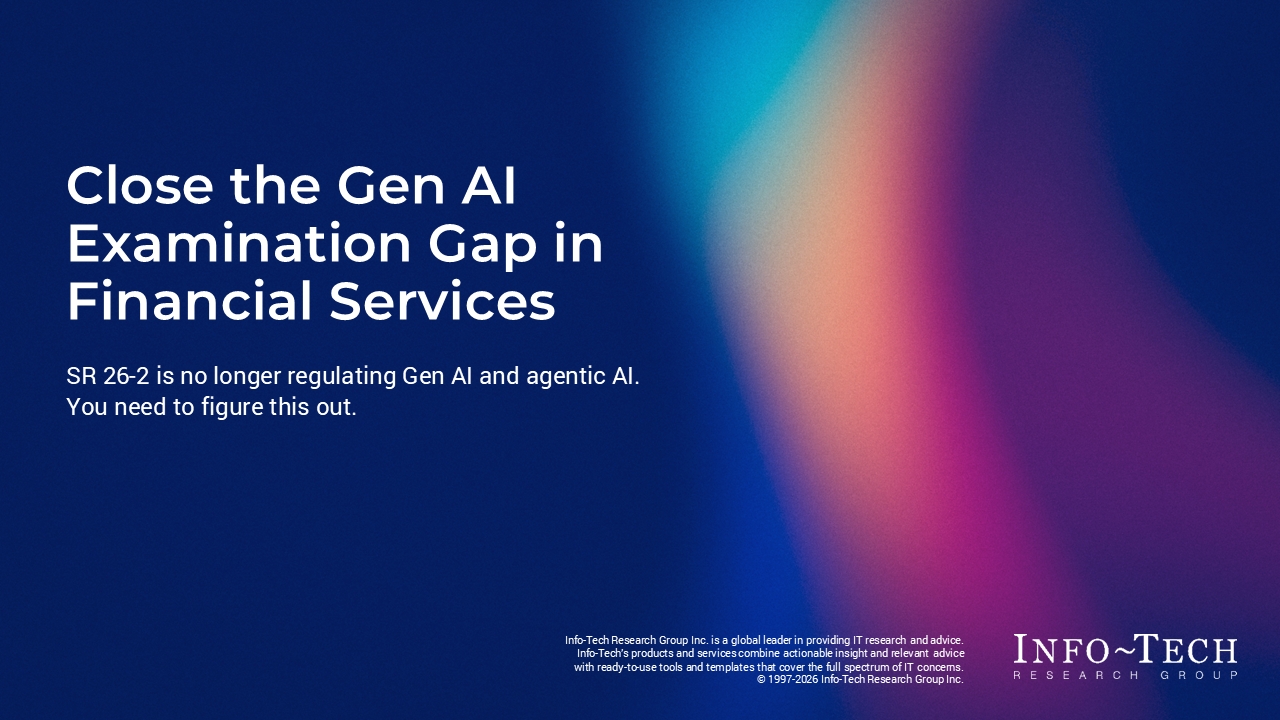
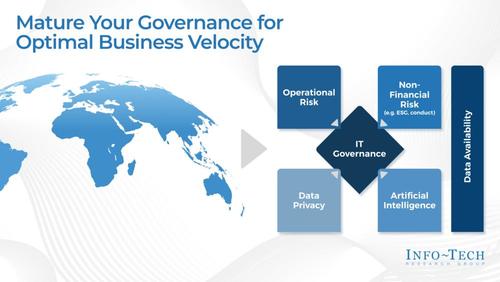
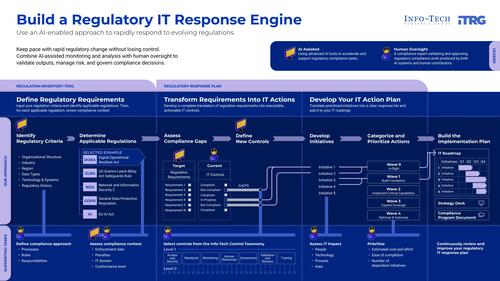
Financial institutions are facing growing expectations across consumer protection, privacy, AI governance, operational resilience, fraud, and climate-related disclosure. Regulatory change is increasing while institutions are also trying to innovate and modernize faster.
Why It Matters
Reduce compliance risk without slowing business change
Organizations that manage regulatory change more effectively can reduce exposure to penalties, improve stakeholder confidence, and accelerate innovation without weakening governance or control. Regulatory volume keeps climbing: between June 2024 and May 2025, CUBE captured 157 financial services regulatory insights tied to AI alone, nearly double the prior year ("The Cost of Compliance Report 2025," CUBE, 2025).
The Solution
Centralize regulatory change management
Use governance, risk, and compliance (GRC) platforms to track requirements, assign accountability, and monitor compliance obligations across business units.
Automate controls and reporting
Implement automated controls and reporting tools with human-in-the-loop workflows to reduce manual compliance effort.
Embed compliance into delivery processes
Use compliance workflows, data lineage, model governance, and risk assessment tools to integrate control requirements earlier in product and technology delivery.

Improve operational resilience and service continuity
The Challenge
Maintain critical financial services during disruption
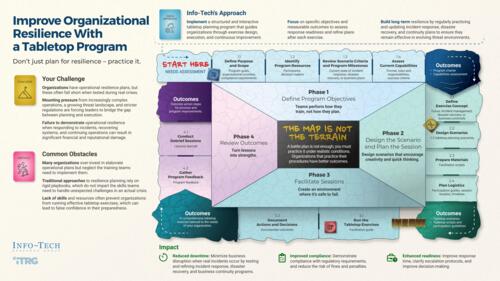
Financial institutions face growing exposure to cyberattacks, outages, third-party failures, and disruptions across payment, trading, lending, claims, and servicing operations. As financial services become more digital, interconnected, and dependent on external providers, disruption can happen faster and outside the organization's direct control, resulting in downtime having a greater impact on customers and markets.
Why It Matters
Protect trust and business continuity
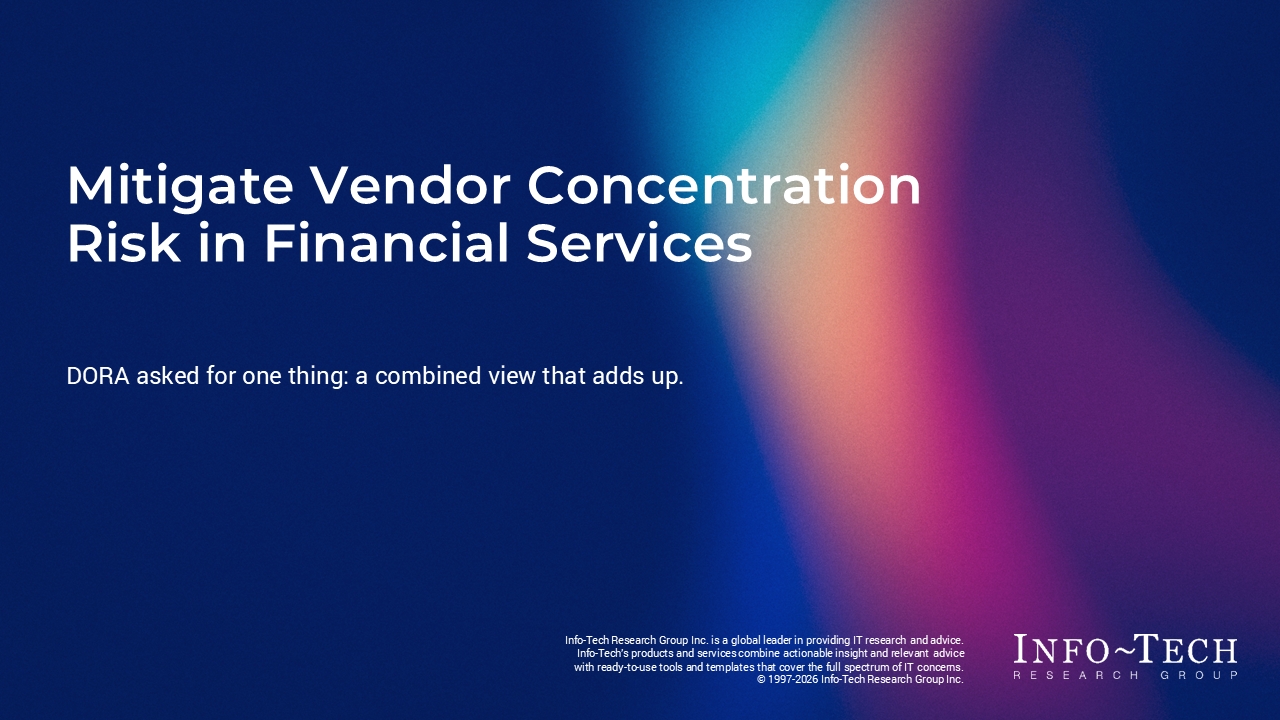
Organizations that improve resilience can maintain customer access, reduce operational disruption, limit losses, and demonstrate confidence to regulators, customers, and business partners. Resilience is now a hard regulatory line: the EU's Digital Operational Resilience Act (DORA) took effect on 17 January 2025, and in November 2025, supervisors named 19 critical ICT providers subject to direct oversight, with serious breaches punishable by fines up to 10% of annual turnover ("Digital Operational Resilience Act," EIOPA, 2025).
The Solution
Map and monitor critical services
Use service mapping, dependency management, and operational monitoring tools to identify the systems, vendors, and processes that support critical business services.
Strengthen cyber and technology resilience
Improve identity controls, incident response, backup and recovery, endpoint security, and cloud resilience capabilities.
Strengthen third-party resilience and recovery readiness
Identify critical third-party dependencies across business services, technology platforms, vendors, payment networks, and cloud providers.

Build a digitally enabled workforce
The Challenge
Equip financial services employees to deliver faster, more informed, and more compliant service
Financial services employees are under increasing pressure to serve customers quickly while managing more complex products, regulations, and digital expectations. Many institutions have not yet equipped their workforce with the skills, tools, or operating models needed to make that shift effectively.
Why It Matters
Employee capability directly affects customer trust, risk outcomes, and productivity
Employees play a critical role in financial services, and if they do not have the tools or information, customers experience delays, inconsistent answers, and lower-quality advice. Institutions that build a digitally enabled workforce can improve service quality, reduce operational costs, strengthen compliance, and free employees to focus on higher-value relationship and advisory work. The payoff is already visible: in NVIDIA's 2026 State of AI in Financial Services survey, 52% of firms cited operational efficiency and 48% cited employee productivity as the biggest improvements AI has delivered (NVIDIA, 2026).
The Solution
Build AI, data, and risk literacy
Train employees to use AI, analytics, customer data, fraud indicators, privacy controls, and regulatory guidance responsibly in day-to-day work.
Equip employees with digital service tools
Implement digital tools for employees across the organization to enable them to better serve customers and complete tasks.
Redesign roles and ways of working around AI
Update operating models, job roles, and performance expectations so employees can shift routine tasks to AI and focus on advisory, judgment, and relationship work.

Modernize legacy operations to reduce complexity
The Challenge
Overcome fragmented and inefficient operating environments
Many financial institutions still rely on legacy core systems, manual processes, duplicated data, and product-specific operating models. This creates complexity across operations and poses risk as fewer employees understand how to operate, maintain, or safely change aging systems, increasing dependence on scarce institutional knowledge.
Why It Matters
Improve efficiency, responsiveness, and operational continuity across the business
Organizations that reduce operational complexity can lower cost-to-serve, improve processing speed, reduce errors, and create more consistent customer and employee experiences. Modernizing legacy operations also reduces reliance on hard-to-replace technical knowledge, making it easier to maintain critical services and modernize without adding more risk or operational burden. The drag is real: on average about one-fifth of bank technology budgets is consumed by maintaining legacy systems and day-to-day running rather than innovation ("Modernizing Legacy Systems in Banking," Deloitte, 2025).
The Solution
Rationalize and modernize core platforms
Use phased modernization, application rationalization, and platform consolidation to reduce technical and operational complexity.
Automate operational workflows
Implement workflow automation to reduce manual effort and processing delays.
Improve process and data standardization
Use common data models, standardized workflows, and integrated operating platforms to improve consistency across business lines.


Sharpen credit, risk, and capital decisions
The Challenge
Sharpen risk and capital decisions as market conditions shift
Economic uncertainty, consumer financial stress, commercial credit pressure, claims volatility, climate exposure, and changing capital expectations are making it harder for financial institutions to assess risk and allocate capital effectively. Many institutions still rely on fragmented data, lagging indicators, disconnected models, and manual reporting processes that limit visibility into emerging risk exposure.
Why It Matters
Risk visibility directly affects profitability and financial resilience
Organizations that improve risk intelligence can make more informed lending, underwriting, reserving, investment, and capital allocation decisions before conditions materially worsen. Stronger risk decision-making reduces unexpected losses, protects capital, and improves portfolio performance. Institutions see the upside: 47% of financial institutions rank productivity uplift as the top reason for adopting Gen AI in credit, with early-warning and credit-decisioning among the most piloted use cases ("Banking on Gen AI in the Credit Business," McKinsey, 2025).
The Solution
Strengthen enterprise risk data foundations
Modernize risk data architecture by integrating credit, market, liquidity, operational, portfolio, customer, and external data into governed enterprise data platforms.
Improve executive decision intelligence and risk reporting
Enhance dashboards, decision support tools, and automated reporting capabilities to provide more timely, trusted insight into risk.
Deploy advanced and AI-enabled risk analytics
Use machine learning, scenario modeling, and early warning indicators to detect credit, market, and portfolio risk shifts earlier and stress-test capital under multiple conditions.

Modernize payments for a real-time economy
The Challenge
Adapt to faster, more digital, and more embedded money movement
Payments are becoming faster, more connected, and more embedded into everyday customer and business activity. Real-time payments, open banking, embedded finance, and instant settlement expectations are changing how money moves across the financial system. Many institutions still rely on aging payment infrastructure, batch-based processing, fragmented fraud controls, and manual reconciliation processes that make it difficult to support faster, more flexible, and more secure payment experiences.
Why It Matters
Payments are a strategic battleground
Organizations risk losing transaction volume, customer engagement, and ecosystem relevance if they cannot support fast, secure, and convenient payment experiences. Modern payment capabilities help financial institutions protect customer relationships, reduce operational friction, support new revenue models, and participate in emerging digital financial ecosystems. Real-time volume is scaling fast: the real-time payments (RTP) network processed $405 billion in the fourth quarter of 2025, up from $80 billion a year earlier, while FedNow volume grew about 460% year over year (Fiserv, 2026).
The Solution
Modernize payment infrastructure
Implement payment hubs, real-time payment connectivity, API-enabled payment services, and modern reconciliation capabilities to support faster, more reliable, and flexible money movement.
Strengthen payment risk and fraud controls
Use real-time transaction monitoring, behavioral analytics, and risk scoring to detect suspicious activity without creating unnecessary friction.
Enable secure ecosystem and partner integration
Develop API, identity, security, and consent management capabilities to allow the organization to safely participate in modern payments.

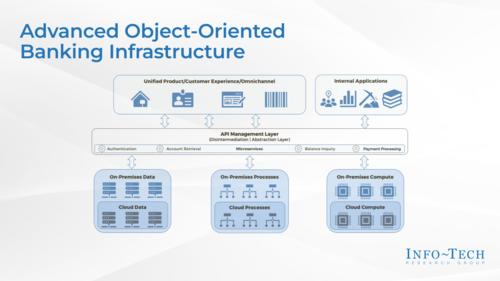
Comprehensive Financial Services Industry Coverage


Testimonials

“Info-Tech analysts are spot on – they have the industry expertise to tell you why projects fail and why projects succeed. I also have to mention the volume of research materials Info-Tech has on its portal – it’s massive.”
Joseph Paulraj, EVP, Chief Digital Officer, Capital Farm Credit
View Full Case Study
“We are being challenged to innovate and create a difference in our service. IT’s role is critical, and we’re working with the rest of the business to bring that innovation forward.”
Scott Ferguson and Cathy Menard, Libro Credit Union
View Full Case Study
“I needed to find a partnership that could help us access trusted research, make IT decisions faster, and give me and my management team the leadership skills we needed to build relationships with the business.”
Brian Mulcahey, CIO, Executive VP, Sunflower Bank, N.A.
View Full Case Study


