



Govern AI before it scales campus-wide
The Challenge
AI is spreading faster than anyone is governing it.
AI tools are already in classrooms, advising offices, and back-office workflows, often with no single owner or policy. Faculty, staff, and students adopt generative tools faster than governance, data-privacy, and academic-integrity rules can keep up, leaving exposure scattered across the institution. The question is no longer whether to allow AI but rather who sets the guardrails before an incident sets them for you.
Why It Matters
AI trust now underpins institutional credibility.
AI has become a board-level priority, and institutions that wait to govern it will inherit risk they never approved. With 57% of higher education leaders now calling AI a strategic priority and only 11% reporting no AI strategy at all, the gap is no longer awareness but coordinated control, making this the year to move from scattered pilots to one accountable framework (AI Landscape Study, EDUCAUSE, 2025).
The Solution
Stand up an AI governance council.
Charter a cross-functional group spanning the provost, CIO, general counsel, and faculty senate to own AI policy, approve use cases, and review risk.
Publish acceptable-use and academic-integrity guidance.
Give faculty and students clear, written rules on permitted AI use, disclosure, and assessment so adoption is consistent across colleges.
Adopt a recognized AI risk framework.
Map institutional use cases to the NIST AI Risk Management Framework so privacy, bias, and security reviews are repeatable rather than ad hoc.


Turn AI pilots into measurable value
The Challenge
Pilots are multiplying, but proven value is not.
Many campuses now run dozens of AI experiments, but few can show what those pilots returned in saved hours, retained students, or reduced cost. Enthusiasm has outpaced measurement, and promising tools stall in pilot purgatory because no one defined success up front. Without a value discipline, AI spending becomes a collection of demos rather than institutional capability.
Why It Matters
Value, not volume, defines AI leadership.
The institutions pulling ahead are not the ones with the most pilots but the ones that scale the few that pay off. As AI shifts from novelty to a strategic priority for the majority of leaders, the advantage in the year ahead goes to those who tie each use case to a hard metric before funding it (AI Landscape Study, EDUCAUSE, 2025).
The Solution
Prioritize use cases by value and feasibility.
Score candidate projects on expected impact and effort so funding flows to high-return work like enrollment operations and student support, not novelty.
Define success metrics before the pilot.
Set the baseline, target, and owner for every pilot so results in cost, time, or retention can be measured and defended.
Build a path from pilot to production.
Agree on what data, security, and budget criteria a pilot must clear to scale so winners move quickly instead of restarting reviews.


Turn the enrollment cliff into a recruiting edge
The Challenge
Recruiting harder will not beat demographics.
The pool of traditional college-age students is shrinking, and recruiting harder against the same prospects will not hold enrollment. Disconnected admissions, advising, and student-success systems mean institutions often cannot see which prospects are melting away or which enrolled students are about to stop out. Demographics are fixed, but the institution's ability to act on its own data is not.
Why It Matters
Demographics now dictate enrollment strategy.
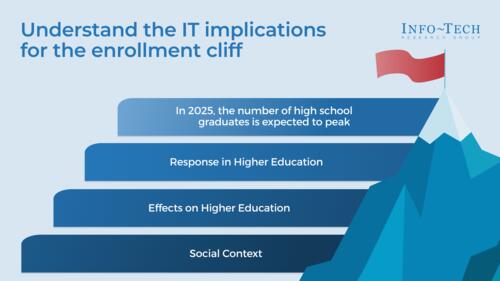
The demographic squeeze is measurable and not unique to the US – falling birth rates are shrinking the college-age population across much of the developed world. In the US specifically, high school graduates are projected to peak in 2025 and then decline roughly 13% through 2041, with 38 states losing graduates ("Knocking at the College Door," WICHE, 2024). That makes the next few years the window to convert and retain students with connected data, before the decline fully arrives.
The Solution
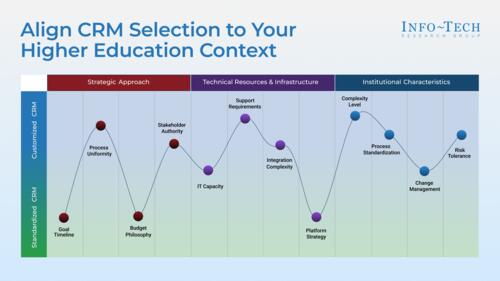
Unify recruiting and retention data in a modern CRM.
Connect admissions, financial aid, and advising records so staff see one view of each prospect and student instead of siloed snapshots.
Deploy early-alert and student-success analytics.
Use student information system (SIS) and learning data to flag at-risk students early enough for advisors to intervene and protect retention revenue.
Target recruiting at growth segments and geographies.
Use the institution's own yield data plus state-level graduate projections to focus spend where prospects are actually increasing.

Treat institutional data as a trusted, governed asset
The Challenge
Institutional data is not yet something leaders can trust.
Student, financial, and research data sit in disconnected systems with no clear owners, inconsistent definitions, and uneven quality. Leaders asking a simple question, like how many students are truly active, get different answers from different offices, and AI and analytics built on that foundation only amplify the errors. Data cannot be a strategic asset until someone is accountable for it..
Why It Matters
Trusted data is the foundation for everything else.
Every AI ambition, retention model, and efficiency play depends on data the institution can actually trust, which is why governance has moved from back-office hygiene to strategic priority. With higher education already facing a confidence problem, the institutions that define ownership and quality now will be the ones whose numbers withstand scrutiny from boards, regulators, and the public ("Top 10 IT Issues," EDUCAUSE, 2025).
The Solution
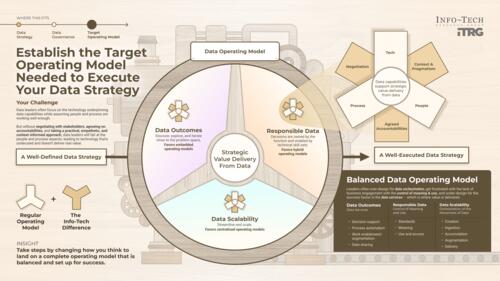
Assign data owners and stewards by domain.
Name accountable owners for student, finance, HR, and research data so every critical dataset has someone responsible for its definition and quality.
Establish a common data dictionary and quality standards.
Agree shared definitions and quality rules for core metrics so reports reconcile across offices instead of competing.
Treat high-value data sets as managed products.
Give priority datasets like the student record a documented source, access policy, and service level so analytics and AI teams can reuse them safely.


Defend an open academic environment from cyberthreats
The Challenge
Open campuses are high-value, soft targets.
Universities run open networks, bring-your-own-device access, and sprawling third-party ecosystems, which makes them high-value, soft targets for ransomware and data theft. Security teams face rising attacks while juggling federal compliance, research-data protection, and tight budgets, and a single vendor breach can expose data the institution never directly controlled. Defending a campus is a coordination problem as much as a technical one.
Why It Matters
Security can no longer rest on a small team.
Threats are escalating exactly as security teams are stretched thinnest: This year's workforce research finds higher education security and privacy teams overwhelmed by excessive workloads, understaffing, and limited institutional support ("Cybersecurity and Privacy Workforce," EDUCAUSE, 2025). The realistic path forward is not heroics from a small team but making security a shared, campus-wide responsibility now.
The Solution
Adopt a security framework and expand multifactor authentication.
Anchor the program in the NIST Cybersecurity Framework and extend multifactor authentication across students, faculty, and staff to close the most exploited gap.
Run a third-party and vendor risk program.
Require security reviews and breach-notification terms for SaaS and edtech vendors so partner failures do not become institutional breaches.
Build a culture of shared cybersecurity.
Integrate role-based awareness training and clear reporting paths into daily work so the wider community strengthens defenses rather than weakening them.




Unify a fragmented application landscape
The Challenge
Years of departmental buying left a tangled application estate.
Decades of departmental buying have left campuses with hundreds of overlapping applications, aging ERP systems, and duplicate spend no one fully tracks. Integrations are brittle, data is trapped, and every new tool adds cost and security surface without retiring the old one. Modernization stalls because the portfolio is too tangled to change safely.
Why It Matters
Simplifying technology is now a credibility move.
A bloated application estate quietly taxes every other priority, from AI to student experience, and erodes the efficiency the public now expects from higher education. With confidence in the sector having fallen from 57% to 36% over the past decade, rationalizing technology is no longer just an IT cleanup but a visible step toward running leaner and more credibly ("Top 10 IT Issues," EDUCAUSE, 2025).
The Solution
Build a full application portfolio inventory.
Catalog every application with its owner, cost, and business value so leaders can see overlap and candidates for retirement.
Rationalize and consolidate redundant systems.
Retire or merge duplicate tools against a target architecture to cut license spend and shrink the integration and security burden.
Set an ERP modernization roadmap.
Decide deliberately whether to reimplement, move to cloud, or extend the core system, sequencing the change around academic and fiscal calendars.


Modernize teaching and research for the AI era
The Challenge
Teaching and research are being redefined by AI.
Generative AI is reshaping how students learn and how faculty teach and conduct research, yet course design, assessment, and research computing have not caught up. Faculty want support and clear policy, not just tools dropped on them, and research teams need infrastructure that keeps pace with data-intensive work. Pedagogy and research are being redefined whether or not the institution leads the change.
Why It Matters
Capability, not access, defines the AI advantage.
The competitive edge is shifting from who has AI to whether people can use it well, putting faculty and student capability at the center of the strategy. Because institutions are already pouring effort into faculty and staff AI training as adoption spreads across teaching and operations, those that pair tools with sound pedagogy now will define learning quality for the next decade ("AI Landscape Study," EDUCAUSE, 2025).
The Solution
Invest in faculty AI and digital pedagogy support.
Support faculty with training, guidance, and instructional design help so they can update courses, assignments and assessments for a world where students are using ai.
Modernize the learning environment and academic-integrity approach.
Update learning management system (LMS) capabilities and assessment design so learning stays rigorous and authentic as AI tools become routine.
Strengthen research computing and data management.
Provide the high-performance computing, storage, and research-data support that data-intensive and AI-driven research now requires.


Free budget through disciplined IT spend
The Challenge
Flat budgets collide with rising demand.
IT budgets are flat or shrinking while demand for AI, security, and modernization climbs, forcing hard trade-offs. Costs are often spread opaquely across departments, so leaders cannot see what technology truly costs or what it delivers, and easy cuts risk hitting the wrong things. Without cost transparency, every funding conversation becomes a fight rather than a decision.
Why It Matters
Innovation now has to fund itself.
Self-funding is now the realistic way to pay for innovation, since few institutions will receive large new IT budgets in a constrained environment. With the sector under intense pressure to operate efficiently and rebuild public confidence, the discipline to show and reallocate IT spend is what frees the dollars for AI and security this year (EDUCAUSE Top 10 IT Issues, 2025).
The Solution
Build a transparent, defensible IT budget.
Present technology cost by service and business capability so leaders can weigh value, not just line items, in funding decisions.
Reclaim savings from rationalization and cloud.
Redirect dollars freed by retiring redundant applications and right-sizing cloud and licensing into priority investments.
Show IT cost back to the business.
Give deans and unit leaders visibility into the technology they consume so demand is managed and trade-offs are owned across the institution.


Coordinate enterprise risk in one operating model
The Challenge
Risk is managed in disconnected corners.
Cybersecurity, compliance, research security, business continuity, and AI risk are often managed in separate corners with no shared view. When a crisis hits, from a ransomware event to a funding shock, the institution discovers that its plans, owners, and data do not connect. Risk that is everyone's job in pieces ends up being no one's job as a whole.
Why It Matters
Constant disruption demands a coordinated response.
Disruption in higher education is now constant rather than occasional, and fragmented risk management leaves leaders reacting instead of steering. With security and privacy teams already overstretched and threats rising, consolidating risk into one operating model is what lets the institution respond as a whole this year rather than scrambling function by function ("Cybersecurity and Privacy Workforce," EDUCAUSE, 2025).
The Solution
Maintain an enterprise risk register with clear owners.
Track top institutional risks, their owners, and mitigation status in one place reviewed regularly by leadership.
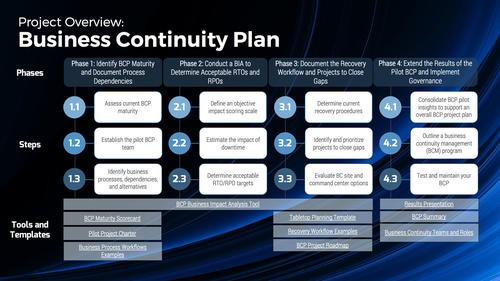
Develop and test business continuity and incident response plans.
Document and rehearse response for ransomware, outages, and data loss so recovery is practiced, not improvised.
Integrate cyber, compliance, and research-security risk.
Connect these programs under shared governance so federal mandates and research-data obligations are met without duplicated effort.
Meet digital accessibility mandates
The Challenge
Accessibility mandates are tightening across jurisdictions.
Governments worldwide are making digital accessibility a legal requirement for higher education. In the US, a federal rule now requires public colleges and universities to make their websites, mobile apps, and digital content meet a specific accessibility standard, while the EU's European Accessibility Act and comparable laws in other regions impose similar obligations. Most institutions are not fully there, and years of inaccessible PDFs, course materials, and third-party tools have accumulated into a large remediation backlog. The obligation is no longer best practice but enforceable law with fixed deadlines.
Why It Matters
Accessibility is now a legal deadline, not a goal.
Accessibility has moved from a voluntary goal to a compliance deadline with legal and reputational stakes, and remediating thousands of documents and vendor tools takes far longer than the calendar suggests. The globally recognized benchmark is the Web Content Accessibility Guidelines (WCAG) 2.1 Level AA: in the US, the Department of Justice's 2024 ADA Title II rule mandates conformance by April 2027 for larger public entities and April 2028 for smaller ones, while comparable mandates such as the EU's European Accessibility Act (in force from 2025) apply elsewhere, making early, funded action essential.
The Solution
Audit digital assets against recognized accessibility standards.
Inventory websites, apps, documents, and course content and baseline them against WCAG 2.1 AA and any standards required in your jurisdiction to size the remediation effort.
Require accessibility in procurement and vendor contracts.
Demand current accessibility conformance reports (such as a VPAT or local equivalent) and remediation commitments from edtech and SaaS vendors so new purchases do not add risk.
Build an ongoing remediation and governance program.
Assign owners, set templates, and prioritize student-facing content so accessibility is sustained, not a one-time scramble before each jurisdiction's deadline.
Comprehensive Education - Higher Education Industry Coverage



Testimonials

“Info-Tech provides actionable research that enables practical delivery of IT outcomes, leveraging high-pedigree analysts to provide insight, experience, and guided support.”
Scott Tully, Deputy Director, Office of the CIO, Curtin University
View Full Case Study
"The real value that Info-Tech provides is the outsider opinion that people listen to and the best practice research that makes implementation of a project easier."
Isaac Abbs, CIO, Pima Community College
View Full Case Study
“In education, we’ve got to do more with less. Our IT department is helping to innovate and bring novel ideas to some of those traditional problems.”
Dr. NeeCee Cornish, AVP of IT and Deputy COO, Western University of Health Sciences
View Full Case Study