
Optimize Your CX Strategy
Unify data, tech, and customer insights deliver AI-orchestration at scale.
- Outdated or surface-level buyer insights limit CX effectiveness.
- Fragmented data, siloed teams, and inconsistent messaging reduce ROI.
- Generic CX strategies fail to resonate with high-value buyers.
- Manual processes prevent personalization at scale.
- Misalignment between Marketing, Sales, and IT stalls transformation.
Our Advice
Critical Insight
True customer-centricity is achieved only when IT’s technology enablement and Marketing’s customer insight move in lockstep.
Impact and Result
- Identify current maturity, pain points, and growth opportunities.
- Improve alignment across business strategy, personas, journeys, and IT.
- Integrate AI where it strengthens scalability, using prompts, automation, and orchestration to reduce manual effort and improve personalization.
- Build a CX roadmap with measurable ROI and defensible competitive advantage.
Workshop: Optimize Your CX Strategy
Workshops offer an easy way to accelerate your project. If you are unable to do the project yourself, and a Guided Implementation isn't enough, we offer low-cost delivery of our project workshops. We take you through every phase of your project and ensure that you have a roadmap in place to complete your project successfully.
Module 1: Prepare for Workshop
The Purpose
Gather relevant business documentation and include necessary participants.
Key Benefits Achieved
Be ready to engage in the workshop.
Activities
Outputs
Review documented organizational strategy and strategic initiatives
- Activity outputs to be shared with workshop facilitator at Info-Tech
Select accounts in the ICP workbook (Account Journey tab) and outline two priority buyer personas with their specific journeys
Schedule Participants
Module 2: Establish Business Goals
The Purpose
Align business and customer priorities.
Key Benefits Achieved
- Document goals and expectations.
- Complete ideal customer profile.
- Draft personas for target segments.
Activities
Outputs
Review Business Strategy and align on high-value clients
- Workshop Expectations: Document participant goals and expectations.
Identify gaps and align on personas
- ICP Workbook: Completed profile of ideal customers
Draft initial personas with AI integration
- Persona Cards: Draft personas linked to target segments
Recap and finalize days findings
Module 3: Determine Growth Strategy
The Purpose
Develop AI-powered customer profiles and journey maps.
Key Benefits Achieved
- Align strategy with target personas.
- Focus on primary personas.
Activities
Outputs
Finalize top customer (3-5) personas
- Buyer-Aligned Messaging Matrix: Strategy aligned with target personas
Review messaging and compare against personas
Review process and workflow for demand creation and capture
Map Buyer Journey
- Map Buyer Journey: Focus on primary personas
Module 4: Define Product Strategy
The Purpose
Leverage automation to build a strategic CX roadmap.
Key Benefits Achieved
- Recorded list of human vs. automated touchpoints.
- Documented key hyper-personalization strategies.
- Documented CX initiatives.
Activities
Outputs
Review human touchpoints & automation for customer journey.
- Automation Opportunity Matrix: Recorded list of human vs. automated touchpoints
CX Trend Analysis and Horizon Scanning
- Trend Radar:Documented key hyper-personalization strategies
Orchestrate customer journeys into an actionable CX framework
- Customer Journey Map
- CX Strategic Planner: Documented CX initiatives
Module 5: Finalize CX Strategy
The Purpose
Build a technology enablement plan.
Key Benefits Achieved
Consolidated plan combining journey priorities, automation opportunities, and technology enablement.
Activities
Outputs
Review current technical architecture
- Architecture, Ecosystem Snapshot & Gap Analysis: Technology initiatives mapped to business goals and CX strategy
Map your technology and gaps to enable CX priorities
Prioritize initiatives to drive your CX strategy
- Technology Enablement Plan: Prioritized technology initiatives using the CX Portfolio Designer.
CX Roadmap
Summarize & recap findings into cohesive strategy
Optimize Your CX Strategy
Unify data, tech, and customer insights to deliver AI orchestration at scale.
ANALYST PERSPECTIVE
Align touchpoints to drive buyer decisions

Julie Geller
Principal Director of Research
Info-Tech Research Group
A well-defined CX journey is no longer optional – it’s the foundation for meeting the deeper needs of high-value customers. Yet many organizations undermine their own strategies through operational inefficiencies. Siloed teams, fragmented systems, outdated technology, and inconsistent messaging make CX efforts difficult to scale and sustain.
Closing this gap requires more than fixing silos or updating tools. It calls for a common operating model that connects data, technology, and customer insights so leaders can align teams and create journeys that adapt as customers do.
Purchasing decisions are shaped by more than transactions – they emerge from the interplay of functional requirements, subconscious triggers, and shifting market dynamics. This blueprint grounds CX design in decision intelligence, translating behavioral insights into actions leaders can trust.
Instead of treating journeys as static funnels, they become adaptive systems. By analyzing high-impact purchase drivers, organizations surface patterns that reveal where and how buyers are most likely to move, giving leaders the foresight to respond before demand peaks.
Advanced automation and predictive analytics then remove operational drag. Workflows streamline, friction fades, and personalization sharpens into precision, helping organizations deliver experiences that continuously outperform expectations.
This blueprint gives leaders a unified foundation of data, technology, and behavioral insight to align teams, streamline operations, and orchestrate adaptive journeys while applying automation where it delivers the greatest impact – fueling engagement, loyalty, and revenue to build a defensible competitive advantage.
Executive summary
Pain Points
Companies facing these challenges often rely on outdated or surface-level buyer insights, making it difficult to tailor CX strategies effectively. As a result, they experience:
- The inability to accurately define or target high-value buyer personas.
- Generic CX strategies that fail to resonate with diverse needs.
- Manual processes that limit personalization scalability.
- Missed revenue opportunities from inconsistent targeting and engagement.
Obstacles
Siloed data, slow AI/ML adoption, and internal resistance to data-driven decision-making prevent organizations from achieving CX excellence. Common barriers include:
- Fragmented data systems that hinder a unified view of customer behavior and intent.
- Limited AI/ML capabilities to analyze and act on real-time insights.
- Organizational resistance to data-driven decision-making.
- Misalignment between marketing, sales, customer service, and CX teams.
Info-Tech’s Approach
Through the Info-Tech approach, CX teams will
- Leverage AI-driven persona analysis to identify and prioritize the highest-value customer segments with precision.
- Integrate automation into critical touchpoints to deliver hyper-personalized experiences at scale while preserving essential human interactions.
- Assess enterprise technology capabilities and develop a phased roadmap that aligns IT infrastructure with CX objectives.
- Implement targeted CX initiatives with measurable ROI, tracked through executive-level KPIs that link directly to business outcomes.
“Your buyer personas should evolve faster than your customers do. Stale data creates stale experiences – and lost revenue.”
– Sarah Elmira, Author of The Adaptive Customer, Harvard Business Review, 2024
Understand the role of buyer personas and journeys in marketing
Aligning customer insights with business strategy
Buyer personas are not just abstract profiles of customer preferences – they serve as a strategic tool for aligning teams across Sales, senior leadership, Customer Service, and IT. When designed effectively, personas provide a clear framework for shaping customer journeys, ensuring every interaction is hyper-personalized and data-driven.
Personas lay the foundation for creating meaningful, high-impact experiences that reinforce the brand promise and seamlessly guide buyers through their journey. When combined with AI-driven insights, they become a dynamic strategy, continuously refining touchpoints to optimize engagement, loyalty, and revenue growth.
However, buyer behavior is constantly evolving. To stay relevant, well-defined personas require ongoing updates, ensuring businesses remain aligned with changing customer expectations and market shifts. By leveraging AI to monitor trends and refine strategies, organizations can maintain consistency across Marketing, Sales, and Customer Service, delivering measurable results at every stage of the journey.
Drive CX success through buyer personas and journeys
What is it?
A buyer persona and journey together represent an ideal customer and their path to purchase, helping businesses understand and optimize marketing, sales, and customer experience efforts. Orchestrating the journey ensures teams can identify key interactions, pain points, and decision drivers at every stage.
How are they made?
- Collect and analyze quantitative and qualitative research data.
- Identify common patterns and characteristics.
- Synthesize findings into semifictional representations.
- Include titles, demographic/firmographic details, and descriptions.
- Apply Jobs-to-Be-Done (JTBD) framework to focus on tasks, goals, and problems.
- Align with the functional and emotional needs of the audience.
- Map key journey stages to track buyer behaviors and optimize engagement, ensuring a seamless buying experience.
Why are they used?
- Deepen understanding of the target audience with your sellers and senior leadership team.
- Drive meaningful conversations that help accelerate sales velocity.
- Inform marketing strategies.
- Improve customer engagement.
- Enhance the overall brand and user experience.
- Enable tailored messaging and communication for specific customer segments.
- Refine touchpoints to seamlessly guide buyers and customers through journey.
Building engaging experiences requires deep customer understanding
Do you have a clear enough understanding of your customers to create an exceptional customer experience?
Achieving CX success goes beyond identifying your customers – it's about understanding the psychological drivers behind their purchasing decisions, both functional and emotional. Persona building is key to this insight.
To optimize CX, cross-functional teams must continuously integrate persona development and journey analysis. This foundational research should guide program changes, ensuring alignment with customer expectations. Companies that strategically navigate the market by leveraging these insights differentiate themselves from those experimenting without clear direction.
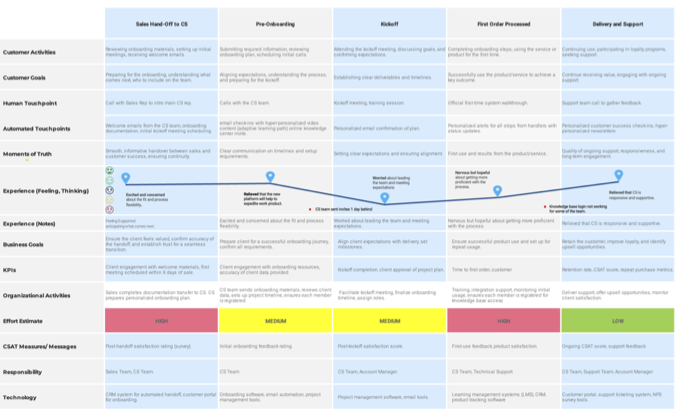
Speed of insights and hyper-personalization is the next frontier in B2B CX
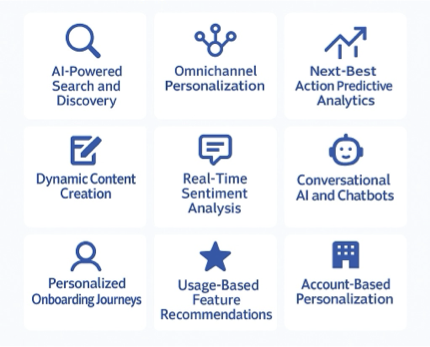
Generated using ChatGPT, May 2025
Hyper-personalization in B2B SaaS transcends traditional customization by leveraging real-time data, predictive analytics, and AI to deliver highly individualized experiences. From personalized onboarding to dynamic dashboards and feature recommendations, every interaction is tailored to user behavior and evolving needs.
AI-powered chatbots have become the first line of customer engagement. Rather than simply triaging questions, they use context and behavioral data to deliver intelligent, personalized responses. When integrated with customer relationship management (CRM) and account-based marketing (ABM) platforms, they unlock deeper buyer insights, reduce sales cycle friction, and improve conversion among high-value accounts.
As privacy regulations like GDPR continue to shape strategy, the future of personalization lies in predictive AI models and the integration of IoT signals. These tools enable even more context-rich, responsive experiences across the customer journey.
Hyper-personalization applications
DISCOVERY & INTELLIGENCE
AI-Powered Search and Discovery
Personalizes search results based on user role, behavior, and intent.
Next-Best Action Predictive Analytics
Recommends next actions or features based on behavioral and usage patterns.
Conversational AI and Chatbots
Provides contextual, AI-driven support and feature guidance in real time.
JOURNEY & EXPERIENCE
Real-Time Sentiment Analysis
Detects user sentiment and triggers interventions to improve engagement.
Personalized Onboarding Journeys
Orchestrates onboarding paths tailored to user role, company size, and use case.
Dynamic Content Creation
Autogenerates user-specific help content, training, and onboarding assets.
RECOMMENDATIONS & OPTIMIZATION
Usage-Based Feature Recommendations
Recommends features or modules based on real-time user behavior.
Account-Based Personalization
Personalizes product experience at the account level to support account-based experience (ABX).
Omnichannel Personalization
Aligns content and engagement across digital and human touchpoints.
Personas aren’t fictional – they’re data-backed buyer models
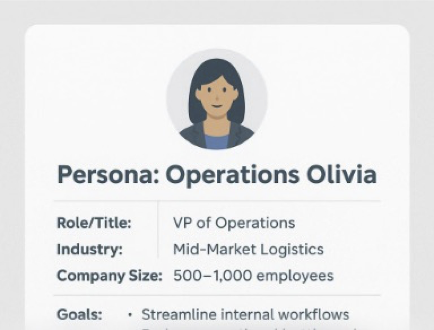
Generated using ChatGPT, May 2025
If your personas look generic or incorporate stock photos, it’s time to move on.
Outdated Approaches
Static Personas
Built once, rarely updated, not tied to actual buying behavior. Models are outdated before they’re applied.
Manual CX Mapping
Can’t keep up with multichannel, fast-changing customer signals. Fragmented systems hinder real-time insights.
Siloed Insights
Teams operate with different data, leading to misalignment across Sales, Marketing, and CS. Insights are disconnected from the broader GTM ecosystem.
Slow Feedback Loops
By the time insights reach the team, customers have already moved on. Analysis lags behind the moment of impact.
Disconnected Data Sources
Persona creation relies on assumptions rather than continuously updated engagement signals.
The New Baseline
Live Ideal Customer Profile (ICP) Validation
Continuously refine your ideal buyers by leveraging comprehensive usage, deal cycle, and win/loss data.
Behavior-Led Segmentation
Map journeys based on actual behavior, integrating signals from multiple channels for real-time precision.
Ops-Led Alignment
When the data layer is unified, GTM teams finally speak the same language. Systemic intelligence informs every touchpoint.
Data-Driven Personas
Leverage dynamic profiles built from real engagement data, continuously evolving with each interaction.
Leverage data layers to define and refine buyer attributes
Info-Tech’s proven approach transforms buyer data into clear, actionable CX strategies by uncovering insights and aligning them with growth objectives to sharpen your competitive edge.
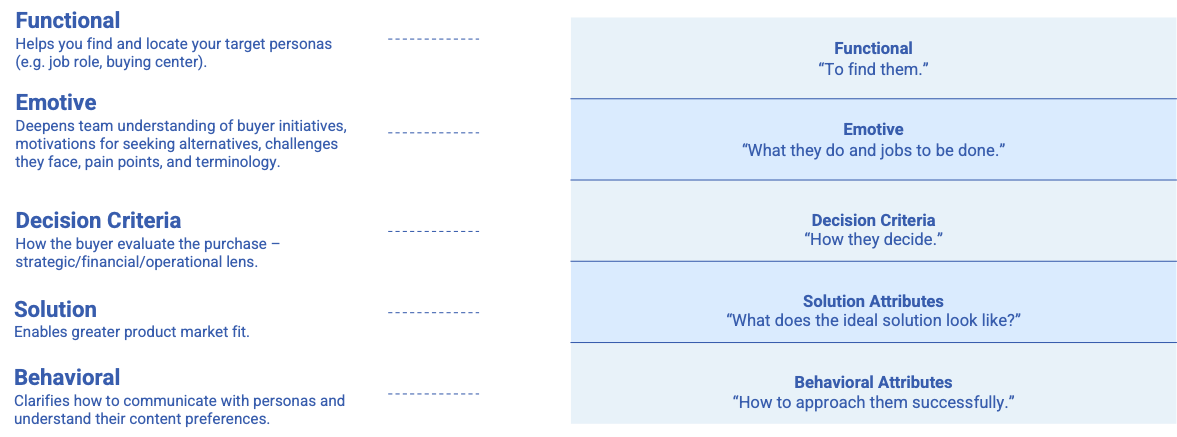
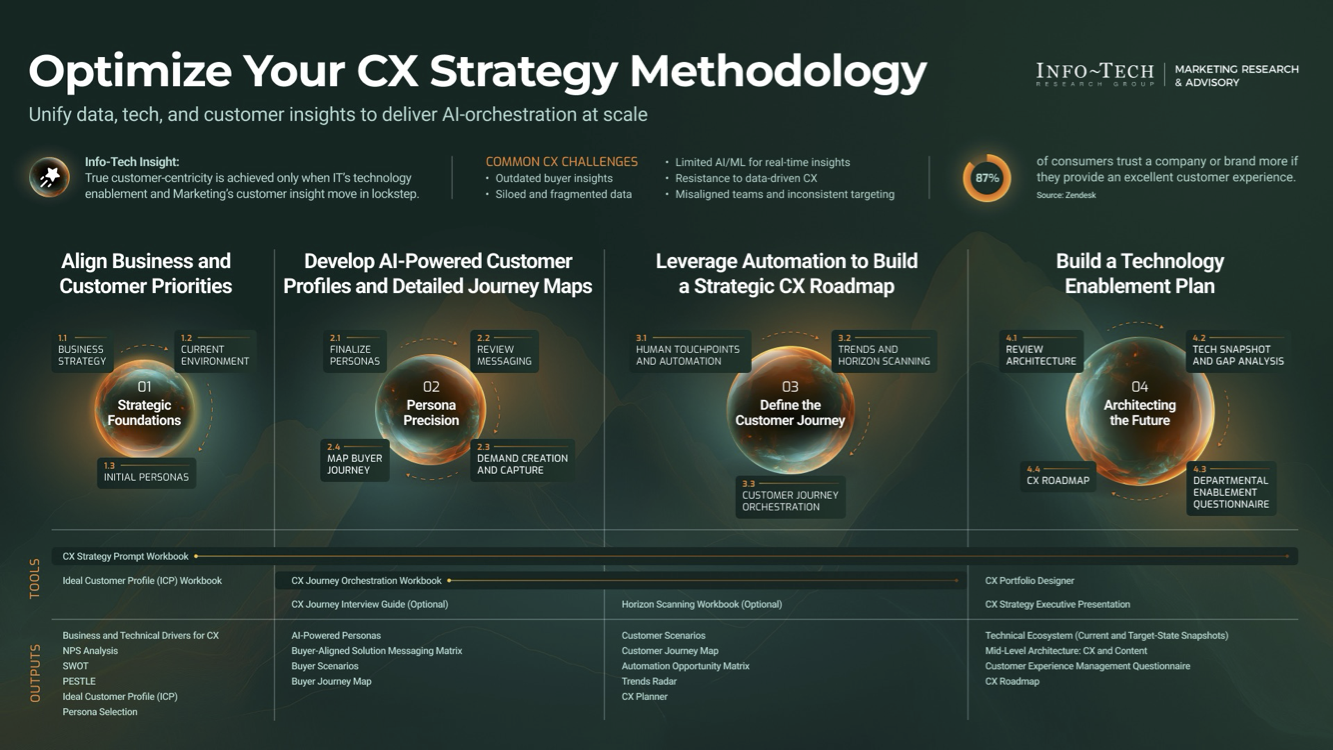
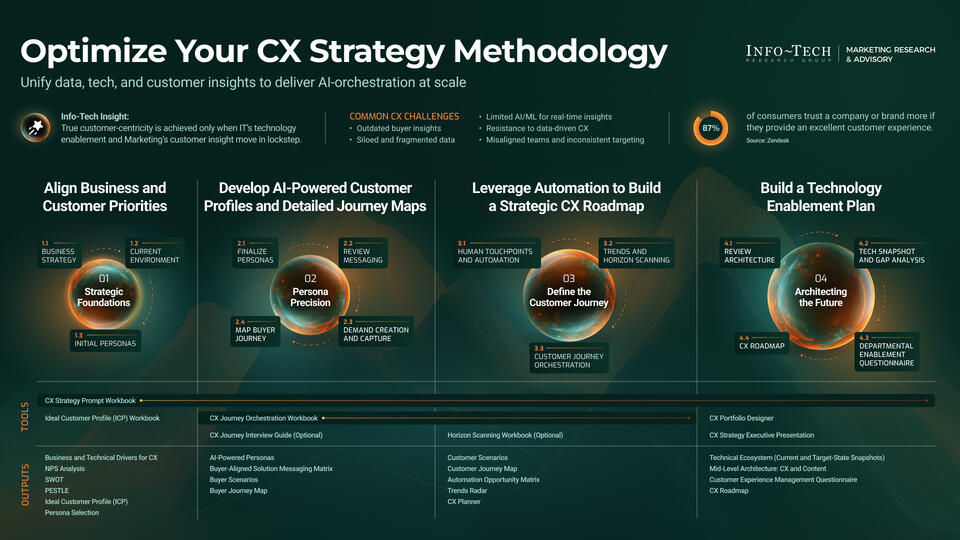
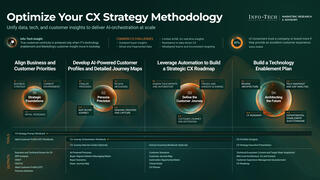
Info-Tech’s CX methodology
Phase Steps |
1. Strategic FoundationsAlign business and customer priorities. 1.1 Business Strategya) Review business strategy and align on high-value clients. 1.2 Current Environmenta) Identify gaps and align on personas. 1.3 Initial Personaa) Draft AI-enhanced personas designed for ongoing updates and asynchronous collaboration. |
2. Persona PrecisionDevelop AI-powered customer profiles and journey maps. 2.1 Finalize Personasa) Complete personas based on Phase 1 outcomes. 2.2 Review Messaginga) Compare against personas. 2.3 Demand Creation and Capturea) Review process and workflow. 2.4 Map Buyer Journeya) Highlight key touchpoints and engagement opportunities. |
3. Defining the Customer JourneyLeverage automation to build a strategic cx roadmap. 3.1 Balancing Human Touchpoints vs. Automationa) Create the core framework for journey orchestration. 3.2 Trend Analysis and Horizon Scanninga) Discuss emerging trends and applications of hyper-personalization. 3.3 Customer Journey Orchestrationa) Unite insights and priorities into a single, actionable CX framework. |
4. Architecting the FutureBuild a technology enablement plan. 4.1 Review Current Architecturea) Assess current state of technical capabilities needed to deliver the target customer experience. 4.2 Technology Snapshot & Gap Analysisa) Map your technology ecosystem and architecture, then identify capability and connection gaps to enable CX priorities. 4.3 Departmental Enablement Questionnairea) Prioritize technology initiatives that align with your CX strategy and seamlessly integrate into your CX roadmap. 4.4 CX Roadmapa) Create a one-year CX strategic roadmap. |
Phase Outcomes |
|
|
|
|
Insight summary
Customer-Centricity Through Alignment
True customer-centricity is achieved only when IT’s technology enablement and Marketing’s customer insight move in lockstep.
Drive Strategy With Real-Time Journey Management
Align with evolving customer journeys by using adaptive platforms that capture live data. Enable asynchronous collaboration for timely, relevant interactions and strategic alignment.
Prioritize Context Over Assumptions
Effective strategy requires understanding what drives buyer decisions now. Track contextual data – external pressures, internal shifts, and emerging patterns – to influence outcomes.
Keep the Human Element
Automation can enhance efficiency but not replace genuine human insight. Consistently delivering on your brand promise requires direct engagement and an authentic understanding of customer motivations.
Use AI and Predictive Insights to Stay Ahead
Relying on historical data alone is insufficient. Integrating predictive intelligence tools can surface emerging trends and behaviors, enabling your team to make proactive GTM adjustments that sustain customer-centric growth.
View Personas as Living Buyers, Not Static Stereotypes
Personas need to continuously evolve with real-world data reflecting client behavior and preferences. Move beyond static templates and stock imagery – use real profiles and engagement signals for authenticity and relevance.
INFO-TECH METHODOLOGY
Blueprint deliverables
CX Strategy Prompt Workbook
This workbook serves as the toolkit to build a custom agent or execute using AI platforms.
Horizon Scanning Workbook
Use this worksheet to prioritize, record, and plan key trends for your organization.
ICP Workbook
Use this worksheet to determine your ICP and tiers.
CX Journey Interview Guide
includes communications templates, buyer persona prompts, and journey questions.
CX Portfolio Designer
Use this worksheet to determine departmental CX, IT, and MarTech needs.
CX Strategy Executive Presentation
Use this template to create a customized presentation of your findings and recommendations for your executive team.
Key deliverable
CX Journey Orchestration Workbook
This workbook serves as a key toolkit to generate priority CX deliverables.
INFO-TECH METHODOLOGY
Info-Tech offers various levels of support to best suit your needs
DIY Toolkit
“Our team has already made this critical project a priority, and we have the time and capability, but some guidance along the way would be helpful.”
Guided Implementation
“Our team knows that we need to fix a process, but we need assistance to determine where to focus. Some check-ins along the way would help keep us on track.”
Workshop
“We need to hit the ground running and get this project kicked off immediately. Our team has the ability to take this over once we get a framework and strategy in place.”
Consulting
“Our team does not have the time or the knowledge to take this project on. We need assistance through the entirety of this project.”
Diagnostics and consistent frameworks are used throughout all four options.
INFO-TECH METHODOLOGY
Guided Implementation
What does a typical GI on this topic look like?
Phase 1Call #1: Align on business strategy.
Call #2: Assess current environment.
Call #3: Align ICP Workbook and personas.
|
Phase 2Call #4: Finalize personas and review messaging.
Call #5: Review demand creation; capture and map buyer journey.
Call #6 Create customer journey orchestration roadmap.
|
Phase 3Call #7 Develop CX strategic plan.
Call #8 Review current architecture, technology snapshot and gap analysis.
|
Phase 4Call #9 Create a technology enablement plan and CX roadmap.
Call #10 Conduct final alignment review
|
A Guided Implementation (GI) is a series of calls with an Info-Tech analyst to help implement our best practices in your organization.
A typical GI is 8 to 12 calls over the course of 4 to 6 months.
INFO-TECH METHODOLOGY
Workshop Overview
Activities |
Day 1Strategic FoundationsAlign business and customer priorities.
1.1 Business Strategy
1.2 Current Environment
1.3 Initial Personas
1.4 Summary |
Day 2Persona PrecisionDevelop AI-powered customer profiles and journey maps.
2.1 Finalize Personas
2.2 Review Messaging
2.3 Demand Creation and Capture
2.4 Map Buyer Journey
2.5 Summary |
Day 3Defining the Customer JourneyLeverage automation to build a strategic CX roadmap.
3.1 Balancing Human Touchpoints and Automation
3.2 CX Trend Analysis and Horizon Scanning
3.3 Customer Journey Orchestration
3.4 Summary |
Day 4Architecting the FutureBuild a technology enablement plan.
4.1 Review Current Architecture
4.2 Technology Snapshot and Gap Analysis Evaluation
4.3 Departmental Enablement Questionnaire
4.4 CX Roadmap
4.5 Summary & Accomplishments |
Day 5Wrap-UpFinalize deliverables and confirm action plans.
5.1 Review Final Deliverables
5.2 Confirm Roadmap and Action Plans |
Deliverables |
|
|
|
|
|
Phases and Steps
A structured sequence for building buyer-centric CX from strategy to execution
Strategic imperatives to optimize your CX at scale
Phase 01
Strategic Foundations
Align business and customer priorities.
Phase 01
Strategic Foundations
Align business and customer priorities.
Project Activities
STEP 1.1
Business Strategy
Review business strategy and align on high-value clients.
STEP 1.2
Current Environment
Identify gaps and align on personas.
STEP 1.3
Initial Personas
Draft initial personas with AI integration (e.g. two business lines, one champion, and one decision-maker).
About Info-Tech
Info-Tech Research Group is the world’s fastest-growing information technology research and advisory company, proudly serving over 30,000 IT professionals.
We produce unbiased and highly relevant research to help CIOs and IT leaders make strategic, timely, and well-informed decisions. We partner closely with IT teams to provide everything they need, from actionable tools to analyst guidance, ensuring they deliver measurable results for their organizations.
What Is a Blueprint?
A blueprint is designed to be a roadmap, containing a methodology and the tools and templates you need to solve your IT problems.
Each blueprint can be accompanied by a Guided Implementation that provides you access to our world-class analysts to help you get through the project.
Need Extra Help?
Speak With An Analyst
Get the help you need in this 4-phase advisory process. You'll receive multiple touchpoints with our researchers, all included in your membership.
Guided Implementation 1: Strategic Foundations
- Call 1: Align on business strategy.
- Call 2: Assess current environment.
- Call 3: Align ICP Workbook and personas.
Guided Implementation 2: Persona Precision
- Call 1: Finalize personas and review messaging.
- Call 2: Review demand creation; capture and map buyer journey.
- Call 3: Create customer journey orchestration roadmap.
Guided Implementation 3: Defining the Customer Journey
- Call 1: Develop CX strategic plan.
- Call 2: Review current architecture, technology snapshot, and gap analysis.
Guided Implementation 4: Architecting the Future
- Call 1: Create a technology enablement plan and CX roadmap.
- Call 2: Conduct final alignment review.
 Marketing Management Suite Software Selection Guide
 Build IT Capabilities to Enable Digital Marketing Success
 Develop Your Web Experience Management Strategy
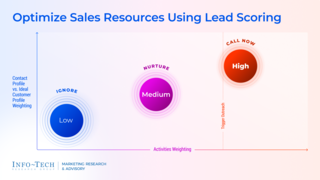 Optimize Lead Generation With Lead Scoring
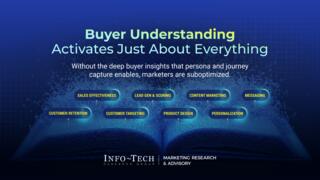 Create a Buyer Persona and Journey
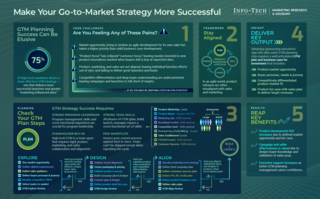 Build a More Effective Go-to-Market Strategy
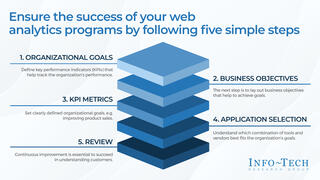 Leverage Web Analytics to Reinforce Your Web Experience Management Strategy
 2020 Applications Priorities Report
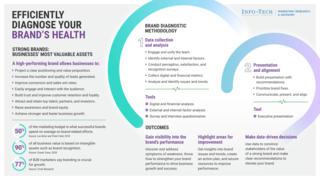 Diagnose Brand Health to Improve Business Growth
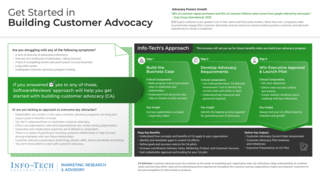 Get Started With Customer Advocacy
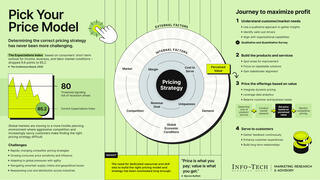 Pick Your Price Model
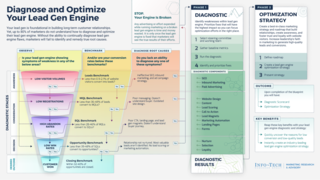 Diagnose and Optimize Your Lead Gen Engine
 Develop the Right Message to Engage Buyers
 Identify the Customer Satisfaction Metrics That Matter
 Create an Effective SEO Strategy
 Accelerate Business Growth and Valuation by Building Brand Awareness
 Social Media Management Software Selection Guide
 Build a More Effective Brand Architecture
 Build Competitive Intelligence for Market Success
 Create Assets to Accelerate the Buyer Journey
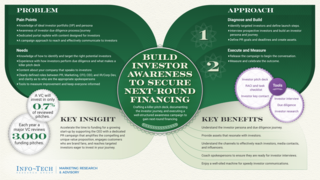 Build Investor Awareness to Secure Next-Round Financing
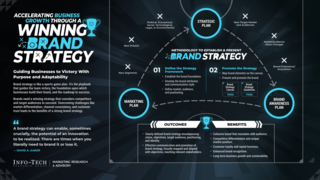 Brand Strategy: Establish and Cultivate a Flourishing Brand
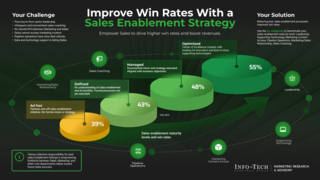 Improve Win Rates With a Sales Enablement Strategy
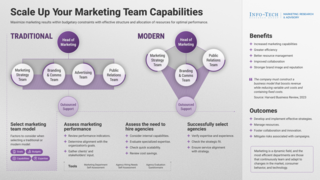 Scale Your Marketing Department
 Choose the Right Channel Sales Partner
 Redesign Your Website to Increase Business Value
 Build Your Account-Based Marketing Strategy
 Build a Strong Analyst Relations Foundation
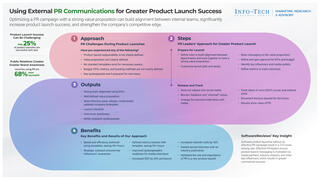 Improve External PR Communications for Greater Product Launch Success
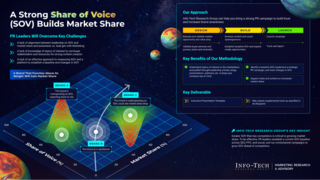 Turn Share of Voice Growth Into a Strategic Weapon
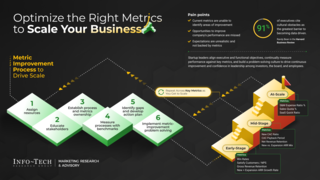 Optimize the Right Metrics to Scale Your Business
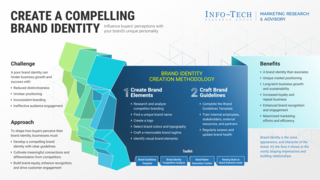 Leave a Lasting Impression With a Compelling Brand Identity
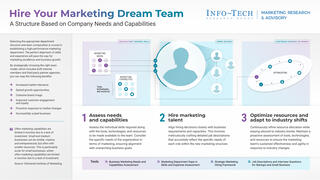 Hire Your Marketing Dream Team
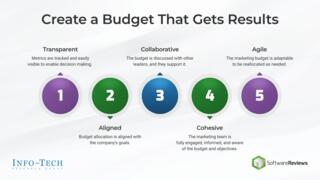 Match Your Budget to Your Market Position
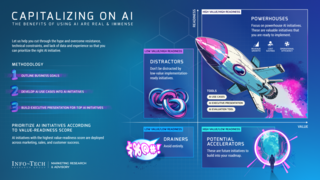 Capitalizing on AI
 Generative AI Use Cases for Marketing, Sales, and Customer Service
 The AI Advantage for Smarter Marketing – A Primer
 Build, Buy, or Shut It Down
 Event Activation Playbook
 Crush Your Product Launch
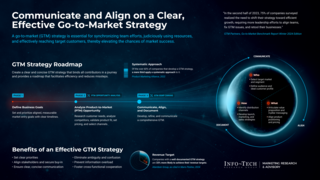 Go-to-Market Strategy on a Page
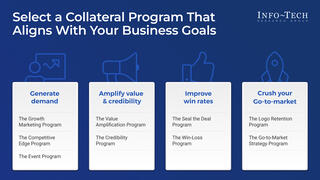 Maximize ROI on Sales and Marketing Collateral
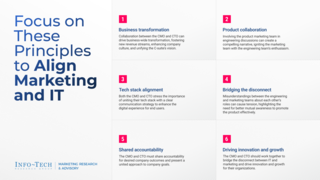 From Silos to Synergy: Create Marketing and IT Alignment
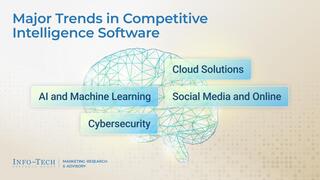 Competitive Intelligence Software Selection Guide
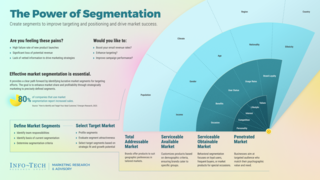 The Power of Segmentation
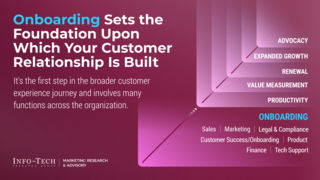 Revolutionize Your Customer Onboarding
 Search Engine Optimization Software Selection Guide
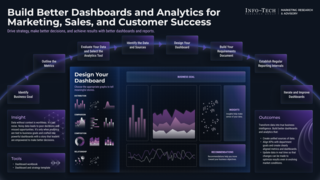 Build Better Dashboards Across Marketing, Sales, and Customer Success
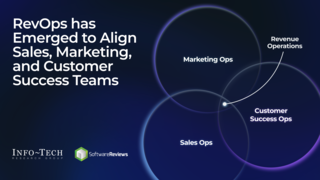 Make the Case for RevOps
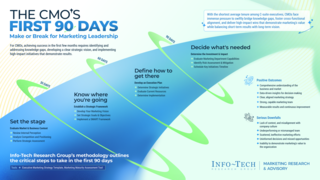 The First 90 Days as a CMO
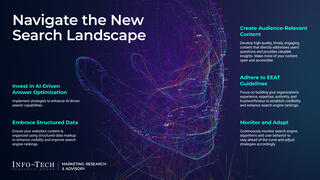 Stay Relevant in the Era of AI-Powered Search
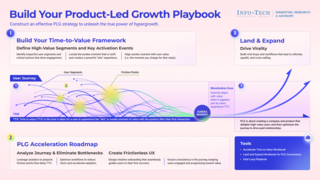 Build Your Product-Led Growth Playbook
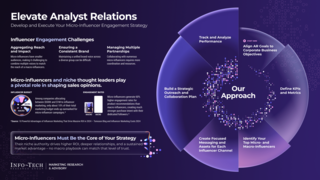 Elevate Analyst Relations
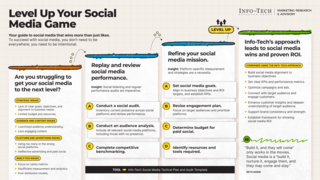 Level Up Your Social Media Game
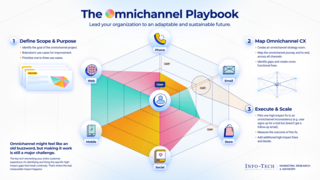 The Omnichannel Playbook
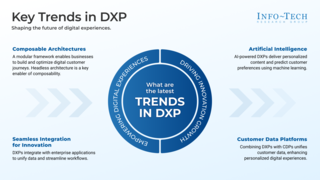 Digital Experience Platform Selection Guide
 Software Buyer Insights 2025
 Optimize Your CX Strategy
 Drive Product & Market Planning With AI
 Board Management Software Selection Guide
 The CMO Playbook
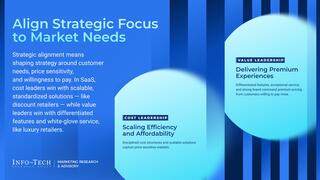 Position Your Brand Strategically as a Cost or Value Leader
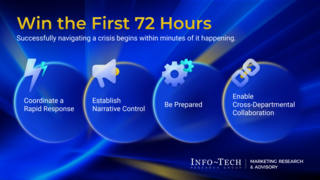 The Crisis Management Playbook
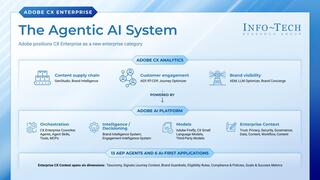 Vendor Spotlight: Adobe CX Enterprise
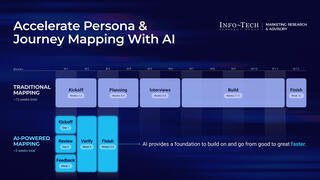 Accelerate Persona & Journey Mapping With AI
