
Build a Business-Aligned IT Strategy
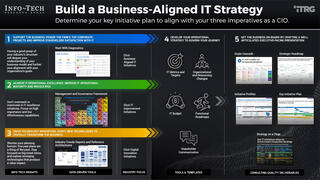
Success depends on IT initiatives clearly aligned to business goals, IT excellence, and driving technology innovation.
IT strategies are often nonexistent or ineffective:
- 74.6% of organizations have an IT strategy process they feel is ineffective.
- IT does not do a good job of communicating its support for business goals; therefore, 23.6% of CXOs still feel that their goals are unsupported by IT.
IT departments that have not developed IT strategies experience alignment, organization, and prioritization issues.
Our Advice
Critical Insight
- A CIO has three roles: enable business productivity, run an effective IT shop, and drive technology innovation. Your key initiative plan must reflect these three mandates and how IT strives to fulfill them.
- Don’t project your vision three to five years into the future. Dive deep on next year’s big-ticket items instead.
- Developing an IT strategy is a wasted effort if no mechanisms are put in place to govern the journey.
- If you don’t communicate it, it doesn’t exist; simple, appealing, and inspirational communication is needed.
Impact and Result
- Establish the scope of your IT strategy by defining IT’s mission and vision statements and guiding principles.
- Perform a retrospective of IT’s performance to recognize the current state while highlighting important strategic elements to address going forward.
- Elicit the business context and identify strategic initiatives that are most important to the organization while building a plan to execute on it.
- Evaluate the foundational elements of IT’s operational strategy that will be required to successfully execute on key initiatives.
- Wrap all strategic information into a highly visual and compelling presentation that enables easy customization and executive-facing content.

On Demand
Webinar

Build a Business-Aligned IT Strategy
Play WebinarMember Testimonials
After each Info-Tech experience, we ask our members to quantify the real-time savings, monetary impact, and project improvements our research helped them achieve. See our top member experiences for this blueprint and what our clients have to say.
9.4/10
Overall Impact
$90,120
Average $ Saved
31
Average Days Saved
Client
Experience
Impact
$ Saved
Days Saved
Fernco Inc
Workshop
10/10
$137K
20
Best: (1) IT Leadership and exchange of ideas on important initiatives for the nex12, 24, and 36 months (2) Learning a process to develop a roadma... Read More
Smithsonian Institution
Workshop
9/10
$32,429
5
The best part was that Paul was really engaging, understood how to run the workshop and get good product out of the team. It was all a good experie... Read More
County of Pitkin
Workshop
9/10
$55,199
20
Diana is an exceptional IT professional and a true collaborative partner. Beyond her technical depth, her institutional knowledge and soft skills a... Read More
HUB24 Management Services Pty Ltd
Workshop
8/10
$98,000
10
Angel was an excellent facilitator and has done a terrific job in corraling the conversations into a comprehensive IT Strategy. In terms of what co... Read More
NYS Office Of The Attorney General
Workshop
10/10
$28,289
10
Areez was invited back to help us with our next three year technology strategic plan. As expected, he far exceeded our expectations and was a joy t... Read More
City of Winter Park
Guided Implementation
10/10
$37,949
5
Ross is extremely knowledgeable and patient. He is a pleasure to work with.
Acadia University
Guided Implementation
9/10
N/A
20
Ross Armstrong was amazing throughout the process. We are extremely busy and he found a way to pull this together. We are very grateful for his h... Read More
UMWA Health and Retirement Funds
Guided Implementation
10/10
N/A
120
There wasn't any worst experience. Working with Ross was perfectly suited for what we were trying to achieve. The strategic plan development proces... Read More
Georgia Department of Corrections, Office of Information Technology
Workshop
10/10
$13,799
120
Peabody Investments Corp.
Workshop
8/10
$34,499
20
Claudia did an excellent job managing the room. The workshops could make good use of AI (transparently with the customer's approval) to get past t... Read More
Champaign Residential Services Inc
Guided Implementation
10/10
$2,621
2
Always a pleasure working with you Ross!
ITW Food Equipment Group, LLC dba Hobart
Workshop
9/10
$13,600
16
Hawaii Medical Service Association
Guided Implementation
9/10
$103K
90
The guidance, templates and examples that InfoTech provided for the value stream-to-capability mapping, capability heat-mapping, and goals cascade ... Read More
Boston Water & Sewer Commission
Workshop
10/10
$137K
120
Best part was working in a collaborative fashion to complete this workshop. This was a first for this group as we all tend to work in silos. Wors... Read More
California Department of Veterans Affairs
Workshop
10/10
$68,999
20
Bill Holliday is a great instructor who met with me and the team ahead of time to help us prepare for the workshop. He provided all the necessary m... Read More
City of Lynnwood
Guided Implementation
10/10
$26,219
29
Ross was very helpful in breaking down what was needed into small, manageable chunks. It came together easier than I expected.
City of Carlsbad
Workshop
10/10
N/A
N/A
It seems to me the only downside to this engagement comes down to the time commitment. It's hard to ask for the time commitment any workshop requir... Read More
Inmar, Inc.
Workshop
10/10
$34,499
5
Facilitator, knowledgeable, good pace, multi-threaded conversations, distilled concepts quickly, organization, kept on time Knowledge about benchma... Read More
Mohegan Gaming and Entertainment
Workshop
10/10
$68,999
20
The workshop that Manish and Larry ran for us at Mohegan was nothing short of spectacular. The process, tools and inquiry helped us navigate the b... Read More
City of Grand Prairie, TX
Workshop
10/10
$68,999
50
Excellent program. This was well worth the money.
Navajo Nation Gaming Enterprise
Workshop
10/10
$68,999
20
I valued the advice and direction this workshop is leading us. Looking forward to see in the next months the impact it will have on our team.
OCT Ontario College of Teachers
Workshop
10/10
$25,840
38
Arriving at a clear roadmap based on a structured and collaborative approach in developing the strategy.
NAU Country Insurance, a QBE Insurance Company
Guided Implementation
9/10
$137K
5
It was very valuable to walk through the various activities, surveys and exercises and understand how they all relate back to the IT Strategy. Befo... Read More
State of Michigan
Workshop
9/10
$34,499
20
The worst part was the self reflection on what we haven't been doing the "right way". The best part for me was working with Syd and my customer. ... Read More
County of San Luis Obispo
Workshop
10/10
$68,999
10
Incredible framework allowing us to go from a bare discussion to a strategic plan within 4 days; knowledgeable workshop leader keeping us on script... Read More
City Of Manhattan Beach
Workshop
10/10
$13,600
20
Kalagadi Manganese
Guided Implementation
10/10
$50,000
20
I had a great experience working with Manish on a business-aligned IT Strategy. His expertise and ability to apply it to my context was extremely h... Read More
HOSI TECHNOLOGIES (PTY) LTD
Workshop
10/10
$100K
50
Oregon Water Resources Department
Guided Implementation
10/10
N/A
2
Amazing knowledge. Quick to understand on what is needed, and able to give pertinent guidance.
Management Control Systems Ltd.
Workshop
9/10
$34,499
23
The general discussion by the group where what I found the most helpful for our team. If I had to pick a worst, I would say it was the scheduling ... Read More
Frequently Asked Questions
What is a business-aligned IT strategy according to Info-Tech?
Info-Tech Research Group defines a business-aligned IT strategy as a comprehensive plan that ensures IT initiatives directly support and enable the organization's business objectives and priorities. Info-Tech emphasizes that a business-aligned IT strategy moves beyond traditional IT planning by embedding IT capabilities within the broader business strategy, ensuring that technology investments deliver measurable business value while maintaining clear alignment between IT goals and organizational outcomes. The approach requires IT leaders to understand business drivers, translate business objectives into IT priorities, and communicate IT's value in business terms that resonate with executives and stakeholders.
Why do organizations struggle with IT strategy alignment according to Info-Tech?
Info-Tech Research Group identifies that organizations struggle with IT strategy alignment because IT leaders often focus on technical capabilities rather than business outcomes, creating a disconnect between what IT delivers and what the business needs. Common challenges include lack of clear communication between IT and business leaders, insufficient understanding of business priorities by IT teams, inadequate involvement of IT in strategic business planning, and failure to demonstrate IT's contribution to business value in terms executives understand. Info-Tech emphasizes that without proper alignment, IT investments may not support critical business objectives, leading to wasted resources, missed opportunities, and perception of IT as a cost center rather than a strategic partner.
What is Info-Tech's framework for building a business-aligned IT strategy?
Info-Tech Research Group's framework for building a business-aligned IT strategy typically consists of multiple phases that guide organizations through understanding business context, defining IT strategic objectives, prioritizing initiatives, developing implementation roadmaps, and establishing governance mechanisms. The framework emphasizes starting with business objectives and working backward to identify the IT capabilities needed to support them, rather than starting with technology and trying to find business applications. Info-Tech's approach includes assessing current state capabilities, identifying gaps, engaging stakeholders throughout the process, and creating clear connections between IT initiatives and business outcomes to ensure sustained alignment.
How does Info-Tech recommend IT leaders engage with business stakeholders?
Info-Tech Research Group recommends IT leaders engage with business stakeholders through structured interviews, workshops, and collaborative planning sessions designed to understand business priorities, challenges, and opportunities where technology can drive value. The engagement approach should focus on listening first to understand the business context before proposing solutions, asking questions that uncover underlying business needs rather than stated technology wants, and building relationships based on trust and demonstrated understanding of business challenges. Info-Tech emphasizes that effective stakeholder engagement requires IT leaders to speak the language of business, frame discussions around business outcomes rather than technical features, and maintain ongoing dialogue beyond the initial strategy development phase.
What tools does Info-Tech provide for building a business-aligned IT strategy?
Info-Tech Research Group provides comprehensive tools for building business-aligned IT strategies including stakeholder interview templates for capturing business priorities, business capability assessment tools for identifying gaps, IT strategic objective templates for defining aligned goals, initiative prioritization matrices for selecting high-value projects, roadmap templates for visualizing implementation timelines, communication plan templates for engaging stakeholders throughout the process, and strategy presentation templates for securing executive buy-in. These tools are designed to streamline the strategy development process, ensure consistency in approach, and provide concrete deliverables that demonstrate IT's strategic value to the organization.
What is the relationship between business strategy and IT strategy according to Info-Tech?
Info-Tech Research Group emphasizes that IT strategy should be derived from and support business strategy, not exist as a separate parallel plan. The relationship should be hierarchical where business strategy defines the "what" and "why" of organizational objectives, while IT strategy defines the "how" by identifying technology enablers and capabilities needed to achieve those objectives. Info-Tech stresses that IT leaders must first understand the business strategy thoroughly, including strategic priorities, competitive positioning, growth plans, and operational challenges, before defining IT strategic directions. This ensures IT investments are focused on capabilities that directly contribute to business success rather than pursuing technology for technology's sake.
How does Info-Tech recommend prioritizing IT initiatives?
Info-Tech Research Group recommends prioritizing IT initiatives using a structured approach that balances business value, strategic alignment, risk reduction, and resource constraints. The prioritization framework typically evaluates initiatives across multiple dimensions including contribution to strategic objectives, expected return on investment, urgency based on business timelines, dependencies between initiatives, and feasibility given current capabilities and resources. Info-Tech emphasizes involving business stakeholders in the prioritization process to ensure shared understanding of trade-offs and build commitment to the resulting roadmap, while also considering quick wins that can demonstrate value early and build momentum for longer-term strategic initiatives.
What are the key components of an IT strategic roadmap according to Info-Tech?
Info-Tech Research Group identifies key components of an IT strategic roadmap including clear strategic themes that connect initiatives to business objectives, phased implementation timelines showing initiative sequencing and dependencies, resource requirements and allocation plans, expected outcomes and success metrics for each initiative, risk mitigation strategies, and governance mechanisms for monitoring progress and making adjustments. The roadmap should balance short-term quick wins with longer-term transformational initiatives, provide visibility into how initiatives build upon each other, and communicate clearly to both technical and business audiences. Info-Tech emphasizes that the roadmap should be a living document that adapts as business priorities evolve rather than a static plan created once and forgotten.
How does Info-Tech recommend measuring IT strategy success?
Info-Tech Research Group recommends measuring IT strategy success through a balanced set of metrics that demonstrate both IT operational excellence and business value contribution. Success metrics should include business outcome measures showing IT's contribution to revenue growth, cost reduction, or customer satisfaction; strategic alignment measures tracking progress on strategic initiatives and stakeholder satisfaction; operational efficiency measures monitoring IT service quality and cost-effectiveness; and capability maturity measures assessing IT's readiness to support future business needs. Info-Tech emphasizes establishing baseline measurements at strategy inception, setting realistic targets with business input, reporting regularly on progress using business-friendly language, and adjusting the strategy based on measurement insights.
What role does IT governance play in business-aligned IT strategy according to Info-Tech?
Info-Tech Research Group emphasizes that IT governance provides the decision-making framework and oversight mechanisms needed to maintain strategic alignment over time as the organization executes the IT strategy. Effective governance for business-aligned IT strategy includes clear decision rights defining who makes decisions about IT investments and priorities, structured review processes for evaluating initiative progress and business value delivery, change management procedures for adapting the strategy as business needs evolve, and communication protocols ensuring stakeholders stay informed and engaged. Info-Tech stresses that governance should enable agile decision-making and course correction rather than creating bureaucratic overhead, with appropriate involvement from both IT and business leaders to maintain alignment.
How does Info-Tech address the challenge of limited IT resources?
Info-Tech Research Group addresses limited IT resources by emphasizing disciplined prioritization, strategic sourcing decisions, and realistic roadmap planning that acknowledges capacity constraints. The approach includes conducting honest assessments of current IT capacity including people, budget, and technical capabilities; using prioritization frameworks to focus limited resources on highest-value initiatives; considering alternative delivery models including vendor partnerships, cloud services, and managed services to extend capability; building the business case for additional resources when strategic objectives require it; and implementing portfolio management practices to balance ongoing operations with strategic initiatives. Info-Tech emphasizes being transparent with business stakeholders about resource constraints and trade-offs rather than over-committing and under-delivering.
What is Info-Tech's approach to IT strategic communication?
Info-Tech Research Group's approach to IT strategic communication emphasizes tailoring messages to different stakeholder audiences, using business language rather than technical jargon, and maintaining consistent ongoing dialogue throughout strategy development and execution. Communication strategies should include executive presentations focused on business outcomes and strategic value, leadership updates on initiative progress and strategic alignment, team communications explaining how individual work contributes to strategic objectives, and board-level reporting when appropriate on IT's strategic contribution. Info-Tech stresses that effective communication requires IT leaders to tell compelling stories connecting IT initiatives to business results, use visual aids like roadmaps and dashboards to make information accessible, and create opportunities for two-way dialogue rather than one-way information push.
How does Info-Tech's Guided Implementation work for IT strategy development?
Info-Tech Research Group's Guided Implementation for building a business-aligned IT strategy typically involves a series of structured calls with an Info-Tech analyst over several months to guide organizations through the complete strategy development process. The Guided Implementation includes analyst review and feedback on developing strategy artifacts, best practice guidance on overcoming common obstacles, templates and tools customized to organizational context, and support for executive presentations and stakeholder communications. Info-Tech's analysts bring experience from hundreds of similar engagements to help IT leaders navigate political challenges, accelerate the strategy process, and produce high-quality deliverables that secure stakeholder buy-in and drive strategic alignment.
What common pitfalls does Info-Tech identify in IT strategy development?
Info-Tech Research Group identifies common pitfalls in IT strategy development including starting with technology solutions before understanding business problems, developing the strategy in isolation without adequate business input, creating overly complex documents that stakeholders don't read or understand, defining success metrics that don't resonate with business leaders, planning initiatives without realistic assessment of capacity and dependencies, failing to establish governance for ongoing strategy execution and adaptation, and treating strategy development as a one-time event rather than an ongoing process. Info-Tech emphasizes that successful IT strategy requires avoiding these pitfalls through disciplined process, strong stakeholder engagement, clear business outcome focus, and commitment to maintaining alignment as conditions change.
Who typically authors Info-Tech's IT strategy blueprints and what expertise do they bring?
Info-Tech Research Group's IT strategy blueprints are typically authored by senior research directors and principal research directors from Info-Tech's CIO and IT leadership practices who bring decades of combined experience working with IT leaders across industries, company sizes, and maturity levels. The authors draw on extensive primary research with IT executives, analysis of strategy best practices from high-performing IT organizations, and direct advisory experience helping hundreds of organizations develop and execute business-aligned IT strategies. Info-Tech's research methodology ensures blueprints incorporate both academic rigor and practical insights from real-world implementations, providing IT leaders with proven frameworks and tools that balance strategic thinking with pragmatic execution guidance tailored to organizational realities.

IT Strategy
Develop a data-driven, fit-for-purpose plan with a strong link to execution.
- Course Modules: 7
- Estimated Completion Time: 1.5 hours
Workshop: Build a Business-Aligned IT Strategy
Workshops offer an easy way to accelerate your project. If you are unable to do the project yourself, and a Guided Implementation isn't enough, we offer low-cost delivery of our project workshops. We take you through every phase of your project and ensure that you have a roadmap in place to complete your project successfully.
Module 1: Pre-Workshop: Elicit Business Context
The Purpose
Conduct analysis and facilitate discussions to uncover what business needs mean for IT and how IT plans to support the business.
Key Benefits Achieved
Build an understanding of what business needs mean for IT, the business strategy, and a clear alignment between the two.
Activities
Outputs
Complete recommended diagnostic programs.
- Diagnostic reports (CIO Business Vision, Management & Governance Diagnostic, CEO-CIO Alignment)
Interview key business stakeholders, as needed, to identify business context: business goals, initiatives, and the organization’s mission and vision.
- IT Strategy Workbook – Business Context
(Optional) CIO to compile and prioritize IT success stories.
Module 2: Establish the Scope of Your IT Strategy
The Purpose
Define statements, principles, and goals to establish the scope of your IT strategy and assess IT’s past performance.
Key Benefits Achieved
Identify and document the scope of your IT strategy and the successes from IT’s past performance (business value realized, key milestones and successful projects, etc.).
Activities
Outputs
Review/validate the business context.
Construct your mission and vision statements.
Elicit your guiding principles and finalize IT strategy scope.
- IT strategy scope (IT mission, vision, and guiding principles).
Module 3: Build Your Key Initiative Plan
The Purpose
Identify high-priority key initiatives to support the business, enable IT excellence, and drive technology innovation.
Key Benefits Achieved
Build your key initiative plan along with your goals cascade visual to clearly communicate business alignment back to your key initiatives.
Activities
Outputs
Identify key IT initiatives that support the business.
Identify key IT initiatives that enable operational excellence.
Identify key IT initiatives that drive technology innovation.
Consolidate and prioritize (where needed) your IT initiatives.
- List of key IT initiatives
Module 4: Build Your Key Initiative Plan (Continued)
The Purpose
Identify high-priority key initiatives to support the business, enable IT excellence, and drive technology innovation.
Key Benefits Achieved
Build your key initiative plan along with your goals cascade visual to clearly communicate business alignment back to your key initiatives.
Activities
Outputs
Determine IT goals.
Complete goals cascade
- Goals cascade
Build your IT strategy roadmap.
- Roadmap (Gantt chart)
Module 5: Define Your Operational Strategy
The Purpose
Evaluate the key components on an operational strategy that will help your team execute on your key strategic initiatives.
Key Benefits Achieved
Build a strong operational strategy to ensure IT can deliver what they promise and put in place the mechanisms to govern your journey.
Activities
Outputs
Identify metrics and targets per IT goal.
- IT metrics and targets
(Optional) Identify required skills and resource capacity.
- IT resourcing changes
Discuss next steps and wrap-up.
- Next steps and strategy refresh schedule
Module 6: Document Strategy
The Purpose
Complete your strategy by building a highly visual and compelling presentation that enables easy customization and executive-facing content.
Key Benefits Achieved
Simple, appealing, and inspirational communication of your strategy to all key stakeholders is a must to ensure IT’s success.
Activities
Outputs
Complete in-progress deliverables.
- IT strategy presentation
(Optional) Set up review time for workshop deliverables.
Build a Business-Aligned IT Strategy
Success depends on IT initiatives clearly aligned to business goals, IT excellence, and driving technology innovation.
Executive Summary
IT strategies are often nonexistent or ineffective.
- According to the Management and Governance diagnostic (MGD), 74.6% of organizations have an IT strategy process they feel is ineffective (Info-Tech, Management and Governance Diagnostic; n=1,931).
- IT does not do a good job of communicating their support for business goals, therefore, 23.6% of CXOs still feel that their goals are unsupported by IT (Info-Tech, CEO-CIO Alignment Diagnostic; n=863).
IT departments that have not developed IT strategies experience alignment, organization, and prioritization issues.
Three-quarters of surveyed CEOs value tech leaders with experience fostering operational stability and strategic business alignment (CIO Journal, 2020), however…
- The CIO is seen as an order taker by business executives. This usually results in the demands on IT far outstripping the IT budget.
- Projects and initiatives are not prioritized around business objectives. Synergies and dependencies are recognized too late. Projects are often late or put on hold because of sudden changes to business requirements.
Follow Info-Tech’s approach to developing a strong IT strategy.
- Use Info-Tech’s industry-focused approach to discern the business context.
- Clearly communicate to business executives how IT will support the organization’s key objectives and initiatives using the Strategy Presentation Template.
- Use Info-Tech’s Prioritization Tool to help make project decisions in a holistic manner that allows for the selection of the most-valuable initiatives to become part of the IT strategic roadmap.
Info-Tech Insight
A CIO has three roles: enable business productivity, run an effective IT shop, and drive technology innovation. Your IT strategy must reflect these three mandates and how IT strives to fulfill them.
Info-Tech’s approach

1. Establish the Scope of Your IT Strategy
Establish the scope of your IT strategy by defining IT’s mission and vision statements and guiding principles.
2. Review IT Performance From Last Fiscal Year
A retrospective of IT’s performance helps recognize the current state while highlighting important strategic elements to address going forward.
3. Build Your Key Initiative Plan
Elicit the business context and identify strategic initiatives that are most important to the organization and build a plan to execute on them.
4. Define IT’s Operational Strategy
Evaluate the foundational elements of IT’s operational strategy that will be required to successfully execute on key initiatives.
Info-Tech’s methodology for IT Strategy
| 01 Business Context | 02 Key Initiative Plan | 03 Operational Strategy | 04 Executive Presentation | |
|---|---|---|---|---|
| Inputs |
|
|
|
|
| Outputs |
Business Context Information for Step 2:
|
IT Strategy Information for Approval:
|
Operational Strategy Information for Step 4:
|
Executive Presentations for:
|
| Service |
Pre-Workshop Industry-Specific Guided Implementation |
IT Strategy Workshop |
IT Strategy Workshop |
IT Strategy Workshop |
Info-Tech’s methodology for IT Strategy

Blueprint deliverables
The IT Strategy Workbook supports each step of this blueprint to help you accomplish your goals:

Goals Cascade Visual
Elicit business context and use the workbook to build your custom goals cascade.

Initiative Prioritization
Use the weighted scorecard approach to evaluate and prioritize your strategic initiatives.
Roadmap/Gantt Chart
Populate your Gantt chart to visually represent your key initiative plan over the next 12 months.
Key deliverable:
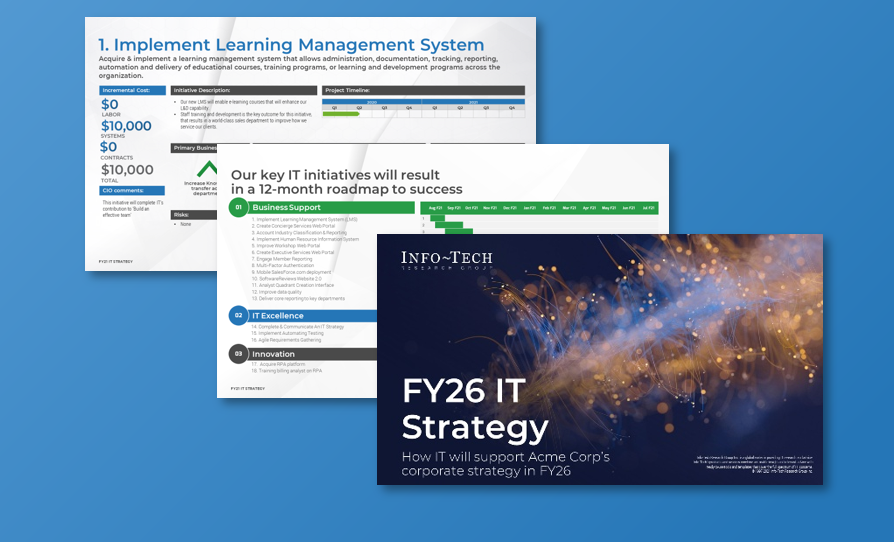
IT Strategy Presentation Template
A highly visual and compelling presentation template that enables easy customization and executive-facing content.
Info-Tech offers various levels of support to best suit your needs
DIY Toolkit
"Our team has already made this critical project a priority, and we have the time and capability, but some guidance along the way would be helpful"
Guided Implementation
"Our team knows that we need to fix a process, but we need assistance to determine where to focus. Some check-ins along the way would help keep us on track."
Workshop
"We need to hit the ground running and get this project kicked off immediately. Our team has the ability to take this over once we get a framework and strategy in place."
Consulting
"Our team does not have the time or the knowledge to take this project on. We need assistance through the entirety of this project."
Diagnostics and consistent frameworks are used throughout all four options.
Guided Implementation
What does a typical GI on this topic look like?

A Guided Implementation (GI) is a series of calls with an Info-Tech analyst to help implement our best practices in your organization.
A typical GI is between 8 to 12 calls over the course of 2 to 4 months.
Workshop Overview
Contact your account representative for more information.
workshops@infotech.com 1-888-670-8889
| Session 0 (Pre-Workshop) | Session 1 | Session 2 | Session 3 | Session 4 | Session 5 (Post-Workshop) | |
|---|---|---|---|---|---|---|
| Elicit Business Context |
Establish the Scope of Your IT Strategy |
Build Your Key Initiative Plan | Build Your Key Initiative Plan | Define Your Operational Strategy | Document Strategy | |
| Activities |
0.1 Complete recommended diagnostic programs. 0.2 Interview key business stakeholders, as needed, to identify business context: business goals, initiatives, and the organization’s mission and vision. 0.3 (Optional) CIO to compile and prioritize IT success stories. |
1.1 Review/validate the business context. 1.2 Construct your mission and vision statements. 1.3 Elicit your guiding principles and finalize IT strategy scope. |
2.1 Identify key IT initiatives that support the business. 2.2 Identify key IT initiatives that enable operational excellence. 2.3 Identify key IT initiatives that drive technology innovation. 2.4 Consolidate and prioritize (where needed) your IT initiatives. |
3.1 Determine IT goals. 3.2 Complete goals cascade. 3.3 Build your IT strategy roadmap. |
4.1 Identify metrics and targets per IT goal. 4.2 (Optional) Identify required skills and resource capacity. 4.3 Discuss next steps and wrap-up. |
5.1 Complete in-progress deliverables. 5.2 (Optional) Set up review time for workshop deliverable. |
| Outcomes |
|
|
|
|
|
|
Workshop Requirements
| Launch Diagnostics | Business Inputs | IT Inputs |
|---|---|---|
|
Launch the CIO Business Vision diagnostic. Launch the CEO-CIO Alignment diagnostic. Launch the Management and Governance diagnostic. Gather all historical diagnostic reports (if they exist). Contact your Account Manager to get started. |
Gather business strategy documents and find information on:
(If this doesn’t exist for your organization, contact your Info-Tech Account Manager to get started.) Interview the following stakeholders to uncover business context information:
Download the Business Context Discovery Tool |
Gather information on last fiscal year’s strategy. Particularly information on:
|
Phase 1
Establish Scope of Your IT Strategy

This phase will walk you through the following activities:
- How to build IT mission and vision statements
- How to elicit IT guiding principles
- How to finalize and communicate your IT strategy scope
This phase involves the following participants:
- CIO
- Senior IT Team
To complete this phase, you will need:
IT Strategy Presentation Template
Use the IT Strategy Presentation Template to document the results from the following activities:
- Mission and Vision Statements
- IT Guiding Principles
IT must aim to support the organization’s mission and vision
A mission statement:
- Focuses on today and what an organization does to achieve it.
- Drives the company.
- Answers: What do we do? Whom do we serve? How do we service them?
"A mission statement focuses on the purpose of the brand; the vision statement looks to the fulfillment of that purpose."
A vision statement:
- Focuses on tomorrow and what an organization ultimately wants to become.
- Gives the company direction.
- Answers: What problems are we solving? Who and what are we changing?
"A vision statement provides a concrete way for stakeholders, especially employees, to understand the meaning and purpose of your business. However, unlike a mission statement – which describes the who, what, and why of your business – a vision statement describes the desired long-term results of your company's efforts."
Source: Business News Daily, 2020
Characteristics of a mission & vision statement
A strong mission statement has the following characteristics:
- Articulates the IT function’s purpose and reason for existence
- Describes what the IT function does to achieve its vision
- Defines the customers of the IT function
- Is:
- Compelling
- Easy to grasp
- Sharply focused
- Concise
A strong vision statement has the following characteristics:
- Describes a desired future achievement
- Focuses on ends, not means
- Communicates promise
- Is:
- Concise; no unnecessary words
- Compelling
- Achievable
- Measurable
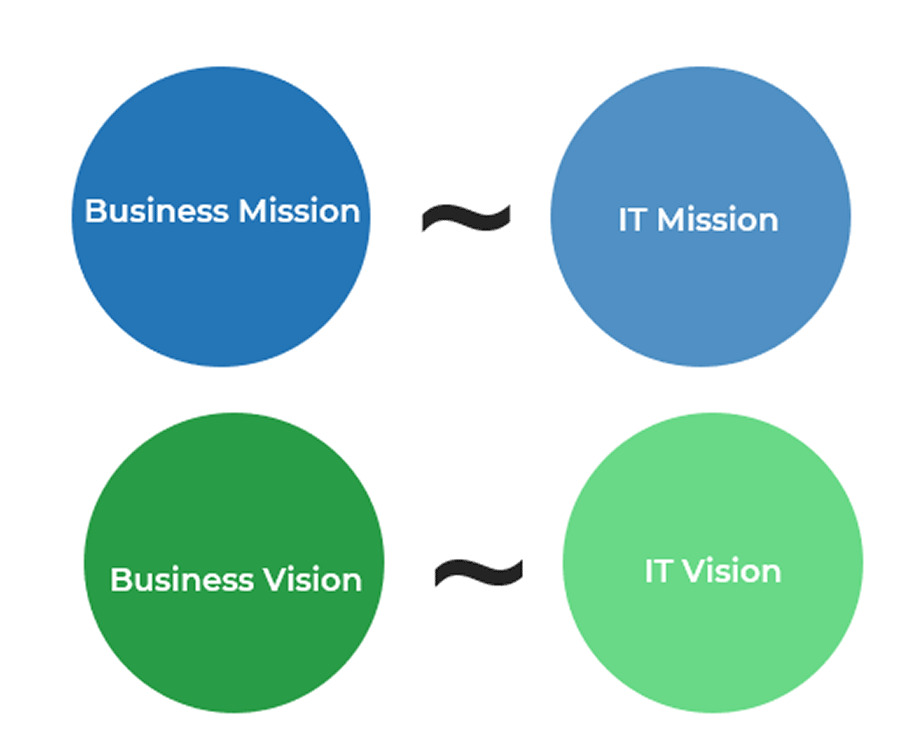
Derive the IT mission and vision statements from the business’
Begin the process by identifying and locating the business mission and vision statements.

Ensure there is alignment between the business and IT statements.
Note: Mission statements may remain the same unless the IT department’s mandate is changing.
1.1 Construct mission and vision statements
Objective: Help teams define their purpose (why they exist) to build a mission statement (if one doesn't already exist).
30 minutes
Step 1:
- Gather the IT strategy creation team and revisit your business context inputs, specifically the corporate mission statement.
- Begin by asking the participants:
- What is our job as a team?
- What’s our goal? How do we align IT to our corporate mission?
- What benefit are we bringing to the company and the world?
Ask them to share general thoughts in a check-in.
Step 2:
- Share some examples of IT mission statements.
- Example: IT provides innovative product solutions and leadership that drives growth and success.
- Provide each participant with some time to write their own version of an IT mission statement.
Step 3:
- This step involves reviewing individual mission statements, combining them, and building one collective mission statement for the team.
- Consider the following approach to build a unified mission statement:
- Use the 20x20 rule for group decision making. Give the group no more than 20 minutes to craft a collective team purpose with no more than 20 words.
- As a facilitator, provide guidelines on how to write for the intended audience. Business stakeholders need business language.
- Refer back to the corporate mission statement periodically and ensure there is alignment.
- Document your final mission statement in your IT Strategy Presentation Template.
1.1 Construct mission and vision statements (cont.)
Objective: Help teams define their ideal culture (how they work together to achieve their purpose) to a vision statement.
60 minutes
Step 4:
- Gather the IT strategy creation team and revisit your business context inputs, specifically the corporate vision statement.
- Share one or more examples of vision statements.
- Provide participants with sticky notes and writing materials, and ask them to work individually for this step.
- Ask participants to brainstorm using the following questions:
- What is the desired future state of the IT organization?
- How should we work to attain the desired state?
- How do we want IT to be perceived in the desired state?
- Provide participants with guidelines to build descriptive, compelling, and achievable statements regarding their desired future state.
- Regroup as a team and review participant answers.
Step 5:
- Ask the team to post their notes on the wall.
- Have the team group the words that have a similar meaning or feeling behind them – these will create themes.
- When the group is done categorizing the statements into themes, ask if there's anything missing. Did they ensure alignment to the corporate vision statement? Are there any elements missing when considering alignment back to the corporate vision statement?
Step 6:
- Consider each category as a component of your vision statement.
- Review each category with participants; define what the behavior looks like when it is being met and what it looks like when it isn’t.
- As a facilitator, provide guidelines on word-smithing and finessing the language.
- Refer back to the corporate vision statement periodically and ensure there is alignment.
- Document your final mission statement in your IT Strategy Presentation Template.
Source: Hyper Island Toolbox
Tips for Online Facilitation
Pick an online whiteboard tool that allows participants to use a large, zoomable canvas. Set up each topic at a different area of the board; spread them out just like you would do it on the walls of a room. Invite participants to zoom in and visit each section and add their ideas as sticky notes once you reach that section of the exercise. If you’re not using an online whiteboard, we’d recommend using a collaboration tool such as Google Docs to collect the information for each step under a separate heading. Invite everyone into the document but be very clear in regard to editing rights. Pre-create your screen deck and screen share this with your participants through your videoconferencing software. We’d also recommend sharing this so participants can go through the deck again during the reflection steps. When facilitating group discussion, we’d recommend that participants use non-verbal means to indicate they’d like to speak. You can use tools like Teams’ “raise hand” tool, a reaction emoji, or just have people put their hands up. The facilitator can then invite that person to talk.
Input
- Business mission statement
- Business vision statement
Output
- IT mission statement
- IT vision statement
Materials
- Screen
- Projector
- Sticky notes
- Markers
- Whiteboard
- Paper
- Collaboration/brainstorming tool (whiteboard, flip chart, digital equivalent)
Participants
- CIO
- Senior IT Team
Download the IT Strategy Presentation Template and document your mission and vision statements in section 1.
IT mission statements demonstrate the IT function’s purpose
The IT mission statement specifies the function’s purpose or reason for being. The mission should guide each day’s activities and decisions. The mission statements use simple and concise terminology and speak loudly and clearly, generating enthusiasm for the organization.
Strong IT mission statements have the following characteristics:
- Articulates the IT function’s purpose and reason for existence
- Describes what the IT function does to achieve its vision
- Defines the customers of the IT function
- Is:
- Compelling
- Easy to grasp
- Sharply focused
- Inspirational
- Memorable
- Concise
Sample IT Mission Statements:
- To provide infrastructure, support, and innovation in the delivery of secure, enterprise-grade information technology products and services that enable and empower the workforce at [Company Name].
- To help fulfil organizational goals, the IT department is committed to empowering business stakeholders with technology and services that facilitate effective processes, collaboration, and communication.
- The mission of the information technology (IT) department is to build a solid, comprehensive technology infrastructure; to maintain an efficient, effective operations environment; and to deliver high-quality, timely services that support the business goals and objectives of ABC Inc.
- The IT department has operational, strategic, and fiscal responsibility for the innovation, implementation, and advancement of technology at ABC Inc. in three main areas: network administration and end-user support, instructional services, and information systems. The IT department provides leadership in long-range planning, implementation, and maintenance of information technology across the organization.
- The IT group is customer-centered and driven by its commitment to management and staff. It oversees services in computing, telecommunications, networking, administrative computing, and technology training.
On Demand
Webinar
Build a Business-Aligned IT Strategy
Play Webinar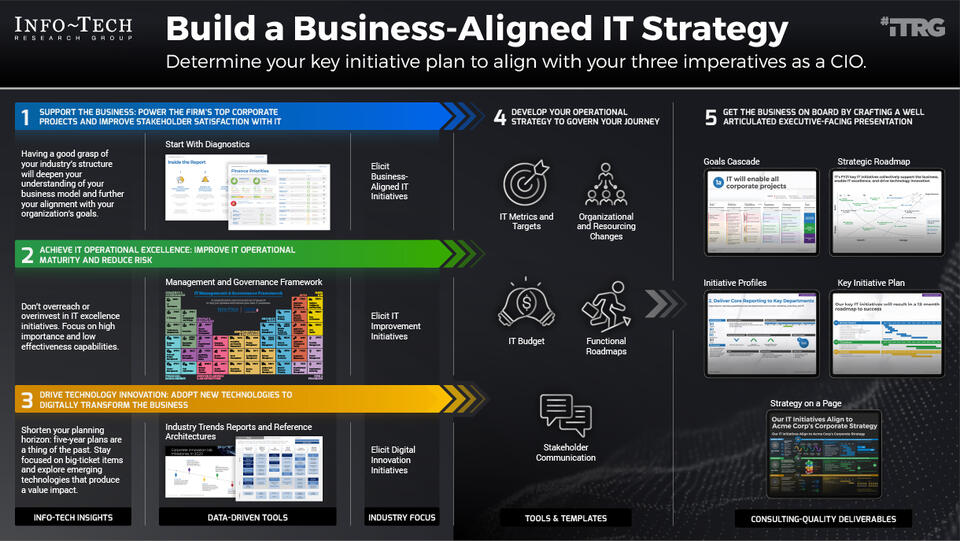
About Info-Tech
Info-Tech Research Group is the world’s fastest-growing information technology research and advisory company, proudly serving over 30,000 IT professionals.
We produce unbiased and highly relevant research to help CIOs and IT leaders make strategic, timely, and well-informed decisions. We partner closely with IT teams to provide everything they need, from actionable tools to analyst guidance, ensuring they deliver measurable results for their organizations.
What Is a Blueprint?
A blueprint is designed to be a roadmap, containing a methodology and the tools and templates you need to solve your IT problems.
Each blueprint can be accompanied by a Guided Implementation that provides you access to our world-class analysts to help you get through the project.
Need Extra Help?
Speak With An Analyst
Get the help you need in this 5-phase advisory process. You'll receive multiple touchpoints with our researchers, all included in your membership.
Guided Implementation 1: Pre-Project Call
- Call 1: Discuss business context and customize your organization’s capability map.
Guided Implementation 2: Establish the scope of your IT strategy
- Call 1: Identify mission and vision statements and guiding principles to discuss strategy scope.
Guided Implementation 3: Review performance from last fiscal year
- Call 1: Assess year-in-review data and evaluate performance.
- Call 2: Discuss diagnostic data results and success stories.
Guided Implementation 4: Build your key initiative plan
- Call 1: Identify strategic initiatives and required information.
- Call 2: Discuss how to build your roadmap.
Guided Implementation 5: Define your operational strategy
- Call 1: Discuss and identify appropriate operational strategy components.
- Call 2: Summarize results and plan next steps.
Contributors
- Luis Ramón Ramos Espinoza, Chief Information Officer, Suramericana
- Kyle Saverance, Chief Information Officer, Coker College
- Scott Ross, SVP Omni-Channel Technologies, Lowe’s Companies
- Max Min, Director, Waterloo City Centre
- Philip D’Aurelio, Development Solutions Supervisor, City of Hamilton
- Michael Dieckmann, Chief Operating Officer, Florida Virtual Campus
- Joe Evers, Consulting Principal, JcEvers Consulting Corporation
- Ken Piddington, Chief Information Officer, MRE Consulting
- 2 anonymous contributors
 Navigate the Digital ID Ecosystem to Enhance Customer Experience
 Document Business Goals and Capabilities for Your IT Strategy
 Build a Business-Aligned IT Strategy
 Define Your Digital Business Strategy
 Drive Digital Transformation With Platform Strategies
 Make IT a Partner in Successful M&A Due Diligence
 Make IT a Successful Partner in M&A Integration
 Plan Your Digital Transformation on a Page
 Review Your Application Strategy
 Start Making Data-Driven People Decisions
 2021 CIO Priorities Report
 Create a Work-From-Anywhere Strategy
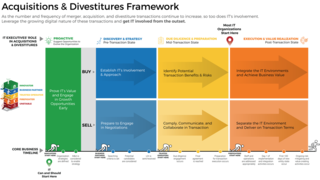 Mergers & Acquisitions: The Sell Blueprint
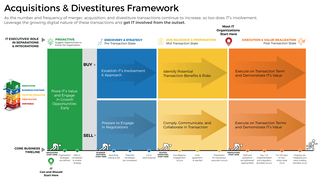 Mergers & Acquisitions: The Buy Blueprint
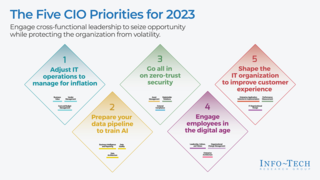 CIO Priorities 2023
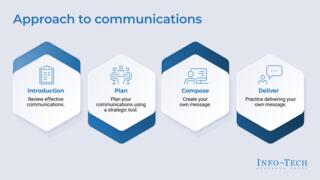 Communicate Any IT Initiative
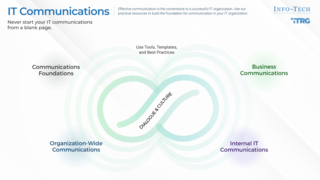 Effective IT Communications
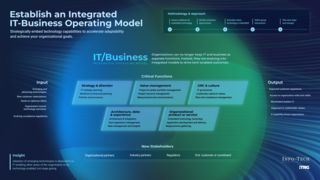 Establish an Integrated IT-Business Operating Model
 Info-Tech Quarterly Research Agenda Outcomes Q2/Q3 2023
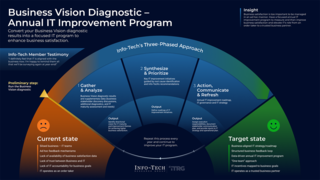 Business Vision Diagnostic – Annual IT Improvement Program
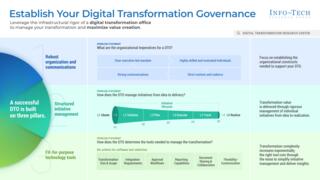 Establish Your Digital Transformation Governance
 Info-Tech Quarterly Research Agenda Outcomes Q4 2023
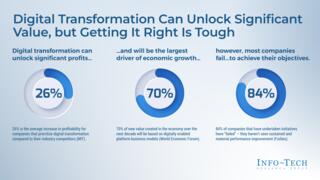 Master Your Change Story for Digital Transformation
 Info-Tech’s Best of 2023: The Year IT Reached an Inflection Point
 Prepare for AI Regulation
 Crack the Code to Successful Transformation Management
 Info-Tech Diagnostics: Identify and Leverage Your Strengths
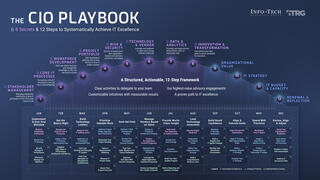 The CIO Playbook: 8 Secrets and 12 Steps to Systematically Achieve IT Excellence
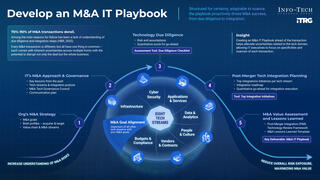 Develop an M&A IT Playbook
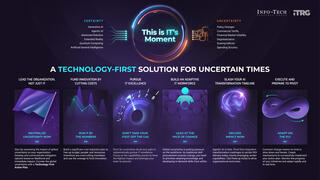 Adapt to Uncertainty With a Technology-First Action Plan
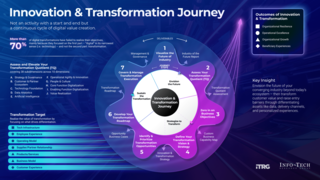 Digital Transformation: A Revolution That Lost Its Way
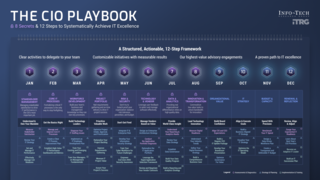 The CIO Playbook
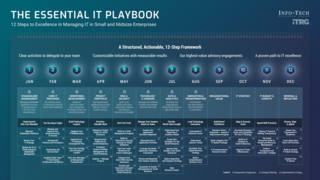 The Essential IT Playbook
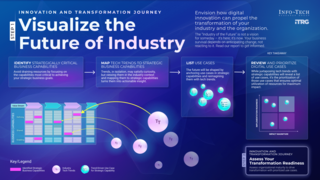 Visualize the Industry of the Future
 CIO Priorities 2026
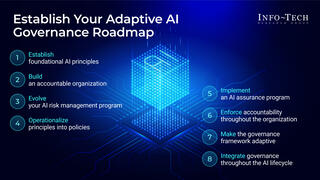 Establish Your Adaptive AI Governance Program: From Principles to Practice
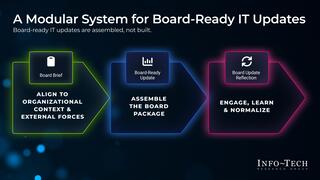 Assemble Board-Ready IT Updates