



Redesign and automate service delivery with AI
Get tailored support & continuous insights for Professional & Technology Services. All included in your membership.
The Challenge
Most firms still deliver the old way.
Generative AI can now draft, research, summarize, and automate large parts of client delivery, yet most firms still run engagements the way they did before. Tools are adopted ad hoc by individuals while the underlying delivery model, staffing, and quality controls stay unchanged. At the same time, clients are increasingly looking to shift some of this work in-house and are pushing for fee reductions, putting traditional billing models under pressure. The risk is not that AI replaces professionals, but that firms that fail to redesign delivery around it lose ground to those that do.
Why It Matters
Saved hours become capacity and margin.
AI is reshaping the economics of professional work, freeing senior time and compressing delivery effort across legal, tax, and advisory practices. With professionals expected to save around five hours a week, worth roughly $19,000 each per year, the firms that redesign and automate delivery now will convert that time into capacity and margin ("Future of Professionals," Thomson Reuters, 2025).
The Solution
Redesign core workflows around AI.
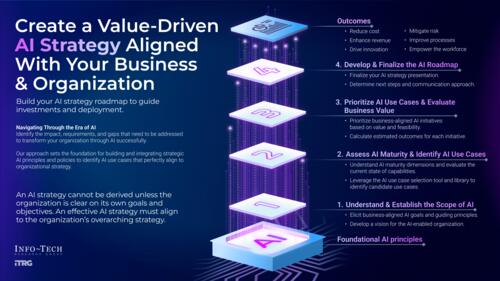
Rebuild high-volume delivery processes, like research, drafting, and review, so AI does the first pass and professionals add judgment.
Automate delivery operations responsibly.
Apply AI and workflow automation to engagement setup, status, and routine tasks, with human review and clear guardrails.
Reinvest saved time in higher-value work.
Channel reclaimed hours into advisory, client relationships, and new services rather than simply cutting costs.



Build an AI-ready knowledge engine
Get tailored support & continuous insights for Professional & Technology Services. All included in your membership.
The Challenge
Firms can't reach their own expertise.
Firms run on knowledge: precedents, methodologies, and prior engagements, but most of it is trapped in documents, inboxes, and individual experts' heads. Without organized, accessible knowledge, AI tools generate generic output and professionals reinvent work that already exists.
Why It Matters
Good AI needs organized knowledge.
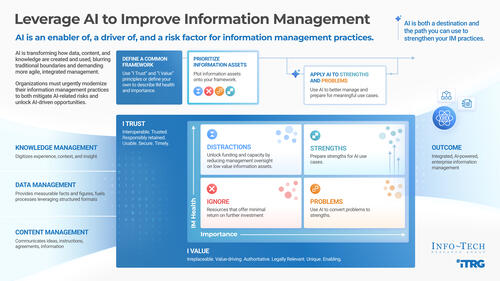
AI is only as valuable as the knowledge it can draw on, which makes a governed knowledge foundation the prerequisite for real returns. With only about a fifth of organizations having a visible AI strategy, firms that turn institutional knowledge into an AI-ready asset now will be positioned for competitive success ("Future of Professionals," Thomson Reuters, 2025).
The Solution
Consolidate institutional knowledge.
Bring precedents, templates, and prior work into a structured, searchable repository instead of scattered drives and inboxes.
Make knowledge AI-ready and governed.
Tag, secure, and curate content so AI tools can retrieve contextually accurate information.
Capture knowledge as part of delivery.
Build lightweight documentation steps into engagements so that expertise is captured and can be reused instead of being lost when people leave.


Defend and differentiate against AI-native competition
Get tailored support & continuous insights for Professional & Technology Services. All included in your membership.
The Challenge
AI-native rivals can undercut you.
AI is lowering the barriers that once protected firms, letting AI-native startups and AI-augmented rivals deliver comparable work faster and cheaper. Clients can now reach basic analysis and drafting through inexpensive AI tools, compressing demand for routine billable work. Firms that simply digitize the old model risk being undercut by native-AI competitors.
Why It Matters
Differentiate on what AI can't replicate.
AI is redrawing competitive lines in professional services, widening the gap between firms that reinvent and those that merely adopt tools. With research showing organizations that have a clear AI strategy are far likelier to see returns while laggards risk being left behind within a few years, firms must defend their position by differentiating on what AI cannot easily replicate ("Future of Professionals," Thomson Reuters, 2025).
The Solution
Differentiate on judgment, trust, and outcomes.
Compete on senior expertise, relationships, and accountability for results, not on the volume of routine work AI can now do.
Launch AI-enabled offerings before rivals do.
Use AI to deliver faster, lower-cost services and productized offers that meet clients already moving to AI alternatives.
Monitor and respond to AI-native entrants.
Track emerging competitors and pricing models so the firm can proactively adapt its positioning.

Defend client data and confidentiality
Get tailored support & continuous insights for Professional & Technology Services. All included in your membership.
The Challenge
Firms are custodians of clients' crown jewels
Professional services firms hold their clients' most sensitive information: deal data, disputes, financials, and strategy, making them high-value targets and custodians of strict confidentiality duties. Lean security teams, heavy reliance on third-party platforms, and rapid AI adoption all widen the exposure. A single breach is not just an IT incident; it is a breach of the trust the entire client relationship rests on.
Why It Matters
Protecting client data now wins or loses work.
Confidentiality is the core promise of professional services, and clients now scrutinize how firms protect it, especially as AI tools touch their data. With 81% of clients concerned their firm may not safeguard confidential information when using generative AI, demonstrable data protection has become a condition of winning and keeping work ("The Hidden Cost of Cyber Neglect," Integris, 2025).
The Solution
Protect confidential data end to end.
Enforce encryption, access controls, and data loss prevention so client information stays protected during use, transit, and storage.
Set guardrails for AI and client data.
Require that AI tools meet confidentiality and security standards before they touch privileged client information.
Prepare for breaches and prove diligence.
Maintain and test an incident response plan and document safeguards so the firm can respond fast and prove its preparedness to clients.


Win and retain scarce digital talent
Get tailored support & continuous insights for Professional & Technology Services. All included in your membership.
The Challenge
AI-fluent talent is scarce and contested.
Firms compete fiercely for professionals who can blend domain expertise with data and AI fluency, and that talent is scarce and expensive. At the same time, AI is reshaping junior roles, leaving firms unsure how to develop and retain people. Without a deliberate talent strategy, firms risk both a skills gap and the loss of the people who differentiate them.
Why It Matters
AI raises the premium on great people.
Talent, not technology, is becoming the binding constraint on professional services growth, as AI raises the premium on people who can use it well. With research showing that AI-enabled professionals will outcompete those who are not, firms that invest now in AI skills and modern career paths will attract and keep the talent that wins work ("Future of Professionals," Thomson Reuters, 2025).
The Solution
Build AI and digital skills across the firm.
Invest in structured upskilling so professionals can apply AI confidently in their domain.
Redesign career paths for an AI era.
Rethink hiring, junior role design and career paths so professionals can develop judgment and client skills as AI absorbs routine, lower-value work.
Use technology to improve the employee experience.
Remove low-value administrative friction so professionals spend time on engaging, high-value work.


Design technology around employee and client experience
Get tailored support & continuous insights for Professional & Technology Services. All included in your membership.
The Challenge
Clunky tools frustrate staff and clients.
Clunky internal tools and disjointed client touchpoints quietly erode both productivity and satisfaction. Professionals lose time fighting systems, and clients experience the firm through inconsistent portals, emails, and handoffs. When technology is built around process rather than people, both talent and clients feel the friction.
Why It Matters
Experience now wins talent and clients.
Experience is becoming a differentiator in a market where clients and talent compare every firm's approach against their low-friction, consumer technology experience. As people-centered firms will attract both better talent and more loyal clients, designing technology around employee and client experience is not only a requirement, but also a competitive lever ("Future of Professionals," Thomson Reuters, 2025).
The Solution
Design tools around real workflows.
Build internal systems around how professionals actually work so technology speeds delivery instead of adding steps.
Create a seamless client experience.
Connect portals, communication, and deliverables so clients get a consistent, professional experience across touchpoints.
Use feedback to improve continuously.
Gather employee and client input regularly and act on it so experience keeps improving.



Build scalable, productized services
Get tailored support & continuous insights for Professional & Technology Services. All included in your membership.
The Challenge
Bespoke, hourly work doesn't scale.
Most firm revenue still depends on bespoke, hourly billing engagements that are hard to scale and leave knowledge locked in each project. As AI compresses routine work, the old model of selling custom effort by the hour delivers shrinking margins. Firms that cannot package and repeat what they know will struggle to grow without simply adding headcount.
Why It Matters
Repeatable offerings beat custom delivery.
Productizing services, turning expertise into repeatable offerings and platforms, is how firms scale revenue beyond billable time. With utilization and margins under pressure across the sector, firms that build standardized, productized services now will grow profitably while peers stay trapped in custom delivery ("2026 PSO Benchmarks," Deltek, 2025).
The Solution
Productize repeatable expertise.
Package common engagements into standardized offerings, templates, and tools that can be delivered consistently.
Add recurring and subscription models.
Consider advisory subscriptions and self-service models so revenue is less dependent on one-off project hours.
Standardize delivery for quality and scale.
Use repeatable methods and accelerators so the firm scales output without proportional headcount or specialized talent.

Modernize pricing and commercial models for the AI era
Get tailored support & continuous insights for Professional & Technology Services. All included in your membership.
The Challenge
The billable hour paradox
The billable hour rewards effort, but AI enables firms to deliver improved outcomes in less time, which can easily undermine revenue. Clients increasingly seek cost predictability and outcomes, yet most firms' pricing and incentives still hinge on hours. Clinging to time-based billing turns every efficiency gain into a potential revenue cut.
Why It Matters
Hours and value have come unlinked.
AI is breaking the link between hours worked and value delivered, forcing a rethink of how firms price and get paid. With billable utilization down to 68.9% and margins at multi-year lows, firms that consider value-based and fixed-fee models can capture the upside potential without fully disrupting their business model ("2026 PSO Benchmarks," Deltek, 2025).
The Solution
Shift toward value and outcome-based pricing.
Price engagements on the value and results delivered, not just the hours spent, so efficiency raises margins.
Pilot fixed-fee and subscription models.
Test fixed-fee pricing on repeatable work where outcomes are clear and AI compresses effort.
Realign incentives away from hours.
Update how teams are measured and rewarded so people are recognized for client impact, not just utilization.

Use analytics to improve utilization and margin
Get tailored support & continuous insights for Professional & Technology Services. All included in your membership.
The Challenge
Leaders still steer on lagging data.
Firms generate significant amounts of data across engagements, but many leaders still steer using spreadsheets and gut feel. Without real-time visibility, bench time grows, projects overrun, and margin leaks go unnoticed until quarter-end. In a tighter, AI-enabled competitive market, flying blind on utilization and profitability is a direct hit to the bottom line.
Why It Matters
Flying blind costs margin every quarter.
Analytics are how firms defend margins as utilization and profitability slide across the sector. With billable utilization at 68.9% and revenue per consultant down below US$200K, firms that put real-time operational analytics to work will catch leakage and protect profitability ("2026 PSO Benchmarks," Deltek, 2025).
The Solution
Track utilization and margin in real time.
Give leaders live dashboards on utilization, project health, and profitability.
Forecast demand and staffing.
Use pipeline and resourcing analytics to match talent to work and cut costly bench time.
Find and fix margin leakage.
Analyze project overruns, scope creep, and write-offs so the firm protects profitability at the engagement level.

Govern technology value and delivery assurance
Get tailored support & continuous insights for Professional & Technology Services. All included in your membership.
The Challenge
Tech and AI sprawl outrun oversight.
As firms add AI, cloud, and new tools quickly, spending and risk pile up without a clear view of what delivers value or who owns it. AI introduces additional risk exposure around quality and confidentiality that ad hoc governance cannot manage. Ungoverned technology growth means wasted spend and risk that can easily jeopardize client trust.
Why It Matters
Ungoverned growth becomes cost and risk.
Disciplined governance is what turns technology and AI investment into reliable value rather than scattered cost and risk. Firms that govern technology and delivery assurance now will compound their returns while others absorb the chaos ("Future of Professionals," Thomson Reuters, 2025).
The Solution
Govern technology spend against value.
Review major technology and AI investments against measurable outcomes so spending follows value.
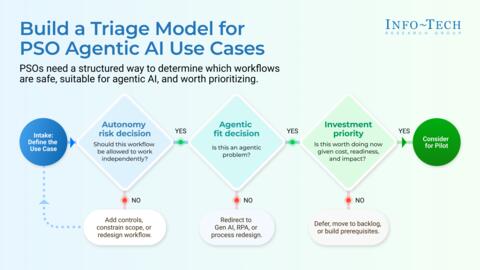
Set AI governance and quality standards.
Define acceptable use, review, and client-disclosure rules so AI-assisted work stays accurate and confidential.
Assure delivery quality and risk.
Put oversight and controls around how technology supports client work so quality and risk are managed, not assumed.