

Stay ahead of regulatory and health data compliance
The Challenge
Regulatory and health data obligations keep expanding.
Health insurers face mounting requirements across privacy, security, reporting, consumer protection, audit readiness, interoperability, consent, and data exchange, now spanning multiple jurisdictions and business lines. Manual controls and fragmented ownership make it hard for IT to keep pace, so compliance has to be built into systems and data rather than bolted on.
Why It Matters
Compliance is a legal, operational, and reputational stake.
Regulatory failure exposes insurers to penalties, disruption, and lost member trust, while strong data governance turns compliance into an asset. With the US Department of Health and Human Services (HHS) proposing the first major HIPAA Security Rule overhaul in more than two decades ("HIPAA Security Rule to Strengthen the Cybersecurity of Electronic Protected Health Information," HHS, 2025) and federal health-data rules continuing to shift toward FHIR-based interoperability ("Health Data, Technology, and Interoperability," Health IT, 2025), insurers that embed compliance and health data controls into their architecture now will absorb new rules without reengineering each time.
The Solution
Centralize regulatory intelligence.
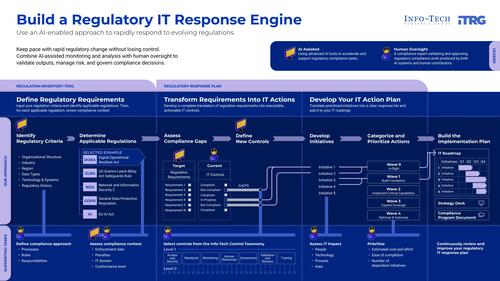
Create one process to monitor regulatory change, assess system impact, and assign accountable owners across compliance, privacy, security, and data teams.
Embed controls and consent into systems.
Move controls out of static documents into access management, reporting, data-use monitoring, and consent governance so compliance is demonstrable during audits.
Build regulation-ready data architecture.
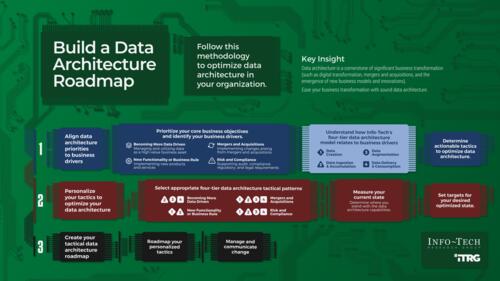
Design application programming interfaces (APIs), exchange, retention, and auditability into the data platform so new health data and interoperability rules can be met without rebuilding each time.

Protect member data and operations from attack
The Challenge
Health data is a high-value target.
Health insurers hold sensitive clinical, financial, identity, and claims data across increasingly complex ecosystems. As ransomware, vendor risk, and privacy expectations rise, cybersecurity is now a business resilience issue.
Why It Matters
Breaches carry consequences far beyond the incident.
A protected health information (PHI) breach triggers regulatory scrutiny, notification costs, disruption, and trust erosion, and the threat is rising fast. The Change Healthcare attack affected roughly 70% of organizations and pushed cybersecurity to the top of payer IT spend ("US Healthcare Spending More on AI, Cybersecurity, Other IT Investments," Bain, 2024), while the HHS proposed HIPAA Security Rule update would make stronger safeguards mandatory ("HIPAA Security Rule to Strengthen the Cybersecurity of Electronic Protected Health Information," HHS, 2025).
The Solution
Assess security maturity regularly.
Evaluate current security capabilities against leading practices and known healthcare threat patterns. Use the findings to prioritize gaps in identity, endpoint security, recovery, monitoring, incident response, and governance.
Extend controls to vendors.
Apply security requirements, access controls, monitoring, and audit rights to vendors and partners with access to PHI or core systems. Contract language alone is not enough when third parties can become direct operational failure points.
Strengthen resilience and recovery.
Test backup, restoration, business continuity, and incident response capabilities against realistic healthcare disruption scenarios. Recovery speed matters as much as prevention when core claims, payment, and eligibility processes are affected.


Turn fragmented data into a single member view
The Challenge
Disconnected data is limiting what the organization can see and do
Health insurers hold large volumes of claims, clinical, pharmacy, financial, operational, and member engagement data, but much of it remains trapped in disconnected systems. This prevents the organization from creating a reliable longitudinal member view and slows analytics, personalization, care management, and operational decision-making.
Why It Matters
Integrated data is the foundation for everything that follows.
Unifying claims, clinical, pharmacy, and operational data improves risk stratification, cost prediction, segmentation, and care management, and the value compounds with each new use case. As payers concentrate IT investment on data platforms and AI that must run on trusted data ("Healthcare IT Spending: Innovation, Integration, and AI," Bain, 2025), a governed, reusable data foundation is now the prerequisite for analytics, personalization, and automation.
The Solution
Build a governed data layer.
Create a shared data architecture that brings claims, clinical, financial, and operational data together under common standards. Assign clear ownership and stewardship to prevent fragmentation from reappearing as new sources are added.
Fix quality before scale.
Invest in standardization, deduplication, lineage, and metadata management before expanding the number of data sources. Poor-quality data at scale creates analytics outputs that look confident but cannot be trusted.
Enable self-service consumption.
Give business, actuarial, clinical, and operational teams governed access to the data products they need. This shifts IT from being a reporting bottleneck to being the owner of reliable data infrastructure.




Deploy AI the business can trust and defend
The Challenge
AI is moving faster than the governance frameworks designed to manage it.
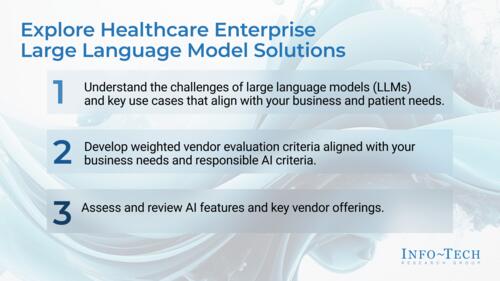
Health insurers have significant AI and machine learning opportunities across claims processing, prior authorization, fraud detection, risk stratification, and service operations. However, these use cases are emerging in an environment of heightened scrutiny around bias, transparency, coverage decisions, and member impact.
Why It Matters
Responsible AI is both a growth and a risk imperative.
Governed AI improves efficiency, while ungoverned AI creates opaque decisions that are hard to explain, audit, or defend. With 80% of payers now pursuing an AI strategy ("Healthcare IT Spending: Innovation, Integration, and AI," Bain, 2025) and the Centers for Medicare & Medicaid Services (CMS) holding Medicare Advantage plans responsible for compliant coverage decisions even when AI or algorithms are used ("Medicare Program; Contract Year 2024 Policy and Technical Changes," CMS, 2023), governance is what lets insurers scale AI without regulatory or reputational fallout.
The Solution
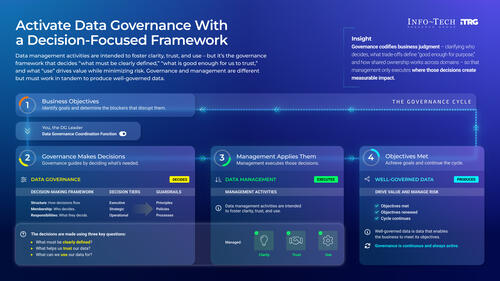
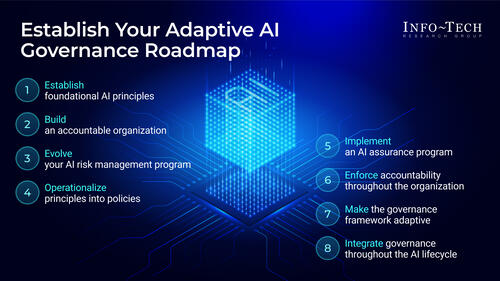
Establish AI governance first.
Define policies for model validation, bias testing, explainability, human review, and auditability before scaling AI into consequential workflows. Governance is much harder to retrofit after models are already embedded in operations.
Start with lower-risk use cases.
Prioritize high-volume operational use cases such as fraud flagging, claims routing, document processing, and service automation. These areas allow the organization to prove its AI governance model before expanding into higher-impact clinical or coverage decisions.
Create cross-functional oversight.
Bring IT, compliance, legal, clinical, actuarial, and business leaders into AI decision-making. This ensures model performance is evaluated alongside member impact, regulatory exposure, and operational risk.

Deliver a member experience that rivals consumer brands
The Challenge
Members expect consumer-grade digital experiences
Health insurance members compare digital service against banks, retailers, and consumer platforms, not just other insurers. Many payer portals remain fragmented, difficult to navigate, and disconnected from the broader member journey. This creates friction that weakens satisfaction, engagement, and retention.
Why It Matters
Digital experience is now a differentiator in a commoditized market.
Strong member-facing digital capabilities lift self-service adoption, lower cost to serve, and generate richer engagement data. Payers are directing AI investment into member engagement and personalization at scale ("Healthcare IT Spending: Innovation, Integration, and AI," Bain, 2025), so a unified, consumer-grade experience increasingly separates retention leaders from the rest.
The Solution
Unify member touchpoints.
Consolidate benefits, claims status, provider search, care navigation, communications, and support into a coherent digital experience. Fragmented portals and apps force members into higher-cost service channels.
Personalize interactions at scale.
Use behavioral, claims, clinical, and preference data to deliver more relevant communications and recommendations. Personalization requires strong identity resolution, data integration, consent management, and content delivery capabilities.
Design for accessibility.
Build digital experiences for members with varying levels of digital literacy, language needs, accessibility requirements, and bandwidth constraints. Inclusive design reduces abandonment and helps prevent digital services from creating unequal member experiences.


Replace the legacy core that holds you back
The Challenge
Aging infrastructure is holding the business back.
Health insurers continue to run core claims, enrollment, billing, and member operations on platforms built for a different era. These systems were not designed for real-time exchange, API-based interoperability, or rapid product and regulatory change. As maintenance consumes more budget, technical debt increasingly crowds out the innovation needed to compete.
Why It Matters
Modernization is the prerequisite for every other priority.
Reducing legacy dependency gives insurers the speed, flexibility, and data access that digital, analytics, interoperability, and automation all require. As payers prioritize technology that improves margins and demands clear returns ("Healthcare IT Spending: Innovation, Integration, and AI," Bain, 2025), every dollar spent maintaining aging core systems is a dollar not improving competitiveness.
The Solution
Prioritize modernization debt.
Assess the legacy estate to identify the systems creating the greatest operational risk or blocking the most important business priorities. Use this assessment to sequence modernization around risk reduction, business value, and dependency management.
Replace incrementally where possible.
Use modular replacement, APIs, and phased migration to reduce the operational risk of large-scale transformation. This allows the organization to retire legacy capabilities over time without disrupting critical claims, enrollment, or billing processes.
Tie funding to outcomes.
Define clear performance indicators for each modernization initiative before investment is approved. This helps sustain executive support by showing how modernization improves speed, reliability, cost, compliance, or member experience.

Make utilization management smarter and faster
The Challenge
Rising medical costs are putting pressure on the tools used to manage them.
Utilization management (UM) is under pressure from rising medical cost trends, scrutiny of prior authorization practices, and growing demand for faster, more transparent decisions. Many UM processes remain reactive, rules-based, and dependent on fragmented data.
Why It Matters
Better analytics translates directly into cost and care outcomes.
Predictive analytics helps insurers spot risk earlier, intervene sooner, and make utilization decisions that are consistent and defensible. With medical costs rising and prior authorization under regulatory scrutiny, the Centers for Medicare & Medicaid Services now requires faster, more transparent prior-authorization decisions and electronic workflows ("2024 CMS Interoperability and Prior Authorization Final Rule" CMS, 2024), making modern, data-driven utilization management both a cost and a compliance imperative.
The Solution
Identify risk earlier.
Use claims, pharmacy, clinical, and engagement data to flag members at risk of high costs, adverse events, or avoidable utilization. Earlier identification allows care teams to intervene before costs escalate.
Modernize prior authorization.
Use data-driven decision support to incorporate clinical evidence, member history, and utilization patterns into authorization workflows. This improves consistency, reduces manual burden, and strengthens defensibility under regulatory scrutiny.
Equip care management teams.
Provide care managers and medical directors with timely views of utilization patterns, care gaps, risk scores, and cost trajectories. Actionable insight at the point of intervention is more valuable than retrospective reporting after outcomes are already set.

Prove the value of every technology dollar
The Challenge
Transformation spending has not always delivered on its promise
Health insurers have invested heavily in digital transformation, but results are not always easy to quantify. Boards and executive teams are asking what the next wave of modernization will deliver differently. Without clear measurement, IT leaders struggle to distinguish strategic investment from ongoing spend.
Why It Matters
Sustained investment requires evidence of success.
Insurers that define outcomes, track benefits, and fix underperforming programs are better positioned to secure continued funding. As payer technology spend is increasingly judged on hard-dollar returns and margin impact ("Healthcare IT Spending: Innovation, Integration, and AI," Bain, 2025), strong value governance is what keeps IT credible with boards and frees savings to reinvest.
The Solution
Define outcomes before funding.
Set clear business outcome targets for major technology investments before programs begin. Metrics should be specific, time-bound, and jointly owned by IT and the business.
Review portfolio performance regularly.
Establish governance cadences that compare delivery progress, spending, and benefits against expected outcomes. Early visibility into underperformance allows leaders to correct, pause, or redirect investment before waste compounds.
Translate IT value clearly.
Report technology progress in business terms such as cost avoidance, cycle time reduction, error reduction, compliance improvement, or member satisfaction. Nontechnical leaders need to see how modernization changes operating performance, not just delivery milestones.


Power value-based care for providers
The Challenge
The administrator role is becoming a strategic platform decision
As value-based care expands, health insurers are no longer only reimbursing claims; they are increasingly expected to provide the data, workflow, analytics, and administrative infrastructure that helps providers manage performance. At the same time, providers, technology vendors, and platform companies are competing to own more of that enablement layer. Insurers must decide whether they will build, buy, partner, or outsource the platform capabilities needed to support provider performance.
Why It Matters
Platform ownership shapes future value-based care economics.
The build, buy, or partner decision determines how much control insurers keep over data, provider relationships, and performance measurement. With the Centers for Medicare & Medicaid Services aiming for nearly all Medicare beneficiaries in accountable care by 2030 ("Value-Based Care," CMS, 2023) and payer spending on value-based-care enablement accelerating faster than other IT categories ("Healthcare IT Spending: Innovation, Integration, and AI," Bain, 2025), defining this role now decides who owns the enablement layer.
The Solution
Clarify your platform ambition.
Define whether the organization wants to act primarily as a payer, administrator, data partner, or full provider enablement platform. This creates the strategic guardrails needed to decide which capabilities must be owned internally and which can be sourced externally.
Decide build, buy, or partner.
Assess whether value-based care administration capabilities should be delivered through internal platforms, cloud-hosted infrastructure, software as a service solutions, or partner ecosystems. This ensures investment decisions align with the organization's operating model, risk tolerance, and desired level of control.
Design for shared accountability.
Build governance, data-sharing, reporting, and workflow models that support joint accountability between insurers and providers. This gives both sides the visibility needed to manage cost, quality, outcomes, and contract performance.
Meet the CMS interoperability and prior-authorization mandate
The Challenge
Federal rules now mandate payer interoperability and electronic prior authorization.
Manual prior authorization and limited data sharing frustrate members and providers and draw regulatory scrutiny. The Centers for Medicare & Medicaid Services now requires impacted payers to open standardized data and build electronic prior-authorization workflows on fixed timelines, turning interoperability from a differentiator into a baseline obligation.
Why It Matters
Meeting the mandate protects compliance, cost, and relationships.
Standardized APIs and faster decisions reduce provider friction, cut administrative cost, and improve member experience, while missing the deadlines creates compliance and reputational risk. CMS requires impacted payers to run patient access, provider access, payer-to-payer, and prior authorization Fast Healthcare Interoperability Resources (FHIR) APIs, with operational rules from 2026 and APIs live by 2027 ("2024 CMS Interoperability and Prior Authorization Final Rule," CMS, 2024), so the build has to be underway now.
The Solution
Stand up the required FHIR APIs.
Build and test the patient access, provider access, payer-to-payer, and prior authorization APIs against the CMS-0057-F deadlines, reusing a common FHIR platform rather than point builds.
Automate electronic prior authorization.
Replace fax and phone workflows with electronic submission, documentation, and decisioning, and meet the faster turnaround and public reporting requirements that begin in 2026.
Use interoperability to cut friction.
Connect payer, provider, and member data flows so the same investment improves care coordination, member experience, and administrative cost, not just compliance.