


Deliver seamless, citizen-centric public services
Get tailored support & continuous insights for Government - Canadian. All included in your membership.
The Challenge
Fragmented, aging service channels are falling behind citizen expectations.
Departments still deliver through siloed systems, manual processes, and inconsistent online and in-person channels. Canadians now expect the same fast, accessible, digital-first experiences they get from the private sector, and the gap is widening.
Why It Matters
Service gaps erode public confidence and raise the cost to serve.
The Treasury Board is resetting the Policy on Service and Digital, acknowledging that outdated systems and rules too often make programs harder to deliver and harder for Canadians to access, and refocusing the rules on user-centric, outcome-driven service ("Modernizing the Policy on Service and Digital," Treasury Board of Canada Secretariat, 2026). Departments that move now will lower their cost to serve, while those that delay will see demand pile onto their most expensive channels.
The Solution
Stand up modern service platforms
Deploy shared case management, workflow, and engagement platforms so services work consistently across departments and channels.
Design around the user
Apply the Government of Canada Digital Standards and accessibility requirements so services are built for the people who rely on them most.
Connect channels end to end
Integrate web, mobile, contact center, and in-person service so a citizen can start in one channel and finish in another without repeating themselves.

Build cyber resilience against escalating threats
Get tailored support & continuous insights for Government - Canadian. All included in your membership.
The Challenge
Public sector systems face a faster, more aggressive threat landscape.
Ransomware, state-sponsored intrusions, and AI-enabled attacks increasingly target governments and the critical infrastructure they run. Unsanctioned employee AI use is widening the attack surface faster than many security programs can adapt.
Why It Matters
A single breach can halt essential services and expose sensitive data.
The Auditor General found significant gaps in the federal government's cybersecurity monitoring and incident response, including a major 2024 attack where poor coordination delayed the response by seven days and prolonged the attacker's access to personal information ("Cyber Security of Government Networks and Systems," Office of the Auditor General of Canada, 2025). Cyber resilience is now an enterprise accountability, not an IT department problem.
The Solution
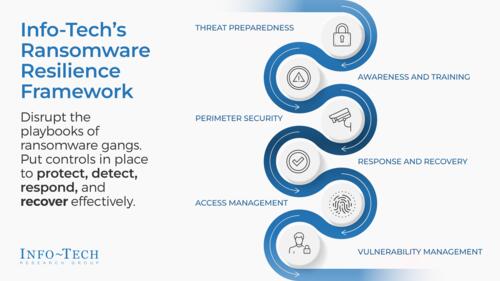
Adopt a zero trust security model
Strengthen identity, access management, and endpoint controls across distributed and hybrid environments.
Modernize security operations
Centralize threat detection and response, and use managed detection and response where internal capacity falls short.
Govern shadow AI as a security risk
Set explicit policy, monitoring, and enforcement for employee use of external AI tools to contain data exposure.


Turn data into a trusted decision-making asset
Get tailored support & continuous insights for Government - Canadian. All included in your membership.
The Challenge
Fragmented data ownership blocks insight and AI readiness.
Inconsistent governance, disconnected systems, and unclear stewardship keep departments from turning the data they hold into evidence for decisions. Many organizations have data strategies but lack the governance to act on them.
Why It Matters
Weak data foundations make every downstream AI and analytics investment underperform.
The Year Two progress report on the federal Data Strategy shows the government building enterprise data reference standards and Chief Data Officer of Canada accountabilities, while flagging persistent gaps in data governance and sharing (Treasury Board of Canada Secretariat, 2025). Establishing trusted data now is the precondition for AI, not a parallel track.
The Solution
Establish enterprise data governance
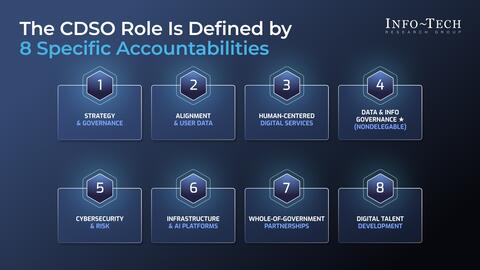
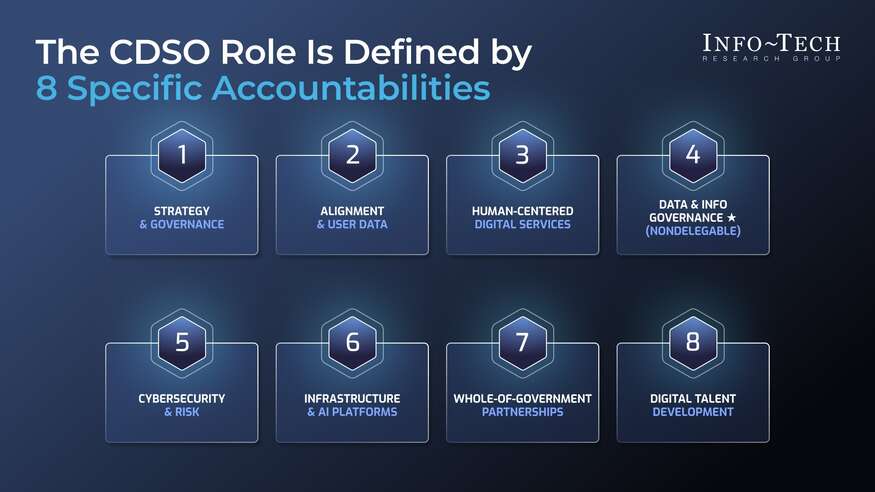
Define ownership, quality, classification, and stewardship, with accountability set at the executive level.
Build and maintain a data inventory
Document what data exists, where it lives, and who controls it to enable sharing, AI risk classification, and sovereignty compliance.
Set data quality standards before scaling AI
Adopt the GC Enterprise Data Reference Standards so analytics and AI draw on consistent, trusted data.

Close the cyber, cloud, and AI skills gap
Get tailored support & continuous insights for Government - Canadian. All included in your membership.
The Challenge
Modernization is constrained by shortages in cyber, cloud, and AI talent.
The public sector competes for scarce digital specialists while preparing its existing workforce for technology-driven change. Outdated operating models and classification rigidity slow hiring and retention further.
Why It Matters
Workforce readiness determines whether technology investments deliver any return.
The Government of Canada Digital Talent Strategy recognizes a global shortage of digital talent that the public service is not immune to, and now requires departments to source internal talent before contracting externally (Treasury Board of Canada Secretariat, 2024). Treating talent as an enabler, not an afterthought, is what makes modernization stick.
The Solution
Build tiered digital and AI literacy
Deliver role-based training across staff, managers, and technical teams through the Canada School of Public Service and specialized offerings.
Grow internal talent pipelines
Use the GC Digital Talent Platform, apprenticeships, and intern streams to reduce dependence on external IT contractors.
Fix the operating-model barriers
Address classification rigidity and create modern product and delivery roles so skilled people can do the work they were hired for.

Adopt AI responsibly and accountably
Get tailored support & continuous insights for Government - Canadian. All included in your membership.
The Challenge
AI adoption is outpacing the governance needed to deploy it safely.
Departments are under pressure to use AI in public-facing services while managing privacy, bias, transparency, and accountability risks. Public-sector AI carries a higher accountability bar than private-sector use.
Why It Matters
Deploying AI without governance risks public-trust failures and compliance exposure.
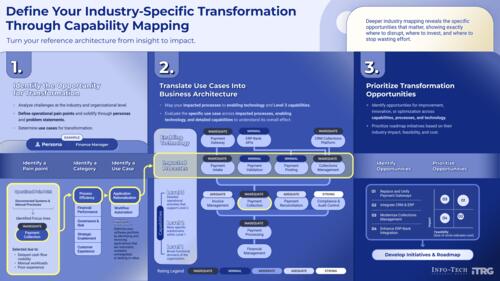
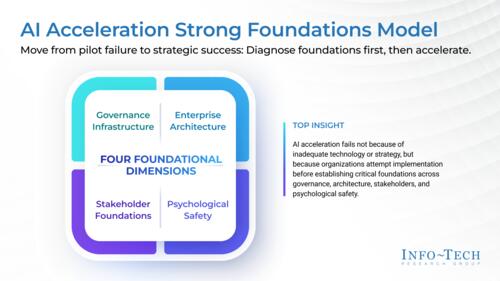
Under the Treasury Board Directive on Automated Decision-Making, existing systems must meet updated Algorithmic Impact Assessment, bias-testing, and explanation requirements by June 24, 2026 (Treasury Board of Canada Secretariat, 2024). The right sequence is to assess the foundations, govern the deployment, then accelerate.
The Solution
Assess AI readiness before deploying
Complete a foundations review of governance, data, and accountability, and close gaps before launching public-facing AI.
Apply risk-tiered governance
Run internal administrative AI with lighter controls, and require impact assessment, transparency, and explainability for decisions that affect citizens.
Complete algorithmic impact assessments
Document bias testing, explainability, and recourse, and design human-in-the-loop controls for autonomous systems from day one.


Assert sovereignty over Canadian data and infrastructure
Get tailored support & continuous insights for Government - Canadian. All included in your membership.
The Challenge
Reliance on foreign-controlled platforms is now a strategic exposure.
Canadian organizations depend heavily on foreign-owned cloud, software, and digital infrastructure. Geopolitical uncertainty and foreign jurisdictional access are forcing leaders to reassess control over their own data and systems.
Why It Matters
Data residency alone does not equal sovereignty, and the gap carries legal and operational risk.
Under the Canadian Sovereign AI Compute Strategy, Budget 2024 committed $2 billion to build Canadian-owned, Canadian-located compute where sensitive data is processed and stored in Canada, and the government has now opened applications for its sovereign AI supercomputing program (Innovation, Science and Economic Development Canada, 2024). Organizations that address sovereignty proactively will accelerate modernization, while those that ignore it will have constraints imposed on them.
The Solution
Assess sovereignty posture across key risks
Evaluate exposure across data residency, cloud jurisdiction, procurement, and AI system control, and tackle the highest-risk dependencies first.
Build interoperable, exit-ready architectures
Reduce lock-in through multicloud governance, API-first integration, and contract terms that preserve Canadian operational control.
Align AI and infrastructure to sovereign capacity
Apply residency requirements to sensitive data and AI training sets, and weigh Canadian and allied-jurisdiction options such as sovereign compute.


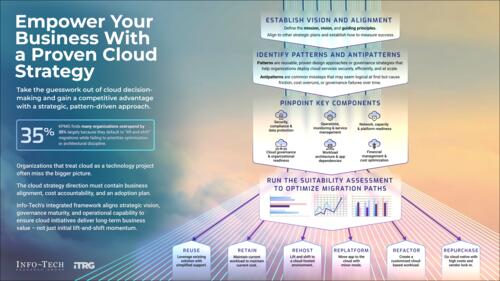
Modernize aging systems and retire technical debt
Get tailored support & continuous insights for Government - Canadian. All included in your membership.
The Challenge
Aging systems and accumulated technical debt threaten service continuity.
Legacy applications, outdated infrastructure, and complex vendor landscapes make modernization slow and risky. Technical debt blocks progress on AI, data governance, and service modernization alike.
Why It Matters
Outdated systems are a daily risk to the services Canadians depend on.
The Auditor General found that only 38% of roughly 7,500 federal IT applications were healthy, leaving the government on track for just 45% by 2030 against a 60% target (Office of the Auditor General of Canada, 2023). Treating infrastructure as the enabling foundation, not a standalone IT project, is what unlocks every other priority.
The Solution
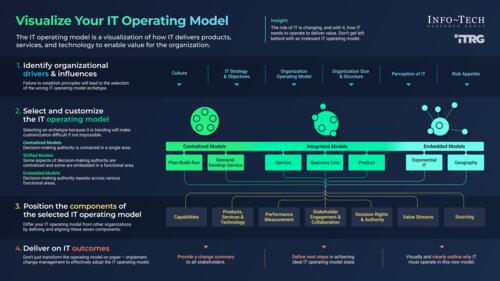
Build enterprise architecture capability
Establish architecture review, change control, and multicloud management to manage complexity and curb new technical debt.
Rationalize the application portfolio
Retire low-value and redundant applications and direct modernization spend to mission-critical systems first.
Adopt cloud-smart hosting and predictive maintenance
Use the GC Cloud Adoption Strategy and asset analytics to migrate workloads and catch infrastructure risks before they fail.

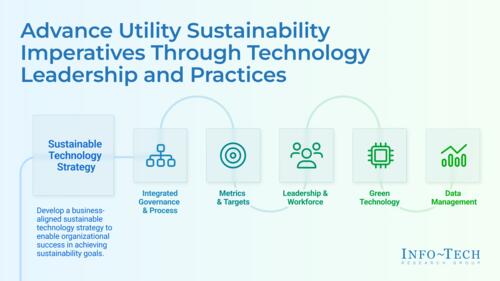


Do more with less through modern operating models
Get tailored support & continuous insights for Government - Canadian. All included in your membership.
The Challenge
Departments must deliver more under tighter budgets and faster decision cycles.
Rising service demand meets constrained spending, heightened accountability, and slow, manual approval processes. Fragmented governance and disconnected data delay the decisions leaders need to make.
Why It Matters
Every modernization dollar is now scrutinized for measurable return.
Budget 2025 launched a Comprehensive Expenditure Review targeting $60 billion in savings over five years and pledged to cut spending on management and other consulting services by 20% within three years (Government of Canada, 2025). Faster, evidence-based decisions and leaner operating models are what make those savings sustainable.
The Solution
Adopt shared and managed service models
Use shared infrastructure and managed services for functions where in-house capacity is not cost effective.
Automate high-volume processes
Apply workflow automation to rules-based, high-volume processes where return on investment is most measurable.
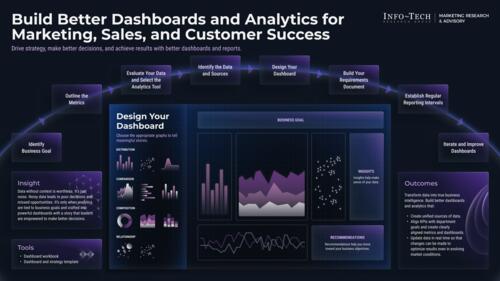
Build IT portfolio management and real-time dashboards
Connect investment decisions to fiscal outcomes and give executives live visibility into performance, demand, and risk.


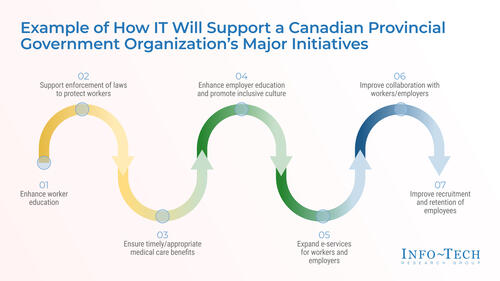
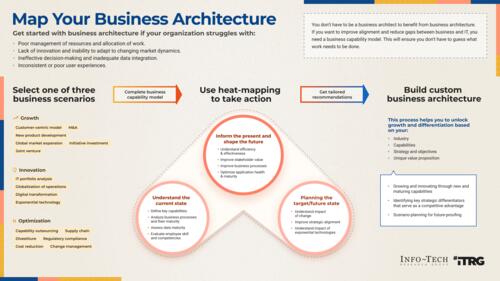
Streamline procurement and vendor oversight
Get tailored support & continuous insights for Government - Canadian. All included in your membership.
The Challenge
Slow procurement strands modernization budgets and entrenches legacy vendors.
Lengthy cycles, growing compliance requirements, and expanding reliance on third-party and AI vendors delay delivery. Procurement choices increasingly determine how much control an organization keeps over its own digital infrastructure.
Why It Matters
Procurement is both a delivery bottleneck and a lever for value and control.
The Parliamentary Budget Officer found that contracted IT services in the departments it examined cost 22% to 25.7% more than the equivalent in-house work, even as federal outsourcing reached a record $20.7 billion in 2023-24 ("Fiscal Cost of Task-Based IT Contracting," Office of the Parliamentary Budget Officer, 2025). Disciplined procurement and vendor oversight, including residency and exit terms, decide both cost and how much operational control an organization keeps.
The Solution
Stand up a Vendor Management Office
Govern vendor performance, risk, and relationships, with extra rigor for high-dependency technology and AI suppliers.
Modernize sourcing and contract management
Use digital procurement platforms to streamline sourcing, contracting, and supplier management.
Apply AI-ready and sovereignty criteria
Use the Government of Canada AI Source List and add explainability, bias, residency, and exit terms to vendor evaluation.


Build trusted digital identity for Canadians
Get tailored support & continuous insights for Government - Canadian. All included in your membership.
The Challenge
Canadians lack a consistent, trusted way to prove who they are online.
Identity verification is fragmented across departments and jurisdictions, forcing citizens through repeated, paper-based, or in-person checks. Without trusted digital identity, seamless and secure service delivery stalls.
Why It Matters
Trusted digital identity is the missing layer beneath every digital service.
The Pan-Canadian Trust Framework (PCTF) sets interoperable, privacy-first standards that let public-sector and private-sector identity services verify one another, and its steward, the Digital ID and Authentication Council of Canada, now publishes a Digital Trust Adoption Dashboard tracking digital-identity progress across provinces and territories ("DIACC Unviels [sic] Digital Trust Adoption Dashboard," DIACC, 2025). Building this layer now, in step with provincial and territorial partners, is what makes digital-first service realistic.
The Solution
Adopt the Pan-Canadian Trust Framework
Align identity and credential programs to PCTF assurance levels so verification is interoperable across jurisdictions.
Partner on provincial digital ID
Connect to provincial credential programs such as the BC Services Card and align with federal credential plans rather than building in isolation.
Embed privacy and accessibility by design
Meet Privacy Act obligations and Accessible Canada Act requirements, with consent and data minimization built into every identity flow.



Comprehensive Government - Canadian Industry Coverage



Testimonials

“I don’t have months to spend to find the answers or get a paperweight of a document that nobody understands. To be able to take the Info-Tech Workshop deliverable, present it to my manager, and he gets it in one go—that’s the value to me.”
Anna Beatty, CIO, Ottawa Police Service
View Full Case Study
“With all the change that was happening, we reached out to Info-Tech for best-practice research and advice. We wanted to move initiatives forward and collaborate with experts, rather than do it all alone.”
Catherine Fitzgerald, IT Director, Municipality of Chatham-Kent
View Full Case Study
"The perception had always been that IT was making decisions on its own. That has changed significantly with the IT Steering Committee – it has given IT an aura of credibility."
Kari Kleven, Corporate Services Manager, IT, City of Kawartha Lakes
View Full Case Study