Boomi: Activate Your Data for Agentic Autonomous Enterprise
The Problem Predates AI
Enterprise technology leaders are carrying two kinds of debt: integration debt, decades of point-to-point connections never meant to be permanent; and semantic debt, business terms that mean different things in different systems, piled up across every merger, platform migration, and departmental data warehouse.
AI agents are making both debts visible at once. When an agent queries across a customer relationship management system and a data warehouse that disagree on what a customer is, the output is wrong – and the agent does not know it is wrong. The model confidently reasons over disjoint inputs, and the failure looks like an AI problem when it is actually a data governance problem that existed long before the agent arrived.
Platform architecture decisions now carry more weight than they did five years ago. The integration layer is no longer just a conduit for data movement. It is where AI agents read and act on enterprise data.
Boomi Is Betting on the Layer Below the Model
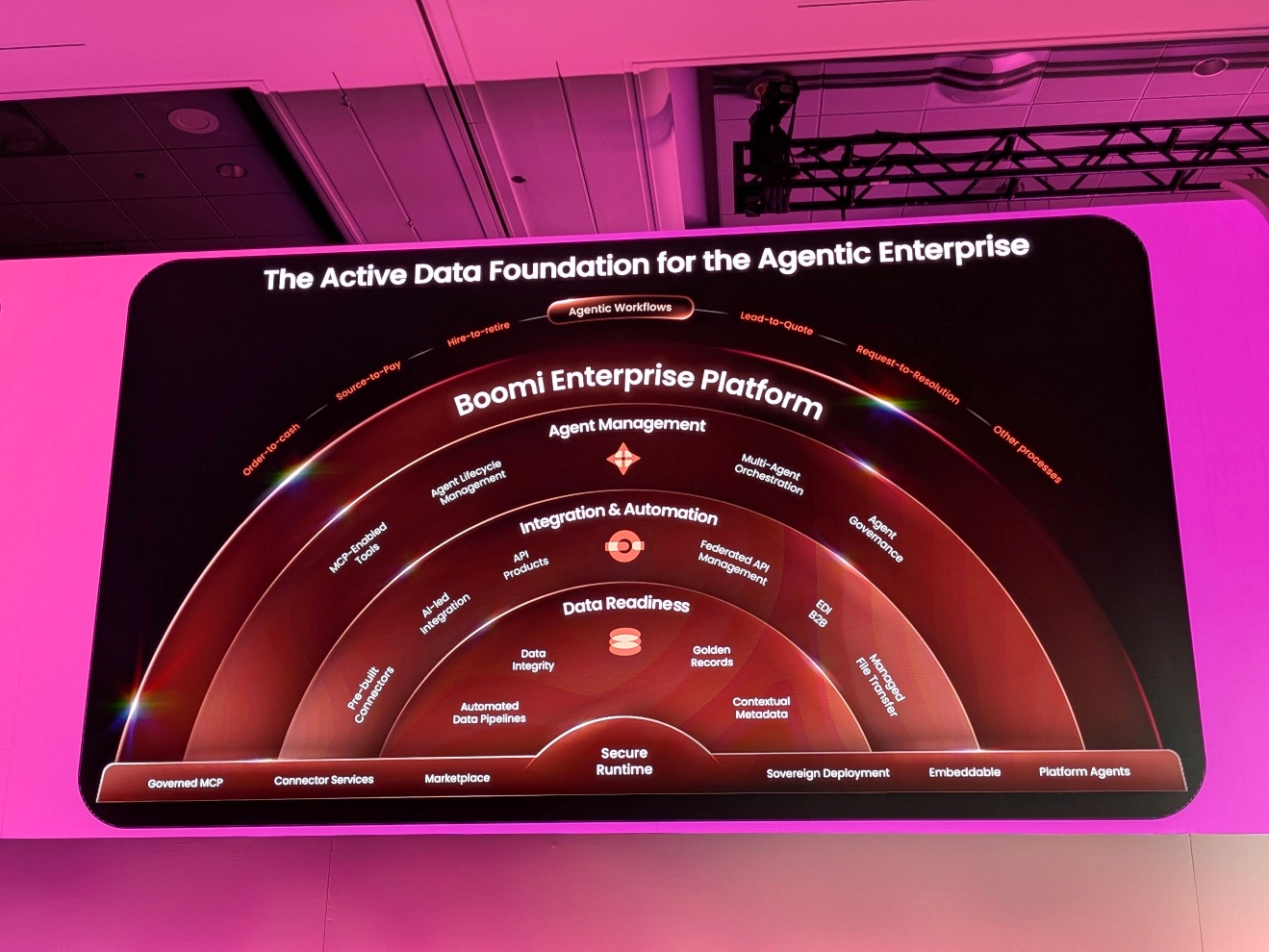
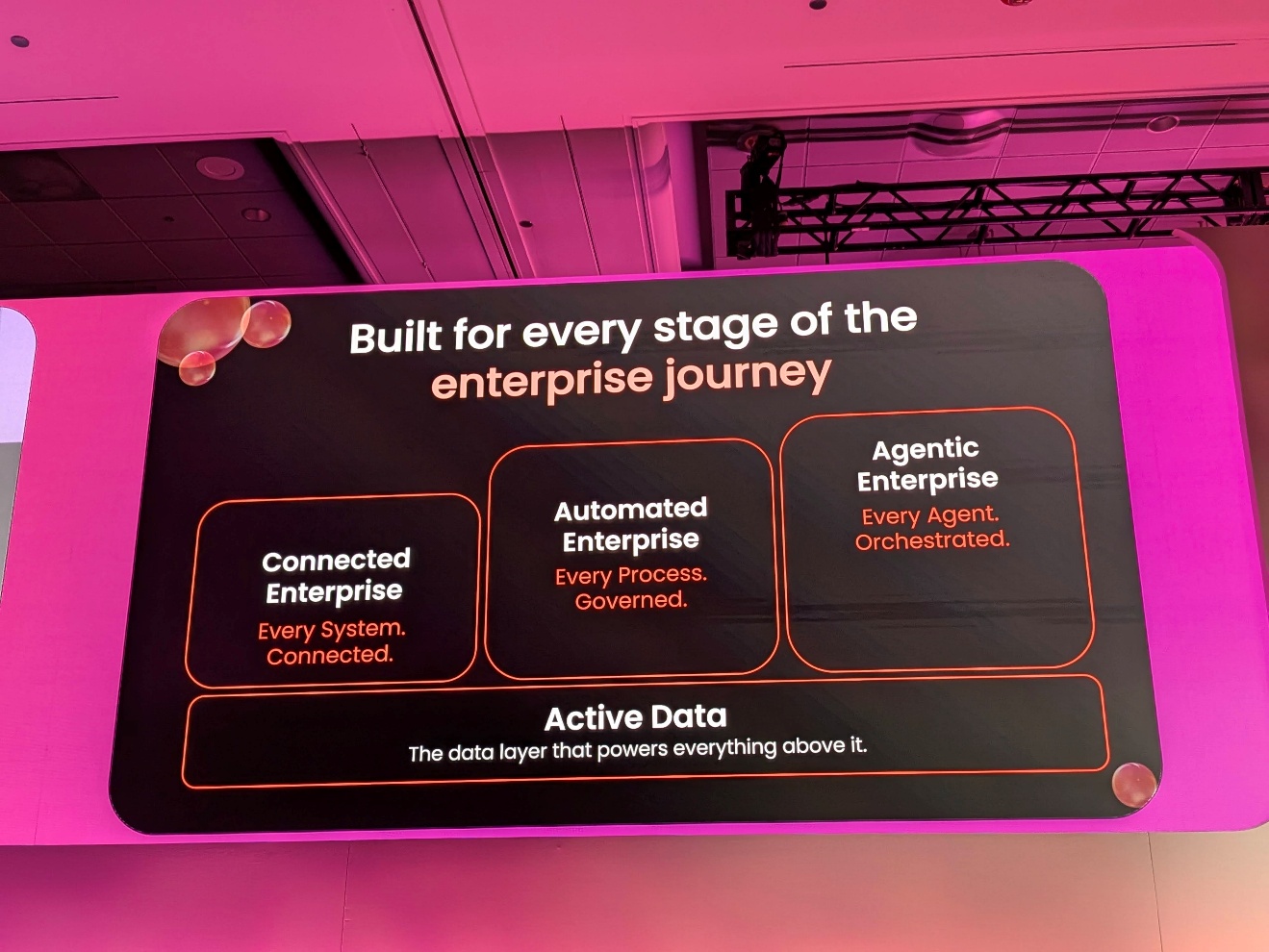
Boomi is more than an iPaaS vendor with a distributed runtime architecture, hybrid and multicloud deployment support, and connectors covering hundreds of enterprise applications. Under Chief Executive Officer Steve Lucas, the company has shifted its stated positioning from integration middleware to what it calls data activation: making data ready for AI agents, not just moving it between systems.
The shift changes who Boomi needs to reach. Integration platform procurement has historically been an IT infrastructure decision. Data activation and agent governance pull in the chief data officer, chief AI officer, and in regulated industries, general counsel. That is a more expensive sales motion and a harder one to execute.
Boomi is not competing for the model layer. The hyperscalers own that market by capital structure. The bet is on the context, orchestration, and data trust layer: the infrastructure that determines whether models produce reliable outputs in enterprise conditions. When model economics commoditize, which they will, the vendor holding the data trust layer retains the pricing power. The vendor holding only the model interface does not.
Governing Agents Built Outside of Boomi
Most vendors in the agentic AI space are attempting to become the single platform where agents live. Boomi's architecture assumes a different approach: Enterprises will use agents from various vendors – and governance should work across all of them. According to CEO Steve Lucas, others are building agentic AI platforms; Boomi is the platform that connects those platforms.
The Agent Control Tower should provide a unified management interface for agents built on Salesforce Agentforce, Amazon Bedrock, Snowflake Cortex, Microsoft Foundry, and Boomi's own environment. Lifecycle management, observability, anomaly detection, and role-based access controls apply regardless of agent origin. Boomi reports support for agents from more than 30 providers, with real-time monitoring of latency, errors, and token consumption.
AgentStudio exposes more than 300,000 endpoints as model context protocol (MCP) interfaces. Agents reach enterprise systems through those interfaces without custom integration code for each connection. An agent built in one vendor platform can therefore access enterprise data from another platform while being governed by the rules defined in Boomi.
For organizations running or planning to run agents from more than one AI provider, which is the trend among large enterprises in 2026, a centralized control plane is a structural requirement. Building a separate governance layer for each AI provider's agent environment produces the same fragmentation problem that iPaaS was supposed to solve for application integration.
Customer Evidence
Interviews with Boomi customers identify technical debt reduction as the first measurable outcome of Boomi deployments: replacing direct system-to-system connections with a managed integration layer cuts the maintenance load that accumulates every time a connected system changes its schema, API, or authentication model.
Customers also identified implementation support as a differentiator in complex deployments. When enterprise data structures, legacy system constraints, or regulatory requirements fall outside standard templates, Boomi's professional services teams are cited as capable of working through nonstandard configurations. That matters in the enterprise segment, where edge cases drive selection decisions.
Boomi's product architecture supports this signal. Distributed runtime, hybrid deployment, and regional data residency options, including a European instance where data, metadata, and runtime execution all stay within regional boundaries, reflect engineering investment beyond the common cases.
Meta Hub Is the Product That Matters Most
Boomi's master data management (MDM) capability, delivered through Data Hub, addresses a specific problem: AI agents can produce locally consistent but enterprise-wide wrong outputs because the systems they query disagree on what the core business terms mean.
Every large enterprise has this problem. A customer relationship management system and a data warehouse may define "customer" differently. An enterprise resource planning system and a supply chain platform may disagree on what makes a supplier "active." An agent operating across both systems without a reconciled definition will synthesize an answer from contradictory facts. The AI is not likely to flag the contradiction – it's rooted in the input data.
Meta Hub maintains a business glossary: a governed set of semantic definitions shared by agents and human users. It is an active constraint layer, governing how agents interpret data within the organization's specific context rather than cataloging metadata for later use.
Boomi World 2026: The Announcements That Move the Thesis
Boomi World 2026 in Chicago grouped its announcements around three themes: agent connectivity, data architecture, and the partner ecosystem.
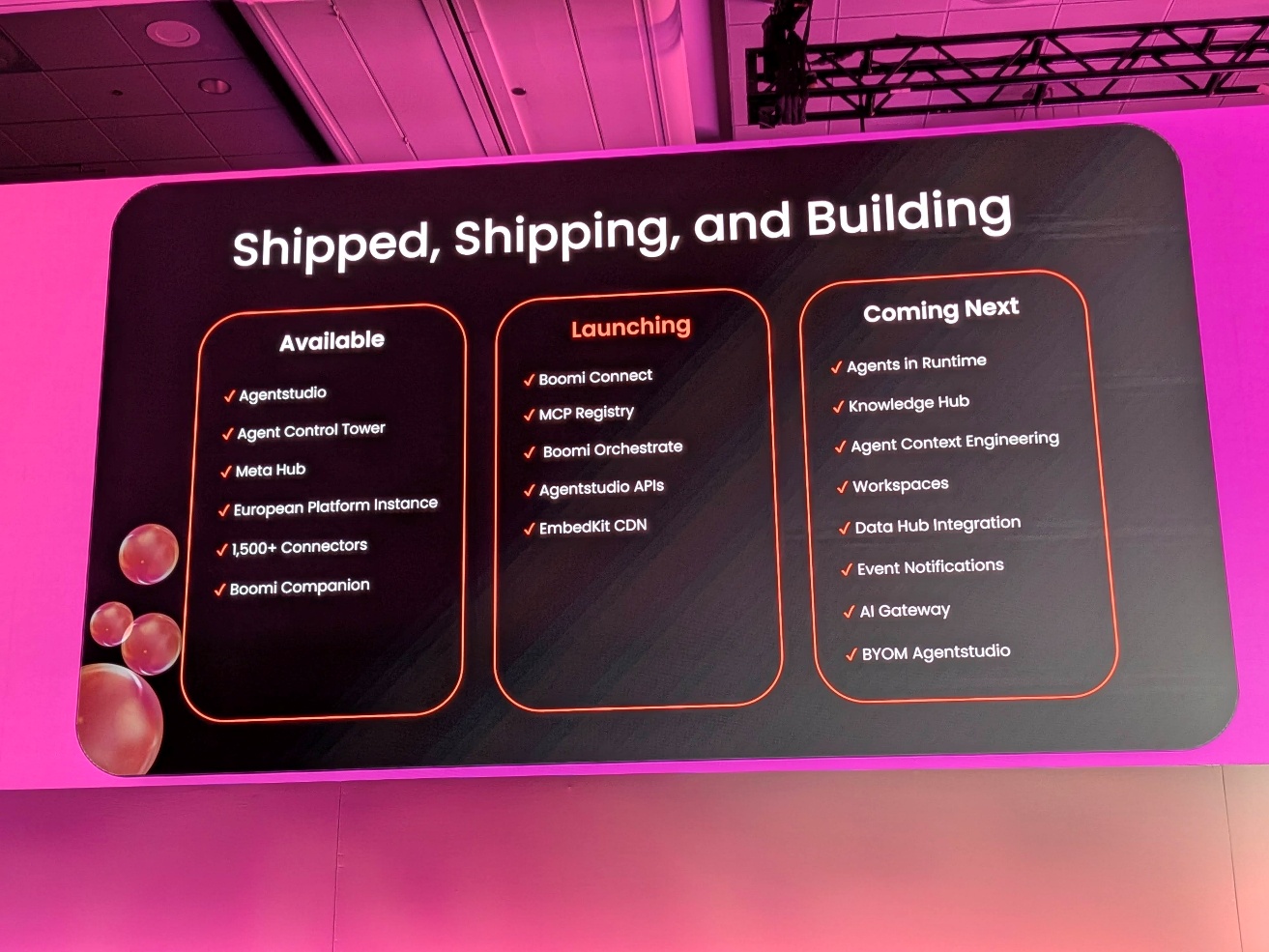
On connectivity, Boomi Connect reached general availability. It connects AI tools and agents to enterprise systems through a governed, MCP-based layer; the product team credits the late-2025 jump in large language model capability for accelerating the release. Boomi also announced its intent to acquire Lunar.dev, an Israeli startup building secure enterprise connectivity for AI agents, extending the same roadmap with a team focused on letting agents reach enterprise resources safely. Knowledge Hub was previewed but is not yet generally available.
On data architecture, Boomi positioned its December 2024 acquisition of Rivery, which added change data capture (CDC) and extract, transform, load (ETL) capabilities as core components of the active data layer rather than a standalone product line.
On partnerships, Boomi announced a Red Hat collaboration on OpenShift AI, a Guru launch partnership for Boomi Connect, and a Couchbase partnership for agent memory. Two customer data points anchored the keynote: Lexitas processes 46% of its payments, roughly 2,500 payment lines per day, through AI agents integrated via Boomi, and Post-Consumer Brands was cited for integration and automation outcomes.
Boomi also announced Boomi Companion. Boomi Companion is a set of agent skills and plugins that converts agentic engineering environments like Claude Code into Boomi experts, encoding actual engineering best practices rather than skeleton processes. In a live demo, Companion built a complete Stripe integration in eight minutes, including field mappings, error handling, logging, and connection reuse. The demo addresses the historical constraint of certified developer availability by compressing the time required to apply integration expertise, changing onboarding economics and what enterprises can build without expanding headcount. Available now and free on GitHub, Companion represents Boomi's bet that integration expertise belongs embedded in the agentic development tools enterprises are already standardizing on.
What Technology Leaders Should Do
For technology leaders evaluating Boomi:
- Sequence the investment. AI agent deployments that skip the data foundation fail in production. Mature the integration and master data capabilities first. Adding agent tooling on top of data problems accelerates the rate at which these problems result in visible failures.
- Treat Agent Control Tower as an infrastructure decision. If your organization runs or plans to run agents from more than one AI provider, a centralized control plane is a structural requirement. Assess whether Boomi's observability and policy enforcement capabilities meet your security and compliance requirements before onboarding the agents.
- Evaluate data governance maturity before committing to Meta Hub. Meta Hub returns value proportional to the quality of definitions your organization contributes to it. A weak data governance program produces a poor business glossary. Meta Hub can accelerate an existing data governance program; it cannot substitute one.
For Boomi's product and strategy teams:
- Master data deserves more investment, not less. Master data is the foundation every agent deployment requires, and Boomi's position at the data movement layer gives it access to the governance problem that pure-play MDM vendors and pure-play AI vendors cannot reach from their positions. The competitive surface here is durable. Invest accordingly.
- Pursue semantic web standards and ontology frameworks. A business glossary that can only be read inside Boomi is a proprietary asset. A business glossary encoded in W3C standards including the Resource Description Framework (RDF) and Web Ontology Language (OWL) is a portable, vendor-neutral one. Enterprise technology leaders should take the metadata/knowledge graph portability as a trust signal. Boomi's position as the data movement layer makes it the natural custodian of these standards at the enterprise level.
- Make the nondisplacement commitment explicit in product decisions. Announcing openness while engineering proprietary lock-in through data formats or closed orchestration layers is a pattern enterprise technology leaders have seen before. The architecture has to match the narrative, or the narrative becomes a liability.
Our Take
Boomi is making a serious argument for owning the layer that will matter as AI agents move from pilots to production infrastructure. Whether it holds depends on execution. Boomi addresses a genuine architectural problem: Enterprise AI deployments are failing because the data underneath them is neither consistent nor governed.
The companies that will matter in five years are the ones that own the layer where enterprise data becomes trustworthy enough for agents to use. Informatica addresses it via data governance/quality/MDM suite but lacks the runtime integration. MuleSoft has a strong API integration platform but sits inside the Salesforce stack, which constrains the cross-vendor governance argument. Microsoft is building an IQ layer for agentic AI but relies on its data storage to serve as the data integration layer. Boomi argues it can connect them all; the proof points are still emerging.
Connecting different and competing agentic AI platforms within a single enterprise will require four capabilities to mature in parallel. What the next two years should show:
- Technical connectivity across platforms. AgentStudio's MCP interfaces and Agent Control Tower's multi-provider support put this layer in production today.
- A standards-based semantic layer so agents interpret enterprise data consistently across repositories – a centralized master data model or conceptual data model expressed as ontology and knowledge graphs. Meta Hub is the foundation; how far it moves toward W3C-standard portability is the signal to watch.
- A standards-based framework for business rules, behavioral patterns, and accountability for agents acting within an enterprise but built on different vendor platforms, ideally anchored to the enterprise's business capability model, value streams, and workflows expressed as ontology and knowledge graphs. This is the next layer above Meta Hub and the natural extension of the data activation thesis – whether Boomi builds it, partners for it, or cedes it is the open question.
- A governance enforcement framework that interprets agent behavior consistently, resolves conflicts among agents, and prevents rogue actions. Observability and policy enforcement are in market today; conflict resolution across multi-vendor agent populations is the harder problem ahead, and no vendor has solved it yet.
Boomi has the first of these capabilities in production and the architectural position to participate in capabilities 2–4. Which of those layers it builds, which it partners for, and whether the market consolidates around a different vendor is what the next two years will reveal.
Three execution questions are worth tracking.
First, the data activation pitch reaches the chief data officer and chief AI officer, a different buyer than the IT infrastructure conversation Boomi has historically led with. The field motion is being rebuilt in real time.
Second, Meta Hub's value scales with the customer's master data discipline, so Boomi's customer success motion has to meet enterprises where their governance maturity actually sits, not where the product assumes it.
Third, the Couchbase partnership for agent memory and the Rivery and Lunar.dev acquisitions live in adjacent territory to Boomi's own roadmap; how cleanly those capabilities consolidate into one architecture will signal how mature the agentic platform is underneath the messaging.
Want to Know More?
- Build a Data Integration Strategy
- Solidatus Expands Metadata Governance With Agentic AI and Bi-Temporal Graphs
- CluedIn: Graph-Based MDM With Agentic Data Management
- Informatica Introduces AI Agents but Does Not Become an Agentic AI Platform Yet
- Microsoft Adopts Ontology-Based IQ Layer for Agentic AI
- Boomi – Orchestrate the Agentic Future, But Don't Forget the Plumbing
- Boomi Introduces Ambitious Roadmap to Revolutionize Integration and Automation