At Insights 2026, Epicor Reframes ERP From Record-Keeper to Action-Taker
At Epicor Insights 2026 in Nashville, Epicor demonstrated a full-stack agentic AI platform built directly into its ERP products, with live customer examples showing measurable freight cost recovery, AI-assisted shop floor planning, and cloud migration times compressed to weeks. Manufacturing and distribution CIOs weighing cloud migration timing, ERP platform strategy, or AI deployment governance will find the announcements directly actionable.
The ERP is becoming a system of action, not just a system of record.
Epicor spent most of the day making one argument: ERP has moved from recording what happened to triggering what happens next. The company demonstrated agents that autoprioritize expedited orders, reconcile freight invoices against carrier manifests without human intervention, and resequence shop floor jobs based on live supply signals. These are not roadmap items. They ran as live demos against actual customer environments. CIOs evaluating whether to delay cloud migration until AI matures should note that most of these capabilities require Epicor Kinetic Cloud or Prophet 21 Cloud. On-premises customers cannot access them.
Freight overcharges are a real and recoverable cost.
Epicor cited customer data showing manufacturers and distributors are routinely overbilled by freight carriers by 3 to 5 percent, largely from incorrect surcharges and rate mismatches. One demo showed a customer who had absorbed $700,000 in freight variance over two years before the Freight Spend Intelligence agent surfaced the problem. After deploying tighter controls, that variance dropped from 19 percent to 1.5 percent. For operations executives running tight margins, this warrants an immediate cost-benefit conversation with the IT team. Vendor-supplied figures are unaudited.
Epicor is building toward a supply chain intelligence network, not just a software product.
CEO Steve Murphy and CPO Vaibhav Vohra framed the company's long-term bet clearly: Epicor holds transaction data from a significant share of North American manufacturers and distributors, and it intends to aggregate that data, anonymized and on an opt-in basis, into a community intelligence layer that can surface macro signals before they appear in public economic data. Vohra claimed the aggregated dataset can already predict the Bureau of Labor Statistics motor vehicle parts CPI more accurately and earlier than the public index. Those figures are unaudited. The strategic direction, however, is credible. The company that sits closest to the transaction layer in manufacturing has a data advantage no general-purpose AI vendor can replicate. CIOs should factor this into long-term platform decisions.
Why AI pilots fail. Epicor's diagnosis is worth paying attention to.
The product keynote opened with a direct challenge: Most companies in the room had attempted an AI pilot that died between Q1 and Q4. Epicor attributed the failures to three causes: generic models that do not understand the difference between a make-to-order shop floor and a distribution hub; lack of shop floor adoption; and inability to answer the question What did this actually do for my margin? Standalone AI tools bolted onto ERP will keep failing at the same rate. Vertically trained models embedded inside the system of record – where role-based security, auditability, and workflow context already exist – have a structural advantage over general-purpose tools trying to connect from outside.
Headless ERP is the architecture shift to track.
Epicor announced now it has a headless ERP, meaning the system can operate without a fixed user interface. Agents, external tools, and AI platforms can interact with ERP data and trigger actions through governed connections, including model context protocol support for external tools such as Claude and ChatGPT. A live demo showed a manufacturing persona running part substitution impact analysis through Claude connected to Kinetic, then creating a follow-up task inside Prophet 21 through ChatGPT. The ERP data layer is becoming an API-first substrate. IT organizations that have avoided ERP cloud migration will find themselves increasingly locked out of the agent ecosystem being built on top of it.
The migration barrier is dropping faster than most IT teams realize.
Cornell Pump completed a full ERP migration from NetSuite to Kinetic in two weeks, assisted by Epicor's Ascend program and its AI-assisted data mapping tooling. Not every migration will move that fast. But the demo showed tooling that identifies field-level schema mappings between legacy systems and Kinetic automatically, eliminates duplicate records, and reduces consultant-dependent SQL mapping work substantially. Epicor stated that 50 to 60 percent of its total AI investment is going into migration tooling. For CIOs who have deferred cloud migration because implementation risk was too high, the calculus is changing.
Pricing for agentic AI is unsettled. Demand clarity before committing.
Epicor's leadership acknowledged in the analyst Q&A that they are still working out consumption-based and outcome-based pricing for AI agents. The stated direction is outcome-based, meaning charges trigger when an agent completes a defined task. No firm pricing structure was committed. CIOs negotiating new or renewal contracts should require specific terms on agent usage pricing, caps, and overage policies before signing. The contract terms accepted today may not reflect the economics in 18 months as model costs continue to decline.
Change management is the actual constraint, not technology.
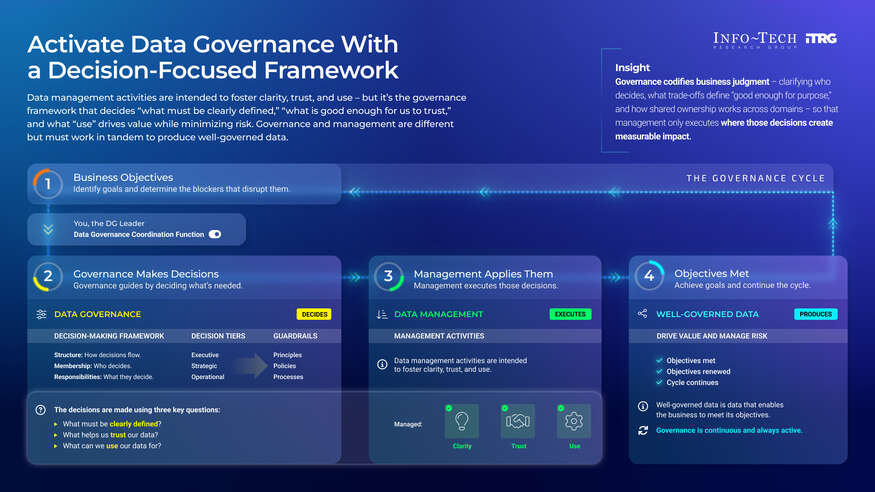
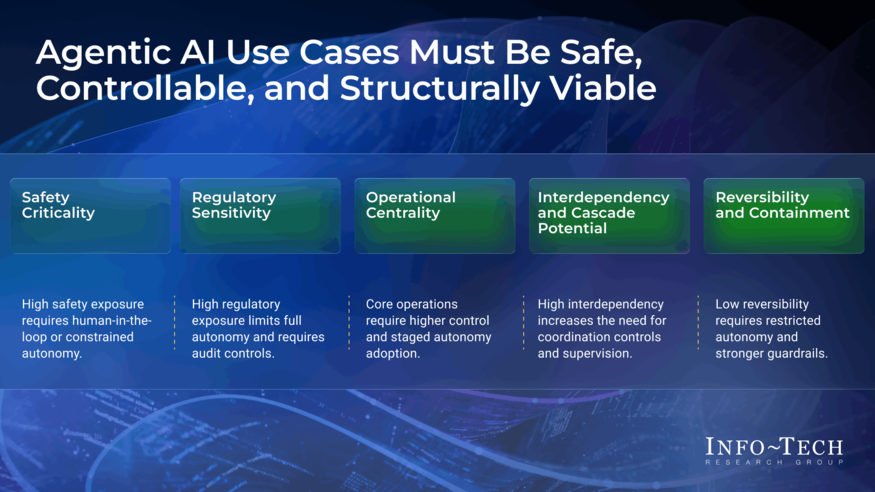
Two customer panelists and an independent manufacturing advisor said the same thing without coordination: The bottleneck on AI adoption is organizational, not technical. Epicor's own research found 92% of manufacturers call smart manufacturing critical to long-term strategy, while most say they are not ready to deploy it at scale. The customers who started with adoption rather than governance were the ones whose pilots failed. CIOs should build a lightweight governance framework before expanding agent deployments: Define the use case, quantify the expected outcome, identify who approves agent actions at each step, and establish regression testing before each release cycle.
Our Take
Manufacturing and distribution CIOs still running Epicor on premises should treat the announcements at Insights 2026 as a forcing function. The agentic AI capabilities demonstrated, including freight variance recovery, MRP explainability, and AI-assisted shop floor replanning, are cloud-only. The migration barrier is falling. AI-assisted data mapping and the Ascend program are compressing implementation timelines materially. CIOs who have deferred migration to wait for AI to mature have the order backwards. The AI is already there. The prerequisite is cloud. Before expanding any agent deployment, build governance first: Define the use case, set approval checkpoints, and establish regression testing. The organizations at Insights whose AI investments produced measurable returns all followed that sequence.
Want to Know More?