
Upcoming
Roundtables & Webinars
View more Industry Roundtables




Implement regulated digital gaming
The Challenge
Expand across digital gaming opportunities while navigating regulatory complexity
Gaming and lottery operators are pursuing growth through iGaming, sports betting, iLottery, mobile wagering, digital wallets, and other digital gaming experiences, but expansion is complex. Regulations, approval timelines, and requirements for licensing, KYC, payments, responsible gaming, prize claims, reporting, taxation, and player protection vary by jurisdiction. The challenge is preparing to move quickly when regulatory opportunities open, without creating compliance gaps, fragmented systems, or operational risk.
Why It Matters
Regulatory readiness determines market access, speed to growth, and player trust.
Digital gaming only scales where operators can launch compliant products fast and adapt as each jurisdiction's rules change, so slow or fragmented compliance directly caps growth. With iGaming up 28.7% to $8.41 billion and sports betting up 25.4% to $13.71 billion in 2024, the operators that industrialize regulated digital launches will capture the fastest-growing revenue in gaming ("2024 Commercial Gaming Revenue Reaches $71.9B," AGA, 2025).
The Solution
Build a digital gaming strategy
Define how iGaming, sports betting, mobile wagering, loyalty, and on-property experiences will work together to grow total player value.
Connect digital gaming to the broader casino ecosystem
Integrate digital gaming across property systems and loyalty to ensure digital activity contributes to a full view of player value.
Strengthen digital analytics
Use player analytics, personalization, lifecycle marketing, responsible gaming controls, and jurisdiction requirements to support profitable and compliant digital growth.


Enable omnichannel engagement through a unified player view
The Challenge
Connect fragmented player and property data
Gaming and lottery customers interact across many disconnected systems, including CMS, PMS, POS, sportsbook, iGaming, iLottery, loyalty, entertainment, retail terminals, cage, marketing, and mobile apps. This creates fragmented profiles, inconsistent offers, limited host visibility, and missed opportunities to connect retail, digital engagement, gaming behavior, and nongaming spend into one coordinated player relationship.
Why It Matters
Compete on total wallet share, not isolated transactions.
Players now move between the casino floor, mobile apps, sportsbooks, and online play, and without a unified view each channel is managed in isolation while value leaks between them. With online gaming reaching a record $21.45 billion and about 30% of all commercial gaming revenue in 2024, a single cross-channel player view is now essential to compete ("2024 Commercial Gaming Revenue Reaches $71.9B," AGA, 2025).
The Solution
Create a single player and guest profile
Integrate CMS, PMS, POS, loyalty, sportsbook, iGaming, entertainment, and marketing data into a trusted customer view.
Enable real-time context sharing
Give hosts, marketing teams, retailer support teams, and service teams access to relevant player context in real time when it matters.
Standardize identity and data governance
Establish common player identifiers, consent rules, data quality standards, and integration practices across systems.
Modernize casino management, lottery, loyalty, and gaming
The Challenge
Modernize the systems that run the casino operation model
Many gaming and lottery organizations rely on legacy systems that were not designed for real-time decision-making, omnichannel engagement, digital wallets, or advanced analytics. These systems limit innovation across the casino floor, digital channels, lottery games, and the broader resort.
Why It Matters
Core gaming platforms determine how quickly the business can adapt.
Legacy casino management, lottery, loyalty, and gaming systems are often rigid and disconnected, which slows new products, raises integration cost, and traps useful data. With commercial gaming at a record $71.9 billion in 2024 and online its fastest-growing channel, operators running on aging core platforms cannot keep pace with where the money is moving ("2024 Commercial Gaming Revenue Reaches $71.9B," AGA, 2025).
The Solution
Modernize core gaming platforms
Upgrade or rationalize core systems to support integration, scalability, and real-time data access.
Build a modern gaming data foundation
Create trusted data pipelines and reporting layers that consolidate gaming, loyalty, payments, compliance, and resort data.
Prioritize integration-ready architecture
Use APIs, middleware, and data platforms to connect core gaming systems with other core systems.


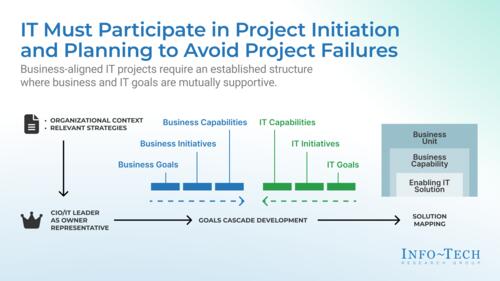

Strengthen responsible gaming, AML, KYC, and regulatory readiness
The Challenge
Manage rising regulatory complexity across land-based and digital gaming
Gaming and lottery operators are under pressure to grow across land-based gaming, iGaming, sports betting, iLottery, retail lottery, and digital wallets, which creates more ways for risky behavior to occur and go undetected. Players can move money, wager, claim prizes, change channels, redeem offers, and interact across multiple systems faster than traditional compliance processes can monitor.
Why It Matters
Maintain regulator confidence and player trust.
Responsible gaming, AML, and KYC failures invite fines, license risk, and reputational damage, while weak controls also cede ground to unregulated competitors. With illegal and offshore operators estimated to have taken $402 billion in bets in 2024 and cost the legal industry $17.3 billion, demonstrable compliance is both a license to operate and a competitive advantage ("2024 Commercial Gaming Revenue Reaches $71.9B," AGA, 2025).
The Solution
Strengthen governance and regulatory evidence
Establish clear ownership, control testing, data lineage, documentation, and reporting so the organization can demonstrate compliance readiness to regulators.
Automate monitoring, case management, and reporting
Use AML, KYC, and transaction-monitoring tools to detect risk earlier, cut manual review effort, and improve auditability.
Operationalize responsible gaming
Use player-monitoring, self-exclusion, and behavioral analytics to flag at-risk play early and meet each jurisdiction's responsible-gaming mandates.

Improve player reinvestment, comp, and loyalty economics
The Challenge
Control the margin impact of comps, offers, and loyalty incentives
Casinos rely on free play, comps, tier benefits, host incentives, offers, and loyalty programs to drive visitation and retain valuable players. However, broad promotions, over-comping, and limited profitability insight can erode margins and reward behavior that is not truly incremental.
Why It Matters
Profitable loyalty matters more than loyalty participation.
Comps, free play, and host incentives drive a large share of gaming cost, so reinvesting without a clear read on each player's worth erodes margin. With AI-driven behavior and predictive tools already lifting high-roller engagement by 12% for early adopters, analytics-led reinvestment is becoming the difference between profitable and wasteful loyalty spend ("AI Dealers, VR Craps, and Robot Bartenders," Casino.org, 2025).
The Solution
Establish loyalty and reinvestment governance
Create consistent data definitions, approval workflows, and measurement standards for offers, comps, free play, tiers, and host incentives.
Build a unified player value foundation
Integrate casino management, loyalty, POS, marketing, and digital gaming data to create a complete view of player profitability.
Target reinvestment with analytics
Use predictive models to size offers to each player's worth and incrementality, shifting spend toward play that is genuinely profitable.
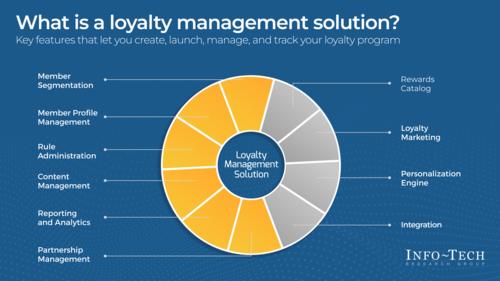

Protect operations from fraud, cyber threats, and gaming integrity risks
The Challenge
Defend a high-cash, high-data, high-trust gaming environment from physical and digital abuse
Gaming and lottery organizations operate across wagering, cash movement, ticket sales, digital payments, retailer networks, loyalty value, player data, surveillance, and regulated gaming systems. The challenge is that risks no longer sit in one area. A threat can move across digital gaming accounts, loyalty programs, prize claims, retail terminals, payment systems, cage operations, hotel systems, and the casino floor making them more difficult to detect.
Why It Matters
Operational trust depends on protecting money, data, prizes, and game integrity.
A single breach or integrity failure can halt the floor, expose player data, and damage the license to operate, not just the balance sheet. The 2023 Scattered Spider attacks cost MGM roughly $100 million, and the threat has only intensified since, with a February 2026 breach at Wynn Resorts exposing more than 800,000 records (MGM SEC filing, 2023; "How the Gaming and Gambling Industry Can Strengthen Their Cyber Defenses," TechRadar, 2026).
The Solution
Establish an enterprise casino risk and security strategy
Create a coordinated approach across cybersecurity, fraud prevention, surveillance, physical security, payments, loyalty, gaming operations, and compliance.
Modernize security monitoring and incident response
Improve visibility across CMS, loyalty, payments, iGaming, sportsbook, iLottery, retail lottery, surveillance, corporate, and network environments to detect and respond to threats faster.
Build resilience into critical casino operations
Prioritize recovery planning, business continuity, data protection, and operational resilience for core systems.


Enable cashless, digital wallet, and payment modernization
The Challenge
Modernize payments in a highly regulated, cash-dependent gaming environment
Casinos remain highly dependent on cash-based gaming, cage transactions, ticket-in/out workflows, ATMs, and manual financial controls. At the same time, players increasingly expect faster, more convenient ways to fund play, move value, redeem winnings, and engage across casino, sportsbook, loyalty, and digital experiences. The challenge is that payment modernization is not a simple convenience upgrade. It changes how money enters, moves, and leaves the gaming environment while creating operational, regulatory, fraud, AML, and player adoption complexity.
Why It Matters
Payment friction can limit player adoption, retention, and spend.
Trips to the ATM and cage interrupt play and frustrate younger, cash-light guests, while clunky digital wallets see high sign-up drop-off. With about 90% of high-spending customers saying they want digital payments on the floor, yet cashless still only about 7% of the market even as wallet usage jumped 44% in the past year, modern payment options remain a major untapped lever ("Embracing Cashless Payments in Casinos," American Gaming Association, 2024; "Cashless Gaming Rollout Slow, but Growth Continues," CDC Gaming, 2026).
The Solution
Build integrated payment architecture
Establish the platforms, APIs, identity controls, and integration standards needed to connect cage, slots, tables, and digital channels.
Strengthen payment governance, risk, and compliance
Embed AML, KYC, responsible gaming, fraud controls, and auditability into payment modernization from the start.
Drive cashless and digital wallet adoption
Roll out funded digital wallets and cashless gaming with clear guest education so players adopt them without friction at the cage, slots, and tables.


Increase nongaming revenue across the property
The Challenge
Turn the casino property into a coordinated revenue engine
Integrated resorts and casinos generate revenue across several different functions, but these areas are often measured and managed separately. This makes it difficult to understand whether a guest is valuable because of casino play, retail spend, event attendance, or food and beverage.
Why It Matters
Nongaming revenue diversifies growth and expands the audience.
Dining, entertainment, hotel, and events attract guests who may never sit at a machine and smooth revenue when gaming softens. On the Las Vegas Strip, nongaming revenue already makes up about 74% of total revenue, with gaming at just 26.1%, the 27th straight year gaming was under half ("Nevada Gaming Abstract 2025," Nevada Gaming Control Board, 2025).
The Solution
Enable enterprise-wide guest experience orchestration
Establish a trusted view of guest, player, spend, loyalty, reservation, and event data across gaming and nongaming systems.
Strengthen cross-functional reporting and performance measurement
Develop shared dashboards and KPIs that give leaders visibility into total guest value, channel performance, and cross-property demand.
Activate cross-property offers
Use the unified view to drive targeted dining, hotel, entertainment, and retail offers that grow nongaming spend per visit.


Build a resilient casino workforce
The Challenge
Attract and retain talent in a high-turnover environment
Casinos depend on specialized frontline and operational roles across dealers, slots, attendants, cage cashiers, surveillance, security, hosts, and food and beverage teams. However, high-turnover, labor shortages, irregular hours, and competition for service workers make it difficult to maintain a stable and experienced workforce.
Why It Matters
Protect revenue, service quality, and operational control.
Dealers, cage, surveillance, and hospitality roles are hard to fill and costly to lose, and understaffing directly degrades service and compliance coverage. With Las Vegas Strip employment down to about 92,130, still below the prepandemic 96,037, technology that supports and retains frontline staff is now an operational necessity ("Nevada Gaming Abstract 2025," Nevada Gaming Control Board, 2025).
The Solution
Digitize frontline operations and employee support
Enable mobile communication, task management, and self-service tools to improve employee experience and reduce operational friction.
Modernize workforce planning and scheduling
Use demand forecasting and labor analytics to align staffing with gaming activity, events, occupancy, and seasonality.
Strengthen retention and upskilling
Use learning, cross-training, and recognition tools to build a pipeline for specialized roles like dealers, cage, and surveillance and reduce costly turnover.

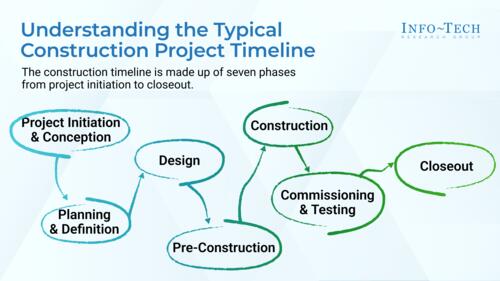
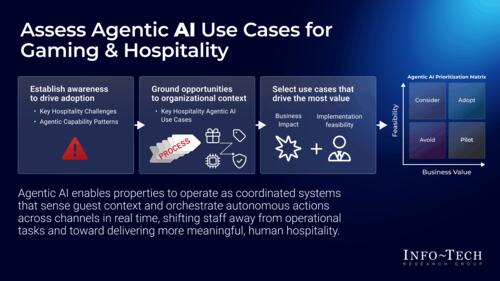
Govern AI and advanced analytics across gaming operations
The Challenge
Turn scattered gaming data into operational intelligence.
Casinos generate enormous data from slots, tables, sportsbooks, loyalty, and digital channels, but most of it sits in silos that staff cannot act on in real time. The challenge is scaling AI and analytics responsibly across marketing, floor operations, and compliance without crossing player-trust or regulatory lines.
Why It Matters
AI is moving from experiment to competitive necessity on the casino floor.
Applied well, AI sharpens player development, optimizes the floor and marketing spend, and strengthens fraud and responsible gaming detection, all areas where human review alone cannot keep pace. With more than 80% of gaming operators already using generative AI but industry AI governance maturity scoring just 30 out of 100, the question is no longer whether to adopt AI but how to govern it ("New Report Reveals Gaming Industry’s Alarming AI Governance Gap," UNLV International Gaming Institute & KPMG, 2026).
The Solution
Apply AI to player development and marketing
Use predictive models to size offers, forecast player value, and target reinvestment toward genuinely profitable play.
Optimize floor and operations with analytics
Use machine learning on slot, table, and traffic data to tune game mix, staffing, and layout in near real time.
Govern AI for compliance and trust
Put human oversight, model testing, and data governance around AI so it strengthens responsible gaming and fraud detection without manipulating outcomes or misusing player data.
Comprehensive Casinos, Gambling & Lottery Industry Coverage


Testimonials

“Info-Tech has targeted solutions that are much more relevant to what we need, which you can easily use and implement with little effort.”
Phil Wood and Suresh Shaddarsanam, Peabody Energy
View Full Case Study
“Info-Tech research, templates, and guidance save me hours of time and help me to make decisions more effectively. It’s a great resource that the IT management team and I use on a daily basis.”
Steven Nino, CIO, Soboba Band of Luiseño Indians
View Full Case Study
“Because of the insights we obtained from running the Info-Tech CIO Business Vision diagnostic and the improvements we were able to make as a result, we saw our satisfaction scores improve 7% year over year.”
Sheri Horwitz, Senior VP, Technical Shared Services, Synchronoss
View Full Case Study