
Evaluate the Application Lifecycle Management Landscape
Manage the complexity of today’s frequent deployment cycles and assure alignment and traceability with business objectives.
- IT leaders are continuously looking for opportunities to streamline the management of their application and development lifecycles while assuring their products are valuable and well supported.
- Application lifecycle management (ALM) solutions are attractive solutions to help organizations streamline their development and portfolio management practices and maintain traceability and transparency of the value and status of both product and projects.
- The capabilities of different ALM solutions vary widely. Some focus on a specific domain such as requirements, test, or issue management. Other solutions are designed with a broad set of capabilities intended to cross multiple aspects of the software development and application lifecycles.
Our Advice
Critical Insight
- Tools are critical for the shift from a document to data-driven ALM. ALM data is currently hidden in documents and network drives. ALM solutions provide the insight needed for governance and continuous improvement of every practice.
- Organizations implement ALM solutions to manage products and projects. Application teams continuously strive to increase throughput and reduce contention, rework, and frustration when they develop and support their application portfolio. ALM solutions ensure that people have the information they need to manage the whole product, not just a single project or work order.
- Teams want an open and integrated ALM environment. Teams are empowered to adopt the tools they need to address complexities and frequent changes while assuring end-to-end artifact traceability. ALM vendors are positioning their products as open solutions with out-of-the-box integrations and marketplaces to allow teams to create a tightly integrated and flexible tool environment.
Impact and Result
- Understand the core ALM features and the various practice focuses of key ALM players.
- Evaluate and select the most appropriate ALM vendors and solutions to satisfy your high priority project management, requirements management, development, testing, deployment, and issue management needs.

About Info-Tech
Info-Tech Research Group is the world’s fastest-growing information technology research and advisory company, proudly serving over 30,000 IT professionals.
We produce unbiased and highly relevant research to help CIOs and IT leaders make strategic, timely, and well-informed decisions. We partner closely with IT teams to provide everything they need, from actionable tools to analyst guidance, ensuring they deliver measurable results for their organizations.
What Is a Blueprint?
A blueprint is designed to be a roadmap, containing a methodology and the tools and templates you need to solve your IT problems.
Each blueprint can be accompanied by a Guided Implementation that provides you access to our world-class analysts to help you get through the project.
 Applications Priorities 2025
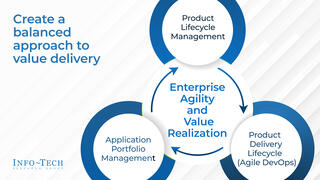 Rationalize Your Application Portfolio
 Extend Agile Practices Beyond IT
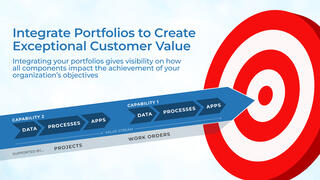 Integrate Portfolios to Create Exceptional Customer Value
 Automate Your Software Delivery Lifecycle
 Build Your BizDevOps Playbook
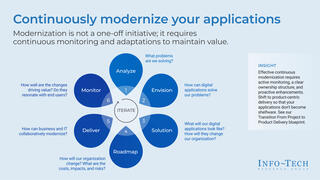 Modernize Your Applications
 Embrace Business-Managed Applications
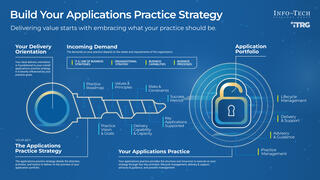 Build Your Applications Practice Strategy
 Review Your Application Strategy
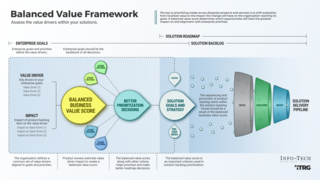 Assess the Value Drivers Within Your Solutions
 2020 Applications Priorities Report
 Applications Priorities 2022
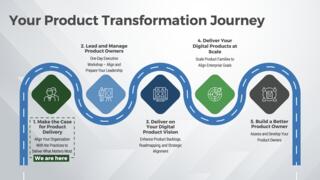 Make the Case for Product Delivery
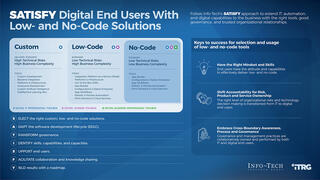 Satisfy Digital End Users With Low- and No-Code
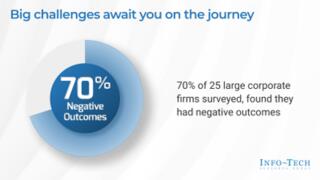 Select a Sourcing Partner for Your Development Team
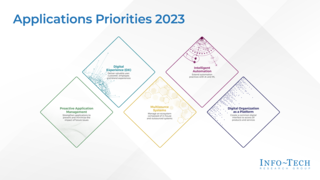 Applications Priorities 2023
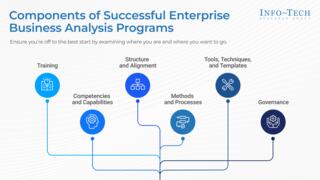 Make the Case for Enterprise Business Analysis
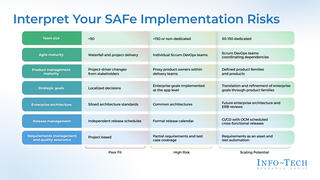 Decide if You Are Ready for SAFe
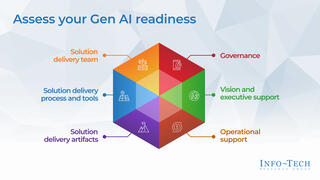 Adopt Generative AI in Solution Delivery
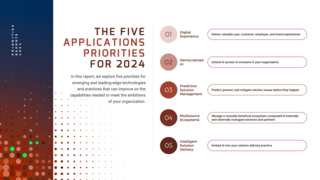 Applications Priorities 2024
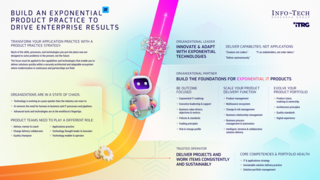 Build Your Exponential IT Product Practice
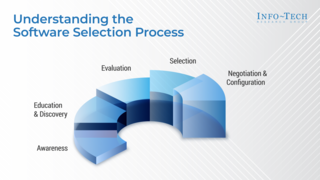 Insights Into Software Selection 2025
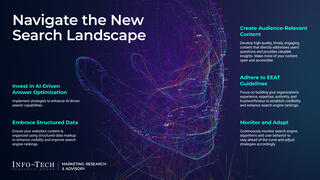 Stay Relevant in the Era of AI-Powered Search
 Transform IT, Transform Everything
 Building Info-Tech’s Chatbot
 Assessing the AI Ecosystem
 Building the Road to Governing Digital Intelligence
 Bring AI Out of the Shadows
 The AI Vendor Landscape in IT
 An Operational Framework for Rolling Out AI
 Applications Priorities 2026
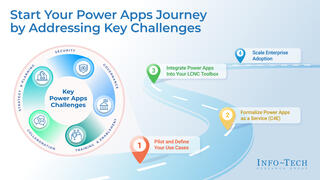 Develop a Plan to Overcome Your Microsoft Power Apps Challenges
