
Build a Regulatory IT Response Engine
Use an AI-enabled approach to rapidly respond to evolving regulations.
Regulatory demands are increasing in volume, complexity, and speed, placing significant pressure on IT leaders to respond quickly and accurately. Most organizations still rely on manual, fragmented approaches that slow response times, delay initiatives, and increase financial and reputational risk. This blueprint introduces an AI-enabled regulatory IT response engine, grounded in human oversight, to help you rapidly translate regulatory requirements into actionable IT controls and prioritized initiatives.
Responding to cross-jurisdictional requirements effectively now requires more than incremental improvements to existing compliance efforts. You need a more adaptive and coordinated approach that brings consistency to how these requirements are interpreted, improves the speed and scalability of response, and ensures initiatives are executed in line with regulatory expectations.
1. Shift from compliance to conformance.
Regulations define expected outcomes, but how your organization interprets and implements them varies based on internal context and external pressures. Without a consistent approach, this leads to fragmented responses and misaligned execution across teams. Define clear conformance levels to ensure regulatory requirements are applied consistently, aligned to business context, and executed with intent.
2. Leverage AI to enable regulatory response at scale.
Traditional approaches cannot keep pace with the volume and velocity of regulatory change. AI can streamline analysis, accelerate response planning, and help identify the right IT initiatives. Use AI-enabled tools to rapidly build and continuously adapt your IT action plan while maintaining alignment with compliance requirements.
3. Prioritize IT initiatives to meet regulatory deadlines.
Regulatory timelines and dependencies create execution risk if initiatives are not properly sequenced. Poor prioritization leads to duplicated effort, missed deadlines, and increased exposure to noncompliance penalties. Align initiatives based on timelines and dependencies to ensure critical compliance activities are delivered on time and with the right focus.
Use this blueprint to build a proactive and scalable regulatory response capability
Our research offers practical tools and templates to operationalize compliance and develop a clear IT action plan. Use this step-by-step blueprint to build a proactive, repeatable regulatory response engine that reduces manual effort, accelerates response timelines, and improves execution:
- Define your regulatory landscape by establishing your organizational profile, governance model, and regulation inventory.
- Translate regulatory requirements into IT controls using AI-enabled analysis and structured gap assessments.
- Develop and prioritize IT initiatives based on cost, effort, and impact.
- Build and communicate a roadmap aligned with your resource capacity and regulatory deadlines.
- Establish a repeatable process to continuously monitor, adapt, and maintain compliance.
Member Testimonials
After each Info-Tech experience, we ask our members to quantify the real-time savings, monetary impact, and project improvements our research helped them achieve. See our top member experiences for this blueprint and what our clients have to say.
Client
Experience
Impact
$ Saved
Days Saved
State of Wyoming
Guided Implementation
7/10
$2,599
5
Love having a sounding board who can readily digest my challenges and offer their own experiences of what has worked for them in the past. Would h... Read More
Government of Cayman Islands
Guided Implementation
10/10
$51,000
20
Andy Woyzbun was very knowledgeable which he provided valuable feedback is resourceful for moving the Cayman Islands Government Computer Services D... Read More

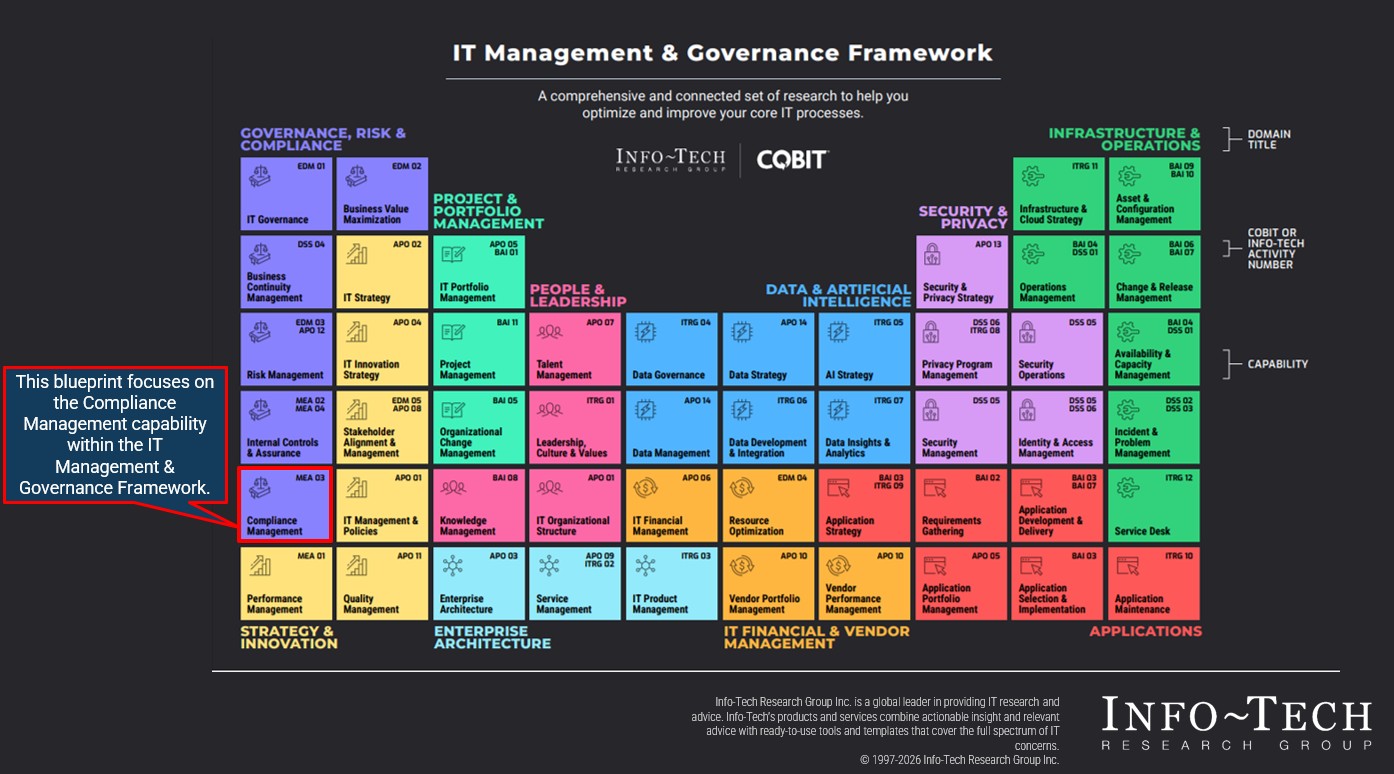
Compliance Management
Don't gamble recklessly with external compliance. Play a winning system and take calculated risks to stack the odds in your favor.
Please note this course is scheduled to be updated in 2026.
- Course Modules: 5
- Estimated Completion Time: 2-2.5 hours
Build a Regulatory IT Response Engine
Use an AI-enabled approach to rapidly respond to evolving regulations.
Analyst perspective
Streamline your regulatory compliance efforts through an AI-enabled approach.

The rise of various global compliance standards has increased the complexity of managing and adhering to multiple regulations. Regulations are increasing across jurisdictions, mainly enforced to respond to emerging technologies and address consumer demands to better protect their data. This rapid change has left organizations struggling to keep pace, citing traditional compliance approaches as insufficient to address modern regulatory amendments.
Furthermore, challenges with translating regulatory requirements into actionable IT controls and initiatives have put a strain on IT leaders’ regulatory compliance efforts. The lack of a structured view on regulatory changes, coupled with the manual, intensive processes to support compliance efforts, impacts organizations’ ability to respond quickly to regulations. This comes at a time where stricter enforcement and increased fines by jurisdictions have transformed noncompliance into not only a reputational risk but also a financial and operational threat to the organization.
With many organizations finding compliance complexity a hindrance to transformation priorities, action must be taken to adopt a resilient approach to managing diverging regulations. This blueprint provides guidance on developing a unified, AI-enabled approach to respond to regulatory changes. Its methodology will help organizations track their existing compliance effort, transform new regulatory requirements into actionable IT controls, and develop an effective IT action plan to implement initiatives, ultimately supporting their compliance efforts. This adaptable framework ensures evolving regulations can be addressed. It supports IT leaders in showing their IT response to adhere to requirements and supports the overall organizational compliance program.
Ahmad Jowhar
Senior Research Analyst, Security & Privacy Practice
Info-Tech Research Group
Executive summary
|
Your Challenge |
Common Obstacles |
Info-Tech’s Approach |
|---|---|---|
|
|
|
Info-Tech Insight
Static models no longer meet the pace of change of regulations. Leverage advanced AI tools to develop a rapid, continuous, and adaptive IT response plan to effectively govern your compliance efforts.
Challenge
Keeping pace with regulatory changes is a top priority for organizations
- The rise of emerging technologies and changes in customer demand has shifted the regulatory landscape, with regulations being enacted at higher speed, volume, and complexity than ever before.
- This has impacted CIOs’ ability to support compliance teams in effectively responding to changes in regulatory requirements that require IT action.
- Organizations are struggling to operationalize compliance requirements, as current methods are not sufficient to effectively translate regulatory text to actionable IT initiatives at scale.
- Lack of oversight of overlapping regulatory requirements impacts organizations’ growth initiatives, as additional time and resources are allocated to develop and implement redundant controls.
85% of organizations report increased compliance complexity.
Source: PwC, 2025
69% of organizations find the complexity and velocity of regulations as key challenges to their compliance efforts.
Source: World Economic Forum, 2025
77% of organizations cite regulatory complexity as a key factor negatively impacting growth initiatives.
Source: PwC, 2025
Common obstacles
Lack of automation hampers rapid regulatory response effort
- Regulatory response processes often operate in silos, with no communication or collaboration among departments, resulting in an unstructured view of regulatory change within an organization.
- Current regulatory response processes lack the capability to scale their compliance effort due to outdated infrastructure and manual processes, resulting in increased time, cost, and effort.
- Stringent compliance deadlines, coupled with various IT dependencies, place pressure on CIOs to efficiently prioritize initiatives to respond to and meet requirements.
- A lack of tooling and operating models for continuous control makes it challenging for organizations to demonstrate continuous compliance, which requires ongoing monitoring, testing, and reporting.
77% of compliance teams rely on manual or outdated processes.
Source: Regology, 2025
65% of compliance leaders cite technology and automation as being essential to reduce compliance complexity.
Source: Thomson Reuters, 2023
What is a regulatory IT response engine?
An AI-enabled regulatory response, strengthened by human oversight
- To address the key challenges and obstacles of responding to evolving regulations, a proactive and repeatable process is required to ensure compliance efforts are appropriately met.
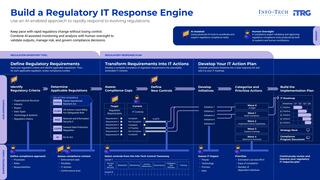
- A regulatory IT response engine is a structured framework that helps organizations identify, analyze, and respond to regulations that have an impact on IT or require an IT action.
- It acts as a centralized mechanism for monitoring regulatory updates, assessing organizational impact, and translating requirements into actionable IT controls and initiatives – improving alignment between legal, compliance, and technology teams.
- The response engine ensures regulatory changes are addressed consistently, efficiently, and with traceability across the organization.
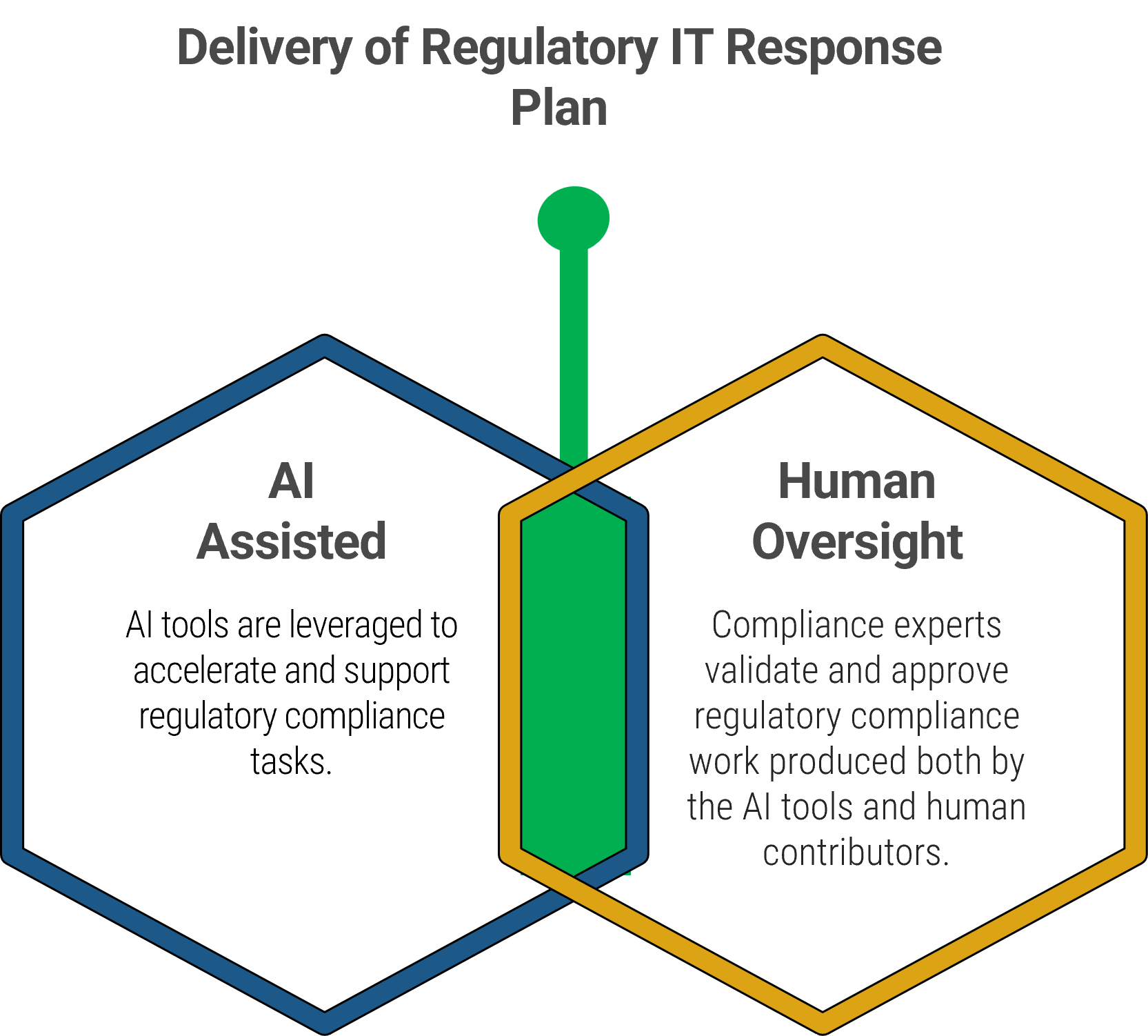
- Its two main components are AI assisted and human oversight elements that support a regulatory response effort:
- AI Assisted: AI-enabled tools that automatically identify applicable regulations and translate regulatory requirements into IT actions.
- Human Oversight: Subject matter experts that review AI’s output to ensure accuracy and proper interpretation.
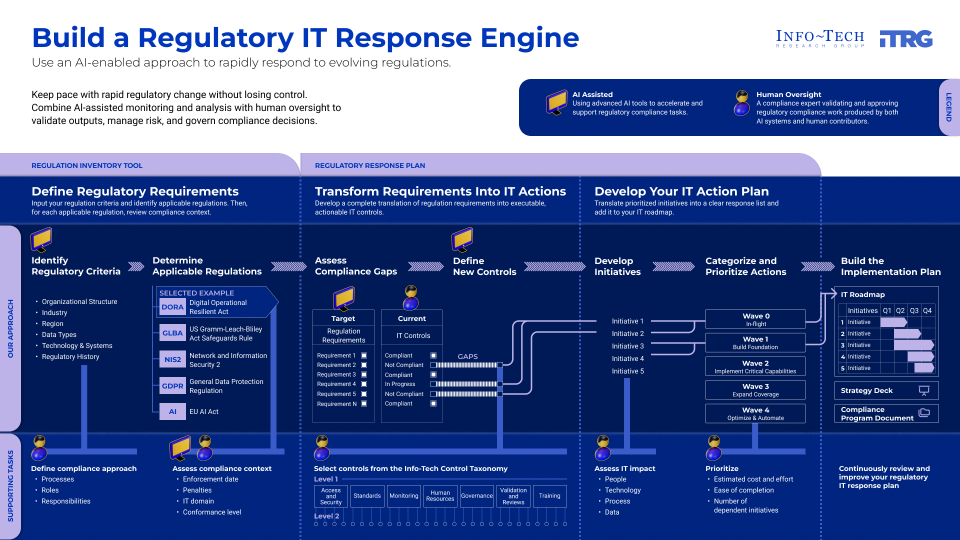
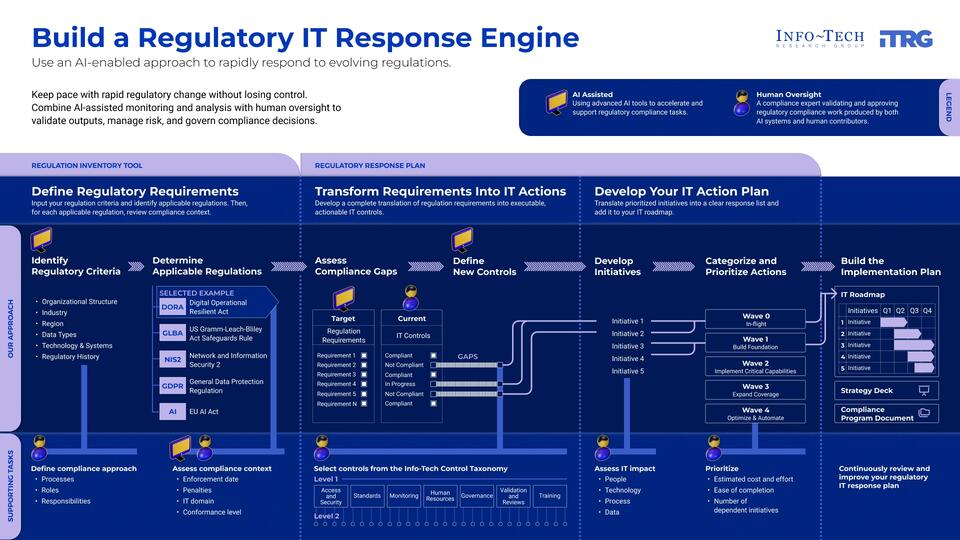
Info-Tech’s methodology for building an effective regulatory response engine
|
1. Define Regulatory Requirements |
2. Transform Requirements Into IT Actions |
3. Develop IT Action Plan |
|
|---|---|---|---|
|
Phase Steps |
|
|
|
|
Phase Outcomes |
|
|
|
Insight summary
Gain clarity on developing an effective IT action plan to respond to emerging regulations.
Static models no longer meet the pace of change of regulations. Leverage AI tools to develop a rapid, continuous, and adaptive IT response plan to effectively govern your compliance efforts.
From compliance to conformance.
Although most regulations specify the required conformance levels, organizations’ regulatory responses are influenced by various internal and external factors. An effective response plan requires a shared understanding of the desired conformance level for each regulation.
Leverage AI to support regulatory compliance.
Leverage AI tools to streamline your regulatory response efforts and develop an IT action plan to ensure the right initiatives are implemented.
Prioritize IT initiatives to avoid noncompliance implications.
Prioritize your IT action plan based on initiative timelines and dependencies to ensure compliance efforts are implemented to meet stringent regulatory deadlines.
Balance AI-informed output with governance expertise.
Although leveraging the power of AI will streamline regulatory response efforts, a robust response plan requires competent human intervention throughout the process to validate AI’s output and ensure compliance requirements are met.
Beyond IT: Compliance as a shared responsibility.
Address compliance as a shared accountability, not just a technical checkbox, to better position your organization in managing risk, adapting to change, and sustaining regulatory trust.
Blueprint deliverables
Each step of this blueprint is accompanied by supporting deliverables to help you accomplish your goals:
Regulation Inventory Tool
Capture all your applicable regulations that require an IT action.
Regulatory Response IT Action Plan Tool
Develop your IT actions to achieve regulatory compliance.
Compliance Program Template
Capture the roles, responsibilities, and processes required for managing IT compliance requirements.
Key deliverable:
Regulatory Response Communication Deck
Capture your regulatory compliance efforts and IT action plan to meet requirements.
Blueprint benefits
|
IT Benefits |
Business Benefits |
|---|---|
|
|
Measure the value of this blueprint
A rapid regulatory IT response plan will have a measurable impact on your program
|
Phase |
Measured Value |
COBIT MEA03 Related Metrics* |
|---|---|---|
|
Phase 1: Define Regulatory Requirements |
Cost to define and assess regulatory compliance efforts that require an IT action:
|
|
|
Phase 2: Transform Requirements Into IT Actions |
Cost to transform regulatory requirements into IT capabilities, controls, and process:
|
|
|
Phase 3: Develop IT Action Plan |
Cost to develop actionable IT initiatives, a roadmap, documentation, and a communication plan:
|
|
|
Potential Savings |
Total estimated effort = $18,000 |
|
*Source: COBIT 2019 Framework, Governance and Management Objectives
Executive brief case study
INDUSTRY: Food & Beverage
SOURCE: Payzaar, 2025
Danone
Operating in over 55 countries with more than 100,000 employees, Danone faced significant challenges managing its decentralized payroll operations. Each country used its own system, resulting in over 35 different payroll solutions with inconsistent controls and varying regulatory requirements. This fragmentation limited global oversight, made it difficult to establish KPIs, and increased audit and compliance risks.
To address this, Danone partnered with Payzaar to standardize and automate payroll processes through a unified platform.
Results
Partnering with Payzaar, Danone unified payroll operations, automated compliance checks, integrated local regulatory requirements, and standardized workflows. This consolidation improved efficiency, strengthened governance, and enabled scalable, reliable global compliance management.
Key Benefits
Improved Operational Efficiency
Improved Data Quality
Improved Compliance and Audit Readiness
Strengthened Governance
Enabled Scalable Compliance
Phase 1
Define Regulatory Requirements
|
Phase 1 |
Phase 2 |
Phase 3 |
|---|---|---|
|
1.1 Define organizational profile 1.2 Define compliance approach 1.3 Develop regulation inventory 1.4 Assess conformance level |
2.1 Identify regulation requirements 2.2 Conduct gap analysis 2.3 Develop new controls 2.4 Identify control owner |
3.1 Develop initiatives 3.2 Prioritize initiatives 3.3 Develop roadmap 3.4 Develop communication deck |
This phase will walk you through the following activities:
1.1 Define organizational profile
1.2 Define conformance approach
1.3 Develop regulation inventory
1.4 Assess current conformance levels
Outcome:
- Applicable list of regulations with an IT action
- Desired regulation conformance levels defined
- Regulation current state assessed
- Roles and responsibilities established
This phase involves the following participants:
- CIO
- Compliance
- Legal
- Audit
- Security & Privacy
Define applicable regulations
Gain clarity on your current regulatory landscape and efforts
- Prior to developing a regulatory IT action plan, organizations need to understand their current regulatory landscape and compliance efforts.
- Establishing a clear understanding of your organization’s structure, operations, data flows, and risk environments will ensure your regulatory efforts are mapped to business context.
- Defining your compliance approach clarifies the governance, roles and responsibilities, and assurance expectations, establishing an overarching framework for how organizations will meet regulatory expectations.
- Periodically identifying new regulations that require an IT action will ensure a single source of truth outlines all applicable regulations, helping teams accurately develop and prioritize initiatives to satisfy requirements.
- Leveraging subject matter expertise to review and validate conformance levels and assessing current efforts will enable transparent understanding of current compliance posture and inform risk-based remediation plans influenced by compliance gaps
1.1 Define organizational profile
1 hour
Gather the required participants and use the Regulation Inventory Tool to define your organization’s profile.
- Identify the relevant variables that will define your organizational profile.
- Leverage the output to help inventory your applicable regulations.
Download the Regulation Inventory Tool
|
Input |
Output |
|---|---|
|
|
|
Materials |
Participants |
|
|
About Info-Tech
Info-Tech Research Group is the world’s fastest-growing information technology research and advisory company, proudly serving over 30,000 IT professionals.
We produce unbiased and highly relevant research to help CIOs and IT leaders make strategic, timely, and well-informed decisions. We partner closely with IT teams to provide everything they need, from actionable tools to analyst guidance, ensuring they deliver measurable results for their organizations.
What Is a Blueprint?
A blueprint is designed to be a roadmap, containing a methodology and the tools and templates you need to solve your IT problems.
Each blueprint can be accompanied by a Guided Implementation that provides you access to our world-class analysts to help you get through the project.
Need Extra Help?
Speak With An Analyst
Get the help you need in this 3-phase advisory process. You'll receive multiple touchpoints with our researchers, all included in your membership.
Guided Implementation 1: Define regulatory requirements
- Call 1: Review business context, define organizational profile, and assign roles and responsibilities.
- Call 2: Develop regulation inventory and assess conformance levels.
Guided Implementation 2: Transform requirements into IT actions
- Call 1: Identify regulatory requirements and conduct gap analysis.
- Call 2: Develop new IT controls.
Guided Implementation 3: Develop IT action plan
- Call 1: Develop and prioritize IT initiatives and build a communication deck.
- Call 2: Summarize results and plan next steps.
Contributors
- Ernest Solomon, Field CTO, Pythian
 Optimize IT Governance for Dynamic Decision-Making
 Maximize Business Value From IT Through Benefits Realization
 Build an IT Risk Management Program
 Review and Improve Your IT Policy Library
 Establish a Sustainable ESG Reporting Program
 Build a Regulatory IT Response Engine
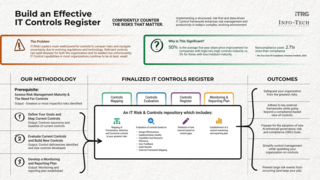 Build an Effective IT Controls Register
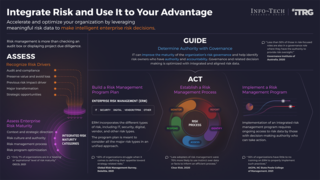 Integrate IT Risk Into Enterprise Risk
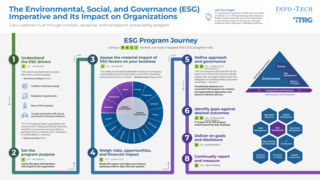 The ESG Imperative and Its Impact on Organizations
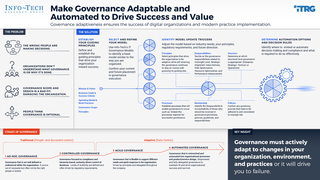 Make Your IT Governance Adaptable
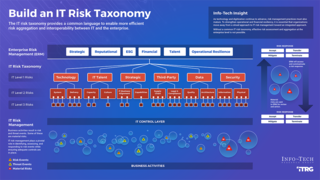 Build an IT Risk Taxonomy
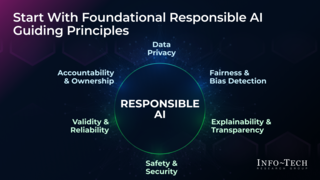 Prepare for AI Regulation
 Building the Road to Governing Digital Intelligence
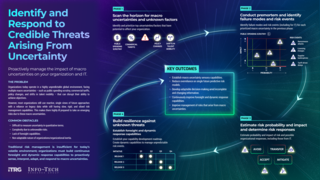 Identify and Respond to Credible Threats Arising From Global Uncertainty
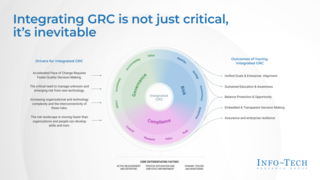 GRC Software Selection Guide
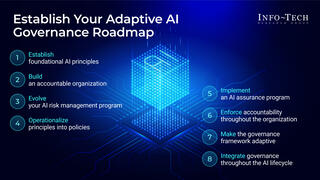 Establish Your Adaptive AI Governance Program: From Principles to Practice
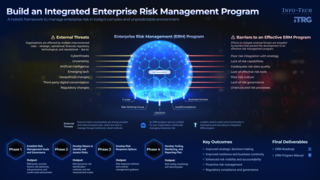 Build an Integrated Enterprise Risk Management Program
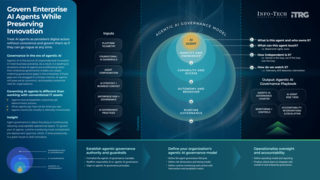 Govern Enterprise AI Agents While Preserving Innovation
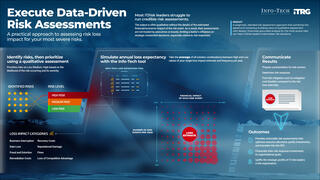 Execute Data-Driven Risk Assessments
