
Streamline Security Detection & Response Outsourcing
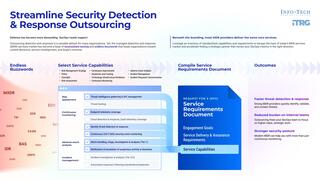
Cut through vendor noise during MDR selection by focusing on outcomes, capabilities, and requirements.
AI-enabled attacks are rising, but economic uncertainty has tightened the supply of cybersecurity talent, budget, and resources that CISOs need to fight them. In this challenging environment, many organizations are outsourcing key security services to managed detection and response (MDR) providers. But the complexity of procurement can consume more time and bandwidth than many organizations can afford today. Use our four-phase methodology and practical supporting tools to craft a streamlined, disciplined MDR procurement process upfront – and avoid months of frustration down the road.
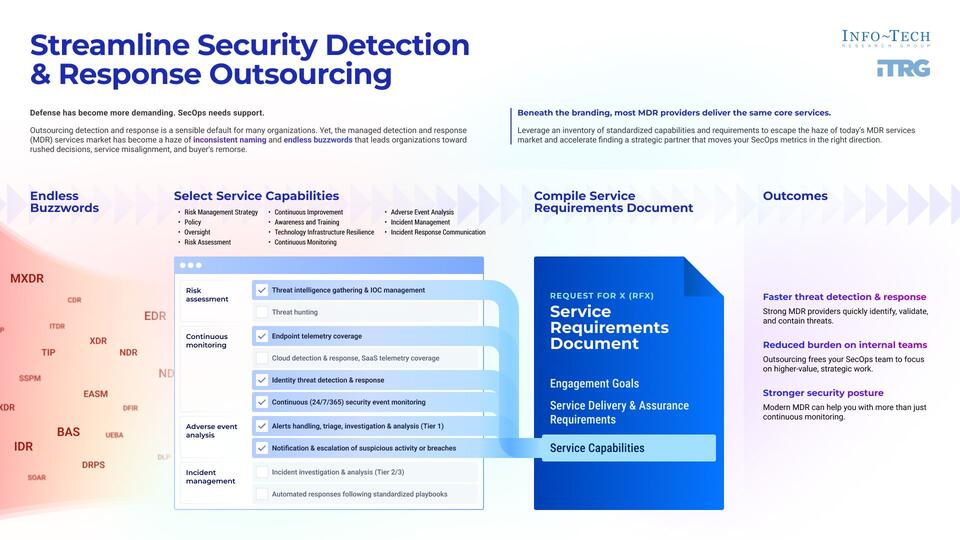
Beyond the branding, buzzwords, and acronyms used by MDR providers, most deliver the same core services. Cut through the vendor marketing hype by leveraging an inventory of standardized capabilities and requirements. Rather than rushing into a contract you’ll regret, focus on strategic discussions to find a provider – whether that’s a managed service provider (MSP), managed security service provider (MSSP), or MDR specialist – that will meet your baseline needs, align with your vision, and commit to being an accountable partner.
1. MDR procurement is a consolidation opportunity.
Modern MDR providers deliver services beyond basic threat detection and response that may overlap with existing capabilities in your vendor environment. Leverage MDR procurement as a strategic opportunity to consolidate security vendor sprawl.
2. Communicate your desired outcomes early.
Service providers should be judged primarily on their ability to deliver measurable outcomes, not on their specific tools or methods. Include desired outcomes in your service requirements early so providers can understand your expectations and demonstrate how their offerings align with your needs.
3. Precise requirements will simplify the evaluation process.
Make sure your requirements are as clear, detailed, and specific as possible. This helps to cut through vendor marketing noise, makes vendor comparisons easier, and streamlines the entire process of evaluating providers.
4. Consider potential trade-offs when choosing an MDR technology model.
Some MDR providers may only allow you to use their tools, resulting in rip-and-replace costs and integration issues for your organization. Although other providers may take a hybrid approach that permits you to use some of your existing tools, this may limit the amount of responsibility and risk you can offload to the provider. Consider these technology implications carefully.
Use this step-by-step blueprint to reduce the effort and complexity of MDR procurement.
Our framework offers a detailed roadmap to create an MDR procurement process that is both efficient and effective. Use our methodology and actionable tools to:
- Prepare: Start by defining service scope and documenting your internal environment.
- Set outcomes: Select engagement goals and metrics, then outline goals, KPIs, and service level requirements (SLRs).
- Procure: Define service requirements, compile a service requirements document, and evaluate, select, and negotiate with providers.
- Implement & Govern: Implement and deploy your selected MDR solution, then govern and manage provider performance.
About Info-Tech
Info-Tech Research Group is the world’s fastest-growing information technology research and advisory company, proudly serving over 30,000 IT professionals.
We produce unbiased and highly relevant research to help CIOs and IT leaders make strategic, timely, and well-informed decisions. We partner closely with IT teams to provide everything they need, from actionable tools to analyst guidance, ensuring they deliver measurable results for their organizations.
What Is a Blueprint?
A blueprint is designed to be a roadmap, containing a methodology and the tools and templates you need to solve your IT problems.
Each blueprint can be accompanied by a Guided Implementation that provides you access to our world-class analysts to help you get through the project.
Need Extra Help?
Speak With An Analyst
Get the help you need in this 3-phase advisory process. You'll receive multiple touchpoints with our researchers, all included in your membership.
Guided Implementation 1: Prepare
- Call 1: Provide an overview of MDR and discuss core capabilities and key trends. Define scope, goals, and priorities for MDR engagement.
- Call 2: Design provider profile and select desired MDR service capabilities.
Guided Implementation 2: Set Outcomes
- Call 1: Identify metrics to support MDR engagement goals. Outline specific goals, KPIs, and SLRs.
Guided Implementation 3: Procure
- Call 1: Define service requirements for MDR engagement.
- Call 2: Evaluate the MDR vendor landscape and prepare for vendor evaluation and negotiation.
Contributors
- Brian Clarke, Enterprise Architect, City of Regina
- Dan Milgram, CTO, Transpharmation Canada Ltd.
- Eric Springler, CISO, Northern Alberta Institute of Technology
- 3 anonymous contributors
 Build Your Security Operations Program From the Ground Up
 Develop a Security Operations Strategy
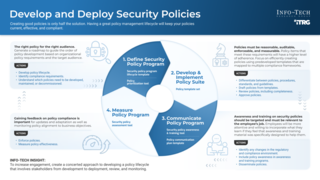 Develop and Deploy Security Policies
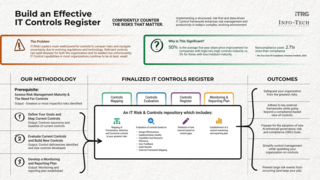 Build an Effective IT Controls Register
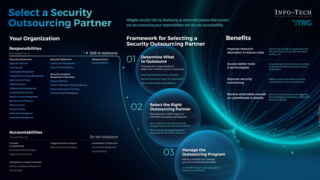 Select a Security Outsourcing Partner
 Reinforce End-User Security Awareness During Your COVID-19 Response
 Cybersecurity Priorities in Times of Pandemic
 Build a Security Metrics Program to Drive Maturity
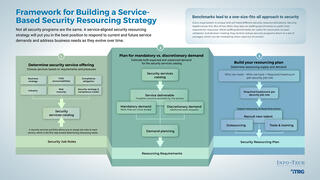 Build a Service-Based Security Resourcing Plan
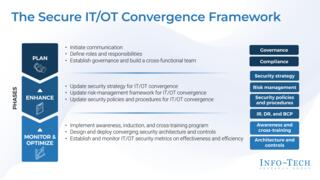 Secure IT/OT Convergence
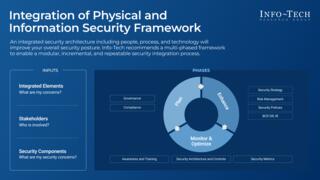 Integrate Physical Security and Information Security
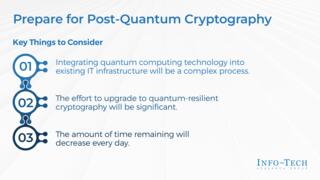 Prepare for Post-Quantum Cryptography
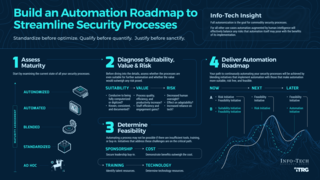 Build an Automation Roadmap to Streamline Security Processes
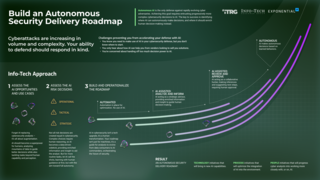 Build an Autonomous Security Delivery Roadmap
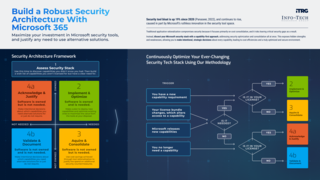 Build a Robust Security Architecture With Microsoft Technologies
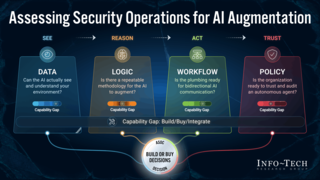 Get Ready for Augmented Security Operations
 AI in Seven Charts
 Emerging AI Trends and Predictions From Our Global Technical Counselor Team
 Turn Customer Friction Into Agentic Opportunity
 People Change in the Face of Disruptive Technology
 Lead IT Like a Business: Every Dollar Is a Decision
 Reinventing Cybersecurity in the AI Era
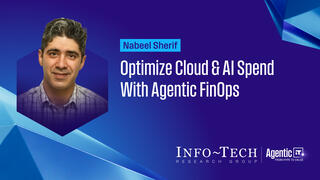 Optimize Cloud & AI Spend With Agentic FinOps
 Reinvent Zero Trust for the Agentic Era Keynote
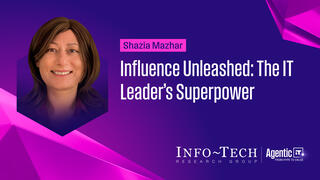 Influence Unleashed: The IT Leader’s Superpower
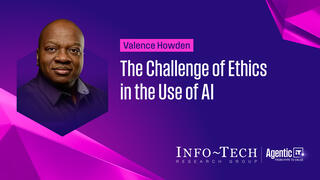 The Challenge of Ethics in the Use of AI
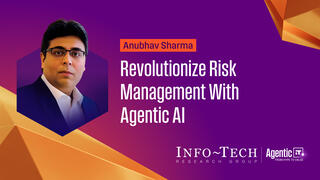 Revolutionize Risk Management With Agentic AI
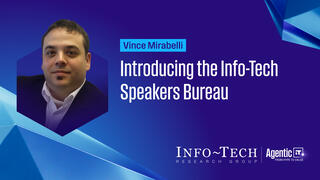 Introducing the Info-Tech Speakers Bureau
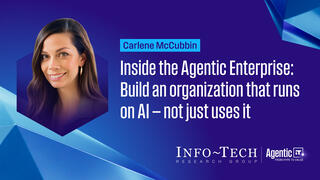 Inside the Agentic Enterprise
 Agents 2.0: From Autonomy to Architecture
 Agentic IT: From Hype to Value
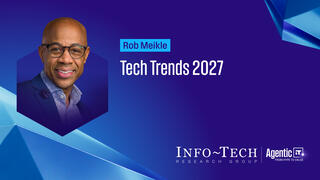 Tech Trends 2027 Keynote
 Become an Exponential CIO
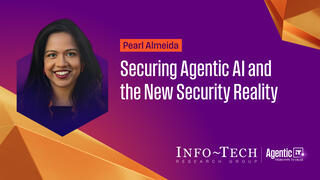 Securing Agentic AI and the New Security Reality
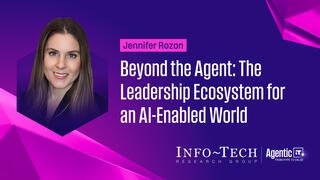 Beyond the Agent: The Leadership Ecosystem for an AI-Enabled World
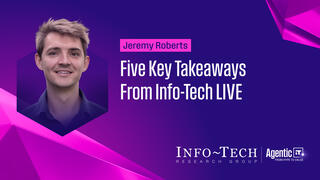 Five Key Takeaways From Info-Tech LIVE 2026
 Streamline Security Detection & Response Outsourcing
