
Build a Venue Platform Operating Model
Simplifying complexity across venue operations.
- Sports organizations often operate across multiple entities (team, venue, partners), each owning different systems and experiences, making unified decision-making difficult.
- Core fan, operational, and commercial systems (ticketing, mobile, POS, sponsorship) are disconnected, limiting a single view of operations and the customer
- Venue operations must perform cohesively in real time, where any system failure directly impacts revenue, fan experience, and brand reputation.
Our Advice
Critical Insight
Select a fit-for-purpose IT operating model that builds the foundation to streamline how your organization will operate and deepen connections. Turn fragmented systems and siloed data into a unified engine that knows your fan, serves your business, and compounds in value with every interaction.
Impact and Result
- Map systems, data flows, and ownership across core processes to create a shared view of how the venue operates today and where fragmentation, silos, and risk are impacting operations.
- Define the right model based on control boundaries, decision rights, and orchestration needs across the venue ecosystem.
- Implement clear roles, integration patterns and operating cadences to embed the model into day-to-day operations.
Build a Venue Platform Operating Model
Simplifying complexity across venue operations.
Analyst perspective
No single model, only structured orchestration
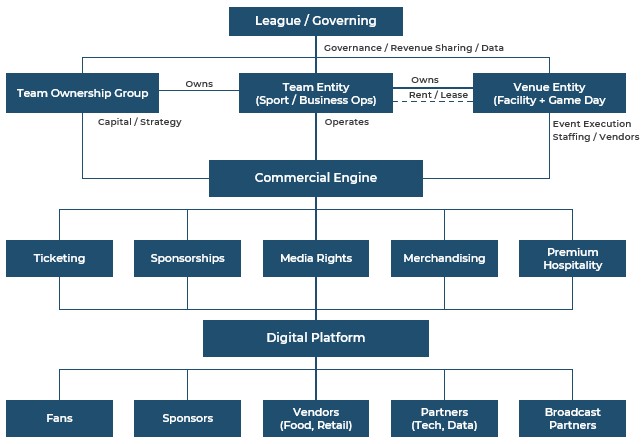
The sports industry has a uniquely complex ownership landscape, where teams, venues, leagues, and partners each shape the fan experience. Ownership of critical systems is often distributed across fully integrated models or fragmented environments, directly shaping how technology is deployed and governed.
There is no one-size-fits-all operating model for a "venue as a platform." Core capabilities such as ticketing, identity, mobile, payments, and sponsorship must work cohesively, but ownership varies. This creates tension for CIOs, who are accountable for seamless experiences but often lack end-to-end authority.
The impact shows up in integration and decision-making. Fragmented models turn integration into cross-entity negotiation, slowing innovation. Centralized models offer control but less flexibility. Without a deliberate model, organizations default to reactive coordination, producing siloed systems and fragile operations.
Sports organizations must shift from managing systems individually to orchestrating the venue as a platform, with clear control boundaries, decision rights, and integration standards. Those that succeed will reduce friction, improve resilience, and deliver the connected experiences fans expect.

Michael Adams
Senior Research Analyst, Sports Industry
Info-Tech Research Group
Executive summary
Executive summary
- Sports organizations often operate across multiple entities (team, venue, partners), each owning different systems and experiences, making unified decision-making difficult.
- Core fan, operational, and commercial systems (ticketing, mobile, POS, sponsorship) are disconnected, limiting a single view of operations and the customer.
- Venue operations must perform cohesively in real time, where any system failure directly impacts revenue, fan experience, and brand reputation.
Common Obstacles
- Misaligned incentives and unclear decision rights slow coordination and create gaps in accountability.
- Point-to-point integrations and inconsistent data ownership make it complex and costly to enable real-time, cross-system orchestration.
- The need for near-zero downtime discourages change, making it difficult to modernize systems or introduce new capabilities safely.
Info-Tech's Approach
- Map systems, data flows, and ownership across core processes to create a shared view of how the venue operates today and where fragmentation, silos, and risk are impacting operations.
- Define the right model based on control boundaries, decision rights, and orchestration needs across the venue ecosystem.
- Implement clear roles, integration patterns, and operating cadences to embed the model into day-to-day operations.
Info-Tech Insight
- Select a fit-for-purpose IT operating model that builds the foundation to streamline how your organization will operate and deepen connections. Turn fragmented systems and siloed data into a unified engine that knows your fan, serves your business, and compounds value with every interaction.
Your challenge
Fragmented ownership slows execution and weakens control
- Multiple entities (team, venue, league, partners) own different systems and touchpoints
- Misaligned priorities and unclear decision rights limit CIO authority
- Standards, integration, and change become negotiation-driven
Diffuses accountability, slowing platform progress
Disconnected systems limit visibility and fan experience
- Ticketing, mobile payments, and sponsorship operate in silos
- Fragmented data and brittle integrations hinder coordination
- No real-time, end-to-end view of operations or customers
Limits personalization, agility, and revenue optimization
Game day demands restrict innovation and modernization
- Zero tolerance for failure prioritizes stability over change
- Any disruption directly impacts revenue and brand
- Innovation introduces risk without structured governance
Reinforces reliance on legacy systems and limits scalability
Sport organizations feel the fragmentation
52% of sport organizations consider their systems moderately to extremely fragmented.
33% of sport organizations feel the fan digital experience is the most impacted area due to siloed systems.
Source: Info-Tech Venue IT Operating Model & Platform
Readiness Survey, 2026, n=10 & Info-Tech Research Group &
The Association of Luxury Suite Directors, Venue and Digital
Experience, Survey, N=57
Common obstacles
Misaligned incentives and unclear decision rights slow coordination
- Stakeholders optimize for their own systems vs. the broader platform
- Lack of clear ownership forces cross-functional negotiation for changes
- Results in delays, inconsistent execution, and weak accountability
Point-to-point integrations increase complexity and limit scale
- One-off integrations and unclear data ownership create fragmentation
- Complexity grows with each new capability added
- Limits real-time orchestration, increases cost of change, and adds fragility
Near-zero downtime requirements constrain modernization
- Game day operations leave no tolerance for disruption
- Organizations avoid changes to critical systems, even when needed
- Drives legacy reliance, technical debt, and higher long-term risk
Info-Tech's Approach
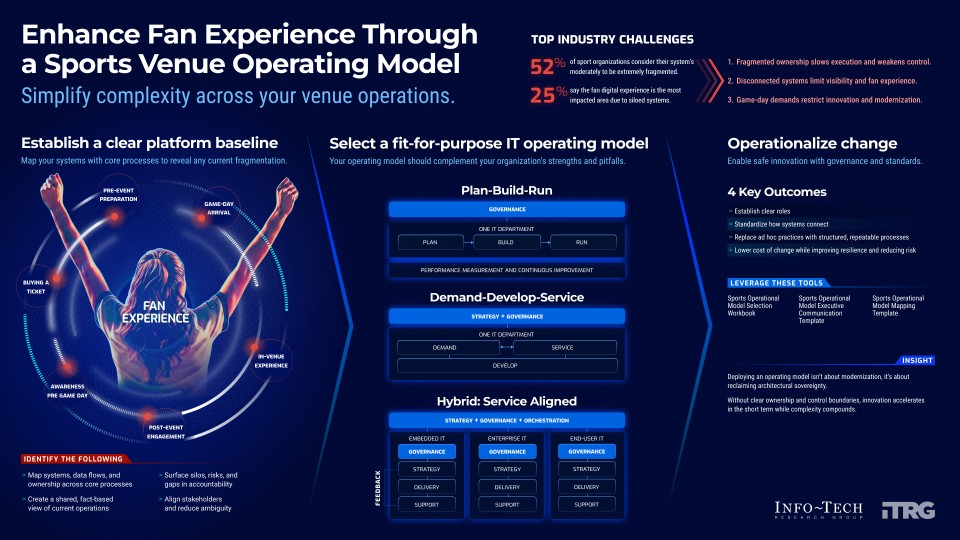
Establish a clear platform baseline to expose fragmentation
- Map systems, data flows, and ownership across core processes
- Create a shared, fact-based view of current operations
- Surface silos, risks, and gaps in accountability
- Align stakeholders and reduce ambiguity
Select a fit-for-purpose operating model to enable coordination
- Define control boundaries, decision rights, and orchestration needs
- Align ownership and governance to how the platform operates
- Reduce reliance on informal alignment and decision bottlenecks
- Provide scalable structure across systems and partners
Operationalize with governance and standards to enable safe innovation
- Establish clear roles, integration patterns, and data standards
- Standardize how systems connect, data is managed, and changes occur
- Replace ad hoc practices with structured, repeatable processes
- Lower cost of change while improving resilience and reducing risk
Complexities of the Sports Industry
Fragmented Ownership
- Team, venue, and league operate under different control models
- Ownership can be shared, split, or leased
Siloed Revenue Functions
- Ticketing, sponsorships, media, etc. run independently
- Misaligned goals lead to disconnected decisions
Physical & Digital Interdependency
- Venue operations and digital platforms must work as one
- Real-time, event-driven success
Multistakeholder Ecosystem
- Fans, sponsorships, vendors, broadcasters, partners all have a stake in decisions
- Each introduces systems, data, and dependencies
- This creates…
- Unclear ownership
- Fragmented data and integrations
- High risk to change
What is an operating model?
If the strategy is what, the operating model is how.
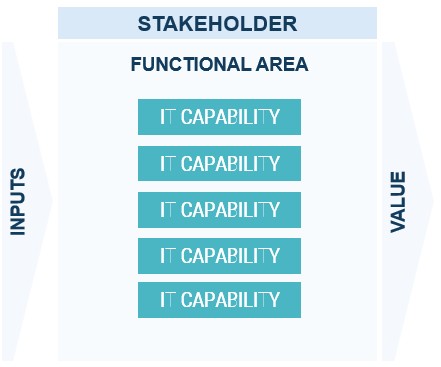
An IT operating model is a visual representation of the way your IT organization will function using a clear and coherent blueprint. This visualization demonstrates how capabilities are organized and aligned to deliver on the business' mission, strategic objectives, and technological objectives.
Additionally, it should clearly show the flow of work so that key stakeholders can understand where inputs flow in and outputs flow out of the IT organization. Investing time in the front-end to get the operating model right is critical. This will give you a framework to rationalize future organizational changes, allowing you to be more iterative and your model to change as the business changes.
Info-Tech Insight
Picking the right IT operating model should not be a choice made lightly. It is foundational to how IT will depict and deliver on strategy and create value for the organization.
Operating Models Create the Needed Structure for Sports
- Fragmented ownership, siloed functions, and a broad stakeholder ecosystem create coordination, accountability, and execution challenges unique to sports.
- Without a defined operating model, disconnected systems and inconsistent data flows increase risk in an already high-stakes, real-time environment.
- A well-defined operating model clarifies decision rights, ownership boundaries, and governance, bringing structure to this complexity.
- It enables consistent integration and shared data standards across teams, venues, and partners.
- The result is a cohesive, scalable platform that supports innovation without compromising game day reliability.
- Without a defined operating model, the complexity of sports organizations becomes a ceiling on growth – but with one it becomes a competitive advantage.
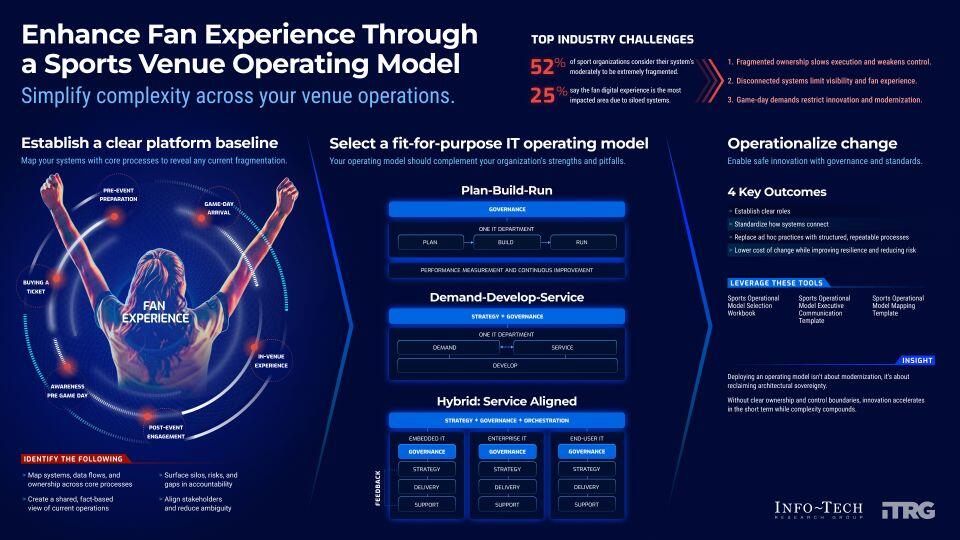
Enhance Fan Experience Through A Sports Venue Operating Model
Info-Tech's methodology for Build a Venue Platform Operating Model
1. Map and Assess | 2. Frame and Select | 3. Govern and Operationalize | |
|---|---|---|---|
Phase Steps | 1.1 Map systems and data across fan journeys | 2.1 Create design principles | 3.1 Define platform jobs |
Phase Outcomes | A comprehensive understanding of current systems, processes, controls, and team responsibilities with clearly identified gaps and requirements to inform solution design. | A tailored operating model, grounded in design principles, that defines how the venue platform will create, deliver, and capture value. | An operationalized governance and execution framework with clear roles, ownership, and communication in place to enable adoption and drive results. |
Insight summary
Operating model can turn complexity into advantage
Without a defined operating model the complexity of sports organizations becomes a ceiling on growth – but with one it becomes a competitive advantage.
Technology alone won't compound value
An IT operating model within the sport is not a technology framework, it is an invisible infrastructure that determines whether an organization's commercial, performance, and fan relationships compound in value over time or quickly erode it.
Data flow wins the next decade
The next decade of fan monetization will not be won by the organizations with the best technology, but by those whose operating models route the right data signals to the right systems, and the right owners at the right moment.
Integration is not alignment
No amount of API connectivity can replace an operating model that clearly defines who owns the fan, who owns the data, and who is accountable when those answers change.
An IT operating model is the foundation for enterprise scale
The moment a sports organization defines its IT operating model is the moment it stops being a collection of departments that happen to share a badge. It will start becoming an enterprise with the structural clarity to scale digital capabilities, protect data assets, and deliver a fan experience no competitor can replicate on budget alone.
Blueprint deliverables
Each step of this blueprint is accompanied by supporting deliverables to help you accomplish your goals:
Sports Operating Model Mapping Template
Use this template document to assess your current state and guide your decision-making to select the right model and governing the change.
Sports Operating Model Executive Communication Template
Use this template to help visualize and communicate the specific information related to the model you selected.
Key deliverable:
Sports Operating Model Selection Tool
Use this workbook to evaluate operating models against design principles and select the most suitable operating model for your organization.
Measure the value of this blueprint
The value of the operating model depends on whether intended objectives are achieved
Goal | Key Performance Indicator (KPI) | Related Resource |
IT can effectively deliver on organization objectives. | Average % of satisfaction for number of business objectives that IT delivered. | Using the CIO Business Vision Diagnostic |
Satisfying organization leaders when trying to achieve their objectives. | X% of business leadership satisfied with the statement "IT communicates with your group effectively." | Using the CIO Business Vision Diagnostic |
End users are satisfied with the services they are offered related to IT. | X% of end users that are satisfied with IT services. | Using the End User Satisfaction Survey |
Reduce the number of IT capabilities that are a priority for the organization to mature. | # of IT capabilities that are high priority because they lack effectiveness due to importance. | Using the Management & Governance Diagnostic |
Employees are empowered to deliver on the objectives and outcomes of the functional area they reside in. | X% satisfaction employees have with statement "I am empowered to make decisions about how I do my job." | Using the Employee Engagement Diagnostic Program |
Phase 1
Align & Map
Phase 1 | Phase 2 | Phase 3 |
|---|---|---|
1.1 Map systems & data across the fan journey 1.2 Identify control and responsibilities of the team 1.3 Establish gaps requirements | 2.1 Create design principles 2.2 Select an operating model | 3.1 Define platform jobs 3.2 Clarify ownership 3.3 Communicate change 3.4 Augment capabilities and finalize ownership |
Simplify complexity across your venue operations
This phase will walk you through the following activities:
- Understand your systems and how they map to your processes.
- Identify current roles, jobs, and accountabilities of relevant stakeholders.
- Identify the gaps where things stop working to assess the areas for improvement.
- Create a cohesive understanding of the current business model to visualize how an operating model will enhance your operations.
This phase involves the following participants:
- CIO
- COO
- Team leads
- System leads
- Other IT leaders
Build the fan journey through touchpoints
Touchpoints represent how fans interact with the organization across channels, systems, and moments in time.
A touchpoint is any interaction where fan identity, transaction, or engagement data is created, exchanged, or acted upon.
Before — Discovery & Consideration
- How is the fan identified or targeted?
- What channels drive awareness and intent?
- What data is captured before they are known?
During — Transaction & Experience
- How is the fan authenticated and transacting?
- How do systems coordinate in real time?
- Where is data generated during the live experience?
After — Retention & Monetization
- How is fan behavior consolidated and analyzed?
- What triggers follow-up engagement?
- How is value extended beyond the event?
| Before | During | After |
|---|---|---|
|
|
|
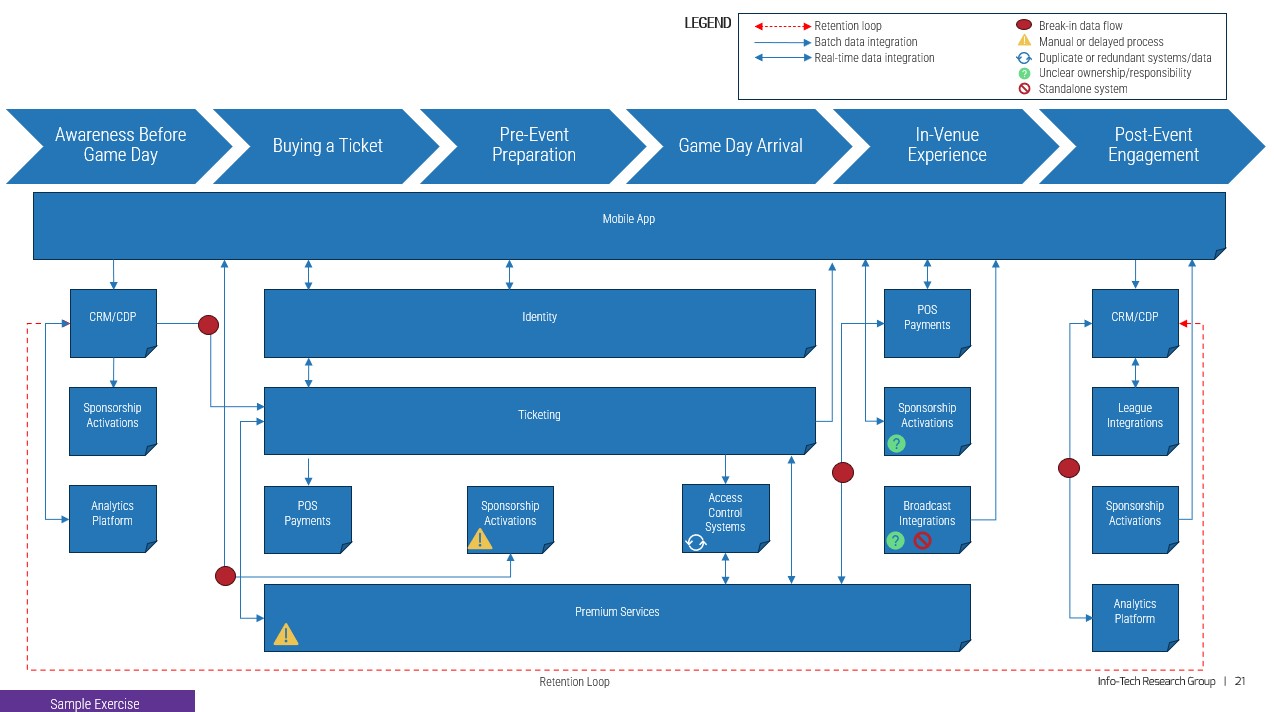
1.1 Map Systems & Data Across the Fan Journey
- Gather the appropriate stakeholders and align on the key stages within a fan's journey to define touchpoints.
- List the systems involved at each stage of the touchpoint to understand where systems play a part in the journey.
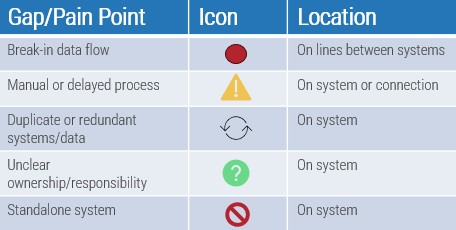
- Draw lines between the systems to show the connection points within each phase, where they integrate, and which systems act as sources vs. consumers of data.
- Trace how fan data moves end-to-end. Understand the flow of data between phases to highlight where data is reused, duplicated, or lost.
- Identify gaps and pain points annotated directly on the diagram:
Download the Sports Operating Model Mapping Template
Input | Output |
|---|---|
|
|
Materials | Participants |
|
|
Visualize systems across the fan journey
1.2 Identify Control and Responsibilities
- Identify key stakeholders and assign each system to a primary owner.
- For each system/process determine:
- Who is the owner (accountable): Who owns the system/outcome?
- Who is the operator (responsible): Who runs it day-to-day?
- For each key process, assign control. Ask:
- Who controls decisions now?
- Is control internal, shared, or external (vendor/league)?
- Identify identity and data ownership. Answer at a high level:
- Where is identity owned? Is it centralized or fragmented?
- Where is data exchanged across teams/systems?
- Who owns the source of truth vs. usage?
Download the Sports Operating Model Mapping Template
Input | Output |
|---|---|
|
|
Materials | Participants |
|
|
Define accountability across capabilities
Sample Exercise
Capability | System | Owner (A) | Operator (R) | Control Type |
Ticketing | Ticketing System | Ticketing Ops | IT/Vendor | Shared |
Identity | Identity Management | IT | IT | Internal |
Mobile App | Mobile App | Digital/IT | Vendor | Vendor-supported |
POS Payments | POS System | Venue Ops | Vendor | Vendor-Controlled |
Sponsorship | Activation | Partnerships | Marketing | Internal |
Customer Data | CDP/CRM | IT | IT | Fragmented |
Analytics | Analytics Platform | IT | Data Team | Fragmented |
Broadcast Integrations | Broadcasting | League | League | League-Controlled |
About Info-Tech
Info-Tech Research Group is the world’s fastest-growing information technology research and advisory company, proudly serving over 30,000 IT professionals.
We produce unbiased and highly relevant research to help CIOs and IT leaders make strategic, timely, and well-informed decisions. We partner closely with IT teams to provide everything they need, from actionable tools to analyst guidance, ensuring they deliver measurable results for their organizations.
What Is a Blueprint?
A blueprint is designed to be a roadmap, containing a methodology and the tools and templates you need to solve your IT problems.
Each blueprint can be accompanied by a Guided Implementation that provides you access to our world-class analysts to help you get through the project.
Talk to an Analyst
Our analyst calls are focused on helping our members use the research we produce, and our experts will guide you to successful project completion.
Book an Analyst Call on This Topic
You can start as early as tomorrow morning. Our analysts will explain the process during your first call.
Get Advice From a Subject Matter Expert
Each call will focus on explaining the material and helping you to plan your project, interpret and analyze the results of each project step, and set the direction for your next project step.
Unlock Sample ResearchContributors
- 10 survey respondents
