
Contact Center as a Service Selection Guide
Fast-track the business case to select your right-sized CCaaS solution.
Organizations are under pressure to modernize customer service while navigating a crowded and rapidly evolving contact center as a service (CCaaS) market. Vendor capabilities are expanding quickly, AI-driven features are accelerating, and overlapping technologies make it difficult to determine what is needed versus what is being sold. For customer service leaders, IT, and enterprise architects aligning customer experience management (CXM) strategy with platform selection, our guide provides a structured approach to evaluate vendors objectively, align capabilities to real use cases, and reduce risk across the decision-making process.
Selecting a CCaaS platform is not just a matter of comparing vendors in a crowded market. It requires clear requirements, stakeholder alignment, and focus on the capabilities that support real service outcomes. A structured evaluation process, supported by a disciplined RFP, enables objective comparison across cost, AI maturity, architecture, and long-term fit.
1. Treat CCaaS as your service orchestration layer.
Many organizations approach CCaaS as a standalone contact center tool, which fragments systems and limits visibility across the customer journey. This disconnect reduces service consistency and weakens the impact of AI-driven capabilities. Position CCaaS as the orchestration layer that connects interactions, data, and workflows to deliver seamless, end-to-end service experiences.
2. Anchor vendor selection to real use cases.
The CCaaS market is saturated with vendors promoting similar features, especially with AI, which makes differentiation difficult. This often leads to investment in capabilities that do not align with actual service needs. Define clear use cases and prioritize requirements based on organizational outcomes to ensure the selected platform improves efficiency and customer experience.
3. Evaluate AI investments against cost and ROI.
Organizations are rapidly adopting AI-driven capabilities without fully understanding their cost implications or expected returns. This can lead to overspending on features that do not deliver meaningful value. Assess AI investments against clear ROI expectations to ensure spending aligns with measurable service and organizational outcomes.
4. Establish governance to support responsible AI adoption.
As AI becomes embedded in service workflows, organizations face increased risk related to compliance, transparency, and accountability. Without clear governance, automated decisions can create inconsistency and erode trust. Define governance frameworks and ethical guardrails to ensure AI adoption remains controlled, transparent, and aligned with organizational standards.
Use this step-by-step guide to select the right CCaaS platform
This practical Selection Guide includes an RFP Template and RFP Requirements List, which together provide a structured approach to evaluating vendors, defining requirements, and building a defensible selection process. It enables organizations to move from unclear requirements and fragmented decisions to a clear, aligned, and repeatable CCaaS selection process.
Use this phased framework to:
- Define the CCaaS landscape by identifying core capabilities, differentiating features, and emerging trends that shape platform selection.
- Build the business case and streamline requirements by aligning service objectives, prioritizing use cases, and developing a structured RFP approach.
- Evaluate vendors and select a solution by shortlisting providers, conducting structured assessments, and preparing for implementation.
Member Testimonials
After each Info-Tech experience, we ask our members to quantify the real-time savings, monetary impact, and project improvements our research helped them achieve. See our top member experiences for this blueprint and what our clients have to say.
10.0/10
Overall Impact
Client
Experience
Impact
$ Saved
Days Saved
Ingham’s Enterprises Pty Ltd
Guided Implementation
10/10
N/A
N/A
Best - Structured approach to decision making. Worst (& necessary) - we were given homework before our next call!
Contact Center as a Service Selection Guide
Fast-track the business case to select your right-sized CCaaS solution.
Analyst perspective
Implementing the right CCaaS platform is essential to improving customer interactions, increasing revenue, and accelerating business outcomes.
Selecting the right CCaaS platform is a critical decision for organizations seeking to deliver seamless omnichannel customer experiences. As customer expectations rise and service models modernize, CCaaS has evolved beyond traditional call handling into intelligent service platforms that unify voice and digital channels, embed AI and automation, and support personalized, end-to-end customer journeys.
While customer service teams often lead CCaaS adoption, successful initiatives require close collaboration across operations, IT, and digital teams. Business leaders must prioritize usability, data-driven insights, and consistent service orchestration while ensuring scalability, security, and integration with CRM, workforce, analytics, and enterprise systems.
The selection of a CCaaS platform should follow a structured evaluation process that aligns platform capabilities with service objectives, prioritizes core requirements, and assesses architecture, deployment flexibility, and vendor viability. A disciplined RFP approach enables organizations to compare vendors objectively while balancing cost, AI maturity, ecosystem strength, and long-term adaptability.
To ensure sustained value, organizations should plan for data migration, service process redesign, workforce enablement, and phased rollout of automation and AI capabilities. This structured approach reduces operational risk, supports adoption, and positions the contact center to adapt as customer expectations, regulatory requirements, and CCaaS technologies continue to evolve.

Jehaan Nanavaty
Research Analyst, Customer Experience & Application Insights
Info-Tech Research Group
Executive summary
Your Challenge
- CCaaS platforms are essential for delivering seamless, efficient, and personalized customer service across every interaction channel. But selecting the right CCaaS solution that aligns with your service strategy is a complex process.
- Many organizations struggle to identify a clear approach for selecting, integrating, and scaling an effective CCaaS solution.
Common Obstacles
- The service technology landscape evolves rapidly, with overlapping capabilities among CRM systems, workforce optimization tools, and other tools, making it difficult to define a sustainable architecture.
- With agentic AI orchestration and workflows increasingly becoming a part of CCaaS platforms, IT and Operations teams face new pressure for seamless integrations and customer information flow.
Info-Tech's Approach
- CCaaS platform selection must be driven by your overall customer experience management (CXM) strategy: Link your CCaaS selection to your organization's CXM framework.
- Clearly define your organization's service goals and use cases to guide CCaaS requirements and vendor evaluation.
- Your CCaaS solution should not operate in isolation; it must function as the orchestration layer for all customer interactions within the service ecosystem.
Info-Tech Insight
IT must work in unison with service, operations, and digital stakeholders across the organization to define a unified vision for the contact center and customer service experience.
Info-Tech's methodology for selecting an appropriate CCaaS platform
| 1. Understand the CCaaS Landscape and Trends | 2. Build the Business Case and Streamline Requirements | 3. Select the Right CCaaS Vendor | |
|---|---|---|---|
| Phase Steps |
|
|
|
| Phase Outcomes |
|
|
|
Guided Implementation
What does a typical GI on this topic look like?
| Phase 1 | Phase 2 | Phase 3 |
|---|---|---|
|
Call #1: Understand the concept of a CCaaS platform and explore its core capabilities and emerging trends. Canvass key vendors in this space. |
Call #2: Build the business case to select a vendor. Call #3: Define your key requirements. Call #4: Build procurement items, such as an RFP. |
Call #5: Evaluate the vendor landscape and shortlist viable options. Call #6: Review implementation considerations. |
A Guided Implementation (GI) is a series of calls with an Info-Tech analyst to help implement our best practices in your organization.
The CCaaS selection process should be broken into segments:
- Create a vendor shortlist using this buyer's guide.
- Define a structured approach to selection.
- Review the contract.
Info-Tech offers various levels of support to best suit your needs
| DIY Toolkit | Guided Implementation | Workshop | Executive & Technical Counseling | Consulting |
|---|---|---|---|---|
| "Our team has already made this critical project a priority, and we have the time and capability, but some guidance along the way would be helpful." | "Our team knows that we need to fix a process, but we need assistance to determine where to focus. Some check-ins along the way would help keep us on track." | "We need to hit the ground running and get this project kicked off immediately. Our team has the ability to take this over once we get a framework and strategy in place." | "Our team and processes are maturing; however, to expedite the journey we'll need a seasoned practitioner to coach and validate approaches, deliverables, and opportunities." | "Our team does not have the time or the knowledge to take this project on. We need assistance through the entirety of this project." |
Diagnostics and consistent frameworks are used throughout all five options.
CCaaS Platform Selection Guide
Speed up the process to build your requirements and select the right CCaaS platform for your organization.
EXECUTIVE BRIEF
Phase 1
Understand the CCaaS Landscape and Trends
Phase 1
1.1 Define CCaaS
1.2 Classify Table Stakes & Differentiating Capabilities
1.3 Explore Trends
Phase 2
2.1 Build the Business Case
2.2 Streamline Requirements Elicitation
2.3 Develop an Inclusive RFP Approach
Phase 3
3.1 Discover Key Players in the Vendor Landscape
3.2 Engage the Shortlist & Select Finalist
3.3 Prepare for Implementation
CCaaS Platform Selection Guide
This phase will walk you through the following activities:
- Establish an understanding of CCaaS.
- Define which CCaaS features are table stakes (standard) and which are key differentiating functionalities.
- Understand the latest trends in the CCaaS space.
This phase involves the following participants:
- Customer Service Leaders
- Business Analyst(s) for CX
- IT & Enterprise Architecture Team
- Compliance & Risk Analyst
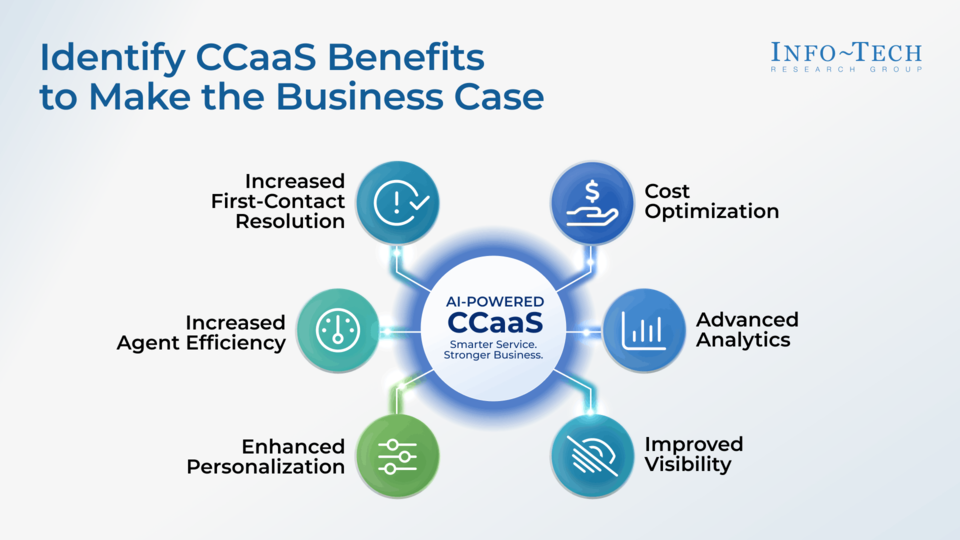
CCaaS unifies customer interactions for more efficient and personalized service delivery
- CCaaS platforms are typically designed to support multiple service models, including inbound customer support, outbound engagement, and blended contact centers, across both B2B and B2C environments.
- CCaaS platforms provide the technology capabilities to support all stages of the customer service lifecycle, turning individual interactions into connected experiences that drive resolution, satisfaction, and loyalty.
A CCaaS platform offers many key features, including but not limited to:
- Call routing and interaction management
- Interactive voice response (IVR) and self-service capabilities
- Real-time data integration and CRM connectivity
- AI-powered virtual agents
- Digital channels such as chat, email, and messaging
- Workforce management and scheduling
- Quality monitoring and performance management
- Agent tools and real-time assistance
- Reporting and analytics
Info-Tech Insight
CCaaS platform capabilities are evolving rapidly as AI and automation become embedded across service workflows. Base CCaaS vendor selection on your service requirements and use cases, not on emerging features or short-term market trends.
CCaaS connects across customer experience (CX) workflows
A defined CCaaS process flow is central to completing end-to-end customer interactions
Customer Entry & Engagement
- Inbound voice and digital entry points
- IVR and conversational AI
- Channel selection and authentication
- Context capture
Interaction Qualification
- Customer identification
- Intent recognition
- Skill-based routing rules
- Context enrichment from CRM, other systems
- Omnichannel queues
- Intelligent routing and load balancing
- Callback and virtual hold
- Queue prioritization and SLA handling
Agent Handling & Resolution
- Agent desktop and unified workspace
- Knowledge access and guided workflows
- Real-time agent assistance
- Case resolution
Escalation & Collaboration
- Supervisor assistance and call monitoring
- Warm transfers
- Back-office task creation
- Internal collaboration and handoffs
Post-Interaction Support
- Case updates and documentation
- Quality monitoring and evaluation
- Customer surveys and feedback
- Follow-up actions
Analytics & Optimization
- Interaction and performance reporting
- Customer experience insights
- Workforce and capacity analysis
- Service optimization
Interaction Orchestration | Customer Data Capture | System Integration | Agent & Supervisor Tools | Workflow Automation | AI Assistance
About Info-Tech
Info-Tech Research Group is the world’s fastest-growing information technology research and advisory company, proudly serving over 30,000 IT professionals.
We produce unbiased and highly relevant research to help CIOs and IT leaders make strategic, timely, and well-informed decisions. We partner closely with IT teams to provide everything they need, from actionable tools to analyst guidance, ensuring they deliver measurable results for their organizations.
What Is a Blueprint?
A blueprint is designed to be a roadmap, containing a methodology and the tools and templates you need to solve your IT problems.
Each blueprint can be accompanied by a Guided Implementation that provides you access to our world-class analysts to help you get through the project.
Need Extra Help?
Speak With An Analyst
Get the help you need in this 3-phase advisory process. You'll receive multiple touchpoints with our researchers, all included in your membership.
Guided Implementation 1: Understand the CCaaS Landscape and Trends
- Call 1: Understand the concept of a CCaaS platform and explore its core capabilities and emerging trends. Canvass key vendors in this space.
Guided Implementation 2: Build the Business Case and Streamline Requirements
- Call 1: Build the business case to select a vendor.
- Call 2: Define your key requirements.
- Call 3: Build procurement items, such as an RFP.
Guided Implementation 3: Select the Right CCaaS Vendor
- Call 1: Evaluate the vendor landscape and shortlist viable options.
- Call 2: Review implementation considerations.
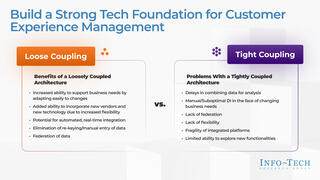 Build a Strong Technology Foundation for Customer Experience Management
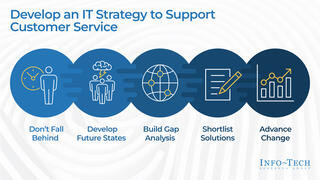 Develop an IT Strategy to Support Customer Service
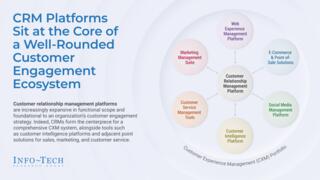 Customer Relationship Management Platform Selection Guide
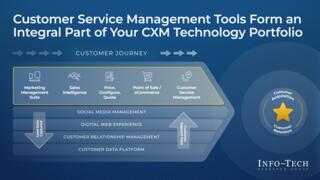 Customer Service Management Software Selection Guide
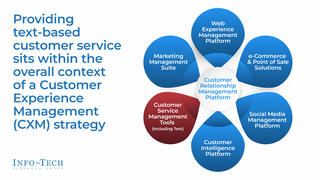 Drive Customer Convenience by Enabling Text-Based Customer Support
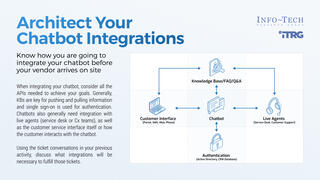 Build a Chatbot Proof of Concept
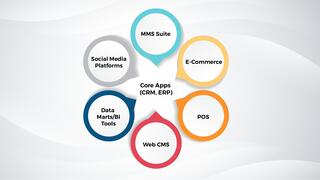 Enable Omnichannel Commerce That Delights Your Customers
 Get the Most Out of Your CRM
 Select an Enterprise Application
 2020 Applications Priorities Report
 Adapt Your Customer Experience Strategy to Successfully Weather COVID-19
 Configure-Price-Quote Selection Guide
 Contact Center as a Service Selection Guide
