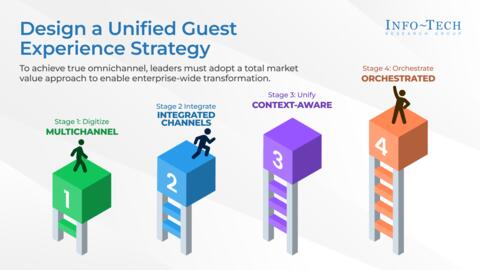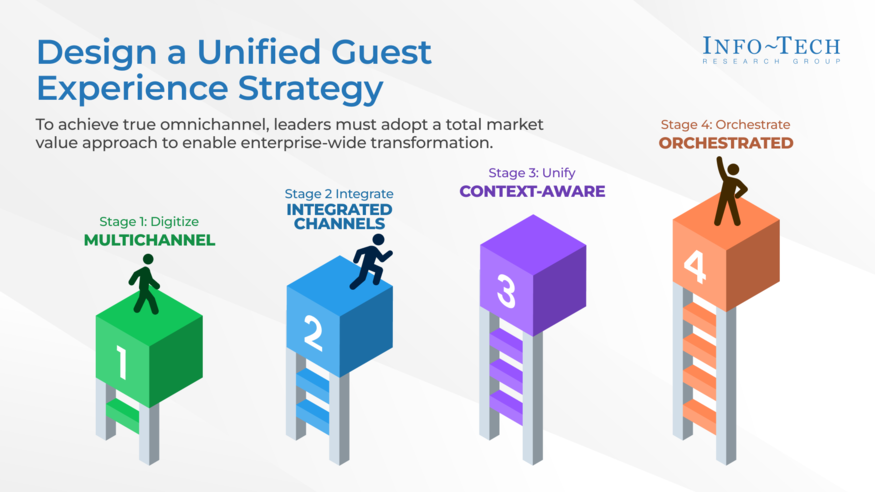




Orchestrate the end-to-end guest journey across touchpoints
The Challenge
Connect a fragmented journey from booking to post-stay engagement
Hotel guests move across brand websites, OTAs, call centers, loyalty apps, pre-arrival messaging, front desk, rooms, restaurants, spas, events, payments, and post-stay channels. These touchpoints are often supported by disconnected systems and departmental handoffs leaving the guest journey fragmented.
Why It Matters
Guests experience the hotel as one journey, not separate departments.
When systems and teams do not share guest context, the experience becomes repetitive and impersonal, and the hotel loses chances to anticipate needs, resolve issues, and grow spend. With 61% of consumers willing to pay more for a customized experience but only 23% reporting high personalization after a recent hotel stay, connecting the journey is now the clearest path to loyalty and wallet share ("Medallia Research Finds 61% of Consumers Are Willing to Spend More for Personalized Experiences," Medallia, 2024).
The Solution
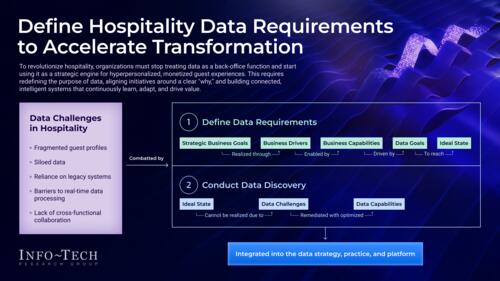
Build a unified guest data foundation
Create a single guest profile that combines identity, preferences, loyalty activity, stay history, service interactions, and spend across every system.
Orchestrate the journey across channels
Connect web, app, OTA, call center, front desk, and on-property touchpoints so each interaction carries context from the last and triggers the right next action.
Activate real-time personalization
Use the profile to drive pre-arrival upsells, tailored offers, and service recovery through CRM and CDP tools while the guest is still in the booking and stay cycle.

Protect property-level profitability
The Challenge
Preserve margins with increasing operating costs
Hotels operate with perishable room inventory, high fixed costs, and property-level cost structures that vary by location, brand, ownership model, and service level. Rising labor, utilities, insurance, maintenance, supplies, and distribution costs make it harder to protect profitability.
Why It Matters
Improve profitability without compromising the guest experience.
Hotels cannot rely on rate increases alone to offset cost pressure, so operators need clear visibility into where margin leaks across properties, departments, segments, and channels. With property-level costs in operations, maintenance, sales and marketing, and IT each rising about 5% in 2024 and outpacing revenue, and total compensation set to reach a record $128.47 billion in 2025, protecting margin now depends on data, not across-the-board rate hikes ("State of the Industry," AHLA, 2025).
The Solution
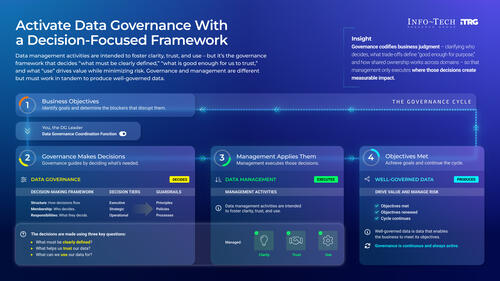
Enable real-time operational and financial decision-making
Integrate finance, PMS, RMS, workforce, procurement, and energy data so property and enterprise leaders can spot margin pressure earlier and act faster.
Shift analytics from cost control to profit optimization
Build analytics that show which properties, segments, channels, and departments drive or erode profitability, then reallocate accordingly.
Automate labor and procurement efficiency
Use labor management and spend analytics to align staffing and purchasing with demand, the largest controllable costs at the property level.
Align owners, operators, and brands to modernize at scale
The Challenge
Align stakeholders around the funding and value of modernization
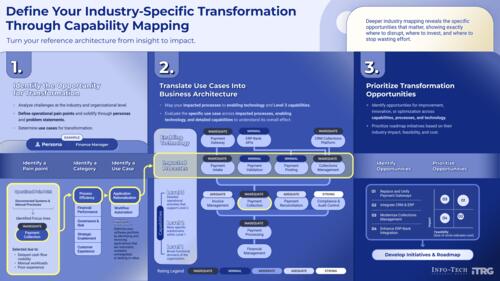
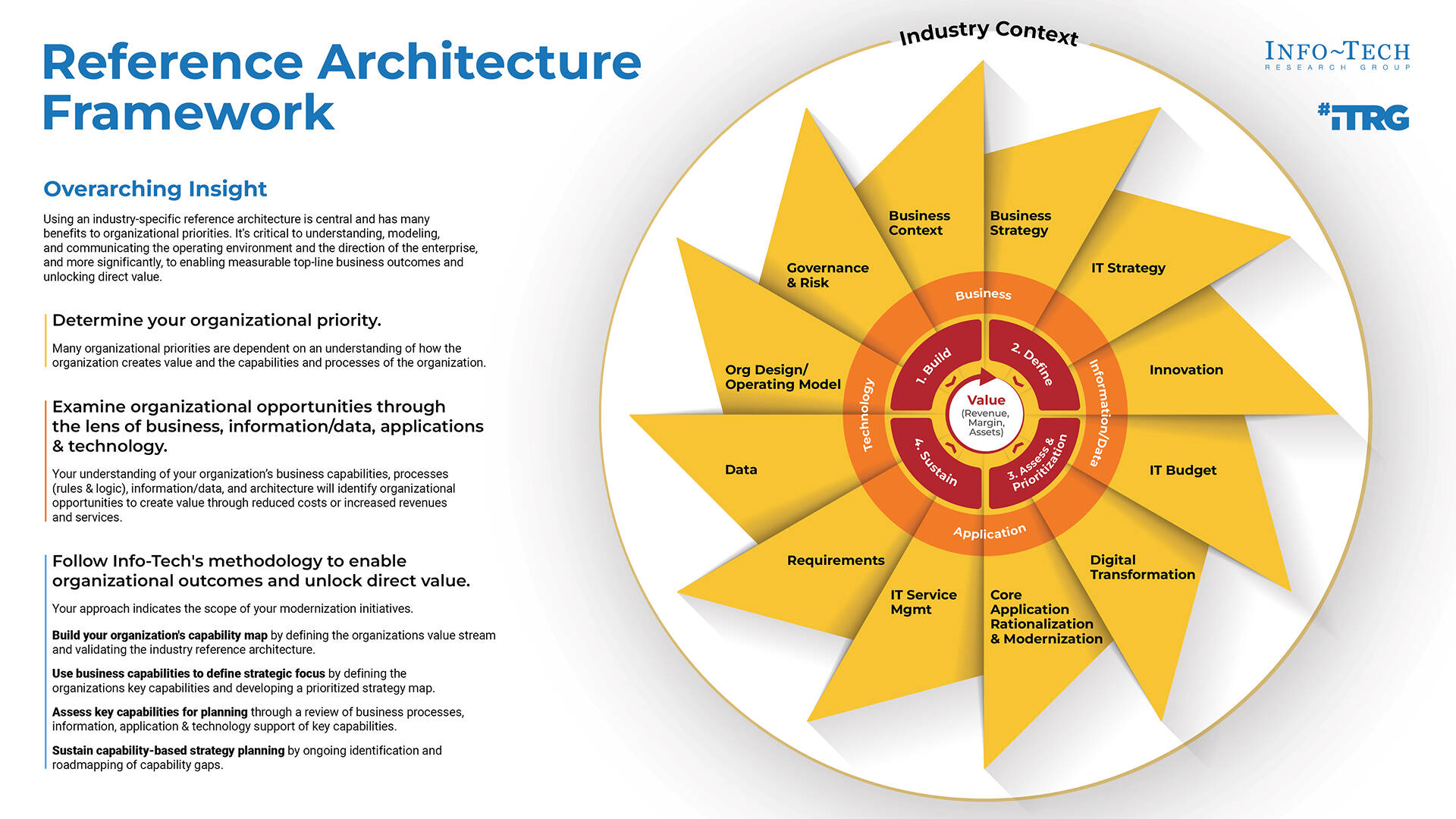
Hotels need to modernize core platforms, property systems, data capabilities, guest-facing digital tools, and operational technology to improve performance and keep pace with guest expectations. However, modernization is difficult to fund and execute because the hotel business model often separates brand strategy, property ownership, day-to-day operations, and technology investment. The challenge is building a modernization case that is credible to every stakeholder.
Why It Matters
Modernization stalls when value and accountability are misaligned.
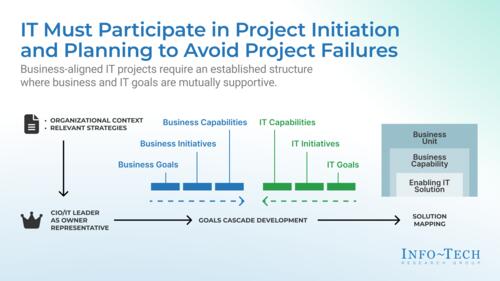
When investment is not clearly tied to owner returns, property performance, and brand standards, hotels delay critical upgrades or roll out inconsistent capabilities that extend reliance on legacy platforms. Because hotel technology stacks remain fragmented and each new system has historically required expensive custom integration, a shared, ROI-based modernization case is now the only way to move at scale ("AI in Hospitality: The 2025 Reality and the 2026 Horizon," Hospitality Upgrade, 2026).
The Solution
Improve transparency into technology cost and value
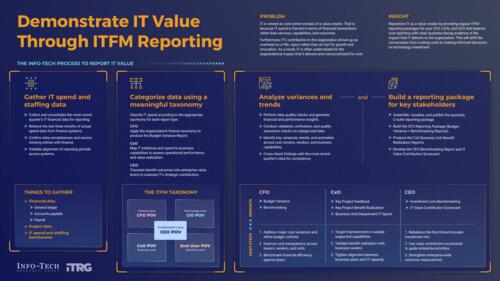
Stand up IT financial management, portfolio reporting, and benefits tracking that connect every dollar of technology spend to an owner or property outcome.
Build scalable technology foundations
Modernize the core integration, data, identity, cloud, and cybersecurity layers needed to support portfolio-wide change rather than one-off property fixes.
Manage adoption and change at the property level
Use pilots, phased rollouts, training, and readiness assessments so new capabilities actually land with on-property teams and stakeholders.


Optimize total revenue across the property
The Challenge
Move beyond room revenue as the primary commercial lens
Hotels generate revenue across rooms, F&B, meetings and events, spa, parking, packages, resort fees, retail, and local experiences. However, commercial decisions are often still optimized around occupancy, ADR, and RevPAR, while ancillary revenue streams are managed separately across departments.
Why It Matters
The most profitable booking is not always the highest-occupancy outcome.
A guest or segment can create more value through total spend, repeat potential, and ancillary purchases even at a lower room rate, so optimizing on occupancy and ADR alone leaves money on the table. As total hotel revenue optimization gains prominence, and with total revenue per available room (TRevPAR) slipping 8.8% in 2025 amid softer discretionary spending, leading hotels are managing rooms, F&B, events, spa, and recreation as one commercial system ("Orchestrating Success With Key Trends," CBRE, 2024; "HotelData.com Q4 2025 Report Shows Demand Slowdown," HotelData.com, 2026).
The Solution
Integrate commercial decision-making
Connect RMS, PMS, POS, sales and catering, and CRM so pricing, promotions, inventory, and capacity decisions all draw on shared data.
Measure and manage total guest value
Report profitability by guest, segment, account, channel, and revenue stream, not just by room.
Drive ancillary revenue across the stay
Use upsell and cross-sell automation to surface F&B, spa, parking, and experiences at booking, pre-arrival, and on property.
Build a resilient hotel workforce
The Challenge
Attract and retain talent in a high-turnover service environment
Hotels depend on frontline and operational roles across front desk, maintenance, food and beverage, banquets, guest services, reservations, and management. However, high turnover, labor shortages, irregular schedules, seasonal demand, and competition for service workers make it difficult to maintain a stable and experienced workforce.
Why It Matters
Workforce instability directly threatens guest experience and operating performance.
Understaffing drives longer check-in lines, slower service, and inconsistent quality, and it limits a hotel's ability to serve peak demand during events and high season. With 65% of hotels still reporting staffing shortages and employment nearly 10% below prepandemic levels, technology that supports and retains frontline staff is now a core operating requirement ("65% of Surveyed Hotels Report Staffing Shortages," AHLA, 2025).
The Solution
Digitize frontline operations and employee support
Give staff mobile communication, task management, and self-service tools that cut friction and make every shift easier to run.
Modernize workforce planning and scheduling
Use demand forecasting and labor analytics to match staffing to events, occupancy, and seasonality without over- or under-staffing.
Strengthen retention and upskilling
Use learning, career-pathing, and recognition tools to improve mobility and reduce the turnover that drives most hospitality labor cost.
Strengthen the direct guest relationship
The Challenge
Drive demand while protecting margin and guest ownership
Hotels rely on OTAs and third-party channels to reach travelers and fill perishable room inventory. However, these channels increase distribution costs, limit access to guest data, and weaken the hotel’s ability to build a direct relationship with the guest.
Why It Matters
High-cost distribution weakens both profitability and loyalty.
OTA bookings protect short-term occupancy but reduce margin and limit the data needed to personalize the stay and earn repeat direct business. With OTAs generating $266 billion of hotel gross bookings in 2024 versus $262 billion booked direct, and commissions of roughly 15% to 25% per reservation, owning the guest relationship is now a strategic priority, not a marketing preference ("Hotel Versus OTA Direct-Booking Tussle Will Shape Distribution for Years to Come," Skift Research, 2024).
The Solution
Improve direct digital commerce
Modernize brand websites, booking engines, mobile apps, and loyalty platforms to lift direct conversion and reduce OTA dependence.
Enable targeted engagement and retention
Use CRM, marketing automation, and loyalty technology to deliver relevant offers, upsells, and post-stay communications.
Unify channel and rate management
Connect channel management, parity monitoring, and attribution so direct and third-party demand is balanced for profitability, not just volume.



Protect guest trust and business continuity
The Challenge
Digital dependency is increasing business risk
Hospitality organizations rely on connected digital systems to manage daily operations across the property. As more of the guest journey and operating model becomes digital, the business becomes more exposed to disruptions, fraud, privacy failures, and technology vulnerabilities.
Why It Matters
Trust failures disrupt operations, damage the brand, and erode revenue.
Guests expect hotels to protect their personal data, payments, loyalty accounts, and digital interactions, and a breach or outage quickly becomes a visible service failure. Even as the global average data breach cost fell to $4.44 million in 2025, hospitality bucked the trend, with its average breach cost rising to about $4.03 million from $3.82 million in 2024, making resilience inseparable from guest experience ("Cost of a Data Breach Report 2026," IBM, 2026; "Top Cybersecurity Challenges in Hospitality," NexusTek, 2025).
The Solution
Strengthen guest data and privacy protection
Improve identity and access management, data governance, consent management, and encryption across guest, employee, and partner data.
Build operational resilience
Strengthen monitoring, incident response, and recovery planning so cyber events and outages cause minimal disruption to the guest.
Manage third-party and connected-device risk
Vet vendors and secure POS, locks, and IoT endpoints, the connected devices behind a growing share of hotel attacks.


Advance sustainable and responsible hotel operations
The Challenge
Control resource-intensive hotel operations as sustainability expectations increase
Hotels are energy-, water-, food-, and waste-intensive businesses. Daily operations across rooms, amenities, housekeeping, and back-of-house areas create high utility costs and environmental impact. However, many hotels lack consistent property level data to understand consumption, compare performance, or identify where waste and inefficiency are occurring.
Why It Matters
Sustainability is now tied to cost, brand trust, and competitiveness.
Poor visibility into energy, water, emissions, and waste makes it hard to control costs, meet reporting expectations, and prove progress to guests and corporate buyers. With energy responsible for up to 60% of a hotel's carbon footprint and the Sustainable Hospitality Alliance calling for a 66% cut in emissions per room by 2030, responsible operations are becoming a commercial differentiator (Sustainable Hospitality Alliance, 2024).
The Solution
Enable smarter resource management
Use building management, IoT, and energy analytics to cut consumption without compromising guest comfort.
Measure and report environmental performance
Adopt standardized carbon and water measurement so the hotel can benchmark, set targets, and report credibly.
Embed sustainability into technology decisions
Build sustainability requirements into vendor selection, data governance, and property technology standards so responsible operations are designed in.

Scale AI and intelligent automation across hotel operations
The Challenge
Move from AI pilots to operational scale.
Hotels are testing chatbots, voice agents, and generative tools across booking, service, and back office, but most efforts stay isolated and never reach property-wide impact. The challenge is no longer whether to use AI, but how to scale it responsibly without diluting brand voice or the human touch guests value.
Why It Matters
Guests already expect AI in the experience, and operators cannot opt out.
AI and automation can absorb repetitive work, sharpen forecasting, and personalize service at a scale frontline teams cannot match alone, freeing staff for the human moments that define hospitality. With 49% of hoteliers now naming AI-powered solutions a priority technology initiative and 81% prioritizing employee productivity, hotels that scale AI deliberately will set the service standard others are measured against ("The Future of Hospitality," Deloitte, 2026).
The Solution
Automate high-volume guest and back-office tasks
Deploy AI for reservations, guest messaging, and routine back-office work so staff can focus on in-person service and recovery.
Apply AI to forecasting and revenue
Use machine learning for demand forecasting, dynamic pricing, and staffing so decisions reflect real-time signals, not last year's averages.
Govern AI for brand and trust
Put data governance, human oversight, and quality testing in place so AI stays accurate, on-brand, and compliant as it scales.

Modernize the connected guest room and property technology
The Challenge
Close the gap between the smart home and the hotel room.
Guests now arrive expecting mobile keys, in-room controls, fast Wi-Fi, and streaming, yet many properties still run on aging in-room and building systems that cannot deliver them. The challenge is modernizing the physical room and property infrastructure at scale without disrupting live operations or overspending on one-off retrofits.
Why It Matters
The connected room is becoming the baseline expectation, not a luxury add-on.
Modern room and property technology improves guest convenience, enables energy savings, and creates the data layer that powers personalization and predictive maintenance. With 65% of travelers now saying they want hotel technology to be more advanced than the tech in their own homes, and guests downloading nearly 14.3 million Hilton digital keys in early 2024, connected experiences have moved from novelty to baseline expectation (Hotel Tech Report, 2025; "High‑Tech Travel Meets Digital Detox," Hilton, 2024).
The Solution
Deploy mobile-first guest controls
Roll out mobile check-in, digital keys, and in-room controls for lighting, temperature, and entertainment so guests manage their stay from their phone.
Modernize property and building infrastructure
Upgrade networks, Wi-Fi, and building systems to a connected platform that supports new room technology and reliable always-on connectivity.
Turn room data into operations value
Use IoT and occupancy data for energy optimization and predictive maintenance, cutting cost while protecting guest comfort.