
Reimagine Business Processes With an AI-First Approach
AI thrives when it follows intentional, optimized workflows.
“How do we adopt AI?” is yesterday’s question. Today’s challenge is “how do we build smarter, AI-enabled workflows that drive real outcomes?” Automating surface-level tasks is no longer enough to achieve the real AI-driven value that organizations demand. But organizations lack a structured way to identify and prioritize the right opportunities for meaningful transformation. Our three-phase approach gives IT leaders the insights and practical roadmap needed to transform core processes and deliver outsized AI value.
Most organizations are still applying AI to tasks instead of processes, resulting in shallow gains and missed opportunities. To get meaningful results, business processes must be reinvented rather than merely reengineered, with AI layering replaced by true AI-first process design. Learn how to move beyond vague AI ideas and identify high-impact, process-specific opportunities that align with business and organizational strategy.
1. Don’t just “add AI” to every process.
AI shouldn’t be applied unilaterally to all processes. Strategically apply it to transform processes that are decision-dense, high-volume, and highly manual and that pull data from multiple sources.
2. Make sure key stakeholders speak a common language.
Business, IT, and Operations each view things from a different perspective. Your AI initiatives will stall if teams lack a shared understanding of the process landscape. Teams need a common language to evaluate process complexity and align on where AI can deliver meaningful change.
3. Look for value as well as efficiency.
When reimagining processes, don’t simply wonder what AI can do. Your organization must also consider what decisions AI can make, assist with, or eliminate. That’s where exponential value lies.
Use this step-by-step blueprint to redesign processes before rewiring them with AI
Our insightful analysis and two practical tools guide you to completion of the three key phases outlined in the research framework. Use our methodology to reshape core business processes with the power of AI.
- Discover high-impact capability areas where AI can drive business value.
- Diagnose current processes to surface inefficiencies, friction points, and opportunities for redesign.
- Redesign processes with tools that center AI in decision-making, automation, and collaboration.
Member Testimonials
After each Info-Tech experience, we ask our members to quantify the real-time savings, monetary impact, and project improvements our research helped them achieve. See our top member experiences for this blueprint and what our clients have to say.
10.0/10
Overall Impact
$196,000
Average $ Saved
50
Average Days Saved
Client
Experience
Impact
$ Saved
Days Saved
The Lottery Corporation
Guided Implementation
10/10
$196K
50
It's very hard to quantify the value of trusted advice - Altaz has always had insightful and well considered answers to any questions we could thro... Read More
Reimagine Business Processes With an AI-First Approach
AI thrives when it follows intentional, optimized workflows.
EXECUTIVE BRIEF
Analyst perspective
Redesign processes before you rewire them with AI.

AI will not transform your organization unless it transforms your processes. The value of AI doesn’t come from scattered automation pilots; it comes from intentionally redesigning how work happens, who does it, and what slows it down.
Today’s business leaders are under pressure to show that AI investments go beyond experimentation. The conversation has shifted from “How do we adopt AI?” to “How do we build smarter, AI-enabled workflows that drive real outcomes?”
This blueprint helps answer that question by:
- Guiding teams through a three-phase approach to discover, prioritize, and reimagine business processes with AI.
- Introducing practical tools to evaluate readiness, identify intervention areas, and design the future-state flow.
- Equipping both IT and business leaders to co-create AI-first processes that are feasible, valuable, and scalable.
The takeaway is clear: True AI transformation starts with process transformation. Not just smarter tools, but smarter workflows.
Harshita Bordiya
Research Analyst, AI
Info-Tech Research Group
Executive summary
Your Challenge
Business, IT, and Ops feel pressured to act on AI, but they lack a structured way to identify and prioritize the right opportunities for meaningful transformation. As a result:
- Leaders struggle to pinpoint which business processes are worth reimagining with AI, and why.
- AI is being tested in disconnected pockets without aligning to enterprise-wide priorities.
- Efforts skew toward automating surface-level tasks, rather than transforming core processes where AI could deliver outsized value.
Common Obstacles
- Business units chase fast wins; IT teams focus on governance and risk, creating misalignment in AI priorities.
- Employees hesitate to engage with redesign efforts, fearing role displacement or unclear expectations.
- Without common standards to assess AI potential, teams struggle to prioritize or compare opportunities.
- AI is approached from a tech-first lens, with less attention to the underlying process challenges that limit real value.
Info-Tech’s Approach
Info-Tech’s three-phase approach guides members to:
- Discover high-impact capability areas where AI can drive business value.
- Diagnose current processes to surface inefficiencies, friction points, and opportunities for redesign.
- Redesign processes with tools that center AI in decision-making, automation, and collaboration.
Our approach is built around real-world use cases, collaborative tools, and clear decision frameworks that help teams prioritize the right areas and design smarter workflows that are scalable and future-ready.
Info-Tech Insight
Reinvent your business processes instead of simply re-engineering them. Autonomy is the goal, with a human remaining in the loop for risk mitigation and exception handling.
Your challenge
AI is being applied to tasks, not processes, leading to shallow gains and missed transformation opportunities.
Business, IT, and Ops feel pressured to act on AI, but they lack a structured way to identify and prioritize the right opportunities for meaningful transformation. As a result:
- Leaders struggle to pinpoint which business processes are worth reimagining with AI, and why.
- AI is being tested in disconnected pockets without aligning to enterprise-wide priorities.
- AI is often layered onto legacy workflows, reinforcing outdated structures instead of enabling transformation. This limits impact to surface-level efficiencies, rather than unlocking true gains in productivity, agility, and decision-making.
70%
~70% of generative AI budgets are spent on sales and marketing tools, even though the highest ROI is found in back-office process automation that dismantles legacy and outdated workflows.
Source: Fortune, 2025
Enterprise-wide barriers to AI success
Most organizations lack a coordinated approach across departments, clear process ownership, and cultural readiness to succeed with AI:
- Process Silos: Teams optimize locally, not systemically. Opportunities for end-to-end transformation are missed.
- Stakeholder Misalignment: Business, IT, and Operations have conflicting priorities and definitions of success.
- Lack of Visibility: Leaders struggle to pinpoint which processes are ready for AI and which ones need optimization first.
- Tool Sprawl: Multiple automation tools are deployed without clear governance, resulting in fragmentation.
- Change Fatigue: Employees are overwhelmed by transformation programs and skeptical of AI-led initiatives.
21%
21% of organizations have redesigned some workflows from the ground up to take full advantage of AI capabilities by 2025.
Source: Aristek, 2025
50%
Among organizations leading in AI-driven redesign, 50% intend to use AI as a catalyst for transforming core operations, prioritizing workflow redesign as a top factor for success.
Source: McKinsey & Company, 2025
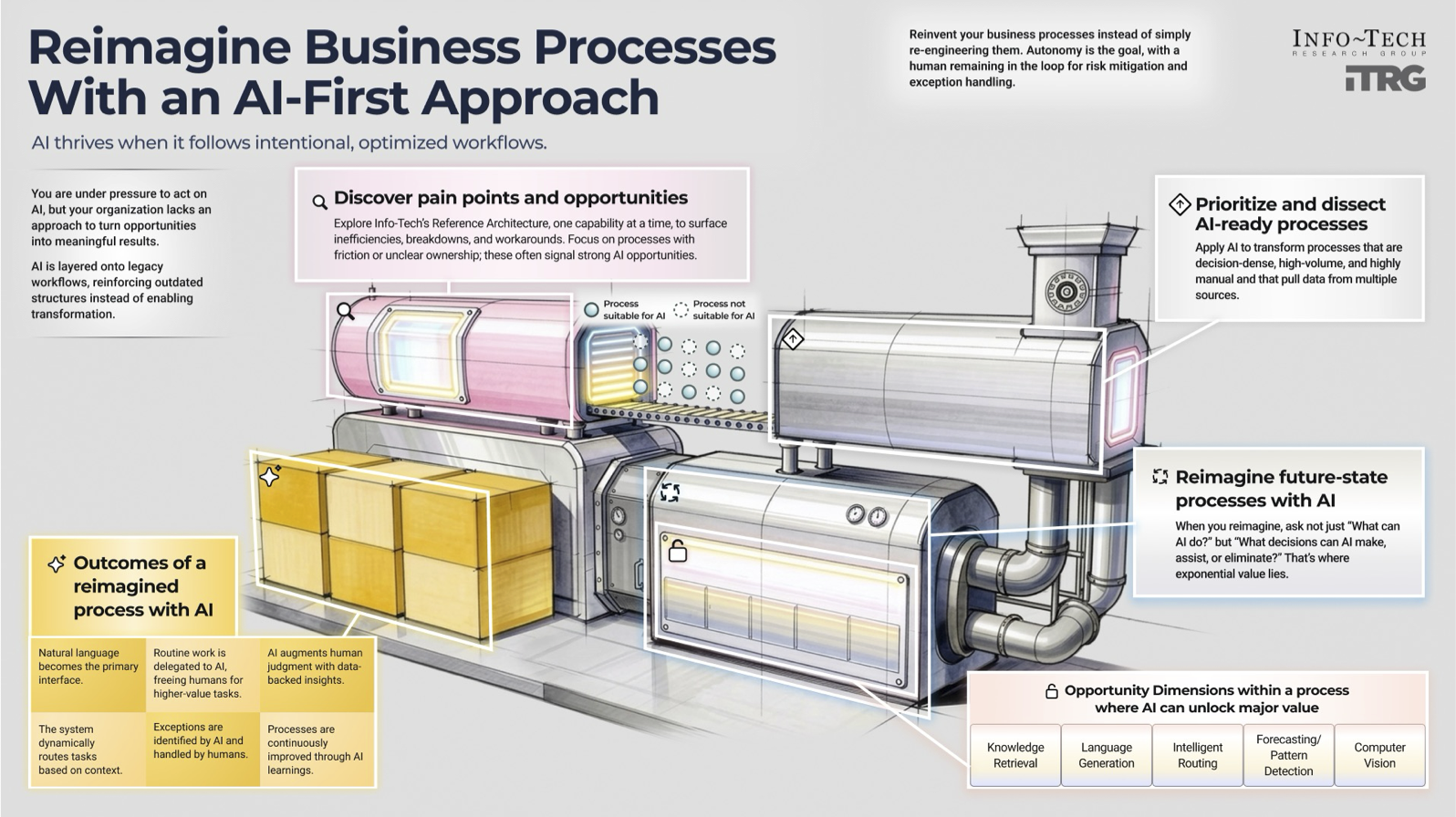
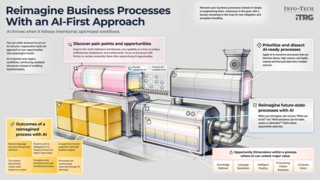
Info-Tech’s methodology for Reimagining Business Processes With an AI-First Approach
Phase Steps |
1. Discover pain points and opportunities across the business
|
2. Prioritize and dissect processes
|
3. Reimagine future-state processes
|
Phase Outcomes |
|
|
|
Insight summary
Overarching insight
To unlock AI’s true value, organizations must go beyond task automation and redesign how work flows across people, systems, and decisions. That’s how transformation takes root.
Phase 1 insight
A lack of accountability is an AI opportunity: AI has the potential to fix breakdowns that have no ownership.
Phase 2 insight
Apply AI to transform processes that are decision-dense, high-volume, and highly manual and pull data from multiple sources.
Phase 3 insight
When you reimagine, ask not just “What can AI do?” but “What decisions can AI make, assist, or eliminate?” That’s where exponential value lies.
Tactical insight
AI initiatives stall when teams lack a shared understanding of the process landscape. Business, IT, and Operations each see different pieces of the puzzle. Info-Tech equips you with a common language to evaluate process complexity and align on where AI can deliver meaningful change.
Blueprint deliverables
Each step of this blueprint is accompanied by supporting deliverables to help you accomplish your goals:
Process Discovery and Evaluation
This tool will help you assess the suitability, value, risk, and feasibility of business processes.
Key deliverable:
Process Reimagination Canvas
This tool helps you capture a one-page snapshot of your redesigned, AI-enabled process to guide alignment, communication, and implementation.
Blueprint benefits
IT Benefits
- Understand the current state of business workflows and where technology can create the most value.
- Ensure AI initiatives are grounded in what the current tech stack can support or surface needs for change.
- Focus resources on AI-ready processes with high automation potential and strong stakeholder support.
- Design solutions with sustainability in mind not just speed so IT isn’t burdened by poorly scoped projects.
Business Benefits
- Move beyond vague AI ideas by identifying high-impact, process-specific opportunities that align with business strategy.
- Redesign core processes to eliminate handoffs, delays, and redundant steps, freeing up time and resources.
- Prioritize initiatives where AI can deliver measurable improvements, reduce risk, and maximize ROI.
- Enable adaptive, intelligent processes that are easier to scale and evolve as AI capabilities improve.
- Bridge gaps between business, IT, and operations by using a shared framework to evaluate processes together.
About Info-Tech
Info-Tech Research Group is the world’s fastest-growing information technology research and advisory company, proudly serving over 30,000 IT professionals.
We produce unbiased and highly relevant research to help CIOs and IT leaders make strategic, timely, and well-informed decisions. We partner closely with IT teams to provide everything they need, from actionable tools to analyst guidance, ensuring they deliver measurable results for their organizations.
What Is a Blueprint?
A blueprint is designed to be a roadmap, containing a methodology and the tools and templates you need to solve your IT problems.
Each blueprint can be accompanied by a Guided Implementation that provides you access to our world-class analysts to help you get through the project.
Need Extra Help?
Speak With An Analyst
Get the help you need in this 3-phase advisory process. You'll receive multiple touchpoints with our researchers, all included in your membership.
Guided Implementation 1: Discover opportunities across the business
- Call 1: Scope requirements, objectives, and your specific challenges.
- Call 2: Inventory key business processes.
- Call 3: Assess each process for AI suitability, value, and risk.
Guided Implementation 2: Diagnose and prioritize AI-ready processes
- Call 1: Prioritize and shortlist processes for deep analysis.
- Call 2: Create current-state workflows for the shortlisted processes.
Guided Implementation 3: Reimagine future-state processes
- Call 1: Map AI opportunity dimensions to shortlisted processes.
- Call 2: Build a reimagined process flow and assess the feasibility of each process.
- Call 3: Document your new workflow using the Reimagination Canvas.
 Develop Your Value-First Business Process Automation Strategy
 Maximize the Benefits from Enterprise Applications with a Center of Excellence
 Prepare and Defend Against a Software Audit
 Automate Work Faster and More Easily With Robotic Process Automation
 2020 Applications Priorities Report
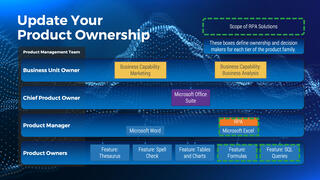 Build Your First RPA Bot
 Get the Most Out of Workday
 Get the Most Out of Your SAP
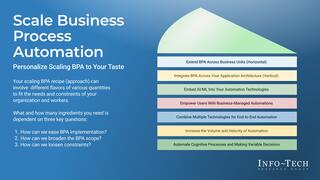 Scale Business Process Automation
 Run IT By the Numbers
 IT Spend and Staffing Benchmarking
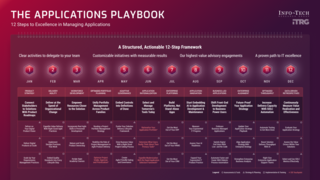 The Applications Playbook
 Contract Lifecycle Management Platform Selection Guide
 Reimagine Business Processes With an AI-First Approach
 AI in Seven Charts
 Emerging AI Trends and Predictions From Our Global Technical Counselor Team
 Developer Survival Guide in the Age of Agentification
 Turn Customer Friction Into Agentic Opportunity
 People Change in the Face of Disruptive Technology
 Lead IT Like a Business: Every Dollar Is a Decision
 Optimize Cloud & AI Spend With Agentic FinOps
 The SaaSpocalypse Is Here. Easy Software Decisions Are Over.
 Influence Unleashed: The IT Leader’s Superpower
 The Challenge of Ethics in the Use of AI
 Revolutionize Risk Management With Agentic AI
 Introducing the Info-Tech Speakers Bureau
 Inside the Agentic Enterprise
 Agents 2.0: From Autonomy to Architecture
 Agentic IT: From Hype to Value
 Tech Trends 2027 Keynote
 Become an Exponential CIO
 Beyond the Agent: The Leadership Ecosystem for an AI-Enabled World
 Five Key Takeaways From Info-Tech LIVE 2026
