
Migrate to Windows 10
Developing a migration and deployment plan for Windows 10 is harder than it looks – Windows 10 is leading the way to an entirely new world of end-user computing.
- Windows-as-a-Service means that updates and ongoing management have become more complicated.
- Organizations are chained to previous versions of Windows due to legacy applications and web applications that only work in older versions of Internet Explorer.
- The costs of migrating operating systems are daunting and there is confusion about new features, making a business case difficult.
Our Advice
Critical Insight
- Windows 10 is not just another upgrade; it is leading to transformative change. Big changes for Microsoft mean big changes for you.
- Plan the migration immediately. Rapid consumer adoption, BYOD, and new hardware make an immediate plan a necessity; waiting for Windows 7’s end of life will not cut it.
- Take it one step at a time: define rings of users and let these categories guide migration methods and timing.
Impact and Result
- Create a migration plan that incorporates your end users’ and organization’s unique pain points.
- Start your pilot as soon as possible by representing the most common user groups.
- Choose a deployment strategy that is best suited for your organization.
Member Testimonials
After each Info-Tech experience, we ask our members to quantify the real-time savings, monetary impact, and project improvements our research helped them achieve. See our top member experiences for this blueprint and what our clients have to say.
Client
Experience
Impact
$ Saved
Days Saved
1425 Horsham Snf Operations LLC
Guided Implementation
8/10
$1,360
2
I believe that Ken validated some of our assumptions and gave us some industry information that assisted us in our implementation.
Care New England Health System
Guided Implementation
10/10
$4,080
5
The ability to discuss the strategy document was valuable (Positive) no negative
Toronto Community Housing Corporation
Guided Implementation
9/10
$30,000
23
It was affirmative that we are heading in the direction to be successful. While the team may be over confident Mark was able to direct the team to... Read More

About Info-Tech
Info-Tech Research Group is the world’s fastest-growing information technology research and advisory company, proudly serving over 30,000 IT professionals.
We produce unbiased and highly relevant research to help CIOs and IT leaders make strategic, timely, and well-informed decisions. We partner closely with IT teams to provide everything they need, from actionable tools to analyst guidance, ensuring they deliver measurable results for their organizations.
What Is a Blueprint?
A blueprint is designed to be a roadmap, containing a methodology and the tools and templates you need to solve your IT problems.
Each blueprint can be accompanied by a Guided Implementation that provides you access to our world-class analysts to help you get through the project.
Contributors
- Onuora Amobi, CEO, The Windows News Network
- Hanan Luftiyya, Professor and Chair of Computer Science, Western University, Canada
- Hutton Henry, Director, Beyond Migration
- Stephen Lewis, Manager: Administrative Computing Team, Senior Computing Consultant, Lehigh University
- 4 anonymous contributors
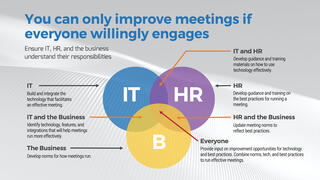 Run Better Meetings
 Rationalize Your Collaboration Tools
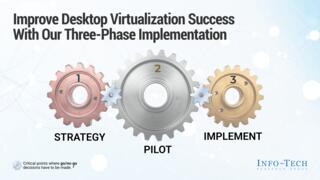 Implement Desktop Virtualization and Transition to Everything as a Service
 Establish a Communication and Collaboration System Strategy
 Build a Digital Workspace Strategy
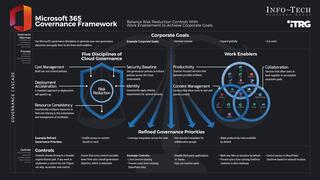 Govern Microsoft 365
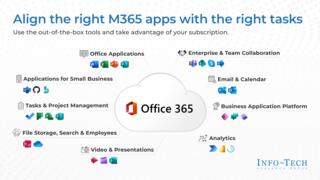 Create a Post-Implementation Plan for Microsoft 365
 Microsoft Teams Cookbook
 2020 Enterprise Collaboration Tools: Market Trends and Buyer’s Guide
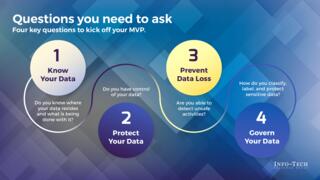 Build a Minimum Viable Product for Data Classification With Microsoft 365
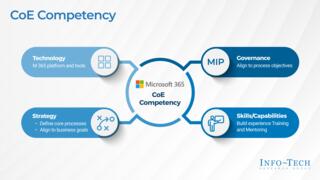 Drive Ongoing Adoption With an M365 Center of Excellence
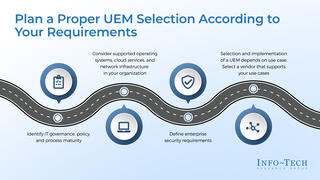 Endpoint Management Selection Guide
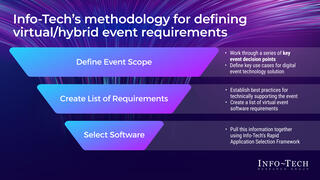 Define Your Virtual and Hybrid Event Requirements
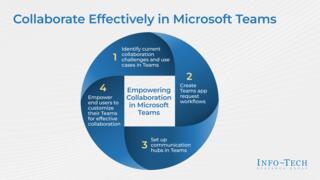 Collaborate Effectively in Microsoft Teams
