
Ensure Cloud Security in a SaaS Environment
The devil’s in the details when realizing full value from a SaaS program.
- The cloud is no longer a trend, but reality. Software as a Service (SaaS) offers major business and IT benefits that organizations are urgently trying to take advantage of.
- For security professionals and leaders there are still major concerns. All too often an organization has decided to migrate some part of the business into a SaaS environment without major consultation or consideration of the security implications.
- SaaS programs are of special concern due to the ambiguity of what vendors will provide for security controls and how a consumer can even begin to determine and validate any controls.
- Security is the last and still largest obstacle to cloud adoption. Privacy and compliance concerns become exacerbated when control is lost.
Our Advice
Critical Insight
- Handing off data doesn’t hand off responsibility. You must become your vendor’s auditor to get the security controls and confidence you need.
- You can’t glue on security after the fact. Include security in SaaS negotiations.
- Your SaaS vendor can often provide better security controls than you can.
Impact and Result
- The business is adopting a SaaS program and that environment must be secured, which includes:
- Ensuring business data cannot be leaked or stolen.
- Securing the network connection points.
- Maintaining privacy of data and other information.
- Use the SaaS vendor to cover some security controls through contractual and configuration requirements to limit the internal controls that must be deployed.
- This blueprint and associated tools are scalable for all types of organizations within various sectors.

About Info-Tech
Info-Tech Research Group is the world’s fastest-growing information technology research and advisory company, proudly serving over 30,000 IT professionals.
We produce unbiased and highly relevant research to help CIOs and IT leaders make strategic, timely, and well-informed decisions. We partner closely with IT teams to provide everything they need, from actionable tools to analyst guidance, ensuring they deliver measurable results for their organizations.
What Is a Blueprint?
A blueprint is designed to be a roadmap, containing a methodology and the tools and templates you need to solve your IT problems.
Each blueprint can be accompanied by a Guided Implementation that provides you access to our world-class analysts to help you get through the project.
 Build a Cloud Security Strategy
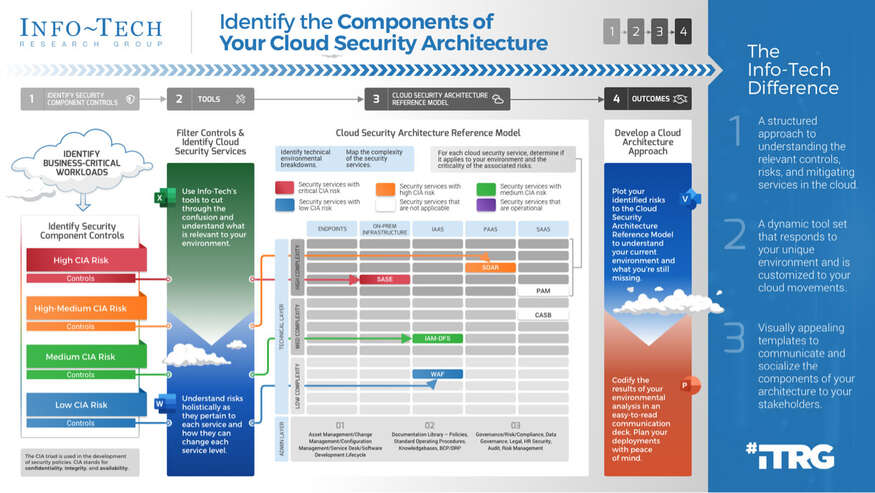 Identify the Components of Your Cloud Security Architecture
 Identify Opportunities to Mature the Security Architecture
 Embed Security Into the DevOps Pipeline
 Secure Your Hybrid Workforce
 Ensure Cloud Security in IaaS, PaaS, and SaaS Environments
 Improve Email Security
 Secure Your Perimeterless Network
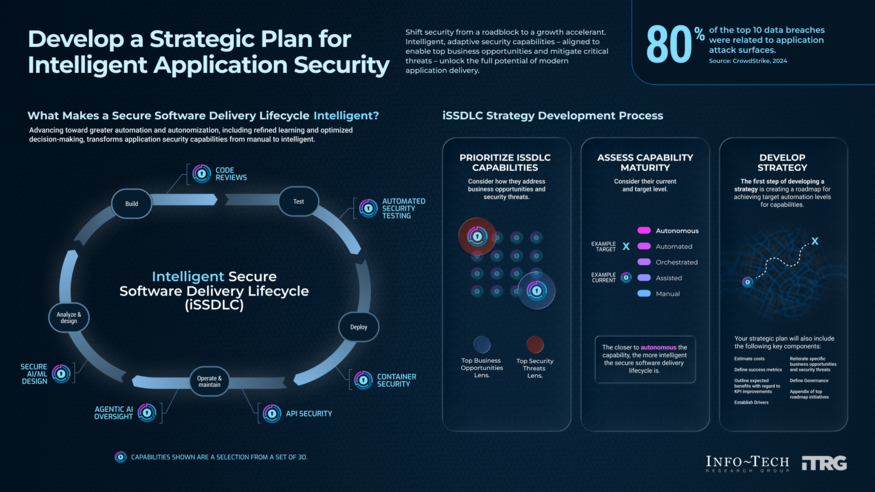 Develop a Strategic Plan for Intelligent Application Security
