
Digital Disruption
with Geoff Nielson


Our Guest Scott Likens Discusses
Synthetic Humans & Quantum AI: The Future of Humanity
Is your business ready for a world where AI agents act, adapt, and make decisions for you?
Today on Digital Disruption, we’re joined by Global Chief AI Engineer at PwC, Scott Likens.
Scott Likens serves as the Chief AI Engineer at PwC, overseeing both the Global and US teams. He leads the AI Engineering and Emerging Technology R&D groups, driving the firm’s strategy across AI, blockchain, VR, quantum computing, and other disruptive technologies. With over 30 years of experience in emerging tech, Scott has helped clients across industries transform their customer experience, digital strategy, and operations. He began his career in software engineering during the early days of the internet, working with major multinationals to apply a localized lens to global digital and innovation trends. Scott’s diverse technical background spans advanced analytics, digital architecture, AI engineering, and innovation. During his time at PwC, he has lived and worked in both China and the US, serving as a global technology leader and advisor to key clients. He is a regular speaker at international conferences on emerging technologies, including AI and generative AI, blockchain and crypto, IoT, quantum computing, and advanced robotics.
Scott Likens sits down with Geoff Nielson for a look into what’s actually happening across the front lines of AI and innovation. Scott shares insights from the edge of tech, from AI agents and embodied intelligence to quantum computing and synthetic identities. He explains why most enterprise AI efforts fail to scale, how to think in innovation “horizons,” and what separates real value from hype. He touches on many topics including how holographic AI and digital twins are already reshaping communication and the skills and structures shaping the IT organization of the future.
00;00;00;24 - 00;00;30;02
Geoff Nielson
Hey everyone! I'm so excited to be sitting down with Scott Lichens, who leads AI Engineering and Emerging Tech R&D. For me, what's cool about Scott is he's experience across the emerging tech landscape and actually implementing them in an R&D capacity. What I want to do today is see if we can pull back the curtain on the research and development actually happening with these technologies right now, and learn what secret capabilities actually exist, and maybe even find out what he sees on the horizon and the next horizon.
00;00;30;05 - 00;00;34;02
Geoff Nielson
Let's find out.
00;00;34;04 - 00;00;42;07
Geoff Nielson
Scott, thanks for being here. Maybe just to start, for people who don't know, can you tell me a little bit about, you know, kind of your story, you know, what you've been up to in your career and what you're doing right now?
00;00;42;14 - 00;01;04;23
Scott Likens
Yeah. So, it's it's been a quite, quite an interesting career. I mean, currently, I'm the global chief AI engineer at UC. So please turn to us. But looking after everything AI, engineering, around the world as a big firm, that that means a lot. Part of my job is also looking at emerging tech. So research and development, you know, beyond AI and obviously AI is the the word of the moment.
00;01;04;23 - 00;01;27;21
Scott Likens
But there's just a ton of innovation happening, whether it's quantum computing, blockchain continues to, to grow, like crazy, virtual reality, even, with synthetic reality kind of being you know, supercharged by AI. My career started in software. Actually, I was studying to be a pilot and pay for flight school. I was, working at a software company, and it just happened to be one building, one of the first internet browsers.
00;01;27;21 - 00;01;51;14
Scott Likens
And, you know, for me that it really was this glimmer of of imagination of what could happen in technology. So I started early days of, of the internet, building the browser, transitioning into, you know, really just the next wave of everything. So living through, the browser and the internet boom, the e-commerce boom, the, the social media boom, the cloud boom, big data boom.
00;01;51;22 - 00;02;00;08
Scott Likens
And now what seems to be more of an emerging tech and AI, wave, which is, has just been amazing. So really interesting journey.
00;02;00;11 - 00;02;21;17
Geoff Nielson
No. That's awesome. And one of the things that, you know, I thought was so cool about your story is that you've had this kind of broad exposure to, you know, a whole pile of, you know, emerging technology that, you know, you've worked with organizations to, you know, work kind of on the R&D side of as well. So, you know, I'm curious from your vantage point right now, Scott, like, what is most exciting to you in tech right now?
00;02;21;17 - 00;02;26;23
Geoff Nielson
Like what's on your radar? As you know, the technologies we should all be looking at or thinking about.
00;02;26;25 - 00;02;44;28
Scott Likens
So no doubt, no doubt. AI is is the bulk of the conversation. And I think that finally has turned the corner in the sense of at the executive level, at the board level, you know, really pervasively throughout an organization. Everyone understands AI is is a lot more real. And, you know, you think about it's 70 or 80 years of research and development.
00;02;44;28 - 00;03;09;23
Scott Likens
So it shouldn't have been that surprising. But I think we've been through so many cycles of promise, but not, you know, value. We're seeing that value in with that investment. It's also supercharged innovation across the board. If you think about some of the challenges with AI needs tremendous amounts of energy. So there's tons of innovation happening in energy and energy transmission and green energy, you know, really good things that are going to benefit beyond AI.
00;03;09;25 - 00;03;30;29
Scott Likens
But I mentioned a few. I think one of the the big areas we're focused on is what's happening in quantum computing, whether it's around cryptography or just quantum computing itself, in the sense of how it will support AI in some of the needs ahead of us. So a lot of excitement for me, and I think there's been a lot of progress just in the last two, three, four years in quantum, we've seen a lot of breakthroughs.
00;03;31;02 - 00;03;57;29
Scott Likens
I continue to monitor blockchain in the sense of how it's becoming pervasive as an infrastructure, not, you know, in the crypto world and investment. Stay away from that. Maybe personally I don't. But in an enterprise world, you know, I think blockchain is is really maturing in the sense of payments and tokenization of assets, both digital and physical, and giving us a really strong foundation, that we just didn't have before in this way.
00;03;58;10 - 00;04;24;05
Scott Likens
I love how AI is infusing into the creative areas so and multimodal, so generating, you know, video and human image and likeness, even even into holographic endpoints. And I think the next wave that we're really focused on right now is kind of the embodied AI. So the physical connection of AI to robotics and the Internet of Things, which, again, continues to grow behind the scenes.
00;04;24;05 - 00;04;36;24
Scott Likens
So now infusing AI at the edge, embodying it into something physical, I think that's that's probably a wave that's going to hit us here, maybe this calendar year in a big way. If, if not already.
00;04;36;26 - 00;04;54;13
Geoff Nielson
Yeah. No, that's super cool. And it's something to be honest, I haven't had a lot of exposure to. So, you know, I'm curious. What what are you starting to see emerge there? Are there specific use cases that people are talking about or investing in and kind of the physical side of AI? And I'm curious as well, like holographic AI, that's something that's a phrase.
00;04;54;13 - 00;04;58;12
Geoff Nielson
I have to be honest, I've never heard before. You know, what does that look like?
00;04;58;14 - 00;05;18;18
Scott Likens
Well, I'll start with that. We've we've created a synthetic version of of me. Synthetic Scott, almost two years ago. And using AI, I can capture my my name, image and likeness so I can capture myself now and really use AI to have someone interact with the synthetic version of me. And that can be done through a screen.
00;05;18;18 - 00;05;39;11
Scott Likens
So we can do that through video. But one of the more interesting advancements is holographic boxes. So I can have a three dimensional version of myself. Sounds like me, looks like me, moves like me. It uses my hand movements, my my facial movements. But also giving me the power to speak any language and interact in any language and have knowledge that the carbon based Scott doesn't have.
00;05;39;11 - 00;06;00;20
Scott Likens
Right. We can program through large language models, information about any topic. And not only that, but we have the foundational training of the large language model. So putting this this holographic, representation of me allows me to maybe go to a meeting without having to go. And I've done that, and I've, I've had a meeting in Korean, which I don't speak, but synthetic.
00;06;00;20 - 00;06;25;28
Scott Likens
Scott does. So it's just maybe a different endpoint, you know, tying together kind of converging the AI generation, the multimodal version of me, the voice match the image and body match, the movement match. And really, in the last two years that went from me as an avatar, so cartoony looking avatar didn't really look like me to 4K representation of me in live video.
00;06;25;28 - 00;06;43;19
Scott Likens
And it's really kind of changing that pattern of how people interact. So not just typing a prompt, just speaking to me in any language and having to respond, and it's not actually me. So that one's pretty interesting. I think it's kind of changing that, that human machine interface quite quickly. And if and just on that. Yeah.
00;06;43;21 - 00;07;01;16
Geoff Nielson
Yeah. Sorry. Let's, let's stay on that for a minute because I'm curious from like from a capabilities perspective, like have we past that uncanny valley. Like do I need to be worry about worrying about like, am I talking to Scott right now or am I talking to an AI avatar of Scott? Like, is it that level of quality we're seeing?
00;07;01;19 - 00;07;27;02
Scott Likens
Absolutely. I think we've past that in the sense of a video screen, for sure. There's technical ways to understand if it's it's generated or not. But to be honest, right now, the human it's it's beyond human comprehension. And there's some pretty public cases of teams meeting, you know, about video meetings where it's not actually the person because the voice can be mimicked, I think with 3 or 5 seconds of my voice, it gets very accurate.
00;07;27;02 - 00;07;43;18
Scott Likens
And with anything beyond that, it gets to a point where humans won't tell the difference. Now, machines can still tell the difference in the sense of using AI to detect AI, but I think it's going to be really hard to tell for humans. Now, when we get into holographic, you know, there's still a little bit of, interaction delay.
00;07;43;19 - 00;08;05;14
Scott Likens
It's not specifically real time back and forth, but that again, I think that's a solvable problem. And it'll get to the point where it's it's really hard to tell whether it's me or not. So we're looking at, you know, can other technologies help us understand and create that trust factor. And maybe that's where blockchain comes in. We can authenticate and understand is this an approved version.
00;08;05;17 - 00;08;22;12
Scott Likens
And there's there's another layer to it. So I can capture my image and what I look like and speak like. So once I've done that, my team can have me say whatever they want. So it's not only the image, it's actually the content. So we have to actually authenticate. Is the content approved and the the way I can deliver the content.
00;08;22;12 - 00;08;26;04
Scott Likens
So, a pretty interesting and difficult problem to solve.
00;08;26;06 - 00;08;45;06
Geoff Nielson
While on that authentication piece is really interesting as well. And it seems like something we need to fast follow on. Right. Because now we're now we're in the realm of deepfakes. It sounds like. Right. Like, is this an approved Scott? Or is this, you know, a nefarious Scott? I'm just trying to get me to sign over, you know, a million bucks for, you know, God knows what.
00;08;45;09 - 00;09;04;01
Scott Likens
That's right. And this this has come up, obviously in Hollywood and IP protections around image and likeness. So there's a lot of people thinking about how to not only secure it, but then is there a commercial model around it. Because now I can get out to more places than I could physically, right? I don't have to fly. I can save, travel and carbon.
00;09;04;16 - 00;09;12;21
Scott Likens
There's there's opportunities with it if it's done responsibly. So that's, that's really where our focus has been. Is that responsible use of the technology.
00;09;12;23 - 00;09;32;08
Geoff Nielson
Right. And responsible is a word that comes up in a lot of the, you know, that comes up in a lot of the, you know, the presentations that you've been giving. And I'm curious, like, what's your what's your worry level with some of these technologies versus excitement levels? Because, you know, we talk about nefarious uses. But even you mentioned Hollywood, you mentioned IP as well.
00;09;32;17 - 00;09;44;11
Geoff Nielson
How concerned do we need to be that, you know, are we empowering people here or are we potentially, you know, robbing people of their agency in some capacity?
00;09;44;13 - 00;10;04;22
Scott Likens
I'm probably the ultimate optimist. So I'm I think I'm excited in general. I think there's a lot that we can do now to put the guardrails in place. And, and I've said this before with, with the the boom of Gen I, it's the first time I've seen the word responsible or trust built in early in the conversation versus let's figure that out later.
00;10;04;22 - 00;10;25;05
Scott Likens
So I do think I'm hopeful. A lot of people have taken responsible AI as a fundamental pillar to everything they're building. There's there's definitely a worry that nefarious people will use this technology in a bad way. But I think we've seen that through throughout the decades of every technology. And it's always been a kind of a constant battle.
00;10;25;07 - 00;10;44;07
Scott Likens
So as long as we're we're all aligned in the beginning that we we have to do this responsibly. We're implementing those things because they're they're the right things to do. I think we're in a better place than we typically are. But there is a lot of work to do. There's unsolved problems in the sense of how fast the technology is moving and how fast can we make sure it's done responsibly.
00;10;44;07 - 00;11;07;17
Scott Likens
There's a lot of intellectual property rights, questions out there that haven't been answered either by regulation or by legal court cases. We've seen some, but there's still a lot of gray area, so not solved. But I'm hopeful that people want to do it the right way and that, we're all we've all started thinking about that in the beginning, which is different, a different pattern than other technologies.
00;11;07;28 - 00;11;25;17
Scott Likens
I said it in the early days of the internet. We weren't thinking about securing it. We were thinking about growing it and connecting it. And if you think about the e-commerce boom, really the pivot point to that was kind of this, this escrow version. If I'm going to buy something, someone's going to escrow my money until I get the product because I didn't trust it.
00;11;25;18 - 00;11;43;21
Scott Likens
Right. And that was an add on. And then then we started to build in more controls and security. So now e-commerce everyone trusts. But in the early days, no one did, right? You didn't know if you're going to get your product. So I do think AI's generative AI wave has been different. But still a lot of hard problems to solve.
00;11;43;23 - 00;12;05;09
Geoff Nielson
Yeah, yeah. And, you know, it's it's one of these things where, you know, my sense is and I'm curious if you're seeing the same thing, Scott, like, people are struggling more and more to keep up with like today's gen AI technology, let alone like what's happening literally every week that comes out. And so it's exciting. And I'm I'm really glad to hear you say that.
00;12;05;09 - 00;12;17;13
Geoff Nielson
Like, responsibility is starting to be baked in. And I, I love that optimism. Right. Because it's fair. That's you're right. That hasn't always been the case. So, you know that that is a nice kind of glass half full approach.
00;12;17;15 - 00;12;39;05
Scott Likens
Yeah. I think the the pace is the problem right now. And there's a great author, Rachel Boston, who said speed can be the enemy of trust. As things move faster, it's hard to trust them because the ground is moving underneath us and I for the last three years has been exactly that. It is moving faster. There's more innovation happening than I've seen really in my career, which is the long, a long time.
00;12;39;21 - 00;13;05;08
Scott Likens
So it's it's exhausting to keep up. But there's also this excitement around this innovation and the invention that's happening. And in general, we're going the right way. You see people, you know, thinking about the mission and ethics of things. And there's obviously some examples where they're not. But in general, like the whole industry, the whole set of innovation is is really trying to be accretive to what we're doing in business, in society, for ourselves personally.
00;13;05;10 - 00;13;22;10
Scott Likens
And I think if we stay focused, we stay in alignment. We need we need some regulation and guidance and guardrails. But in general, the technology gets it even though it's moving fast. I think it's trajectory is good and it's positive. And you know, we're seeing benefits across the board right.
00;13;22;13 - 00;13;41;13
Geoff Nielson
So I you do talk about speed and how fast this is all moving and generally moving in the right direction. You know, I wanted to, throw at you a quote that I got, I think, from a colleague of yours, Dan Priest, something like that. But he but he had said, you know, speed is more important. Scale is less important.
00;13;41;14 - 00;13;48;01
Geoff Nielson
Innovation is the most important. Can you kind of, you know, unpack that and what it means for people who are, you know, participating in this race?
00;13;48;03 - 00;14;05;16
Scott Likens
Yeah. I think it's trying to call it this. This pattern is different than we've seen it. Again, if we proxy back to the internet or e-commerce or social media, it's the cloud, big data. They follow these similar patterns where there was some innovation, but then it was all about scaling it to get to be the biggest and to to own everything.
00;14;05;16 - 00;14;36;13
Scott Likens
And we saw that, of course, with the social media, all kind of conglomerate ING into to central apps with AI, the innovator and keeps you ahead. And, and that's hard sometimes for big enterprises. Yeah. Innovation is something they say they invest in, but it's really not the core of the business strategy. And I think because this new generation of AI really does affect every aspect of an organization, you have to stay maybe not at the edge of innovation, but you have to keep up with it.
00;14;36;16 - 00;14;58;07
Scott Likens
So that's where speed means how fast we can change our organization, our workforce. How can we skill our people at a very different rate if we give them a tool? Today, it could be different in one week or two weeks. And that's just not a kind of a motion that most organizations understand. So we think that the innovation that that gives you that roadmap that that view of what's coming next.
00;14;58;07 - 00;15;18;19
Scott Likens
And again, you don't have to do every single thing, but you have to understand the trajectory. It's it's moving in. Especially with generative AI, there's been really amazing, invention that, you know, can be infused right back into the organization. And that's where speed matters. And we're a big organization, 150 or so countries, you know, 200 and 375,000 people.
00;15;18;22 - 00;15;34;15
Scott Likens
That's a hard, you know, workforce to change overnight. But for us, it was we saw the benefits. So moving fast with our people, giving them access to that new innovative technology. And then we got the scale. So it's kind of that pivot around scale will happen right.
00;15;34;15 - 00;15;37;24
Geoff Nielson
Versus you back into the scale versus Frontloaded.
00;15;37;26 - 00;15;57;11
Scott Likens
That's right. That's right. As you start to get the business to understand where we can fundamentally reinvent processes that maybe have been around for decades or hundreds of years, even depending on the industry, reinventing those are hard. But if you're innovating at at speed, the scale will happen. So it's a little bit of a different pattern that we've seen in big technology.
00;15;57;21 - 00;15;59;05
Scott Likens
Revolutions.
00;15;59;07 - 00;16;19;13
Geoff Nielson
Right. Can we can we unpack that word innovation a little bit? Yeah. You know, it's a word that that gets thrown around a lot, and I'm certainly guilty of that myself when we're talking about innovation here. You know what does that mean in the context of an organization or leaders, like what are we doing there? What's kind of the outcome or the process.
00;16;19;15 - 00;16;40;24
Scott Likens
So really it it depends on where you sit in an organization because there's innovation happening. As the engineer, for me innovation is technical invention. So there's invention. I and the innovation on the back end of that is how I apply that into the business to actually change something fundamentally. So a lot of the times technology is an incremental, improvement.
00;16;40;24 - 00;17;02;22
Scott Likens
I'm going to get 5 or 10% better, you know, efficiency based on this technology. To me, innovation is not doing any of the the patterns we did before, but getting a better output. And that's where we really work with our clients. To say the innovation in a process is reinventing it. If you did ten steps yesterday during those faster is not innovation.
00;17;02;27 - 00;17;24;18
Scott Likens
Do two steps. Today. Was AI filling in the gaps and getting a better output? That's innovation. So there's business model invent reinvention which could be innovation. There's technical invention which could drive innovation. So it's really a combination of of how we apply that into a business. That's where we see the benefit and the results. To me, that's the big AI innovation, right?
00;17;24;21 - 00;17;46;09
Scott Likens
Small AI innovation is more invention. There's pieces were inventing that didn't exist. Or we're using inventions out in the market in open source or with our partners. The innovation happens when we're changing something fundamental to the business. We're we're getting to market differently. We're creating products differently. Fundamentally, and you see the business impact happens then.
00;17;46;11 - 00;18;06;15
Geoff Nielson
Got it, got it. And I understand, Scott, in your role, you know, you mentioned engineering. This is sort of what you're team lives and breeds. Right. You guys are I don't know if I'm allowed to call it a lab, but you've got kind of your, your, you know, innovation emerging technologies kind of engineering group. Can you give me a little bit of a peek behind the curtain?
00;18;06;15 - 00;18;15;10
Geoff Nielson
Like, what does that look like in your world? And what are the some of the things you're working on either internally or with other organizations? Sure.
00;18;15;12 - 00;18;35;14
Scott Likens
If I think about the process we we take we think in horizons. So horizon one is taking some emerging technology and applying it into the world with, with ourselves or our clients that we could make an impact today. It's still probably the first time it's been done, but it's a it's a tangible idea and a tangible technology.
00;18;35;14 - 00;19;03;16
Scott Likens
So implementing AI agents is horizon one. We know we can we can do agents today. We can have multi-agent, build outs. Those agents can work together. They can supply some opportunity to the to a business process or efficiencies within the business, etc.. Horizon two is is trying to understand what's happening in universities or in research labs or our own lab building, something that probably isn't finalized.
00;19;03;16 - 00;19;24;11
Scott Likens
And that's where I'd say some of the quantum work we're doing is is in horizon two. We know that we can start to optimize do AI optimization better with quantum. Now it's still early because there's not a scaled quantum platform. There's some options, but at the enterprise level it's still not ready. So that's horizon two. Pricing three is looking further out.
00;19;24;11 - 00;19;46;19
Scott Likens
And that's maybe an area we're looking at what's happening in in space technology and communications and things that may not apply to the enterprise in the next year or two, but we know that that's going to spawn invention and innovation that we can use. So trying to understand how to apply maybe what seems irrelevant, making it more relevant to enterprise business.
00;19;46;19 - 00;20;05;08
Scott Likens
So we think in those patterns. And then with within my team we have deep research and development done in in different areas. A lot of the times it is skill based. So if for in quantum computing you have to have quantum understanding. There's specific skills and math that you have to understand. If we're talking about satellites that's a different skill.
00;20;05;08 - 00;20;26;21
Scott Likens
That's you know, how do we actually build a physical, satellite and sensors. And so we start to kind of pattern the skills with the horizons and in the, the, the art and magic of it is how do you then bring that into an enterprise, relevancy. So we're, we're this helping enterprise, a big insurance company or a retailer or oil and gas company.
00;20;26;28 - 00;20;47;16
Scott Likens
So we have to have that sector lens. So we have a, a many to many, funnel in the sense of, of what we do in our work. We work very agile. So we have very small pods of people focused on delivering in a week or two weeks, not long drawn out research on, projects, because we have to understand if there's going to be value there.
00;20;47;16 - 00;21;14;13
Scott Likens
And we want to then go scale that. The other aspect is we we kind of have these incubators. So once we get to a point where we see there's some value, we've tested it with a client or two. We want to incubate that into a business that we can bring out in scale to, to many more clients that then takes, you know, traditional skills that change management and the program management, the, you know, the skills that would mean we could take this to a lot of clients and help them find value with this, this new idea.
00;21;14;15 - 00;21;45;27
Scott Likens
And that's that's the hardest part. You're selling something that didn't exist before. And, you know, I think about going back to blockchain. You know, it was probably two years of experimentation and, working with clients on, on ideas that really didn't exist in the market. And now it's exploded and, and there's, there's timing of that with the administration change in the US and what's happening with the the price of crypto, like there's a lot of reasons now is the time, but now it's exploding and we're seeing a lot of interest.
00;21;45;27 - 00;21;48;24
Scott Likens
And that's where that incubator just starts to scale.
00;21;48;26 - 00;22;01;12
Geoff Nielson
Right. Well and I expect in your world too, Scott, like the the hit rate at this stage of the game just cannot be 100% right. Like it's always going to be fractional. There's going to be wins and losses. And that's kind of a built in model of what you're doing.
00;22;01;14 - 00;22;21;15
Scott Likens
What's interesting, what we find is when things don't hit, it's it's likely because they're just ahead of their time. And I and I look back and we pull things off the shelf from four years ago. That was just pure research and now is ready because there was maybe some dependencies in the data we needed or the compute we needed or the physical hardware we needed.
00;22;21;17 - 00;22;36;08
Scott Likens
But now is the time. So it's it's almost like we we look at our backlog from previous years and say, oh wow, this one. Let's let's pull it back out. It's early so we don't throw anything away because we've learned something from it. But sometimes it's timing. Is the market ready?
00;22;36;11 - 00;22;46;21
Geoff Nielson
Right. Are there any of those that you've pulled off the shelf in the past, you know, 12 months or so that, you know, like, and any technologies whose time has finally come or is coming.
00;22;47;03 - 00;23;06;14
Scott Likens
One that comes to mind is digital twins, which is a concept that have been around for a long time, but they were always really bespoke and and in one off and now with, with generative AI helping us interface into digital twins with, with the amount of data we have coming from IoT devices. So the the data now is there from physical.
00;23;06;14 - 00;23;27;22
Scott Likens
The physical world like digital twins. Now is one of those that we've, we've researched, systems dynamics models for for a decade. And now you're seeing real value, you know, in enterprise, usage of those. So that's one a lot of the AI work is, is had been done in the research phase, and maybe that was a horizon three.
00;23;27;22 - 00;23;31;06
Scott Likens
And now it's really accelerated.
00;23;31;09 - 00;23;49;07
Geoff Nielson
Cool. The digital twin piece. You we're kind of now backing into it from the other side. But we were talking earlier about these kind of physical manifestations of AI. Can we come back to that conversation for a little bit? What what are we starting to see there, emerge in terms of capabilities and maybe also its use cases.
00;23;49;09 - 00;24;08;02
Scott Likens
So the one I love is, is bipedal robots. So robots that stand and walk like humans and, and you've seen an explosion of bipedal robots in the last 2 or 3 years. And in ten years ago, there were some very well known labs that were building one. And, you know, yeah, see some some videos. But now there's an explosion.
00;24;08;02 - 00;24;28;21
Scott Likens
And part of that is the generative AI interface, the natural interface in the sense of how humans interact with them. So we can speak in natural language, but also action, voice to action. You know, they're able to now use generative AI to, to have those robots learn. And you're seeing an explosion of, of intelligent, moving robots.
00;24;28;21 - 00;24;51;12
Scott Likens
That applies to the drone, the drone space, which in the U.S at least had really, softened over the last five years. We didn't hear a lot about drones. There was regulatory and licensing issues, but now indoor drones land based drones, those kind of to me are all the same thing. We're embodying AI, we're using the power of both generative and good old AI together in a physical, instance.
00;24;51;12 - 00;25;13;06
Scott Likens
And that's where it becomes a lot more real. You know, we can fundamentally change manufacturing and warehousing and logistics. Self-Driving cars are embodied AI. They have AI happy all throughout them. You're starting to see, a lot in the defense tech, world. So, not an area that, you know, we do a ton of work in, but just the amount of invention happening there.
00;25;13;06 - 00;25;34;24
Scott Likens
So from a drones perspective, both in water, on land and in air. So that is all on the backs of this, this AI explosion and generative AI and just the the reasoning and thinking that these models can do has really advanced what's happening in embodied AI. And then in a more micro level, the IoT world having edge AI embedded.
00;25;34;25 - 00;25;54;13
Scott Likens
So not just a sensor that's kind of dumb, just sends a reading. Now that sensor can be much more intelligent and actually make decisions or take action. So now we can instrument the world in a different way. Smart cities and smart districts, of course, smart cars, they're not only generating data, but they're actually taking action. And that's because of AI.
00;25;54;13 - 00;26;08;19
Scott Likens
And that's why we call it converging the convergence of AI and robotics and IoT and maybe blockchain to authenticate or make payments, as things are happening. So that's where the real value comes in, is when we converge these technologies.
00;26;08;21 - 00;26;16;07
Geoff Nielson
Right. And are you starting to see some of those convergences in you're like at that horizon, one level in your lab, is that still horizon two? Like.
00;26;16;09 - 00;26;38;03
Scott Likens
No, absolutely. I'd say the first wave for us was in the IoT world, where we're seeing the ability to have much more intelligent sensors, which then create better data or take action, which then we can build into an optimization of, of energy, of water, of people, you know, absolutely. Been rolling that out. And the bipedal robots, still probably horizon two.
00;26;38;04 - 00;27;03;10
Scott Likens
You know, there's experiments. Those still seem to be a little bit out, maybe a year or two for for scale, but there's some individual use cases you're seeing. And then I think horizon three is, is this space and what's happening, you know, beyond just our, the world that we walk around in. And it's a broader a broader connection, from a communications perspective, from a sensors perspective, etc..
00;27;03;13 - 00;27;29;03
Geoff Nielson
Right. That the space stuff is interesting in a, you know, it's got me thinking about the 20th century in general. And, you know, I'm not an expert in this area, but my sense is there's been a lot of use cases where, you know, DARPA or the military or, you know, these public R&D institutions came up with these advanced technologies, and then they were kind of brought in to more, you know, if I can call it civilian or commercial purposes here.
00;27;29;06 - 00;27;40;04
Geoff Nielson
Is is that still a trajectory we're seeing, or is it almost the reverse now where it's more kind of commercialized R&D labs and then like what where is the space tech coming from? I guess.
00;27;40;07 - 00;28;07;02
Scott Likens
Like I think there's a lot more private industry that is, you know, inventing things related to space than we had before. It was it was really driven by, you know, governments and the, you know, the investment that they had to have. But now with, the lowered cost of because of AI, the lowered cost of product development and, you know, engineering, there's a lot more private industry.
00;28;07;02 - 00;28;33;23
Scott Likens
And I think it's amazing. And there's some great examples without naming names, you know, many private companies launching rockets at a pace that governments can't even come close to. And you know, that that competition, I think will accrete it will it will be to the benefit of governments because they're going to have to keep up. And it's to the benefit of us because it's technology we all can see and understand and start to figure out ways to proxy that into, you know, enterprises.
00;28;33;23 - 00;28;57;18
Scott Likens
So I think it's amazing. And I think, you know, it's just an example of how that innovation will lift everyone together. Lift, you know, see right there into space. But, you know, low orbit satellites in the communications and sensors gives us more data. And, you know, it's just a kind of a self-fulfilling, cycle where more data equals better AI and better AI equals better products and better ways to get more data.
00;28;57;18 - 00;29;03;01
Scott Likens
So it it's really starting this flywheel that we think is, is amazing for business.
00;29;03;03 - 00;29;32;04
Geoff Nielson
No, that's that's awesome. And it's I mean horizon three is it's such an exciting space for, you know, just trying to it's trying to figure out what's next and what's, you know, what's next after next. You know, in terms of back to the horizon, one for a minute. Are there any projects you know you can talk about either that your team has done in the past year that are ongoing now that, you know, might surprise people that, you know, technology is kind of here or that you're excited about, that that may not be on people's radar.
00;29;32;06 - 00;29;50;12
Scott Likens
It might be on the radar. But just to give an example of of how real it is, you know, the a genetic AI era that we're living in, this is something that we this was horizon one for us last year, even though it probably wasn't a term people were using. There were were not any. If only a few agent tech frameworks.
00;29;50;15 - 00;30;22;07
Scott Likens
But we started in the world of software development, knowing that agents could help engineers just build better technology. And now we're at the point where we can scale agents with our engineers not only to generate code, but, to look at regulatory obligations, to look at obviously, security obligations can are we, meeting all of our safety and responsibly AI requirements and and empowering our developers to put put out output at, you know, two, three, five x of what they were doing?
00;30;22;07 - 00;30;57;17
Scott Likens
So for us, it's been a huge enabler. And those AI agents, you know, just a year ago were probably not on anyone's radar. Now we're we're infusing them into everything we do and thinking about fundamentally transforming legacy technology, migration, you know, looking at old mainframe software and languages, nobody knows being able to to use AI and agents to unravel something that's 40 or 50 years old, that's been running perfectly, modernize it and maybe not have to have humans recode that right.
00;30;57;17 - 00;31;20;26
Scott Likens
Have the agents do that for us in a way that we trust it, that we have a comfort on the output. So that's one that was yeah, last year, probably horizon two. And suddenly boom, it's here. It's at scale. We're doing this across many other functional areas beyond software development, thinking about, you know, customer service and finance and operations and human capital and starting to really scale that out.
00;31;20;28 - 00;31;47;00
Scott Likens
We launched something called agent OS, which is our ability to work across all the agent frameworks in any cloud, you know, in a much simpler way, so that agents can can work autonomously together. That's rapidly happened. And I just think that's an example of how fast these horizons could move. Yeah. When the innovation is is understood and scaled, and that's, that's happening throughout almost every sector and every function.
00;31;47;02 - 00;32;09;06
Geoff Nielson
And, and I've got to compliment you for a second on the branding of agent OS because that's. Yeah, beautiful, beautiful branding. And right away you're like, oh, I get it. That's cool. Why doesn't that exist? How like how ready for prime time is that right now? Is this something that people are already implementing and that the legacy modernization piece, I don't know, like to me, to me, it's quite interesting because it's such a gnarly, wicked problem.
00;32;09;06 - 00;32;16;18
Geoff Nielson
Maybe some other people think it's boring, but are we starting to see people actually implement this, or is it still talk right now?
00;32;16;21 - 00;32;39;09
Scott Likens
No. So. So first the agent OS is is ready at scale. Were we. So we we take a kind of an approach that if we can drink our own champagne, use it ourselves, we're a very complex organization. This is something we had to build out of necessity. To your point, it didn't exist. So thinking about how agents across frameworks can can speak in a standard way.
00;32;39;09 - 00;32;58;06
Scott Likens
Sure. Memory, you know, all these things that didn't exist, we built that. But we are rolling that. We roll it out internally. We've been on this journey over the last 18 months for our own AI chassis. Again, 100 countries at scale has to be safe, secure, protected, confidential data, etc. etc. so once we get through that pattern, then it's ready for our clients.
00;32;58;06 - 00;33;28;21
Scott Likens
And that that is the point where we're working with many clients. There's something that we can we can bring in, accelerate, you know, in a week or two, have agents up and running and start to see business value so that that's ready. Legacy modernization, you know, obviously is is a huge area of cost for clients. The industries that have been running on mainframes for a long time, or maybe they even transition off that about a year, maybe a year and a half ago, I said, you know, I could see a world where we don't even have to move the system with a world of agents.
00;33;28;21 - 00;33;47;03
Scott Likens
Could we keep the system isolated? And if I think about, specific, like life insurance, where that policy runs for 30, 40 years, it has to, you know, you have to trail those off. Could we just isolate it, have an agent that's intelligent enough to speak to the old system and the new system? Could we build a new system and not move the old system?
00;33;47;03 - 00;34;08;23
Scott Likens
Do we actually have to to modernize it? And I think we're starting to see people look at, different approaches. One is we're seeing right now on the legacy modernization. Can we use AI to actually unravel what's there? You know, you're not going to find the original coders. It's maybe in a language, you know, of course, COBOL, but maybe in some like there's languages that are really tough to find experts.
00;34;08;26 - 00;34;25;26
Scott Likens
Well, I can help us unravel that and create, you know, the new version of that, maybe not even in code. Maybe it just gives us the the agile stories. And then from there we go code it. But if we could do that in a day or two or a week, that's a huge difference from the old, the old approach.
00;34;26;03 - 00;34;43;28
Scott Likens
So we're definitely seeing that. Let's go after those legacy systems. Can we extract what's there using AI and then build it new? That's one approach. I think another approach is can we leave it, and can we create an agent that's intelligent enough to interact with the old system and the new system and, and bridge that? And I think we'll start to see some of those patterns.
00;34;43;28 - 00;34;49;03
Scott Likens
That's not at scale, but that's one of my hypotheses around where agents can really play a strong role.
00;34;49;06 - 00;35;17;03
Geoff Nielson
Now it's it's it's super, super exciting. And, you know, I'm sure as you know, like a lot of these legacy mainframe systems, like it's they're limiting the pace of innovation for organizations. Right. It limits the speed of effectiveness. It it impacts what they can do. And so for for organizations who want to go down this road and, and maybe more broadly, organizations that are looking to implement a gentle AI across their organization.
00;35;17;06 - 00;35;28;05
Geoff Nielson
What's the role you see corporate IT playing here? Do they need to be leading this? Is this happening around them? Is it replacing them? Like how do they how do they fit into the puzzle?
00;35;28;08 - 00;35;49;11
Scott Likens
Well, of course we'd love to help those clients, but I think I think part of the challenges corporate it has to do this upskilling that, you know, of course we've lived through, they have to adapt the pattern and the the way they approach these problems. We can't just go after it. The old maybe waterfall way or hybrid or agile way where we're just creating a two and three year transition.
00;35;49;13 - 00;36;08;23
Scott Likens
I think they have to change that mindset and build those new muscles around how these tools can help accelerate that. And we have a tool called Code Intelligence that will go in there and extract, all of the, the, the way the code works and generate, you know, the new stories. It'll generate all the documentation, create a little website that that's something that the corporate it's to kind of change the mindset.
00;36;08;23 - 00;36;27;25
Scott Likens
And some of that is the building those muscles around what I can do, what it can't do. You know, it doesn't do everything where can play a role and be more efficient and helping their team actually have much more output. Right. So I think that's the transition. It's more of this human problem. The technologies available, there's vendors like us that will help you, but you have to change the mindset.
00;36;28;01 - 00;36;48;26
Scott Likens
I think it also affects budgeting and strategic planning. You know, if I see a five year plan on technology, I just shake my head and say, how do you know what's happening in five years with, you know, the pace of change today? Not that you shouldn't have a kind of a target vision, but the reality of technology is, is going to be very different every year versus maybe every five years before.
00;36;48;28 - 00;36;59;17
Scott Likens
So I think corporate it's just that, that pace that, they're working at and the way they, they bucket these activities and just change the skill set as they go along.
00;36;59;19 - 00;37;10;08
Geoff Nielson
So when you look at the when you look at the IT organization of the future, you don't see it being, you know, replaced or displaced. You see a different skill set than we have today.
00;37;10;08 - 00;37;35;02
Scott Likens
I think I see it adapting. I see I'm already seeing a little bit of a change in the traditional organization models, in the sense of moving to much more, you know, you call it whatever you want, but pod structures of multidisciplinary, technology and business together. So I think the org model changes a little bit and the skills have to change because you have to take advantage of of AI, of course.
00;37;35;05 - 00;37;53;19
Scott Likens
But no, the role is there. And that's you know, we've been studying jobs. We're published our second version of the AI Jobs Barometer here, I think, in May. And what it shows is that it's not taking jobs away. It's changing the tasks in those jobs, and it's changing them faster than we thought. But it's the jobs are there, they're just different.
00;37;53;19 - 00;38;12;28
Scott Likens
And the people that are adapting and using AI, they're actually making more money. So there's a good story there. And it's creating new jobs, of course. And, you know, it's been accretive. So we haven't seen this this drop off. There's some jobs that have gone away. But in general, it's just what those jobs titles do, versus the job title going away.
00;38;13;00 - 00;38;17;04
Scott Likens
So I, I see that throughout it and other areas of the business.
00;38;17;06 - 00;38;33;27
Geoff Nielson
So to put a little bit of a spin on that, and I'm curious, first of all, if you'll if you'll agree with this or not. But you know, what I'm hearing and what I'm seeing firsthand is that I mentioned this earlier. We have these capabilities now that seem to be in many ways far outpacing organizational abilities to adopt them.
00;38;33;29 - 00;38;51;27
Geoff Nielson
And I mean, I just to say it bluntly, it seems like organizations are just not going fast enough to be able to embrace these technologies. And so, I mean, I wanted to ask you, like, what's what's going wrong out there? And what do organizations need to be doing differently or what do they need to be like? What's the mindset piece?
00;38;51;27 - 00;38;56;24
Geoff Nielson
What do they need to be doing? What do they need to be thinking about, you know, to better get ahead here?
00;38;56;27 - 00;39;15;21
Scott Likens
I, I agree 100%. I, I struggle even with my own teams. I don't go faster and it's a really a human problem. I say biology doesn't move as fast as technology. You know, we have to. It's a cultural change in an organization. And each each org is different. There has to be strong leadership from the top about the pace.
00;39;15;23 - 00;39;39;26
Scott Likens
And that means you're breaking the budget cycles. You're breaking the planning cycles, you're breaking strategic, you know, organizational cycles. That has to come from the top. But I'll tell you, over the last two years, I've been in front of more board of directors and more C C-level across the board about this topic. So I think that's been solved and I think at the lower levels and, you know, you know, people coming in out of college, they're they're using AI.
00;39;39;28 - 00;39;56;29
Scott Likens
It's kind of this middle level that, yeah, you look at it as is a threat. And I think that's just the wrong way to look at it. If you lean in and you say, this now gives me a superpower in no matter what I'm doing, if I can enable my teams to do more, it's not about getting rid of on people.
00;39;56;29 - 00;40;12;21
Scott Likens
It's about producing more products. It's about getting to more markets. It's about being more efficient than my competitor. That's all upside. So I think we have this weird problem where the top and the bottom really align, that this is a good thing in the middle is saying, whoa, whoa, this changes my world. I've been doing this for ten years.
00;40;12;21 - 00;40;42;28
Scott Likens
12 years. Yes. And it's going to change. And we'd like you to change with it because it's a better outcome for everybody. So it's a human problem. And I think, you know, how you communicate that, how you create the change management around that is really important. And, I do feel like it's a little slow. And we've seen some of our clients really just over the last year change and go fast, ironically, a lot in the regulated industries because I think they see so much opportunity and they've been really doubling down on the investment.
00;40;43;01 - 00;41;01;26
Scott Likens
A lot of it's about workforce training and the communications around it that this is this is a good thing in general for everybody and giving them the tools and skills now, the challenges, the training changes all the time. You know, it's it's like how many tools do you have? And as we we roll out our own tools we struggle with how do we communicate this a changed again.
00;41;02;19 - 00;41;16;25
Scott Likens
And I just got to say, we got to tell them that that's the new world that's going to change every month. It's not something one and done. These tools are going to get better as as the AI gets better. And you got to be curious and you've got to lean in and and you got to have that passion to change with it.
00;41;16;25 - 00;41;18;28
Scott Likens
But it's a it's a tough problem.
00;41;19;01 - 00;41;48;17
Geoff Nielson
You said something there that caught my attention, which is you know, you alluded to we give them the tools, you know, to what degree are you recommending that this is kind of centralized and it's, you know, you know, here here's the tools. Like, I don't know, the the image that came to mind was still like an office. This is very old fashioned, but but you know, Moses coming down from the mountain with like the tablets, like here, you know, I versus, you know, it being kind of grassroots people led employees at the bottom saying, these are the tools we found.
00;41;48;17 - 00;41;52;16
Geoff Nielson
This is what's enabling us. Is is it one, is it both?
00;41;52;18 - 00;42;11;09
Scott Likens
It's it is a bit of both. But I think in the world of Genii specifically, we have a unique opportunity at the end of the day, one foundational model, you know, whichever one you use can serve the whole organization. So we have a we have a point of entry to that technology versus the, you know, the previous world of technology, we had a lot of options.
00;42;11;09 - 00;42;32;09
Scott Likens
There was a lot of competition, and anyone could install and use it. And however they wanted within their business unit machine learning, etc.. Now we have one way that we have to make sure it's done responsibly. It's secure, it's private. So we can't let people use public tools because that means data could leak and it's hard to understand.
00;42;32;11 - 00;42;55;04
Scott Likens
So there's there's some business strategy around we wanted to provide the best tools. And we did. We've we've provided cutting edge tools at a pace, but we didn't want to have 100 tools because then it's it's impossible to manage the risk. So it is somewhat of a centralized, enablement. But that tool is so flexible that it it's not constraining.
00;42;55;04 - 00;43;20;07
Scott Likens
It can help, a tax accountant, it can help a consulting strategy person, it can help someone doing an audit. And our business really that same tool is, is so generally intelligent that there's no constraints. But to us it was, you know, minimizing the risk, giving them enough innovation. And the bottoms up is about how I use it, not about which tool is better.
00;43;20;07 - 00;43;40;00
Scott Likens
If I'm this language model or this language model, don't worry about that. How are you going to change what you do every day? That's where we want the innovation. So we open that up. If you want to build something custom using the standard architecture, go crazy. And let's share that with with your colleagues. So we want that innovation around how to use it, but not necessarily this tool versus that tool.
00;43;40;01 - 00;43;54;01
Scott Likens
That's what my team can do. And we'll evaluate them in a very deep way against not only our business rules, but the innovation. And we feel like we've kept a good balance there. There's other strategies, but I do think you have to have some controls on it.
00;43;54;03 - 00;43;58;17
Geoff Nielson
So you provide the sandbox, but they can build whatever they want.
00;43;58;23 - 00;44;01;14
Scott Likens
That's exactly right. That's exactly right. Yeah.
00;44;01;16 - 00;44;21;08
Geoff Nielson
Yeah, I love that. I imagine there is a tension there though, for your organization or for others where if you're not there fast enough, you know, it's the same shadow IT problem. Now, you know, a shadow I problem if you're not there fast enough, you're kind of raising them as they come up with new use cases. And I don't know, maybe that's a good thing or maybe it's a bad thing, but at least it's challenging.
00;44;21;08 - 00;44;42;05
Scott Likens
You know it is. It has pushed us to to be very fast. When new models are released, we have them same day or next day, because if we wait for six weeks, then we do get frustration. We do get people trying to find a way around it. So I think it's made us better and increased our pace of delivery to give them the best thing to then go innovate on.
00;44;42;07 - 00;44;59;22
Scott Likens
But you got to be in the sandbox. We've got to protect our own, you know, internal IP. We got to protect our client's data. We cannot take any shortcuts there. So while I want to go fast, I can't take any risk in certain areas of our business. It's it's it's just non-negotiable. So it is a bit of a tension.
00;44;59;22 - 00;45;12;22
Scott Likens
But I think we still get great, you know, ground level innovation within the the boundaries, the guardrails. It's not a controlled environment. It's just guardrails like stay within these do whatever you want and, work with us to scale it.
00;45;12;24 - 00;45;37;26
Geoff Nielson
Got it. There's there's another word I wanted to unpack here and that this comes up all the time. By the way, which is tools. Right. That the tools we're talking about, Scott, you mentioned it's kind of broad general applicability. Are we talking about enterprise versions of things like Copilot GPT three? Are we talking about, you know, more industry and sector specific tools or maybe even, you know, business function specific tools?
00;45;37;26 - 00;45;42;12
Geoff Nielson
What what tools do you consider to be, you know, part of your toolkit here?
00;45;42;15 - 00;46;06;28
Scott Likens
So I'd say last year was was mostly about those enterprise enablement. We've created chat feedback, which is our our custom private version. It has access to open AI models, to Gemini models, to cloud models, if you're the right kind of level llama models and other open source models. So for us, that was you have copilot in Microsoft of course, and other tools where that's to me a general use.
00;46;06;28 - 00;46;28;28
Scott Likens
It's, you know, you're using it on a document or a meeting chat. You do, you see, was something we build to be general public use. We're embedding our data, our processes. We're building agents that do things specific to what we do as you see, no matter where you're at in the business, that was valuable. And then you had these enterprise versions which were secure, but they were still general.
00;46;28;28 - 00;46;50;02
Scott Likens
They don't have your data necessarily. So this year it's moving much more into the world of agents, which is where you get more domain specific. And, you know, there's probably some areas of of fine tuning or small models and certain domains. But in general it's it's more agent specific to a domain and or a function within an industry.
00;46;50;04 - 00;47;09;05
Scott Likens
So there's very, interesting data in this area. We want to create an agent that knows everything about that data. It's not more generally usable, but it's going to be very precise. So we are starting to see and we're building dozens of those now to say this would be used in this specific instance. And it's going to be very good.
00;47;09;05 - 00;47;42;28
Scott Likens
And we'll continue to make it better. So don't use a general model. Use a specific agent that was using a general model behind the scenes, but in a different way, so that we get the precision we need within areas of our business. And then tools to your point is a very broad term in the world of agents, tools means something I'm calling a tool, which is an API to go do something versus a large language model, which is doing the planning and reasoning around calling tools, which in effect are APIs to a piece of software or code or another model.
00;47;42;28 - 00;47;48;00
Scott Likens
So they're, you know, it's a it's an interesting term right now because of the way people are using it.
00;47;48;02 - 00;48;11;07
Geoff Nielson
Got it. So, you know, to zoom out just a little bit, you know, as you talk to leaders who want to implement, whether it's, you know, a genetic AI or any of these kind of horizon, one, technologies. What's kind of your best advice for, you know, what they should be thinking about or what they should be doing to, you know, break the cycle of slow and actually get, success?
00;48;11;09 - 00;48;28;26
Scott Likens
So I always say waiting is not a good strategy in the world of AI right now. And last year that was there was a lot of wait to see which model. So that is that is a bad strategy. So I say waiting is not a great, great starting point. So some experimentation. My big advice is the workforce investment you need to make.
00;48;28;26 - 00;48;47;14
Scott Likens
So I believe you're going to get benefits, no matter what large language model you use or what hyperscaler you use, you're going to you're going to see opportunity. We're probably barely tapping the actual benefit available. It's all about the investment in that workforce. What are the skills you need? You know, I, I personally have changed the team to the AI engineers.
00;48;47;14 - 00;49;07;18
Scott Likens
It's a combination of data science and engineering, which typically would have in different groups. Now I want everyone to have some data science and some full stack development, because everything we're doing is kind of a combination. Well, how do you do that in your organization? You know, it could look different, but the skills you need to to deliver at pace, to look at, you know, your funding and, and road mapping models.
00;49;07;23 - 00;49;28;10
Scott Likens
How are you, effectively managing this and then that overall or organizational design, you know, is there a central group of experts, is it a hub and spoke a couple different models depending on, on the organization. But, you have to start looking at that workforce transformation to enable the, the upside. Otherwise you're just going to get individual efficiencies here and there.
00;49;28;10 - 00;49;46;03
Scott Likens
They're hard to capture. You're not going to see the big return on investment. The bottom line will be impacted. You have to go in pick a business. That's that's willing and has opportunity and team come up with a new way to operate the technology transformation. And that's where you're just going to see explosion of return.
00;49;46;10 - 00;50;09;27
Geoff Nielson
I agree with you. I think that that that's very much in line with what with what I'm hearing and what I've seen in practice, the the workforce transformation piece. Just to kind of put a finer point on it, is this largely about upskilling current staff? Is it about procuring, you know, external talent either full time or, you know, working with vendors or suppliers or, you know, some combination of the above?
00;50;10;00 - 00;50;25;26
Scott Likens
As the ultimate optimist, I think it's a combination, right? I think there's plenty of great people that are that want to be upskill. They want to make this transition. And you should, you know, go after them first. There's kind of the I forget the percentages, but the zealots, they're all in. There's kind of the big middle that's got to be convinced.
00;50;25;26 - 00;50;47;07
Scott Likens
And then there's ones that are ever going to change. So the ones that are ever going to change find different stuff for them to do. Convince the ones in the middle, use the zealots or the passionate to to help them. I think outside talent always helps kind of be a catalyst to change. And with the speed of delivery, I think you need a little bit of that, whether it's a partner or a vendor or hiring in some of this, this new mindset.
00;50;47;09 - 00;51;06;09
Scott Likens
We're seeing that quite a bit, working with very traditional companies who are, you know, in fact, one client said, can you help me write this? So it sounds like a Google or an Amazon job rack and it's a very traditional industry because they want to track that, that different type of person. So I do think there's some kind of catalyst to bringing in the new mindset.
00;51;06;09 - 00;51;22;18
Scott Likens
But I think you have to focus on the core, your, your, your, your team has been delivering something good or else you wouldn't be in business. And taking them through that transition makes so much sense. But it is. It's difficult. You have to plan for it. You have to invest in it, and you have to change things that maybe have existed for decades.
00;51;22;18 - 00;51;27;00
Scott Likens
And that that's the tougher part. That cultural change.
00;51;27;03 - 00;51;46;26
Geoff Nielson
Cool. That's yeah, it's it always comes back to the human piece. Right. As much as we talk about the technology to get it to work, it's the people. The people, the people. Scott, I wanted to ask you a completely different question. And you may find this one a little bit challenging, given your kind of moniker is, as you know, ultimate optimist.
00;51;47;02 - 00;52;07;20
Geoff Nielson
But I'm curious in your mind what technologies are overhyped right now. And when I say overhyped, you know, in your language that may mean what are probably closer to horizon threes or, you know, deep horizon twos that are being marketed right now as kind of, you know, the next big thing.
00;52;07;23 - 00;52;31;05
Scott Likens
Ironically, AI agents, I think are overhyped. Most, you know, to be blunt, and I'm not going to call out any specifics, but I think people are falling in the trap of creating agents like we did RPA, where they're creating agents in a brittle way, that it's just a step by step workflow. And the true power of agents is autonomy and action and I you know, I think that's a ways off.
00;52;31;06 - 00;52;50;05
Scott Likens
You know, the the that's challenging to trust in AI to be autonomous and take action. So are you going to let purely AI commit that transaction to to close that piece of business? I think we're a ways off from that. And people are selling it as, as agents are the the answer to everything. And I don't think they are right now.
00;52;50;05 - 00;53;13;23
Scott Likens
So I think that's one, I don't know, I don't know if any other are necessarily oversold at this point because we've we've seen the quantifiable AI. A lot of the AI stuff, I think is pretty quantifiable. Some would say quantum's over overhyped currently, but I don't know. I again, I see the trend line on that is very different.
00;53;13;23 - 00;53;32;05
Scott Likens
So, people used to think it's 20 years away, and now some would say it's two and, you know, it's somewhere in the middle there. But, I don't think that's the overhyped, but maybe under or under understood. Misunderstood in the sense of how to get there different, very, very different approaches.
00;53;32;08 - 00;53;41;05
Geoff Nielson
Right. Do you have, do you have a prediction for, you know, Q day or when we get to, you know, the need for post-quantum cryptography?
00;53;41;07 - 00;54;02;23
Scott Likens
I don't I, I think it's closer than people think, depending on what you mean by Q day, I think the one we were really tracking aggressively is the post-quantum cryptography. Yeah. Post the peak, in the sense of when when quantum could be a real threat to, to encryption. And I think, you know, that was probably a 20, 35 date for many people.
00;54;02;23 - 00;54;20;13
Scott Likens
And I think that's moved in. I think that's moved. And I think more and more people are starting to say, that has moved in and maybe not necessarily just because of the, the, the Q de is there, but maybe quantum approaches to optimization could cause a new attack vector for cryptography. And we're starting to see some trend lines there.
00;54;20;15 - 00;54;35;03
Scott Likens
Could quantum inference help AI inferencing which could maybe create another attack. So maybe there's different attack vectors for cryptography that could move that, post-quantum cryptography day. And so we're tracking that quite aggressively.
00;54;35;05 - 00;54;48;03
Geoff Nielson
Yeah. So if I understand that there's there's just some convergences happening here that we can't quite parse out what the impact is going to be, but it feels like it feels like they're starting to come together in a big way and take off.
00;54;48;05 - 00;55;03;26
Scott Likens
When it's hard because there's there's much more nation state investment in quantum, and we're not going to ever really know what nation states are doing. They're not going to share that. So it's it's hard, hard to judge, based on just university and enterprise research.
00;55;03;28 - 00;55;18;14
Geoff Nielson
I really appreciate it. There's been a really, there's been an awesome conversation. I feel like we covered, a ton of ground, a lot of really interesting stuff. And it's nice to hear kind of, you know, what you guys are doing, you know, in your own group and with your customers. You know, you've got a really unique viewpoint on it.
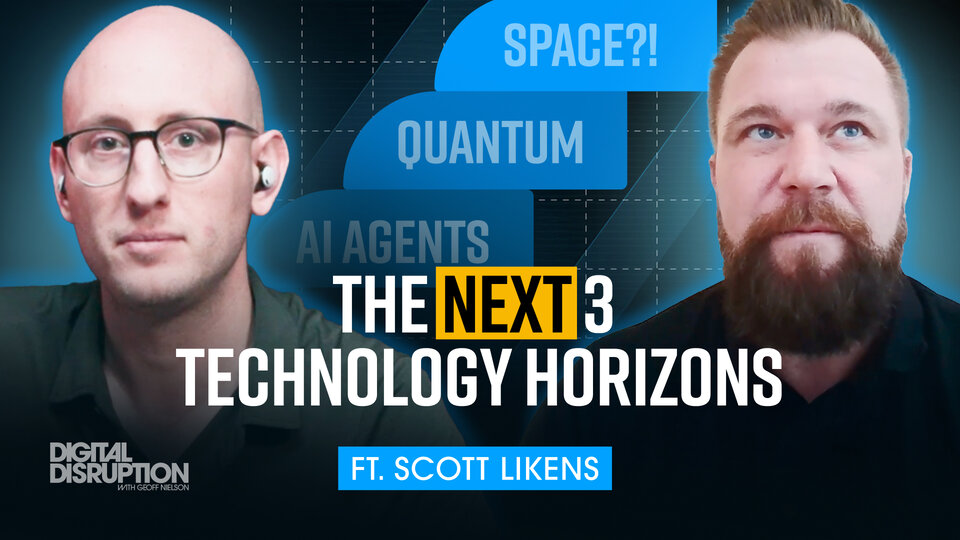



The Next Industrial Revolution Is Already Here
Digital Disruption is where leaders and experts share their insights on using technology to build the organizations of the future. As intelligent technologies reshape our lives and our livelihoods, we speak with the thinkers and the doers who will help us predict and harness this disruption.
Listen


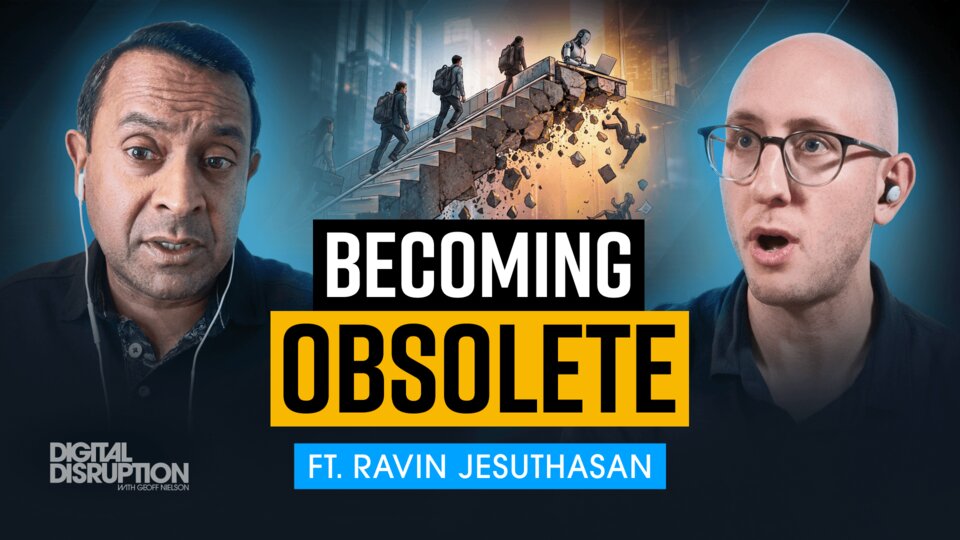
Our Guest Ravin Jesuthasan Discusses
AI Is Breaking the Economics of Work. No One Is Ready
In this episode, futurist and bestselling author Ravin Jesuthasan joins Geoff to discuss generative AI, AI agents, and the impact of automation on jobs.
Listen
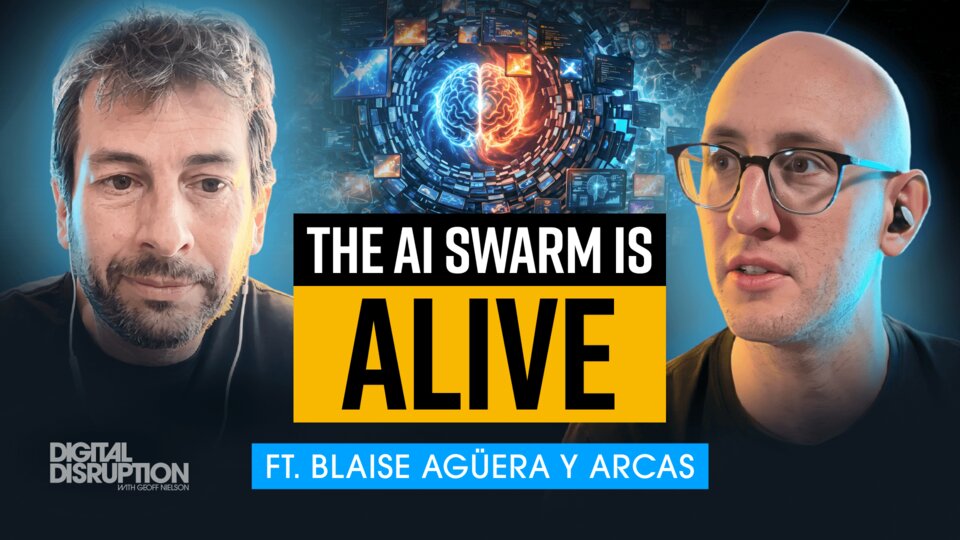
Our Guest Blaise Agüera y Arcas Discusses
Is AI Already Conscious? Google’s Blaise Agüera y Arcas Explains
Blaise Agüera y Arcas joins us on this episode of Digital Disruption to talk about AI consciousness, large language models, and why intelligence is inherently social. He explains how AI agent swarms work together, what recursive self-improvement looks like today, and why he questions the idea that smarter machines will inevitably dominate humanity.
Listen
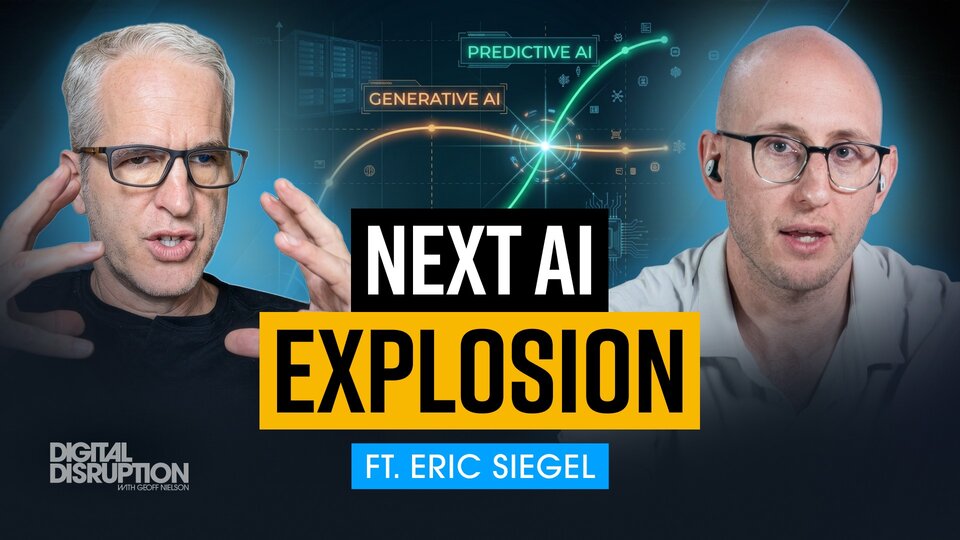
Our Guest Eric Siegel Discusses
The Other AI Revolution: Why Predictive AI Will Overtake Generative AI in 2027
Predictive AI often gets ignored, yet it may hold the real key to business value in the current tech landscape.
Listen
Our Guest Peggy Johnson Discusses
AI Humanoid Robots Have Already Entered the Workforce. Should You Care?
Peggy Johnson, CEO of Agility Robotics, joins us on today's episode to look beyond the fear of robot overlords and ask: How will humans and robots work together in the years ahead?