
Digital Disruption
with Geoff Nielson


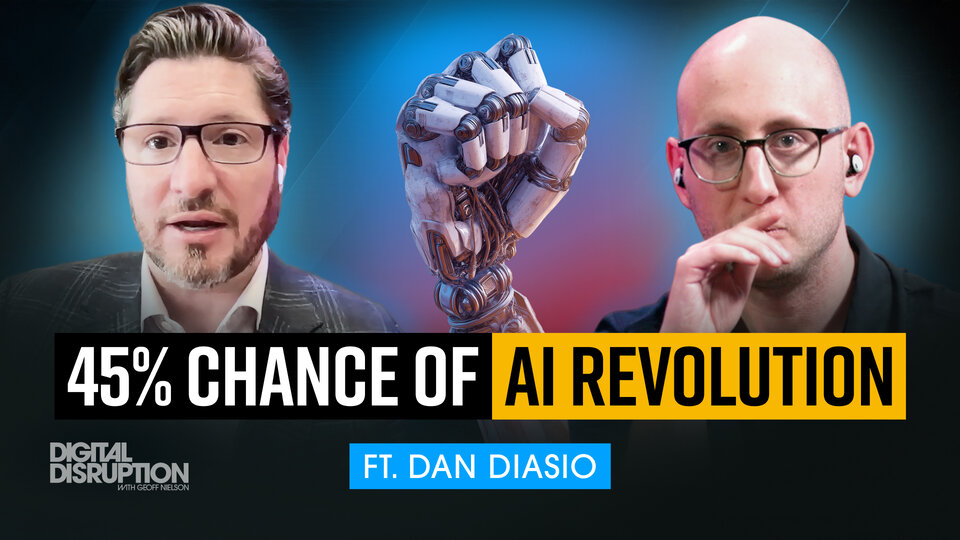
Our Guest Dan Diasio Discusses
AI Revolution or Collapse: EY's AI Leader on 4 Futures of Work in 2030
Why are 88% of businesses using AI but only 5% seeing real transformation?
In this episode, we sit down with Dan Diasio, EY’s global consulting AI leader and CTO, to break down the four possible futures of AI, from constraint to full transformation, and what it takes for organizations to win in an AI-driven world.
Drawing from his experience advising Fortune 50 executives, Dan explains how leaders are navigating uncertainty, why many companies fall into the “sameness trap,” and what separates simple AI adoption from true competitive differentiation.
We also explore the rise of AI agents and end-to-end workflows, why mindset and skillset matter more than tool set, and what the future of jobs looks like in an AI-first world.
If you are thinking about AI strategy, leadership, or how to prepare your organization for what comes next, this episode delivers practical and forward-looking insights.
00;00;02;06 - 00;00;03;13
DAN
we had the right answer,
00;00;03;16 - 00;00;07;05
DAN
and then we asked our AI assistant, and it gave us the wrong answer.
00;00;07;05 - 00;00;09;19
DAN
And then, you know, we changed our answer at the last minute.
00;00;09;22 - 00;00;14;29
DAN
sometimes over relying on these systems can put you down a path of predictability and sameness
00;00;15;04 - 00;00;19;23
DAN
that prevents you from really being able to unlock its full potential.
00;00;19;25 - 00;00;28;04
GEOFF
Hey everyone! I'm super excited to be sitting down with Dan, the CEO. He's Aei's Global Consulting AI leader as well as CTO.
00;00;28;07 - 00;00;42;18
GEOFF
He spends his days in executive boardrooms across the fortune 50. Getting a first hand look at how executives are struggling to react to AI, and helping them use it for more than just churning out slop. What caught my attention about Dan is that he's not predicting the future.
00;00;42;21 - 00;00;59;23
GEOFF
He's predicting for futures and teaching leaders how to be ready for each of them, from transformation to collapse. I want to understand what those futures are, how likely they are, and what the best leaders are doing to get ready for anything. Let's find out.
00;00;59;26 - 00;01;03;04
GEOFF
How was South? By Southwest. I heard you were doing a workshop there.
00;01;03;06 - 00;01;16;09
DAN
Yeah. We ran a workshop, focused on what we called, like, you know, planning, you know, future proofing your strategy. Let's go. It was my first time at South by Southwest. Have you been there before? Jeff?
00;01;16;11 - 00;01;22;15
GEOFF
I haven't I've talked to a handful of people who have presented there, including pretty recently, but I haven't been there myself. I was it.
00;01;22;17 - 00;01;45;26
DAN
Yeah, it was it was, it was different from those conferences. Like, fundamentally, it's a conference, and you get the app and you look and there's 3500 different activities that you can sign up for it in any particular period. And this year there was no convention center. So it was really scattered across the hotels, bars, restaurants. They all they all turned themselves into venues.
00;01;45;29 - 00;02;14;08
DAN
I think it was a really, really great and engaging discussion. I mean, you know, when you have 3500 activity, activities available, we had two hours. And, it was really humbling. It was like a nice line outside the room to be able to get in. We had really engaged, you know, members that were, or participants, I would say everybody from, like, senior vice president at a big fortune 50 company down to like, I started my startup yesterday, and I want to learn more about how I can apply to my business.
00;02;14;08 - 00;02;18;17
DAN
So was, it was a real fun event. I hope we get the opportunity to do it again.
00;02;18;20 - 00;02;22;14
GEOFF
Yeah. That's awesome. Future proofing your strategy.
00;02;22;17 - 00;02;33;15
GEOFF
I'm curious about that. And, you know, I read the I read the byline of your session and it talked about planning for a few different types of futures. What is what's your view of the future? What does that look like to you?
00;02;33;18 - 00;02;53;07
DAN
Yeah, it's really hard to, with any set of confidence, really predict where we're going to be in in 2030. The way that we think about it is that when you have this amount of uncertainty or, you know, a term that's often used as is Vuca, then the best thing to do is to be able to do scenario plants.
00;02;53;09 - 00;03;16;05
DAN
And in this instance, what we do is we created for different scenarios or for different worlds that will be in 2030. And then you can start to plot to see how you can win in each of those scenarios. So on one end of the continuum, we have a scenario where for a variety of reasons, I to of of the future doesn't look that's fundamentally different than the way that it does today.
00;03;16;07 - 00;03;40;18
DAN
You know, you could have had supply chain supply side disruptions. You know, there could be a bubble that pops, or there could be increased regulation due to some very public failures. But the the AI doesn't look that much different fundamentally. And on the other end of the continuum you have, there's this very powerful AI that is really consolidated where power is centralized into a single company or a single country.
00;03;40;20 - 00;04;04;29
DAN
And if you're a company that's really trying to win in this space, you don't really have your own AI. You're renting it and your landlord is in complete control of how you how like, you know what, you pay for that. So it's a it's kind of an interesting, you know, thought experiment because many times if we just spend time listening to the, to the news, you know, we all kind of think that one future is happening.
00;04;05;01 - 00;04;20;08
DAN
You know, it's just, you know, and like in different communities there are different sects. Like there's the there's the group that thinks a little bit more about, you know, the AGI aside, there's some that say it's just going to be a genetic AI. There's some that are saying like, this is all just a little bit of hype.
00;04;20;10 - 00;04;41;21
DAN
So, so plotting the course of how the business really, can win in each of those scenarios is that is the game that we made for all the participants. And and that way it was a lot of fun. They worked in groups of ten. They, they they competed, you know, they had options. They presented back and forth to each other and then, and then we awarded them some prizes.
00;04;41;22 - 00;04;44;05
DAN
So fun way to spend two hours.
00;04;44;07 - 00;04;55;26
GEOFF
Nice. So what did the you know, when you looked at the winning groups or the ones that were most prepared for, you know, multiple futures? What did that look like? Like what were the defining characteristics?
00;04;55;28 - 00;05;06;00
DAN
So, so there were a couple of. Really? I'm glad you asked that question, Jeff. There were a couple of really interesting observations that we had. The first thing I would say is that
00;05;06;01 - 00;05;14;11
DAN
I heard from many people afterwards that we had the right answer, and then we asked our AI assistant, and it gave us the wrong answer.
00;05;14;11 - 00;05;21;11
DAN
And then, you know, we changed our answer at the last minute. So that was that was kind of fascinating because yes, we'll probably spend some time talking about
00;05;21;11 - 00;05;30;29
DAN
sometimes over relying on these systems can put you down a path of predictability and sameness that, that that prevents you from really being able to unlock its full potential.
00;05;31;02 - 00;05;50;10
DAN
The some of the things that we saw from the teams that won, they were they had a couple of creatives in there around the table and, and they were able to articulate and vision a new story of business model innovation, or, you know, a new product that they become over time.
00;05;50;13 - 00;06;10;16
DAN
And, and we're able to explain that in a really succinct and compelling way. So, you know, just one of the reflections I had is like the the real piece of value in this space of differentiation when everybody is normalizing around the same capability, is the creativity that companies are able to, whether in this case their teams are able to unleash.
00;06;10;16 - 00;06;15;19
DAN
So, that would probably be one of the big takeaways that I have from the session.
00;06;15;22 - 00;06;39;06
GEOFF
Nice. So. So I want to come back to this, you know, this notion of differing futures. And it sounds like you're less invested in like, exactly how the future is going to unfold versus making sure that you're prepared, you know, kind of no matter how it unfolds. You mentioned a notion basically of, you know, lesser AI impact, more like today to, you know, greater AI impact.
00;06;39;09 - 00;07;07;07
GEOFF
One of the other lenses we look at this through often with guests is, you know, kind of positive or negative AI impact, I guess, if you can call it that, if it's going to end up societally building more of a utopia versus, you know, more of a threat. And I guess from a workforce perspective, if it's more harmonious with, you know, people plus AI versus AI instead of people, do either of those lenses, you know, lend themselves to this exercise?
00;07;07;07 - 00;07;12;00
GEOFF
Or do people look at some of those macro factors as they scenario, plan?
00;07;12;02 - 00;07;43;16
DAN
Yeah, Jeff. So we have this robust like what we call drivers of change that look into things that are not directly related to the technology, but all can have a contributing factor in the future that we're engaging with. So, so a lot of different perspectives can kind of come in to this, you know, there could be a negative sentiment towards AI because it is caused either, let's say, the next wave of financial or economic crisis or because it has caused mass employment, mass mass unemployment.
00;07;43;18 - 00;08;02;22
DAN
But I would say, like specific to your question and this scenario planning, where we really, kind of shift the difference. So there are a back up a little bit. There are four scenarios that we laid out. There's a constraint scenario. This is this scenario where the AI doesn't look fundamentally that much different than it does today.
00;08;02;22 - 00;08;25;24
DAN
But there's a lot more regulation in place and there's a lot more careful consideration that, it's not whether or not we can do this, it's whether or not we're allowed to do this. So that's the constraint scenario. Then we have a growth scenario. This is kind of the scenario that, that often the headlines that are, that are big across the AI space referred to.
00;08;25;26 - 00;08;47;22
DAN
And in this instance we have agents starting to run end to end workflows and creating a lot of increased productivity. You know, a single person can now accomplish the work of ten, or a team of ten can accomplish the work of 100. But what we think in this scenario that we lay out is that it's more going to be people directing AI to be able to go do work, right.
00;08;47;22 - 00;09;06;13
DAN
So still people are in control. They have their agency. The next scenario that we that we laid out was one that we called a transform scenario. The transform scenario assumes that there is a inflection point which causes the AI and the world that we live in to be kind of a little bit more unrecognizable from where it is now.
00;09;06;14 - 00;09;30;03
DAN
This is more of like the AGI or the the takeoff scenario. And in that scenario, we say that it is more about AI directing us on what to go do, like it is executing the critical path. And and, and we are accomplishing some of the tasks that the systems are not yet able to achieve. And then finally there's a scenario around collapse.
00;09;30;06 - 00;09;52;14
DAN
And collapse is not really, you know, it's not Skynet or Terminator. It's more the scenario that value collapse to a single company or a single country. Because this is a matter in a lot of cases of national security, many companies are really working hard to be able to compete against one another in this space. There's talks about recurring, recursive self-improvement.
00;09;52;17 - 00;10;13;18
DAN
So in this scenario, it's like, how do you protect and you know, treat what is distinctly yours in a, in a place where you are renting the AI capability and where and how do you create value in that space? Now, the interesting thing is, before we do these sessions, we ask people to raise their hand on which they think is most probable.
00;10;13;20 - 00;10;21;19
DAN
And, we've been doing this. We now have like over 2000 votes because we do it at a bunch of different, with a bunch of different audiences. And it
00;10;21;22 - 00;10;32;22
DAN
seems to be more like 10% of people are saying constrain about 35% or saying growth about 50% or about 45% are in
00;10;32;24 - 00;10;42;24
DAN
the transform scenario and about 5% are in the collapse scenario. So, so these things, these things are very influenced by the news that people have.
00;10;42;24 - 00;10;43;01
DAN
But
00;10;43;08 - 00;11;05;07
DAN
for an organization that has to make bets today, sometimes just looking beyond the incremental and thinking about how you compete in a world where everybody has this very powerful AI system, like the question is no longer should we adopt this or how do we adopt this? It's more a question of how do you win relative here competitors.
00;11;05;13 - 00;11;19;14
DAN
And that's the part of the exercise that helps many of the participants start to see that maybe they're not playing to win yet. And there are some other things that they can do to be able to try to to try to go in a different direction.
00;11;19;17 - 00;11;46;29
GEOFF
If you work in IT, Infotech research Group is a name you need to know. No matter what your needs are, Infotech has you covered. IT strategy? Covered. Disaster recovery? Covered. Vendor negotiation? Covered. Infotech supports you with the best practice research and a team of analysts standing by ready to help you tackle your toughest challenges. Check it out at the link below and don't forget to like and subscribe!
00;11;47;02 - 00;11;58;05
GEOFF
want to come back to the how you win in just a second. But just before we do I want to talk about those stats about the future people are envisioning. And I'm fascinated that transform is actually the biggest fraction
00;11;58;07 - 00;11;59;02
DAN
Yeah.
00;11;59;04 - 00;12;08;29
GEOFF
you know even grow. Has that been growing over time? Like have you seen longitudinally over the past year or two that more people are shifting their vote to transform?
00;12;09;01 - 00;12;37;21
DAN
Absolutely. I did this experiment for the first time a little over a year ago, and at that point it was zero were in the constraint 5,050% were in the growth, 35 were in the transform, and 15% were in the collapse scenario. So so there is, a clear shift of those that are kind of moving their votes in a way, some towards the the constraint scenario.
00;12;37;23 - 00;12;53;11
DAN
And that is mostly due to those that are paying attention to some of the economics beyond beyond, you know, around some of the data, data center buildout and, and a lot more of those are shifting their, their votes towards the transform scenario.
00;12;53;14 - 00;13;12;27
GEOFF
That's it's it's interesting to see that that shift. I and you know to your point how news narratives are kind of shaping that and you know I don't want to diminish the impact of the technology itself and how it seems to be, you know, improving at such an impressive rate. But I did want to talk about winning, which you just mentioned.
00;13;12;29 - 00;13;36;20
GEOFF
And what you had said is that winning and the teams that you saw as best positioned to win were the ones that had novel business models. Right? Like that. They were building new business models with AI or in the face of AI. And that's really interesting to me because the other thing that you mentioned that it's not is workflows, right?
00;13;36;20 - 00;13;56;19
GEOFF
It's not just bringing in AI to a gen to Fi, what you're doing today. It's answering some more, as you said, more creative, more foundational question. Can you, maybe elaborate a little bit on the differences there and why you see the business model pieces being so fundamental?
00;13;56;22 - 00;14;21;26
DAN
Yeah. So, Let me let me back up a little bit. I'm going to answer your question, but let me back up a little bit with just an observation that we've, we've had, you know, about a year ago or a year and a half ago, we stopped talking about AI and PowerPoints, and we started talking about AI by getting the opportunity to put your hands on the keyboard and create more immersive experience.
00;14;21;28 - 00;14;49;00
DAN
So we call these these masterclasses. And these masterclasses were essentially a way for executives to be able to get their hands on the keyboard. And we created like an impossible task once it was to create a shoe and to market and advertise the shoe. And they all, you know, the executives and, you know, it's either a board or the C-suite would sit around the table and start to go create a product, create a brand market, and figure out how they were going to roll it out.
00;14;49;04 - 00;15;14;10
DAN
In some cases, we did it around snack products. And, I got to say like it was a really powerful, opportunity and a really powerful exercise for people to put their hands on the keyboard. Sometimes it still surprises me like the number of, of senior leaders that have not yet gone in and started by coding, for instance, just to be able to try it out and get a sense of where the state of the capability is today.
00;15;14;13 - 00;15;38;23
DAN
But after we did that exercise countless amounts of times, like for in the in the snack example, we looked at the results. And while there was incredible passion beyond the snacks that the teams were creating in the room and you'd hear some giggling, I once had, an executive who had a Greek background stand up in front of his leadership team and do a jingle in Greek about why his product was going to be the best.
00;15;38;25 - 00;16;06;06
DAN
But observing each of the products on a long day to know basis, like after having done these sessions, many, many times, you start to see that a lot of these products look the same. And it's something that we call the sameness trap. Like in this instance, like all the products had matcha in them or they had some like sweetener that was, monk fruit, as a way of being able to, you know, a low calorie way of being able to introduce some sweetness into the snack.
00;16;06;11 - 00;16;15;00
DAN
But they were all the same hues of brown and green, etc.. So. So we name that we started. We call that a state, a sameness trap. We say that like, this is where
00;16;15;05 - 00;16;36;18
DAN
you need to break through the same this trap. If you want to differentiate yourself from other companies, because everybody is using the same models in a in a lot of ways, just using AI Commoditize the output, it takes the creativity and the ideation, the origination to be able to go build something new.
00;16;36;21 - 00;16;57;22
DAN
That's what we saw in those winning teams. Like those winning teams were thinking a lot more before they were just deferring to the AI system in this instance, and they were coming up with creative ideas of how they might be able to not just do what they do today, but kind of reinvent a new a new proposition or a new product.
00;16;57;25 - 00;17;21;05
DAN
And this is starting to bear itself out in some of the statistics that we look at, Jeff. So we run a study every six months that we call the AI Pulse Survey, and essentially goes out to 500 executives and asks them a series of questions about their investments, whether they're seeing return on investment, what are some of their individual like their big bets and priorities.
00;17;21;09 - 00;17;39;14
DAN
And then we ask some topical questions in every round just to be able to to kind of get a flavor of West Contemporary at that particular moment. And one of the questions we've asked is where they've seen the most amount of benefit over the last, you know, you know, at that particular time. Now we're on our fourth iteration of this, so we have about two years worth of data.
00;17;39;16 - 00;18;04;26
DAN
And for the first 18 months, we saw an increasing tick up of companies that had invested over $10 million in seeing their benefit come from employee productivity and operational efficiency. So kind of gets to that question. I know you've been discussing in the podcast of like, is this something that is really, just looking at eating hours of, you know, or going after the jobs that people do today?
00;18;04;28 - 00;18;33;01
DAN
Interestingly enough, this latest iteration, we saw that a just in a pretty, you know, in a pretty material way, the the employee productivity and operational efficiency had gone down as an area where companies were seeing their benefits and instead competitive differentiation and new product introduction, where the areas that had grown the most like, I think, competitive differentiation grew ten points in those six months.
00;18;33;03 - 00;18;34;26
DAN
So I think
00;18;34;26 - 00;18;57;10
DAN
I think we're starting to reach an inflection point now where many organizations are in, instead of looking at how they can apply AI inside their organization, are now starting to ask the question, do I have the opportunity to do today something that was yesterday impossible? Like, can I go tackle something entirely new? And that was what we saw in the winning answers.
00;18;57;10 - 00;19;04;14
DAN
And I think we're starting to see companies shift their direction of travel in that, in that, in that, in that way.
00;19;04;17 - 00;19;21;25
GEOFF
That's that's really exciting to hear. And for me, in some ways, that's like the final frontier of AI, right? It's not just like it's not just automating what you're doing. It's, you know, having these new frontiers and being able to do something. I think in your words, that that was recently impossible.
00;19;21;27 - 00;19;29;25
GEOFF
intimated that there's a right way to do this and a wrong way to do this, and there's a place that I can help, and there's a place that I cannot help.
00;19;29;25 - 00;19;31;05
GEOFF
Right? That this sameness trap.
00;19;31;10 - 00;19;46;24
GEOFF
Can you give me a little bit more of a flavor of, like, the playbook of, you know, as an executive, what do you really need to get right in this space? If AI is going to help you differentiate, differentiate yourself competitively versus, you know, the the initiative is going to fall flat on its face.
00;19;46;26 - 00;20;13;22
DAN
Yeah. Well, I think, you know, first I would say that AI is a tool that really lifts the floor. And what we're seeing is that it's people and their creative thinking that lift the ceiling. Just starting there I think is a very helpful framing. So companies can maintain their differentiation and can maintain what has helped them when up until that point of time, as they move forward.
00;20;13;24 - 00;20;54;06
DAN
But, you know, I'd say that, you know, so you can you can, you know, ultimately as, as you've talked about on the podcast before, the goal is to really transform and reinvent or reimagine a new way of working. And there's two ways to be able to do that. You know, like, it's kind of like you're building a plane while you're flying it at the same time, you need to be able to both go broad across the organization to empower and lift everybody up across the organization and pick a couple of areas where it makes sense to go deep and go through this reinvention or reimagination process, to be able to go build
00;20;54;06 - 00;21;31;06
DAN
something entirely new. Now, recipes to success on those two different axes. If we're focused on the going broad right now, statistically, another another statistic that we have is that 88% of people are using AI as part of their work, like we don't have an adoption challenge anymore, you know, but what we do have is only 5% of those people have reported that they are using AI to do something different than what they've done in the past, so it's like 88% are using it, 5% are using it in a transformative way.
00;21;31;06 - 00;21;55;04
DAN
That gap, that 83% gap is the opportunity that that we now have ahead of us, that we need to close and it's not gonna close itself. So it takes specific training and development culture and mindset to be able to teach people how to do more than just adopt these tools. And, you know, in why we say that this involves looking at the sequence.
00;21;55;06 - 00;22;23;28
DAN
So we need to do our critical thinking and context gathering first before we engage with the AI. It's it's kind of, just a back up. It's human AI and then human. And, you know, it's a lot of critical thinking, context building, strategic planning. Then we engage in AI and the execution of the work, and then finally we have people come back and take a look at the the results start to really challenge the results that we see.
00;22;23;28 - 00;22;40;07
DAN
Make sure there's no biases in the answers and then move forward. That happens in the way they engage in their desktop productivity tools. That also happens in the way that they work and their vibe coding tools to be able to go build new applications, to be able to power the business, there needs to be a lot of critical thinking up front.
00;22;40;10 - 00;23;06;17
DAN
And often right now, the training that enterprises are putting out are more tool focused training on how to use these particular tools. So we say at the UI like there's it takes three sets, takes the right the right mindset, the right skill set and the right toolset. And unfortunately, most of the money today is going towards the toolset that actually needs to flip, where the money needs to be going more towards the mindset and the skill set.
00;23;06;17 - 00;23;27;09
DAN
While the tool set is in place in a lot of organizations. So that's kind of a that's kind of a playbook for how organizations can teach their people not just to use AI, but to use AI in a way to be able to create or drive something that was previously unattainable or impossible at the point of time.
00;23;27;11 - 00;23;47;02
GEOFF
It makes it makes complete sense to me. And one of the questions that I've been grappling with, and I heard it come out there, a couple of different ways, is to what degree success in, you know, getting the most out of, you know, these new business models and new tools has to be top down versus can be bottom up.
00;23;47;05 - 00;24;11;13
GEOFF
And the reason I ask that is because it sounds like on that ending note there, Dan, that there was an implication that if you train people not just on tool set, but on mindset, that maybe more of this can be bottom up and you can yield some of those results. Do you buy that or do you think this really needs to be driven as a top down exercise?
00;24;11;16 - 00;24;45;18
DAN
You know, I know this is still something that's being sorted, at the moment. And many organizations are on this journey. I still think we are in the early innings of a multi-year business transformation, and it's a lot less about the technology. It's more about changing, changing, you know, mindsets, behaviors and institutional ways of working. But I, I kind of, you know, with respect to the going broad and going deep, I do think that needs to be led top down inside the organization.
00;24;45;20 - 00;25;08;25
DAN
Because when you start to do things in bigger and bolder ways, you often tackle things that were not clearly in the lines of the existing organizational chart. You know, like the organization or chart has been built around, you know, old ways of working. And when you start to apply AI, you start to stripe across these different, these different org charts.
00;25;08;28 - 00;25;35;25
DAN
And in doing so, then you start to need support from the top to be able to really push agenda broader. However, that is not to say that, it's that's all that it takes. I mean, I, you know, one of the other things that I think is, is, you know, an observation that we have in working with many of our clients is sometimes the deepest expertise that you have actually blinds you from what the new process can be, something, you know, I we've called these things trap.
00;25;35;25 - 00;26;04;04
DAN
So we call that the visibility trap that like, you know, this process so particularly well that you can't imagine a new way of working it, it kind of blinds you and locks you up. So the so the antidote to that actually has to do a lot with the bottoms up. You know, sometimes we find that the best way to be able to go reinvent the work is not by having the domain experts take the lead and have them be supported by AI people.
00;26;04;06 - 00;26;25;28
DAN
And it's also not by having AI people that know nothing about the process lead and the domain team support it, but it's having equal footing in the design between those two that you bring your domain experts together with people that know nothing about the process but are more native in the way they think about AI. And Jeff, many times this is people that have come right out of school.
00;26;26;01 - 00;26;45;19
DAN
Yeah, it's kind of this interesting phenomenon where I know many, many students that are graduating soon are looking at the prospects of a harder job market. Sometimes those people that have the ability to say, why do we do it this old way? Like, you know, if this does not make sense anymore. The way that that innovation can happen.
00;26;45;19 - 00;27;05;03
DAN
Bottoms up. So, so while I do think it needs to be, the conditions for change need to be set top down, it does not mean that the initiatives need to be led top down. You can start to leverage that talent that exists that is much more fluent. And working with these tools to be able to challenge the status quo.
00;27;05;06 - 00;27;22;19
GEOFF
I haven't heard it articulated like that before. And I really like that sort of hybrid approach where you can have people within the organization with either domain expertise or more as generalists and don't necessarily have the baggage of the way we've always done things that, that that makes a lot of sense to me.
00;27;22;21 - 00;27;46;05
DAN
I mean, because if you if you if you have a problem, if you're a leader and you have a problem that you have to go solve, the normal instinct is to put the person that knows the most about the problem. To go solve it like that is totally normal. But, but sometimes that can just lead you down the path that you solve a tiny part of the problem, but you don't really challenge the way the, you know, the, the, the entire process from an end to end perspective.
00;27;46;08 - 00;27;54;21
GEOFF
While and you have a consulting background, so I'm sure you can appreciate that the more you do that, the more likely you are to end up at a target state that looks an awful lot like your current state, right?
00;27;54;21 - 00;28;22;08
DAN
Yeah, yeah, yeah. And a lot of ways, when you have to reinvent, you almost need to forget the current state. You know, we say like break down the jobs to be done or the key decisions that need to be made to be able to go run this particular function. You know, sometimes like we refer to it as zero based design or we have, you know, a kind of a reinvention methodology and that helps you start to really unencumbered yourself from from the institutional legacy.
00;28;22;10 - 00;28;41;29
GEOFF
So I'm curious in when it comes to AI and it comes to, you know, business model transformation or operating model transformation. Historically with these types of transformations it seems like, you know there's some degree of buy in from, you know, everybody that you know, yes, it's going to look different, but we'll all kind of chip in and make this work.
00;28;41;29 - 00;29;12;04
GEOFF
And there is a decent, you know, as I'm sure you've seen the stats, there is a a decent failure rate. I'm curious to what degree you're finding with AI that AI's reputation and some of the, you know, stories you hear in the news about AI, you know, just taking jobs or making people obsolete, that some of this, you know, fear and uncertainty around AI is preventing cooperation at an organizational level because people are so concerned that AI is going to take their jobs.
00;29;12;08 - 00;29;17;22
GEOFF
Are you seeing that play out in practice, or is that more of kind of a headline problem?
00;29;17;24 - 00;29;28;24
DAN
I would say that there's always resistance to new things. You know, people as, as, you know, on a continuum, about ten people like change
00;29;28;27 - 00;29;40;08
DAN
you know, on a continuum of 100 people, ten people like change. And about 90 people really do not enjoy having you know, the proverbial carpet, the carpet pulled out from underneath them on a regular basis.
00;29;40;08 - 00;30;03;06
DAN
So I think this is something that is, that is actually quite normal, and expected. I think that can be very amplified, though, by the way, that AI is taken inside the organization. So if we if we start looking to apply AI by by taking the process as it exists today and asking the question like, where can I go do some of this work,
00;30;03;09 - 00;30;14;19
DAN
you know, we're starting this process of, of an employee feeling like they are facing death by a thousand papercuts, you know, because a, a job is something that is artificially made.
00;30;14;21 - 00;30;50;08
DAN
It's a collection of tasks that people do. We bundle those tasks together, and we call it a job. Most cases, AI is not automating the job. AI is automating a bunch of tasks inside the job. And eventually, if you keep going, then you start to feel like there's there's really nothing left. So, so I do see some, some resistance if you take that approach because you're applying AI to a new way of working, but you're not showing where the employees come out benefiting this on the other end.
00;30;50;10 - 00;31;13;25
DAN
However, there is a there are some different ways to be able to look at this. You know, if you take that reinvention or the, what I was calling earlier, I don't want to call it reinvention. Jeff. So if we take that reimagination methodology that we had referred to earlier, then you can start to cast where the jobs, the new jobs are going to exist inside the organization.
00;31;13;27 - 00;31;29;10
DAN
So instead of saying, okay, well, you know, we're going to automate 20% of your work this week and the next week we're going to start looking at where to go next. Instead, we start transitioning people from being a domain expert that is responsible for conducting this work into a job
00;31;29;10 - 00;31;40;17
DAN
of a knowledge engineer, where they are responsible for collecting the right intelligence and the right context for these systems to be able to work in an optimal way.
00;31;40;19 - 00;32;16;26
DAN
And we're going to push people more or allow people to go more into some of these creative spaces where they get to sit atop and start to orchestrate these agents on their behalf. That story of what happens next is often missing when you start to run into the organizational resistance, because you're just looking for where I can solve a problem, and you're not showing where and how the employees are able to unlock new possibilities on the outside and where they might land into a job that is absolutely going to be required when we fully implement AI inside the organization.
00;32;17;02 - 00;32;41;04
DAN
So those are just some ways that we've seen organizations be able to get through navigating this. But, you know, this is pretty common. Like anytime you go through a big period of technological revolution, there's always a lot of concern about disruption. And then usually, in the past, if the past is any, indication of the future, then usually you end up reinventing a whole bunch of new jobs that come on the back end of this.
00;32;41;07 - 00;33;01;12
GEOFF
I'm curious to that point, as you think about those new jobs, what they are and what the future of work looks like. There was a conversation earlier about, you know, kind of mindset skill set, tool set in that order. Is that going to hold? What are the the skills of the future and what's most important for people to be good at?
00;33;01;17 - 00;33;07;29
GEOFF
Or you know what? What's going to help them bring the most value to the the jobs of tomorrow?
00;33;08;01 - 00;33;37;17
DAN
Yeah. Well, as we've kind of had referred to earlier, if we work with AI but don't give it the appropriate context, the appropriate amount of direction and creativity, if we don't start to give it the counterfactuals to be able to, make sure that it is operating and giving, giving really useful, responses and content, then, then we're going to go down the path of statistical sameness.
00;33;37;19 - 00;34;03;20
DAN
So we see that there are a couple of really important skills for the future. So there's a skill around critical thinking, which is just, you know, avoiding a lot of these traps where, where, where you can fall victim to an AI that is behaving either in a sycophantic way or is, really aligning you down a path of answers that would probably be applicable for a whole breadth of questions.
00;34;03;22 - 00;34;24;16
DAN
There's a skill around, around deep domain expertise, and this is where you can provide the appropriate instructions for the systems. There's a skill around the management and delegation. And this is something that's really important in the future when we hire people into, into why we are now going to start training them more on managerial
00;34;24;16 - 00;34;32;09
DAN
tasks like the corporate ladder used to be that you worked, you got experience, you did your time, and then if you were lucky, you got a promotion.
00;34;32;11 - 00;34;50;27
DAN
And then a lot of instances. Now we're expecting people to manage on day one. They're just going to be managing a bunch of agents that, you know, our clumsy but very powerful and can go do a lot of the work that they would have traditionally done in the past. And I'd like to come back to a point around like what that means for the apprenticeship model.
00;34;50;27 - 00;35;12;00
DAN
But we can do that a little bit later. I want to finish up the skills here. So critical thinking, the creativity, the, the the domain expertise, the managerial skills and then big picture thinking is actually really important. Like sometimes people refer to this as systems thinking, being able to kind of see the big picture and zoom out.
00;35;12;03 - 00;35;32;07
DAN
These are incredibly important skills that workers will have in the future, because they will move from doing the work to orchestrating a whole bunch of AI doing the work for them. And you know, you're only in that case going to be as good as the idea and direction that you gave at the outset.
00;35;32;10 - 00;36;02;16
GEOFF
Can we talk a little bit about the role of it or enterprise technology as a function within the organization with success here, with bringing these tools in, with training? You know, the the business function staff on this. What does this look like? And I guess the backdrop of this question is there's an awful lot of obituaries being written right now for business functions for industries.
00;36;02;18 - 00;36;28;08
GEOFF
That I just on. None of these matter anymore. And one of the trends I've personally seen around AI is that this rush to business adoption, where it's almost happening around any sort of corporate it. And I'm curious what role you see a core technology group is playing. You know, how important it is and what the risks are of not having that at all.
00;36;28;10 - 00;36;40;13
DAN
Yeah. Great question. Jeff. Yeah. AI is an incredibly democratizing capability that since everybody has it on their phones now, everybody brings it into work.
00;36;40;15 - 00;37;21;21
DAN
As I mentioned in the in The Recipe for success, there's a combination of going broad and going deep and in the growing and the going broad aspect there. The real role of technology is to be able to empower the workers with as close to the frontier capability as they can, but with the appropriate guardrails and sandbox to be able to do this in a way that respects information security, privacy, intellectual property, you know, all the other ethics and the the corporate usage standards that exist.
00;37;21;24 - 00;37;53;19
DAN
So that is much more of an enablement, you know, maybe you might argue like a traditional technology function where we are providing a capability and scaling that across the enterprise. But when you move the the focus to going deep in a particular space, the role of the technology department is going to become more of the execution of the operating system for the future, because the real hard problems to solve are two.
00;37;53;22 - 00;38;28;00
DAN
It's how do we orchestrate these workforce of agents to be able to go do the work with the appropriate security and access controls, and closing off this new, larger surface area for, for cyber risk and for a bunch of, a bunch of, you know, infiltrations, let's say insider risks. So that's, that's one is that orchestration layer is essentially the new operating system for many of these companies.
00;38;28;02 - 00;38;58;13
DAN
And the second that really help you get the most value out of these agent run operations are maintaining the kind of being the library of the corporate memory for the company, because context is what powers these agents to be able to do work that works for you, Jeff, or that works for me. And the same agent can work in a completely different way for you than it will with me if we configure it the right way with the right appropriate context.
00;38;58;16 - 00;39;21;11
DAN
But most technologists and most technology does not address this corporate memory in an agent world. So this is going to be an area where I would expect many of the technology, departments inside of traditional companies going to need to move towards and figure out how they do that, while also maintaining and managing the legacy landscape, the legacy software landscape that they have.
00;39;21;13 - 00;39;49;17
DAN
I mean, many of the conversations that we're having with technology leaders now is, what do I do with my SAS products or my big my, my big, platforms that I've used and, and have been the center of my company for the last couple of years. And and how do they coexist with this world of agents? So, so I think they're going to have a very important role in defining the operating system for the future of the company.
00;39;49;20 - 00;40;05;27
DAN
And in that respect, it's kind of a two speed job enable everybody with a common with a, with a capability as close to the frontier as you can, and then in parallel, you know, start to define what that what that operating runtime system is in the future.
00;40;05;29 - 00;40;27;20
GEOFF
I want to push you a little bit more on the, you know, the question that you were asking broadly about how these systems do coexist when you've got your, you know, enterprise CRM or you know, ERP system and, you know, maybe you've been working on some sort of legacy migration for the past nine years or something. But, again, one of the obituaries we hear about these days is like the SAS industry in general.
00;40;27;20 - 00;40;47;13
GEOFF
And, you know, who needs SAS when everybody's, you know, coding their own apps. And Claude, you know, in their spare time off the side of their desk. What does that interplay look like? Do you see the future as as totally moving off of these platforms? Do you see an integration layer? Is it, you know, two completely different speeds and lanes and functions.
00;40;47;13 - 00;40;51;28
GEOFF
What what does success look like there?
00;40;52;00 - 00;41;16;26
DAN
Yeah. Well, for the last 20 years, many companies have been told that custom development is too expensive. So therefore, the answer is to adopt the standard and fit your company into the standard that exists. Because that is going to be the most efficient to run. That will be the safest and most predictable. And this is the standard, and that has worked for a lot of companies.
00;41;16;26 - 00;41;41;24
DAN
But what has happened is that standard has started to sprawl out from what its original core is. And what you have is, whereas it's sprawl is out. You have to spend a lot of time maintaining the custom aspects that you've put around that particular standard. So, so what we what we often refer to inside of UI is we say there's been this build up of a sprawling core and there's a starved edge.
00;41;41;26 - 00;42;05;04
DAN
Like we we've all probably we all know of companies that have billion dollar ERP programs. But when you engage with their sales force, like the, the systems of, the systems of their, customer engagement, and I don't mean the, the product sales force when when you engage with their sales teams or when they engage with their customers, everything is done in Excel, you know?
00;42;05;11 - 00;42;28;13
DAN
So, so like in a lot of ways, there's been a build up at the center and neglect at the core. And for the for the next couple of years, I would expect that to basically with, with these new tools to be able to address this starved core with the kind of new capability that will allow them to be able to be, a center for differentiation in the future.
00;42;28;16 - 00;42;30;15
DAN
So I don't think these things collide
00;42;30;15 - 00;42;47;23
DAN
you know, anybody that's saying there's going to be the obituary for the CRM or the ERP at these large companies, you know, in large fortune 500 companies. I think we're still a little early to start to draw some of those conclusions, because it's not just the application.
00;42;47;23 - 00;43;14;18
DAN
Maybe you don't like to use the application, but it's also all the authorization objects. And like all the the privacy controls that are built into those systems. But you can build the, you know, custom software to be able to address the parts of the business that have not gotten any capital that have been starved for investment over the course of the last decade, and start to see a lot of real build out in those spaces.
00;43;14;21 - 00;43;53;00
GEOFF
You know that that picture you paint is really interesting. And I like the metaphor of kind of the core and the edge there. And if I'm understanding correctly, Dan, you know, one of the things that I'm concerned about is when you look at, you know, a particular sales force or team that needs to use these tools and is not, you know, it's getting starved for the tech that they need in this world where there's a commoditization and consumerization of AI tools, maybe they will build their own apps and maybe they will be able to, you know, have all these these frontier tools that don't necessarily play nice with the corporate core.
00;43;53;02 - 00;44;10;12
GEOFF
But your point is, well, how is that? How is that worse than just using their own Excel anyway and that it's a problem. But it's just kind of a a continuation of an existing problem versus, you know, an entirely net new problem. Is that fair? Or would you, you know, conceptualize that a bit differently?
00;44;10;14 - 00;44;55;13
DAN
Yeah, I think I think, the general thesis is very fair, Jeff, but just something I'd like to, to clarify is, you know, I wouldn't expect that sales reps would start to build their own applications because they have access to these tools. I would expect that you'd have a couple of sales, of sales members working with a couple of AI powered software engineers, like people that really know how software can be built to design a system that is able to solve a problem that exists in the Salesforce and stand that up in weeks where otherwise it would have taken months or years to be able to make happen.
00;44;55;15 - 00;45;23;20
DAN
I, you know, like I think the, the build your own, the build your own application is really interesting for prototyping and for ideation. But, but I think that a lot of the value that happens inside of these applications is the concentration of insights, the concentration of proprietary data, the network effect of by people using this application, like the more I use the application.
00;45;23;25 - 00;45;58;04
DAN
Jeff, you and I work at the same company, the more you benefit from that. Those start to really compound like knowledge and data start to compound over time when there are, when there are applications and products in place. So I wouldn't expect it to be a thousand flowers of, of products across the organization, maybe, a bunch of different, proof of concepts or prototypes that would exist and that all to feed into the opportunity for a company to now invest into a space that previously they just never had the capital to go to.
00;45;58;06 - 00;46;17;25
GEOFF
Fred. And that's you know, I'm not I'm not going to drain that one because it's quite aligned with my thinking as well. I mean that that's exactly my view that great for pilots for proof of concepts. But as soon as something is, you know, has proven itself and you want to do it at scale, then now it's time to actually figure out how you integrate it into the core.
00;46;17;27 - 00;46;26;06
DAN
Yeah. And that is being AI powered as well. Like in many instances when we use some of these vibe coding tools, we use them for the purposes of being able to derive,
00;46;26;13 - 00;46;37;01
DAN
working prototype. And, you know, in the future, I anticipate that we'll be able to treat prototypes in a similar way that marketers think about different pieces of marketing content.
00;46;37;02 - 00;47;00;20
DAN
We can do AB tests on what is the most effective to work. But then you have to put them through an enterprise standard. You know, this is, while this is an incredibly, powerful capability, it also expands the service area pretty rapidly of where, where there are the, opportunities for risks and intrusions. So, so then you consolidate, you build a standard that can be powered by AI as well.
00;47;00;21 - 00;47;18;24
DAN
So that can still it doesn't mean that we got a prototype in a day. And now we need to go do the project in 12 months. That can still happen very, you know, very fast. But I think that is a job that will likely be done by people that are professionally trained in that, in that space, as opposed to the, the people that are building out the prototype.
00;47;18;26 - 00;47;37;20
GEOFF
It makes sense. So, so just on the topic of people who are, you know, leaving it to the professionals, let's say I wanted to pivot to a slightly different area and you know, Dan, I'll preface this one by saying, I know I'm not asking a neutral party here, but one of the obituaries you hear about from time to time is the obituary of the consulting industry.
00;47;37;20 - 00;48;09;02
GEOFF
And oh, why do you need consultants when you can just ask AI what to do? And so I'm here and I'm being, you know, semi facetious with that even though, you know, there's lots of people out there who I'm sure you know, are completely convinced that it's a, that it's a dead industry. How does consulting reinvent itself as an industry and as, you know, a value driver in the age of AI and, you know, what areas of consulting, you know, if any, do you see as being under threat and maybe, you know, need to die to make way for this?
00;48;09;02 - 00;48;10;28
GEOFF
You know, that this new age.
00;48;11;00 - 00;48;19;29
DAN
Yeah. Well, thank you for asking the question, Jeff. I would say that,
00;48;20;01 - 00;48;51;09
DAN
A little bit earlier in the conversation, we had talked about the fact that in order to get more out of AI, you need a couple of core skills. You need to be able to do the critical thinking, the creativity, the management and delegation, the systems thinking, and have deep domain expertise. And when you can put those together, you can start to create things that are differentiated and things that the AI would have intuitively known to be able to go build.
00;48;51;11 - 00;49;15;12
DAN
When you look at those five skills, those are the skills of most of the consultants that exist today. I think those are core competencies for consultants. So so while I think in a lot of instances, the work, the assembly that people in the consulting industry do will change, like we're not going to spend weeks working on PowerPoints anymore.
00;49;15;14 - 00;49;28;14
DAN
It just allows us to be able to close the loop in terms of the speed in which we can work with our clients, to be able to create new areas of opportunity and growth for them in a lot of ways,
00;49;28;14 - 00;49;34;16
DAN
many of the traditional projects will have changed, and some of them will will go away.
00;49;34;16 - 00;49;56;29
DAN
And some of them, I think some of the ways that we do our work will just be significantly enhanced. But I think it will open up a new opportunity space for us to be able to help shift focus towards growth and growth. Without the budgetary constraints that many of our clients have had to be able to go examine and evaluate possibilities of ideas.
00;49;57;02 - 00;50;13;21
DAN
So. So for that reason, I mean, we hire extremely talented people, that have a lot of the core skills and requisites that that are, are good for getting the most out of AI. And, and for that reason, I wouldn't I wouldn't write, you know, write the book on the death of consulting. Yet.
00;50;13;23 - 00;50;33;00
GEOFF
It makes sense. And just as you were, you know, explaining kind of your view on that. I realized that I didn't ask something earlier that has been kind of, you know, piquing my interest, which is when you describe the four futures and people voting on, you know, which future they expect to see. Well, what's your vote on that?
00;50;33;07 - 00;50;55;09
DAN
Oh, this is this is like, different because in a room I can just, you know, I can just say it comfortably. You know, I've spent so much time. Jeff, I'm going to try to not give you the non-answer, but, like, I can I can convince myself of any of these things happening. And that's why that's why they're real and plausible.
00;50;55;11 - 00;50;59;29
DAN
It it shifts. It shifts, you know, quick, quite quickly.
00;51;00;04 - 00;51;06;01
DAN
you see, like, all the, you know, the gigawatt data centers that are, you know, are projected into the future.
00;51;06;09 - 00;51;29;17
DAN
And I wanted to really get an appreciation of where the bottlenecks exist, because there have to be bottlenecks, like, we can't manufacture that many new chips, at the kind of speed, that people are referring to. So I went deep into learning about how the ASML machines work, the EUV machines, which is like it literally feels like science fiction in reality at this point in time.
00;51;29;20 - 00;51;48;13
DAN
And if you like to, we can we can geek out on that a little bit. But that just helped me kind of see that there are some constraints that we have, you know, coming down the path. You know, that, in a lot of ways,
00;51;48;15 - 00;52;15;24
DAN
There's, there's a lot being built up that we hope, you know, we'll kind of see its way through and there's new things that are affecting the world now, you know, wars, etc., that can put a lot of pressure on inflation and those sorts of things. So. So I guess I'm basically giving you the preface of why I probably lean a little bit more constraint right now than, than any of the other four features, but that, that kind of changes.
00;52;15;24 - 00;52;35;24
DAN
And I think part of the whole purpose is to, is to start to evaluate your priors and see how things change on a continuous basis. But since you asked me the question, Jeff, now I have to turn to turn the mic over to you. What what what would you say based on the little that I've given you about those futures, what what would you lean towards?
00;52;35;26 - 00;52;46;04
GEOFF
Well, just just before I answer that question, I was going to say I find it very interesting that you lean towards constraint, given that that's the area that seems to be, you know, less popular.
00;52;46;07 - 00;52;46;18
DAN
Yeah.
00;52;46;21 - 00;53;04;08
GEOFF
I remember your numbers correctly, I think it was like the third place answer. Yeah. I'm I'm tempted to answer somewhere between growth and constraint, like, like and I know I'm, I'm like deliberately picking somewhere right in the middle.
00;53;04;11 - 00;53;04;20
GEOFF
But
00;53;04;22 - 00;53;28;21
GEOFF
see what's going on with constraints of this technology. I see the unevenness of the adoption, and it's difficult for me to jump right into the transform future, at least immediately. You know, if we're talking about 2040 or beyond, you know, I can I can get there a little bit more easily. But in the next few years, yeah, I can see that happening very quickly.
00;53;28;21 - 00;53;49;22
GEOFF
And it's, it's interesting you bring up the AI infrastructure piece, because one of the things that's been catching my attention lately is the with this sort of gold rush in AI and a lot of the technologies that you need to to build this, whether it's, you know, rare earth minerals or whether it's, you know, Ram, how it's changing the economics of adjacent industries.
00;53;49;25 - 00;54;07;14
GEOFF
Right. And how that's leading to sort of downstream constraints. And, you know, none of this, none of this is just all, you know, net positive, you know, zero impact on anything else and how these trade offs are going to, you know, in some ways destabilize, you know, the economic model of today.
00;54;07;16 - 00;54;17;19
DAN
Yeah, absolutely I would, I since you chose two answers, I would say I'm right. Between those two of constraint and growth, I picked one. I follow the instructions, but
00;54;17;25 - 00;54;19;09
GEOFF
Thank you.
00;54;19;12 - 00;54;27;11
DAN
but, but it's right there on the border for those reasons. Like, I think the technology is going to continue to, to take off. And kind of going to continue to grow.
00;54;27;11 - 00;54;54;05
DAN
I'm not I'm not suspecting that the like, the AI that we see is as good as it is today. I just wonder, you know, can we, can we keep the token price is, you know, as what it is with, with demand, you know, continuing to increase at what it does, and with complexities, you know, you kind of referred to it, but almost all the semiconductors in the world are, you know, are made in a single country that's, you know, located on a fault line and is an area of geopolitical tension.
00;54;54;05 - 00;55;16;26
DAN
So, you know, there's a lot of, it's it's amazing. The more you spend time looking at the, the, the semiconductor industry and the supply chain for AI infrastructure. It's like it's fascinating how it all works because there are like multiple single points of failure along the entire chain that, that are all working in concert at the moment.
00;55;16;28 - 00;55;24;27
GEOFF
Yeah. Yeah. And that, that very naturally takes you right to that, that constraint concern. I am curious though, and
00;55;25;00 - 00;55;45;20
GEOFF
of the things that's interesting about being the host on a podcast like this is I get to hear all sorts of different perspectives around AI in the future of technology. And as you might expect, most people's perspectives tend to look an awful lot like, you know, whatever product or service they're selling or however their income stream, is comprised.
00;55;45;26 - 00;56;09;06
GEOFF
so you end up especially with the big tech companies, they tend to be selling you this vision of transformation versus this vision of, you know, collapse or market capture, which I think there's probably more truth to than that. They would like to admit, with narratives that are not necessarily neutral, just taking up so much of people's, mental bandwidth.
00;56;09;08 - 00;56;25;13
GEOFF
I'm curious from your perspective, Dan, if there's any narratives you're hearing around, you know, AI or future of tech or future of work that you think are best that you hear a lot about, and you're saying, you know what? Whatever you hear about that, that is somebody pushing an agenda or it's a compelling, you know, a tension point.
00;56;25;13 - 00;56;29;00
GEOFF
But I don't think there's a lot of merit to it.
00;56;29;02 - 00;56;52;23
DAN
Yeah. Jeff, I think I think humility is important in this space, to be honest. So anybody tells you that they know exactly where things are going to end up with, with like a high degree of certainty, unless if they're working in the labs, like in the labs, that the 100 people that are working on the product, then I think it's a lot of speculation that at this moment, there's still a lot that's unsettled.
00;56;52;25 - 00;57;15;15
DAN
I think there's, there's often a bit of a narrative that, you know, people will be relegated. I think in some industries, we're already starting to see what happens when you over automate. And just because you can automate think something doesn't mean that you should that like ultimately, at the end of the day, value is created by meeting a consumer need.
00;57;15;17 - 00;57;54;01
DAN
And consumers ultimately have the buying power over where they go. We've already started to see some instances of companies deciding that experience matters a whole lot, and what they buy, and that experience is different. If you have the experience with a person, then if you have the experience with the companies I robot, you know, so I so I think the, the narrative that often is that, you know, people will be relegated to the side, is one that kind of fits in this cone of possibilities.
00;57;54;03 - 00;58;14;14
DAN
But I think at the end of the day, given the fact of like, who has the buying power in the consumer space, like I think it is, I think that is, is is significantly overplayed right now. And I think it really devalues the, the real power that humans and people bring in being able to create new ideas.
00;58;14;17 - 00;58;31;00
DAN
Like so far, you know, there's been talk about this, but a lot of the new idea generation is still a very, very, a human thing. And, and I think that's underrated at the moment.
00;58;31;02 - 00;59;02;04
GEOFF
No, I appreciate that. And there is an insight in that, in that answer that I really liked, which was that it seems like enterprises are maybe over indexing on automating what's easy to automate versus what's high value to automate. And, you know, could be actually, to your point, automating the wrong things just because you know that they can, but they don't know if they should and that that enterprises can be complicit in that.
00;59;02;04 - 00;59;07;17
GEOFF
And that's that's probably not the road forward as we look at, you know, the future we want to build.
00;59;07;19 - 00;59;46;18
DAN
Yeah. Exactly. And and diffusion, you know, the, the, the term that's often used to be able to say how long it takes for AI, the state of the AR capability to be able to disseminate across the organization like that is still takes time. You know, so sometimes the, the, the projections, of how deep or how impactful AI is going to be in the short term seem to be, you know, missing the part that, at the end of the day, this is all about change.
00;59;46;21 - 01;00;09;11
DAN
There's a famous quote, you've probably heard of it before. Amara's law. And if you don't know what a myers law is, you definitely have heard of what the law is. But it basically says we tend to overestimate in the short term and underestimate in the long term. And I think many that are in the news talking about AI are kind of falling into that trap.
01;00;09;13 - 01;00;32;05
GEOFF
Right. That makes sense to me. So as we as we start to wrap things up here, Dan, I'm curious, you know, if you have any parting wisdom you wanted to leave for business leaders or technology leaders in terms of, you know, your top advice around what they should be thinking about or what they should be planning to get right to make sure that, they are able to futureproof in this coming age.
01;00;32;08 - 01;00;54;20
DAN
That's a tough question. At the end of this dialog, I'm trying to think about what I haven't, shared. But, at the end of the day, you know, senior leaders have a really important role in shaping the direction of where the strategy goes across the organization. And how much they are doing this with their people as opposed to against their people.
01;00;54;22 - 01;01;21;14
DAN
So, you know, I think where I've seen organizations really lean in and leverage the collective wisdom and brainpower from their organization is when they move more into a value creation mindset as opposed to an operational efficiency and a cost cutting mindset. When you go into a cost cutting mindset, you're turning off the part of the brain that really focuses on creativity.
01;01;21;16 - 01;01;44;17
DAN
Where, when, when people feel threatened by a technology and move to a state of fear, they're starting to cut off the part of their brain that focuses on creativity. So in a lot of ways, the way that AI is discussed about the, across the organization as lifting the four or so people can now lift the ceiling is incredibly important to bringing the organization along.
01;01;44;19 - 01;02;13;17
DAN
And sometimes in this space of AI, we look for trying to drive adoption, and we look to find where the value is created and we fall down that visibility trap of looking to where the, we apply AI to the work that we do today. And just like finding a bunch of incremental use cases that that don't really substantially move the company forward, but start to start to do that, what we referred to earlier as death by a thousand papercuts.
01;02;13;20 - 01;02;37;09
DAN
So I think positioning and strategy is so important for organizations, and it's often left to the team that is responsible for driving the AI program. So that would be just one part of spend time as a leadership team, getting a common understanding of what it is and how we're going to use AI to be able to, to, to to power the business.
01;02;37;11 - 01;02;54;18
DAN
What are the new markets we can move towards? What are the ways we can enhance our products? What are the new opportunities for us to be able to grow? And if the executive teams can stay consistent and locked in with that language, that will be a very inspired organization to be able to go run through balls for you.
01;02;54;21 - 01;03;13;10
DAN
If it if it, you know, everybody has an understanding of what AI is, you know, don't need to do learning sessions on this anymore. But everybody's definition is what it means for the organization. If they haven't done that session is a little bit different. And if that happens, that's when there can be fractures and there can be organizational resistance to change.
01;03;13;13 - 01;03;22;22
GEOFF
I love that. And I think a really valuable note to end on. Dan, I want to say a big thank you for joining today. This has been a really interesting and insightful session.
01;03;22;24 - 01;03;26;13
DAN
Thank you so much for the opportunity, Jeff.
01;03;26;16 - 01;03;51;29
GEOFF
If you work in IT, Infotech research Group is a name you need to know. No matter what your needs are, Infotech has you covered. IT strategy? Covered. Disaster recovery? Covered. Vendor negotiation? Covered. Infotech supports you with the best practice research and a team of analysts standing by ready to help you tackle your toughest challenges. Check it out at the link below and don't forget to like and subscribe!



The Next Industrial Revolution Is Already Here
Digital Disruption is where leaders and experts share their insights on using technology to build the organizations of the future. As intelligent technologies reshape our lives and our livelihoods, we speak with the thinkers and the doers who will help us predict and harness this disruption.

Listen


Our Guest Robin Hanson Discusses
Robin Hanson: AI Is Probably the End of Humanity (and Why That's OK)
In this episode, economist, futurist, and The Age of Em author Robin Hanson explains one of the biggest questions humanity has faced: What happens after humans?
Listen
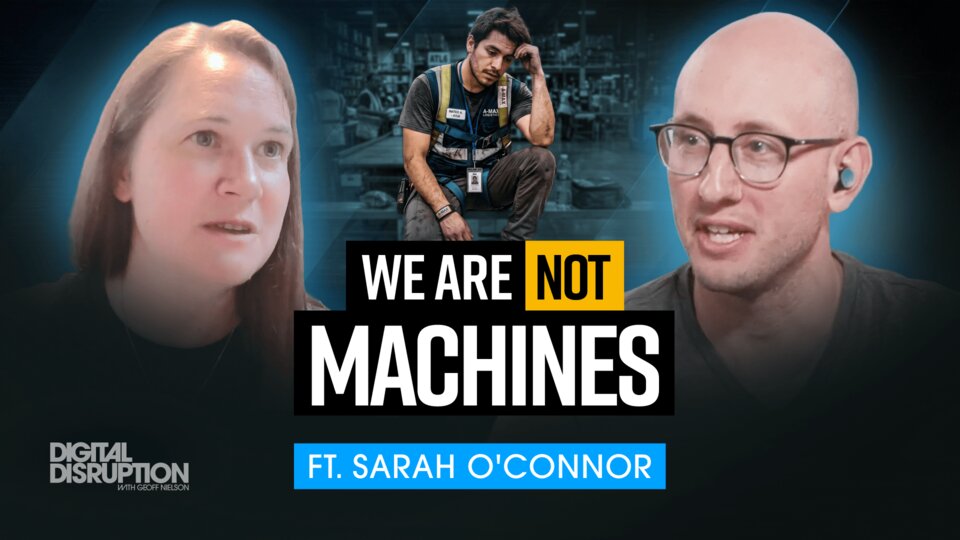
Our Guest Sarah O'Connor Discusses
AI CEOs Are Lying About the Future of Work. Here's What's Really Coming
Is AI actually making work better? Discover why many employees are feeling more constrained by machines instead of being empowered by them.

Listen
Our Guest Janak Alford Discusses
The Government AI Playbook That's Saving $2M a Week
If you're tired of AI hype and want to see what real implementation looks like, don't miss this conversation with Janak Alford, deputy minister of technology and innovation for the Government of Alberta.
Listen
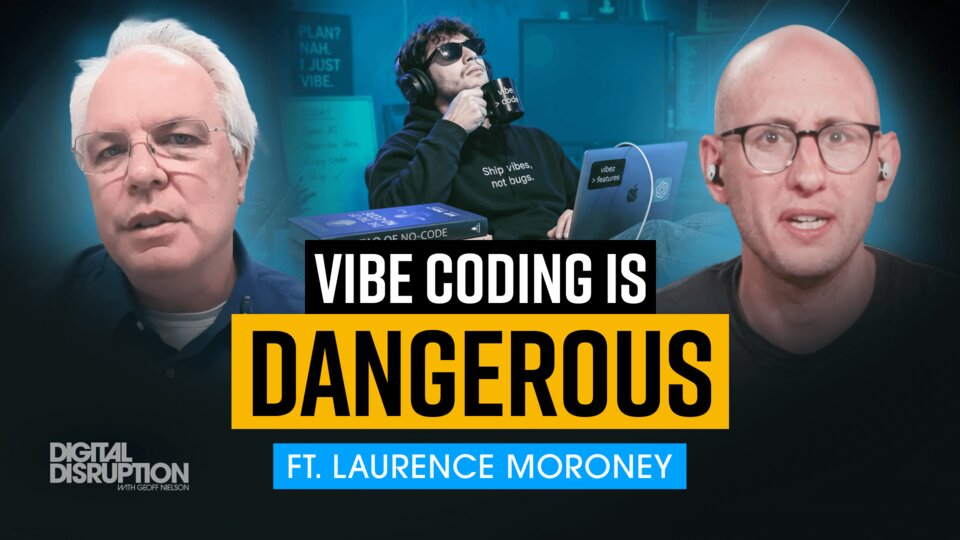
Our Guest Laurence Moroney Discusses
Ex-Google AI Lead: Vibe Coding Doesn't Belong at Work
In this episode, Geoff Nielson sits down with Laurence Moroney, former Head of AI Advocacy at Google and now Director of AI at Arm, to separate AI hype from reality and discuss what software development actually looks like in the age of generative AI.