
Digital Disruption
with Geoff Nielson


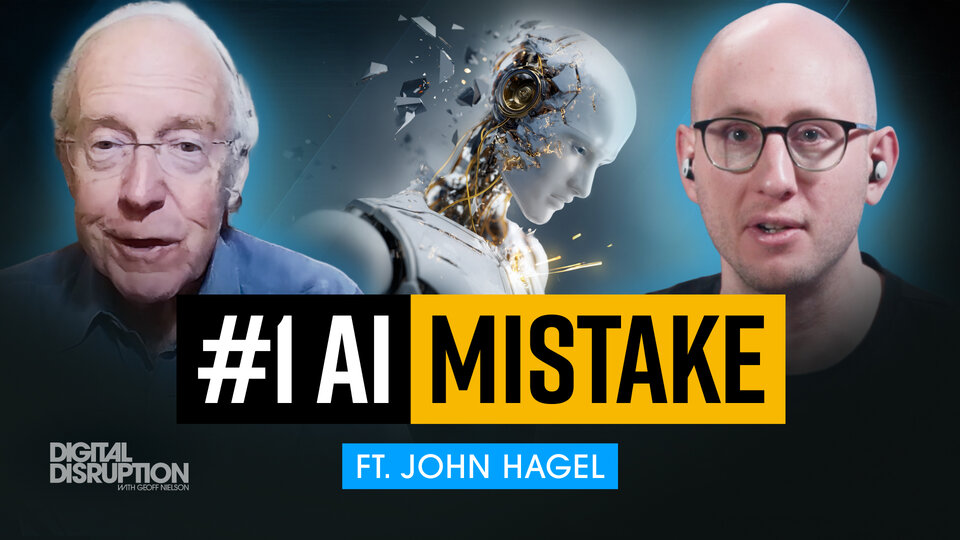
Our Guest John Hagel Discusses
Top Tech Advisor: Every CEO Is Getting AI Wrong
What if everything we’ve been told about AI and the future of work is wrong?
John Hagel says most leaders are asking the wrong questions:
“How fast can we automate?”
“How many jobs can we cut?”
According to him, that’s a “going out of business strategy.”
In this episode, we sit down with Silicon Valley veteran John Hagel, an advisor to firms like McKinsey, BCG, and Deloitte, to challenge the dominant narrative around AI, automation, and job elimination. He shares insights into how leaders are approaching AI today, often focusing on cost-cutting and workforce reduction, and what that means for the future of business and entrepreneurship.
John explains that the real opportunity with AI isn’t efficiency, it’s learning. He talks about the shift from scalable efficiency to scalable learning and how organizations can use AI to augment human potential, unlock creativity and curiosity, and build cultures rooted in trust, collaboration, and continuous improvement.
If you’re thinking about the future of work, this episode will challenge how you view AI, strategy, and innovation, and offer a different perspective on AI’s role in the modern economy.
00;00;01;24 - 00;00;16;16
John Hagel
In my experience, if I build trust with a leader and have them in the privacy of their office, I have two questions about AI. How quickly can I automate and how many jobs can I eliminate? Those are the only two questions on their mind.
00;00;16;19 - 00;00;38;02
Geoff Nielson
This is a show about the future of tech and the future of work. I'm Geoff Nielsen and today my guest is John Hagel. He's a four decades Silicon Valley whisperer and has worked with everyone from McKinsey to BCG to Deloitte to advise the top technology leaders in the world. John has been following the future of work for decades and is deeply interested in how AI is transforming our organizations.
00;00;38;04 - 00;00;58;05
Geoff Nielson
He's on record as calling using AI for automation and elimination a mistake, and calls it a going out of business strategy. I want to ask him what the real future of work is. How we can actually harness AI to get ahead, and what we need to do to avoid getting disruptive. Let's find out.
00;00;58;07 - 00;01;23;03
Geoff Nielson
John, thanks so much for joining today. You know, I've been really interested. You're someone who's, you know, been at this whole business of, you know, technology, business work for, you know, the better part of four decades. I'm curious, one of the narratives you hear a lot these days is that, you know, this time is different. And I'm curious, you know, from your perspective, is that is that a useful narrative?
00;01;23;03 - 00;01;30;18
Geoff Nielson
Is that true, or is that just something that people say you know, every 5 or 10 years is a way to get more attention?
00;01;30;21 - 00;01;54;02
John Hagel
That's a good question. I think that, we've been through a lot of technology revolutions, and I think the challenge is that the, the, pace of change is accelerating. It has been accelerating for decades. And so that's the thing to, to be aware of is that, change is happening at a much more rapid rate.
00;01;54;04 - 00;02;17;06
Geoff Nielson
Yeah, that's I, I think that's well said. And it's something that, you know, we talk a lot about here and I've certainly had my eye on. So what's the implication of that. Because it feels like in the last handful of years, the pace of change has reached this rate, where it's now sort of dramatically outpacing a lot of organizations ability to keep up with the new technology.
00;02;17;06 - 00;02;29;04
Geoff Nielson
And there's, you know, a lot of talk about, you know, is it bending up exponentially? Will we never catch up again? So, so, like, what's the implication there for organizations. And I guess for society.
00;02;29;07 - 00;02;54;14
John Hagel
Well, I think it's going to require a fundamental shift in how we organize and manage organizations. And I, I talk about what I call the big shift, which is the result of these long term trends that are reshaping our global economy and society. And one of the, elements of a big shift is a shift in our institutional models.
00;02;54;16 - 00;03;18;04
John Hagel
I generalize a lot. You'll see, as we go through this weeks, we're on a lot of time. But, it's generalizing. Large organizations around the world today are driven by a model that I describe as scalable efficiency. The key to success is do everything faster and cheaper and just keep doing it faster and cheaper. And you'll be successful.
00;03;18;07 - 00;03;42;29
John Hagel
And for over a century, it's led to hugely huge growth of large institutions around the world. So it's hard to argue with that at one level. But given the change in the world, that model is becoming less and less efficient, actually. And instead I believe the the institutional model that we need to embrace is what I call scalable learning.
00;03;43;01 - 00;04;10;27
John Hagel
And that's a model where the focus is on having everyone in the organization learn faster together. And specifically, I have to be careful because when I talk about learning, most executives say, oh, you're talking about training programs, workshops. We have a lot of those. And no, I'm not. Because there are two different forms of learning. One form is sharing existing knowledge, which you do in a training session or workshop.
00;04;10;27 - 00;04;45;06
John Hagel
You're listening to an expert and you're gathering knowledge and you're acquiring what they already have. In a rapidly changing world. Anything we know today is becoming obsolete at an accelerating rate. So if all you're doing is sharing existing knowledge, good luck. You're sharing an increasingly obsolete asset. I believe that learning that's most necessary and powerful in this changing world is learning in the form of creating entirely new knowledge that never existed before.
00;04;45;09 - 00;05;14;25
John Hagel
And you don't do that in a training room. You do that in the workplace by confronting situations that have never been confronted before, and learning how to address them in ways that create more value. And so that's a very powerful form of learning, unfortunately very few. I mean, again, generalizing in large organizations, you have research labs and innovation centers where that kind of learning is, permitted if not encouraged.
00;05;14;27 - 00;05;33;22
John Hagel
But in the rest of the organization, it's not just focus on doing the assigned tasks. And, I believe everyone in the organization, even janitors in a facility, should be focusing on how to learn faster in the form of creating new knowledge. So I'm sorry, just went on a bit, too.
00;05;33;23 - 00;05;59;10
Geoff Nielson
You know, you know, it's interesting. John, I want to get back to, you know, how we go about that learning. But I wanted to just pause and recognize that what you're describing around this learning at all feels very countercultural to a lot of, you know, the narratives and the investments that we're seeing from CEOs, from boards, from investors, where AI is a tool to basically turbocharge scalable efficiency.
00;05;59;12 - 00;06;19;24
Geoff Nielson
Right. Thinking about AI, as you know, how do we do more with less resources, less cost, and ultimately less staff? And so, you know, if that idea is ultimately wrong headed, it feels like an awful lot of people are headed in that direction. Can you can you unpack a little bit? You know why that might not be the best course of action anymore?
00;06;19;26 - 00;06;43;07
John Hagel
Yeah. Well, it's, definitely the case I or when my experience, if I build trust with a leader and have them in the privacy of their office, I have two questions about AI. How quickly can I automate and how many jobs can I eliminate? Those are the only two questions on their mind. It's all about freeing, you know, cutting costs again, scalable efficiency.
00;06;43;09 - 00;07;09;23
John Hagel
But the challenge is that the more efficient you become, it's a diminishing returns kind of, result that the more efficient you become, the longer and harder you have to work to get the next level of efficiency. And, and again, I think the challenge in, in a rapidly changing world is we need people who are going to confront these rapidly changing environments and find ways to create much more value.
00;07;09;23 - 00;07;26;01
John Hagel
And if you're eliminating people, you're not going to have that that resource, that capability. You're just going to keep doing what you've always been doing. But in a rapidly changing world that's becoming obsolete. So it's a challenge as well.
00;07;26;01 - 00;07;42;05
Geoff Nielson
So it sounds like that's where the new knowledge seeking comes into play, that we need fundamentally new ways of doing things, not just, you know, the old way, but faster. And, you know, you're suggesting that that does ultimately require people. Is that fair?
00;07;42;08 - 00;08;11;17
John Hagel
Yeah. None. If it's okay, I can give a brief example that I think is, illuminating about the potential. And it's, a clinical laboratory company in the health care industry. And, in that company, they noticed that their, customers were becoming more and more unhappy and leaving in an accelerating rate. And the employees in their call centers were becoming more and more frustrated and leaving their jobs.
00;08;11;18 - 00;08;42;27
John Hagel
And so the head of the call center operation, call center department called all the people together. And he said, first thing, I promise none of you are going to lose your jobs. You're all going to stay employed. So your first assignment is to go work with the IT department to figure out how you can automate all these routine calls that are consuming all of your time, whether you're just reading a script because it's a call that hundreds of other people have dealt with.
00;08;43;00 - 00;09;20;29
John Hagel
So automate those calls. Get those off your plate, and then will the free time that's been freed up come together and focus on the calls that you're getting where customers are confronting totally unknown, unknown, unexpected situations and find creative ways of responding to those those questions. And he organized them into small groups. He called them pods of five people, and each of them had the focus on these new new questions and short story is that, very quickly, customer satisfaction went way up.
00;09;21;02 - 00;09;42;08
John Hagel
Passion levels of the workers in the department. The call center department went way up because now they were doing things that nobody had ever done before, but wasn't just reading a script that anybody could read. It was, you know, coming up with new ideas and new approaches to problems that had never been encountered before. So I think it's an illustration of what the potential is.
00;09;42;08 - 00;09;55;00
John Hagel
If we really focus on freeing up people from routine tasks and focus not that eliminating them, but focusing them on the, new situations that are being encountered.
00;09;55;02 - 00;10;34;17
Geoff Nielson
Well, what's interesting to me about that story is that that foundation and you mentioned it of trust, right? Being able to have the trust with your employees for them to actually, you know, not worry about their job and do what's right for the organization. And that seems to be one of the traps that I'm watching. So many organizations get stuck in, which is if you know, you're standing on a pedestal as CEO saying, you know, basically what we want to do here is have the fewest number of staff possible, and then you're expecting those same staff to, you know, help you, you know, implement this automation like you're kind of the staff are kind of
00;10;34;17 - 00;10;50;12
Geoff Nielson
negotiating down the barrel of a gun. Right. And it like I'm, I'm curious, how do you see things playing out for organizations that aren't able to cultivate that trust and take the, you know, the path that we're seeing so much of these days?
00;10;50;15 - 00;11;13;13
John Hagel
Well, I think they're on the track to be eliminated. And in the rapidly changing world, if we're not prepared to embrace the changes that are occurring, not just deal with them, but embrace them, view them as an opportunity to learn new things and come up with ways to create new value. You're going to be out of work. It's a challenging world.
00;11;13;15 - 00;11;39;17
Geoff Nielson
If you work in it. Infotech research Group is a name you need to know no matter what your needs are. Infotech has you covered. AI strategy covered. Disaster recovery covered. Vendor negotiation covered. Infotech supports you with the best practice research and a team of analysts standing by ready to help you tackle your toughest challenges. Check it out at the link below and don't forget to like and subscribe!
00;11;39;19 - 00;12;08;25
Geoff Nielson
We're just inundated these days with all these stories of, you know, what feels like companies doing the wrong thing here. And, you know, as I'm sure you're feeling acutely, too, it feels like these days we're just we're just bombarded with all these narratives of, you know, what's going on with AI, what's going on with work. And, you know, my sense is that almost all of them are very self-serving for, you know, whoever is is telling the story and where they're trying to get money.
00;12;08;27 - 00;12;21;07
Geoff Nielson
But just just while we're at it, John, I'm curious if there's any other kind of common narratives you're hearing in the media these days about AI or the future of work that you think are bias or you think are worth debunking?
00;12;21;09 - 00;12;46;10
John Hagel
No. Why? How many hours do we have? I think most of the coverage of AI has been very superficial. And, yeah, I, I think what we really need to focus on is, the opportunity to take over many of the tasks that are being done by people. I believe people should never have been doing those routine tasks.
00;12;46;13 - 00;13;14;05
John Hagel
If you can take these specified routine tasks that are done in a standardized way every time, why have a human do that? We as humans are not, you know, suited for that. We, make mistakes, we get tired, we get distracted. Let the machines do that. Focus the humans on creativity, imagination, curiosity. And I think that that's what's missing here.
00;13;14;07 - 00;13;42;20
John Hagel
It, brings up a whole other, theme or topic around AI, because a lot of the discussion of AI is about the imperative for reskilling. We need to reskill people. And, I again, I you'll see in our conversation, I focus a lot on semantics and definitions of words. For me, skills are things that are valuable in a specific context.
00;13;42;22 - 00;14;15;18
John Hagel
It's, you know, how to operate this machine in this factory. That's a skill very valuable in that factory. But everywhere else, who cares? Skills on how to do mathematical calculations or whatever. So skills have value in a specific context I focus on. And I believe we rather than focusing on reskilling, we should focus on cultivating capabilities. And what I mean by capabilities are things that are valuable in every context.
00;14;15;21 - 00;14;48;26
John Hagel
And I think uniquely human capabilities, curiosity, imagination, creativity, collaboration, all of those are going to be extraordinarily valuable and necessary in a rapidly changing world. But very few organizations spend time really cultivating those capabilities. In fact, in large organizations, many of these capabilities are, are deeply suspect. Curiosity. You're asking too many questions. Read the manual, do the job as assigned.
00;14;48;29 - 00;15;03;18
John Hagel
And so I think we really need to shift at a fundamental level from skills to capabilities and bring out those capabilities, which I believe all human beings have. But we just haven't cultivated.
00;15;03;20 - 00;15;27;00
Geoff Nielson
So I want to ask two separate questions, I guess, about that. The first one is about the mindset of organizational leadership and making the case that this is worthwhile. Because I think as you as you said, there's a lot of organizations out there that sort of treat it like you know, the the CEO or the executives of the board, they're the head and all the other workers are just hands, like, just just do what we say.
00;15;27;00 - 00;15;45;28
Geoff Nielson
We're the brain here. We're going to tell you what to do. So do it. Don't don't go asking those questions. Don't think about it. Just do what we ask you to do. And you're saying that's that's fundamentally not the right way to, you know, run and develop a company. So I'm curious, you know, what would you say?
00;15;45;28 - 00;15;58;07
Geoff Nielson
And I'm sure you've had this conversation with your fair share of executives, you know, how do you make the case for taking that, that, that learning based approach?
00;15;58;09 - 00;16;24;18
John Hagel
Well, it's complicated again. And you'll find that a lot of the things I talk about are connected in one way or another. But in this context, I think one of the keys is, helping executives to understand, in a rapidly changing world, on the one side, it's very challenging. There's increasing pressure, but on the other side, there are exponentially expanding opportunities.
00;16;24;21 - 00;16;51;11
John Hagel
We can create far more value with far less resource, far more quickly than would have ever been imaginable a few decades ago. A very few executives, in my experience, are focused on those opportunities. They're focused on the challenge. We're under increasing pressure. We need to squeeze harder. We got it. Do the job. And, I think it ties into another whole theme, which where hopefully we can go into I beeper on.
00;16;51;11 - 00;17;15;27
John Hagel
But it's this notion of the emotions that are driving the leaders. And in my experience, most leaders today, even though they won't acknowledge it or say it out loud, are driven by the emotion of fear. They see more and more pressure. They see that CEOs have been turned over at an accelerating rate. The lifespan of a CEO is shrinking at an accelerating rate.
00;17;16;04 - 00;17;33;19
John Hagel
They're very afraid. And so that's driving them to hold on to what they have and squeeze harder versus really being excited about the opportunity that's out there and moving beyond the fear to find ways to address those opportunities.
00;17;33;22 - 00;17;53;18
Geoff Nielson
The the fear piece is really interesting to me, and I agree with you. In my experience, I've seen that too. I've seen it at the executive level. As you can imagine, when you have executives who are operating from fear, it creates a culture of fear that permeates through the whole organization. And I think, you know, societally, we're just fed through the media a diet of, you know, be afraid.
00;17;53;18 - 00;18;09;25
Geoff Nielson
Everything is crazy. And so, I guess just on a practical note, how do you overcome that? How do you rid yourself of that fear mindset and get back to this mindset of opportunities and growth?
00;18;09;28 - 00;18;32;15
John Hagel
Well, it's complicated, and it's the reason I ended up writing a whole book on the journey Beyond fear, because it's not something. It's a two sentence answer to that. You know, the first, the first step is actually acknowledging the fear and acknowledging the limits of the fear, because I think for most people, you know, they won't even admit that they're afraid.
00;18;32;15 - 00;18;57;14
John Hagel
Because if you're afraid, that means you're a weak late. And why would you ever say you're a weakling? And so, you know, you come through with conviction and, strong emotions. I actually, I believe one of the, things we're seeing in the world today is the increasing, prevalence of anger. And I believe that if you probe underneath that anger, you'll find that it's actually driven by fear.
00;18;57;14 - 00;19;21;06
John Hagel
But anger is a good, strong emotion. I can be angry. That's good, that's strong. So I think acknowledging, first of all, acknowledge recognizing you have fear and then recognizing how limiting fear is that makes you risk averse, that it isolates you, the, you know, you you're much less willing to reach out and connect with other people because your your fear says, I've got to do it all myself.
00;19;21;06 - 00;19;49;04
John Hagel
And, if you see the limits of that fear now you'll start to say, okay, is this really the best thing for me? What in terms of getting more impact and achieving more what what's meaningful to me? And then it starts you on a journey of really exploring what are the things that really excite you and motivate you and, finding ways to embrace those rather than the fear that's holding you back?
00;19;49;07 - 00;20;16;05
Geoff Nielson
Yeah, it's. Yeah, as you said. And, you know, I'm sure I wrote extensively about it. It's easier, you know, said than done. But it, it, it feels like it's so important to be able to do that. And there's so much. Yeah. Resting on that and, and breaking free you know through that journey. So you know let's let's go back to the second piece I wanted to unpack, which is okay, assuming you can move, you know, you can move beyond fear.
00;20;16;05 - 00;20;34;22
Geoff Nielson
You can acknowledge that, okay. The world is full of opportunities. I can't tackle them all myself. I need to work with my team. I need everybody, you know, in an environment of trust and on board with this. You know, I want to come back to this idea of learning and continuous learning and learning on the job. It's not, you know, it's not a workshop.
00;20;34;22 - 00;20;51;19
Geoff Nielson
It's not something you do in a seminar. What what does that look like? You know, and maybe if it's not something that, you know, works in a, you know, in a 22nd soundbite, if you can give some examples of how, you know, you've seen organizations tackle that effectively.
00;20;51;21 - 00;21;18;16
John Hagel
Now it's again that there are many different dimensions to it. Part of it is, you know, encouraging people. I one of the things I talk about is, a shift in leadership models because I think today most the, the mark of a strong leader today is someone who has an answer to all the questions, no matter what the question is, you can count on the leader to have an answer.
00;21;18;18 - 00;21;41;20
John Hagel
And by the way, if they don't have an answer, maybe it's time to get rid of them and find somebody who does. And I think we talk, you know, talk a lot about the surveys showing the trust is eroding in all of our institutions. And very few people ask why. I think one of the key reasons is we have leaders who say they have the answers to all the questions.
00;21;41;22 - 00;22;09;10
John Hagel
There are two possibilities. One is they have no idea how rapidly the world is changing and all the new things that are emerging, or they're lying. In either case, why would you trust them? So trust erodes, I believe the mark of a strong leader in this in the future is going to be a leader who has the most powerful and inspiring questions and who will freely admit they don't have an answer and ask for help.
00;22;09;12 - 00;22;42;17
John Hagel
And so I think that's what's really a key requirement to start to build more of a culture in the in the organization that says, first of all, questions are not only okay, they're absolutely essential in a rapidly changing world. And it's not only okay to ask for help, it's essential to ask for help. And I will say to that in in the course of my research, I found that one of the the keys to accelerating learning in the form of creating new knowledge is coming together into small groups.
00;22;42;19 - 00;23;07;21
John Hagel
I call them impact groups, but it's typically anywhere between 3 to 15 people who share a real excitement about a certain opportunity and who on one side, support each other. They develop deep, trust based relationships. So that's why can't be a large group. 15 is probably the max. But they they have deep trust with each other and they're supporting each other.
00;23;07;21 - 00;23;35;28
John Hagel
If something fails, not to worry. We will make it work next time. And also challenging each other to say, what could we do to have even more impact? How do we get to the next level of impact? And so that those groups I, you know, I've come to believe no matter how smart or talented any individual is, they're going to be a lot more effective in this learning if they come together into small groups and part of the small groups, too.
00;23;35;28 - 00;24;02;11
John Hagel
Just as a here again, I could go on forever, but, one of the key attributes of these small groups, to accelerate learning in the form of creating new knowledge, is bringing people together from very different backgrounds and experiences. So they're not all from the same, you know, school department or whatever. But they're coming at it with very different angles and, and perspectives.
00;24;02;11 - 00;24;09;03
John Hagel
And that helps to accelerate the, the development of new ideas.
00;24;09;05 - 00;24;26;29
Geoff Nielson
How do you functionally, as a leader, set up a group like that? I really like the idea. I've been, you know, an advocate of, you know, things like that. You mentioned pods before. I love that concept. How do you set that up? Does the group have a leader? How clear does the mandate need to be for what they're achieving?
00;24;27;05 - 00;24;38;20
Geoff Nielson
You know, is it is it something they do you know, longitudinally, or do you just give them, you know, kind of a short burst of concentrated time to work together? What are some of the most important parameters there?
00;24;38;23 - 00;25;06;11
John Hagel
Well, I think some key parameters. Number one is a really powerful and exciting question. What is the question or opportunity that, we want this group to address? And, metrics for performance. So how would we measure our progress towards answering this question and a key key? Element in these impact groups is the focus is on action and impact, not just conversation.
00;25;06;11 - 00;25;26;02
John Hagel
It's in in large organizations, you have a lot of teams, and they come together every Friday and have really interesting conversations, and then they go back to work. The focus here is on what actions can we take, do we need to take, how can we measure the progress, and how can we learn so that we can have even more impact over time?
00;25;26;05 - 00;25;32;05
John Hagel
It's a very different model. And, powerful when it's implemented.
00;25;32;07 - 00;26;06;10
Geoff Nielson
No, I really like that. And that helps, you know, kind of clarify, you know, some of the ways we can see even more impact from it. I did want to come back to something you said earlier about the the erosion of trust in institutions. And this has been on my mind lately, as you know, frankly, one of the one of the kind of societal cancers that we're dealing with right now that we've just seen sort of this linear decline in, in trust in institutions like, you know, you name it, basically every institution that has lost its repeatability, at least in some circle.
00;26;06;14 - 00;26;29;18
Geoff Nielson
And, you know, I don't know if it's accelerating, but it feels like it's at an all time low. And so can you maybe just clarify a little bit, how do we how do we get out of that? Is it just about putting in a leader who's willing to ask questions like, what sort of your vision for, you know, a society with more trusted institutions?
00;26;29;21 - 00;26;58;27
John Hagel
Why? And many different, approaches, answers here. I think it, it requires fundamental change. I think one of the, tools that I've become very passionate about is, what I call, corporate narratives. And, again, I have to be careful because when I talk about narrative, as most people think, you're talking about stories, corporate stories and, you know, the leaders will say, well, I have a corporate narrative.
00;26;58;27 - 00;27;31;06
John Hagel
We began in a garage. We faced incredible obstacles. We overcame them. We have pushed amazing things. That's our narrative. No, for me, a narrative, first of all, it's about the future. It's about, you know, you what do you see it primarily in the future as a primarily a threat or an opportunity. And what's your call to action to the people you're addressing who are in the in a case of the corporate narrative, it's actually people outside your organization, not your employees.
00;27;31;06 - 00;27;57;03
John Hagel
It's your customers, your stakeholders. What's your corporate narrative for that? And the example that I like to give, it's one of the few that I know of and would welcome suggestions or ideas if there are other ones. But, it was Apple Computer back in the 1980s, 1990s. Steve Jobs came up with a corporate narrative which was condensed into the slogan Think different.
00;27;57;06 - 00;28;19;23
John Hagel
But when you unpack that, the slogan, the narrative was for decades we had digital technology that took away our names, gave us numbers, but US cubicles made us cogs in a machine. Now, for the first time, there's a technology that can allow us to express our unique potential and individuality. But it's not going to happen automatically. You need to think different.
00;28;20;00 - 00;28;53;24
John Hagel
It was a call to action to the people outside of Apple to think different and to address a huge opportunity. And I think it's the reason why for many people, Apple at the time became the equivalent of a religion. You were speaking to such a deep aspiration that people have. And I think that can be a very powerful way to energize and excite not just the customers and people outside the organization, but the employees, because you're helping those people outside your organization achieve something that has never been achieved before.
00;28;53;27 - 00;29;00;15
John Hagel
And so I do think that that's one of the ways to to really move forward.
00;29;00;18 - 00;29;24;08
Geoff Nielson
I, you know, I, I talk a decent amount about Apple and, and to me they're a really interesting, example. And it's, you know, the fact that they're in tech, but they're so designed for word and they've, you know, would think different kind of fundamentally challenged the market to like, yeah, think differently about technology and know this isn't this kind of geeky difficult to use thing.
00;29;24;08 - 00;30;06;01
Geoff Nielson
It can be, you know, extension of you and it can be, you know, a fundamentally good experience. So, so I'm curious for organizations that want to, you know, challenge themselves to, to do this and reimagine what they can be. How much of that do you see as being done through, you know, kind of sniffing out new technology versus just just kind of raw creativity about, you know, the market that they're serving and, and what their products and services are and how they fit, the lifestyles of their, of their users or of their buyers or their, you know, constituents.
00;30;06;04 - 00;30;41;13
John Hagel
Now, again, complicated a lot of different things coming together. But, in this context, I've become very, focused on a specific form of strategy, which I call zoom out, zoom in. And it comes from actually having the opportunity to work with many of the most successful tech companies in Silicon Valley. And what I found is they had an approach to strategy, which was very different from most traditional organizations, that the zoom out, zoom in is focuses on two time horizon.
00;30;41;16 - 00;31;06;08
John Hagel
One time horizon is 10 to 20 years. That's the zoom out. Zoom out 10 to 20 years and focus on identifying what's a really exciting, exponentially large opportunity that we could be addressing. And then zoom in. And here it's a very different horizon. It's 6 to 12 months. And on that horizon, the questions are what are the 2 or 3 initiatives.
00;31;06;08 - 00;31;33;05
John Hagel
No more 2 or 3 that we could pursue in the next 6 to 12 months. That would have the greatest impact. And accelerating our movement towards that bigger opportunity. And how would we measure progress in addressing that opportunity? But I think it can be a very powerful way to start to overcome fear. First of all, you if you see a really large opportunity in the future, that can be inspiring and exciting.
00;31;33;08 - 00;31;52;13
John Hagel
But for many people are driven by fear. They're going to say, oh, that's just the fantasy. That's never going to happen. But if you can show tangible progress in the next 6 to 12 months towards that opportunity, now you start to overcome the skepticism and people start to say, get excited and say, how can I join? How can I participate?
00;31;52;15 - 00;32;16;18
John Hagel
And so I think that's one way of really starting to move forward, is really, engaging in the exercise of moving, looking ahead. And I think obviously, one of the challenges I face from, from executives is, come on, John, the future's so uncertain, you know, how can you possibly, know what 10 to 20 years is going to look like?
00;32;16;18 - 00;32;41;16
John Hagel
And I think one of the examples there, there are relatively few examples that have been published or publicly available on zoom out, zoom in, but one of them is a, small tech startup in the 1970s, in, 1980s in, Redmond, Washington, with a company called Microsoft. And, Bill gates pursued a zoom out, zoom in approach.
00;32;41;19 - 00;33;08;07
John Hagel
And on the zoom outside, this was back in the 1980s. He had a, view of the to a future opportunity that was summarized really in two sentences. One, well, it was basically that the computer industry is increasingly going to be on the desktop. The desktop is where the future is. And, at the time that was viewed as a fantasy by most, you know, executives.
00;33;08;07 - 00;33;32;21
John Hagel
I was in a board meeting of a mainframe company at the time, and they were dismissing Microsoft as this toy company. But what he did on the zoom out side, number one, he did not develop a detailed blueprint of what the computer industry was going to look like in 20 years from now. It was, but it was enough specificity so that he could really focus is their term actions.
00;33;32;24 - 00;34;02;25
John Hagel
And he focused on two trends that were pretty predictable even in an uncertain future. One was the exponential price improvement of, the, computing devices, and the other was the, he saw in large companies long lines of very frustrated employees waiting for their opportunity to ask the mainframe a very simple question. And, the frustration and an unmet need there was very powerful.
00;34;02;25 - 00;34;28;23
John Hagel
He said. If I could provide a desktop device that would provide answers to those questions immediately in real time, they would buy them in a minute. And so, again, it wasn't a detailed blueprint of the future, but it was enough. It was focused on reasonably predictable trends and enough detail so that he could focus his actions in the short term to say, how can I become a leader in desktop?
00;34;28;25 - 00;34;49;23
Geoff Nielson
I like that clarification about specificity without it being, you know, an entire, you know, map of what the world is going to look like 20 years from now. Because to your point, John, you know, it feels like so many leaders now are using the rapid and increasing pace of change of technology to kind of throw up their arms and say, well, I can't predict anything anymore.
00;34;49;29 - 00;35;13;17
Geoff Nielson
I don't know what the future looks like and using it as an out to say, well, I'm actually not going to do the exercise because who knows? And so you end up in this sort of fear spiral. But but it sounds like you're saying like that. That's actually no excuse at all that, that in spite of the pace of change increasing, you should still be able to make specific calls and specific bets that you can anchor your firm around.
00;35;13;17 - 00;35;14;23
Geoff Nielson
Is that fair?
00;35;14;26 - 00;35;46;28
John Hagel
Yes. If you don't have a focus and destination, you're going to be very challenged. I think a bit of a contrarian on many things, and one of the most popular things these days is the notion of agility. We need to become more agile. That's the keys to success. And and my challenge to that is, well, if agility is just responding as quickly as possible to anything that's happening around you, millions of things are happening around you.
00;35;46;28 - 00;36;14;05
John Hagel
You're going to spread yourself way too thin because you have no focus on what's really important, what are the things that are going to generate the most value over time. And so I think it's one of the reasons in large organizations today, we're seeing things spread out much too thinly across too many initiatives because they're trying to be agile, but they have no sense of what is that that is really the big opportunity that we should be focusing on.
00;36;14;08 - 00;36;18;03
John Hagel
And so I think that's that's a challenge.
00;36;18;06 - 00;36;29;05
Geoff Nielson
Yeah. No, I can I can absolutely relate to that. It it feels like without that North Star, you're just trying to go in every direction at once as fast as possible.
00;36;29;07 - 00;36;53;12
John Hagel
Yeah. Now as fast as possible. It's again, it's about speed and efficiency and. Yeah, having a sense of where you're, where you're headed is, in my experience, absolutely critical. And, and then being able to measure progress. I'm a big proponent of metrics in terms of how would we measure the progress we're making and and addressing those big opportunities in the future.
00;36;53;15 - 00;36;53;27
John Hagel
So, so.
00;36;53;27 - 00;37;21;20
Geoff Nielson
When we're thinking about where we're going or, you know, generating new ideas or sort of the art of the possible, you know, you in the past have been a big advocate of this idea of the edge and, and kind of, you know, listening and understanding about what's going on at the edge. Can you share, you know, maybe for the audience that isn't familiar with that idea, you know what the edge is, what your kind of practical advice is around it, and you know how and if it's changed recently for you.
00;37;21;22 - 00;37;46;08
John Hagel
Yeah. Well, it's been a key theme of my work, on many levels. One is this notion of the edge as being a, what's the right word? I don't know, a launchpad for, seeing new opportunities. So one way of thinking about edge is, is just areas that are today relatively marginal, but over time could become more and more central.
00;37;46;08 - 00;38;20;18
John Hagel
So you could think about edges in terms of, in global economy, the developing world versus the developed world, what's going on in the developing world that potentially could, be embraced by in the developed world? Generational edges. So looking at younger generations coming into the workforce, coming into the marketplace, their, their edges today, and what can we learn from their unmet needs that are going to grow over time as they, become more central to the workforce?
00;38;20;21 - 00;38;50;21
John Hagel
And edges and technology? I think they are the frontiers of technology that are being addressed. And what what scope of what experiments are going on, the innovations going on today that potentially could scale into, core technologies. So there are many different dimensions of edges, but I'm a strong proponent of exploring edges to see emerging trends that again, you have to be become confident that they will be sustained.
00;38;50;21 - 00;39;34;26
John Hagel
But, they start to generate ideas for what these emerging opportunities are. And, and then another piece to the edge, which it has again in a number of dimensions. But I become a strong proponent of, what I call scaling the edge, which, you know, it deals with the issue of transformation and change. The challenge I see there is, for large organizations is most leaders, if they see the need for fundamental change, they will call their leaders together, and they will at announce what I call a top down big bang approach to change.
00;39;34;28 - 00;39;51;06
John Hagel
We need to change everything. And because we're a large organization, it's going to cost a lot of money. And because it's the larger organizations got to take a long time. But trust me, wonderful things will happen once we make that change.
00;39;51;08 - 00;40;12;21
John Hagel
Well, the response I, I've seen this in, in corporate meetings is when the executive is making this announcement, everybody's smiling, talking. Yes, yes, yes, we're going to do this. Then they go into the privacy of their office and figure out what they can do to undermine this, this new initiative. It's going to cost a lot of money.
00;40;12;23 - 00;40;48;06
John Hagel
We don't have money to spare. We're on a tight budget. It's going to take a long time. We're going to focus on quarterly performance. We can't be, distracted by long term initiatives. And so it calls out. And this again, is a big message of mine to leaders is when thinking about transformation, never, ever underestimate the power of the immune system and the antibodies that exist in every large organization, and will motivate or will move quickly any indication of change to crush it.
00;40;48;08 - 00;41;22;05
John Hagel
So if that's the challenge for large organizations, I believe the approach to change is what I call scaling the edge, which is rather than going top down and trying to change everything all at once, find an edge to the existing business that today is very moderate in terms of revenue and and people. But if you've done the zoom out, that edge has the potential to become the new core of your business over time and focus on scaling that edge and driving the change in that edge.
00;41;22;07 - 00;41;38;22
John Hagel
And early on, it takes relatively little money and effort. But it's it starts to generate real results, and then you draw more and more people from the core out into that edge, and it becomes the new core of the business, but very different approach.
00;41;38;24 - 00;42;13;06
Geoff Nielson
And it feels like that comes back to that, executive mindset of basically listening versus telling, right? Like being able to actually do the work to understand where the edges are in your organization that are actually performing well and, you know, are comfortable doubling down or tripling down, you know, your investments in that area. And, and just, I guess, having the, you know, the absence of ego to say, oh, that may not be, you know, my idea, but, you know, it's working well and therefore it's right for the organization.
00;42;13;08 - 00;42;28;20
John Hagel
Yeah. But again, I think it really requires looking into the future to see what are the really exponentially bigger units and really then looking for edges within the existing organization that potentially could be the launchpad to address that.
00;42;28;22 - 00;42;52;24
Geoff Nielson
That opportunity that, that that makes sense. You used a very specific word when you were talking about, you know, people who are looking at the edge, trying to understand it, try and scale it. And that was explorers. You said we need explorers, for the edge. And that's a word that I know has come up, you know, many times in, in your research, in your publications.
00;42;52;26 - 00;43;05;07
Geoff Nielson
I'm curious if you can unpack a little bit more about, I guess, the value you place on the explorer. And you know what we can do, I guess, to cultivate more exploration.
00;43;05;09 - 00;43;30;12
John Hagel
Yeah. Well, you know, it was a key theme in my book, The Journey Beyond Fear. Because one of the questions that I confronted was, well, a fear is not a good emotion. What's the best emotion to be cultivating to help you achieve more impact? That's meaningful. And I did a fair amount of research looking at environments where there's sustained extreme performance improvement.
00;43;30;15 - 00;44;05;24
John Hagel
And I said, what can we learn from those environments? And they were very diverse environments. They were not just in the business world, but on one of the areas I was focused on was extreme sports, big waves surfing, extreme skiing. What could we learn from environments where there's sustained extreme performance improvement? And what I found was that all the participants in those environments had a very specific form of passion, and I've come to call it the passion of the explorer, because again, I find when when I use the word passion, everybody nods their head.
00;44;05;24 - 00;44;33;05
John Hagel
But, you know, I, I'm in workshops. I've gone around the room and asked each person to, to to define what they mean by passion. And everybody has a different definition. They use the same word. They all think they're talking about the same thing, but they're talking about different. So passion of the explorer has three components to it. One is the people with this passion are really excited about having more and more impact in a specific domain.
00;44;33;07 - 00;44;55;28
John Hagel
It could be anything from gardening to nuclear physics, but it's a domain where they're not just wanting to be in it, not just wanting to have some impact, wanting to have more and more impact over time. And secondly, they're really, excited when confronted with unexpected challenges because it's an opportunity for them to learn and have even more impact over time.
00;44;56;01 - 00;45;19;22
John Hagel
How can I address this? And then the third attribute of the passionate explorer is when confronted with those challenges, the person with the passion, their first response is, who else can I connect with? Who can help me get to a better answer faster? So they're deeply connected and develop deep, trust based relationships with others because they're expressing vulnerability.
00;45;19;22 - 00;45;55;13
John Hagel
They're saying, I don't know. I don't have an answer, I need help, can you help me? And so those three things together combined really help to accelerate learning. And, it's bringing people together with passion. And what so in the context of scaling the edge, one of the, key themes that I have are messages for leaders is when you're starting to, focus on a particular edge to scale it, their tendency is, I got to bring people with the right credentials and resumés and, you know, education expertise to come together.
00;45;55;20 - 00;46;19;23
John Hagel
No. Find people who are really passionate about that opportunity, excited about it, and want to come together with others. And they'll come together and they'll find a way to scale that edge in ways that will be amazing. So let's, you know, focus on passion rather than, skills.
00;46;19;25 - 00;46;56;10
Geoff Nielson
It's it's really interesting. And I, I haven't quite thought about it that way before, but the idea that, you know, there are organizations where there's just organizationally more passion or less passion in the workforce, organizations that are better at cultivating it or better, frankly, at suppressing or repressing it. And so whether you're a leader or whether you're just working in an organization, I mean, I think it's it may be more difficult to measure, but you can get a pretty good sense of whether you're in a high passion or low passion organization and who the passionate people are around you.
00;46;56;12 - 00;47;18;00
Geoff Nielson
And it feels like it's, you know, again, we've we've talked about this a few times already. It feels like we're sort of moving in the wrong direction now around passion that some of the, you know, mandates coming from the top around scalable efficiency, around automation, like they're actually killing passion or repressing it rather than growing it. Is that also your read of the situation that we're in?
00;47;18;02 - 00;47;38;29
John Hagel
No, absolutely. I think that's, a big challenge. I, I one of the questions I ask is how many large organizations are measuring passion in their organization? Virtually no one. It's what they measure is worker engagement, you know, do we have engaged workers? And again, definitions vary. But basically it means do you like the work you do?
00;47;39;06 - 00;48;02;13
John Hagel
Do you like the people you work with? You respect the company you work for. That's an engaged worker. Okay. Let's take one of those engaged workers and tell them that their work is going to have to fundamentally change. What change? I like the work I'm doing. I'm not going to change. They become a source of resistance to change.
00;48;02;16 - 00;48;31;07
John Hagel
And on the other side, the passionate workers. And by the way, I've done a survey of the US workforce. And, our best estimate from the survey was that at most 14% of US workers have this kind of passion about their work. And I'm actually surprised that it's as much as 14%, because I think that our large organizations find passion, deeply suspect.
00;48;31;09 - 00;48;57;03
John Hagel
Passionate people ask too many questions. They take too many risks. They deviate from the script. Why would you want a passionate worker? You want somebody who's going to do the job, read the manual, do the job reliably and efficiently, and so, I think one of the big challenges we have is how do we first of all, recognize that potential of passion and and then create environments that will draw it out and encourage it.
00;48;57;06 - 00;49;30;14
John Hagel
And I should say to, I do get a lot of resistance from people saying, you know, come on, John, some of us are capable of passion, but most of us just want to be told what to do. And, you know, have the security of an income and my response on that is, let's go to a playground and let's look at children 5 or 6 years old, show me one child that's not really excited about exploring new things, doing new things, you know, coming together with others to explore what happened.
00;49;30;17 - 00;50;03;29
John Hagel
They went to school and they were taught, listen to the teacher, memorize what the teacher has to say and show you. Memorize that on the exams. Passion is not part of the education system. It's, you know, go out on the playground and do it or do it at home. And it was to prepare students. I mean, I've done a lot of work on the US public school system and in US public school system was explicitly designed to prepare children to go into the workforce where it was, read the manual, do the job as assigned.
00;50;04;01 - 00;50;18;03
John Hagel
And so I think, I believe we all have that passion within us, but it's just being suppressed. And we need to create environments that will draw an out and, and encourage people to come together with passion.
00;50;18;05 - 00;50;54;28
Geoff Nielson
One, I really like that vision as, as you just said, almost as a capstone for what the future of work is, that it's not this manual, repetitive grunt work. It's not just tell me what to do. It's actually bringing that passion that creativity, that curiosity, that spirit of exploration into what you're doing. And there's, you know, I'll just sort of, you know, zoom in a little bit to it, but you, you said something really interesting, which is that you believe that everybody naturally has this passion and it's kind of, you know, beat out of them or repressed.
00;50;54;28 - 00;51;19;09
Geoff Nielson
And I just want to I want to confirm that with you, because the implication there is that in an organization, if you have the right leadership and the right mindset, you actually can cultivate this passion at a broad scale. It's not just cultivating it in, you know, 14% of your employees. It's you can you have the power to have a fully passionate workforce.
00;51;19;12 - 00;51;22;13
Geoff Nielson
Do you do you by that?
00;51;22;15 - 00;51;50;26
John Hagel
Absolutely. Again, I think it's a fundamental human capability that's within us. And, I think, again, creating the right environment, if you have leaders who are asking really powerful and inspiring questions, if you're helping people come together to address opportunities, I mean, there are many things you can do to help draw out that passion. But, you have to focus on wanting to draw it out versus wanting to suppress it.
00;51;50;28 - 00;51;54;25
John Hagel
It's one of the big challenges in large organizations today.
00;51;54;28 - 00;52;29;04
Geoff Nielson
Absolutely. I want to take us down, actually, a completely different road that we haven't covered yet. So so, you know, given that we talk so much about the future of work in the future of technology, you know, we've talked a lot about business leaders and, you know, one of the areas of interest for me, as well as technology leaders, and you know what the future of enterprise technology and enterprise, you know, it looks like in the organizations and how all this kind of rapid change AI new technology is impacting that.
00;52;29;07 - 00;52;51;13
Geoff Nielson
So, John, you wrote you wrote an article an awfully long time ago, and it's based basically suggesting at the time in 2003 that it still matters when there was this question about whether it still matters. And I feel like that's a question that's sort of reentered the cultural zeitgeist of, you know, our AI is here and we'll we'll just use that.
00;52;51;13 - 00;53;14;17
Geoff Nielson
And, you know, that's too important for it. And, well, aren't technology projects also slow and cumbersome? And so I, I wanted to ask you, you know, now that 20 some odd years have passed, you know, do you believe that it still matters? And what role does it play now versus in the past, if different at all?
00;53;14;20 - 00;53;57;19
John Hagel
But I think it's, more and more central to everything we do. I mean, I confused about the distinction between AI and it. I mean, AI is IP is, what what's delivering AI? Is it not technology? I don't know, so I think but but then you get all kinds of, connections. The one that I'm most interested in, I think at this point is, the technology in it around, human wellness and longevity, technology is increasingly helping us to not just address diseases once they happen, but avoid diseases.
00;53;57;21 - 00;54;24;10
John Hagel
And, I think that's going to lead to dramatic change in, in who we are as people, you know, what's our average lifespan? Is it really 80 years or 70 years? It's not. It's 140 years. And ultimately I think it's infinite. As we move forward with this, it so I think that the, technology is increasingly going to change everything in the world.
00;54;24;10 - 00;54;37;13
John Hagel
And, I will be helpful in terms of helping us to harness that technology and, create more value. But it's not going to happen just by itself. I mean, the other technologies.
00;54;37;15 - 00;55;07;24
Geoff Nielson
So let's, let's let let's maybe follow that road a little bit, looking at this future that's technology enabled and is extending life spans. You know, can you share a little bit which, you know, if there's any, you know, kind of health care developments, any pharmaceutical developments with AI, with tech that you've been following recently or just, you know, what sort of edges or frontiers you are following that have gotten you excited about the the, I guess, the optimistic opportunities for this tech?
00;55;07;26 - 00;55;47;11
John Hagel
Yeah. Well, I again, I think there are many different dimensions. I certainly is helping in the diagnosis of diseases or becoming much more efficient and, and effective in terms of identifying diseases at an earlier stage, finding treatments that will be specific to the individual that are helpful. So all of that is great, but I think that, other dimensions, and AI plays a role in it, but it there's a whole area that is described as biosynthesis, which is, you know, synthesizing biology, creating new organs from scratch.
00;55;47;13 - 00;56;14;14
John Hagel
You know, today, if you have a, kidney disease, you have to wait for a kidney donor to actually don't donate a kidney for you. What if you could make that kidney in the laboratory and just insert it? That's what biosynthesis will do. And it is doing it today for mice. I mean, we're already down to the level of doing it for, for smaller animals.
00;56;14;16 - 00;56;31;12
John Hagel
It's just a matter of time before we'll find a way to do this for human beings. And I think it's going to lead to dramatically different lives where, you know, our biology is whatever happens to the biology, we can replace it. So I don't know.
00;56;31;15 - 00;56;49;11
Geoff Nielson
Yeah. No, it's really exciting. And it's I always find myself kind of veering back as well to the, you know, the human health and longevity implications as well. And, you know, living well versus just, you know, how to squeeze a little bit more efficiency out of your, you know, your business engine, right.
00;56;49;13 - 00;57;13;16
John Hagel
Well, again, I think that I believe we're facing a world of fundamental change around everything that we do. But one of the areas of fundamental change is the health care industry. I mean, today, again, I generalize, but the health care industry says wait until the person gets sick and when they get sick, diagnose it and treat it. That's the health care industry.
00;57;13;18 - 00;57;52;22
John Hagel
Wait a minute. Why do you want to wait until somebody gets sick? Why don't you want to focus on what you can do to help the individual stay healthy and become even healthier over time? And I think one of the things we're seeing today, which I, get encouragement from, is the emergence of, what are broadly described as wellness coaches, people who invest the time to really get to know you as an individual and your biology and your body and your emotions and whatever, and will help you to improve your wellness and connect you with a broader range of providers.
00;57;52;22 - 00;58;19;26
John Hagel
It could be anything from reading consultants to meditation to whatever, but there they have a large network of experts that they're bringing together to help people improve their wellness. And I think that's, it's, by the way, it just taps into a whole, big opportunity that I see emerging in the world, which is not really being effectively addressed yet.
00;58;19;28 - 00;58;52;08
John Hagel
But it's what I call the trusted advisor. And I think that, one of the things that's really, necessary is, you know, rapidly changing world, there's actually going to be explosion of options, more and more options available, and people are going to be overwhelmed with all the options that are available and having somebody they can trust who will get to know them as individuals extremely well, and that help connect them with the most relevant and helpful.
00;58;52;10 - 00;59;24;05
John Hagel
The very, all the thousands of providers. That's huge value. And I think the key, again, is building trust. I mean, if you're if whenever you work with somebody, a customer and all you're doing is recommending your own products and services to them, there's not a lot of trust. I know you're just trying to sell more products and services versus, you know, no, I'm going to connect you with whatever experts are relevant to you at the time, and we'll monitor and evolve over time.
00;59;24;08 - 00;59;36;20
John Hagel
That's a huge opportunity that I think, addresses an unmet need that we as individuals have as the need for trust and the need to help navigate through a rapidly changing world.
00;59;36;23 - 00;59;50;01
Geoff Nielson
Is is the trusted advisor human? Because there seems to be this narrative right now that wow, that your best trusted advisor is AI knows more than everybody. So the only trusted advisor you need is generative AI.
00;59;50;03 - 01;00;14;21
John Hagel
Yeah, well good luck. You know, I think, again, it's a challenge that, I certainly don't want to dismiss. I think I can be very helpful to trusted advisors, but at the end of the day, I believe that the the elements, the key elements for trusted advisors are curiosity, creativity, imagination, collaboration. And I think those you know, I can do some of that.
01;00;14;21 - 01;00;36;02
John Hagel
But humans are much better at that over time. And so it's, I think we can still be a significant role for human beings to be there to, to provide those capabilities and not just, rely on technology to come up with the the answer at the moment.
01;00;36;04 - 01;00;45;10
Geoff Nielson
Right, that AI is an enabler or a tool that the trusted advisor has in their toolkit, but it's not a substitute.
01;00;45;13 - 01;01;07;16
John Hagel
Absolutely. Like, yeah. Yeah. So it's a big opportunity. And I think it, again, I'll just say to one of the things that I find so intriguing about this is I'm seeing elements of this emerge. I mentioned wellness coaches, which I think is an example, early example of trusted advisors, and they're growing at a pretty significant rate there.
01;01;07;23 - 01;01;38;17
John Hagel
It's a, a growing industry or a business type. And, over time, I believe trusted advisors will emerge in specific, domains like wellness and health or travel or finance or whatever, home ownership, whatever. But over time, if they build trust and can connect to a broader and broader range network of expertise, they can expand beyond their initial focus.
01;01;38;17 - 01;02;07;12
John Hagel
So Wellness Advisor could ultimately become a financial advisor. I know your your physical condition, it's very well and what you really need physically. Let me help you with the finances to serve those needs and start expanding more and more to provide ultimately a whole range of capabilities that the person needs. Because I trust you, I've built a deep trust based relationship with you.
01;02;07;15 - 01;02;15;17
Geoff Nielson
And it sounds like knows you as well, right? Like gets to really know and understand your specific needs that are multi dimensional.
01;02;15;18 - 01;02;25;19
John Hagel
You are committed to understanding and curious, wanting to always know more, learn more and yeah for sure.
01;02;25;21 - 01;02;45;12
Geoff Nielson
So so you know, just being mindful of the time here. John. I just wanted to get sort of your, I guess, final thoughts and advice for business leaders who may be listening to this. You know, the what they should be walking away with and thinking about, you know, implementing in their own lives or organizations.
01;02;45;15 - 01;02;58;14
John Hagel
Why? You know, I think, first level is just the rapidly changing world that that, we're, we're living in. And, I think the,
01;02;58;16 - 01;03;32;21
John Hagel
And the, and very few executives really understand how fundamentally to change how fundamental the changes and how rapidly that change is unfolding. So I think that's a key, key requirement and starting to focus again on looking at trends that are reasonably predictable. And where can we start to focus to create more value? But I think ultimately, and it's the reason I wrote my book, The Journey Beyond Fear, is recognizing that, don't get distracted by the technology.
01;03;32;23 - 01;03;52;29
John Hagel
I mean, if all you do is focus on the technology. You're not focusing on what's really going to make a difference, because what, and I, you know, I go back a bit, in my career, I was trained as a business strategist. I was trained to believe that strategy is everything. If you have the right strategy.
01;03;52;29 - 01;04;18;15
John Hagel
When I focus on strategy over the years, I've come to believe it's less about strategy and more about psychology. But if we don't understand the emotions that are shaping our choices and actions, the best strategy is just going to sit on a shelf somewhere and, it, boy, who I get drawn into many different, areas here.
01;04;18;15 - 01;04;50;02
John Hagel
But, one of the things this draws into is and my advice for executives is, in the AI world, there's a lot of debate about is AI going to be good or bad? And my response to that is AI is a tool. You know, I give the example of a hammer. If you give me a hammer, I can use it to crush your skull, or I can use it to build a wonderful home for you.
01;04;50;05 - 01;05;22;04
John Hagel
It's not the tool that's good or bad. It's how the humans are using that tool. And so focus on emotions, the emotions that are driving humans, and you'll have a better view of how this technology is going to be used and evolved. And where you can take advantage of it. And so I think that that's, my keep increasingly my key focus with executives is this question of the emotions and starting with their own emotions.
01;05;22;07 - 01;05;54;03
John Hagel
Look inside. Because I think, again, most executives are unwilling to even admit to themselves that they're they're afraid, much less tell anybody else, and then recognize how limiting that fear is, and then finding ways to cultivate this passion of the explorer. And I view that as a process of exploring the future, to see where these exponentially large opportunities are that are emerging and addressing those.
01;05;54;05 - 01;05;57;28
John Hagel
And I think it's,
01;05;58;00 - 01;06;29;10
John Hagel
Again, I don't want to suggest it's easy. It's very challenging. But I think that, for those who do it, the the world is creating huge opportunity, and we need to fundamentally change in order to address that opportunity. I will also say, I'm sorry if I go on too long, but, I, I find that, every large organization that I know of has a digital transformation program in their, in their company.
01;06;29;12 - 01;06;57;16
John Hagel
But when I probed to ask, what's the digital transformation doing? What is it? What's the focus? It's how can we apply digital technology to do what we've always done faster and cheaper, more efficiently? That's digital transformation. My response is I for me, transformation. Use the metaphor of the caterpillar to the butterfly. If it's not evolving, fundamentally different way, it's not transformation.
01;06;57;16 - 01;07;19;21
John Hagel
If you're just making the caterpillar walk faster, good luck. But, that's not, transformation. And, I think that's the real potential here is to really think about transformation at a more fundamental level based on the opportunities that are emerging. And then driving the change through scaling the edge.
01;07;19;24 - 01;07;39;14
Geoff Nielson
I love the, I love the quote about the caterpillar and the butterfly, and I think it's so apt for, you know, what's actually happening and where people should really be thinking about how to do things better. John, I thought that was a great summary of so much of the conversation we've had here so far. So much insight packed in there, so much to think about.
01;07;39;20 - 01;07;45;24
Geoff Nielson
I want to say a big thank you for joining today. It's been really insightful. I've appreciated the conversation.
01;07;45;27 - 01;08;09;01
John Hagel
Well, and I should say too, that, as you can probably tell, I'm very passionate about the this the opportunities and the need for change. And, I've actually just created a new center called the center for growth, and it's offering programs based on my book, The Journey Beyond Fear. So I would encourage people, if they're interested, to read the book The Journey Beyond Fear.
01;08;09;01 - 01;08;19;02
John Hagel
But, the center for growth, as it's on the website and, would welcome people coming to learn more through through the programs that we're offering.
01;08;19;05 - 01;08;44;00
Geoff Nielson
Amazing. Well, check it out if you work in it. Infotech research Group is a name you need to know no matter what your needs are. Infotech has you covered. AI strategy covered. Disaster recovery covered. Vendor negotiation covered. Infotech supports you with the best practice research and a team of analysts standing by ready to help you tackle your toughest challenges.
01;08;44;02 - 01;08;47;00
Geoff Nielson
Check it out at the link below and don't forget to like and subscribe!



The Next Industrial Revolution Is Already Here
Digital Disruption is where leaders and experts share their insights on using technology to build the organizations of the future. As intelligent technologies reshape our lives and our livelihoods, we speak with the thinkers and the doers who will help us predict and harness this disruption.
Listen


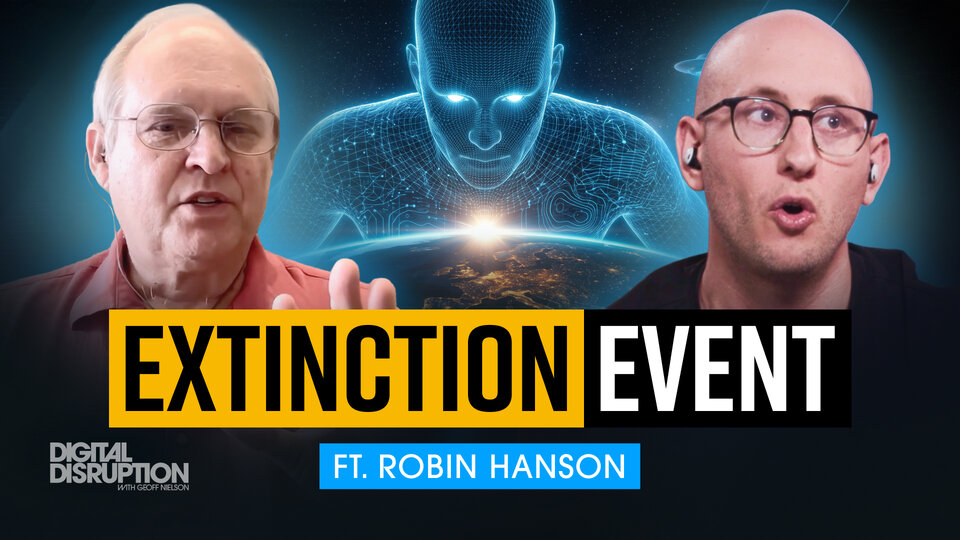
Our Guest Robin Hanson Discusses
Robin Hanson: AI Is Probably the End of Humanity (and Why That's OK)
In this episode, economist, futurist, and The Age of Em author Robin Hanson explains one of the biggest questions humanity has faced: What happens after humans?
Listen
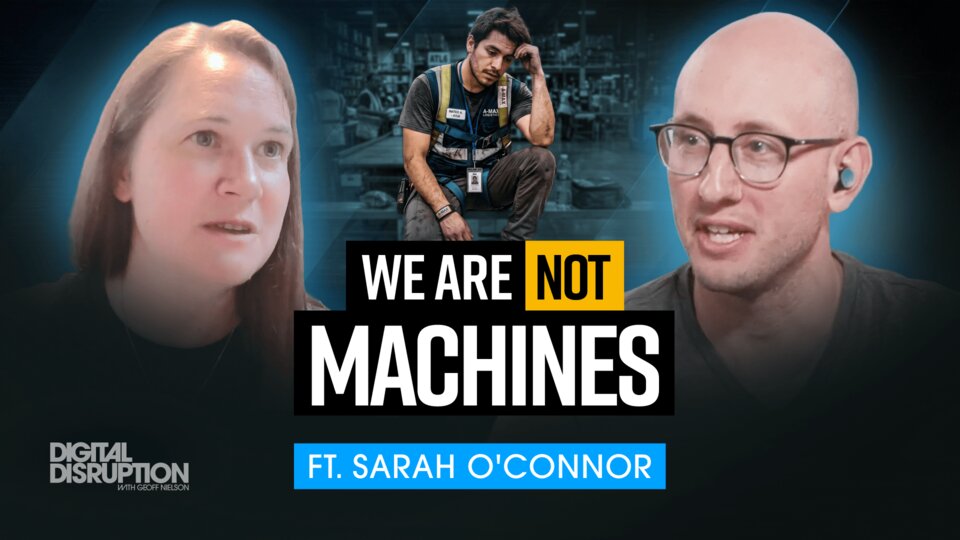
Our Guest Sarah O'Connor Discusses
AI CEOs Are Lying About the Future of Work. Here's What's Really Coming
Is AI actually making work better? Discover why many employees are feeling more constrained by machines instead of being empowered by them.

Listen
Our Guest Janak Alford Discusses
The Government AI Playbook That's Saving $2M a Week
If you're tired of AI hype and want to see what real implementation looks like, don't miss this conversation with Janak Alford, deputy minister of technology and innovation for the Government of Alberta.
Listen
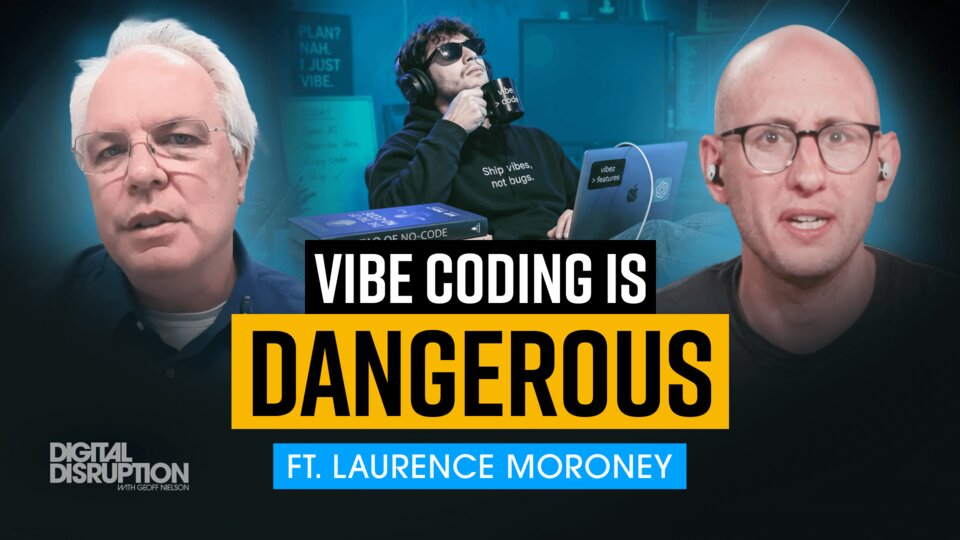
Our Guest Laurence Moroney Discusses
Ex-Google AI Lead: Vibe Coding Doesn't Belong at Work
In this episode, Geoff Nielson sits down with Laurence Moroney, former Head of AI Advocacy at Google and now Director of AI at Arm, to separate AI hype from reality and discuss what software development actually looks like in the age of generative AI.