
Digital Disruption
with Geoff Nielson


Our Guest Ian Beacraft Discusses
Jobs After AI: Futurist Ian Beacraft on What Happens When AI Does All the Work
In this episode, we sit down with Ian Beacraft, founder and chief futurist at Signal and Cipher, to talk about one of the most urgent questions facing leaders today: what happens to work, organizations, and identity in the age of AI?
Ian argues that the next two years will matter more than the last 30, and that AI is not just another tool. It is a platform reshaping economies, organizations, and how we define work itself.
We break down why most companies are getting AI wrong, the critical difference between culture and coordination, and how the rise of AI agents is shifting value from doing the work to designing it. We also cover what leaders need to do right now to stay ahead, including real world examples of failed AI adoption, the growing power of small teams, and the coming identity shift in the workplace.
00;00;02;04 - 00;00;07;12
IAN
What happens in these next two years is all that will matter.
00;00;07;15 - 00;00;09;18
IAN
When people look back and take a look what you did
00;00;09;21 - 00;00;14;13
IAN
the last 30. I'm sorry, but they don't count.
00;00;14;16 - 00;00;26;26
GEOFF
Hey everyone! Today I'm super excited to sit down again with Ian Beacraft. He's the founder and chief futurist at Signal and Cipher and an undisputed thought leader at the intersection of AI and work.
00;00;26;29 - 00;00;40;17
GEOFF
I was a huge fan of our last conversation, and super impressed by the breadth and depth of insights he brought to the table. He is on record as saying he thinks the next two years are going to be more impactful than the last 30.
00;00;40;20 - 00;00;53;22
GEOFF
So I'm really excited to get his take on where work is headed and how helpful the latest AI tech really is. It should be an amazing conversation. Let's jump in.
00;00;53;25 - 00;01;20;08
GEOFF
So, Ian, it's been, you know, I think close to a year since we last talked. And I'm curious just, you know, reflecting on, you know, all the changes in that time and, you know, it's feels like dog years these days with with AI and the pace of technology. What do you see as kind of the biggest trends or, you know, the biggest things on your radar, both in terms of what's changed in technology and in our posture toward technology?
00;01;20;11 - 00;01;42;08
IAN
I mean, it could take conferences to kind of catch up on just what's happened since then. But I think one of the things that inspires me the most is the conversation has switched from, hey, this stuff is cool. Look at all these things these tools can do to oh, this is challenging our whole concept of what an organization should look like, what work should look like.
00;01;42;11 - 00;02;04;00
IAN
Those who've been leaning in and really spending the time getting to know the tools and how they can implement into the work that we do are moving beyond just how do I become an advanced user of the tools to how do I reshape the actual notion of work, my own impact, my relationship with these things, and it's become, a question of identity, organizational design.
00;02;04;00 - 00;02;09;09
IAN
They're much bigger questions than just technology now, which is fascinates me.
00;02;09;12 - 00;02;27;29
GEOFF
So along those lines, one of the narratives you've challenged is just this talk of jobs and how AI is changing jobs and tasks and more of that kind of design layer. Can you can you unpack that a little bit? What what's, you know, the wrong narrative here and what's, you know, a more productive way of thinking about it?
00;02;28;01 - 00;02;49;03
IAN
For sure. So the narrative, I think that is, too small is that this is about using tools. AI isn't a tool. Tools are a new way or a more effective or efficient way to do a task. I think we can all see safely. The AI is much bigger than that. It's a platform that rewrites the rules of entire economies and ecosystems.
00;02;49;06 - 00;03;07;06
IAN
So if we think of it as a tool, we ask tool like questions what can I do with it? What is it do for me? Those are very small and narrow questions. When we start looking at how it rewires the rules of economics, how it rewires the rules work, we start asking much bigger questions so it changes our relationship with it.
00;03;07;06 - 00;03;28;09
IAN
Of how do I use it to how does it help me reframe what work even means for me? And that's the thing that I think that people have been grappling with the most have kind of gotten past this. Oh my gosh, it threatens my work too. It reorients my posture towards work significantly, and that's going to be an identity shift for a lot of people.
00;03;28;11 - 00;03;52;21
IAN
That's why there's so much anxiety around this is we're looking at automations, but it's also starting to challenge our paradigms on what work is, how organizations are designed and how technology plays a role in that. So I mentioned organizational design, and the thing that I've been really leaning into lately and investigating and studying is the way that we design organizations today are a result of the physics of human work.
00;03;52;23 - 00;04;08;07
IAN
They weren't designed for AI and agents collaborating with us, and as a result, they're challenging literally every institution we can think of when it comes to the the functions, the variables and the structures of the work that we are so familiar with.
00;04;08;10 - 00;04;32;25
GEOFF
One of the, you know, one of the insights I remember from our last conversation is that is that you told me that, you know, the threat that people and organizations are facing right now is is not necessarily AI itself. The greater threat is having these outdated mindsets like you just described about what an organization is, how it should function.
00;04;32;28 - 00;04;39;09
GEOFF
Do you still believe that? And you know what, if anything, have you seen in terms of mindset shift in the past year?
00;04;39;11 - 00;05;00;06
IAN
I actually believe it even more so now than I did back then. And the what we're seeing bear out is organizations that lean so too far into the technology and say, hey, we can one for one, replace an individual with a set of agents because it's cheaper, it's faster, it's more effective. It can answer questions, customer questions faster.
00;05;00;08 - 00;05;22;03
IAN
They're learning. It's not that simple. What they're learning is that there's two elements to an organization that they have to kind of wade through, and that's coordination, which is what agents do very, very well. And what most people think is the only thing work is all about and culture. And oftentimes we find that culture is actually doing the work of coordination.
00;05;22;03 - 00;05;44;23
IAN
It's kind of doing a couple things all at once. And we just can't separate the two. We don't know how to identify what's what, what's coordination versus what's culture. So I'll give you an example. Your morning stand up is both culture and coordination. You're imparting knowledge about what's happening, what the status is. But there's also cultural elements to that in terms of the the vibe, the organization there's teaching.
00;05;44;23 - 00;06;05;25
IAN
This camaraderie is a bunch of things that come with that. But sometimes the culture is actually doing the work of coordination, where the coordination or the structure of the organization fails. How many times have you been in a stand up, or even any meeting at all, where something's not going right? There's a miscommunication. There's friction of some sort where things just aren't working properly.
00;06;05;27 - 00;06;28;07
IAN
And what happens is we step in as humans to fill that gap, and we just figure it out. That's because the system that we built to for that coordination has failed. And we as humans with our culture has stepped in to fill that. So culture becomes like this load bearing structure in an organization, and you start to see that, you know, how these two kind of pull apart at the seams, where culture and coordination are necessary.
00;06;28;09 - 00;06;43;09
IAN
But the reason I bring that up and so adamant about it is because when we start talking about identity, I and I replacing roles, we're ignoring a huge part of that equation. We're just focused on the coordination and execution component of it.
00;06;43;11 - 00;07;06;02
GEOFF
Well, there's an implication there. If I'm if I'm reading that correctly that, you know, leaders, CEOs, boards who just take a machete or an ax to parts of their organization and say, you know what, we're just going to rip and replace this with AI, that there's going to be some pretty detrimental, unintended consequences if they don't consider the broader cultural piece.
00;07;06;06 - 00;07;08;26
GEOFF
Is that a fair reading?
00;07;08;28 - 00;07;29;25
IAN
Yeah. And I think we've seen that kind of come to bear in the headlines. To me, there's the classic clarinet case where they, you know, let go about seven out of contractors. I know that's been in dispute, but it seems to be a pretty reliable telling of a story where they essentially let go of about 700 contractors and full time employees and let more of the agents handle those requests.
00;07;29;25 - 00;07;50;12
IAN
And what ended up happening was even the CEO, like the C-suite, had to kind of jump in and get involved in some of the ticket resolutions because people were getting frustrated with the responses they were getting. It wasn't actually solving the challenge. They were getting informational responses, but they weren't getting solutions to their challenges. And that's a huge difference.
00;07;50;15 - 00;08;09;03
IAN
The agents that they had put together had been really good at delaying that information, but not getting through the points where they could actually get to resolution. Because you have to hop between systems, you have to be able to align with the other end, really understand what you're actually looking for, and connect all those things. That's something that agents aren't really good at yet.
00;08;09;06 - 00;08;34;02
IAN
And as a result, they ended up hiring a lot of those roles back in order to fill those gaps. And it ended up costing them quite a bit of damage in, brand and reputation and a lot of money. So kind of re-engineer that whole process. So that's just one cautionary tale. There's several others, but organizations that have leaned too far in that direction are now starting to see that there are multiple components to to embracing AI.
00;08;34;02 - 00;08;59;13
IAN
It's not just use the tool. You have to fundamentally rethink the workflows, the systems, the departments, the job descriptions, the functions, all of that. When you implement AI, because when you get efficiency in one place, you don't just eliminate the bottleneck, you shift where the bottleneck lies. And it's that second order impact that most companies have not grappled with.
00;08;59;16 - 00;09;27;00
GEOFF
If you work in IT, Infotech research Group is a name you need to know. No matter what your needs are, Infotech has you covered. IT strategy? Covered. Disaster recovery? Covered. Vendor negotiation? Covered. Infotech supports you with the best practice research and a team of analysts standing by ready to help you tackle your toughest challenges. Check it out at the link below and don't forget to like and subscribe!
00;09;27;03 - 00;09;48;11
GEOFF
So I want to talk in just a second about the right way to do this. But just before I do, I want to pick on another implication here, because one of the themes that I'm reading a lot about and hearing a lot about, is it feels like there's this sort of angst and dread at the employee level about about this shift and about this technology, regardless of whether or not it's a tool.
00;09;48;17 - 00;10;12;25
GEOFF
And the implication I wanted to ask you about is that it feels like in this world. And as soon as we're talking about rewriting systems and, you know, restructuring whole workflows, it feels to me like executives like boards that the people at the top have a lot more impact here than maybe they've had in the past for for good or for bad, right.
00;10;13;03 - 00;10;31;28
GEOFF
Their ability to take a company or an organization in the right direction or the wrong direction feels like it's a much more dramatic, you know, there's much more variance than maybe you've seen in the past. Do you buy that? And and if so, what are the implications of that reality?
00;10;32;00 - 00;10;36;11
IAN
When you you mean variance or like or oversize impact in general.
00;10;36;18 - 00;10;45;12
GEOFF
Well, what I mean is variance and impact that that the amount of good you can do and the amount of harm you can do or both feel like they're magnified.
00;10;45;14 - 00;11;19;01
IAN
I would agree with that. I think it's absolutely right, because at that point in time, you're making macro decisions about the environment of the workplace and what people I don't understand, they're still treating this like it's an IT issue. And this is about provisioning licenses. It's about replacing like for like it's about reduction in force. Because whenever you see something that is in efficiency based technology, the first thing that most boards are going to look at and say are that is code for layoffs or that's code for reduction in force.
00;11;19;01 - 00;11;39;11
IAN
Because I'm getting that efficiency, I should be able to kind of replace those two. And it's not that simple because it isn't just about efficiency and speed and scale. The thing is, when you put it in a play of an environment like this, when it's ubiquitous and everyone has access to efficiency, speed and scale, you get to race to the bottom.
00;11;39;11 - 00;12;07;09
IAN
You can only cut yourself to through efficiency. So far. So when you lean into that direction, A it's a commodity. So everyone has access to the tool. It's not like this is some sort of super secret weapon. So whatever you do to just kind of replace like for like has no strategic advantage, no competitive advantage. And when that's the level you pull, you're easily going to be out competed in some other way with by somebody who's actually thought through the problem a little bit harder.
00;12;07;12 - 00;12;15;05
IAN
And realize that when you put this into your environment, you have to rethink the environment entirely itself.
00;12;15;08 - 00;12;31;20
GEOFF
I completely buy that. And to your point, it feels like this is a daunting challenge. And again, it sounds like you were getting at the fact that it's the challenge is not going away. And maybe in some ways, it's even a bigger challenge then than it was a year ago. So so like, how do we how do we get this right?
00;12;31;20 - 00;12;46;24
GEOFF
What what is the right way to do this? And you know, if we're going to, you know, have a coffee and a chat a year from now, what has to happen so that we can say, yeah, things have been going good versus we're losing even more ground.
00;12;46;27 - 00;13;10;12
IAN
Yeah. So the the thing that most organizations have not even thought about, when it comes to AI is how do we actually get these things to understand and operate within the context of our company and understand the DNA of our company? Most are just kind of using the tools as they are and handing them to employees, and they go get more efficient with this.
00;13;10;14 - 00;13;36;12
IAN
And when you don't have the standards of your department, your team, your role, the job, the function, the workflows embedded in the data sets that these tools are working with, your defaulting to the standards that come with the tool itself. So your standards are the standards that open AI is setting for you. Your standards are this, the ones that anthropic is setting for you by their defaults and their understanding of your company.
00;13;36;14 - 00;13;51;03
IAN
Ultimately, what happens is it's kind of like if you got a this is back in the early 2000, 20 tens, you started pushing all of your data to the cloud. Well, let's say you got a new cloud provider, but you had no data in it, and somebody else put the data in there for you. You don't know what you're going to get.
00;13;51;04 - 00;14;12;19
IAN
It's kind of what's happening with AI tools is when you don't have your data formatted and also set up in a way that these tools now understand the context in which they are operating in. They're not going to give you what you want. They're not going to be reliable. They're going to hallucinate more frequently. They're not going to give you the outcomes that you're looking for because they don't understand what success looks like.
00;14;12;19 - 00;14;46;07
IAN
They don't understand the failure conditions of the workflows that you're trying to embed them in. And that's all sorts of context that most companies have not spent the time to articulate. And I don't mean just hooking it up to Azure or to your OneDrive and saying, hey, go read the documents. I mean, really spending time to figure out how do you encode these things into the data sets in a way that is designed for these systems, not extracted from existing documentation by the systems, but really actually practically hand, tailored to these types of things?
00;14;46;10 - 00;15;03;28
GEOFF
Right. It's it's it's a way to kind of encode that cultural piece and all kind of the latent, you know, organizational wisdom that's sitting in everybody's head. And how can we actually use that to parameterize, you know, any sort of a genetic work that's happening? Is that fair?
00;15;04;01 - 00;15;32;08
IAN
Yeah. And and what you've hit on there, too, is also one of the sources of anxiety for people, too, because when you start leading into that and say, okay, I'm going to help you encode the expertise that you have, the the wisdom that you've gotten from being here for 15 years, the cultural context that you have, the implicit information that allows you to understand the shortcuts of the work that's done here, that becomes a question of like, well, if I give that to you, does that mean you can replace me?
00;15;32;10 - 00;16;04;05
IAN
And ultimately what we found is when people do lean into that and they start to take what makes them who they are within the context of the organization, they end up getting augmented far more than anything that they were doing was getting replaced, because their impact actually gets, felt further throughout the organization. So when I'm starting to encode my own expertise, one, I can use that my own myself, I can start to divert a lot of the administrative work that typically would have demanded my time and my expertise to the systems that I built out for that.
00;16;04;07 - 00;16;22;07
IAN
And also, the inbound requests can start being handled by the agents that you've set up that now understand your expertise, your cultural context. It starts to actually return the benefits we're hoping for in the first place. Well, really, elevating the individual who's been able to set that up.
00;16;22;09 - 00;16;42;16
GEOFF
So it feels like I buy all of that. It feels like it's predicated on a certain level of trust, though, right, between employee and employer, that, you know, it's not going to be as soon as I finish planning this thing, you know, as though you'd be doing it with a pen that they're going to say, okay, great. Now that we know everything of value about you, you know you're out the door.
00;16;42;20 - 00;17;13;01
GEOFF
And so, you know, if we forget for a second, you know, the actual AI side of things, what do employers need to do and what do they need to signal around the contract with employees? And I mean that in the loose sense of contract, not in the yet, you know, the very, specific sense of contract that more of the social contract, and like it feels like a lot of the headlines were reading, there's some very high profile breaches of that contract.
00;17;13;03 - 00;17;23;23
GEOFF
So how do we how do we get past that if we think this is going to be a necessary precondition for actually, you know, augmenting everybody and making this thing work?
00;17;23;25 - 00;17;44;07
IAN
Yeah. I think that's probably one of the most important questions of the moment. And we definitely hear examples of that in the news every other day. The the thing that most leaders forget is that people look at what you do, not what you say. And if you are not modeling the behavior, you want to see, there's no way you can tell them to go forth and do it.
00;17;44;08 - 00;18;04;18
IAN
Leaders have to lead from the front, not from not from the rear. And I'm not seeing a lot of C-suite do that. Most of them understand that AI is important as the future of the company, but they're usually saying, hey, go and do this thing, and that's not very inspiring. The other part of this is the people need a clear vision of where they're going.
00;18;04;19 - 00;18;24;14
IAN
They need a crystal clear articulation of what the future of their company looks like, and described in such a way that they can see themselves in that future. Can I see myself in your articulation of the vision of this company that I work at, and can I see myself succeeding in that vision that you painted and if I can't, that gap in trust is even wider.
00;18;24;18 - 00;18;42;16
IAN
There's even more that you have to do in order to bring me forward. And that's why I think a lot of organizations are struggling with right now. They have not been able to articulate what their future looks like, and therefore they have not painted a narrative people can buy into. And when that narrative is not strong, they start to look for the stories elsewhere.
00;18;42;17 - 00;19;08;24
IAN
They look to the news for the narrative that they should be telling themselves, okay, if I do this, then that means I'm getting laid off. If I do this, that means I'm replaceable. Whereas if the narrative is strong and then people see other people in their organization succeeding by doing that, it changes things entirely. When people see others who look like them, who come from the same background as them, who work in the same environments as, who are part of their culture succeeding.
00;19;08;26 - 00;19;27;23
IAN
Then they start to look around, say, okay, that can be me too. But when the only examples they have of people succeeding don't look like them, don't work in the same industry, see them, don't feel relatable to them, then they're disconnected from that story of success. And the only narrative they can, they can tell themselves are the loudest signals coming from outside of that environment.
00;19;27;26 - 00;20;06;26
GEOFF
I think I think that's a really interesting and compelling point. And it sounds like you and your experience is the same as mine, which is just we're we're short on vision just across the board like that. That's one of the bigger challenges that we're facing. And, you know, my experience working with a decent number of C-suite across a decent number of industries on this, and I don't I don't mean to dunk on them, but I'll I'll take a deliberately, you know, provocative approach here, which is it's a lot harder to invent a vision from a blank sheet of paper than to, you know, pull it or, you know, kind of craft it from
00;20;06;26 - 00;20;26;01
GEOFF
other sources. And it feels like there's a lot of leaders out there, you know, just looking around the room to their peers or to consult and saying, can you tell me the vision? What's what do you think the future of the industry is? And waiting for someone to hand them the answer versus, you know, actually doing the hard work to come up with the answer.
00;20;26;06 - 00;20;50;03
GEOFF
And so I'm curious, first of all, if you agree with that. But but if you do, maybe if you can share some counter examples or some, you know, positive stories about, you know, organizations you've worked with. That have been able to kind of crack that code and actually, you know, kind of demonstrate the agency to change that, that struggle.
00;20;50;05 - 00;21;11;22
IAN
Yeah. I'll give both sides of that equation. I'll start with the one that I feel like is less inspiring. And practically 3 or 4 times a week, I'll speak with either a C-suite executive or a board member who says some form of this raise a, hey, I've got two years left. I just want to ride this out and I'm done.
00;21;11;24 - 00;21;30;13
IAN
And I say, I get it. All of your predecessors have had the opportunity to do that. Like everybody that you've ever watched in this role has had that opportunity say, hey, I've got two years, I'm going to show up, I'm gonna do my thing. But I'm not like giving everything I've got to this because I've spent the last 40 years doing exactly that.
00;21;30;15 - 00;21;46;20
IAN
I'm not going to coast, but I'm not going to give it all. And my response is, here's the deal. What you do in these next two years, if you decide to lean out, that will be your legacy. If you decide to lean in, that will be your legacy.
00;21;46;23 - 00;21;52;01
IAN
What happens in these next two years is all that will matter.
00;21;52;04 - 00;22;15;26
IAN
When people look back and take a look what you did in the last 30. I'm sorry, but they don't count. If you decide to lean out, because this moment is so important in terms of what you do, the momentum you build now accelerates by virtue of the way that the technology is changing, the way that it's effecting every sector of society, every sector of business, every part of the organization.
00;22;15;28 - 00;22;43;23
IAN
This is not incremental. This is exponential. So small motions, micro actions have macro effect. Macro actions get exponentially bigger. So it's not a choice at this point in time. You don't have that choice really. So that's one end of the coin. The other is organizations and leaders that have really understood this is a pivotal moment, not just for them or their organization, but for work as a whole.
00;22;43;25 - 00;23;14;18
IAN
They're starting to toy with the idea of not how do I make my company more efficient? How do I fundamentally reimagine what our company could be? Or do I start an entirely new function from the scratch that can then inform the rest of my company? And those are much more visionary approaches. You don't want to upset the apple cart and completely reverse your business model overnight, but we do need things that can show us a radical approach to how work can look by using the native functionalities, these tools.
00;23;14;24 - 00;23;42;02
IAN
And that's not something I'm seeing a lot right now. I'll give you an example. What I mean, the most people look at this as a way to augment existing workflows and just make things faster. That's an incremental change. What they're not doing is realizing that this is something that has to force you to relook at not just a function or a task or a workflow, but the values of the organization.
00;23;42;05 - 00;24;01;22
IAN
What are the things that are actually where is the value of the work that we're doing? Is value moving in our industry? Is it being captured appropriately? Because if we're not paying attention to where value is shifting, we might be getting really good at the wrong thing. And that's just as bad is not paying attention in the first place.
00;24;01;24 - 00;24;21;13
GEOFF
Again, a lot to unpack there. And I really like that approach. So so it feels like what you're saying, Ian, is that if you're going to do this successfully, it probably starts with zooming out and actually reimagining your sector or your industry and thinking about where where does value live and how can we be part of that value ecosystem.
00;24;21;19 - 00;24;24;27
GEOFF
Is it is that a fair statement?
00;24;25;00 - 00;24;52;04
IAN
It comes from both directions, actually comes from having a much more macro perspective and also a much more micro perspective. So I'll start with the micro picture, because this is something that that's not, I don't think, intuitive, but the companies that have been able to articulate the implicit knowledge or the organization kind of like what we call the soul of the organization and been able to encode that in a structural identity have been really, really effective.
00;24;52;06 - 00;25;16;18
IAN
So an example of that be how you articulate your values, your mission, your vision, all that kind of stuff. Most of that's written somewhere, but they're usually just like hollow platitudes for a branding exercise. How do you actually turn that into what it actually means for the organization, and put that into a document that agents can use, not just values, but once you've really articulated your values, we go from the why do we do what we do?
00;25;16;20 - 00;25;37;03
IAN
And I mean at a very robust level to how do we do that and what is it that we're doing? So why do we do it? What is it that we're doing and how on top of that, that is not just your SOPs and your workflow documents, your your blueprints. It's a text based articulation of exactly what those things are.
00;25;37;03 - 00;26;12;17
IAN
And that's actually something we spent two and a half years doing for ourselves at Signal and Cipher. And the results have been profound. The fact that we spent that amount of time doing that, and we made that bet that early has been a huge win in ourselves in terms of being able to take advantage of how agents behave, because what we found is that if you articulate the things that we take for granted, the implicit knowledge that we have across the organization and the structure of the organization, that never gets written down, and you actually put that in a heuristic data set and start with markdown files, doesn't have to be anything complicated.
00;26;12;20 - 00;26;40;21
IAN
This becomes the structural fallback for agents. So even if you haven't given them great instructions, they still have a really rich and robust understanding of the context of your organization. Why do you do what you do? Okay, this is the why. If I'm being instructed to go do this, I know a background knowledge as far as why I'm doing it and how I should be functioning, even if I run into challenges that my, you know, my set of instructions don't give me to solve that for.
00;26;40;23 - 00;27;22;09
IAN
So that is essentially a set of operational and governance procedures that are now embedded in the system. So what that does is it takes this thing that we typically put on the outside of the apparatus of the organization. Let's talk about governance and compliance. Two things very few people think are sexy. And if you take that and encode it into the foundation of what your agents are working with now, it's not this this thing that sits outside the organization that is occasionally applied when compliance is in effect or when you have to evaluate something, it is fundamental to the action of the agents, and it flips the script from compliance being this thing that slows
00;27;22;09 - 00;27;46;25
IAN
things down, or governance being this thing that interferes progress to the very thing that accelerates progress. So by being fundamental from the bottom up, being almost this atomic unit of agent at work, what it does is you're able to accelerate the pace of adoption and production because literally everything these agents do is in compliance. It is in keeping with the governance policies of your organizations.
00;27;46;28 - 00;28;04;28
IAN
It works with all the operational procedures that you've already declared and constructed. So you're never going to get something from the agents that is going to be putting you afoul of regulation, governance, or operational procedures. That's a fundamental reframe of the way almost everyone I'm seeing is approaching agents.
00;28;05;01 - 00;28;20;25
GEOFF
It's really interesting. And I want to talk about that reframe and how you actually put it into practice. And as you said, you know, governance and compliance are, you know, some of the least sexy topics out there in technology. And, you know, if if we don't want anyone to watch this video, we can we can label it something about governance.
00;28;20;25 - 00;28;39;25
GEOFF
And. Yeah, exactly. And that'll ensure we get exactly zero views. I, I've made that mistake before, but that's another story. So governance and compliance, you know, these are areas, as you said, that, you know, they're often either buried in the organization or they're in some basement or they're look down upon, you know, maybe they're in it, maybe they're in a compliance or risk function.
00;28;40;03 - 00;29;02;08
GEOFF
If we're going to flip the script and we're going to change, you know, their prominence and their value, who who is doing this work? Are you taking those existing teams and saying, hey, IT governance, you know, IT risk team encode this into the AI. Are you spinning up a new team? How do you realize that this kind of reimagination.
00;29;02;10 - 00;29;25;25
IAN
Absolutely. So this is the kind of work that will be happening in every sector of the organization. So governance and compliance is just one function of it. But this is something every individual employee will have to do for their own work to some extent. I'll give an example. Most people have realized that I writing sucks. It doesn't sound like them.
00;29;25;28 - 00;29;49;15
IAN
It uses em dashes everywhere you go. It always has those phrases. You know, we've gotten rid of delve, but now we have. That's the unlock or it's not this, it's that they're like signs that everyone can tell that I wrote this. However, there are some writers who've spent a lot of time deciding what they don't want in their writing that I puts in the writing.
00;29;49;17 - 00;30;12;07
IAN
And then they've also spent time saying, what makes my voice uniquely mine? That when I write it, you can tell it's me. That's hard to do, because that requires that you take time to articulate something you've never really had to explain to somebody. There's a great cartoon, from, it's Snoopy, it's Snoopy, and the I'm forgetting the bird's name.
00;30;12;07 - 00;30;24;16
IAN
But he asked, like, how do you fly? It's like, I don't know, I just do it. It's like it will show me. And all of a sudden when he thinks about it, he falls to the ground. It's the same thing for most people. When we try to articulate things that we do naturally, we have a really hard time to do it.
00;30;24;18 - 00;30;45;28
IAN
The problem is, that's good to be 90% of the work you need to do to encode the knowledge you have into data sets, but those who've done it have 100 XT, their output, the capacity and the capability. I first watched my co-founder do it two years ago. I've had the opportunity to do it for myself and the difference is profound.
00;30;46;00 - 00;31;15;26
IAN
The challenge, though, is when you start to do that, you start to articulate your voice, your values, your function. It does feel like you're giving up a piece of yourself and saying, okay, now that the machines have that, what's uniquely mine. The interesting part is that this unlocks all sorts of opportunity for you, because you actually being amplified and your impact is being scaled by using agents to now affect your vision rather than the work itself.
00;31;16;01 - 00;31;36;14
IAN
So what happens is we're now creating this hierarchy of different modes of work. So for the last 150 years we have been responsible for execution. It's the artifacts we produce. It's the projects we complete. We as individuals are responsible for, like the act, the act of work. And that's something that's the very thing that agents are good at.
00;31;36;16 - 00;32;00;06
IAN
Now. Just because they're good at that doesn't mean that we're out of work, because what happens is we now have to elevate ourselves to a different level of abstraction, just like the industrial revolution took us from physical labor to mental labor being our value, we're going through another level of abstraction now, where it used to be that we were responsible for doing the work artifacts, projects, outputs, and now we're moving up to designing the work.
00;32;00;09 - 00;32;26;29
IAN
So that's workflows, that's automations. That's that's essentially like looking at systems and how those systems come together. So we're looking at a series of those things that might have been dozens of outputs, and tasks kind of thrown together. But now that we're looking them from a higher elevation, we're also looking at the surrounding elements that change the impact of those things, because we're seeing, elements and signals of change internally and externally.
00;32;27;01 - 00;32;53;08
IAN
So when you're starting to look at design of work, you're to be very cognizant of how the external environment is changing around you. So as AI models change, as geopolitical events become more important, as the competition starts to move differently, as value starts to shift, those are external signals that things are changing, which means you, as a designer of the work needs to shift what work looks like to capture where value is going.
00;32;53;10 - 00;33;17;20
IAN
That is something that does not stop. The world doesn't stop. It's never static. It always continues to change. So that's where the value of most work is going to shift. You're never going to run out of challenges to solve. So the people who are starting to see work that way aren't finding less work to do. In fact, almost everyone I know that's leaned into a genetic work and quad code and a genetic coding is losing sleep left and right.
00;33;17;22 - 00;33;31;10
IAN
Yet they're still being 100 times more effective, but they're finding that there's so many more challenges that they can solve that they can't stop themselves from going and solving those things. So there's not less work to do. Trust me, there's plenty.
00;33;31;13 - 00;33;56;11
GEOFF
Right. And I mean, it's an interesting sales pitch saying that if you're use AI, you can't sleep, but that's, you know, that's if they're if they can't sleep, if they can't sleep because they're excited. I guess that's a slightly different story. But there are I really like that entire model of of designing the work and rethinking it and actually taking the time to kind of step outside, you know, your own tasks and roles and responsibilities and rethinking, how could I do this better?
00;33;56;11 - 00;34;20;07
GEOFF
How could, you know, I assist me in doing this better. There's two scenarios that it feels like we're sort of talking about at once. One of them is, you know, any employee independently saying, I'm going to do this activity, and I'm going to rethink what I can do in my contributions to this organization. And the other one is hearing from your boss or your boss's boss or your boss's boss's boss, like thou shalt like.
00;34;20;11 - 00;34;44;07
GEOFF
It's a demand that everyone in the organization do this. We expect you to do that. And the reason I bring that up is I feel like there's a very different flavor to both of those, a very different feeling of agency as an individual. And so I mean, what's your what's your guidance there? Is this something that people should be doing anyway if you're a leader, how do you encourage it without being dictatorial?
00;34;44;09 - 00;34;50;12
GEOFF
How do we like is there a way where both the individual and the organization can thrive?
00;34;50;14 - 00;35;12;02
IAN
Absolutely. That and to your point, 99% of organizations are getting this wrong right now, which is exactly why it does feel dictatorial, because we're in a moment where work is shifting so profoundly that you won't have a choice. It's like saying, I'm not going to learn to use a computer. There were people who said that when computers became a thing, there are too many holdouts anymore.
00;35;12;10 - 00;35;38;13
IAN
That same transition is happening at a much compressed speed. The challenge, though, is when you say, thou shalt people resist being told what to do in a way that they feel they have no power to influence it. But if you say, hey, the fundamental like workings of our company are shifting as a result of this huge change in the world, it's not just like, hey, we need to use AI, it's the wrong approach.
00;35;38;13 - 00;36;00;09
IAN
It's the world is shifting. You feel it, I feel it. The is going to have to look differently in order to thrive in this new world where things are going. This is a challenge that I, as a leader, can't solve on my own. That no one person has a perfect answer for. This is something that we're going to have to solve for together, and I'm going to need your help.
00;36;00;09 - 00;36;19;14
IAN
As somebody who is an expert in the space that you operate in, to help me solve that, we need to come together and figure out what those solutions are. And it's going to take some time because there's no roadmap. Nobody's giving us the blueprint. Nobody has the answer just yet. We're still figuring this out as we go along, and everybody in the world is in R&D right now.
00;36;19;17 - 00;36;42;04
IAN
We're all thinking about what this means for our jobs are roles, our employment, security, the organizations and the industries that we're in. So if we come together, we decide that this is what matters. We can start to figure out ways to go forward. But if all it is, is, hey, I don't know, go do it, people are going to find someplace else that has a much more collaborative way to do it.
00;36;42;07 - 00;36;56;24
GEOFF
Right. And as you were, you were saying that I was processing that there's actually it feels like there's sort of two electric rails here. There's that way of saying, you know, I'm forcing you to do this. And there's also the other way that you know, I don't know if you're seeing happen where leaders just feel like they're going to they will do it themselves.
00;36;56;24 - 00;37;20;13
GEOFF
They're going to do it non collaboratively. And you know that that doesn't feel like it's the right approach either. And so I like your kind of middle ground of like look we all agree this has to happen in some capacity. How can we do this together to everybody's benefit. And you know hopefully have enough trust as an organization that people buy that and believe you versus actively resist.
00;37;20;16 - 00;37;39;19
IAN
Absolutely. And and I'm definitely seeing certain leaders saying, hey, I'm just going to do it myself. That is absolutely happening. Those who've leaned in and understand the power of the technology oftentimes say, it's just easier for me to do it that way. It's kind of like when you're teaching somebody new, it's like, if you understand it better than the other person, it's easier.
00;37;39;19 - 00;37;49;10
IAN
It takes less time for you to do it yourself and to train the other person on how to do it effectively. But you scale significantly better when you actually have the patience to do it right.
00;37;49;13 - 00;38;08;26
GEOFF
Absolutely. So so maybe with that Ian, you know, I'd love to hear a little bit more. Just practically, you mentioned that this is something you've been working on with Signal and Cipher for a couple of years now. You know, just share a little bit more about your insights. What are the things you've gotten right or wrong? And, you know, some of the biggest takeaways that you try and share with, with people around that.
00;38;08;29 - 00;38;45;13
IAN
Absolutely. So the the right and wrong is it is interesting track. You go around because there's we are a fan of the scientific method of have a hypothesis and test it out and test it out at scale, because we're in a world now where executions cheap, failure is cheap and it's fast. I talked earlier about the fact that all the fundamental assumptions of what makes an organization work are kind of falling by the wayside, and one of the biggest ones is that we need to spend a lot of time thinking and planning before we do.
00;38;45;16 - 00;39;14;23
IAN
So our organizations are kind of built around the assumption that execution is expensive, and mistakes in execution are far more expensive from a cost perspective, reputational damage, you name it. And that world required that. We spent a lot of time researching, doing synthesis, analysis, competitive analysis, you name it. And this is the world of consultants lead and breathe in all the time, where you can kind of do the planning and then you hand it off for execution internally in our organizations we do the same thing.
00;39;14;25 - 00;39;39;11
IAN
We're figuring out what the markets are doing, we do the market planning, etc. before we do any of the execution. The way we look at it is we now say that planning is rehearsing your assumptions. Building gives you proof, and because execution is so cheap, it's now cheaper to build the prototype than to even have the meeting about planning the prototype.
00;39;39;13 - 00;40;03;04
IAN
Just think about that for a second. It would actually be cheaper for you to spend three hours coming up with a prototype that shows people what the idea is about, that expresses the concept that you're trying to get across, rather than saying, hey, we're going to get all the people who are responsible for this, and then we're going to go through the RACI, and we talk about responsibilities and timelines, and we're going to talk about the future meetings, and then we're all going to go off and do our planning.
00;40;03;04 - 00;40;24;20
IAN
And everybody come back and say, what do you think? And like this. Six weeks later, you just started actually thinking about the project when somebody said, hey, I spent three hours banging this out, come up with three different prototypes. Well, deploy one of them internally to so we can get some responses. And you walk in two days later with data like actual hard experience that shows what's working and what's not.
00;40;24;23 - 00;40;54;20
IAN
That's the world we live in now. And the idea that we should still be doing this very slow and measured, almost defensive posture means we're not leaning in and understanding what the native capabilities of this technology are. We're just sprinkling AI pixie dust on top of the organization, saying, hey, we are now AI enabled. So that's one of the biggest things that we've seen is when you end up just building your the fidelity of your data and your signal is so much stronger than your opinions.
00;40;54;23 - 00;41;23;26
IAN
So you get to simulate and get that done. The other is that we're starting to see that all of the assumptions of the way in organizations, functions, I said earlier, is kind of a, an artifact of the physics of human work. Things like job descriptions, departments, sign offs, hierarchy. These are all things that existed because humans had to do the coordination and were the parts of the the culture that drove the work.
00;41;23;26 - 00;41;50;12
IAN
So let's say departments, departments exists because certain types of knowledge are scarce. And we need a unit that coordinates the work. But also, facilitates the growth of that expertise, the career path that creates also a cultural unit, a sense of identity. These are cultural artifacts that support the growth of the human side of the business. But if you have something that's a genetic, it doesn't need any of that.
00;41;50;14 - 00;42;13;09
IAN
So what we did, over about six weeks, we actually did an experiment, right when open Cloc came out and we gave it our data set, our organizational identity. And over time, we had it build iteratively towards building its own as an own, completely autonomous organization. And we use that to build several software products, that we use now.
00;42;13;12 - 00;42;33;07
IAN
But what it did is it was focused on a sense of, autonomous coordination. And every time it would run into a wall or sense of failure, you would then say, okay, I'm encoding this, that failure into my data set and now having a hypothesis to what's next and just keep going, going, going until it finds what's going to work, what path actually defines that word nation.
00;42;33;09 - 00;42;54;21
IAN
And what we found is after spending about 8 billion tokens in the course of it was six days between two of us. We were able to build a system that had come up with so many different lessons. It was able to integrate each failure as a element of its infrastructure. So these weren't just like, hey, we we learned this lesson, now we think we'll remember it.
00;42;54;23 - 00;43;18;10
IAN
The agents encoded it as a structural lever to make sure that those mistakes never got made again. And that coordination could actually happen across the entire organization. And as a result, the agents were able to coordinate at massive scales. We're talking 16, 24, 36 hour runs on a regular basis without any interference from a human to get the work done.
00;43;18;13 - 00;43;42;06
IAN
Now, what this is showing us is that's able to separate coordination and culture. These agents didn't need one on ones. They didn't need coaching. They didn't need, a morale boost. They didn't need all the things that we as humans need to create that sense of identity culture. It doesn't mean we're not necessary. It just means that for coordination, those things are not necessary in a world where we're also leaning on agents.
00;43;42;08 - 00;44;08;00
IAN
So it talks about execution becoming cheap, becoming more ubiquitous. That leans into will. Now, what is culture become because culture previously was doing double duty. It not only was about the sense of identity and meaning making and like who we are and what we stand for. It was also kind of structurally making up for our own personal failures in coordination.
00;44;08;03 - 00;44;24;27
IAN
So when coordination is actually kind of handled in many ways by agents that have a strong sense of organizational identity, now you get to take a look at what is culture actually mean in a world where it's not lip service. So when you talk about culture and people don't roll their eyes and say, oh yeah, of course we're a family.
00;44;24;27 - 00;44;44;07
IAN
But like deeply, what do we stand for? What are our values? Can I articulate those and are we living them? That I feel like becomes an organizational reality for far more organizations when they coordination piece is flawlessly executed by a system that's designed for it.
00;44;44;09 - 00;45;00;21
GEOFF
So again, a ton there that I want to, you know, unpack and tease out and lots of really good and interesting insights. One piece I want to, you know, rewind on Ian that I think would be useful to people is if you can just give us a little bit more flavor when you talk about agents and you talk about them doing, you know, 36 hour runs.
00;45;00;27 - 00;45;12;04
GEOFF
Can you give me a flavor of the type of work that you've, you know, outsource to them or that they would be working on that? To, to just kind of, you know, how people imagine that a little bit better.
00;45;12;06 - 00;45;30;13
IAN
Yeah. So in the beginning, it actually was helping us augment those data sets I was talking about. So the data sets that we had built for ourselves in the beginning that we took like two years to produce, were data sets that encoded the who we are, why we are what we say, we are, what we do, and how we do it.
00;45;30;15 - 00;45;56;07
IAN
And that's everything from, marketing and communication styles. What's your tone of voice? What's your crisis communication policy? You know, what are your governance policies, your compliance policies, all that literally all of that got encoded into a data set. And what we would do is we'd actually use agents to extrapolate on that data set because we'd spent so much time growing it, which is the opposite way most organizations have their data is like, okay, we got data spread everywhere.
00;45;56;07 - 00;46;15;29
IAN
How do we consolidate it and like put it into this system that now becomes our data set. We were literally curating that and treating it like a living organism that grows as you nurture it. And after a while, it got to a point of fidelity where agents were able to run on it. But we still needed to kind of plug in some gaps and augment that data set.
00;46;15;29 - 00;46;34;00
IAN
So we were able to create as in a sense, that synthetic data that augmented the data set to the point where it was no longer just a small startup of six of us, it was the data set that would be the size of what you'd expect of an enterprise of 4000 people. And that became one of our agent edges because we had that kind of data.
00;46;34;00 - 00;46;41;09
IAN
Your agents can also act like they are part of an organization of 4000 people. So we built all sorts of infrastructure for our organization.
00;46;41;16 - 00;46;56;20
IAN
Practically every piece of infrastructure, with a few exceptions, has been completely built by our agents. And we learned a couple lessons we didn't anticipate. I'll give you an example. We had, overnights.
00;46;56;22 - 00;47;14;07
IAN
All right. Raises. We're doing, one of the data set runs and they were trying to ping one of the databases that we had worked with that was doing, a set of roll ups and the mutations in the data set, and it was pinging the API because we were using the cloud based system, and they decided amongst themselves, this is way too slow.
00;47;14;09 - 00;47;25;08
IAN
We're never going to get where we need to go. Based on the parameters that Ian and Brant have set for us, we need to bring this on premise. So in the morning, we woke up to having that
00;47;25;08 - 00;47;28;21
IAN
whole platform running on our servers,
00;47;28;24 - 00;47;29;22
GEOFF
Wow.
00;47;29;25 - 00;47;32;15
IAN
having never given it the instructions to do so.
00;47;32;17 - 00;47;33;00
GEOFF
Wow.
00;47;33;04 - 00;47;48;29
IAN
But it knew based on the way that we had built out our data set, with the way that we were functioning internally and the way we'd encoded that, that that type of behavior would have been acceptable. But we used never thought to think of that. That was not even part of our reality at that time, that that was possible.
00;47;49;02 - 00;47;59;07
IAN
So what we were finding is that even infrastructure can be ephemeral, which that concept alone took a while to wrap our minds around.
00;47;59;10 - 00;48;21;24
GEOFF
Yeah. Yeah. Well, and I, I can imagine there's some profound implications for, you know, it teams for for teams for, you know, what does that mean when you're working with some of these databases or data centers? You know, folks like AWS and and you know, what is the future look like there? There's yeah, a lot of pretty interesting implications.
00;48;21;26 - 00;48;39;27
GEOFF
Yeah. I want to take a slightly different road, though, versus talking about the infrastructure. I want to talk about the people. Because you mentioned it's a team of about six operating like a much larger team. And, you know, I've heard you say in the past, you know, some version of, you know, small teams are a much bigger flex than, than big teams.
00;48;39;27 - 00;49;04;11
GEOFF
And so as you move to a world where there's more a genetic work, you know, how many people are needed to do that work, like what happens for these organizations that are already fairly sprawling? Do we think organizations are going to shrink in general and there'll be more of them? Is there enough work to go around? What what do these teams actually look like in practice?
00;49;04;13 - 00;49;23;07
IAN
Yeah I think there's a couple factors at play here. One to go straight for the positive is I think there's going to be explosion in entrepreneurship. I don't think everyone's made to be an entrepreneur. But I think one of the challenges that keeps people from being entrepreneur is all the red tape and the administrative stuff that prevents you from starting.
00;49;23;09 - 00;49;39;13
IAN
That's being eviscerated by agent. The ability to start business has never been easier, and it's only going to get easier. Like it's at one point you were able to like, enter a prompt and you've got a business. So that's kind of the world we're moving into. And I think that it raises a lot of red tape to make that happen.
00;49;39;13 - 00;50;07;06
IAN
So I think there's going to be an explosion of smaller companies doing an enormous amount of work. But when it comes to big companies, the thing I would say is if your role is exclusively the function of the size of your organization, and what I mean by that is if your role would not exist in a smaller organization of a similar industry, that is a sign that I will disrupt the work that you were doing.
00;50;07;08 - 00;50;36;01
IAN
Because if all your work is doing right now is coordinating or ensuring that size, it not become a detriments. That is the kind of thing that agent work takes care of very easily. So that right there is a function of size that changes the dynamics between small and big teams. The other thing I think is going to happen is not that we're going to be downsizing the organizations or cutting them down to fit their size, but we will be shrinking teams immensely.
00;50;36;04 - 00;51;00;13
IAN
So what happens is the teams become smaller, but the impact becomes bigger. And that means that organizations can actually pursue new opportunities that were previously impossible. With the with AI, we've heard Jevons Paradox applied to a whole suite of different challenges and opportunities. And this is another one where I would, point that towards is there's no shortage of challenges to pursue.
00;51;00;15 - 00;51;27;21
IAN
And I talk about the physics of human work. The reason so many organizations don't continue to pursue other opportunities is one, if it's not squarely in the strategic remit of the organization, you need to stay focused in a world where attention is not a boundary, where execution is an abundance, where delivery is cheap, your ability to kind of move off that strategic imperative and pursue other challenges grows exponentially.
00;51;27;23 - 00;51;46;05
IAN
So I think what's going to happen is we'll see organizations saying, let's not just be defensive and try and shrink the organization. Let's go after industries, sectors, challenges, customer bases that we never could have touched before, that we can now, as a result of this infrastructure, this change in the nature of work.
00;51;46;08 - 00;52;07;23
GEOFF
It is a very positive view on it. And I'm curious just to take one specific aspect of At and tease it out. There's a reading of this where I, in a genetic technology disproportionately turbo charges these small teams. Right. To your point, it gives them these capabilities that they just would not have had even a few years ago.
00;52;07;25 - 00;52;29;21
GEOFF
And so if you're a, you know, a much larger enterprise, sure. It can turbocharge you as well. However, you also have the burden of being a much larger enterprise. And so do you think? Yeah, comparatively, do you think that the advantage sits more, you know, you know, and a heavier concentration with these smaller organizations and is going to upend the landscape in that way?
00;52;29;29 - 00;52;37;07
GEOFF
Or is that just, is that two narrower reading of the value that larger enterprises can unlock?
00;52;37;09 - 00;53;08;24
IAN
I think there's a kernel of truth to it. I think that in certain sectors it is very true. In other sectors, it's a it's a portion of the truth. So let's take for example, utilities, infrastructure companies, logistics companies, those are the types of companies that even if you shrink the teams, the sprawling nature of the physical assets, of the physical moats, the fact that they are also moving atoms, you know, everyone started fixating on, like, do you do stuff in the physical world?
00;53;08;26 - 00;53;31;15
IAN
The size and scale of their assets alone kind of mandates a size that is commensurate with their own scope, and a small startup of like 20 people is not going to be able to go toe to toe with a Lindi Gas. It's just not possible. The same thing could be said of like a Boeing or some organization like that.
00;53;31;15 - 00;54;04;10
IAN
But if your organization is strictly bits and bytes from the start, the dynamics starts to shift a little bit and that then becomes distribution. Being your moat, do you have distribution in a way other startups don't? And that becomes your access to the mindshare of the customer. That relationship can create feedback loops that mean that you can actually serve them in a way more effectively, more rapidly than any other startup could, because it's sort of has to break through and build that network effect and build that scale, and that takes time and a ton of resources.
00;54;04;15 - 00;54;23;13
IAN
It's easier than it's ever been, but it's not easy. So distribution that becomes the moat is data certainly is not. And so there's I think a bunch of different levers that have some sort of impact. And I think that we're going to see an explosion of small teams taking on much larger, teams, but they're not going to wipe the floor with them.
00;54;23;13 - 00;54;45;01
IAN
I think what's going to happen is we're going to start seeing this kind of compression towards the middle, where gargantuan companies become leaner. And these small startups also increase a little bit in size as they become more successful to take on those larger organizations, because it can't just all be given to the agents. There's an element of physical, awareness has to be in place.
00;54;45;01 - 00;54;51;22
IAN
And also the relationship piece of it is a huge limiting factor to how much you can push over to agents.
00;54;51;25 - 00;55;13;05
GEOFF
Well, and I was just taking some notes while you were talking. And to me that that question about value, that question, especially as a larger enterprise about what is your moat or what is your new moat now just feels like it's so encapsulating of how you need to structure your thinking in this age before you do anything else.
00;55;13;08 - 00;55;46;05
IAN
Absolutely. To your point, the, the this system that we exist within now has already changed around us. It's like the frog being, you know, the boiling the frog. You don't really realize it. Or maybe you can't read the label from inside the bottle is the world is already shifted. We are just slowly gravitating towards that change and we're so stuck in the old paradigm that is taking us a while to make those realizations of what's changed, how it changed, and what it means for how we need to change.
00;55;46;08 - 00;56;08;00
IAN
Because we've attached our identity to the things that we've grown up with and that we've lived around. It's not something that people can easily do, which is shift their identity overnight. So there's that lag, that, that friction and that gravity that's still pulling us towards what's familiar and just completely flipping our perspective on practically everything we know about work.
00;56;08;03 - 00;56;21;25
IAN
That's it's hard. And I mean, I live and breathe it 24/7. 365 and there are moments where I just sit here and I'll be like, wait, wait, what's happening? What am I supposed to be doing? And I think that's everybody right now.
00;56;21;27 - 00;56;47;02
GEOFF
It's why it's so telling that, you know, as you said, like 99% of organizations and leaders are are struggling with this. And maybe by some counts that's actually an underestimate. But you know, I wanted to come back to this notion of the last time we talked. We talked briefly about I think you brought it up, martech law, about the fact that technology is accelerating and adoption is is lagging the acceleration.
00;56;47;05 - 00;57;09;00
GEOFF
And I'm curious on, on your sort of broad predictions about that. I, you know, made an offhand comment earlier about what's it going to look like, you know, if we meet again a year from now and, and will things get better or worse? Are you are you confident that things will get better or is it going? Will things get worse but better in certain pockets?
00;57;09;00 - 00;57;23;29
GEOFF
And it's this sort of, you know, Darwinian survival of the fittest. Like, where is this going and how does this play out? Given this, you know, really intense and accelerating change.
00;57;24;01 - 00;57;52;27
IAN
So it I'll give you one confident, prediction that I will bet my reputation on. It's going to be a mess. This is going to be messy. I don't think there's one firm direction of, you know, this gets better because. Or this gets worse because it's going to be both. They're going to be bits and pieces that we figure out faster, and that the technology kind of just delivers on a silver platter that we can say, that's the thing that's making, like, easier.
00;57;53;01 - 00;58;16;22
IAN
Holy cow. Never could have seen that coming. That's amazing. Where are you seeing that? In the sciences and medicine. And the advances we're seeing are absolutely mind boggling. But we're not seeing the same thing in the workplace very much. I one of the things I say is it it feels like everything is changing, but nothing has changed. Because if you ask the average person like, how fundamentally does work feel different?
00;58;16;25 - 00;58;34;05
IAN
How does it look different? They'll say, kind of looks the same. I'm just using a different tool and it's a little faster. And then you ask him, well, what do you do with that extra time? The first thing they say is, well, more work. Of course. So we do the same thing that we've always done. We just do it better, faster and cheaper.
00;58;34;07 - 00;58;56;13
IAN
And that means work should get more intense. And then eventually some things will break. And when things break, that's when we tend to be really introspective about it. We don't do that proactively. We almost exclusively do that retroactively. So for example, if I said, when was the last time you thought about your race and you're not most really know what that is.
00;58;56;19 - 00;59;15;20
IAN
But if I said, well, never really said, well, what if I broke your arm? How much do you think you would think about that nonstop? Constantly. And I think about it so I could do something to help it heal and fix it. And that's kind of an analogy for what we do in society. We don't proactively say, oh, that could be bad.
00;59;15;20 - 00;59;38;04
IAN
Let's make sure that we avoid that and go in the opposite direction. We're like, hey, we're overburdened, we're overstretched, we're under-resourced with a million things to do and no real bandwidth or time to deal with the stuff that might not come to pass. So when things become completely urgent, that's the first time we give them attention. And when the functions of the organization start to break, that's when we get to spend the time being introspective.
00;59;38;10 - 00;59;57;24
IAN
That's when we're going to spend the time building data sets that I think that are going to get us out of the bind. So I think more things have to break before we decide how to build a better system. And that's what's going to build a more robust system, a more resilient system. Unfortunately, it's not the visionaries who are super proactive that take us there.
00;59;57;27 - 01;00;06;11
IAN
It's kind of this we're being dragged in that direction by the necessity of how hard and painful our current reality is.
01;00;06;13 - 01;00;29;14
GEOFF
I completely buy that, even if it's not the most optimistic, message so far today. So maybe, Ian, just to just to sort of land the plane on this discussion, you know, if you were going to leave business leaders, people who are building the future of work in the future of organizations with kind of one message from this conversation about what we can do to build the future we want.
01;00;29;20 - 01;00;33;28
GEOFF
What would that be?
01;00;34;00 - 01;00;54;27
IAN
If I was to say one thing to leaders is that, yes, we have to fundamentally reimagine practically every facet of work. But that's not where you start. That's what you understand. That's in North Star that you might be able to keep in your head. But if you drop that in your organization tomorrow, we're going to change everything. If you change everything, you really change nothing.
01;00;54;29 - 01;01;15;18
IAN
But if you understand that that is going to be a gradual evolution as a result of a clear vision as and also the bumps and bruises that you're going to have by coming in contact with the troops at the market and the technology. Then you start to understand what you're really in for. And this is a fundamental reimagining of the organization and of the nature of work.
01;01;15;21 - 01;01;22;27
IAN
The cool thing is you get a front row seat. The nightmare is you get a front row seat,
01;01;22;29 - 01;01;38;25
IAN
you're driving, and if you don't create the environment where you can start to build a picture of what that means for you and for the people that you are leading, you won't be leading them anywhere. This is no longer a question of technology.
01;01;38;28 - 01;02;05;10
IAN
This is a discussion about HR, about people, about the organization of work, what work means identity. Because we're all going to be challenged as leaders about how well we shepherd our people through the coming identity crisis, because that's right at our doorstep right now. People attach their worth, their value, and their identity to the work that they do.
01;02;05;10 - 01;02;23;20
IAN
And when all of that shifts, so is a relationship with that. So how do we counsel people through that? How do we make sure that we can support them in a way that they need to get through this in a way that also provides value to the organization? These are going to be dynamics we've never really had to think about before.
01;02;23;22 - 01;02;24;18
IAN
So
01;02;24;21 - 01;02;46;02
IAN
this is not just doing the same old thing better, faster, cheaper. This is really leaning in and saying what's going to matter on the human side of the equation to make this transformation happen. Because honestly, the technology part that's going to be the easy piece. Everything else, that's where the value is going to be.
01;02;46;04 - 01;03;02;00
GEOFF
Well, Ian, I feel like you just blew the door off that answer. And I wish we had another hour or more to dive into. You know, the piece about identity, the human piece, the managing that change? But that'll have to be to be continued. And for today, I wanted to say a big thank you for joining. Really interesting.
01;03;02;00 - 01;03;10;00
GEOFF
We've covered a lot of ground, and I really appreciate your insights.
01;03;10;03 - 01;03;35;16
GEOFF
If you work in IT, Info-Tech Research Group is a name you need to know. No matter what your needs are, Infotech has you covered. IT strategy? Covered. Disaster recovery? Covered. Vendor negotiation? Covered. Infotech supports you with the best practice research and a team of analysts standing by ready to help you tackle your toughest challenges. Check it out at the link below and don't forget to like and subscribe!



The Next Industrial Revolution Is Already Here
Digital Disruption is where leaders and experts share their insights on using technology to build the organizations of the future. As intelligent technologies reshape our lives and our livelihoods, we speak with the thinkers and the doers who will help us predict and harness this disruption.
Listen


Our Guest Robin Hanson Discusses
Robin Hanson: AI Is Probably the End of Humanity (and Why That's OK)
In this episode, economist, futurist, and The Age of Em author Robin Hanson explains one of the biggest questions humanity has faced: What happens after humans?
Listen
Our Guest Sarah O'Connor Discusses
AI CEOs Are Lying About the Future of Work. Here's What's Really Coming
Is AI actually making work better? Discover why many employees are feeling more constrained by machines instead of being empowered by them.
Listen
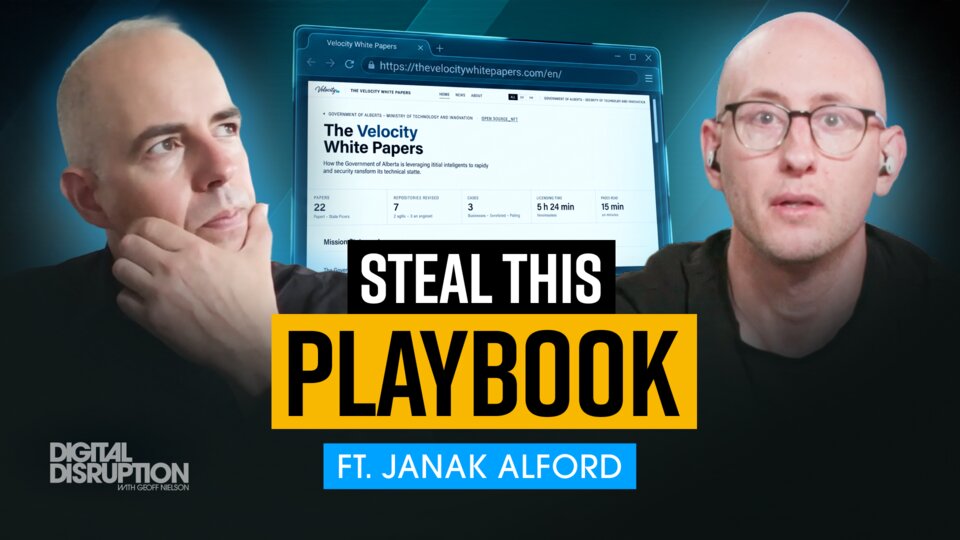
Our Guest Janak Alford Discusses
The Government AI Playbook That's Saving $2M a Week
If you're tired of AI hype and want to see what real implementation looks like, don't miss this conversation with Janak Alford, deputy minister of technology and innovation for the Government of Alberta.
Listen
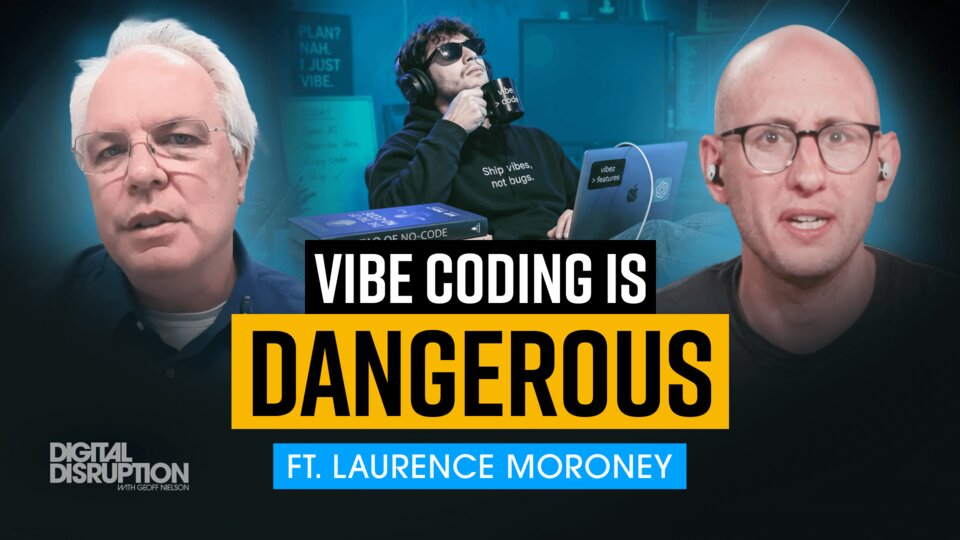
Our Guest Laurence Moroney Discusses
Ex-Google AI Lead: Vibe Coding Doesn't Belong at Work
In this episode, Geoff Nielson sits down with Laurence Moroney, former Head of AI Advocacy at Google and now Director of AI at Arm, to separate AI hype from reality and discuss what software development actually looks like in the age of generative AI.